
Broadleaf Milkweed (Asclepias latifolia)
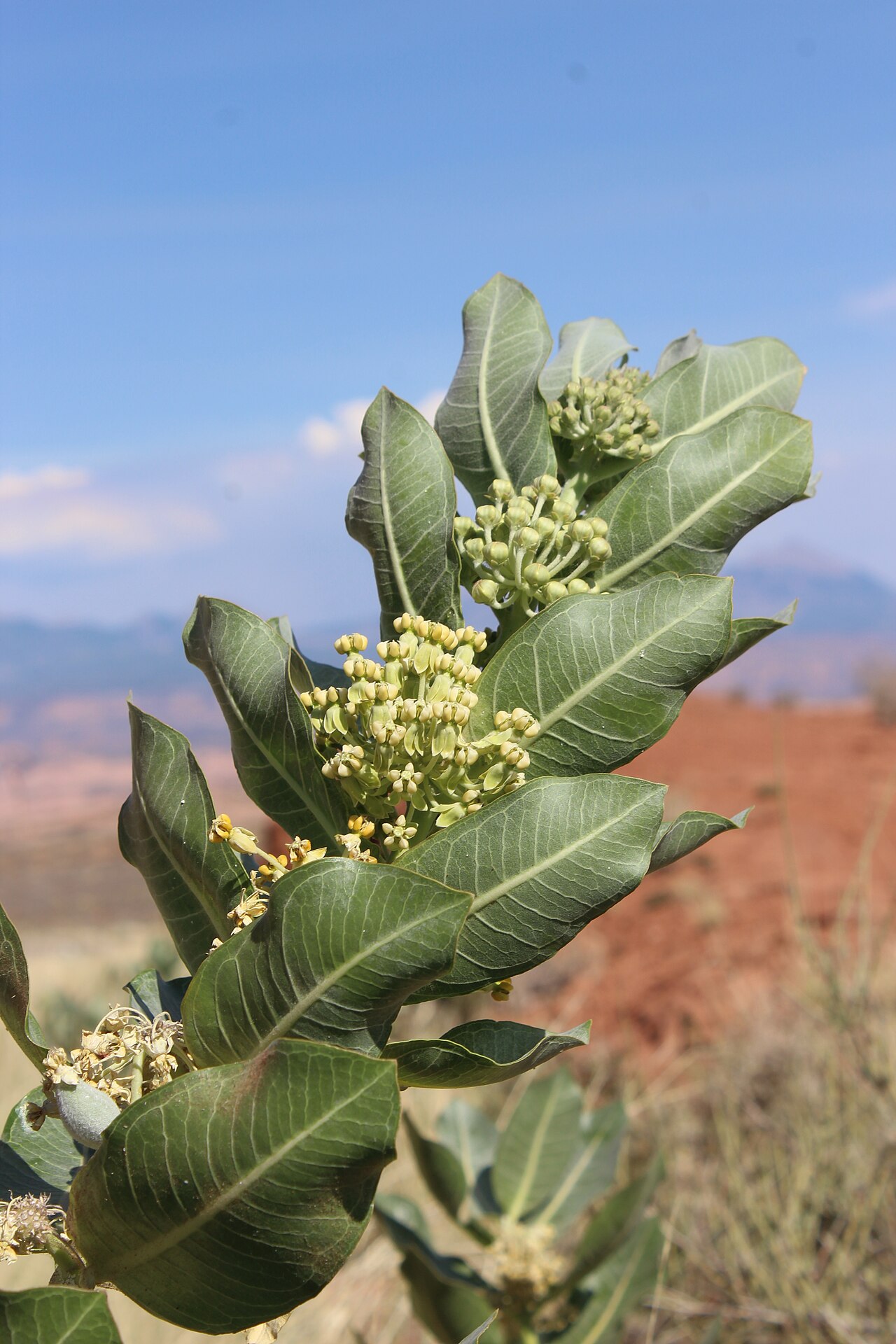
Asclepias latifolia, known as Broadleaf Milkweed, is a bold, drought-tough milkweed of the Southwest and the western Great Plains. It grows as stout, upright, mostly unbranched stems 1 to 3 feet tall, lined with large, thick, nearly round leaves up to 4 inches long and about 2 inches wide or more. Tucked among the upper leaves are tight clusters of pale green to yellowish-green flowers. It belongs to the dogbane family (Apocynaceae), the family that now includes all milkweeds.
The species name latifolia means “broad-leaved,” and the leaves are the easiest way to recognize it: gray-green, leathery, attached directly to the stem with almost no stalk, and marked by prominent pale veins. Leaves are softly hairy when young and become smoother with age. Broadleaf milkweed grows in dry grasslands, desert scrub, pinyon-juniper woodland, sandy and gravelly washes, and very often along roadsides and other disturbed ground.
For gardeners in the arid West it is one of the most striking native milkweeds, a sculptural plant that tolerates heat, drought and poor soils. It is a host plant for monarch and queen butterflies and a nectar source for many insects. This guide covers identification, native range, how to grow it and its role in the ecology of western grasslands.
Identification
Several southwestern milkweeds have broad leaves, but broadleaf milkweed stands out for its upright, stout stems with many pairs of nearly round, stalkless leaves and its compact clusters of green flowers held close to the stem rather than on long stalks at the top.
Stems & Roots
Stems arise from a deep, thick root, usually several from one crown. They are stout, upright, and usually unbranched, 1 to 3 feet tall, and often reddish near the base. Young stems are covered with soft hairs that wear off with age. All parts contain the milky latex sap typical of milkweeds.
Leaves
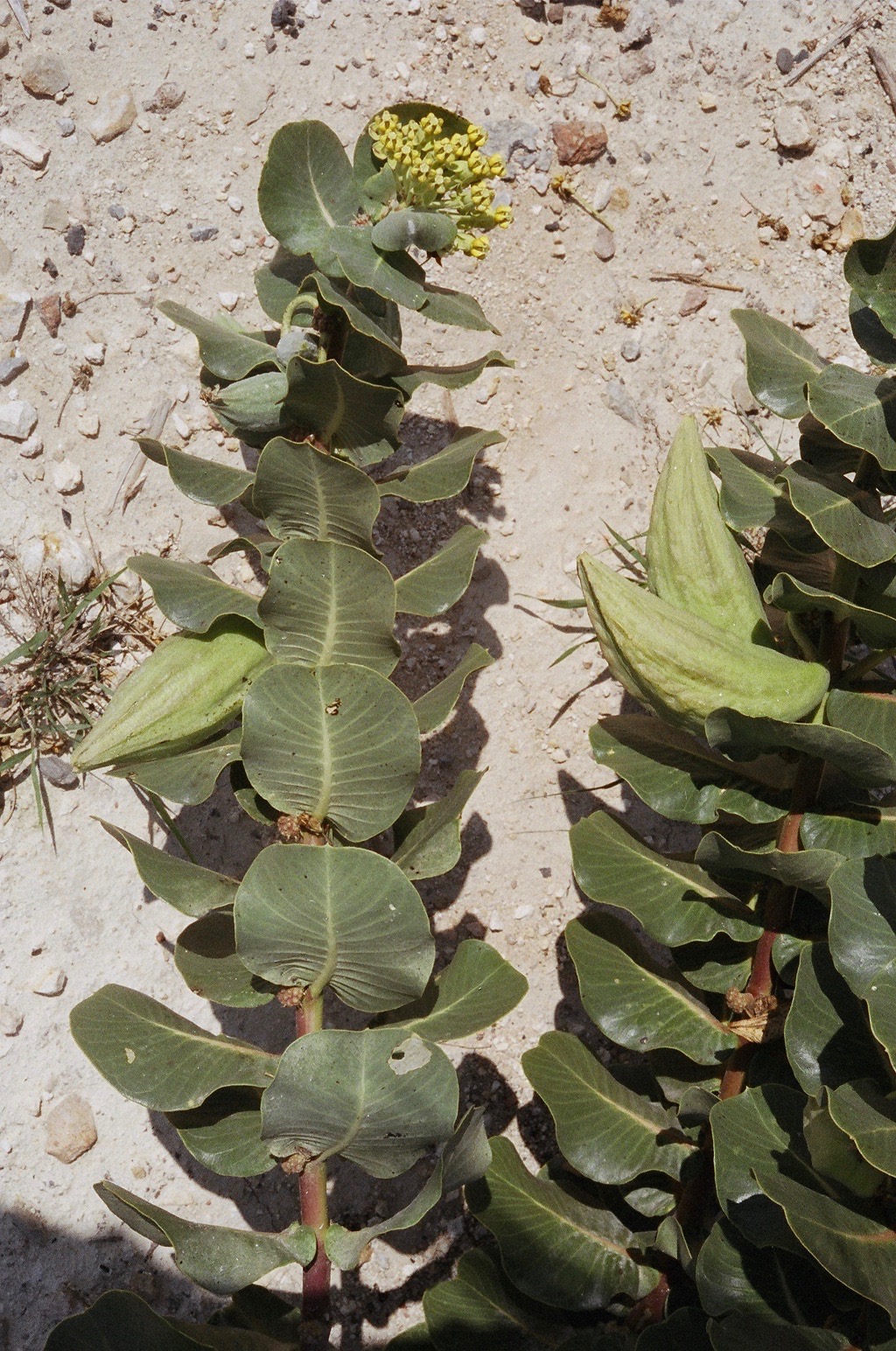
The leaves are opposite, broadly oval to almost round, 3 to 4 inches long and 2 inches or more wide, thick and leathery. They are stalkless or nearly so, clasping the stem, and often folded along the midrib or wavy at the edges. The surface is gray-green, with a pale midrib and conspicuous veins running to the margins. The leaves are densely hairy at first and become nearly smooth as the season goes on.
Flowers
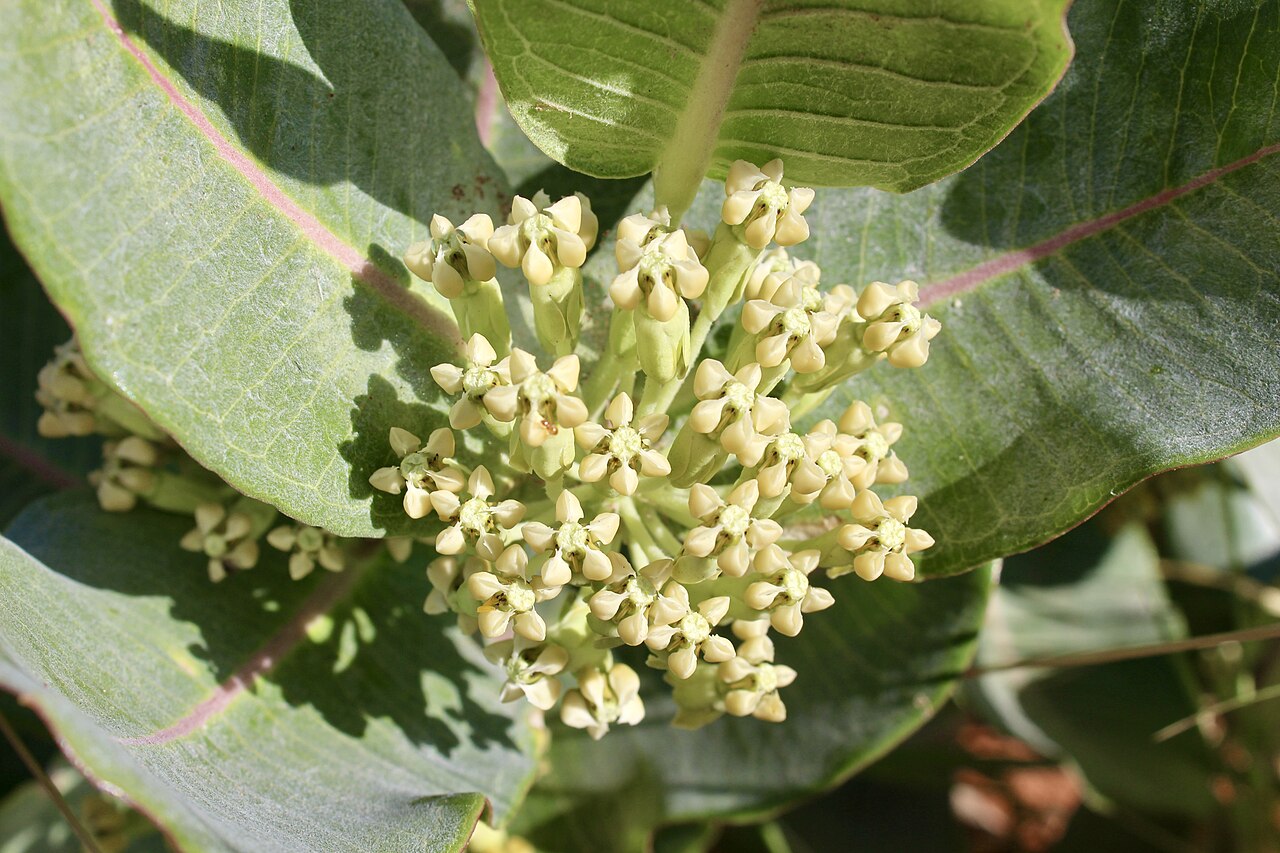
Flowers appear in compact, rounded umbels in the upper leaf axils, held close to the stem and often partly hidden by the leaves. Individual flowers are about ½ to ¾ inch long, with five pale green to yellowish-green petals bent sharply back and a crown of five pale yellow-green hoods. Bloom typically runs from late spring through summer and, after rains, into early fall.
Fruit & Seeds
The pods are plump, smooth, upright follicles 2 to 3 inches long, tapering to a point. When they ripen in late summer and fall, they split along one side to release flat brown seeds, each with a tuft of silky white hairs that carries it on the wind.
Quick Facts
| Scientific Name | Asclepias latifolia (Torr.) Raf. |
| Family | Apocynaceae (dogbane family; milkweed subfamily) |
| Plant Type | Herbaceous perennial |
| Mature Height | 1–3 ft |
| Mature Spread | 1–2 ft |
| Growth Rate | Moderate |
| Sun Exposure | Full sun |
| Water Needs | Low; very drought tolerant |
| Soil Type | Sandy, gravelly, rocky or clay soils; tolerates disturbed and alkaline ground |
| Soil pH | About 6.5–8.5; tolerates alkaline soils |
| Bloom Time | May–September |
| Flower Color | Pale green to yellowish-green |
| Fall Color | Leaves turn yellow before the stems die back |
| Fruit | Plump, smooth pod 2–3 in long with silk-tufted seeds |
| Deer Resistant | Yes; toxic and rarely browsed, but poisonous to some livestock |
| USDA Hardiness Zones | 5–9 |
Native Range
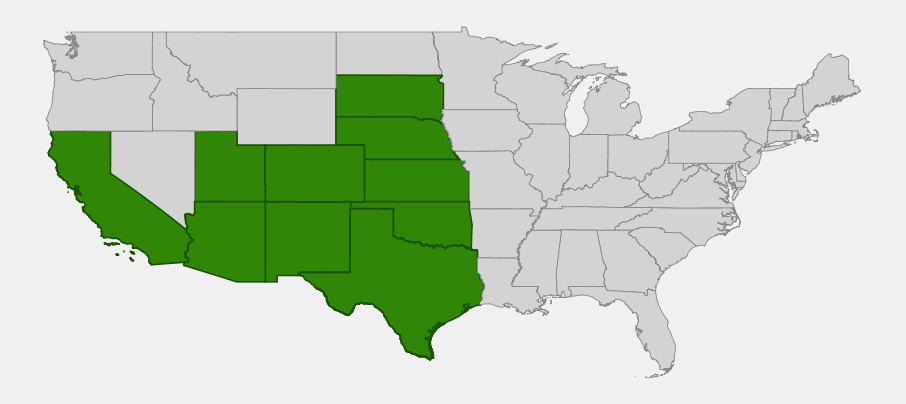
Broadleaf milkweed is native to the southwestern United States, the western Great Plains and northern Mexico. The Lady Bird Johnson Wildflower Center and USDA PLANTS record it from Arizona, California, Colorado, Kansas, Nebraska, New Mexico, Oklahoma, South Dakota, Texas and Utah. Its range extends from southeastern California and southeastern Utah east through Colorado and New Mexico to western Kansas, Nebraska and Oklahoma, and south through Texas into northern Mexico.
It is most common in New Mexico, western Texas, southern Colorado and the Colorado Plateau of Utah and Arizona, including Arches and Canyonlands National Parks, where it grows in pinyon-juniper woodland, desert scrub, sandy washes and even the moist rock alcoves known as hanging gardens. On the southern High Plains it grows in shortgrass prairie, sandhills and along roadsides and pasture edges. In California and South Dakota it reaches the edges of its range and is uncommon.
Like many western milkweeds, broadleaf milkweed is favored by disturbance. It is often most visible along road shoulders, where extra runoff and reduced competition from grasses help it grow, and in overgrazed pastures, where livestock avoid it.
📋 Regional plant lists featuring Broadleaf Milkweed: Arizona & New Mexico · Utah & Western Colorado · South & West Texas · Nebraska, Kansas & Eastern Colorado · California & Nevada · North Dakota, South Dakota & Western Minnesota
Growing & Care Guide
Broadleaf milkweed is a durable, low-water plant for sunny gardens in the Southwest and on the western Plains. It is slow to establish from seed but long-lived once its deep root is in place.
Light
Plant in full sun. It grows in open, sunny places in the wild and becomes leggy and sparse in shade.
Soil & Water
It grows in sandy, gravelly, rocky or clay soils, including alkaline and caliche-influenced soils, as long as water does not stand around the crown. Water young plants during their first summer. After that, it needs little or no supplemental water in most of its range. Occasional deep watering in long droughts will keep it looking fresh but is not essential.
Planting Tips
Plant small container-grown plants in spring or early in the summer monsoon season, about 18 inches to 2 feet apart. Like other deep-rooted milkweeds, it resents having its roots disturbed, so choose its permanent spot carefully. It suits xeric borders, roadside and parking-strip plantings, wildlife gardens and the edges of native grass plantings.
Pruning & Maintenance
Cut the old stems back to the ground in late winter or early spring. Otherwise little care is needed. Wear gloves when handling the plant, as the milky sap can irritate skin and eyes. Oleander aphids sometimes colonize the stems; they rarely do lasting harm and attract beneficial predators.
Propagation
Grow broadleaf milkweed from seed. Collect pods as they begin to split and separate the seeds from the silky fluff. About 30 days of cold, moist stratification improves germination. Sow in deep containers to accommodate the developing taproot, and transplant seedlings while they are still small.
Landscape Uses
- Xeriscapes: a sculptural, low-water perennial for sunny, dry gardens
- Monarch waystations: a western milkweed host plant for monarch and queen caterpillars
- Roadside and disturbed-site revegetation: tolerates poor, disturbed soils and roadside conditions
- Prairie and grassland restoration: within its native range on the High Plains and in the Southwest
- Wildlife gardens: nectar for bees and other insects through summer
Wildlife & Ecological Value
Broadleaf milkweed is a valuable plant for insects in the dry West. Its flowers feed bees and other pollinators, and its foliage feeds specialized milkweed insects.
For Pollinators
The flowers produce nectar and attract native bees, bumblebees, honey bees, wasps and butterflies. The Xerces Society notes that it has special value to native bees, bumblebees and honey bees, and that it supports beneficial insects used in conservation biological control. The pollen is packed into paired sacs (pollinia) that clip onto the legs of visiting insects.
Monarch and queen butterflies lay eggs on broadleaf milkweed, and the caterpillars feed on its leaves. The plant also supports milkweed specialists such as large milkweed bugs, red milkweed beetles and milkweed tussock moth caterpillars.
For Birds
Birds do not eat the plant, but they forage on the many insects it supports, and some songbirds use the silky seed fluff for nest lining.
For Mammals
Broadleaf milkweed contains toxic cardiac glycosides and is poisonous to some livestock. It is generally avoided by deer and other grazing animals, which is one reason it persists and spreads in heavily grazed pastures.
Ecosystem Role
As a deep-rooted perennial of grasslands and disturbed ground, broadleaf milkweed helps stabilize soil and adds flowers to landscapes dominated by grasses and shrubs. Monarch and queen caterpillars store its toxins in their bodies, which makes them distasteful to birds and other predators.
Cultural & Historical Uses
Broadleaf milkweed was first described by John Torrey in the 1820s, from material gathered on early expeditions to the Rocky Mountain region, and later moved into Asclepias by Constantine Rafinesque. The species name latifolia simply means “broad-leaved,” describing its most noticeable feature.
Milkweeds in general were widely used by Native American peoples of the West for fiber, food and medicine, with the young shoots, buds and pods of some species cooked as food and the stem fibers used for cordage. Records specific to broadleaf milkweed are few, and like all milkweeds it is toxic when eaten raw or in quantity.
Today broadleaf milkweed is recognized as an important native milkweed for monarch conservation in the Southwest and southern Great Plains, where fewer milkweed species are adapted to the arid climate. Native seed companies and regional nurseries have begun to offer it for pollinator gardens and restoration plantings.
Frequently Asked Questions
Is broadleaf milkweed good for monarchs?
Yes. Monarch and queen butterflies use it as a host plant, and its flowers provide nectar for adults. It is one of the native milkweeds recommended for the arid Southwest.
How do I recognize broadleaf milkweed?
Look for stout, upright stems 1 to 3 feet tall with pairs of large, thick, nearly round, gray-green leaves that clasp the stem and have prominent pale veins, plus compact clusters of pale green flowers in the upper leaf axils.
Is broadleaf milkweed poisonous?
Yes. Like all milkweeds, it contains cardiac glycosides and is poisonous to some livestock. Do not eat it, keep pets from chewing on it, and wear gloves when handling it because the sap can irritate skin and eyes.
Does broadleaf milkweed spread aggressively?
It is not known as an aggressive spreader. Garden plants generally form clumps from a deep root and self-sow modestly, unlike strongly running species such as common milkweed or horsetail milkweed.
When does broadleaf milkweed bloom?
Typically from late spring through summer, roughly May to September, with peak bloom in early summer and additional flowering after summer rains.

Looking for a nursery that carries Broadleaf Milkweed?
Browse our native plant nursery directory: Arizona · California · Colorado · Kansas · Nebraska, New Mexico & Oklahoma · South Dakota, Texas & Utah