
Grassleaf Barbara’s Buttons (Marshallia graminifolia)
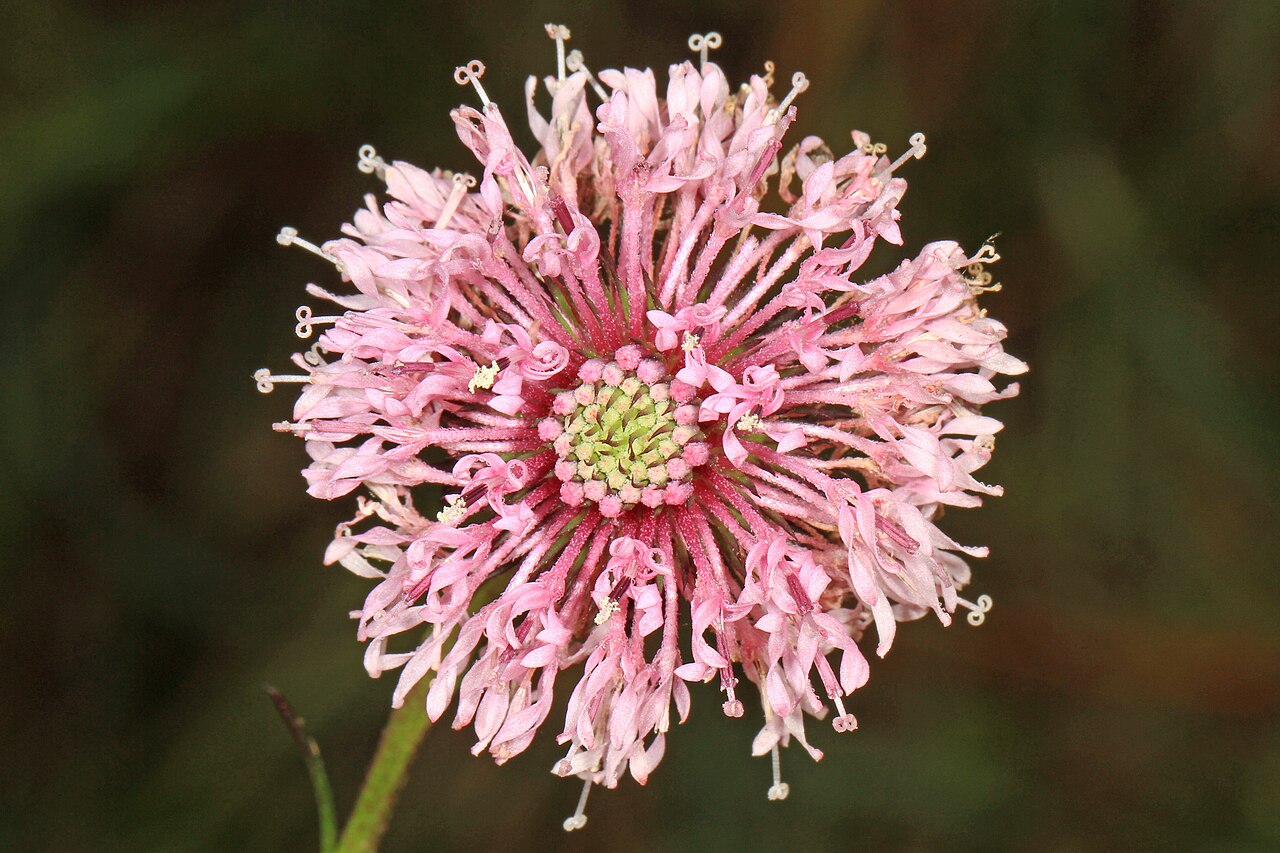
Marshallia graminifolia, known as Grassleaf Barbara’s Buttons, is a late-summer wildflower of the wet pine savannas and flatwoods of the southeastern Coastal Plain. From a low tuft of narrow, grass-like leaves it sends up slender, nearly leafless stems 1½ to 3 feet tall, each topped with a round, pincushion-like head of pale pink to lavender flowers about an inch across. The flowers are lightly fragrant, and in a good year after a spring burn they dot the savanna by the hundreds.
It belongs to the aster family (Asteraceae), but it has no ray flowers. Each head is made entirely of small tubular disk florets whose five long, narrow lobes curl outward, giving the head a soft, frilly look that is very different from the daisies and sunflowers it is related to. The genus honors the 18th-century Pennsylvania botanist Humphry Marshall and his nephew Moses Marshall. Nobody knows for sure who Barbara was.
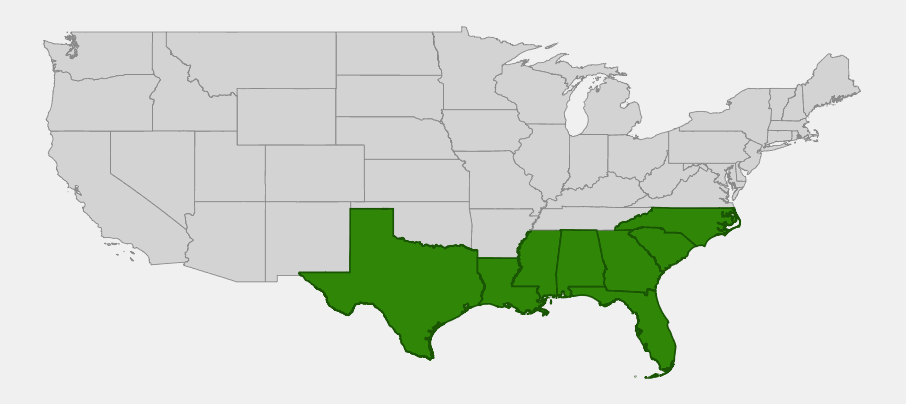
Grassleaf Barbara’s buttons ranges from southeastern North Carolina south into the Florida peninsula and west along the Gulf Coast to eastern Texas. Like many savanna wildflowers it depends on frequent fire to keep its habitat open, and it has declined as longleaf pine savannas have been drained, planted in dense pine, or left unburned. For gardeners it is a delightful choice for a sunny, damp bed, a rain garden or a native meadow.
Identification
Out of flower, Barbara’s buttons looks like a clump of grass. In bloom its long-stemmed pink pincushions are distinctive, though several related Marshallia species grow in the Southeast.
Leaves & Stems
Most of the leaves are in a basal tuft. They are narrow and grass-like, typically 4 to 10 inches long and less than half an inch wide, fairly stiff, and smooth. The leaves stay green through much of the year in mild climates. The flowering stems rise from the tuft and carry only a few small, narrow leaves that shrink in size up the stem. Each stem usually ends in a single flower head, though vigorous plants branch near the top and carry several.
Flowers
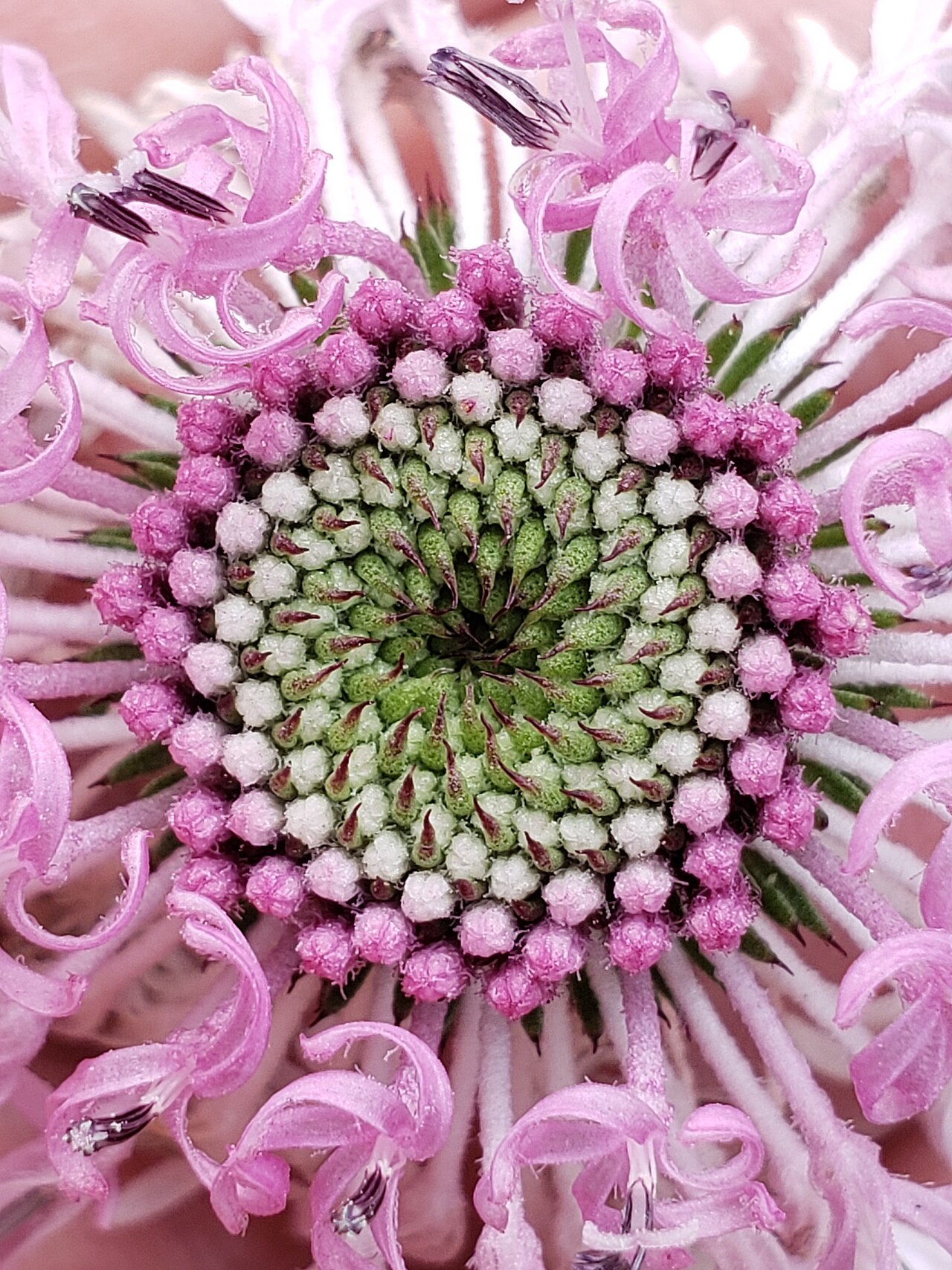
The flower heads are about 1 inch across, round to slightly flattened, and made only of disk florets. Each floret is a slender tube that splits into five long, narrow lobes, pale pink to lavender or nearly white, which curl back as they open. Dark purplish anthers and long, branched styles stick out from the florets. Florets open from the outer edge of the head inward, so for several days a head shows a ring of open, frilly florets around a center of round buds. Narrow green bracts sit beneath the head, and narrow chaffy scales between the florets.
The main bloom comes from midsummer into early fall, mostly July through September, with stragglers later in the season and sometimes a flush after fire.
Fruit & Seeds
The dry seeds (achenes) are small, ribbed and topped with a crown of short, papery scales rather than a fluffy parachute, so they mostly fall near the parent plant.
Similar Species
Several other Marshallia species grow in the Southeast. Most bloom in spring and early summer and have broader, more spoon-shaped leaves; grassleaf Barbara’s buttons is the narrow-leaved, late-summer species of wet Coastal Plain savannas. Some recent floras separate the more western Gulf Coast plants, with very narrow leaves, as Marshallia tenuifolia, while USDA PLANTS includes them in M. graminifolia. Blazing stars (Liatris) share the same savannas and bloom at the same time, but their small heads are stacked in tall spikes rather than held singly.
Quick Facts
| Scientific Name | Marshallia graminifolia |
| Family | Asteraceae (aster family) |
| Plant Type | Herbaceous perennial wildflower |
| Mature Height | 1½–3 ft in flower |
| Mature Spread | 6–12 in |
| Growth Rate | Moderate |
| Sun Exposure | Full sun to part shade |
| Water Needs | Moderate to high; moist to wet soil |
| Soil Type | Acidic sand or sandy peat |
| Soil pH | Acidic, about 4.5–6.0 |
| Bloom Time | July–September |
| Flower Color | Pale pink to lavender, occasionally white |
| Fall Color | None of note; leaves partly evergreen |
| Fruit | Small ribbed achene with a crown of papery scales |
| Deer Resistant | Moderately; occasionally browsed |
| USDA Hardiness Zones | 7–10 |
Native Range
USDA PLANTS records grassleaf Barbara’s buttons from eight southeastern states: North Carolina, South Carolina, Georgia, Florida, Alabama, Mississippi, Louisiana and Texas. It is almost entirely a plant of the Coastal Plain, from the Carolina savannas around Wilmington and the Green Swamp south through Georgia and into Florida, and west along the Gulf Coast to the pine savannas of southwestern Louisiana and southeastern Texas.
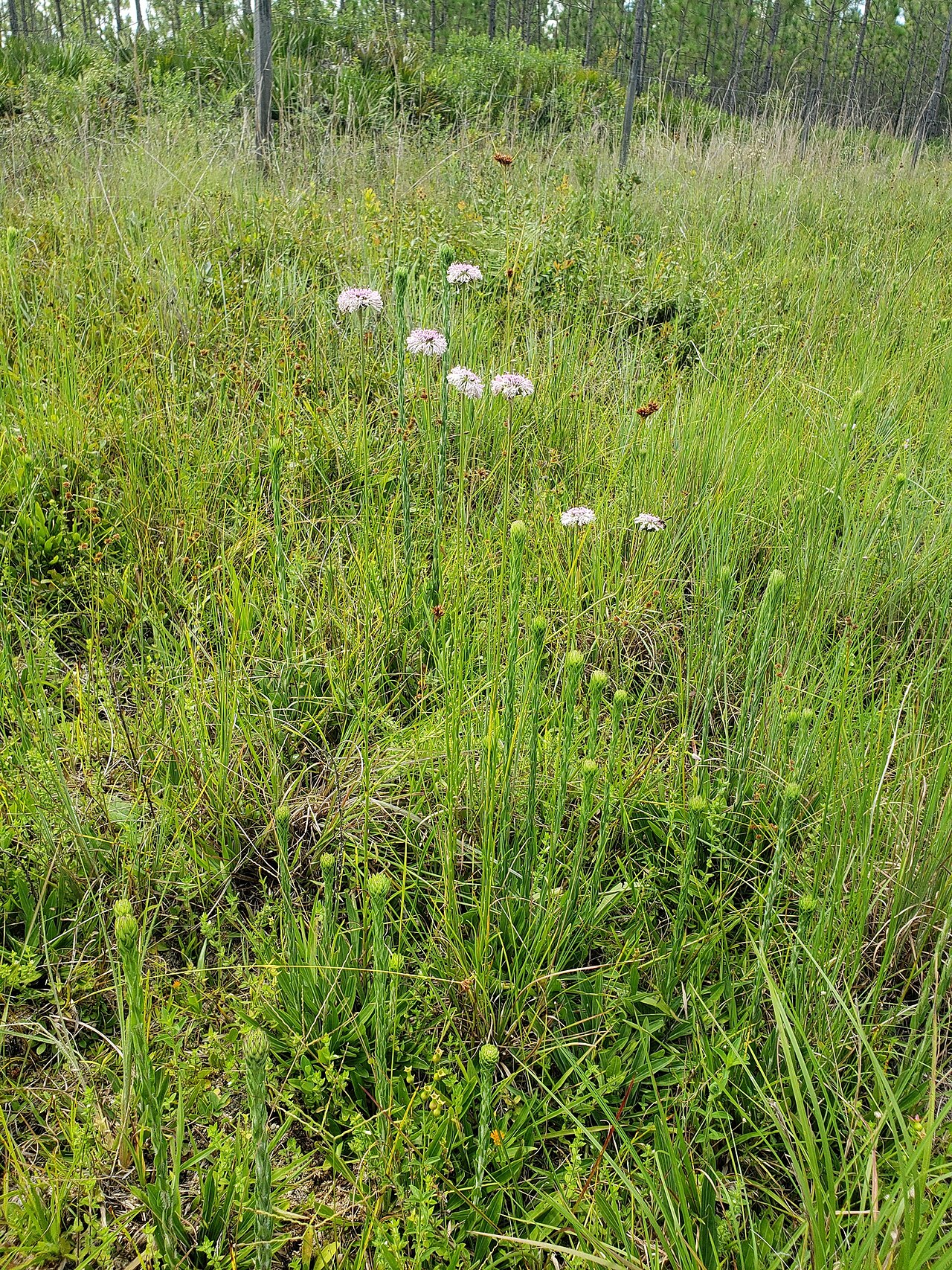
In Florida it grows in the Panhandle and the northern and central peninsula, with scattered records farther south. It favors the wetter parts of longleaf pine flatwoods and savannas, seepage slopes, bog edges and wet roadside ditches that are mowed rather than shaded by brush.
Across its range it is tied to habitats that need frequent, low-intensity fire. Without fire, shrubs such as gallberry and wax myrtle quickly crowd out the grasses and wildflowers. Drainage for pine plantations and development has also removed much of its habitat, so the best places to see it today are in managed preserves, national forests and well-burned private lands.
📋 Regional plant lists featuring Grassleaf Barbara’s Buttons: North & South Florida · Alabama, Georgia & Mississippi · North & South Carolina · Arkansas, Louisiana, Eastern Oklahoma & Eastern Texas
Growing & Care Guide
Grassleaf Barbara’s buttons is not hard to grow if you give it what a pine savanna offers: sun, acidic sandy soil that never dries out completely, and little competition from taller plants. It is offered by some southeastern native plant nurseries, usually as small potted plants. Buy nursery-grown plants rather than digging them from roadsides or natural areas.
Light
Full sun gives the best flowering. It tolerates light shade or a few hours of afternoon shade, but in deep shade the stems flop and the plants slowly fade away.
Soil & Water
Plant it in acidic, sandy or sandy-peaty soil that stays moist, especially in summer when it is growing and flowering. It tolerates short periods of standing water in winter and spring, as in its native flatwoods. Heavy clay, alkaline soil and lime-rich fill are poor choices. Once established in a naturally moist spot it needs little extra watering, but it is not drought tolerant in dry, sandy beds.
Planting Tips
Set plants in spring or early fall at the same depth they grew in the pot, and space them about a foot apart. They look best in groups of five or more, scattered among low grasses such as wiregrass or little bluestem and other savanna wildflowers. A rain garden, the damp edge of a pond, or the low spot in a meadow are all good sites.
Pruning & Maintenance
Leave the stems standing after flowering until the seed has dropped, then cut them back. Keep taller grasses and shrubs from shading the basal leaves. In a meadow setting, a late-winter mow or (where allowed) a controlled burn imitates the fires that keep its habitat open. Avoid fertilizer, which mainly feeds competing grasses.
Propagation
Established clumps can be divided carefully in early spring. Seed can be sown fresh in fall on moist, sandy, acidic mix and left outdoors over winter; germination is often irregular. Collect seed only from your own plants or with permission, and leave most of it for the wild population.
Landscape Uses
- Rain gardens: thrives in the damp, sunny low spot where runoff collects
- Native meadows and savanna gardens: a late-summer bloomer among grasses and other savanna wildflowers
- Butterfly gardens: fragrant nectar flowers in a season when spring bloomers are finished
- Bog garden edges: on the slightly drier margin of a pitcher plant bog
- Longleaf pine restoration: in fire-managed savannas within its native range, using local seed
Wildlife & Ecological Value
In late summer, when many spring flowers are gone, Barbara’s buttons gives savanna pollinators a reliable source of nectar and pollen.
For Pollinators
The fragrant heads attract butterflies, including swallowtails, skippers and sulphurs, along with native bees, beetles and other insects. Because the florets open over several days from the outside of the head inward, each head offers nectar and pollen for a week or more. The Lady Bird Johnson Wildflower Center lists it as a butterfly nectar source.
For Birds
Birds make little use of the small seeds, but the savannas where it grows are home to Bachman’s sparrows, brown-headed nuthatches and, in the best longleaf stands, red-cockaded woodpeckers.
For Mammals
Deer and rabbits occasionally graze the flower stems, especially after a burn, when fresh growth is scarce. The plant is otherwise of limited importance to mammals.
Ecosystem Role
Grassleaf Barbara’s buttons is part of the remarkably diverse ground layer of wet longleaf pine savannas, among the most species-rich plant communities in North America. Its basal leaves survive fire close to the ground, and it often flowers more heavily in the season after a burn, when the canopy of grass is open and sunlight reaches the soil.
Cultural & Historical Uses
The genus Marshallia was named by Johann Christian Schreber in 1791 in honor of Humphry Marshall (1722–1801), a Quaker farmer and botanist from Chester County, Pennsylvania, whose Arbustrum Americanum (1785) was one of the first books on American trees and shrubs written by an American. His nephew, Moses Marshall, collected plants for him across the colonies and is often included in the dedication.
The origin of the name “Barbara’s buttons” is a mystery. One common guess is that it refers to a person named Barbara, another that it echoes the button-like heads, but no source settles the question. The names “grass-leaved Barbara’s buttons” and simply “Barbara’s buttons” both appear in field guides.
There is little record of practical use of the plant by people. Its value today is mostly as a showpiece of healthy savanna habitat, a favorite of wildflower photographers in late summer, and an increasingly popular native for damp, sunny gardens in the Southeast.
Frequently Asked Questions
Why is it called Barbara’s buttons?
No one knows for certain. The genus Marshallia honors the Pennsylvania botanist Humphry Marshall, but the common name “Barbara’s buttons” has no documented origin. The “buttons” part clearly refers to the round flower heads.
When does grassleaf Barbara’s buttons bloom?
Mostly from July through September. It is one of the late-season Barbara’s buttons; most other Marshallia species bloom in spring.
Does it need wet soil?
It needs soil that stays moist, especially in summer, and it handles short periods of flooding. It does not do well in dry, sandy beds or in heavy, alkaline clay.
Is it good for pollinators?
Yes. The fragrant pink heads attract butterflies, native bees and other insects, and they bloom in late summer when nectar can be scarce in savannas.
Can I grow it outside the Southeast?
It is native to the warm Coastal Plain and is generally hardy only to about zone 7. In colder areas, related species such as Marshallia grandiflora or M. obovata may be better choices where they are native.

Looking for a nursery that carries Grassleaf Barbara’s Buttons?
Browse our native plant nursery directory: Alabama · Florida & Georgia · Louisiana & Mississippi · North Carolina · South Carolina & Texas