
Woolly Pyramidbush (Melochia tomentosa)
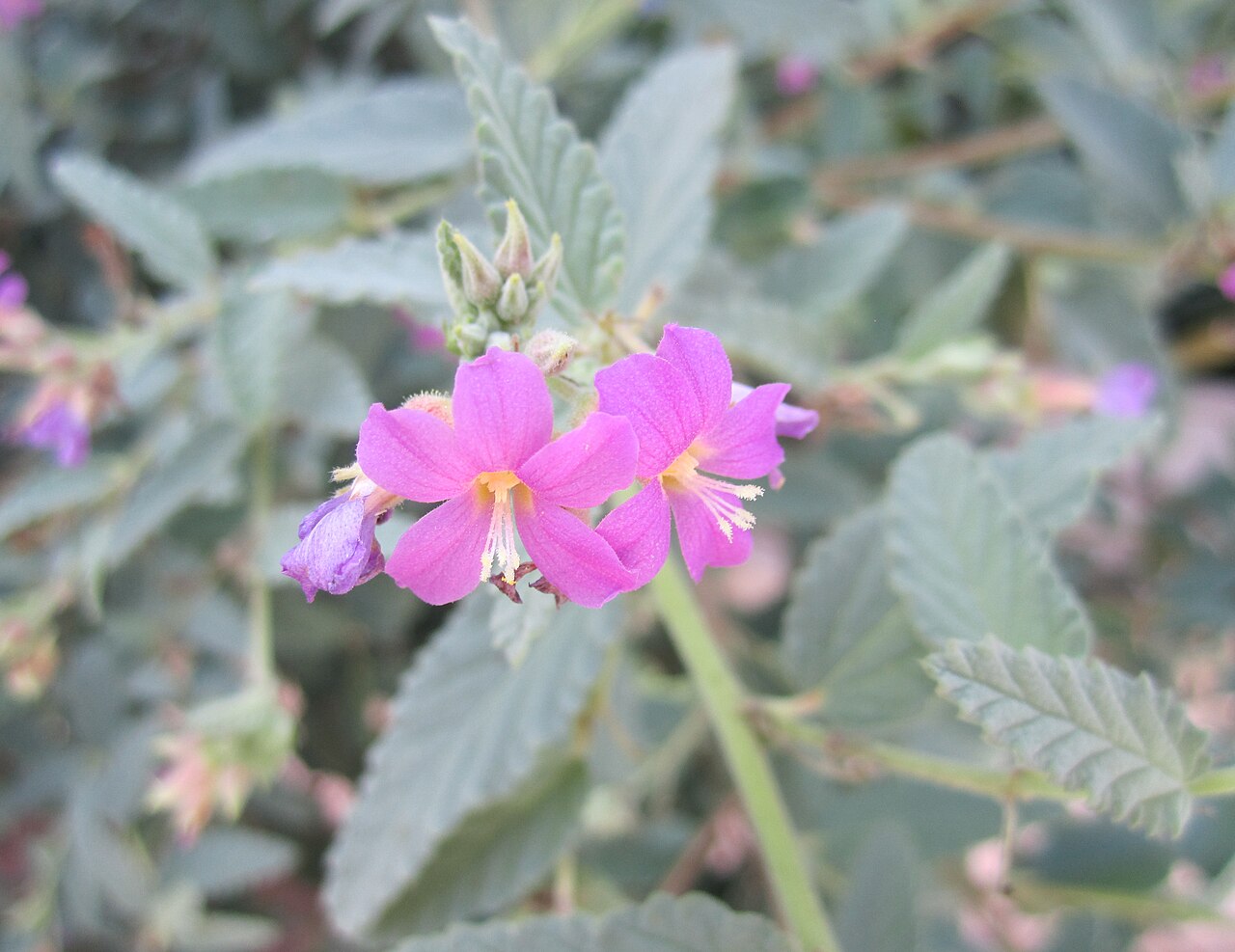
Melochia tomentosa, known as Woolly Pyramidbush (also teabush and broomwood), is a small, airy shrub of hot, dry, sunny places in the American tropics and subtropics. Its soft, gray-green leaves are covered with dense, velvety hairs, and for much of the year its arching branches carry clusters of bright pink to magenta-purple, five-petaled flowers. It belongs to the mallow family (Malvaceae); older references place Melochia in the cacao family, Sterculiaceae, which botanists have since merged into the mallows.
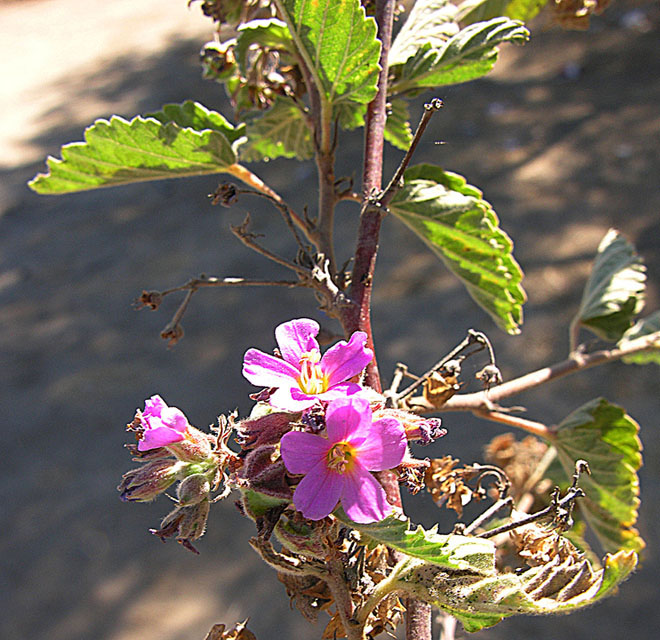
The common name comes from the fruit. After flowering, each blossom forms a dry capsule shaped like a small, five-sided pyramid with a pointed tip. These capsules often stay on the plant while new flowers open, so the shrub shows flowers and fruit at the same time. The plant is a dependable nectar source for butterflies and bees and blooms over a long season, nearly all year in frost-free south Florida.
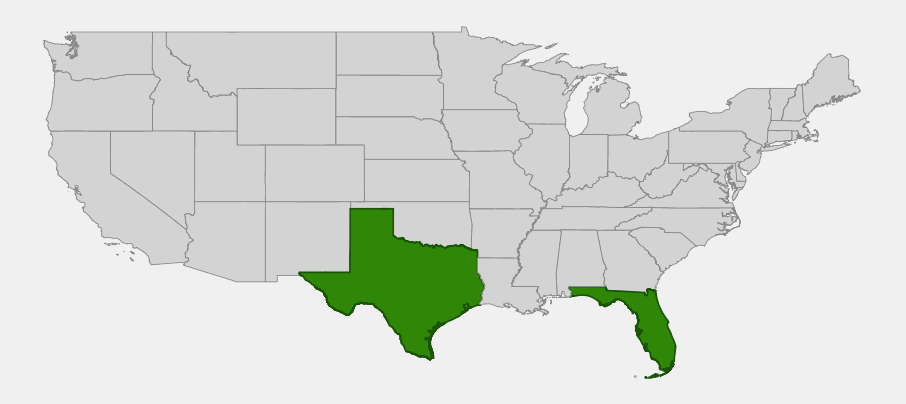
In the United States woolly pyramidbush is native to southern Florida and South Texas, and USDA PLANTS also lists it as native in Puerto Rico and the U.S. Virgin Islands. Its wider range runs through Mexico, the West Indies and Central America south to Brazil. It is a fast-growing, drought-tolerant shrub for sunny, well-drained gardens in the warmest parts of the country.
Identification
Woolly pyramidbush is easy to recognize when it is in flower or fruit. The soft, felted gray-green leaves, the bright pink flowers with a yellow-green center, and the distinctive pyramid-shaped capsules set it apart from other small shrubs in its habitats.
Stems & Habit
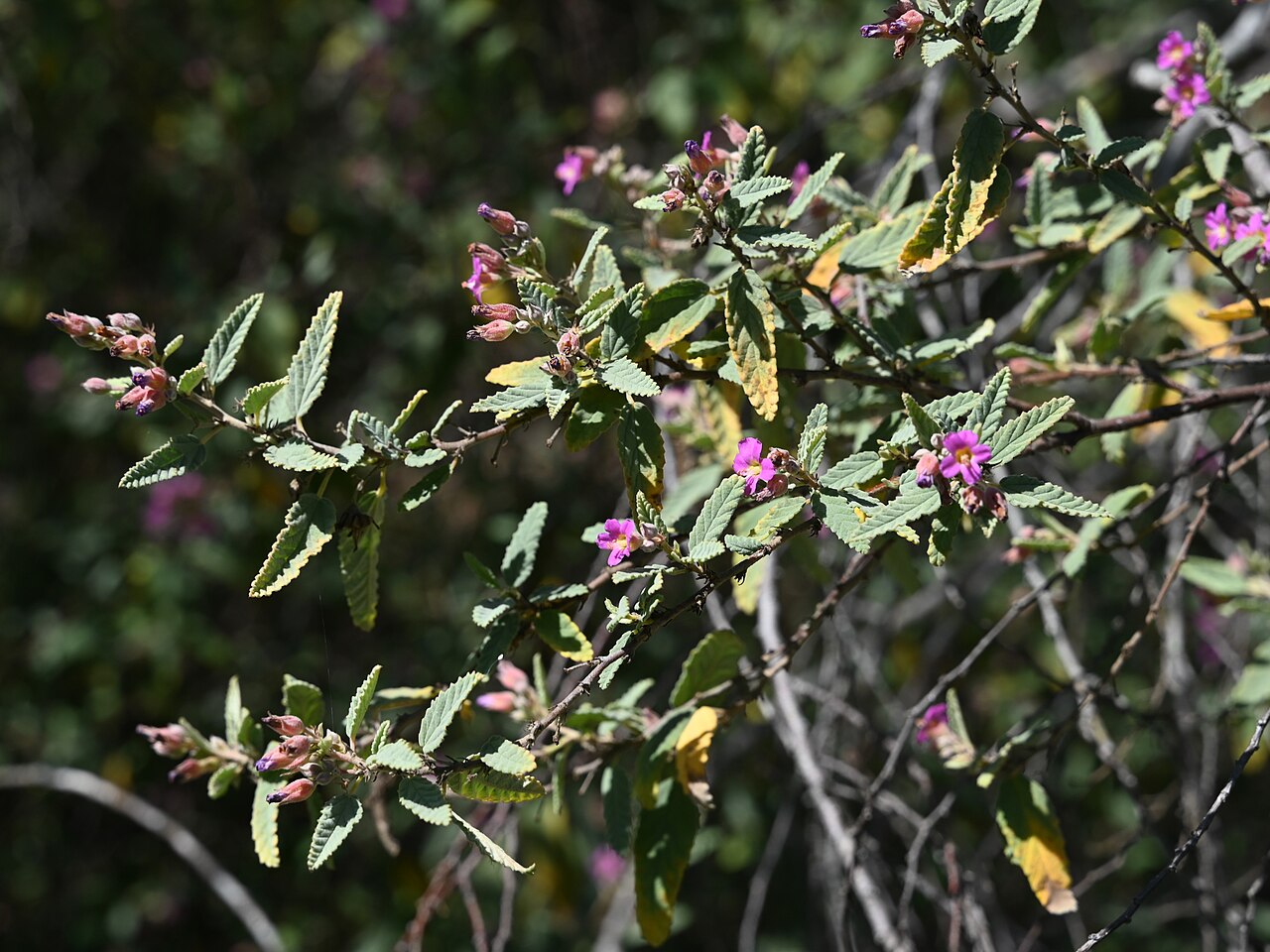
It is an upright to sprawling shrub or subshrub, usually 3 to 6 feet tall and occasionally up to about 8 feet, with slender, arching branches that give it an open, loose shape. Young stems are densely covered in star-shaped (stellate) hairs, which make them feel felty and look grayish. Older stems become woody and brownish. The plant has a taproot.
Leaves
The leaves are alternate, simple, oval to oblong, about 1 to 2½ inches long, with toothed (crenate) edges and prominent, deeply impressed veins that give the surface a pleated, quilted look. Both sides are covered with soft, star-shaped hairs, densest underneath, so the foliage looks gray-green to silvery and feels like flannel. This woolly covering is the source of the species name tomentosa.
Flowers
The flowers are borne in small clusters (cymes) near the branch tips and in the leaf axils. Each flower has five spreading, slightly overlapping petals, pink to rosy magenta or lavender-purple, about ¾ inch across, with a pale yellow to greenish eye at the center. The five stamens are joined into a short tube around the style. Flowers open over a long season, from spring through fall in Texas and through most of the year in south Florida.
Fruit & Seeds
The fruit is a dry, hairy capsule, about ⅓ to ½ inch long, strongly five-angled and tapering to a beak, like a small pyramid. When ripe it splits into five sections, each holding one or two small, dark seeds. The persistent brown capsules are a useful identification feature even when the plant is not in bloom.
Quick Facts
| Scientific Name | Melochia tomentosa (USDA symbol METO4) |
| Family | Malvaceae (mallow family); formerly Sterculiaceae |
| Plant Type | Evergreen to semi-evergreen shrub or subshrub |
| Mature Height | 3–6 ft (occasionally to about 8 ft) |
| Mature Spread | 3–5 ft |
| Growth Rate | Fast |
| Sun Exposure | Full sun |
| Water Needs | Low; tolerates dry to moderately moist, well-drained soil |
| Soil Type | Sand, limestone rock, sandy or rocky loam |
| Soil pH | Neutral to alkaline (about 6.5–8.5) |
| Bloom Time | April–October in Texas; nearly year-round in south Florida |
| Flower Color | Pink to rosy magenta or lavender-purple |
| Fall Color | None; gray-green foliage |
| Fruit | Dry, five-angled, pyramid-shaped capsule |
| Deer Resistant | Moderate; the woolly foliage is not a preferred browse |
| USDA Hardiness Zones | 9b–11 |
Native Range
Woolly pyramidbush is a tropical and subtropical species. USDA PLANTS lists it as native in the lower 48 states (Florida and Texas), Puerto Rico and the U.S. Virgin Islands. Outside the United States it grows through much of Mexico, the Bahamas and the Greater and Lesser Antilles, Central America, and northern South America south to Brazil.
In Florida it is a plant of the southern peninsula and the Florida Keys, where it grows in pine rocklands, coastal thickets and the sunny edges of hammocks, on sand or limestone, as well as on disturbed ground. In Texas it occurs in the southern part of the state, in the brush country of the Rio Grande Plains and along the lower Gulf Coast, where the Lady Bird Johnson Wildflower Center describes its habitat as dry, open places on rocky limestone hills, coastal thorn thickets, savannas, pinelands and roadsides, usually below about 1,600 feet.
Because it tolerates heat, drought and poor soil, and is commonly grown in butterfly gardens, woolly pyramidbush is also seen in landscapes outside its natural range in central Florida and elsewhere in Texas, where cold winters may kill it back to the ground.
📋 Regional plant lists featuring Woolly Pyramidbush: North & South Florida · South & West Texas
Growing & Care Guide
Woolly pyramidbush is one of the easiest native shrubs for hot, sunny, dry gardens in south Florida and South Texas. It grows quickly, flowers young and over a long season, and needs little water once established. Its main limitation is cold: it is reliably hardy only in the warmest zones.
Light
Full sun gives the best flowering and the most compact shape. In partial shade the plant becomes leggy and flowers less.
Soil & Water
Plant it in well-drained sand, rocky limestone soil or sandy loam. It tolerates alkaline soils well and does not need fertilizer. Water regularly for the first couple of months after planting; after that it is very drought tolerant and usually needs extra water only in long dry spells. Avoid poorly drained spots, where roots can rot.
Planting Tips
Plant container-grown shrubs any time in frost-free areas, ideally at the start of the rainy season in Florida. Space plants about 3 to 4 feet apart for a loose informal hedge or mixed planting. Its open, airy habit works well among other native shrubs and wildflowers or at the back of a butterfly border. In places with occasional frost, give it a warm spot near a south-facing wall.
Pruning & Maintenance
Woolly pyramidbush tends to become leggy and sprawling with age. Prune it back by about a third in late winter or early spring to keep it bushy, and remove dead or weak stems. Plants killed back by frost often resprout from the base. It is a relatively short-lived shrub, so allow a few volunteer seedlings to replace older plants.
Propagation
It grows readily from seed sown in warm weather; seedlings often appear on their own near established plants. Softwood or semi-hardwood cuttings taken in spring or summer also root fairly easily.
Landscape Uses
- Butterfly gardens: long-blooming nectar shrub for sunny, dry sites
- Pine rockland and coastal landscapes: in south Florida native plantings on limestone or sand
- Xeriscapes: for South Texas and south Florida gardens with little irrigation
- Informal hedges and borders: loose, airy screening mixed with other native shrubs
- Restoration: for revegetating open, disturbed ground within its native range
Wildlife & Ecological Value
Woolly pyramidbush is valued in native gardens mostly for its long flowering season, which provides nectar for insects in months when other flowers may be scarce.
For Pollinators
The flowers are visited by a wide range of butterflies, including skippers, sulphurs, hairstreaks and swallowtails, as well as by native bees and other insects. The Lady Bird Johnson Wildflower Center lists it as a nectar source that attracts butterflies.
For Birds
The small, dry seeds are of minor value to birds, but the shrub provides perching and cover for small songbirds, and the insects it attracts are food for insect-eating birds.
For Mammals
The densely hairy foliage is not a favorite of deer, though browsing can occur. It is of limited importance to mammals.
Ecosystem Role
Woolly pyramidbush is a pioneer shrub that quickly colonizes open, sunny ground after disturbance, fire or storms. It helps stabilize thin, rocky or sandy soils and adds nectar resources to early-successional habitats in coastal and thornscrub communities.
Cultural & Historical Uses
The species was described by Linnaeus in 1759. The name tomentosa means densely woolly and refers to the felted leaves and stems. Common names such as teabush and broomwood reflect traditional uses: in parts of its range the leaves have been brewed as a tea, and the stiff, slender branches have been bound into brooms.
In Mexico and the Caribbean, Melochia tomentosa and related species have been used in folk medicine. This guide does not recommend any medicinal use; consult reliable sources and a health professional before using any wild plant.
Today it is grown mainly as a native ornamental and butterfly plant in south Florida and South Texas, and it is offered by many native plant nurseries in both states.
Frequently Asked Questions
Why is it called pyramidbush?
After the flowers fade, the plant produces dry, five-sided seed capsules that taper to a point like tiny pyramids. They often stay on the shrub while it continues to bloom.
Is woolly pyramidbush cold hardy?
Only in the warmest areas. It is best suited to USDA zones 9b to 11. A light frost can damage it, and a hard freeze can kill it to the ground, although established plants often resprout from the base.
Does woolly pyramidbush attract butterflies?
Yes. Its long-lasting pink flowers attract many kinds of butterflies and native bees, which makes it a popular shrub for butterfly gardens in south Florida and South Texas.
Where is woolly pyramidbush native?
In the United States it is native to southern Florida and South Texas, and also to Puerto Rico and the U.S. Virgin Islands. Its range continues through Mexico, the West Indies and Central America to Brazil.
How do I keep pyramidbush from getting leggy?
Grow it in full sun, avoid fertilizing, and cut it back by about a third in late winter or early spring. Replace old, woody plants with seedlings every few years.
