
Giant Leather Fern (Acrostichum danaeifolium)
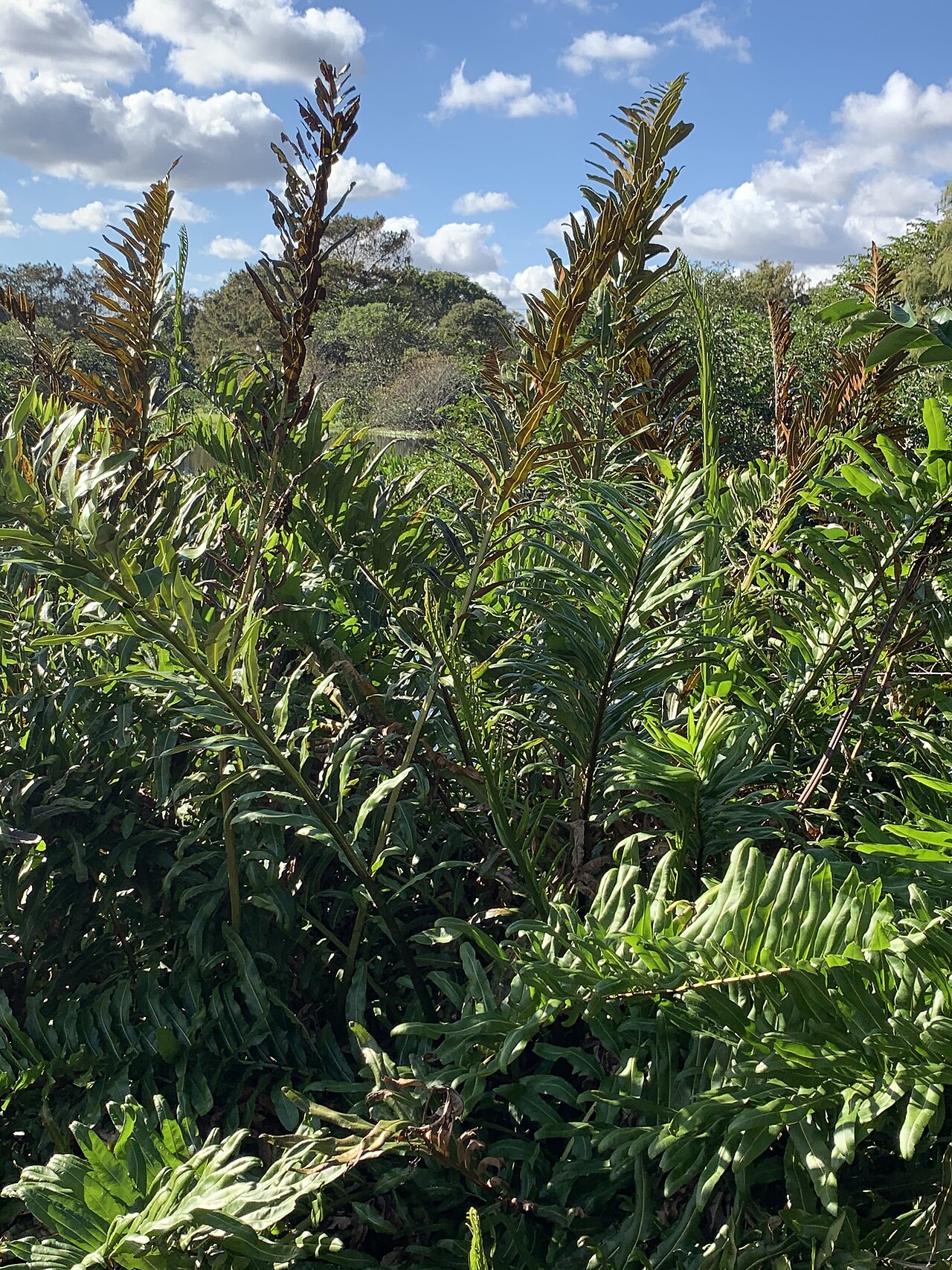
Acrostichum danaeifolium, the Giant Leather Fern, is the largest fern native to the continental United States. Its stiff, upright fronds commonly reach 6 to 9 feet and can top 12 feet in rich, sunny swamps, forming huge fountain-shaped clumps that look more tropical than almost anything else in a Florida wetland. USDA PLANTS lists it as inland leatherfern; Florida gardeners also call it leather fern or giant swamp fern. It belongs to the brake fern family (Pteridaceae).
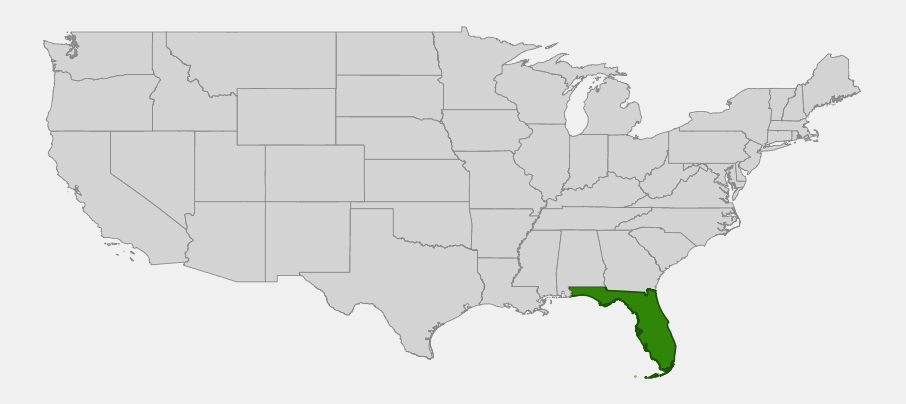
In the United States it grows only in Florida, mostly in the central and southern peninsula, where it lines freshwater and brackish marshes, cypress and hardwood swamps, wet hammocks, canal banks and the landward side of mangrove forests. It is also native to Puerto Rico and the U.S. Virgin Islands, and its full range covers much of tropical America. The thick, leathery fronds shrug off heat, sun, flooding and a fair amount of salt, which makes it one of the most dependable large plants for wet Florida landscapes.
This guide explains how to tell giant leather fern from its smaller relative, the golden leather fern, where it grows, and how to use it in rain gardens, pond edges and retention areas. It also covers its role in wetland ecology and the history of its unusual name.
Identification
Giant leather fern is hard to mistake for anything except the other Florida leather fern, Acrostichum aureum. The differences lie in frond size, how many leaflets (pinnae) a frond carries, how closely they are spaced, and which of them bear spores.
Growth Habit & Rhizome
Each plant grows from a stout, woody, upright to creeping rhizome covered in brown scales. The fronds rise in a dense crown, and old plants form broad clumps several feet across. Leaf stalks are thick and grooved, and the bases are tough enough to persist for years after the blades die. Plants in sun are stiff and upright; in shade the fronds arch outward and the clump looks more open.
Fronds
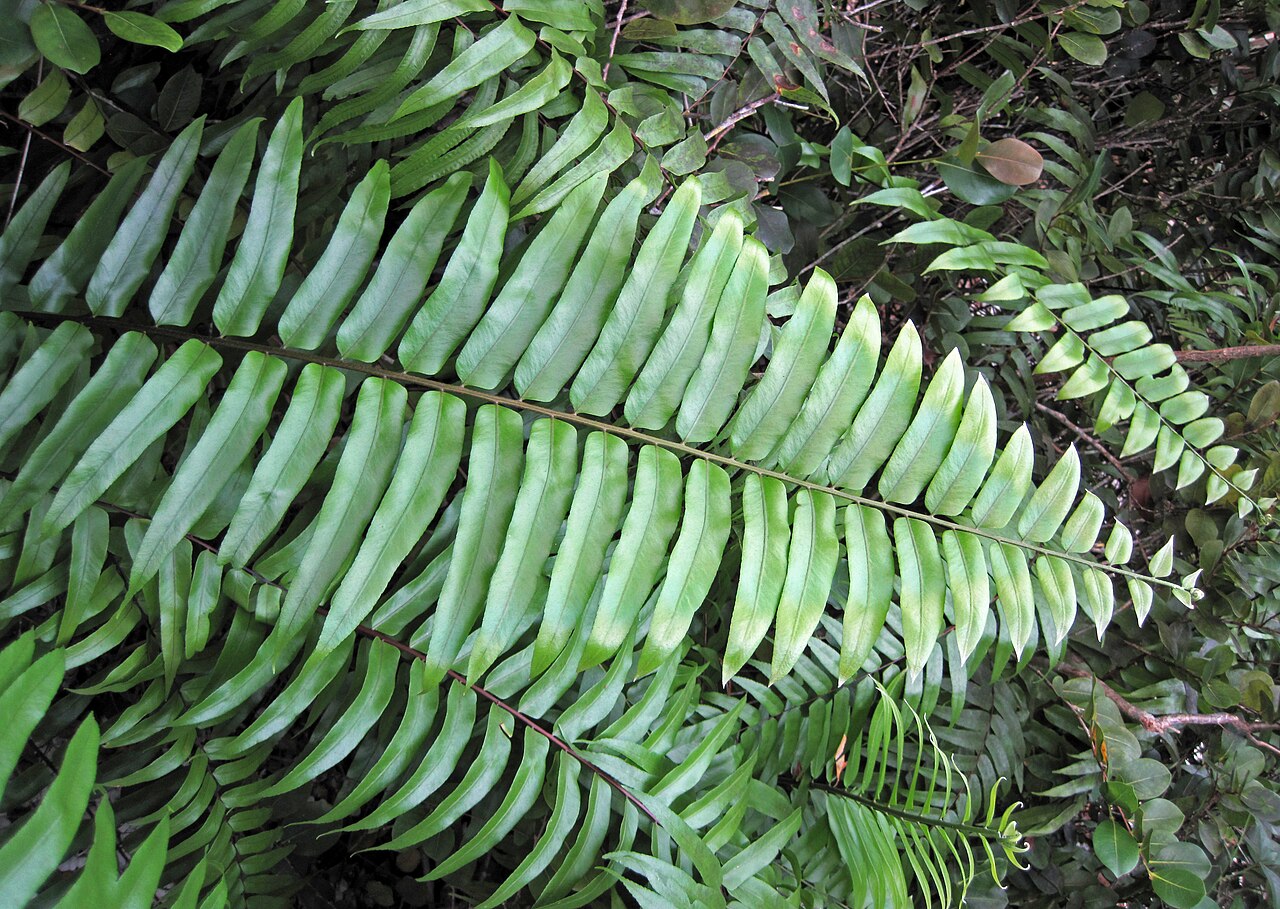
The fronds are once-pinnate: a central stalk carries many paired, strap-shaped pinnae, each about 1 to 2 inches wide and up to a foot long, with smooth edges and a blunt or slightly pointed tip. The texture is thick and leathery, and the surface is glossy green. Held up to the light, each pinna shows a fine net of veins, a feature shared by both leather ferns. On giant leather fern the pinnae are numerous and set close together, often nearly touching or overlapping. Golden leather fern has fewer, more widely spaced pinnae, usually under about 30 pairs.
Spores & Fertile Fronds
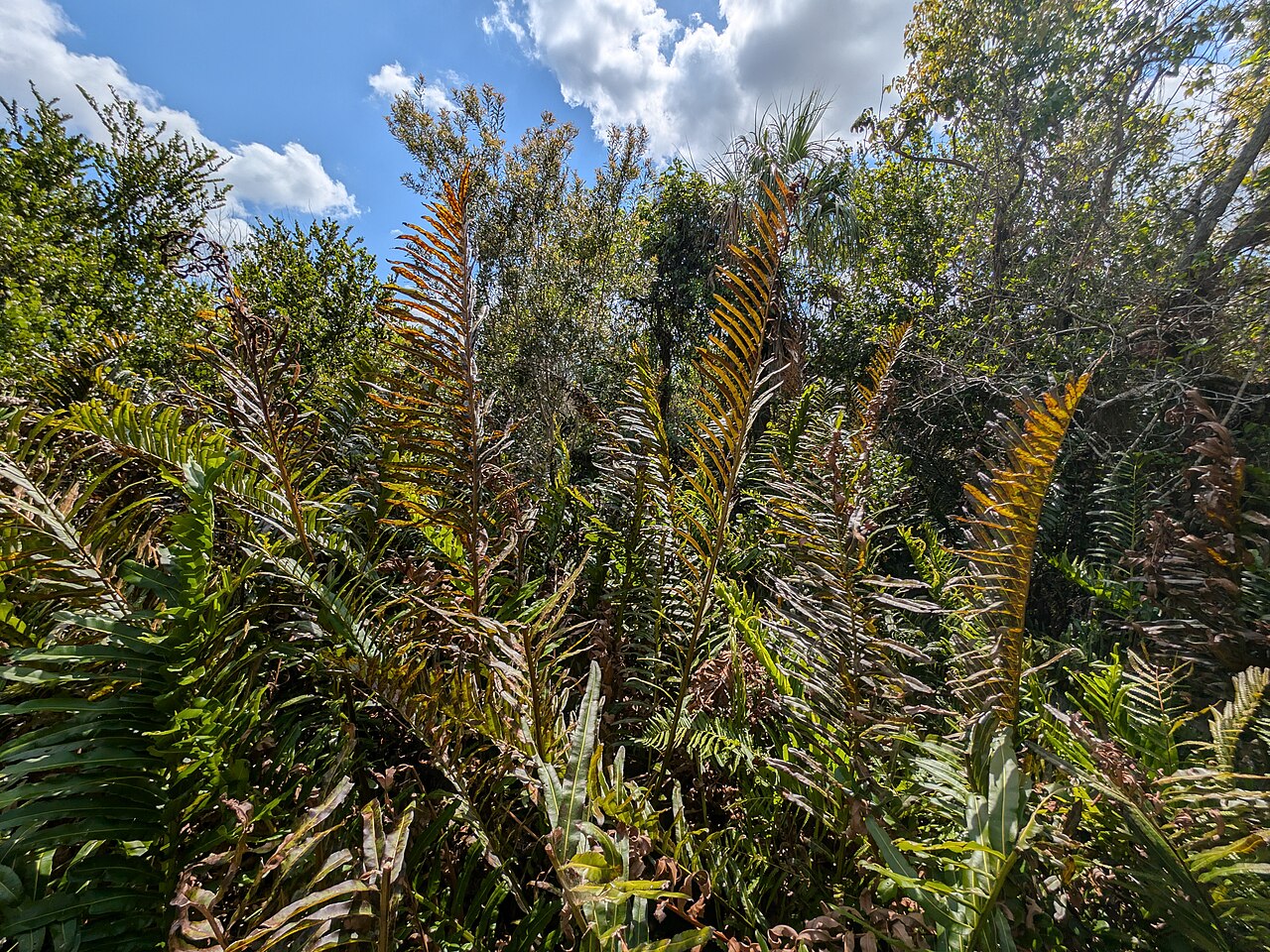
Leather ferns do not have the neat dot-like spore clusters (sori) of most ferns. Instead, the whole underside of a fertile pinna becomes covered with a felt of spore cases that turns rusty brown as it ripens. This is the “acrostichoid” pattern the genus is named for. In giant leather fern, fertile fronds are usually fertile along most of their length, so a mature clump has whole fronds that look cinnamon-colored. In golden leather fern only the uppermost pinnae of a frond are fertile.
Telling the Two Leather Ferns Apart
Habitat helps too. Golden leather fern is a coastal plant of mangroves and salt marsh edges, and it rarely grows far from tidal water. Giant leather fern is mainly a freshwater and slightly brackish species, common far inland in the Everglades, cypress strands and lake shores. Where the two meet, giant leather fern is usually the larger plant with more crowded pinnae and fully fertile fronds.
Quick Facts
| Scientific Name | Acrostichum danaeifolium (USDA symbol ACDA) |
| Family | Pteridaceae (brake fern family) |
| Plant Type | Evergreen fern; very large clump-forming perennial |
| Mature Height | 6–9 ft; to about 12 ft in rich, sunny swamps |
| Mature Spread | 4–8 ft; clumps slowly widen with age |
| Growth Rate | Moderate to fast in wet, sunny sites |
| Sun Exposure | Full sun to part shade |
| Water Needs | High; wet to flooded soil, tolerates standing water |
| Soil Type | Muck, peat, wet sand or marl; tolerates slightly brackish soil |
| Soil pH | About 5.5–8.0 |
| Bloom Time | None (spore-bearing fern); fertile fronds mostly in summer |
| Flower Color | None; fertile pinnae turn rusty brown |
| Fall Color | None; evergreen |
| Fruit | None; spores released from fertile fronds |
| Deer Resistant | Yes; leathery fronds are rarely browsed |
| USDA Hardiness Zones | 9–11 (fronds burn in hard freezes but resprout) |
Native Range
Within the United States, giant leather fern is native only to Florida. USDA PLANTS lists it as native to the lower 48 states (Florida), Puerto Rico and the U.S. Virgin Islands. The Atlas of Florida Plants maps it through most of the central and southern peninsula, with scattered records farther north along both coasts. It is most abundant in the Everglades, Big Cypress and the coastal lowlands of south Florida.
Outside the United States it ranges through the Bahamas and the Caribbean, Mexico and Central America, and into South America. The species was first described from Brazil. Across this huge range it is a plant of fresh to brackish swamps and marshes and the inland edges of mangrove forests, usually in full or broken sun.
In Florida it often marks the boundary between true freshwater wetlands and saltier tidal ones. It thrives in sawgrass marshes, willow heads, cypress domes, wet hammocks, spoil banks and canal edges, and it quickly colonizes ditches and stormwater ponds. It is not listed as endangered or threatened in Florida.
📋 Regional plant lists featuring Giant Leather Fern: North & South Florida
Growing & Care Guide
Giant leather fern is one of the easiest large natives to grow in south and central Florida as long as it gets plenty of water. Nurseries sell it in containers, and it establishes quickly in any wet or regularly irrigated spot. Give it room: a happy plant becomes a clump the size of a small car.
Light
Full sun produces the most compact, upright and fertile plants, provided the roots stay wet. It also grows well in part shade under cypress or pond apple, where the fronds become longer, darker and more arching. Deep shade gives a thin, floppy plant.
Soil & Water
Plant it where the soil stays moist to wet most of the year: pond and lake edges, swales, rain gardens, retention ponds and low spots that flood after storms. It tolerates standing water several inches deep for long periods and moderately brackish water near the coast. In ordinary garden soil it survives with regular irrigation but rarely reaches full size. Muck, peat and sand are all fine; it is not fussy about pH, and it does well on the alkaline marl soils of south Florida.
Planting Tips
Plant container plants in spring or the start of the rainy season so they establish during the wet months. Set the crown at soil level, not buried, and space plants at least 5 to 6 feet apart for a mass planting, or farther if you want each clump to show its fountain shape. Keep newly planted ferns well watered until new fronds appear.
Pruning & Maintenance
Maintenance is limited to cutting off old brown fronds at the base once or twice a year. Wear gloves and long sleeves, because the old stalks are stiff and sharp-edged. After a freeze in central Florida the fronds may brown completely; wait until spring and cut them back when new growth appears. The plant needs no fertilizer in natural wetland soils.
Propagation
The easiest method is division. Use a sharp spade or saw to cut a section of rhizome with several fronds from the side of an established clump, and replant it in wet soil. Plants also spread by spores, which germinate readily on wet, bare muck and sand. This is how it colonizes new ditches and ponds, and how nurseries raise it in quantity.
Landscape Uses
- Pond and lake edges: a bold, tropical-looking accent that stabilizes banks and screens the water line
- Stormwater and retention ponds: tolerates fluctuating water levels and fills in quickly
- Rain gardens and wet swales: thrives where water collects after summer storms
- Screening: large clumps make an evergreen screen 6 feet or more tall
- Wetland restoration: a durable native for freshwater and brackish marsh plantings in Florida
Wildlife & Ecological Value
A big stand of giant leather fern is a structure as much as a plant. Its dense fronds and hollow interior create shade, cover and nesting space in wetlands that otherwise have few tall, evergreen plants.
For Pollinators
As a fern, giant leather fern produces no flowers, nectar or pollen, so it is of no direct value to bees and butterflies. It is still useful in a pollinator planting as evergreen shelter for insects and the predators that eat them.
For Birds
Wading birds, rails, common gallinules and marsh wrens forage around and under leather fern clumps, and songbirds such as common yellowthroats and northern cardinals use them for cover. The fronds and old stalks are used as nest supports and shelter in marshes with little woody cover.
For Mammals
Marsh rabbits, raccoons and river otters use leather fern thickets as resting and hiding places. The leathery fronds are seldom eaten by deer.
Ecosystem Role
Giant leather fern helps hold soil on canal banks and lake shores, traps sediment and organic matter, and adds tall evergreen structure to marshes. It is one of the first large plants to recover after fire, freeze or hurricane damage, resprouting from its protected rhizome. In the transition zone between fresh and salt water, it is a useful indicator of where fresh groundwater still reaches the surface.
Cultural & Historical Uses
German naturalist Georg Heinrich von Langsdorff and botanist Friedrich Ernst Ludwig von Fischer described Acrostichum danaeifolium in 1810 from plants collected in Brazil. The genus name comes from the Greek akros (top or tip) and stichos (row), referring to spores carried at the tips of fronds, as in the golden leather fern. The species name means “with leaves like Danaea“, a genus of tropical ferns with similar once-divided fronds.
Leather ferns are among the few ferns that grow at the meeting point of fresh and salt water, and the genus is found on tropical coasts around the world. Giant leather fern is the American member that has moved furthest inland. In Florida, its towering clumps along canals, levees and the edges of sawgrass marshes are among the most recognizable sights of the Everglades, and visitors often mistake them for young palms or cycads at a distance.
Today its main human use is in landscaping and restoration. The Florida Native Plant Society includes it among recommended natives, and Florida native nurseries grow it for pond margins and wetland plantings because it is long-lived, needs almost no care and tolerates both flooding and drought once established.
Frequently Asked Questions
How big does giant leather fern get?
Most garden plants reach 6 to 9 feet tall and 4 to 8 feet wide. In rich, sunny swamps fronds can exceed 12 feet, which makes it the largest native fern in the continental United States.
What is the difference between giant leather fern and golden leather fern?
Giant leather fern (Acrostichum danaeifolium) is larger, with many closely spaced pinnae, and its fertile fronds bear spores along most of their length. Golden leather fern (A. aureum) has fewer, widely spaced pinnae, only its top pinnae are fertile, and it grows mainly in mangroves and salt marsh edges.
Can I grow giant leather fern in a regular garden bed?
Yes, if you water it regularly, but it will stay smaller than in wet soil. It looks best and needs the least care at the edge of a pond, in a rain garden or in a low area that stays moist.
Is giant leather fern cold hardy?
It is reliable in zones 9 to 11. Frost browns the fronds, and hard freezes can kill them to the ground, but established plants usually resprout from the rhizome in spring.
Does giant leather fern tolerate salt?
It tolerates moderately brackish water and occasional salt spray, so it grows well near the coast and along tidal creeks. For sites flooded regularly by seawater, golden leather fern and mangroves are better choices.

Looking for a nursery that carries Giant Leather Fern?
Browse our native plant nursery directory: Florida