
Feay’s Palafox (Palafoxia feayi)
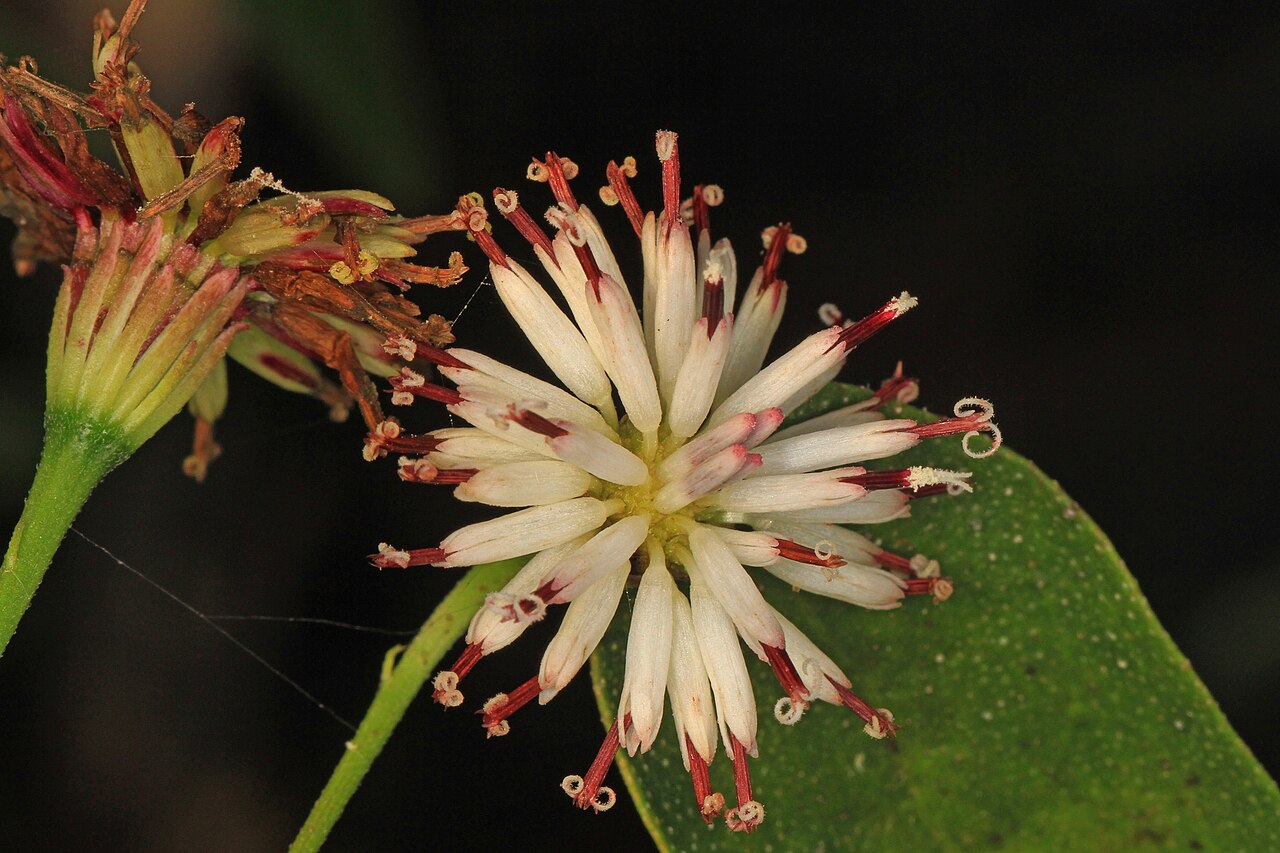
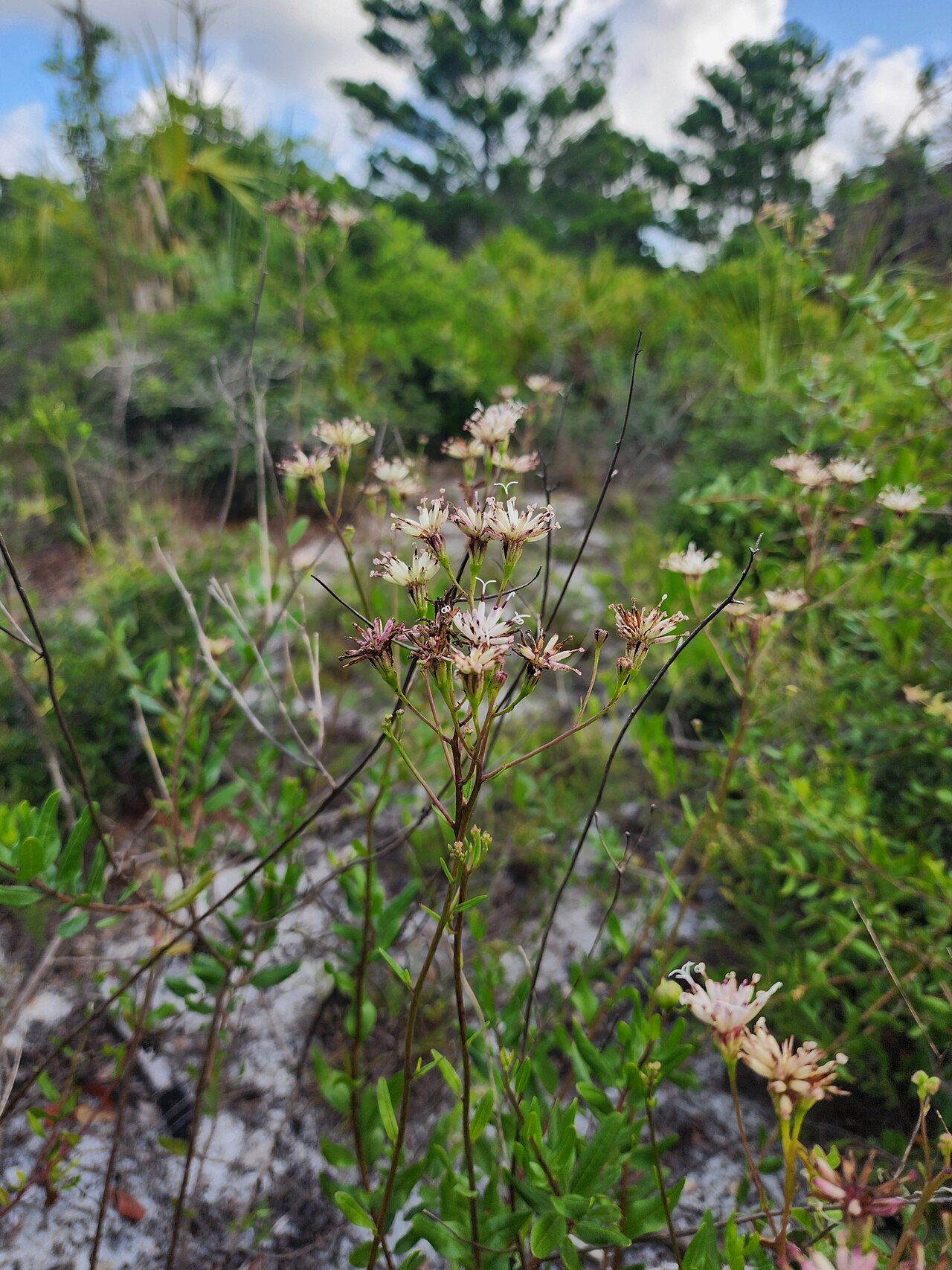
Palafoxia feayi, known as Feay’s Palafox, is a shrubby wildflower of the aster family (Asteraceae) found only in Florida. It grows on the dry, white sands of Florida scrub, sandhills and scrubby flatwoods, where it forms an open, loosely branched plant usually 3 to 6 feet tall, sometimes taller. From spring through late fall, the tips of its branches carry clusters of small flower heads made entirely of tubular florets, creamy white to pale pink with dark maroon or purplish tips and long, curling styles. Butterflies, bees and wasps visit them constantly.
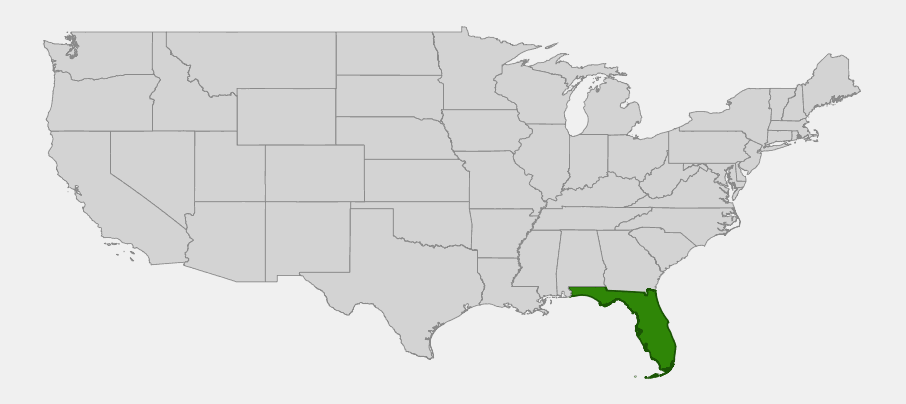
Feay’s palafox is endemic to Florida per the Atlas of Florida Plants: it grows naturally nowhere else in the world. Its range covers the central and southern peninsula, from the central ridges, including the Lake Wales Ridge, to the old coastal dunes of the Atlantic and Gulf coasts. Much of this scrub habitat has been lost to citrus groves and development, so remaining populations are concentrated in parks and preserves.
Unlike many scrub plants, it adapts well to gardens with deep, well-drained sand, and it is grown by a number of Florida native plant nurseries. Gardeners should buy nursery-propagated plants and never dig plants or collect large amounts of seed from the wild. This guide covers how to identify Feay’s palafox, where it grows, how to use it in a dry, sunny garden, and its role in Florida scrub ecology.
Identification
With its woody base, sparse foliage and clusters of rayless, pinkish-white heads, Feay’s palafox looks unlike most other Florida asters. It is the only shrubby Palafoxia in Florida.
Growth Habit & Stems
Feay’s palafox is a short-lived perennial or subshrub with a woody base. It usually grows 3 to 6 feet tall, and the Lady Bird Johnson Wildflower Center notes that it can reach about 10 feet in good conditions, though it is often shorter. It branches into an open, airy crown, and the stems are brittle and covered in short, rough hairs.
Leaves
The leaves are alternate, simple and stalked, elliptic to egg-shaped, about 1 to 3 inches long, with smooth edges. They are slightly thick and rough to the touch from short, stiff hairs, and they are often sparse on older stems, so much of the plant’s bulk is bare branches topped with flowers.
Flowers
Flower heads are borne in loose, flat-topped clusters at the branch tips. Each head is about an inch across and has no ray flowers. Instead it is made up of many tubular disk florets, each opening into five narrow lobes. The florets are creamy white to pale pink, and the dark purplish anthers and long, pink to white style branches stick out above them, giving the heads a spidery, frilly look. Bloom time is mainly April through November, and in south Florida plants can flower year-round.
Fruit & Seeds
The seeds are narrow, four-angled achenes topped with a crown of small scales. They mature a few weeks after flowering and are dispersed mostly by gravity and wind over short distances.
Quick Facts
| Scientific Name | Palafoxia feayi |
| Family | Asteraceae (aster family) |
| Plant Type | Short-lived perennial or subshrub with a woody base |
| Mature Height | 3–6 ft (occasionally taller) |
| Mature Spread | 2–4 ft |
| Growth Rate | Fast |
| Sun Exposure | Full sun |
| Water Needs | Low; very drought tolerant once established |
| Soil Type | Deep, well-drained sand |
| Soil pH | About 4.5–6.5 (acidic sand) |
| Bloom Time | April–November; year-round in south Florida |
| Flower Color | Creamy white to pale pink with maroon tips |
| Fall Color | None; semi-evergreen |
| Fruit | Narrow four-angled achene with small scales |
| Deer Resistant | Moderately |
| USDA Hardiness Zones | 9–11 |
Native Range
Feay’s palafox is endemic to Florida; USDA PLANTS and the Lady Bird Johnson Wildflower Center record it from Florida only. It grows in the central and southern peninsula, from the central ridges south to the Lake Wales Ridge in Polk and Highlands counties, east to the Atlantic coastal ridge of Martin, Palm Beach and Broward counties, and west to old dune and scrub remnants near Tampa Bay.
Its home is Florida’s dry, sandy upland communities: sand pine and oak scrub, scrubby flatwoods, sandhills and coastal scrub on ancient dunes. These are fire-maintained habitats, and Feay’s palafox tends to be most abundant in open sand a few years after a fire, when sunlight reaches the ground.
Large areas of Florida scrub, especially on the Lake Wales Ridge and the Atlantic coastal ridge, have been converted to citrus, housing and roads. Feay’s palafox is not state-listed and is still locally common in protected scrub, but its range is small and entirely within one state, so protecting the remaining scrub is important for its future.
📋 Regional plant lists featuring Feay’s Palafox: North & South Florida
Growing & Care Guide
Feay’s palafox is one of the most useful flowering plants for a dry, sunny Florida garden on sand. It grows quickly, blooms for months, and needs no irrigation once established. Because it is endemic to Florida, buy nursery-propagated plants from native plant nurseries and never dig plants from the wild; collect seed only from garden plants or with permission.
Light
Give it full sun. In shade it becomes sparse and leggy and flowers poorly. It is a plant of open sand, so avoid planting it where taller shrubs will crowd it.
Soil & Water
Plant it in deep, well-drained sand. It thrives in poor, acidic scrub sand and also grows in sandy fill and coastal sand. It will not tolerate wet or heavy soil, and plants in rich, irrigated beds tend to grow floppy and short-lived. Water regularly for the first few weeks after planting, then let rainfall take over. It is very drought tolerant once rooted.
Planting Tips
Plant in spring or early in the rainy season. Space plants about 2 to 3 feet apart and mix them with other scrub and sandhill wildflowers and low shrubs. Because individual plants are short-lived, plant a group and let them reseed so the planting stays full over the years. As a Florida endemic, it should come from nursery-propagated stock, not from wild plants.
Pruning & Maintenance
Cut plants back by about a third in late winter if they become leggy, which encourages a fuller shape and heavier flowering. Remove dead stems as older plants decline. No fertilizer is needed. Leave a few seedlings each year to replace aging plants.
Propagation
Feay’s palafox grows readily from seed sown on the surface of a sandy mix in spring or summer; germination is usually quick in warm weather. It also self-sows in open sandy gardens. Stem cuttings can be rooted in a well-drained mix but are less reliable than seed.
Landscape Uses
- Butterfly and pollinator gardens: a long-blooming nectar source in dry, sunny beds
- Scrub and sandhill gardens: with Florida rosemary, gopher apple and other dry-sand natives
- Xeriscape and coastal sand gardens: needs no irrigation once established
- Scrub restoration: on the Florida ridges and coastal dunes within its range, using local seed
- Naturalized areas: reseeds into open sand to form loose drifts
Wildlife & Ecological Value
In Florida scrub, where flowers can be scarce in summer and fall, Feay’s palafox is one of the most heavily visited nectar plants.
For Pollinators
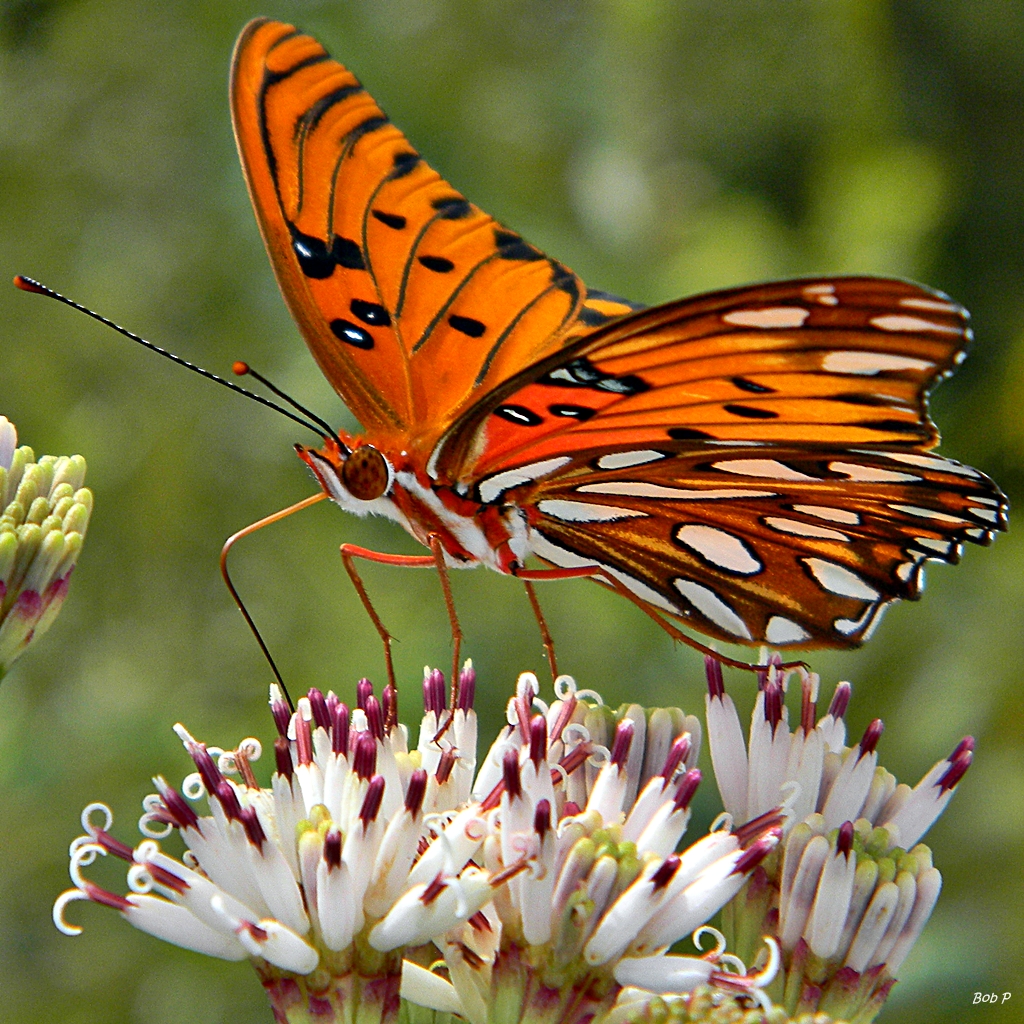
Its long flowering season makes it a magnet for butterflies, including gulf fritillaries, skippers, hairstreaks, sulphurs and swallowtails. Native bees, wasps and beetles also visit the flowers for nectar and pollen. Florida pollinator gardeners often rank it among the best native plants for dry, sandy sites.
For Birds
Finches and sparrows may eat the small seeds, and insect-eating birds such as Florida scrub-jays and towhees forage on the many insects the flowers attract. The open, sandy scrub where it grows is the habitat of the threatened Florida scrub-jay.
For Mammals
Deer occasionally browse it, but it is not a favored food. Small mammals in the scrub may eat the seeds.
Ecosystem Role
Feay’s palafox is a pioneer of open sand. It grows quickly after fire or other disturbance and fills gaps between scrub shrubs, then declines as the shrubs close in. This cycle is part of the natural rhythm of Florida scrub, which needs periodic fire to remain open. Its abundance of nectar supports a large community of insects, and those insects feed lizards, birds and other scrub wildlife.
Cultural & Historical Uses
The genus Palafoxia was named in honor of José de Palafox y Melzi, a Spanish general famous for defending Zaragoza during the Peninsular War against Napoleon’s army. The species was described by Asa Gray and named for William T. Feay, a 19th-century naturalist from Savannah, Georgia, who collected plants in Florida.
Most Palafoxia species grow in Texas, the Southwest and Mexico. Besides Feay’s palafox, the only species in Florida is the herbaceous coastal plain palafox (Palafoxia integrifolia), which also grows in sandy uplands but has narrow leaves and dies back to the ground. Botanists consider the Florida scrub a center of endemism, and Feay’s palafox is one of dozens of plants found only there.
There is no well-documented traditional use of Feay’s palafox. Its popularity today comes from Florida’s native plant movement, where it is valued as a tough, long-blooming butterfly plant for dry yards, and from scrub conservation, where it is a familiar part of the flora on the Lake Wales Ridge and the coastal ridges.
Frequently Asked Questions
Is Feay’s palafox found only in Florida?
Yes. It is endemic to Florida per the Atlas of Florida Plants and grows wild nowhere else. Buy nursery-propagated plants, and do not dig plants or collect large amounts of seed from the wild.
How tall does Feay’s palafox get?
Usually 3 to 6 feet, sometimes more. It forms an open, airy shrub with a woody base, so it fits best at the back of a bed or in a naturalistic planting.
Does it need watering?
Only while it gets established. After that it is very drought tolerant and grows best in deep, dry sand. Too much water and rich soil make it floppy and short-lived.
Why do my plants die after a few years?
Feay’s palafox is naturally short-lived, often only a few years. Let it reseed in open sand, and new plants will replace the old ones.
Is it good for butterflies?
Yes. It blooms for most of the year and is one of the best nectar plants for butterflies in dry Florida gardens, along with native bees and wasps.

Looking for a nursery that carries Feay’s Palafox?
Browse our native plant nursery directory: Florida