
Tropical Royalblue Waterlily (Nymphaea elegans)
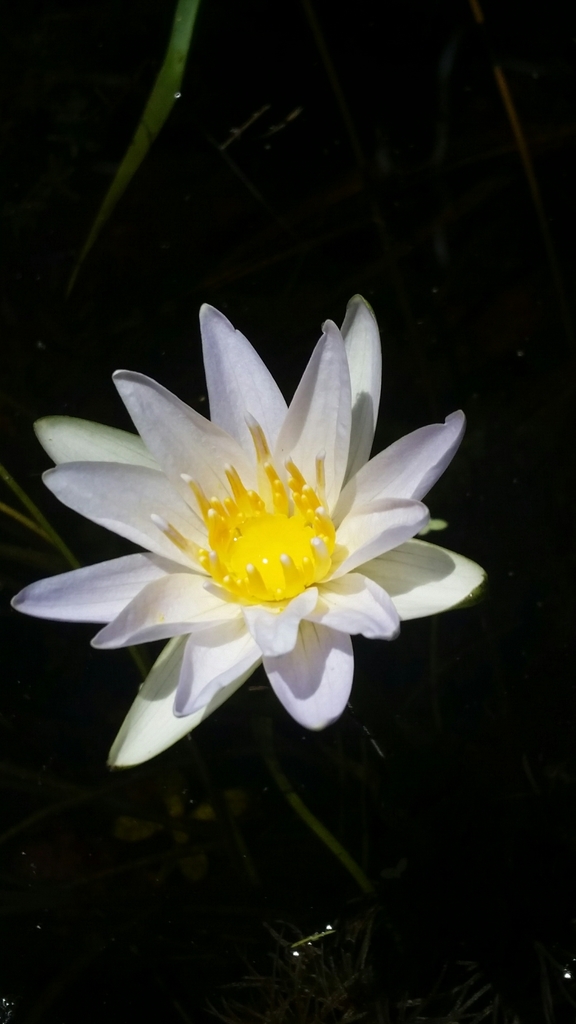
Nymphaea elegans, known as Tropical Royalblue Waterlily or blue waterlily, is one of only a few blue-flowered waterlilies native to the United States. It is an aquatic perennial that grows from a submerged tuber rooted in the mud of shallow ponds, marshes and swamps, with round, floating leaves and star-shaped flowers held a few inches above the water. Its flowers range from pale lavender-blue to almost white, with a bright yellow center, and they open in the morning and close in the afternoon.
It belongs to the waterlily family (Nymphaeaceae) and is a tropical species at the northern edge of its range in the U.S. It grows from Texas, Louisiana and Florida south through Mexico and Central America to the Caribbean. In Florida it is mostly a plant of the southern and central peninsula, in cypress swamps, marsh ponds and ditches with clear to tannin-stained water.
Tropical royalblue waterlily is less familiar to gardeners than the hybrid blue waterlilies sold for water gardens, many of which come from African and Asian species. For a native pond in Florida or along the western Gulf Coast, it is a beautiful alternative. This guide covers how to identify it, where it grows, and how to grow it in a water garden.
Identification
Florida has several native waterlilies, among them the fragrant American white waterlily (N. odorata), the yellow-flowered banana waterlily (N. mexicana), the large white toothed-leaf waterlily (N. ampla) of south Florida, the night-blooming N. jamesoniana, and the tropical royalblue waterlily. The combination of bluish petals, flowers held above the water, and purple-flecked leaves identifies this species.
Tubers & Stems
The plant grows from an upright, egg-shaped tuber buried in the mud. Long, flexible leaf and flower stalks rise from it to the surface, so the plant adjusts to water depths of roughly 1 to 3 feet. It does not spread by long creeping rhizomes as the American white waterlily does, so a single plant stays as a compact clump of leaves.
Leaves
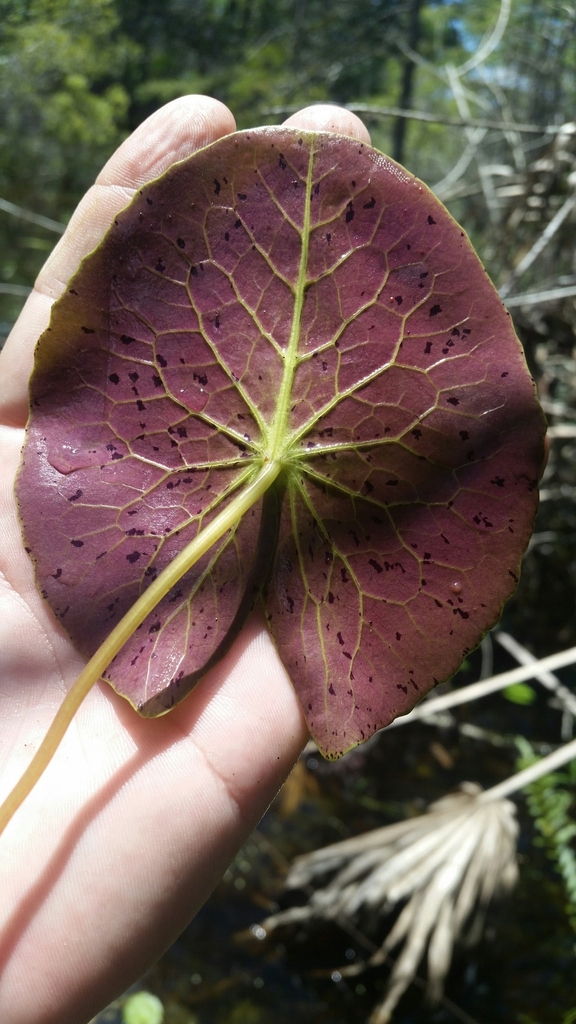
The floating leaves are round to oval, usually 4 to 8 inches across, with a deep, narrow notch where the stalk attaches. The margins are smooth to slightly wavy. The upper surface is green, often with scattered purplish-brown flecks, especially on young leaves. The underside is reddish-purple and dotted with darker spots. Florida’s other native species lack this combination of mottling on both sides.
Flowers
The flowers are 3 to 5 inches across, with four green sepals streaked or dotted with dark purple outside, and about a dozen to twenty pointed petals. The petals are pale blue to lavender in the tropics, and wild Florida plants often have very pale, nearly white petals with only a blue tint at the tips. The center holds many bright yellow stamens, some with pale blue-tipped appendages. The flowers stand 2 to 6 inches above the water on stiff stalks, open in the morning and close by late afternoon, and each lasts about three days. They have a light, sweet fragrance.
Fruit & Seeds
After pollination the flower stalk bends and pulls the developing fruit underwater, where it ripens as a fleshy, berry-like capsule. When ripe it breaks open and releases many small seeds, each wrapped in a spongy, air-filled coat that lets it float away before it sinks and germinates in the mud.
Quick Facts
| Scientific Name | Nymphaea elegans Hook. |
| Family | Nymphaeaceae (waterlily family) |
| Plant Type | Aquatic perennial with floating leaves, from a tuber |
| Mature Height | Flowers held 2–6 in above the water surface |
| Mature Spread | 3–5 ft of water surface per plant |
| Growth Rate | Moderate to fast in warm water |
| Sun Exposure | Full sun |
| Water Needs | Aquatic; still or slow water about 1–3 ft deep |
| Soil Type | Muck, mud or heavy loam on pond bottoms |
| Soil pH | About 6.0–7.5 |
| Bloom Time | Spring to fall (March–November) |
| Flower Color | Pale lavender-blue to nearly white, yellow center |
| Fall Color | None; leaves die back in cool winters |
| Fruit | Fleshy, berry-like capsule ripening underwater |
| Deer Resistant | Yes; grows in water |
| USDA Hardiness Zones | 9–11 |
Native Range
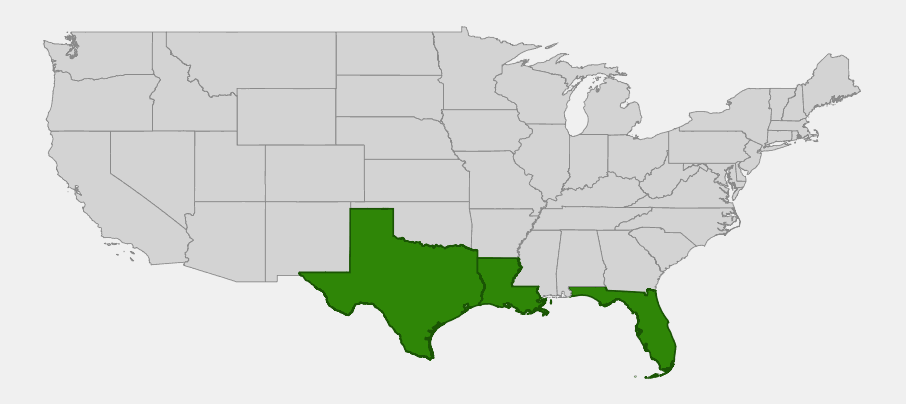
Tropical royalblue waterlily reaches the United States only along the Gulf Coast. USDA PLANTS and the Lady Bird Johnson Wildflower Center record it from Florida, Louisiana and Texas. In Texas it is most frequent in the southern part of the state and along the coast, including the lower Rio Grande Valley. Louisiana records are few. In Florida it is scattered through the central and southern peninsula, including the Big Cypress region and the Everglades.
South of the U.S. its range extends through eastern and western Mexico and Central America to Cuba and other parts of the Caribbean. It is a tropical plant, and its northern limit roughly follows the line where hard winter freezes become uncommon.
In the wild it grows in shallow, still or slow-moving fresh water in full sun: marsh ponds, sloughs, cypress strands, roadside ditches, borrow pits and the edges of lakes. It tolerates the dark, tannin-stained water typical of south Florida swamps and the seasonally fluctuating water levels of Gulf Coast marshes.
📋 Regional plant lists featuring Tropical Royalblue Waterlily: North & South Florida · Arkansas, Louisiana, Eastern Oklahoma & Eastern Texas · South & West Texas
Growing & Care Guide
Tropical royalblue waterlily is a good choice for natural ponds and water gardens in frost-free or nearly frost-free parts of Florida and the Gulf Coast. It stays more compact than the American white waterlily and does not cover a whole pond. Buy plants from aquatic or native nurseries that sell true Nymphaea elegans, not one of the many tropical blue hybrids, and do not collect tubers from wild ponds, drainage ditches or public lands.
Light
Give it full sun, at least six hours a day. Waterlilies in shade produce leaves but few flowers.
Soil & Water
Plant the tuber in heavy garden soil or pond muck, not potting mix, which floats. In a lined pond, use a wide, shallow container at least 10 to 12 inches across, and top the soil with a layer of gravel. Set the pot so that 6 to 18 inches of water cover the crown. Still, warm water is best, since waterlilies dislike moving water and fountain spray. Water temperatures above about 70°F trigger flowering. Avoid fertilizers in natural ponds, where they encourage algae; in container ponds, a slow-release aquatic tablet pressed into the soil once a month in summer improves flowering.
Planting Tips
Plant in spring, when water has warmed. Set the tuber upright with its growing point just at the soil surface. Start the pot in shallow water, then lower it gradually as leaves reach the surface. In a natural pond, plant at the sunny, shallow margin where water is 1 to 2 feet deep year-round.
Pruning & Maintenance
Remove yellowing leaves and spent flower stalks to keep the pond clean, cutting them near the tuber. Divide crowded plants every few years in spring. In south and central Florida and far south Texas, the tubers survive winter in place; in cooler areas, leave the pot at the deepest part of the pond, below the freeze line, or store the tubers in damp sand in a frost-free place. Watch for aphids and leaf beetles, and hose them off rather than spraying insecticides, which harm aquatic life.
Propagation
Propagate by separating the small offset tubers that form around a mature tuber, or by growing from seed. Seeds can be sown in shallow water in a bowl of soil in a warm, sunny spot. Seedlings grow quickly and can flower in their first or second year.
Landscape Uses
- Water gardens: a native blue-flowered waterlily for ponds and container water features in warm climates
- Natural ponds and wetland restoration: in shallow, sunny pond margins within its native range
- Wildlife ponds: shade and cover for fish, frogs and aquatic insects
- Stormwater ponds: on sunny, permanently wet benches of retention ponds where permitted
- Educational plantings: to show the difference between native waterlilies and imported hybrids
Wildlife & Ecological Value
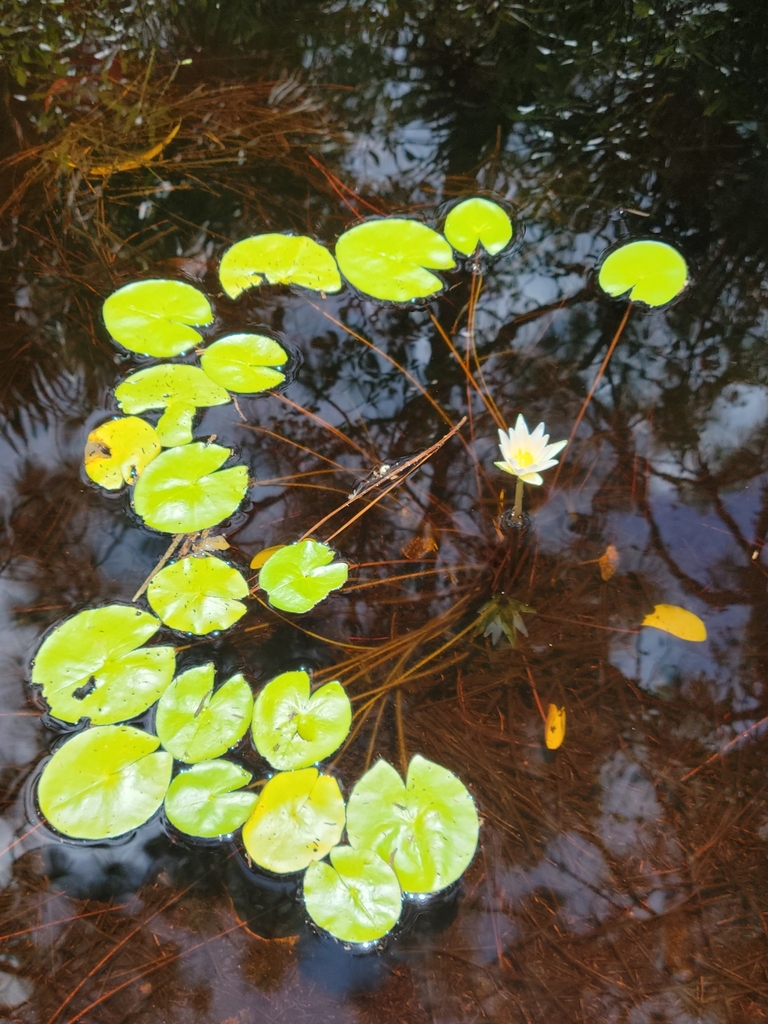
Floating-leaved plants like tropical royalblue waterlily form an important layer in shallow wetlands, between the emergent plants of the shore and the open water.
For Pollinators
The flowers open in the morning and attract bees, flies and beetles that come for pollen. As in other waterlilies, newly opened flowers on the first day hold a small pool of liquid in the center, and insects that fall in can leave pollen from other flowers. Later the flower produces pollen for visitors.
For Birds
Ducks and other waterbirds eat waterlily seeds. Wading birds such as herons, egrets and purple gallinules hunt among and walk across the floating leaves.
For Mammals
Muskrats, nutria and other aquatic mammals may eat the tubers and leaf stalks where they occur.
Ecosystem Role
The floating leaves shade the water, keeping it cooler and limiting algae, and they provide shelter for small fish, tadpoles and aquatic insects. Many insects lay eggs on the leaves or feed on them, and the decaying leaves are an important food source in wetland food webs.
Cultural & Historical Uses
William Jackson Hooker, director of the Royal Botanic Gardens at Kew, described Nymphaea elegans in 1851 in Curtis’s Botanical Magazine, from plants cultivated in Britain. The species name means “elegant.” Its color-plate illustration shows the pale flowers and spotted leaves that still identify the species today.
The plant was among the tropical waterlilies used by early hybridizers in Europe and the United States in the late nineteenth and early twentieth centuries. Henry S. Conard’s classic 1905 monograph The Waterlilies included it in color plates. Today’s water gardens are filled with tropical blue hybrids, but few gardeners know that one of their wild relatives is native to the southern United States.
In Florida, interest in tropical royalblue waterlily has grown with the native pond movement. Several non-native waterlilies, including blue-flowered African species, have escaped into Florida waterways, so gardeners who want a blue waterlily can choose the native species instead.
Frequently Asked Questions
Is the tropical royalblue waterlily native to Florida?
Yes. It is native to central and south Florida as well as Texas and Louisiana, and it extends south to Mexico, Central America and the Caribbean.
Why are wild Florida flowers so pale?
Flower color varies across its range. Many Florida plants have nearly white petals with a faint blue or lavender tint, while plants from farther south can be more distinctly blue.
Can it survive winter outdoors?
In south and central Florida and far south Texas, yes. In colder areas, keep the pot at the deepest part of the pond or store the tubers in damp sand in a frost-free place.
How is it different from American white waterlily?
American white waterlily (Nymphaea odorata) has larger, strongly fragrant white flowers that float on the water, plain green leaves, and spreads by creeping rhizomes. Tropical royalblue waterlily holds its bluish flowers above the water, has purple-flecked leaves, and stays as a clump.
Can I collect plants from a ditch or pond?
No. Buy plants from aquatic or native nurseries. Collecting on public lands requires a permit, and removing tubers from the wild harms local populations.
