
Calloose Grape (Vitis shuttleworthii)
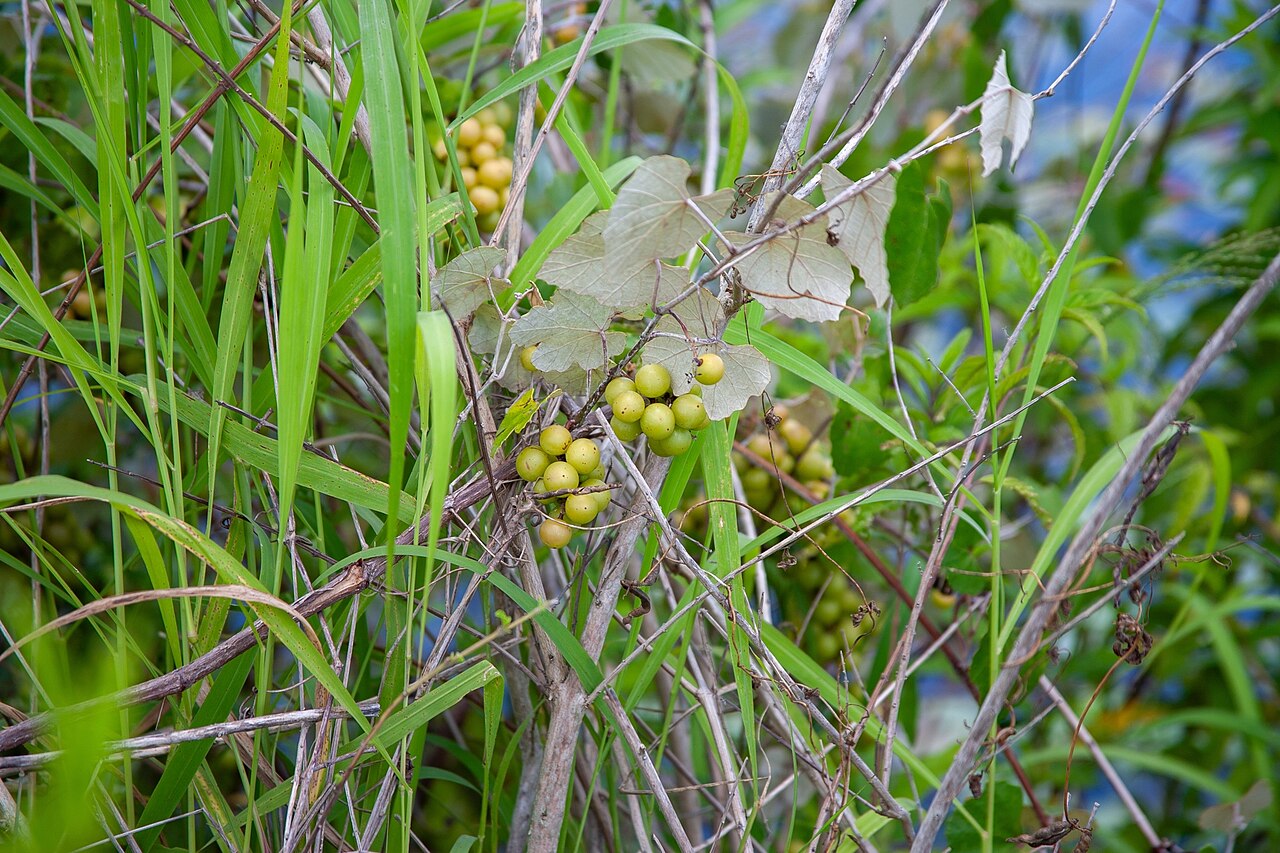
Vitis shuttleworthii, the Calloose Grape, is a wild grape found only in Florida. It is endemic to Florida per the Atlas of Florida Plants, which means it grows naturally nowhere else in the world. It is a vigorous, woody vine that climbs over shrubs and into trees by forked tendrils. Its thick, heart-shaped to lobed leaves are dark green above and covered beneath with dense, white to rusty wool, so a vine in the wind flickers green and silver. It belongs to the grape family (Vitaceae).
Calloose grape grows mostly in the central and southern Florida peninsula, in pinelands, hammock edges, scrub, thickets, fencerows and disturbed ground. In spring it produces small, fragrant, greenish flowers, and by summer it carries clusters of dark red to purple-black grapes, a favorite food of birds and mammals. Some people call it bear grape.
Because it is a Florida endemic, gardeners who want to grow it should buy nursery-propagated plants or grow it from legally collected seed, and never dig vines from the wild. This guide covers how to identify calloose grape, where it grows, how to grow it in a wildlife garden and its role in Florida ecosystems.
Identification
Florida has several native grapes, and telling them apart is mostly a matter of leaves and tendrils. Calloose grape stands out for its thick, densely woolly leaf undersides.
Stems & Habit
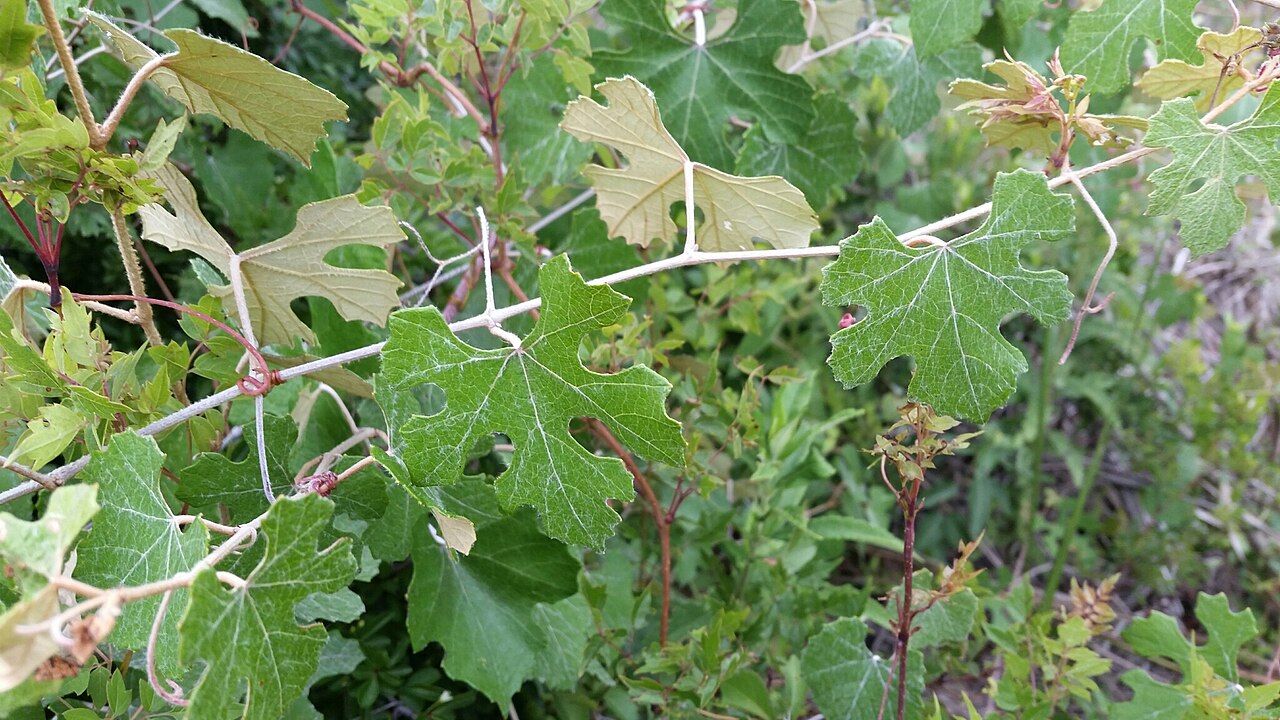
It is a high-climbing or sprawling woody vine, with stems reaching about 30 feet. Older stems have shredding, brown bark, while young branches are covered in woolly hairs. Like most Vitis, it climbs with forked tendrils that occur opposite the leaves at two of every three nodes. Vines may sprawl over shrubs and fences or climb into the canopy of small trees.
Leaves
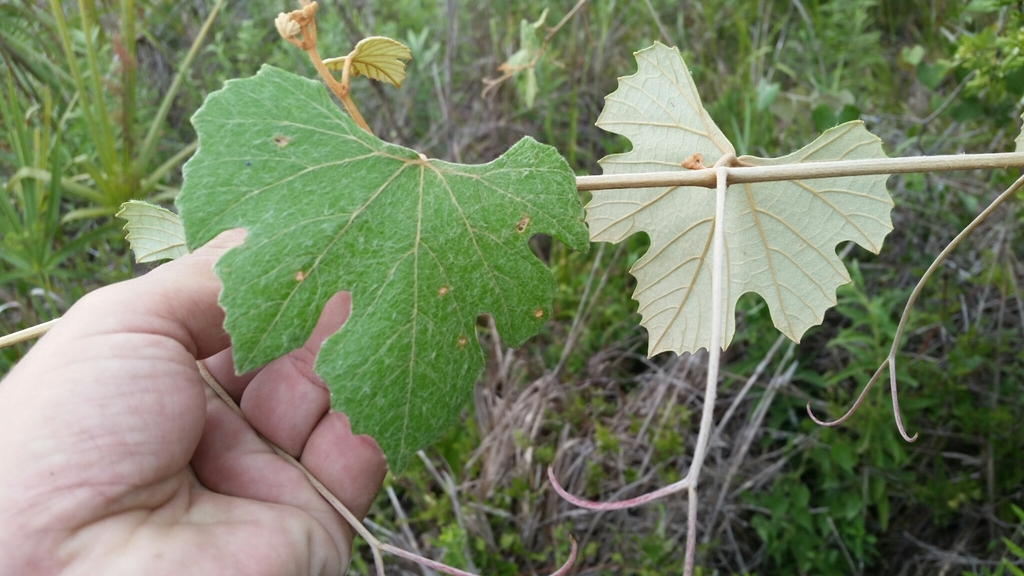
The leaves are alternate, broadly heart-shaped, unlobed or with three shallow to fairly deep lobes, and mostly 2 to 5 inches long. They are thick and somewhat leathery, with wavy or coarsely toothed edges. The upper surface is dark green and becomes smooth with age, while the lower surface remains thickly covered in white to rusty-tan wool that hides the leaf tissue. Deeply lobed leaves are especially common on young, vigorous shoots.
Flowers
The flowers appear in spring, in branched clusters opposite the leaves. They are tiny, greenish-yellow and fragrant. As in most wild grapes, male and female flowers usually grow on separate plants, so only female vines produce fruit.
The Muscadine (Vitis rotundifolia) has unforked tendrils, smooth, rounded, glossy leaves and large fruit in small clusters. Summer grape (V. aestivalis) and Florida grape (V. cinerea var. floridana) can have hairy leaf undersides, but their hairs are thinner and the leaf surface shows through, while calloose grape’s thick wool is persistent and completely covers it.
Fruit
The fruit is a round grape about ⅓ to ½ inch across, borne in loose clusters. It ripens from green to dark red and finally purple-black in summer. The fruits have thick skins, a tart to sweet flavor and several seeds each.
Quick Facts
| Scientific Name | Vitis shuttleworthii House (syn. V. coriacea Shuttlw. ex Planch.) |
| Family | Vitaceae (grape family) |
| Plant Type | Woody climbing vine |
| Mature Height | Climbs or sprawls to about 30 ft |
| Mature Spread | 10–30 ft |
| Growth Rate | Fast |
| Sun Exposure | Full sun to part shade |
| Water Needs | Low to medium; drought tolerant once established |
| Soil Type | Sand, sandy loam, limestone-derived soils |
| Soil pH | About 5.5–8.0 |
| Bloom Time | Spring (about March–May) |
| Flower Color | Greenish-yellow, tiny and fragrant |
| Fall Color | Some yellow leaves in winter; mostly semi-evergreen in south Florida |
| Fruit | Dark red to purple-black grapes, summer |
| Deer Resistant | No; deer browse leaves and eat fruit |
| USDA Hardiness Zones | 9–11 |
Native Range
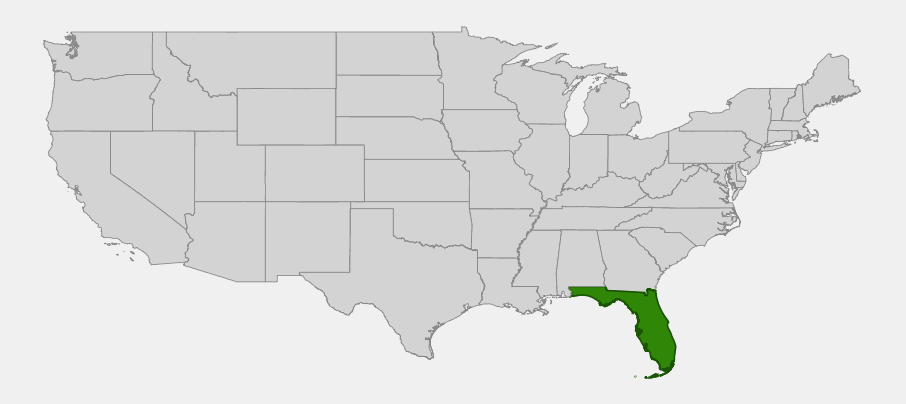
Calloose grape is endemic to Florida per the Atlas of Florida Plants, and USDA PLANTS and the Lady Bird Johnson Wildflower Center record it from Florida only. It is found mainly in the central and southern peninsula, from about the latitude of Orlando and Tampa Bay south to Miami-Dade and Collier counties, with scattered records farther north.
It grows in a wide range of open to partly shaded habitats: pine flatwoods and rocklands, scrub and scrubby flatwoods, the edges of hammocks, thickets, old fields, fencerows and roadsides. The Lady Bird Johnson Wildflower Center describes its habitat as well-drained pinelands and thickets. It tolerates drought and limestone soils better than many other Florida grapes.
Although it is not state-listed, it is part of Florida’s unique endemic flora. Gardeners should buy nursery-propagated plants or grow it from seed collected with permission, and never dig vines from the wild.
📋 Regional plant lists featuring Calloose Grape: North & South Florida
Growing & Care Guide
Calloose grape is a tough, fast-growing vine for wildlife gardens in central and south Florida. It is occasionally available from Florida native nurseries. Because it is a Florida endemic, buy nursery-propagated plants and never collect from the wild. Choose a spot where its vigor is an asset.
Light
It grows in full sun to part shade, and fruits best with several hours of direct sun. In dense shade it grows lanky and fruits poorly.
Soil & Water
It does well in sandy and limestone-based soils, including alkaline soils, and needs good drainage. Water regularly during the first growing season. Once established, it is quite drought tolerant and rarely needs irrigation. Fertilizer is unnecessary.
Planting Tips
Plant in spring or the rainy season next to a sturdy fence, arbor, trellis or large shrub that it can climb. Give it plenty of room: vines can grow 10 feet or more in a season. Because male and female flowers are usually on separate plants, plant several vines if you want fruit, or plant near existing wild grapes.
Pruning & Maintenance
Prune in late winter to control size and keep vines off roofs and tree canopies. Like other grapes, it fruits on the current year’s shoots, which grow from last year’s wood, so heavy pruning reduces fruit. Watch for vines climbing into small trees, where they can shade them.
Propagation
Grow it from seed cleaned from ripe fruit and sown in fall or spring; seedlings may take a few years to flower, and you will not know their sex until they do. Hardwood cuttings taken in winter and softwood cuttings in spring also root, and layering stems along the ground is a simple way to make new plants.
Landscape Uses
- Wildlife gardens: summer fruit for many birds and mammals
- Arbors, fences and trellises: fast cover with handsome two-toned foliage
- Natural screens: quick, dense cover over fences in sunny, dry sites
- Habitat restoration: edges of hammocks and pinelands in central and south Florida
- Edible fruit: tart to sweet grapes for jelly, juice or fresh eating
Wildlife & Ecological Value
Wild grapes are among the most important wildlife foods in Florida, and calloose grape is no exception.
For Pollinators
The small, fragrant flowers attract bees, flies and beetles in spring. Grape leaves are larval food for several moths, including grapevine sphinx moths and the eight-spotted forester, as well as other insects that feed birds.
For Birds
Many birds eat the grapes, including northern mockingbirds, gray catbirds, northern cardinals, blue jays, woodpeckers, thrashers and wild turkeys. The dense tangles provide nesting and roosting cover, and some birds use the shredding bark as nest material.
For Mammals
Raccoons, opossums, foxes, black bears and squirrels eat the fruit. Deer browse leaves and young shoots and eat fallen grapes.
Ecosystem Role
Calloose grape is part of the vine layer of Florida’s hammock edges and pinelands, and its fruit is an important summer food resource. Its seeds are spread widely in the droppings of birds and mammals.
Cultural & Historical Uses
The species is named for Robert James Shuttleworth, a 19th-century Swiss-English naturalist who studied plants collected in Florida. Shuttleworth called it Vitis coriacea (“leathery grape”), a name later published by Planchon. Because that name had already been used for a different plant, botanist Homer D. House later gave it the new name Vitis shuttleworthii.
Wild grapes of many species were gathered by Native Americans and early settlers in Florida for fresh fruit, juice and drying. Calloose grape fruit has thick skin and a tart flavor, and like many wild grapes it is mostly used for jelly or juice today.
The origin of the name “calloose” is unclear. The plant is also known locally as bear grape. Because it is found only in Florida, it is part of what makes the state’s flora distinctive.
Frequently Asked Questions
Is calloose grape found only in Florida?
Yes. It is endemic to Florida per the Atlas of Florida Plants, and grows naturally mainly in the central and southern peninsula.
Are calloose grapes edible?
Yes. The grapes are edible, with thick skins and a tart to sweet flavor. They are best for jelly and juice. Make sure of identification before eating any wild fruit.
How do I tell calloose grape from muscadine?
Calloose grape has forked tendrils and leaves with thick white to rusty wool underneath. Muscadine has unforked tendrils and smooth, glossy leaves without wool.
Can I collect calloose grape from the wild?
No. Because it is a Florida endemic, buy nursery-propagated plants or grow it from seed collected with permission. Do not dig vines from the wild.
Will calloose grape take over my yard?
It is vigorous and can climb into shrubs and trees, so give it a strong support and prune in late winter. It is easy to control with regular pruning.

Looking for a nursery that carries Calloose Grape?
Browse our native plant nursery directory: Florida