
Bandana-of-the-Everglades (Canna flaccida)
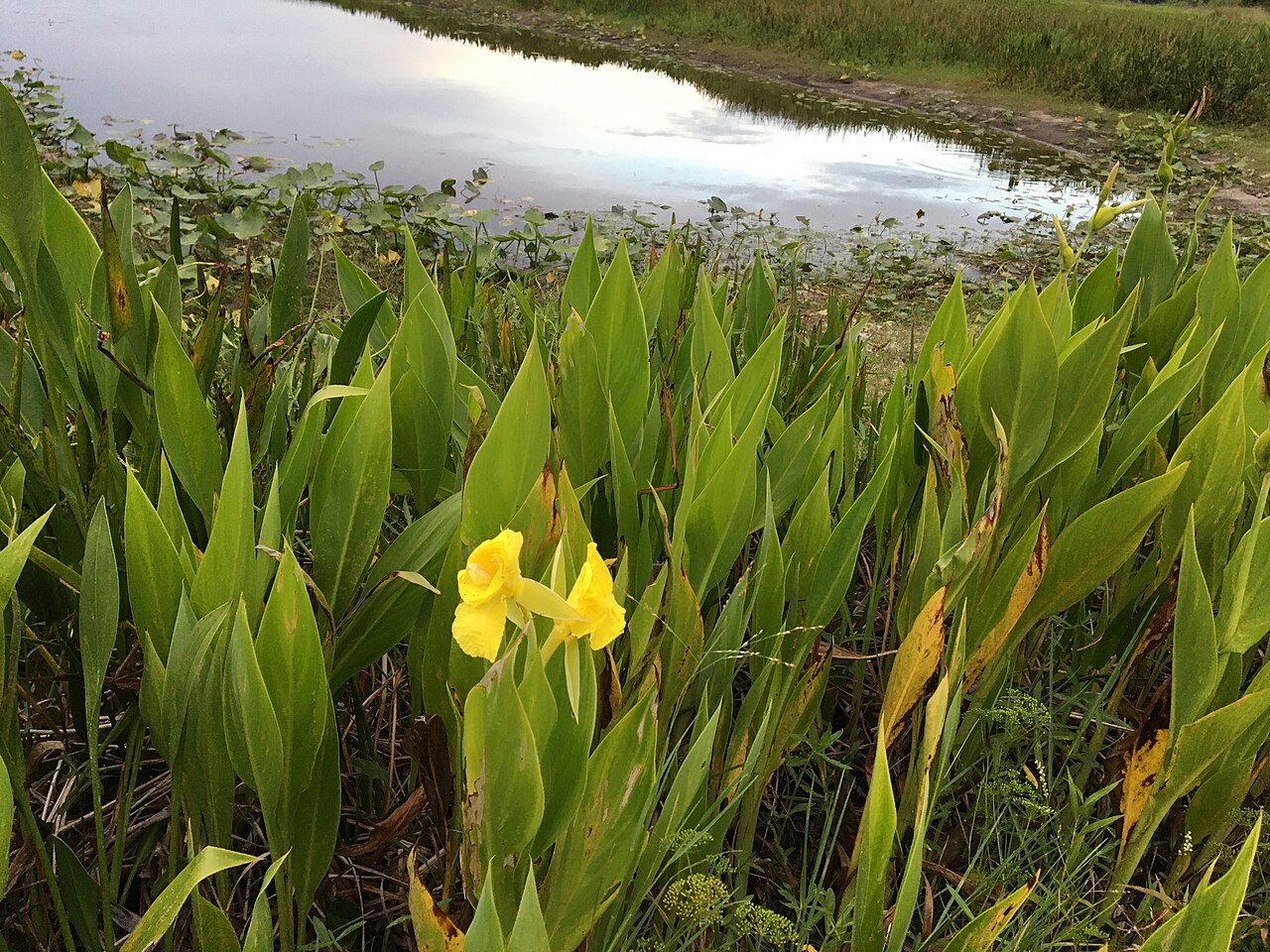
Canna flaccida, known as Bandana-of-the-Everglades, golden canna or yellow canna, is one of only a few cannas native to the United States. It is a wetland perennial 3 to 5 feet tall with broad, upright leaves and large, soft yellow flowers, 3 to 4 inches across, that look almost like iris blossoms. It belongs to the canna family (Cannaceae). USDA PLANTS spells the name “bandanna of the Everglades.”
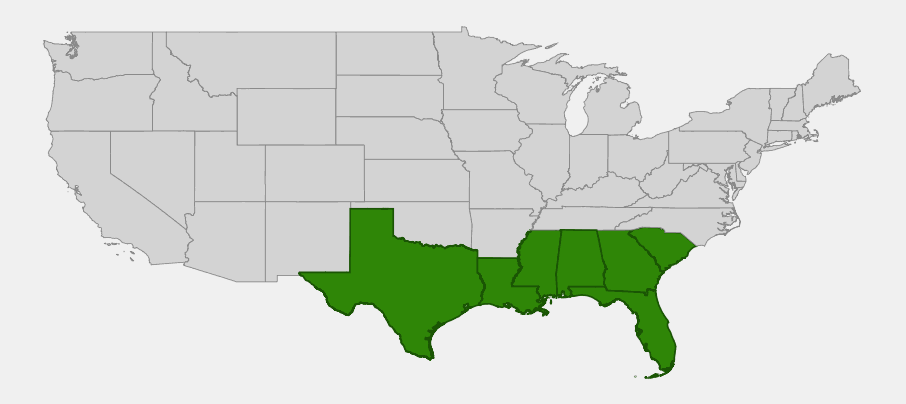
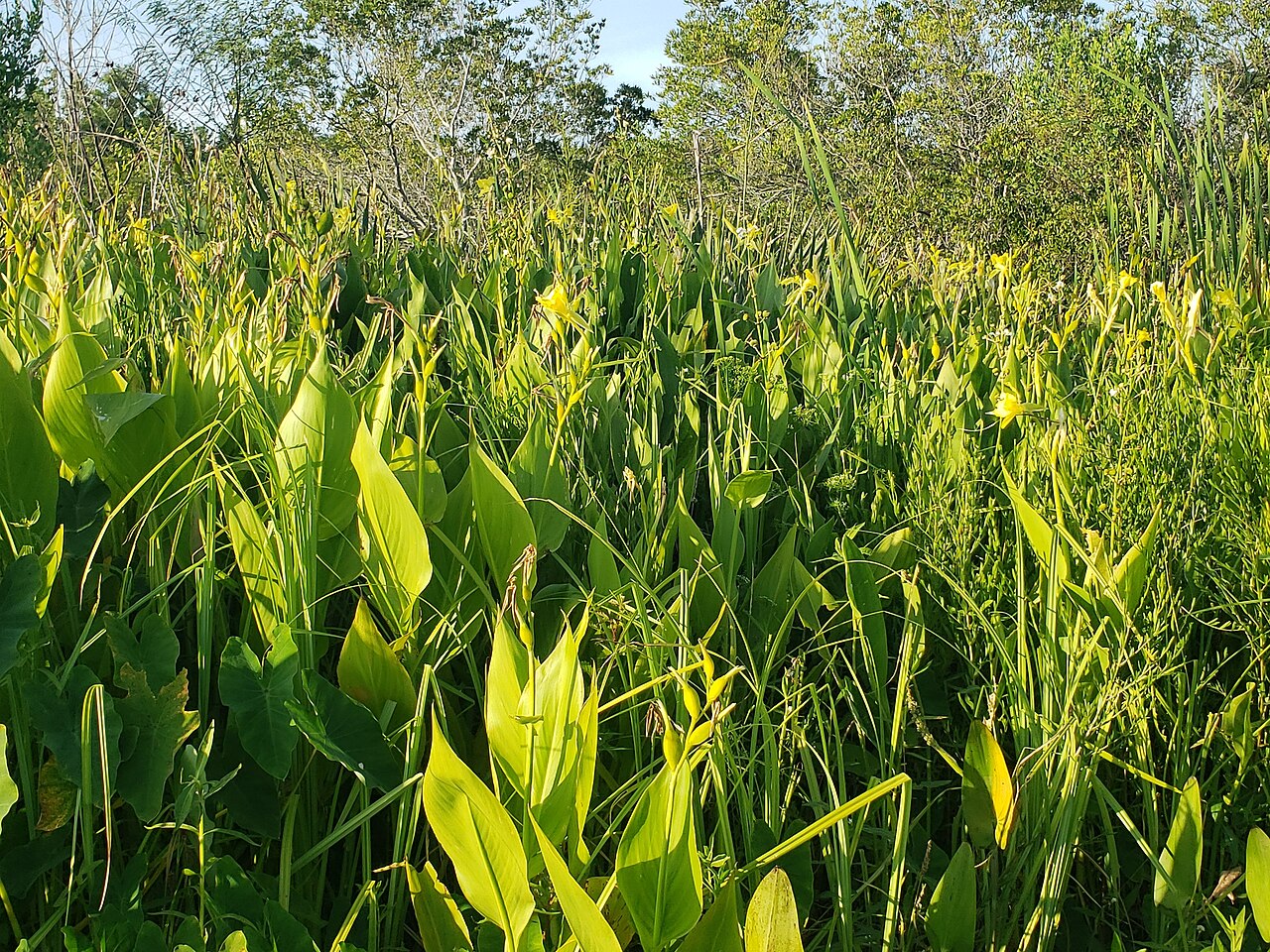
It grows in freshwater marshes, swamps, wet prairies, ditches and the edges of ponds and streams on the Coastal Plain from South Carolina to Florida and west along the Gulf Coast to Louisiana and Texas. In Florida it is found throughout most of the state, from the panhandle to the Everglades, and it can form large colonies in sunny wetlands.
Golden canna is a long-blooming, easy plant for water gardens, pond edges and rain gardens in the Southeast, and a host plant for skipper butterflies. This guide covers how to identify it, where it grows and how to grow it.
Identification
Most cannas sold in garden centers are tropical hybrids with large, bold leaves and red, orange or yellow flowers. Golden canna is more delicate, with narrower leaves and lighter, more fragile flowers.
Rhizomes & Stems
Each plant grows from a thick, branching rhizome just below the soil or mud surface. The stems are formed by tightly wrapped leaf sheaths and rise 3 to 5 feet tall, occasionally taller. The rhizomes spread steadily, so plants form dense patches over time.
Leaves
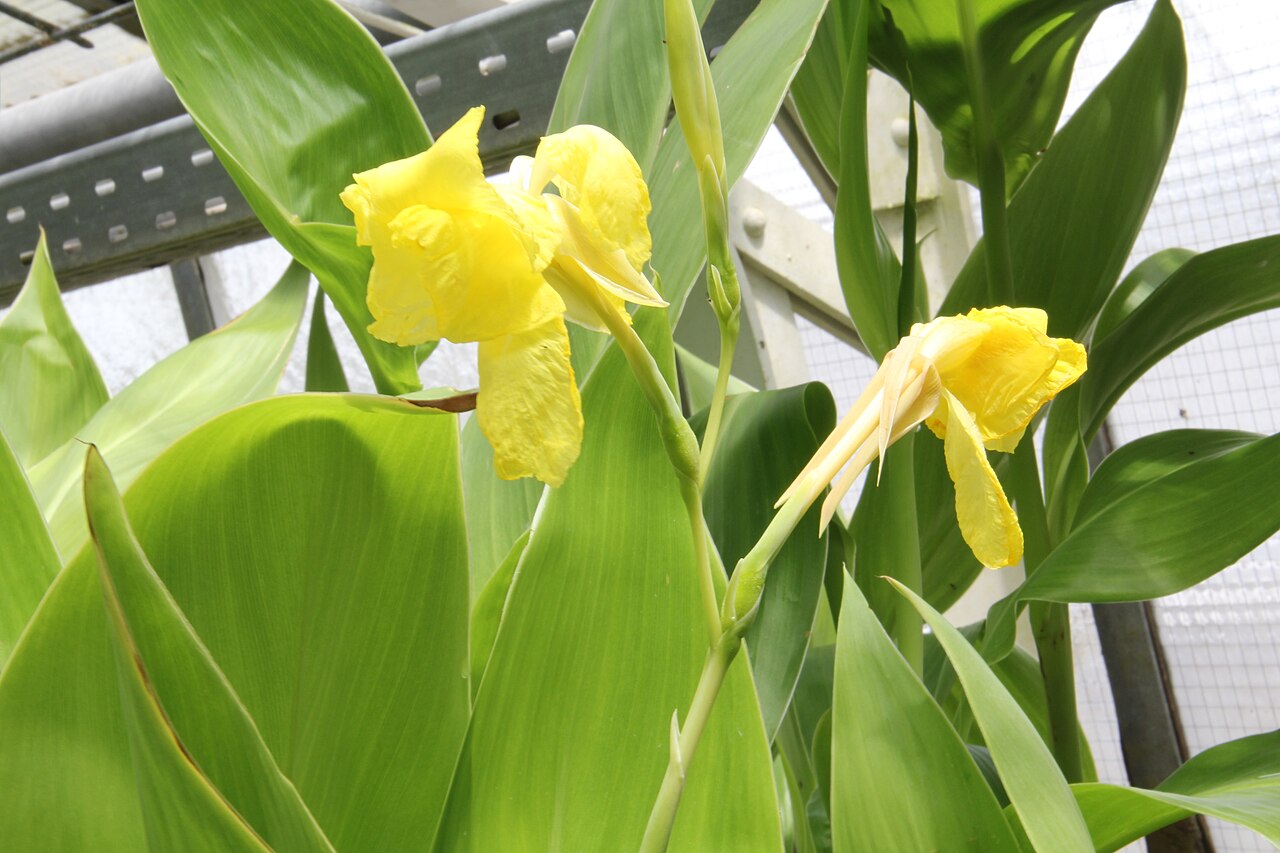
The leaves are large, alternate and lance-shaped to narrowly oval, 1 to 2 feet long and 3 to 6 inches wide, with a pointed tip and a sheathing base. They are gray-green to bluish-green with a waxy surface and parallel veins running from the midrib to the margin. Upper leaves are smaller.
Flowers
The flowers are borne in a loose cluster at the top of the stem, usually from late spring through summer. Each flower is 3 to 4 inches across and pale to bright yellow, sometimes with faint speckles. The three true petals are greenish-yellow and narrow, and they are fused at the base into a tube with three small green sepals. The showy part of the flower is formed by three or four broad, ruffled staminodes, sterile stamens that look like petals, and by a petal-like style. Each flower opens for only about a day and then wilts, giving the plant its species name flaccida, meaning “limp.”
Fruit & Seeds
The fruit is a rounded, warty, three-chambered capsule, green at first and turning brown. When ripe it splits to release round, hard, dark seeds. Canna seeds are known for their very hard seed coats, which must be scratched or soaked to germinate quickly.
Quick Facts
| Scientific Name | Canna flaccida (USDA symbol CAFL11) |
| Family | Cannaceae (canna family) |
| Plant Type | Herbaceous perennial from rhizomes; emergent wetland plant |
| Mature Height | 3–5 ft |
| Mature Spread | 2–4 ft; spreads by rhizomes into colonies |
| Growth Rate | Fast |
| Sun Exposure | Full sun to part shade |
| Water Needs | High; moist to wet soil or shallow water |
| Soil Type | Muck, peat, sand or clay; not particular |
| Soil pH | About 5.5–7.5 |
| Bloom Time | May–August; longer in south Florida |
| Flower Color | Pale to bright yellow |
| Fall Color | Leaves brown after frost |
| Fruit | Warty capsule with hard, round seeds |
| Deer Resistant | Moderate; occasionally browsed |
| USDA Hardiness Zones | 8–11 |
Native Range
Golden canna is native to the Southeastern Coastal Plain. USDA PLANTS and the Lady Bird Johnson Wildflower Center record it in South Carolina, Georgia, Florida, Alabama, Mississippi, Louisiana and Texas. Most populations lie close to the coast, from the South Carolina Lowcountry to the Gulf Coast.
Florida is the center of its range. The Atlas of Florida Plants records it throughout most of the state, from the western panhandle to the Everglades. It grows in freshwater marshes, wet prairies, swamps, the edges of ponds, lakes and streams, and in roadside ditches and canals. In the Everglades it is part of the sawgrass marsh and wet prairie community, and it can be common along canal banks.
It is not listed as threatened or endangered in Florida and is common in many areas. It has disappeared from some places where wetlands have been drained or overgrown by woody plants, but it adapts readily to ditches and constructed wetlands.
📋 Regional plant lists featuring Bandana-of-the-Everglades: North & South Florida · Alabama, Georgia & Mississippi · North & South Carolina · Arkansas, Louisiana, Eastern Oklahoma & Eastern Texas
Growing & Care Guide
Golden canna is one of the easiest native wetland plants to grow, and it is widely available from native nurseries and aquatic plant suppliers in the Southeast. It establishes quickly and blooms its first season.
Light
Plant it in full sun for the most flowers. It also grows in part shade, though it flowers less there.
Soil & Water
It grows in moist to wet soil or in standing water up to about 6 inches deep, so it is well suited to pond edges, bogs, water gardens and rain gardens. It tolerates a wide range of soils, from sand to heavy clay and muck. It can also be grown in moist garden soil with regular watering, but it will need more care during dry spells.
Planting Tips
Plant rhizomes or potted plants in spring. In ponds, plant them in the shallow margins or in containers sunk to the rim. Space plants about 2 feet apart for a mass planting. Because it spreads steadily by rhizomes, give it room, or plant it in a container to keep it in place in small water gardens.
Pruning & Maintenance
Remove spent flower stalks to keep plants tidy and encourage more blooms. In areas with frost, the leaves die back in winter; cut them off after the first frost, or leave the debris to protect the rhizomes in the cooler parts of its range. Leaf-rolling caterpillars may damage some leaves. They are the larvae of skippers and the lesser canna leafroller moth; tolerate them or clip off the affected leaves.
Propagation
Divide the rhizomes in early spring, making sure each piece has at least one growing point. Seeds can be collected when capsules are dry. Scratch or nick the hard seed coat, or soak the seeds in warm water for a day, before sowing to speed germination.
Landscape Uses
- Water gardens and ponds: showy yellow flowers at the water’s edge or in shallow water
- Rain gardens and bioswales: tolerates flooding and drying
- Wetland restoration and stormwater ponds: fast-growing native for freshwater marshes within its range
- Butterfly gardens: larval host plant for the Brazilian skipper
- Erosion control: its rhizomes help stabilize wet banks
Wildlife & Ecological Value
Golden canna adds structure and flowers to freshwater wetlands and supports several insects that feed on cannas.
For Pollinators
The large flowers attract bees, including bumble bees, and other insects for nectar and pollen. The plant is a larval host for the Brazilian skipper (Calpodes ethlius), also called the canna skipper, whose caterpillars roll and tie leaves into shelters. The lesser canna leafroller moth also feeds on canna leaves.
For Birds
Wetland birds use canna stands for cover, and the insects that live on the plants provide food for wrens, warblers and other songbirds. The hard seeds are of limited value to birds.
For Mammals
The rhizomes may be eaten by some marsh mammals, and deer sometimes browse the leaves, but the plant is not an important mammal food.
Ecosystem Role
As an emergent wetland perennial, golden canna helps stabilize mud and sand along wet margins, slows water flow and traps sediment. It provides structure and shade in shallow water, sheltering frogs, small fish and aquatic invertebrates.
Cultural & Historical Uses
English botanist Richard Anthony Salisbury described Canna flaccida in 1791. In the nineteenth century it was crossed with tropical cannas by European breeders, and it contributed to the development of large-flowered garden cannas, sometimes called orchid-flowered or Italian cannas. Many modern hybrid cannas therefore have some golden canna in their background.
The name bandana-of-the-Everglades is a fanciful reference to its bright yellow flowers waving above Everglades marshes. Cannas in general have been used around the world as food (from the starchy rhizomes of edible canna) and for their hard seeds, but there is little specific documentation for traditional uses of this species.
Today golden canna is valued by native plant gardeners in the Southeast as a showy, easy-care alternative to nonnative hybrid cannas, and it is often used in stormwater ponds and wetland restoration projects in Florida.
Frequently Asked Questions
Is golden canna the same as bandana-of-the-Everglades?
Yes. Canna flaccida is known as bandana-of-the-Everglades (USDA spells it “bandanna of the Everglades”), golden canna and yellow canna.
Is golden canna native?
Yes. It is native to the Southeastern Coastal Plain from South Carolina to Florida and west to Texas, and it is the most widespread of the few cannas native to the United States.
Can golden canna grow in standing water?
Yes. It grows in moist soil or shallow water up to about 6 inches deep, making it a good choice for ponds and water gardens.
What is eating my canna leaves?
Rolled or tied leaves are usually the work of Brazilian skipper caterpillars or lesser canna leafroller larvae. Golden canna is a native host plant for the skipper, so damage is usually tolerated in wildlife gardens.
Does golden canna spread?
Yes. It spreads by rhizomes into colonies. In small water gardens, grow it in a container to keep it in bounds.

Looking for a nursery that carries Bandana-of-the-Everglades?
Browse our native plant nursery directory: Alabama · Florida & Georgia · Louisiana & Mississippi · South Carolina & Texas