
Woolly Huckleberry (Gaylussacia mosieri)
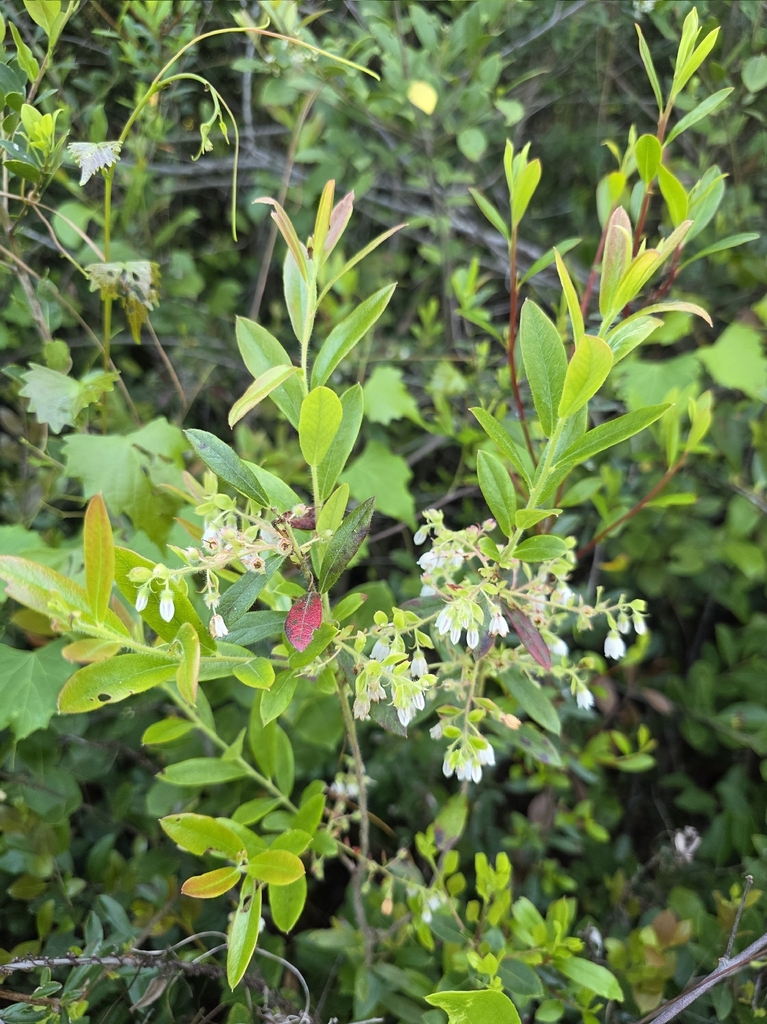
Gaylussacia mosieri, the Woolly Huckleberry, is a wetland huckleberry of the southeastern Coastal Plain. This deciduous shrub of the heath family (Ericaceae) grows in pitcher plant bogs, seepage slopes and wet pine savannas from Louisiana to the Florida Panhandle, Georgia and South Carolina. Its twigs, leaves, flower stalks and even its berries are covered in long, gland-tipped hairs, which give it a fuzzy, slightly sticky feel and its common name.
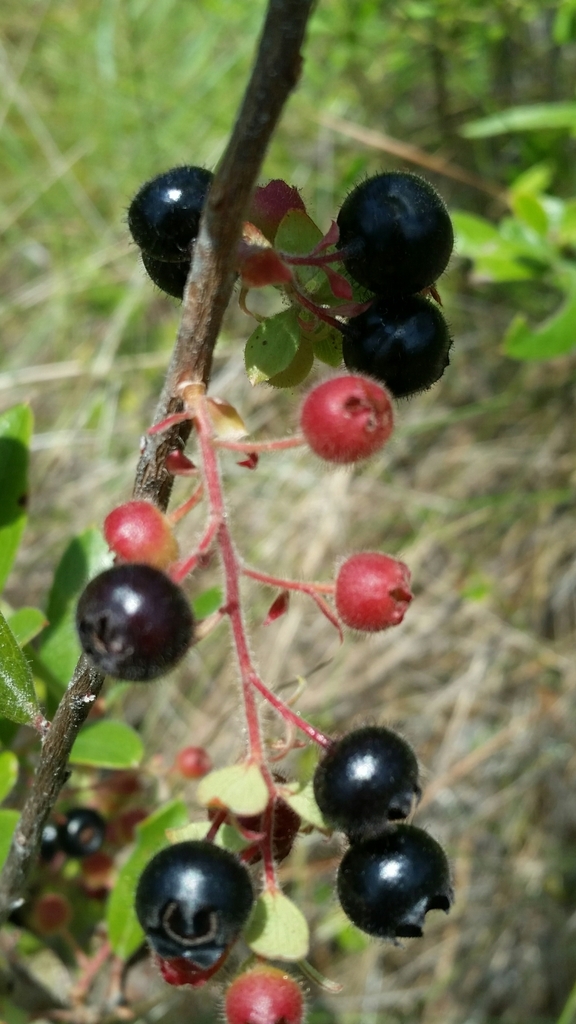
In spring, as the new leaves unfold, woolly huckleberry hangs out short sprays of small, white to pinkish, bell-shaped flowers. They are followed in early summer by shiny black berries that look like hairy blueberries. They are edible, but like all huckleberries they contain ten small, hard seeds, and most of the crop goes to birds and other wildlife.
It is not a common nursery plant, but it is well worth growing in a bog garden or wet, acid site within its native range, and it is an important part of the shrub layer in restored wet savannas. This guide covers identification, range, growing conditions and wildlife value.
Identification
Huckleberries (Gaylussacia) look much like blueberries (Vaccinium) but have tiny resin dots on their leaves and fruit with ten hard seeds. Woolly huckleberry is the hairiest of the southeastern species, and it grows in wetter places than its relatives.
Growth Habit
Woolly huckleberry is an upright, sparsely branched shrub, usually 2 to 4 feet tall and occasionally to about 5 feet. It spreads by underground stems and can form loose colonies. The young twigs are densely covered with long, spreading, gland-tipped hairs, which become less noticeable as the bark ages to gray-brown.
Leaves
The leaves are deciduous, alternate, simple and untoothed, elliptic to oblanceolate, generally 1 to 2½ inches long. They are covered on both sides with glandular hairs and dotted beneath with small yellowish resin glands. New leaves are bright green, sometimes red-tinged, and in fall they turn shades of red and orange before dropping.
Flowers
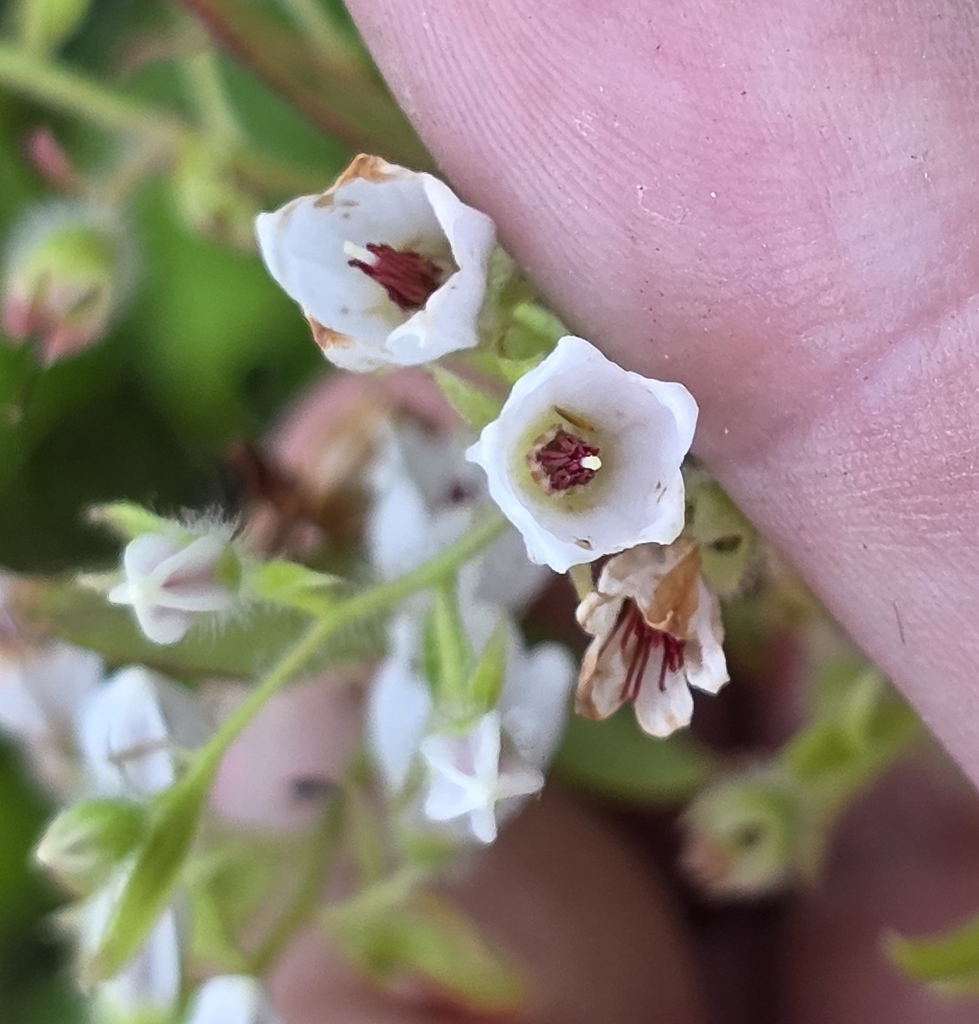
The flowers open from about March to May, in short racemes from the previous year’s twigs. Each flower is bell-shaped, about ¼ to ⅓ inch long, white to pink, with five short lobes and dark reddish stamens inside. The flower stalks and calyx are glandular-hairy.
Fruit
The fruit is a round, glossy black berry about ⅓ inch across, ripening in early to midsummer through a red stage. It is bristly with glandular hairs and contains ten small, hard seeds. It is juicy and edible, though seedier than a blueberry.
Quick Facts
| Scientific Name | Gaylussacia mosieri |
| Family | Ericaceae (heath family) |
| Plant Type | Deciduous shrub; spreads by rhizomes |
| Mature Height | 2–4 ft (up to about 5 ft) |
| Mature Spread | 2–4 ft; colonies wider over time |
| Growth Rate | Slow to moderate |
| Sun Exposure | Full sun to part shade |
| Water Needs | High; moist to wet soil |
| Soil Type | Wet sandy peat, acid sands and seepage soils |
| Soil pH | About 4.0–5.5 (strongly acid) |
| Bloom Time | March–May |
| Flower Color | White to pink |
| Fall Color | Red to orange |
| Fruit | Black, glandular-hairy berries, early summer |
| Deer Resistant | No; deer browse huckleberries |
| USDA Hardiness Zones | 8–9 |
Native Range
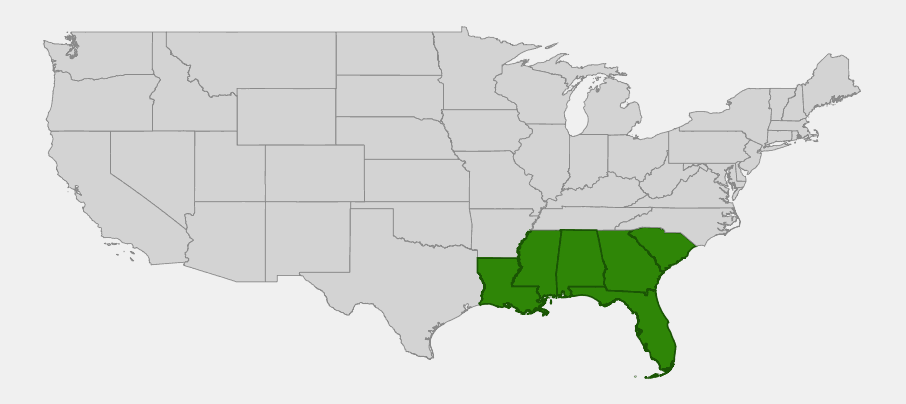
Woolly huckleberry is a Gulf and southern Atlantic Coastal Plain species. USDA PLANTS lists it as native to Alabama, Florida, Georgia, Louisiana, Mississippi and South Carolina. The center of its range is the region of wet pine savannas and seepage bogs along the northern Gulf Coast, from southeastern Louisiana across south Mississippi and Alabama to the Florida Panhandle.
In Florida it grows mainly in the Panhandle and the northern part of the state, with especially good populations in the Apalachicola region of Liberty and Franklin counties. It becomes scattered and local in Georgia and South Carolina at the northeastern edge of its range.
Its habitats are wet and acid: pitcher plant bogs, hillside seepage bogs, wet pine savannas and flatwoods, and the edges of bay swamps and titi thickets. Many of these are fire-maintained communities. Like other huckleberries, it resprouts from rhizomes after fire, and it declines where long fire suppression lets taller shrubs and trees close in.
📋 Regional plant lists featuring Woolly Huckleberry: North & South Florida · Alabama, Georgia & Mississippi · North & South Carolina · Arkansas, Louisiana, Eastern Oklahoma & Eastern Texas
Growing & Care Guide
Woolly huckleberry is a specialist of wet, acid, sunny ground, and it grows best where those conditions are recreated. It is occasionally offered by native plant nurseries that specialize in Gulf Coast species. Buy propagated plants rather than digging them from bogs, which damages fragile wetland habitat.
Light
Give it full sun to light shade. Plants in open bogs and savannas flower and fruit most heavily. In heavy shade they become thin and rarely bloom.
Soil & Water
Plant in acid, nutrient-poor, constantly moist to wet soil, such as sandy peat, or a mix of peat and sand in a lined bog bed. It tolerates seasonal flooding and saturated soil but not dry, alkaline or limey soil. Use rainwater where possible, and do not fertilize.
Planting Tips
Plant in late fall or winter while the shrub is dormant. It works well at the back of a bog garden, behind pitcher plants and other low bog plants, or along the wet edge of a pond or swale. Mulch with pine straw to keep the root zone cool and acid.
Pruning & Maintenance
Little pruning is needed. Every few years, cut the oldest stems to the ground in late winter to rejuvenate the clump, imitating the effect of fire. Remove encroaching woody seedlings so the bog stays sunny.
Propagation
Divide rooted suckers from the edge of a colony in winter. Softwood cuttings can be rooted in late spring in an acid peat and perlite mix under mist. Seed is slow and erratic to germinate and is best left to specialist growers.
Landscape Uses
- Bog gardens: a woody backdrop for pitcher plants, sundews and other bog perennials
- Wet savanna and seepage bog restoration: part of the native shrub layer in fire-managed sites within its range
- Pond and swale edges: for wet, acid, sunny soil where few shrubs thrive
- Wildlife gardens: spring flowers for native bees and summer berries for birds
Wildlife & Ecological Value
Woolly huckleberry’s flowers and fruit support pollinators, birds and mammals in some of the most species-rich habitats in North America, the wet pine savannas and pitcher plant bogs of the Gulf Coast.
For Pollinators
The small bell-shaped flowers are visited by bumblebees and other native bees, which collect nectar and pollen by vibrating the flowers. Because it blooms in early spring, it is a useful early food source for bumblebee queens establishing new colonies.
For Birds
The berries are eaten by birds such as northern bobwhite, wild turkey, northern mockingbird, gray catbird, brown thrasher and eastern towhee. The shrub layer gives cover to birds of open pine savannas.
For Mammals
Black bears, raccoons, opossums, foxes and other mammals eat the fruit. Deer browse the leaves and twigs, especially the fresh shoots that appear after a fire.
Ecosystem Role
Woolly huckleberry is a characteristic shrub of the Gulf Coast savanna and bog flora. Its rhizomes let it survive frequent fires, and like other heath family members it depends on root fungi (ericoid mycorrhizae) to absorb nutrients from poor, acid peat. Its fruit adds to the summer food supply in wet pinelands.
Cultural & Historical Uses
John Kunkel Small described Gaylussacia mosieri in 1927 from Florida material, naming it for Charles A. Mosier, a Florida plantsman and park superintendent who worked with Small on the flora of the state.
The genus Gaylussacia honors the French chemist Joseph Louis Gay-Lussac. Huckleberries of several species were gathered as food by Native Americans and later settlers across the eastern United States. In the Gulf Coast region, woolly huckleberry’s fruit was likely picked along with other wild huckleberries and blueberries, but there is little record of special uses for this species.
Today woolly huckleberry is mainly of interest to botanists, wetland restorationists and bog gardeners. Its presence in a savanna is a sign of intact, wet, acid soils, and land managers working to restore Gulf Coast pitcher plant bogs often encounter it returning after prescribed fires.
Frequently Asked Questions
Are woolly huckleberry berries edible?
Yes. The black berries are juicy and edible, though they are hairy and contain ten small, hard seeds, so they are crunchier than blueberries. They are best eaten fresh or cooked into jams.
Why is it called woolly huckleberry?
Almost every part of the plant, including twigs, leaves, flower stalks and fruit, is covered in long hairs, many of them tipped with tiny glands. The fuzzy look sets it apart from other southeastern huckleberries.
How is a huckleberry different from a blueberry?
Huckleberries (Gaylussacia) have resin dots on their leaves and fruit with ten hard, seed-like nutlets. Blueberries (Vaccinium) have many tiny, soft seeds.
Can I grow woolly huckleberry in an ordinary garden bed?
Usually not. It needs constantly moist, acid, nutrient-poor soil and plenty of sun. A bog garden or the wet edge of a pond is the best place for it.
Does woolly huckleberry need fire?
In the wild it depends on periodic fire to keep its sunny, open habitats from being shaded out. In a garden, occasional cutting back of old stems and removal of overtopping shrubs has a similar effect.

Looking for a nursery that carries Woolly Huckleberry?
Browse our native plant nursery directory: Alabama · Florida & Georgia · Louisiana & Mississippi · South Carolina