
Seashore Dropseed (Sporobolus virginicus)
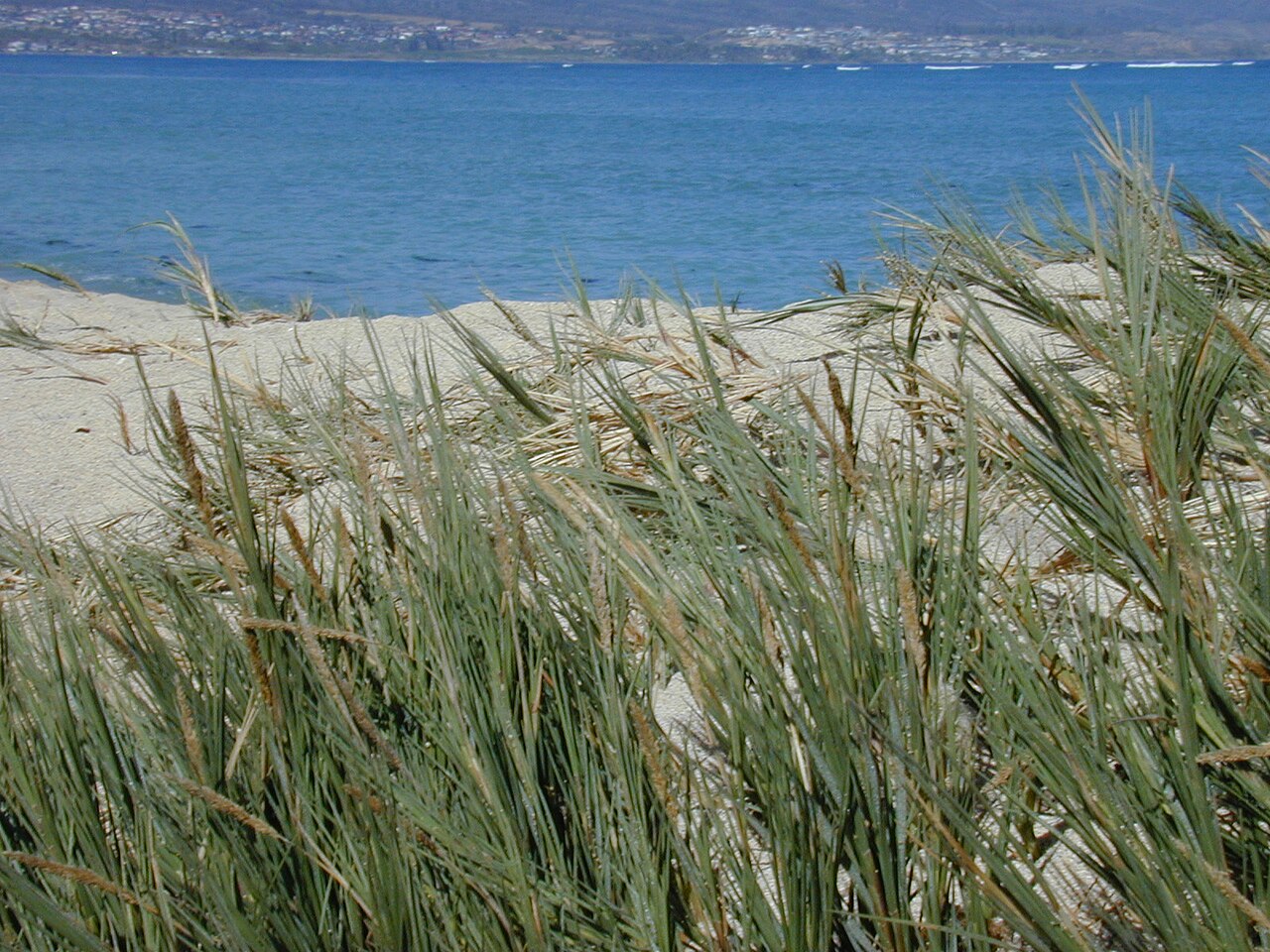
Sporobolus virginicus, known as Seashore Dropseed, is a low, mat-forming perennial grass of beaches, dunes and salt marsh edges. It spreads by long, creeping rhizomes that knit loose sand together, and it sends up short, stiff stems with leaves arranged in two neat rows. In summer and fall it produces narrow, spike-like seed heads of tiny grayish spikelets. It is one of the most salt-tolerant grasses on the Atlantic and Gulf coasts.
It belongs to the grass family (Poaceae) and to the dropseed genus Sporobolus, whose name means “seed thrower”, for the way the ripe seeds fall free from the spikelets. Both the Atlas of Florida Plants and USDA PLANTS call it seashore dropseed. In Hawaii it is called ʻakiʻaki, and in Australia it is known as sand couch or saltwater couch.
Seashore dropseed is native along the coast from Virginia and Maryland to Florida and west to Texas, and it is also native in Hawaii, Puerto Rico and the U.S. Virgin Islands. It is mainly a plant for coastal restoration and beachfront landscapes; it is rarely sold at ordinary garden centers, but some native and restoration nurseries grow it. This guide covers identification, range, care and wildlife value.
Identification
Seashore dropseed can be recognized by its creeping, mat-forming habit, its short, stiff, sharp-tipped leaves arranged in two flat rows along the stem, and its narrow, dense, grayish seed heads.
Rhizomes & Stems
Plants spread by long, scaly, whitish rhizomes and sometimes by stolons on the surface, forming loose to dense mats. The upright stems are usually 6 to 24 inches tall, stiff, and densely leafy, often branching near the base.
Leaves
The leaves are short, usually 1 to 4 inches long and narrow, stiff, smooth and often rolled inward, ending in a sharp point. They are arranged in two opposite rows (distichous), so a stem looks flat and fishbone-like from above. Leaf color is gray-green to bright green, turning tan in winter in the northern part of its range.
Flowers & Seed Heads
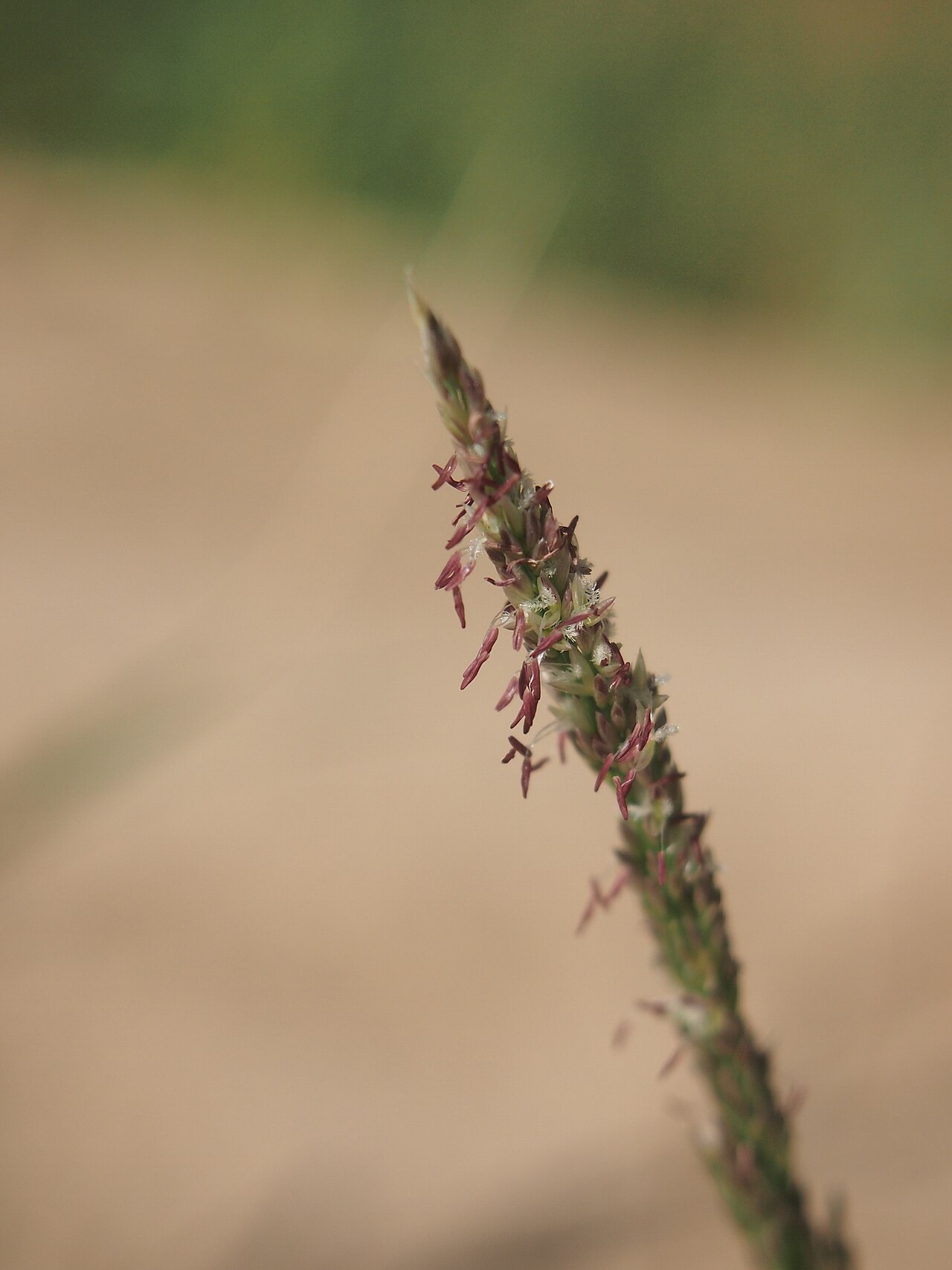
The flower head is a narrow, dense, spike-like panicle about 1 to 4 inches long. It is made of many tiny spikelets, each about ⅛ inch long and holding a single flower; they are shiny and gray-green to lead-gray, sometimes purplish. During flowering, small anthers dangle from the spikelets. Bloom is in summer and fall, roughly June to November.
Seeds
As in other dropseeds, the ripe seed (grain) falls free of its husk. Seed set is often low, and the plant spreads mainly by rhizomes.
Similar Species
Saltgrass (Distichlis spicata) looks very similar and grows in the same places, but its flower heads are made of larger, flattened, several-flowered spikelets, and male and female flowers are on separate plants. Saltmeadow cordgrass has longer, wiry leaves and flower heads of several one-sided spikes. Sea oats is much taller, with large, drooping seed heads.
Quick Facts
| Scientific Name | Sporobolus virginicus (L.) Kunth; same name in the Atlas of Florida Plants and USDA PLANTS |
| Family | Poaceae (grass family) |
| Plant Type | Warm-season perennial grass, rhizomatous |
| Mature Height | 6–24 in |
| Mature Spread | Spreads indefinitely by rhizomes |
| Growth Rate | Moderate to fast |
| Sun Exposure | Full sun |
| Water Needs | Low to high; tolerates drought and brief tidal flooding |
| Soil Type | Beach sand, shell, or salty marsh soils |
| Soil pH | Neutral to alkaline, about 6.5–8.5 |
| Bloom Time | Summer–fall (about June–November) |
| Flower Color | Gray-green to purplish spikelets (not showy) |
| Fall Color | Tan in winter in northern areas; evergreen in south Florida |
| Fruit | Tiny free grains; seed set often low |
| Deer Resistant | Moderate; grazed by livestock but rarely browsed by deer |
| USDA Hardiness Zones | 7b–11 |
Native Range
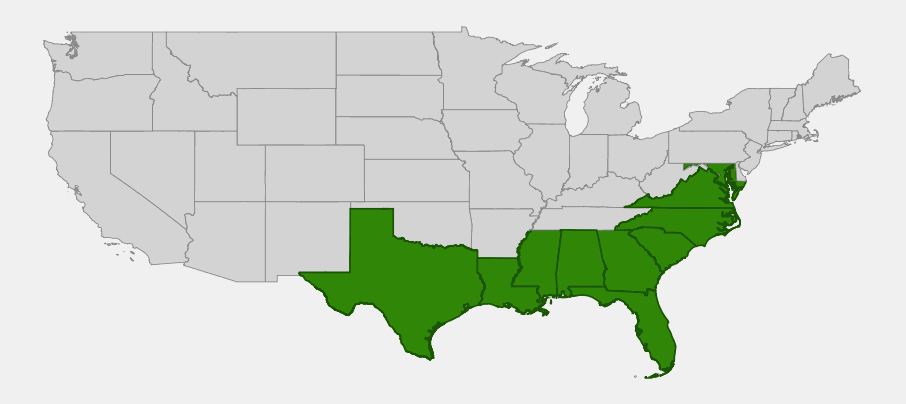
In the continental United States, seashore dropseed grows along the Atlantic and Gulf coasts. USDA PLANTS lists it as native in Maryland, Virginia, North Carolina, South Carolina, Georgia, Florida, Alabama, Mississippi, Louisiana and Texas, as well as Hawaii, Puerto Rico and the U.S. Virgin Islands. In Florida, the Atlas of Florida Plants maps it in coastal counties all around the state, from the panhandle to the Keys.
Beyond the United States it is one of the most widespread coastal grasses in the world, native on tropical and warm-temperate shores of the Caribbean, Mexico, Central and South America, Africa, Asia and Australia. Puerto Rico and Hawaii are not shown on the map.
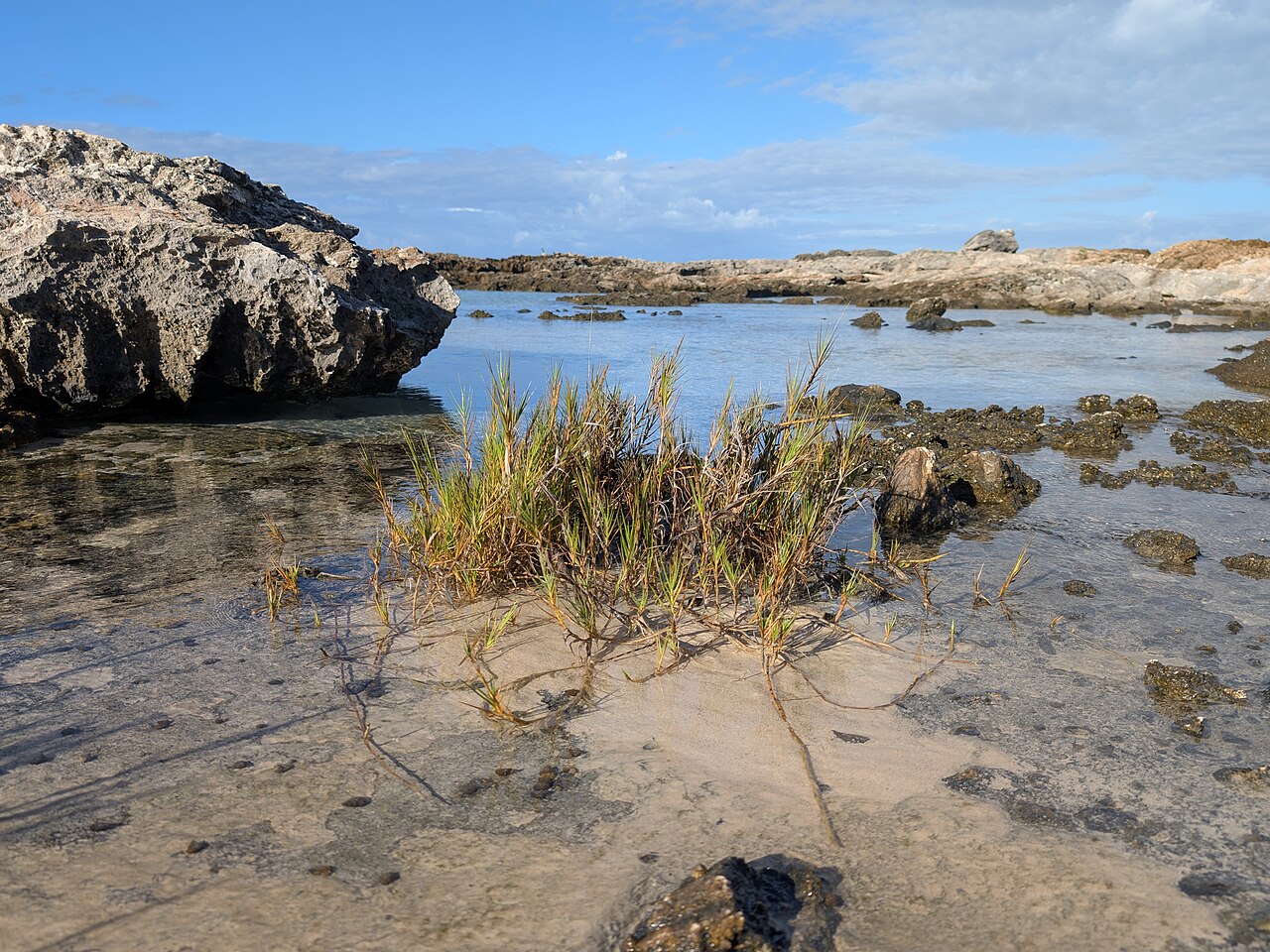
It grows on upper beaches and foredunes, in swales between dunes, on the high edges of salt marshes and mangroves, on salt flats, and on coastal rock. It tolerates salt spray, salty soils, burial by blowing sand and occasional tidal flooding.
📋 Regional plant lists featuring Seashore Dropseed: North & South Florida · Alabama, Georgia & Mississippi · North & South Carolina · Maryland, Virginia & West Virginia · Arkansas, Louisiana, Eastern Oklahoma & Eastern Texas · South & West Texas · Hawaii
Growing & Care Guide
Seashore dropseed is a working plant for the coast rather than an ornamental. It is used to stabilize dunes and the high edges of salt marshes, and it can serve as a tough, salt-proof groundcover in beachfront yards. Look for it at native plant and coastal restoration nurseries, and check local rules before planting on a beach or dune, where permits are often required.
Light
Plant it in full sun. It thins out in shade.
Soil & Water
It grows in pure beach sand, shell, and salty or brackish soils, and does best where it has access to some moisture below the surface. Once established it is very drought tolerant and handles salt spray, salty irrigation water and short periods of tidal flooding. It does poorly in rich, acidic, fresh-water garden soils, where other grasses outcompete it.
Planting Tips
Plant plugs or rooted sprigs in spring or early summer, about 12 to 18 inches apart, and water them until new growth appears. In time the rhizomes fill in to form a continuous, low mat. Use it on the landward side of dunes, around salt marsh margins and on coastal slopes, together with taller dune grasses such as sea oats. It spreads steadily by rhizomes, so give it room or plant it where spreading is wanted; it is not suitable for small, tidy beds.
Pruning & Maintenance
Very little care is needed. It can be mowed occasionally to keep it low, but this is rarely necessary. Avoid fertilizer, which mainly encourages weedy grasses. Do not walk on planted dunes; foot traffic breaks the rhizomes and causes erosion.
Propagation
It is propagated mainly by dividing mats or planting rhizome and stem sections (sprigs), each with a few nodes. Seed set is often poor and seed is rarely available, so vegetative propagation is the standard method in restoration work.
Landscape Uses
- Dune stabilization: binds sand with dense rhizomes
- Salt marsh and shoreline restoration: for the high marsh and upper beach
- Coastal groundcover: salt-proof, low-growing turf alternative near the shore
- Erosion control: on coastal slopes, spoil banks and causeway edges
- Living shorelines: upper-edge plantings in shoreline stabilization projects
Wildlife & Ecological Value
Seashore dropseed is a modest plant, but on beaches and marsh edges its dense mats are an important part of the habitat for coastal wildlife.
For Pollinators
Like most grasses, it is wind-pollinated and offers little to pollinators, though bees sometimes collect its pollen.
For Birds
Its mats provide cover and nesting sites for shorebirds and marsh birds at the upper edge of the beach and marsh, and seed-eating birds such as sparrows pick seeds from the heads.
For Mammals
Small mammals shelter in the mats, and livestock graze it where coastal pastures reach the shore.
Ecosystem Role
Its rhizomes trap and hold windblown sand, helping to build and stabilize dunes and protect the land behind them from storm damage. On the high marsh it helps hold soil and provides cover for fiddler crabs, insects and other small animals.
Cultural & Historical Uses
Carl Linnaeus first described this grass in 1753 as Agrostis virginica, based on plants from Virginia, and the German botanist Carl Sigismund Kunth later moved it to Sporobolus. The species name virginicus therefore refers to Virginia, near the northern end of its North American range.
In Hawaii, ʻakiʻaki is a characteristic native strand plant and is widely used in coastal restoration and landscaping because of its tolerance of salt and wind. In Australia, saltwater couch is also used as a salt-tolerant turf on coastal sites.
Because it is so salt tolerant, seashore dropseed has been studied by researchers interested in salt tolerance and as a possible turf or forage grass for salty land and irrigation with brackish water.
Frequently Asked Questions
Is seashore dropseed good for lawns?
It can serve as a low, salt-tolerant groundcover near the beach, where few other grasses survive, but it is not a typical lawn grass and is rarely sold for turf in the U.S. It spreads by rhizomes and is best where a natural, informal look is wanted.
How do I tell seashore dropseed from saltgrass?
They look alike. Seashore dropseed has narrow, dense seed heads of tiny one-flowered spikelets, while saltgrass has larger, flattened, several-flowered spikelets, with male and female flowers on separate plants.
Does seashore dropseed spread?
Yes. It spreads steadily by long rhizomes, which is why it is valued for stabilizing dunes and marsh edges. Plant it where spreading is welcome.
Where can I buy seashore dropseed?
It is mainly sold as plugs by native plant and coastal restoration nurseries rather than garden centers. Check local regulations before planting on beaches or dunes.
Is seashore dropseed native to Hawaii?
Yes. USDA PLANTS lists it as native in Hawaii, where it is called ʻakiʻaki and grows on beaches and coastal rocks.

Looking for a nursery that carries Seashore Dropseed?
Browse our native plant nursery directory: Alabama · Florida & Georgia · Louisiana, Maryland & Mississippi · North Carolina · South Carolina, Texas & Virginia