
Hairy Chaffhead (Carphephorus paniculatus)
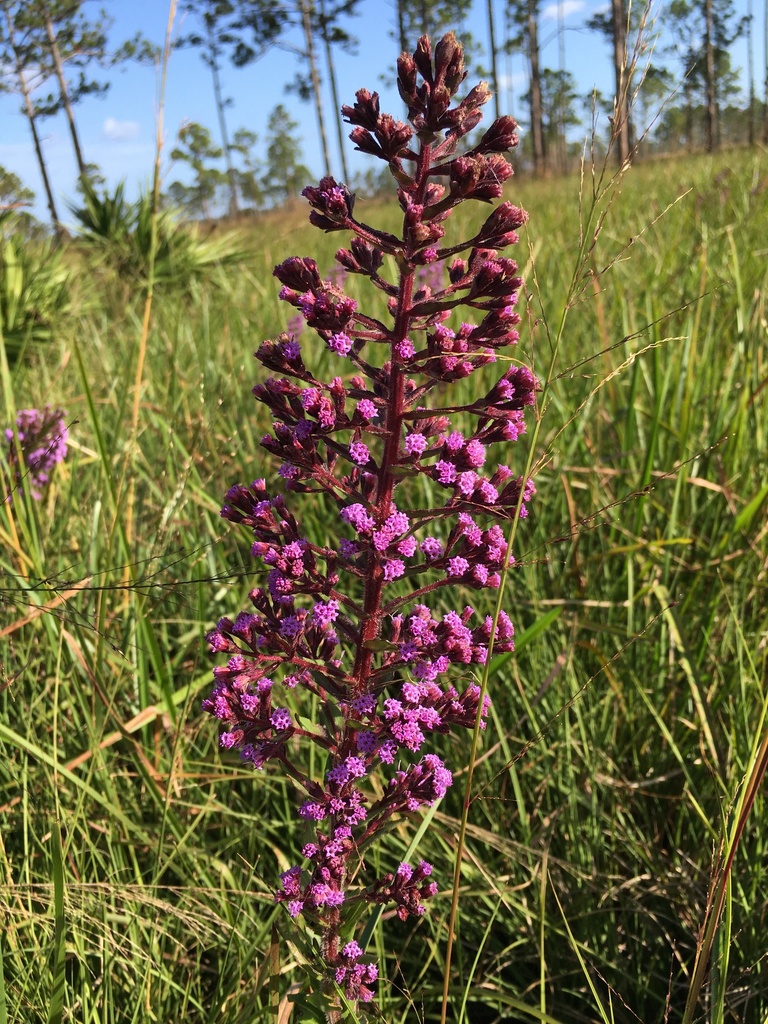
Carphephorus paniculatus, the Hairy Chaffhead, is one of the showiest fall wildflowers of the southeastern pine flatwoods. In autumn it sends up stiff, reddish, densely hairy stems 2 to 4 feet tall, crowded with small magenta to rose-purple flower heads in a long, narrow, spire-like cluster that looks at first glance like a blazing star. It is also known by its older scientific name, Trilisa paniculata, still used by many field guides and by iNaturalist.
It belongs to the aster family (Asteraceae) and to Carphephorus, a small genus of chaffheads found only in the southeastern Coastal Plain. Its closest relative is vanillaleaf or deer’s tongue (Carphephorus odoratissimus), but hairy chaffhead is easy to tell apart by its sticky-hairy stems and narrow, elongated flower cluster.
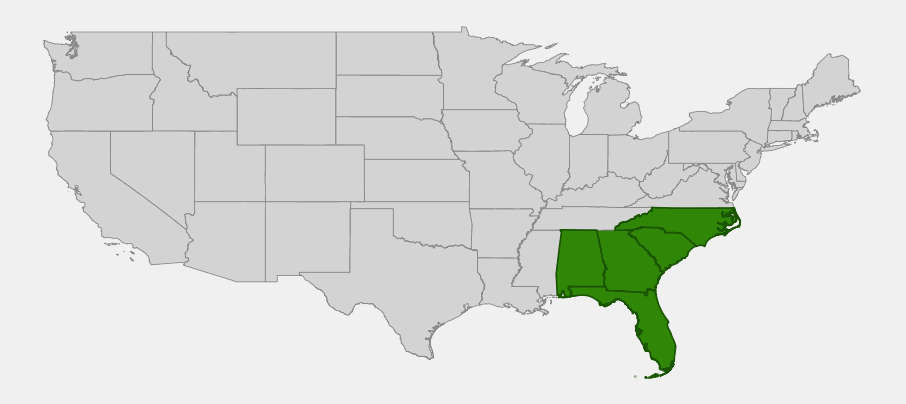
Hairy chaffhead is native to Florida, Georgia, Alabama, South Carolina and North Carolina. It blooms late, mostly from September into December, when it is an important nectar source for butterflies and bees in wet pinelands, and it is a fine plant for moist, sunny native gardens and flatwoods restorations.
Identification
In fall, the tall, narrow wands of purple flowers can be confused with blazing stars and with other chaffheads. Look at the stem: in hairy chaffhead it is covered with dense, often reddish, sticky glandular hairs, which gives the plant its name.
Basal Leaves
Plants overwinter as a rosette of fairly broad, oblanceolate to elliptic basal leaves, about 4 to 10 inches long, smooth, bright green and somewhat thick, with a slightly pointed tip. The rosettes are easy to overlook among grasses for most of the year.
Stems & Stem Leaves
The flowering stems are usually 2 to 4 feet tall, unbranched below the inflorescence, and densely covered with spreading, gland-tipped hairs that are often reddish or purplish. Stem leaves are much smaller than the basal ones, stalkless, and become progressively smaller upward, pressed close to the stem.
Flowers
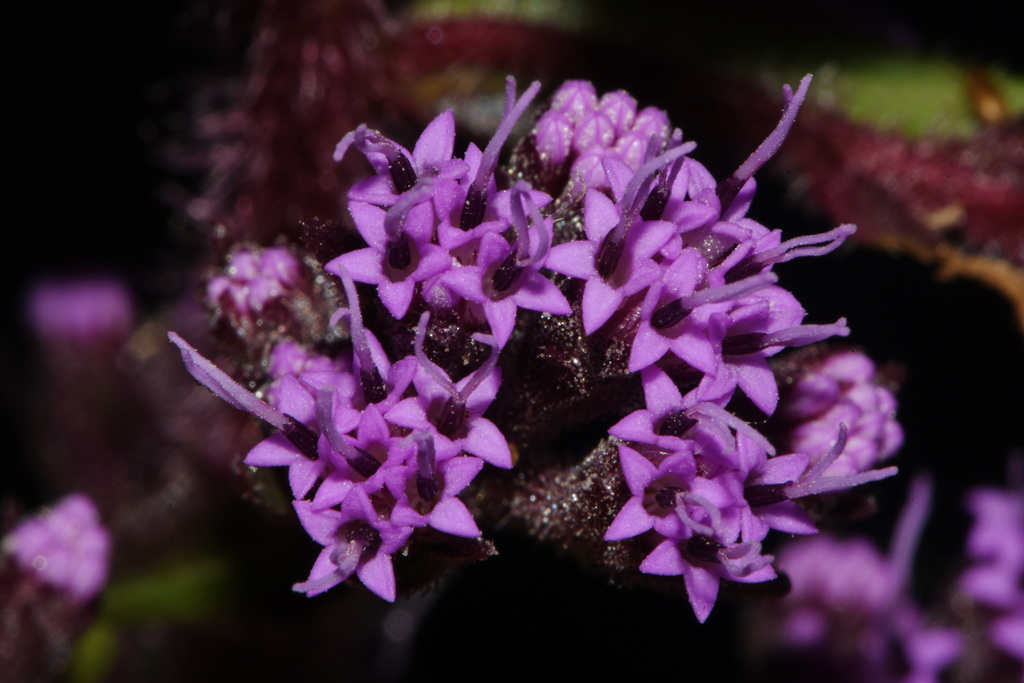
The flower heads are borne in a long, narrow, cylindrical cluster (panicle) occupying the upper part of the stem, often a foot or more long. Each head is small, about ¼ inch across, with several tubular, five-lobed florets that are magenta, rose-purple or lavender, and long style branches that give the cluster a fuzzy look. The bracts around each head are glandular-hairy and often dark purple. There are no ray florets. Bloom is mainly September to December, occasionally into January in Florida.
Fruit & Seeds
The seeds are small achenes topped with a ring of tawny bristles (pappus), which helps them spread by wind. The stems and empty heads remain standing into winter.
Similar Species
Vanillaleaf (C. odoratissimus) has smooth stems, a broader, flat-topped flower cluster and leaves that smell of vanilla when dried. Coastalplain chaffhead (C. corymbosus) and bristleleaf chaffhead have flat-topped clusters, and pineland chaffhead has smooth stems and fleshy leaves. Blazing stars (Liatris) lack the chaffy scales on the flower base and usually have stalkless heads in a dense spike.
Quick Facts
| Scientific Name | Carphephorus paniculatus (syn. Trilisa paniculata) |
| Family | Asteraceae (aster family) |
| Plant Type | Herbaceous perennial wildflower with a basal rosette |
| Mature Height | 2–4 ft in flower |
| Mature Spread | 6–12 in |
| Growth Rate | Moderate |
| Sun Exposure | Full sun |
| Water Needs | Moderate to high; moist to seasonally wet soil |
| Soil Type | Acidic sand or sandy peat |
| Soil pH | About 4.5–6.0 |
| Bloom Time | September–December (occasionally August–January) |
| Flower Color | Magenta to rose-purple |
| Fall Color | None notable; flowering stems turn tan in winter |
| Fruit | Small achenes with a bristly pappus |
| Deer Resistant | Unknown |
| USDA Hardiness Zones | 8–10 |
Native Range
Hairy chaffhead is native to the Atlantic and Gulf Coastal Plain. USDA PLANTS and the Lady Bird Johnson Wildflower Center record it from Florida, Georgia, Alabama, South Carolina and North Carolina. It is widespread in Florida, from the Panhandle to the central and southern peninsula, and reaches its northern limit in the coastal plain of southeastern North Carolina.
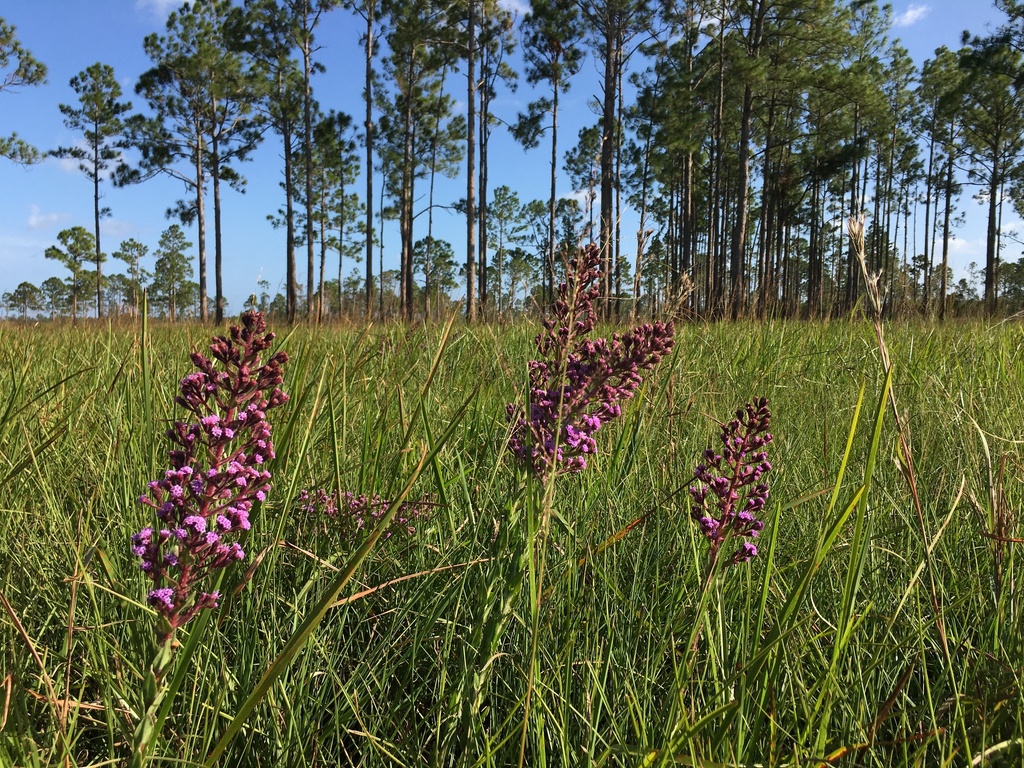
Its habitats are wet and mesic pine flatwoods, longleaf pine savannas, wet prairies, seepage slopes and the edges of bogs and cypress domes, almost always on acidic, sandy soils that are moist or wet for part of the year. USDA lists it as a facultative wetland (FACW) plant in the Coastal Plain.
It is not state-listed in Florida and is common where good flatwoods remain. Like many flatwoods wildflowers, it is favored by regular fire, which clears away shrubs and leaf litter; it often flowers most heavily the fall after a spring or summer burn.
📋 Regional plant lists featuring Hairy Chaffhead: North & South Florida · Alabama, Georgia & Mississippi · North & South Carolina
Growing & Care Guide
Hairy chaffhead is sometimes offered by Florida native nurseries and is a rewarding plant for moist, sunny, acidic sites, where it provides late-season color long after most wildflowers have finished.
Light
Plant it in full sun. In shade it produces weak, leaning stems and few flowers, and in the wild it declines where fire is excluded and shrubs close in.
Soil & Water
It does best in acidic, sandy soil that is moist to seasonally wet, such as a low area, a rain-garden edge or a flatwoods-style meadow. It tolerates short dry periods once established but not long droughts in very dry sand. Water during dry spells in the first year. Avoid fertilizer and lime.
Planting Tips
Plant in groups of several plants among bunchgrasses such as wiregrass, little bluestem or other native grasses, which support the tall stems and mimic its natural setting. Set rosettes at soil level and keep heavy mulch off the crowns.
Pruning & Maintenance
Leave the flowering stems standing into winter so the seeds can ripen and blow away, then cut them back in late winter. In a meadow or restoration, burn or mow in late winter or spring every year or two to keep woody plants from shading the rosettes.
Propagation
Grow it from fresh seed collected in early winter and sown on the surface of a moist, sandy mix. Mature clumps can also be divided carefully in late winter. Use seed from your own plants or a native nursery rather than wild collection.
Landscape Uses
- Butterfly gardens: a late-fall nectar source for butterflies, including migrating monarchs
- Flatwoods and savanna restoration: a characteristic fire-adapted wildflower of wet pinelands
- Rain gardens and moist meadows: in sunny, acidic, seasonally wet soils
- Native fall displays: tall purple spires with goldenrods and native grasses
Wildlife & Ecological Value
Hairy chaffhead blooms when the year’s last butterflies and bees are feeding heavily before winter, so a patch in flower can be busy with insects on warm fall days.
For Pollinators
The magenta flower heads are visited by many butterflies, including skippers, sulphurs, swallowtails and migrating monarchs that pass through the Southeast in October and November. Bees and wasps also visit. Because it flowers so late, it can be one of the few nectar sources still available in wet pinelands in November and December.
For Birds
Small seed-eating birds may eat some of the seeds in winter, and the open, grassy pinelands where it grows are habitat for birds such as Bachman’s sparrow and northern bobwhite.
For Mammals
It is of little food value to mammals; the sticky-hairy stems are not a favored browse.
Ecosystem Role
Hairy chaffhead is part of the diverse groundcover of longleaf and slash pine flatwoods, one of the most species-rich plant communities in North America. Its persistent basal rosettes survive frequent fires, and its late flowers extend the flowering season of the community into early winter.
Cultural & Historical Uses
The genus name comes from the Greek karphos (chaff) and phoros (bearing), for the small chaffy scales among the florets. The species name paniculatus refers to the branched, panicle-shaped flower cluster.
For much of the 20th century hairy chaffhead and vanillaleaf were placed in a separate genus, Trilisa, and many field guides, as well as iNaturalist, still use the name Trilisa paniculata. USDA PLANTS and the Atlas of Florida Plants include both species in Carphephorus.
Its relative vanillaleaf was harvested in Florida for its fragrant leaves, which contain coumarin and were used to flavor tobacco. There is no comparable record for hairy chaffhead, which is valued today as a late-season wildflower of the pinelands.
Frequently Asked Questions
Why is it called hairy chaffhead?
Its flowering stems and flower bracts are densely covered with sticky, gland-tipped hairs, and like other chaffheads it has small chaffy scales among the florets.
When does hairy chaffhead bloom?
Mostly from September to December, making it one of the latest-blooming wildflowers in southeastern pine flatwoods. In Florida a few plants may still flower in January.
Is hairy chaffhead the same as Trilisa paniculata?
Yes. Trilisa paniculata is an older name for the same plant. USDA PLANTS and the Atlas of Florida Plants now use Carphephorus paniculatus.
How is hairy chaffhead different from a blazing star?
Blazing stars (Liatris) usually have their flower heads tightly packed in a spike and lack chaffy scales on the flower base. Hairy chaffhead has a branched, panicle-shaped cluster, chaff among the florets, and very hairy stems.
Can I grow hairy chaffhead in a garden?
Yes, in full sun and moist, acidic, sandy soil. It does not do well in dry, rich or alkaline soils, or in shade.

Looking for a nursery that carries Hairy Chaffhead?
Browse our native plant nursery directory: Alabama · Florida & Georgia · North Carolina · South Carolina