
Florida Goldenaster (Chrysopsis floridana)
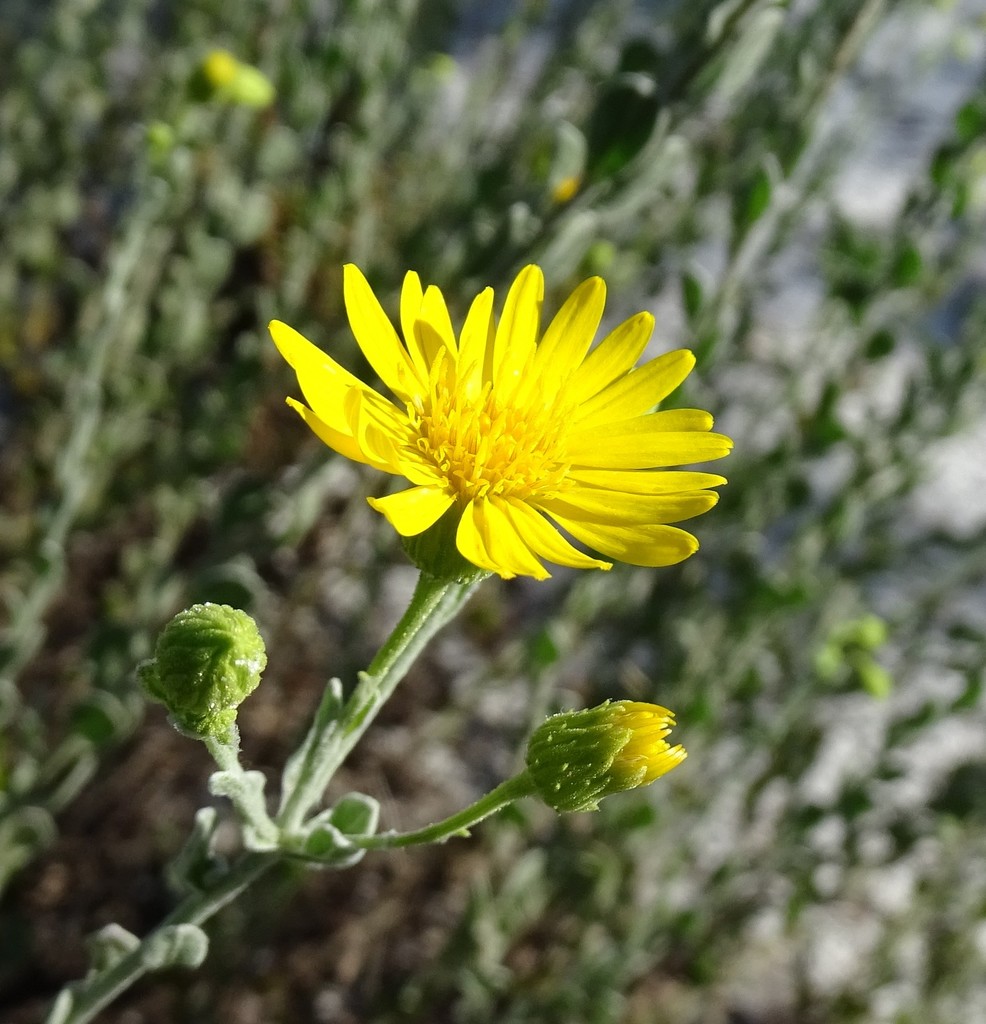
Chrysopsis floridana, known as Florida Goldenaster (also written Florida golden aster), is a rare wildflower found only in a small part of west-central Florida. It grows in open, sunny patches of white sand in scrub and scrubby flatwoods, where its silvery, woolly leaves stand out against the bare ground. In fall it produces bright golden-yellow, daisy-like flower heads about an inch across.
It is endemic to Florida per the Atlas of Florida Plants, and USDA PLANTS also records it only from Florida. It is listed as Endangered by the State of Florida (FDACS Regulated Plant Index). The U.S. Fish and Wildlife Service listed it as federally endangered in 1986, when only nine clusters of plants were known. After decades of habitat protection, prescribed fire and reintroductions, the Service removed it from the federal list due to recovery in a rule effective April 4, 2024.
Florida goldenaster belongs to the aster family (Asteraceae). It has also been treated as Heterotheca floridana and as Chrysopsis mariana var. floridana, a variety of the widespread Maryland Goldenaster. Because it remains state-listed, buy only nursery-propagated plants or seed, and never collect from the wild. This guide covers identification, range, care and its role in Florida scrub.
Identification
Florida goldenaster is a short-lived perennial that spends much of the year as a low rosette of silvery leaves and sends up leafy flowering stems in late summer and fall.
Growth Habit
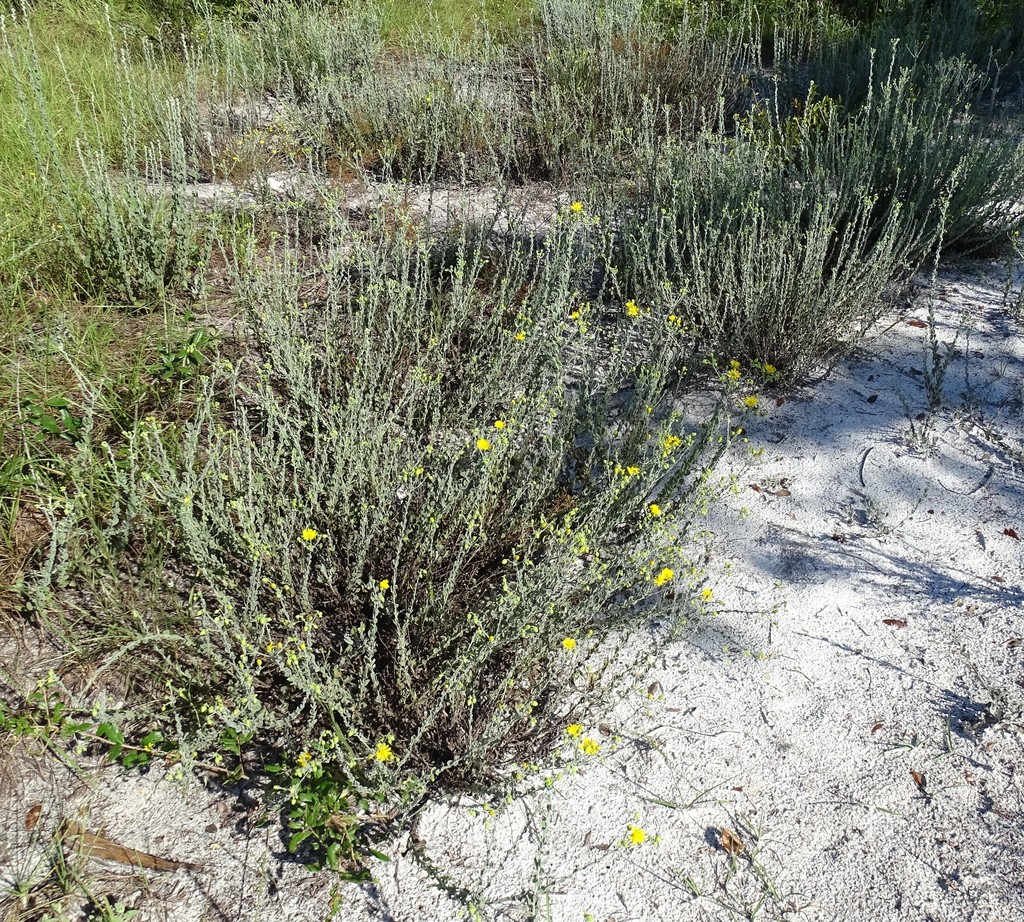
Plants form a basal rosette of leaves, from which one to several stems rise in summer. The flowering stems are usually 1 to 2 feet tall, upright or leaning, and densely leafy. Several stems from one rosette give mature plants a small, bushy look. Individual plants usually live only a few years and are replaced by seedlings.
Leaves
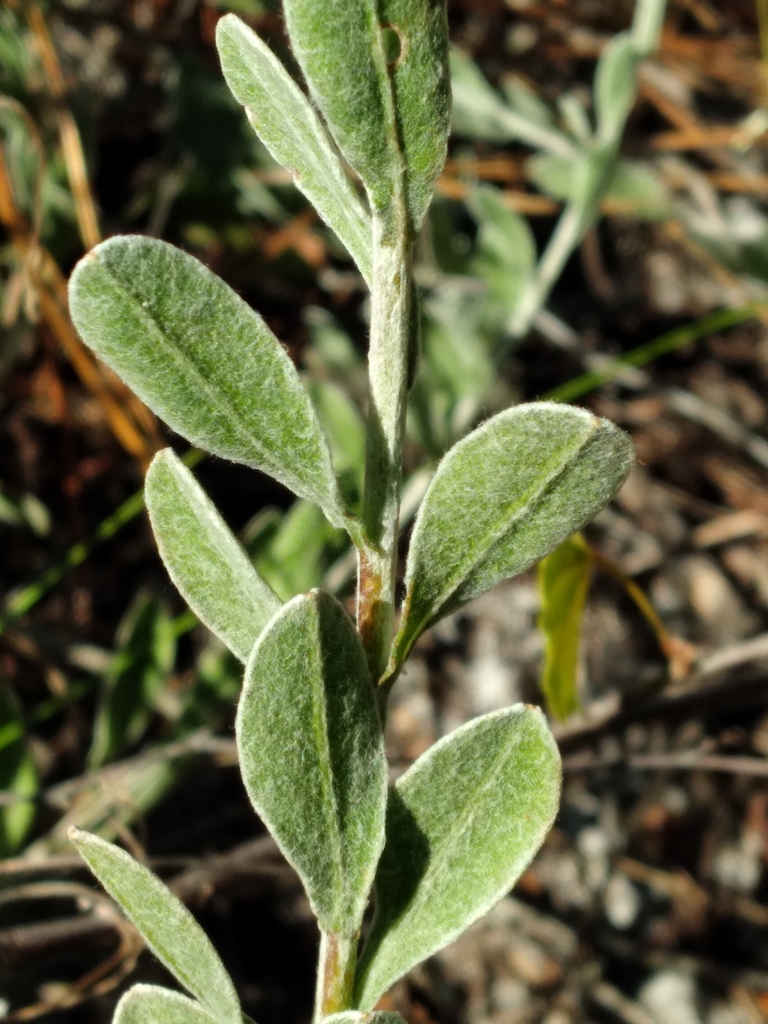
The leaves are oblong to spoon-shaped (obovate), about 1 to 2½ inches long, with smooth edges. Both surfaces are covered in dense, white, woolly hairs, which give the plant a soft, silvery gray-green color. Leaves along the stems are smaller than the basal leaves and clasp the stem closely.
Flowers
The flower heads are about 1 to 1½ inches across and are held in loose, flat-topped clusters at the stem tips. Each head has 15 to 30 or more bright yellow ray florets around a yellow center of disc florets. The bracts below the head are glandular and somewhat sticky. Bloom time is mainly fall, from about September into December.
Fruit & Seeds
After flowering, each floret produces a small achene topped with a tuft of tan bristles (pappus) that carries it on the wind. Seeds ripen in late fall and early winter and germinate in open, bare sand.
Quick Facts
| Scientific Name | Chrysopsis floridana Small (synonyms Heterotheca floridana, Chrysopsis mariana var. floridana) |
| Family | Asteraceae (aster family) |
| Plant Type | Short-lived herbaceous perennial |
| Mature Height | 1–2 ft |
| Mature Spread | 1–1½ ft |
| Growth Rate | Moderate |
| Sun Exposure | Full sun |
| Water Needs | Low; dry, excessively drained sand |
| Soil Type | Deep, well-drained white or tan sand |
| Soil pH | Acidic, about 4.5–6.0 |
| Bloom Time | Fall (about September–December) |
| Flower Color | Golden yellow |
| Fall Color | Silvery foliage year-round |
| Fruit | Small achene with a tuft of bristles, wind-dispersed |
| Deer Resistant | Moderate |
| USDA Hardiness Zones | 9–10 |
Native Range
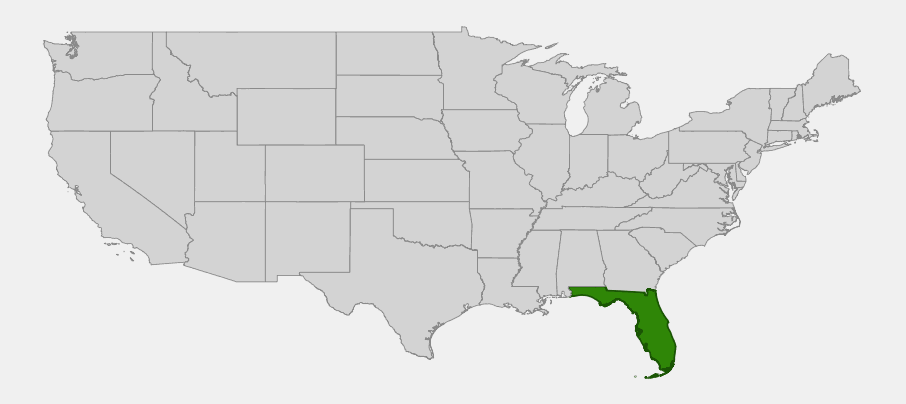
Florida goldenaster is endemic to Florida per the Atlas of Florida Plants: it grows naturally nowhere else in the world. USDA PLANTS and the Lady Bird Johnson Wildflower Center also record it only from Florida. Its range is a small area of west-central Florida centered on the Tampa Bay region, with most populations in Pinellas, Hillsborough and Manatee counties and a few farther inland.
Much of its original coastal scrub habitat around Tampa Bay was lost to development, which led to its federal listing in 1986. Since then, populations have been protected on public conservation lands, and new populations have been established through planting and seeding on suitable protected sites. These efforts led to its removal from the federal endangered species list in 2024 due to recovery. It remains listed as Endangered by the State of Florida on the FDACS Regulated Plant Index.
Its habitat is sunny openings in sand pine scrub, scrubby flatwoods and coastal scrub on deep, well-drained sand. It depends on periodic fire or other disturbance to keep these openings free of dense shrubs, and it also grows on some disturbed sandy sites such as old fields and roadside edges near scrub.
📋 Regional plant lists featuring Florida Goldenaster: North & South Florida
Growing & Care Guide
Florida goldenaster can be grown in a sunny, sandy garden in central and south Florida, but it is only occasionally available, usually from specialty Florida native nurseries or conservation plant sales. Because it is a Florida endemic and state-listed as Endangered, buy only nursery-propagated plants or seed and never collect plants or seed from the wild.
Light
Give it full sun. In shade, or when crowded by taller plants, it becomes weak and short-lived and flowers poorly.
Soil & Water
It needs deep, very well-drained sand and does best in poor, unfertilized soil like that of its native scrub. Water only to establish new plants. After that it should not need irrigation, and overwatering or heavy, organic soils will quickly rot the crown. Do not mulch heavily around the rosette; a bare or lightly mulched sandy surface is best.
Planting Tips
Plant small container plants in fall or early winter, or at the start of the rainy season, 12 to 18 inches apart. It is well suited to a scrub-style garden with other low, sun-loving natives, on dry sandy banks or in rock-free sandy beds. As a Florida endemic and state-listed plant, purchase nursery-propagated stock only, and never dig or collect plants or seed from the wild.
Pruning & Maintenance
Leave the flowering stems until the seeds have dispersed in winter, then cut them back. Because individual plants are short-lived, allow some seedlings to grow in open sand nearby so the planting renews itself. Keep taller plants and weeds from shading the rosettes.
Propagation
It is usually grown from seed. Sow fresh seed from cultivated plants on the surface of a sandy mix and keep it lightly moist; germination is usually good without special treatment. Transplant seedlings while small into their permanent spot.
Landscape Uses
- Scrub and sandhill gardens: silvery foliage and gold fall flowers in dry sand
- Pollinator gardens: fall nectar and pollen for native bees and butterflies
- Xeriscapes: needs no irrigation once established in sandy soil
- Conservation plantings: helps keep a Florida endemic in cultivation
- Habitat restoration: on protected scrub sites within its native range, under conservation guidance
Wildlife & Ecological Value
Florida goldenaster is a small but characteristic part of west-central Florida scrub, flowering in fall when many scrub plants are past bloom.
For Pollinators
The golden flower heads are visited by native bees, including sweat bees and small leafcutter bees, along with butterflies, skippers and beneficial flies, which find nectar and pollen in fall.
For Birds
Small seed-eating birds may take the seeds in late fall and winter, but the plant is not an important bird food.
For Mammals
It is of little food value to mammals. The woolly leaves are not favored by browsing animals.
Ecosystem Role
Florida goldenaster is a gap specialist: it colonizes bare, sunny sand opened up by fire or other disturbance and declines when shrubs close in. Its recovery depended on managing scrub with prescribed fire and on protecting remaining habitat around Tampa Bay.
Cultural & Historical Uses
The American botanist John Kunkel Small described Chrysopsis floridana in the early 20th century. The genus name Chrysopsis comes from Greek words meaning “golden appearance”, referring to the flowers.
Its federal listing in 1986 and delisting in 2024 make it one of the few Florida plants to be removed from the federal endangered species list due to recovery. The work involved local governments, state agencies, botanical gardens and conservation groups that protected sites and planted new populations.
Like other Florida scrub endemics, it is a reminder of how much of Florida’s unique biodiversity is concentrated in small patches of old sand dunes and ridges.
Frequently Asked Questions
Is Florida goldenaster still endangered?
It was removed from the federal endangered species list in 2024 due to recovery, but it is still listed as Endangered by the State of Florida (FDACS Regulated Plant Index). Buy nursery-propagated plants and never collect from the wild.
Where does Florida goldenaster grow?
It is endemic to Florida and grows naturally only in a small area of west-central Florida, mainly around Tampa Bay, in sandy scrub and scrubby flatwoods.
How is it different from Maryland goldenaster?
The Maryland Goldenaster is widespread in the eastern United States and has greener, less woolly leaves. Florida goldenaster has dense, silvery-woolly leaves and is restricted to west-central Florida.
Can I grow Florida goldenaster in my garden?
Yes, if you have full sun and deep, dry sand. It is occasionally sold by Florida native nurseries. Avoid rich soil, irrigation and shade.
When does Florida goldenaster bloom?
It blooms mainly in fall, from about September into December, with bright golden-yellow flower heads.

Looking for a nursery that carries Florida Goldenaster?
Browse our native plant nursery directory: Florida