
Chapman’s Blazing Star (Liatris chapmanii)
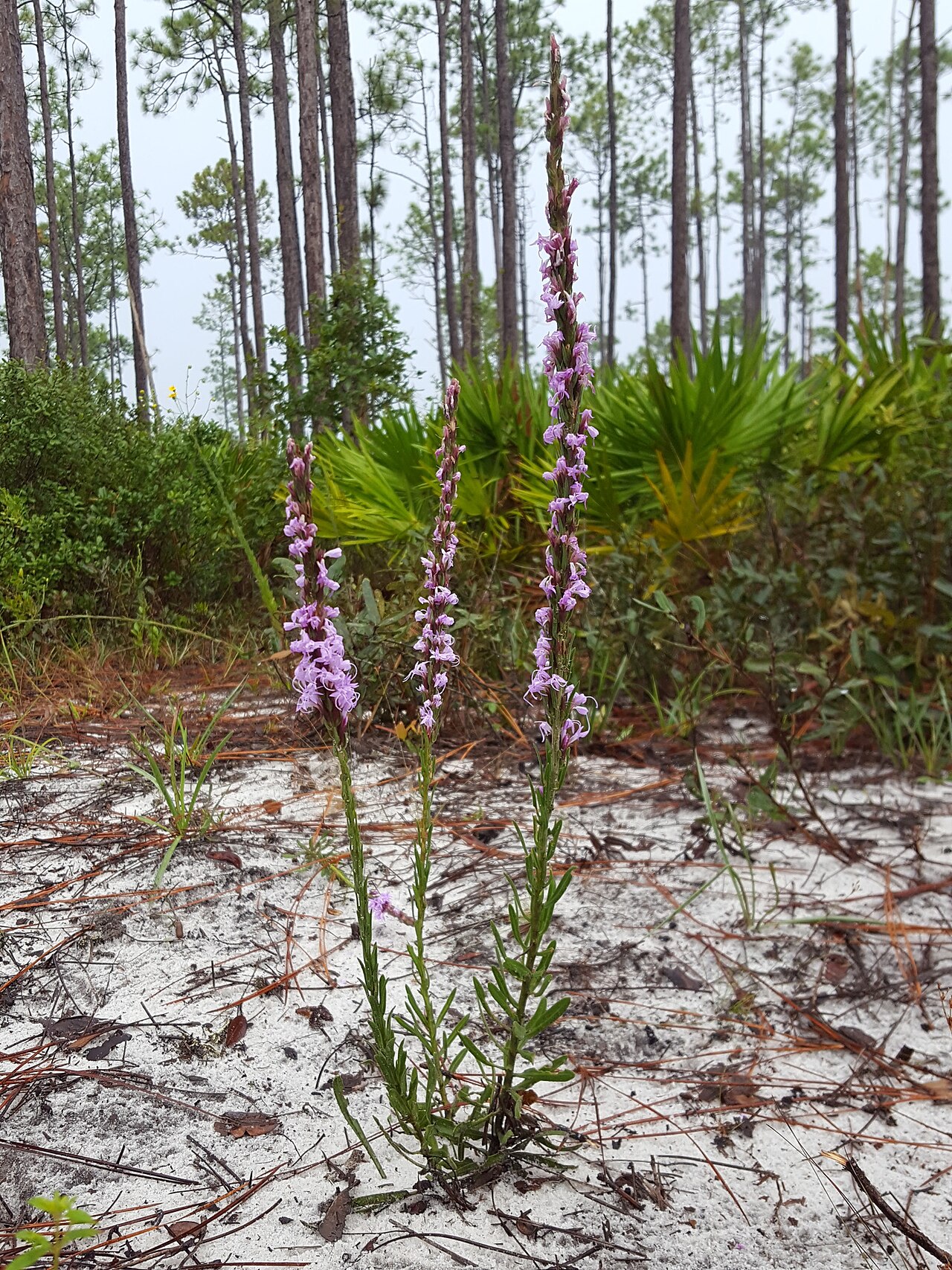
Liatris chapmanii, known as Chapman’s Blazing Star or Chapman’s gayfeather, is a stiff, upright wildflower of the deep, dry sands of Florida and the adjacent parts of Georgia and Alabama. Its leafy, hairy stems grow 1 to 3 feet tall and end in dense, cylindrical spikes of small lavender to rose-purple flower heads in late summer and fall. In Florida scrub and sandhills it is one of the showiest fall wildflowers.
It belongs to the aster family (Asteraceae). The Atlas of Florida Plants calls it Chapman’s gayfeather, while USDA PLANTS uses Chapman’s blazing star; this guide uses the blazing star name, which is more widely used by gardeners. Older works sometimes list it as Lacinaria chapmanii. The species honors Alvan Wentworth Chapman, a physician and botanist from Apalachicola, Florida, who wrote the first comprehensive flora of the southern United States.
Chapman’s blazing star grows in Florida scrub, scrubby flatwoods, longleaf pine sandhills, coastal dunes and pine rocklands, nearly throughout Florida, and reaches southwestern Georgia and southern Alabama. It is extremely drought tolerant, a magnet for butterflies and bees, and a fine plant for dry, sunny, sandy gardens. This guide covers identification, range, care and wildlife value.
Identification
Chapman’s blazing star is best recognized by its densely leafy, finely hairy stems, its short, stiff leaves that continue up into the flower spike, and its compact, cylindrical spikes of small heads with only three or four florets each.
Corm & Stems
It grows from a rounded underground corm. The stems are stiff and upright, usually 1 to 3 feet tall (occasionally taller), and covered with short, spreading hairs. A mature plant may produce one to several stems.
Leaves
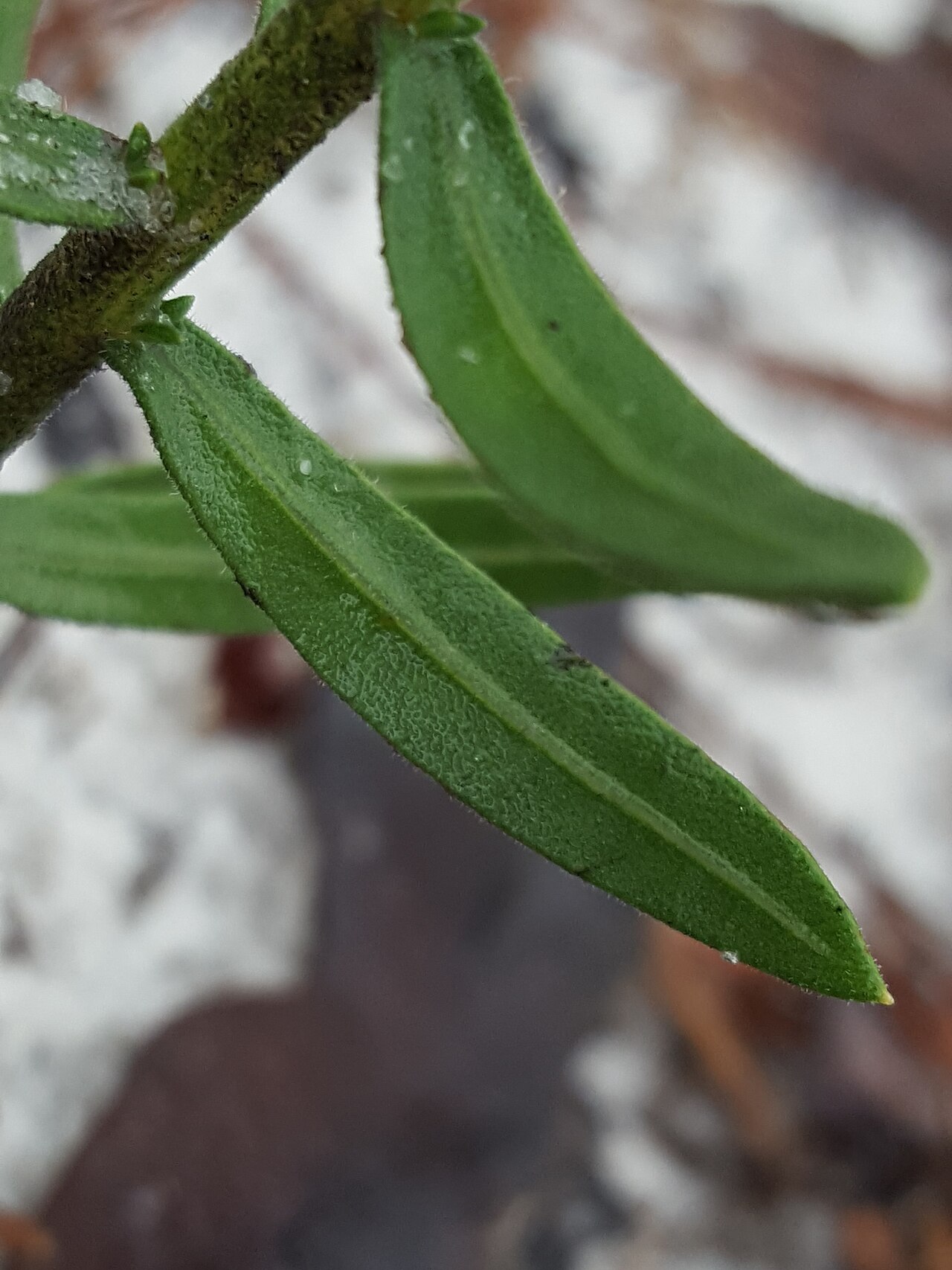
The leaves are narrow, stiff and crowded along the stem, with a single prominent vein. The lower ones are a few inches long, and they gradually become shorter upward, so the stem looks evenly leafy right up to the flowers. The leaves are gray-green and slightly rough or finely hairy.
Flowers
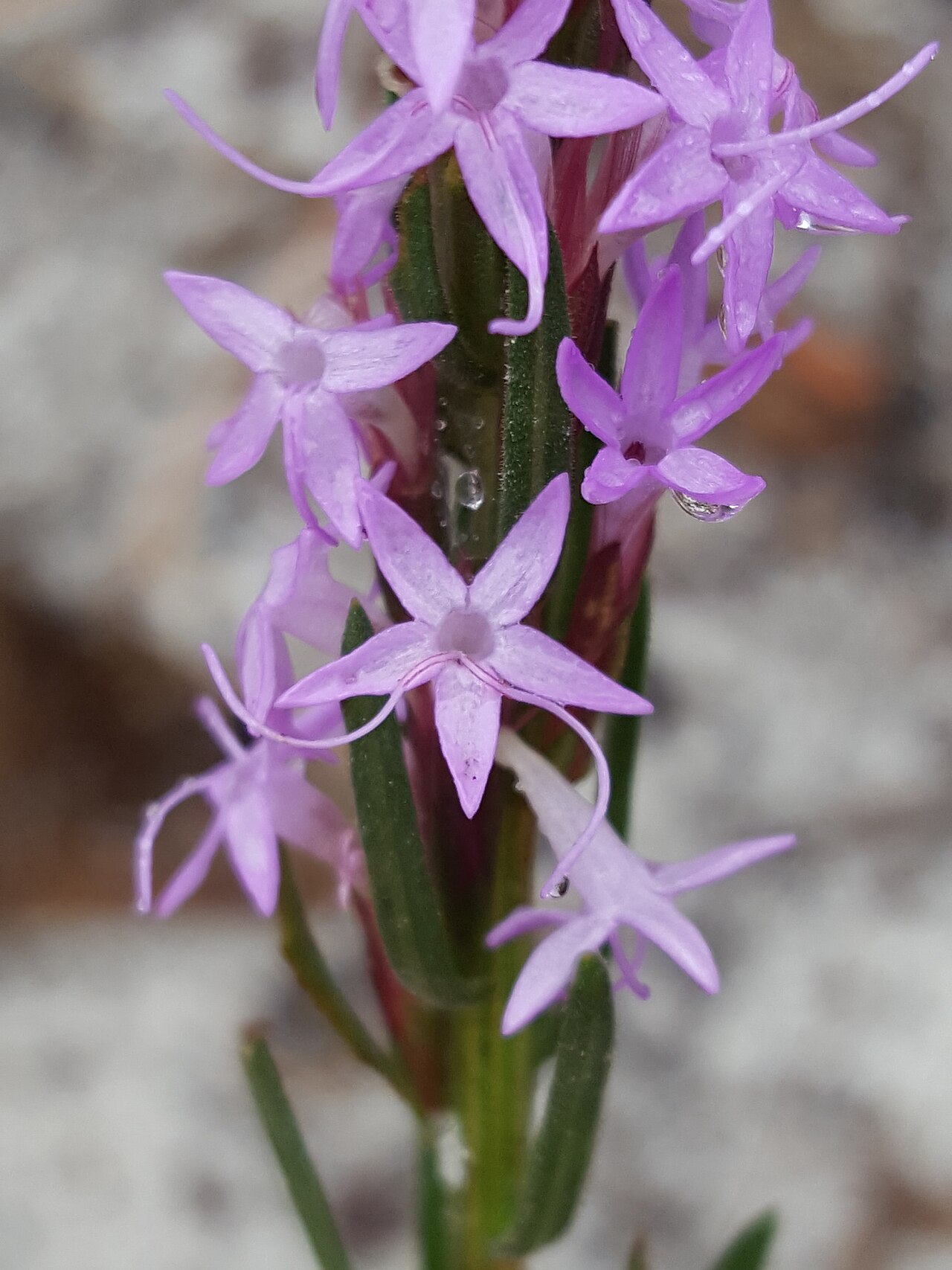
The flower heads are packed into a dense, cylindrical spike, often 4 to 12 inches long. Each small head contains only three or four tubular florets, which are lavender to rose-purple (rarely white) and have long, curling, two-branched styles. The bracts around each head are pointed and often tinged purple. Flowering is from August to October, sometimes into November.
Fruit & Seeds
Each floret produces a small, ribbed seed (cypsela) topped with a ring of feathery bristles that carries it on the wind in late fall.
Similar Species
Shortleaf gayfeather (L. tenuifolia) grows in the same habitats and blooms at the same time, but it is taller and more slender, with smooth stems, thread-like basal leaves and four or five florets per head. Dense blazing star (L. spicata) grows in moist soils and has longer, smooth leaves. Florida’s other scrub blazing stars, such as the endangered scrub blazing star (L. ohlingerae), have larger heads with many more florets.
Quick Facts
| Scientific Name | Liatris chapmanii Torr. & A. Gray (syn. Lacinaria chapmanii); Atlas name Chapman’s gayfeather |
| Family | Asteraceae (aster family) |
| Plant Type | Herbaceous perennial from a corm |
| Mature Height | 1–3 ft in flower |
| Mature Spread | 6–12 in |
| Growth Rate | Moderate |
| Sun Exposure | Full sun |
| Water Needs | Low; very drought tolerant once established |
| Soil Type | Deep, well-drained sand |
| Soil pH | Acidic to neutral, about 4.5–7.0 |
| Bloom Time | Late summer–fall (August–October) |
| Flower Color | Lavender to rose-purple |
| Fall Color | Spikes in bloom; stems turn tan in winter |
| Fruit | Small ribbed seeds with feathery bristles |
| Deer Resistant | Low; deer and rabbits may browse young shoots |
| USDA Hardiness Zones | 8a–10b |
Native Range
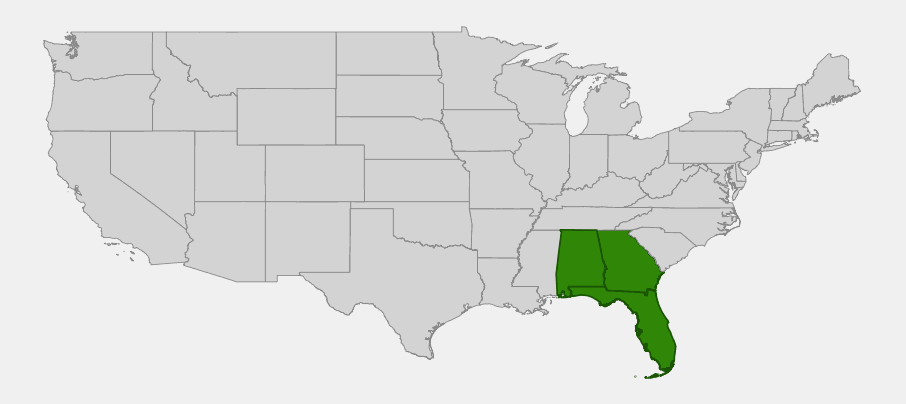
Chapman’s blazing star is native to the southeastern Coastal Plain. USDA PLANTS lists it in Florida, Georgia and Alabama. In Florida, the Atlas of Florida Plants maps it nearly statewide, from the western panhandle to the southern peninsula. Outside Florida it is limited to southwestern Georgia and southern Alabama.
It is not found in Canada or Mexico.
It grows in deep, dry, sandy habitats: Florida scrub and scrubby flatwoods, longleaf pine and turkey oak sandhills, coastal dunes and beach strands, and, in south Florida, pine rocklands. It also appears on sandy roadsides and old fields. These are fire-maintained habitats, and the plant flowers best in open sites that burn every few years.
📋 Regional plant lists featuring Chapman’s Blazing Star: North & South Florida · Alabama, Georgia & Mississippi
Growing & Care Guide
Chapman’s blazing star is an excellent choice for dry, sunny, sandy yards, especially in Florida. It is sold by a number of Florida native plant nurseries and is easy to grow from seed. Buy nursery-grown plants or seed rather than digging plants from the wild; the corms are deep and rarely survive transplanting.
Light
Plant it in full sun. In shade, plants become thin and floppy and produce few flowers.
Soil & Water
It needs deep, well-drained sand and does best in poor, unamended soil. Water new plants until they are established, then let rainfall take over. It is very drought tolerant but rots in heavy or wet soils, and it should not be placed in irrigated lawn areas. It tolerates moderate salt spray and can be planted behind the dunes.
Planting Tips
Plant potted plants or corms in fall or winter, about 12 inches apart, in groups of five or more for the best show. It is shorter and sturdier than many blazing stars, which makes it a good choice for the front or middle of a sunny sandhill or scrub-style garden, mixed with native grasses, silkgrass, goldenrods and other fall bloomers. Avoid fertilizer and rich mulch, which favor weeds and can rot the corms.
Pruning & Maintenance
Leave the spikes standing until the seeds have blown away, then cut them back in winter. In meadow plantings, a late-winter mow or burn imitates the natural fire cycle and encourages heavy flowering. Rabbits and deer may nibble young shoots, but established plants usually recover.
Propagation
Collect fluffy seed heads in late fall and sow the seed fresh on the surface of sandy soil, or keep it cold and moist for several weeks before spring sowing. Seedlings usually reach flowering size in two or three years. Established clumps can be divided while dormant, but deep corms make this difficult.
Landscape Uses
- Sandhill and scrub gardens: compact fall color in dry sand
- Pollinator and butterfly gardens: late-season nectar for butterflies and bees
- Coastal landscapes: behind dunes in sandy, salt-influenced yards
- Pineland restoration: in scrub, sandhill and pine rockland projects
- Cut and dried flowers: dense, long-lasting spikes
Wildlife & Ecological Value
Like other blazing stars, Chapman’s blazing star is a valuable fall nectar source in Florida’s dry uplands, blooming when migrating butterflies are passing through.
For Pollinators
Its flowers attract many butterflies, including monarchs, gulf fritillaries, skippers and sulphurs, along with native bees. A survey of bees at Archbold Biological Station in central Florida recorded it among the floral hosts used by native bees in Florida scrub.
For Birds
Seed-eating birds such as sparrows feed on the ripe seed heads in late fall and winter.
For Mammals
Deer and rabbits browse young stems and leaves.
Ecosystem Role
It is a characteristic wildflower of Florida scrub and sandhills, which depend on periodic fire to stay open and diverse. After fires, it resprouts from its corm and typically flowers heavily the following season.
Cultural & Historical Uses
John Torrey and Asa Gray described Liatris chapmanii in the 1840s and named it for Alvan Wentworth Chapman (1809–1899), who lived in Apalachicola, Florida, and whose Flora of the Southern United States, first published in 1860, was the standard reference for southern plants for decades.
In 1973, chemists led by S. Morris Kupchan reported a sesquiterpene lactone they named liatrin, isolated from Liatris chapmanii, which showed antileukemic activity in laboratory tests. This was early laboratory research only, and the plant has no established medicinal use.
Florida scrub and sandhills are among the most threatened habitats in the Southeast, and many of their plants grow nowhere else. Common, widespread species such as Chapman’s blazing star help make these habitats colorful in fall and are an easy way for gardeners to bring a piece of the scrub into their own yards.
Frequently Asked Questions
Is Chapman’s blazing star the same as Chapman’s gayfeather?
Yes. The Atlas of Florida Plants uses Chapman’s gayfeather, and USDA PLANTS uses Chapman’s blazing star for Liatris chapmanii.
When does Chapman’s blazing star bloom?
From August to October, occasionally into November.
How is it different from shortleaf gayfeather?
Chapman’s blazing star is shorter and stockier, with hairy, densely leafy stems and three or four florets per head. Shortleaf gayfeather is taller, with smooth stems, thread-like basal leaves and four or five florets per head.
Will Chapman’s blazing star grow in my lawn or garden bed?
Only if the soil is deep, dry, well-drained sand. It rots in heavy or regularly irrigated soils, so plant it in a dry, sunny spot away from sprinklers.
Does it attract butterflies?
Yes. Its fall flowers are visited by monarchs and many other butterflies, as well as native bees.

Looking for a nursery that carries Chapman’s Blazing Star?
Browse our native plant nursery directory: Alabama · Florida & Georgia