
Shortleaf Gayfeather (Liatris tenuifolia)
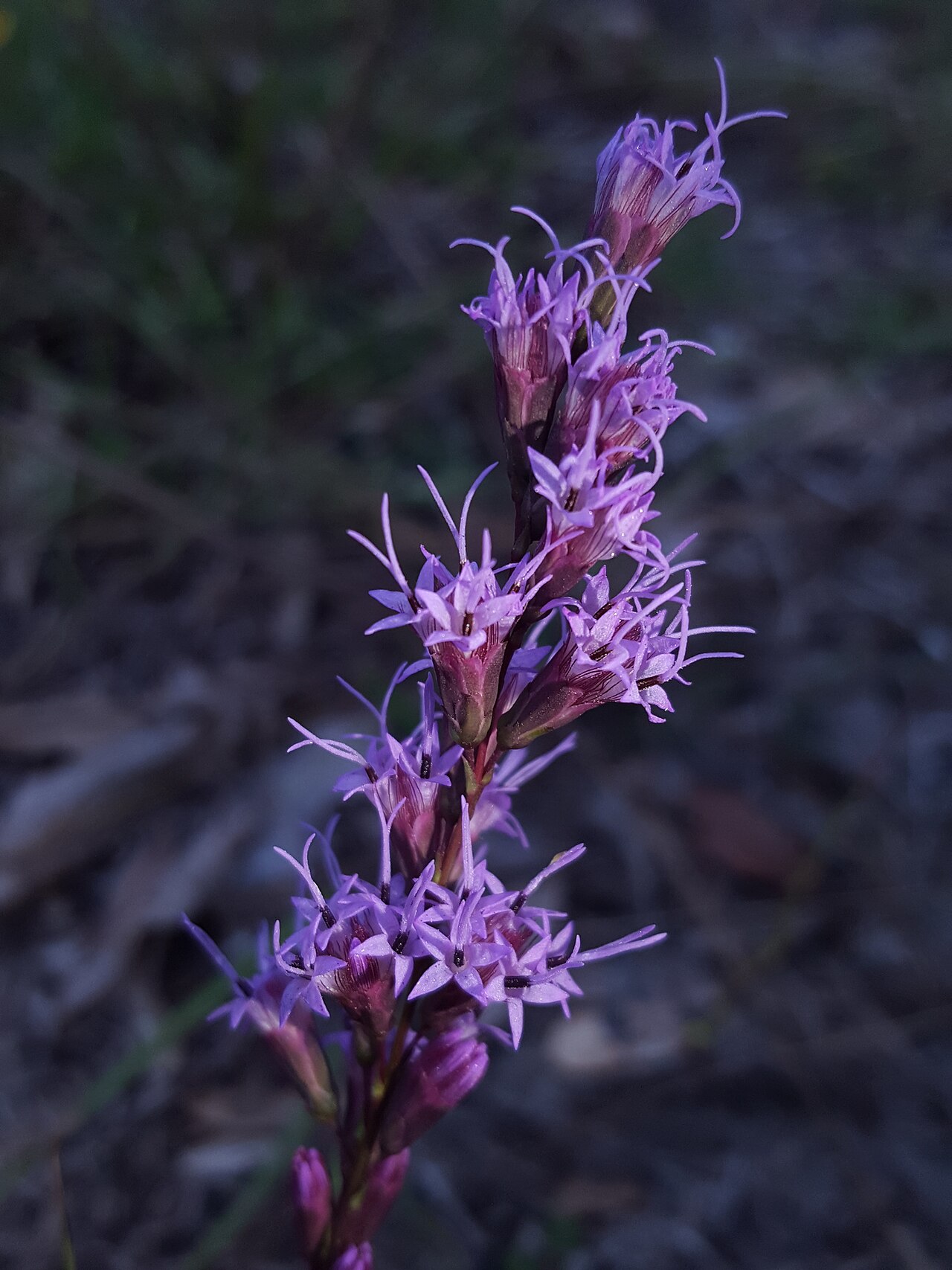
Liatris tenuifolia, known as Shortleaf Gayfeather or shortleaf blazing star, is a tall, slender wildflower of the dry, sandy uplands of the southeastern Coastal Plain. From a tuft of thin, grass-like leaves it sends up wand-like stems 2 to 5 feet tall, and in late summer and fall the upper part of each stem is covered with small lavender to rose-purple flower heads that open from the top down. In sandhills and scrub it is one of the most conspicuous fall wildflowers.
It is a member of the aster family (Asteraceae). The Atlas of Florida Plants calls it shortleaf gayfeather, while USDA PLANTS uses shortleaf blazing star; both names refer to the same plant. The species name tenuifolia means “slender-leaved”, for its narrow, almost needle-like leaves. Some botanists treat the broader-leaved peninsular Florida form as Liatris tenuifolia var. quadriflora or as a separate species, Liatris laevigata.
Shortleaf gayfeather grows in longleaf pine sandhills, turkey oak barrens, Florida scrub, coastal dunes and sandy roadsides from South Carolina to Florida and Alabama, and it is found throughout most of the Florida peninsula. It is drought tolerant, thrives in deep sand, and draws large numbers of butterflies and bees. This guide covers identification, range, care and wildlife value.
Identification
Shortleaf gayfeather is best recognized by its very narrow, grass-like basal leaves, its smooth stems, and its long, dense spikes of small lavender heads with only about four or five florets each.
Corm & Leaves
Like other blazing stars, it grows from a rounded underground corm. The basal leaves are thread-like to narrowly linear, usually 4 to 10 inches long and only about 1/16 to ⅛ inch wide, forming a grassy tuft that often includes the dry remains of earlier leaves. Plants of var. quadriflora have broader basal leaves. The leaves up the stem are much shorter and become tiny toward the top, which is the source of the name shortleaf.
Stems
The flowering stems are erect, smooth (hairless) and slender, typically 2 to 5 feet tall and usually unbranched. In open, recently burned sites a single plant may produce several stems.
Flowers
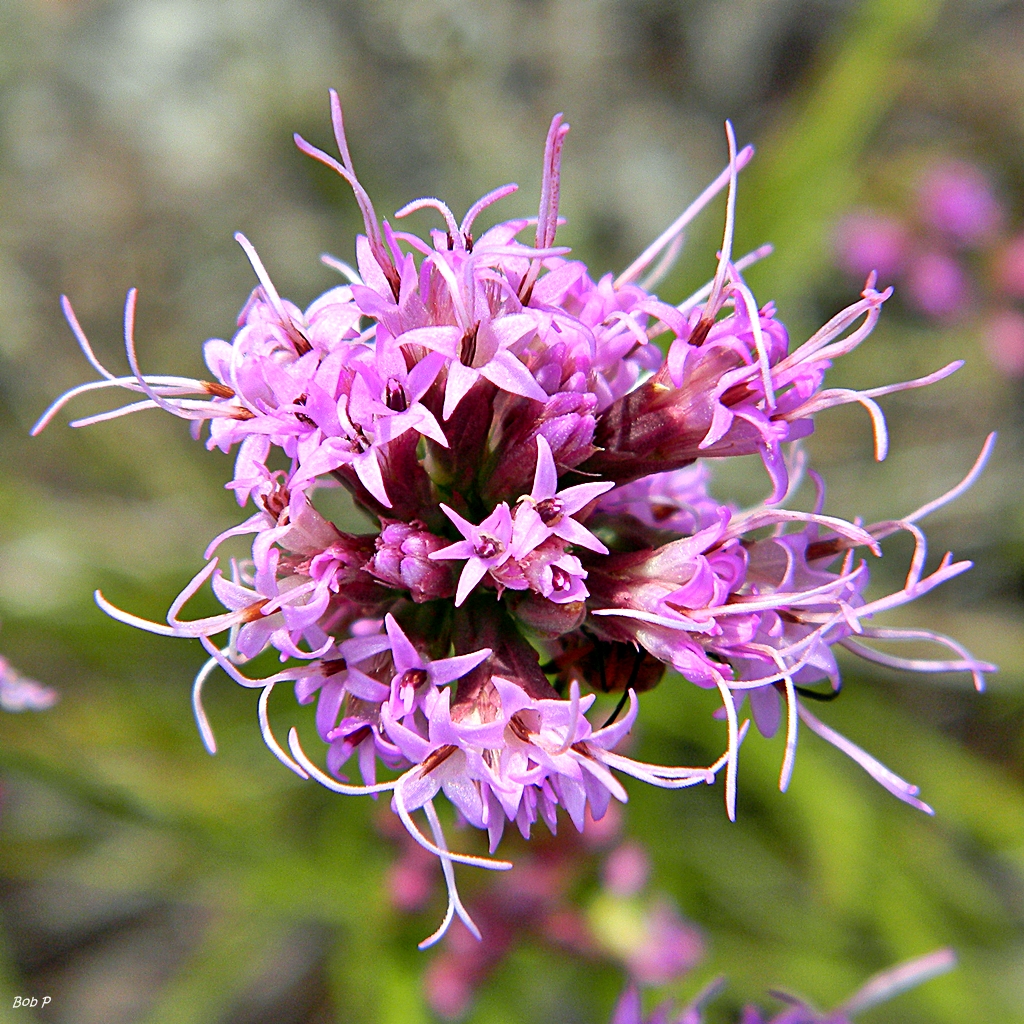
The flower heads are crowded along the upper part of the stem in a dense spike that can be 8 to 20 inches long. Each small head has about four or five lavender to rose-purple tubular florets, with long, curling, two-branched styles that give the spike a feathery look. The bracts around each head are smooth and often purplish. The heads open from the top of the spike downward. Bloom is mainly September to November, sometimes starting in August.
Fruit & Seeds
Each floret produces a small, ribbed, dark seed (cypsela) topped with a ring of bristly pappus that carries it on the wind.
Similar Species
Dense blazing star (L. spicata) has wider, longer leaves and grows in moister soils. Scaly blazing star has few, larger heads with pointed bracts. Chapman’s blazing star (L. chapmanii) grows in the same sandy habitats but has hairy stems, stiffer leaves and a shorter, denser spike. Garberia and the chaffheads (Carphephorus) bloom at the same time but have flat-topped clusters of heads rather than spikes.
Quick Facts
| Scientific Name | Liatris tenuifolia Nutt.; Atlas name shortleaf gayfeather, USDA name shortleaf blazing star |
| Family | Asteraceae (aster family) |
| Plant Type | Herbaceous perennial from a corm |
| Mature Height | 2–5 ft in flower |
| Mature Spread | 6–12 in |
| Growth Rate | Moderate |
| Sun Exposure | Full sun |
| Water Needs | Low; very drought tolerant once established |
| Soil Type | Deep, well-drained sand |
| Soil pH | Acidic, about 4.5–6.5 |
| Bloom Time | Late summer–fall (mainly September–November) |
| Flower Color | Lavender to rose-purple |
| Fall Color | Spikes in bloom; leaves turn tan after frost |
| Fruit | Small ribbed seeds with bristly pappus |
| Deer Resistant | Low; deer and rabbits may browse young stems |
| USDA Hardiness Zones | 8a–10b |
Native Range
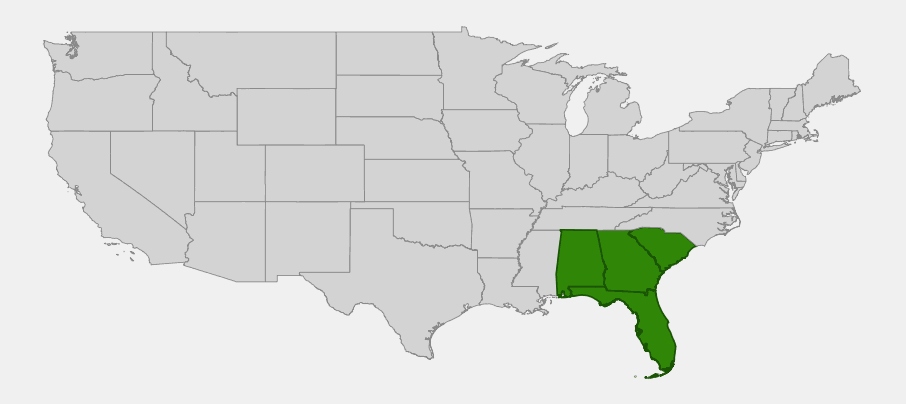
Shortleaf gayfeather is native to the outer Coastal Plain of the southeastern United States. USDA PLANTS lists it in South Carolina, Georgia, Alabama and Florida. In Florida, the Atlas of Florida Plants maps it in most counties of the panhandle and peninsula south to the southern peninsula, making it one of the state’s most widespread blazing stars.
It is not found in Canada or Mexico.
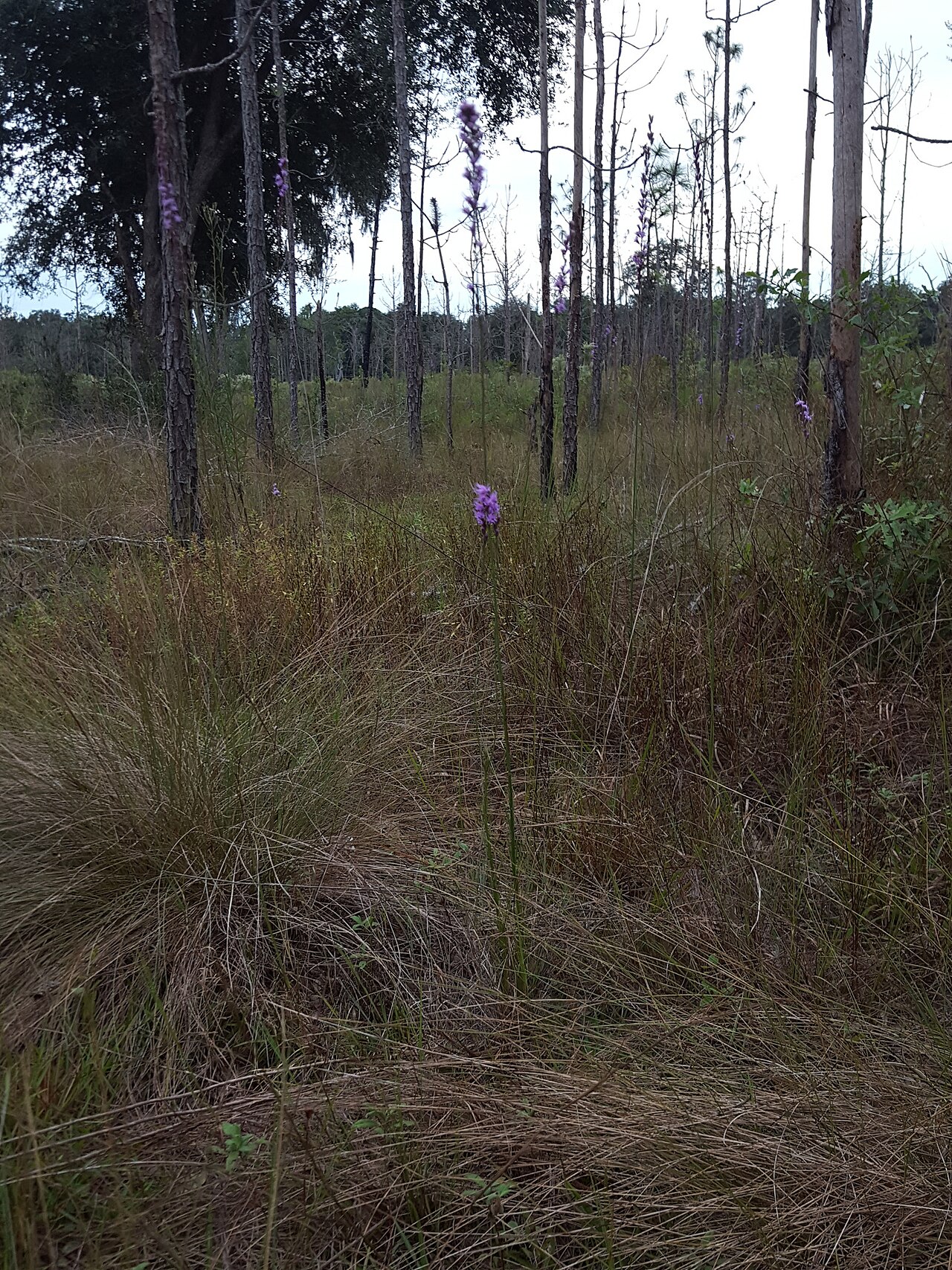
It grows in dry, sandy, open habitats: longleaf pine and turkey oak sandhills, Florida scrub and scrubby flatwoods, coastal dunes and maritime openings, dry pine flatwoods and sandy roadsides. It is fire adapted, and plants typically flower most heavily within a year or so after a burn.
📋 Regional plant lists featuring Shortleaf Gayfeather: North & South Florida · Alabama, Georgia & Mississippi · North & South Carolina
Growing & Care Guide
Shortleaf gayfeather is an excellent choice for dry, sunny, sandy yards where many garden plants struggle. It is sold by some Florida native plant nurseries and is easy to raise from seed. Buy nursery-grown plants or seed, and never dig plants from the wild.
Light
Plant it in full sun. In shade the stems become weak and lean, and flowering is sparse.
Soil & Water
It needs deep, well-drained, sandy soil and does best in poor, acidic sand without added organic matter or fertilizer. Water new plants until they are established; after that, rainfall is enough. It is very drought tolerant but will rot in soils that stay wet. It has moderate tolerance for salt spray, so it can be grown on the landward side of coastal dunes.
Planting Tips
Plant corms or potted plants in fall or winter, setting the top of the corm just below the soil surface. Space plants about 12 inches apart in groups of five or more; single stems are slender and look best in drifts. It combines well with native grasses such as wiregrass and lopsided indiangrass, and with other fall bloomers like goldenrods, asters and silkgrass. Tall stems may lean in rich soil; lean sand keeps them upright.
Pruning & Maintenance
Leave the spikes standing after bloom so the seeds can ripen and disperse, then cut them back in winter. A late-winter mow or controlled burn of a meadow planting mimics the fires that keep its natural habitat open and stimulates flowering. Rabbits and deer sometimes nibble young shoots.
Propagation
Collect seed from your own plants when the heads turn fluffy in late fall. Sow it fresh on the surface of sandy soil, or give it a few weeks of cold, moist treatment before spring sowing; it germinates readily. Seedlings usually bloom in their second or third year. Mature clumps can also be divided while dormant.
Landscape Uses
- Sandhill and scrub gardens: tall fall color in dry sand
- Pollinator and butterfly gardens: one of the best late-season nectar plants in Florida
- Meadow and pineland restoration: pairs with wiregrass and other native grasses
- Coastal landscapes: behind the dunes, out of direct salt spray
- Cut flowers: long-lasting lavender spikes for arrangements
Wildlife & Ecological Value
Blazing stars are among the most important fall nectar plants in the Southeast, and shortleaf gayfeather flowers at a time when monarchs and other butterflies are migrating through Florida.
For Pollinators
The flowers are visited heavily by butterflies, including monarchs, gulf fritillaries, skippers and sulphurs, and by native bees and bumble bees. The Xerces Society lists it as having special value to native bees.
For Birds
Seed-eating birds such as sparrows and finches pick seeds from the ripe heads in late fall and winter.
For Mammals
Deer and rabbits browse young stems and leaves, and small mammals dig and eat the corms.
Ecosystem Role
It is part of the diverse groundcover of fire-maintained longleaf pine sandhills, one of the most species-rich plant communities in North America. Regular fire removes shade and leaf litter, and shortleaf gayfeather responds with increased growth and flowering after burns.
Cultural & Historical Uses
Thomas Nuttall, the English naturalist who explored much of North America, described Liatris tenuifolia in 1818. The genus name Liatris is of uncertain origin; the common names gayfeather and blazing star describe the feathery, bright spikes.
Several Liatris species are grown commercially as cut flowers, and the dried spikes hold their color well. Shortleaf gayfeather itself is mainly grown by native plant enthusiasts and in restoration projects.
Southern sandhills once covered millions of acres. Today, much of what remains is managed with prescribed fire, and wildflowers such as shortleaf gayfeather are among the most visible signs of a healthy, regularly burned sandhill.
Frequently Asked Questions
Is shortleaf gayfeather the same as shortleaf blazing star?
Yes. The Atlas of Florida Plants uses shortleaf gayfeather, and USDA PLANTS uses shortleaf blazing star for Liatris tenuifolia.
When does shortleaf gayfeather bloom?
Mainly from September to November, sometimes starting in August. Flowers open from the top of the spike downward.
Will it grow in clay or wet soil?
Not well. It needs deep, well-drained sand and will rot in soil that stays wet. For moist soils, choose dense blazing star instead.
Does shortleaf gayfeather attract butterflies?
Yes. It is one of the best fall nectar plants for butterflies in the Southeast, including migrating monarchs, and it is also visited by many native bees.
How do I grow it from seed?
Collect ripe, fluffy seed in late fall and sow it on the surface of sandy soil, either right away or after a few weeks of cold, moist storage. Seedlings usually flower in their second or third year.

Looking for a nursery that carries Shortleaf Gayfeather?
Browse our native plant nursery directory: Alabama · Florida & Georgia · South Carolina