
Redmargin Zephyrlily (Zephyranthes simpsonii)
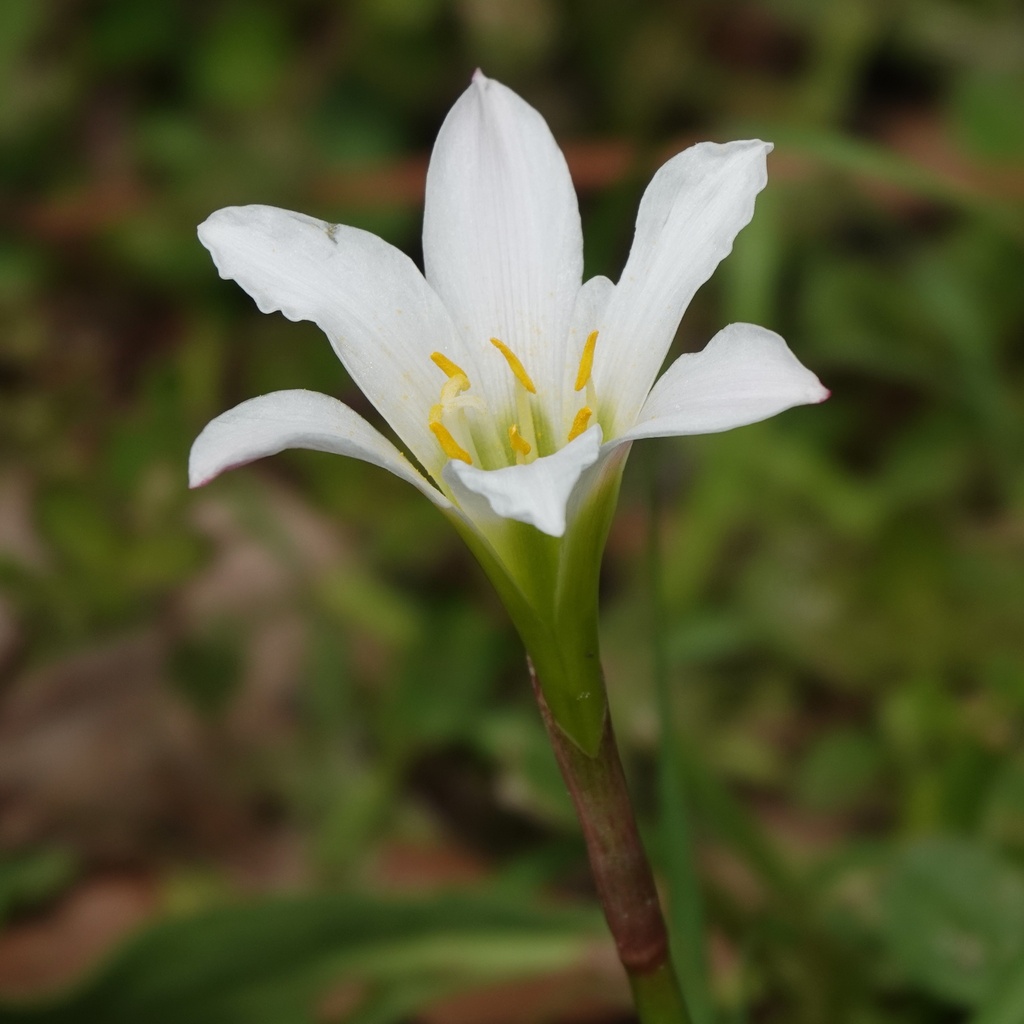
Zephyranthes simpsonii, known as Redmargin Zephyrlily, Simpson’s zephyrlily or Simpson’s rain lily, is a small spring-flowering bulb of the wet pine flatwoods and meadows of the southeastern Coastal Plain. From a tuft of narrow, grass-like leaves it raises single, upright, funnel-shaped white flowers, 6 to 10 inches tall, with a green throat and bright yellow anthers. The outside of the tepals is often edged or striped with red or pink, which gives the plant its name and is especially visible on the buds.
It belongs to the amaryllis family (Amaryllidaceae), along with the atamasco lily, the spiderlilies and the swamp lily. Both the Atlas of Florida Plants and USDA PLANTS call it redmargin zephyrlily, and the Atlas also lists Simpson’s zephyrlily. Older references sometimes place it in the genus Atamosco as Atamosco simpsonii. Like other rain lilies, its bulbs and leaves contain toxic alkaloids.
Redmargin zephyrlily is listed as Threatened by the State of Florida (FDACS Regulated Plant Index). It is rarely available in the nursery trade. If you want to grow it, buy only nursery-propagated bulbs, and never dig plants from the wild. This guide covers identification, range, care and wildlife value.
Identification
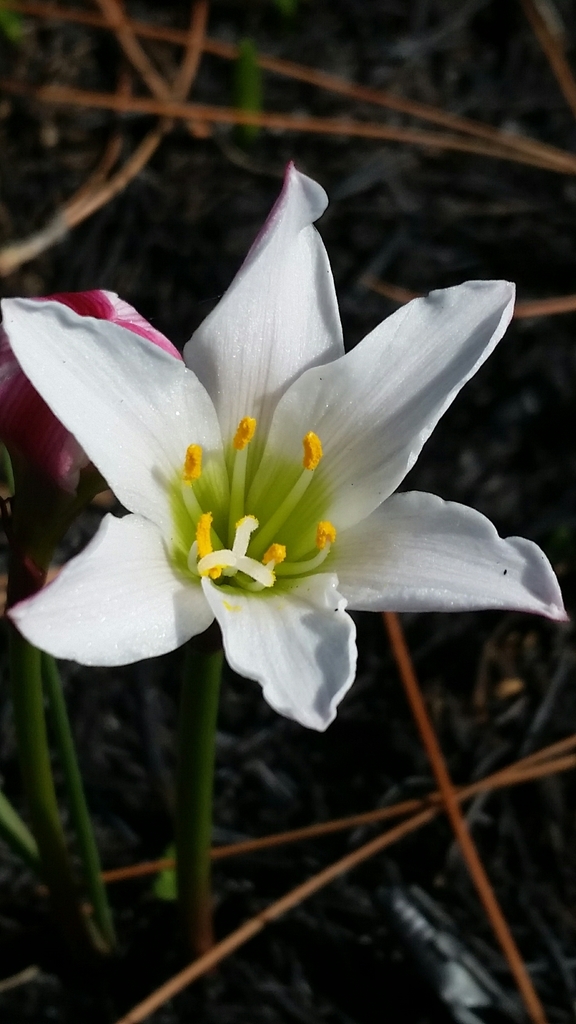
Redmargin zephyrlily is a small rain lily with a single, erect white flower on each stalk. Look for its narrow, dull green leaves, the green throat of the flower, and the red or pink margins and stripes on the outside of the tepals, which are most obvious on buds and fading flowers.
Bulb & Leaves
It grows from a small, rounded bulb about ¾ to 1¼ inches across with a dark tunic. The leaves are narrow and grass-like, usually only about ⅛ inch wide, dull green and somewhat fleshy, and appear in late winter and spring. Plants are easy to overlook among grasses when not in flower.
Flower Stalk
Each bulb sends up one or more slender, hollow stalks, usually 6 to 10 inches tall, each carrying a single flower held upright above a papery bract.
Flowers
The flower is funnel-shaped to bell-shaped, about 2 to 3 inches across, with six white tepals that are green toward the base, forming a green throat. The outside of the tepals is often marked with red or pink along the margins and tips, and the buds are frequently striped with red. Six yellow anthers surround a three-branched stigma. Flowering is mainly in early spring, from about February to May, often a few days after rain and often heavily after a burn.
Fruit & Seeds
A pollinated flower forms a three-lobed capsule that splits to release flat, black seeds in late spring.
Similar Species
The atamasco lily (Zephyranthes atamasca) is a larger plant of moist woods with broader, glossy leaves and bigger flowers. Treat’s zephyrlily (Z. treatiae) of Florida and Georgia is very similar and grows in the same flatwoods; the two differ mainly in technical details of the leaves and of the position of the stigma relative to the anthers, and some botanists treat these as varieties of one species. The giant rain lily of Texas and Mexico flowers in summer and fall. Non-native rain lilies, such as the white Z. candida and pink Z. rosea, are common garden plants that bloom mostly in summer and fall.
Quick Facts
| Scientific Name | Zephyranthes simpsonii Chapm. (syn. Atamosco simpsonii); also called Simpson’s zephyrlily |
| Family | Amaryllidaceae (amaryllis family) |
| Plant Type | Bulbous perennial (spring ephemeral) |
| Mature Height | 6–10 in |
| Mature Spread | 3–6 in per clump |
| Growth Rate | Slow |
| Sun Exposure | Full sun to light shade |
| Water Needs | Moist to seasonally wet soil |
| Soil Type | Acidic, sandy, organic flatwoods soils |
| Soil pH | Acidic, about 4.5–6.0 |
| Bloom Time | Early spring (about February–May) |
| Flower Color | White with a green throat; red or pink margins outside |
| Fall Color | None; leaves die back by summer |
| Fruit | Three-lobed capsule with flat black seeds |
| Deer Resistant | Yes; bulbs and leaves contain toxic alkaloids |
| USDA Hardiness Zones | 8a–10a |
Native Range
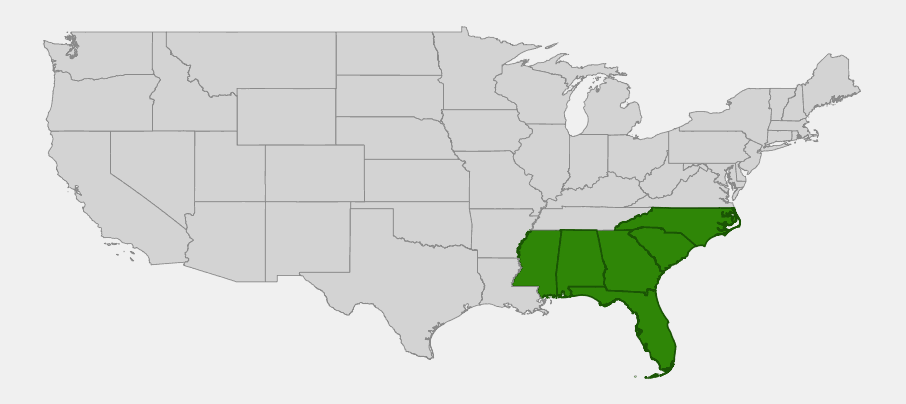
Redmargin zephyrlily is native to the southeastern Coastal Plain. USDA PLANTS lists it in North Carolina, South Carolina, Georgia, Florida, Alabama and Mississippi. In Florida, the Atlas of Florida Plants maps it in scattered counties of the northern and central peninsula and the panhandle, south to southwest Florida. It is listed as Threatened by the State of Florida (FDACS Regulated Plant Index), mainly because its wet flatwoods habitat has been widely drained and developed.
It does not occur in Canada or Mexico.
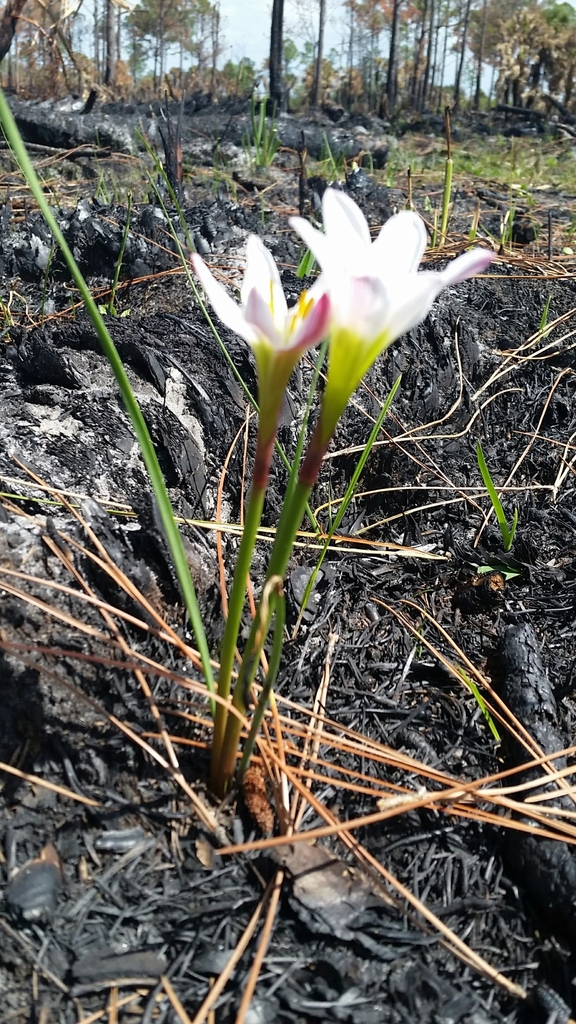
It grows in wet pine flatwoods, wet meadows and savannas, and the edges of cypress domes, as well as in wet ditches, roadsides and pastures where native groundcover remains. It favors black, organic sands that are saturated in winter and spring. Like many flatwoods plants it depends on regular fire, and it often flowers in large numbers soon after a burn.
📋 Regional plant lists featuring Redmargin Zephyrlily: North & South Florida · Alabama, Georgia & Mississippi · North & South Carolina
Growing & Care Guide
Redmargin zephyrlily is a delicate spring bulb for wet, sunny native gardens, but it is rarely sold and is best suited to experienced native plant gardeners. Because it is listed as Threatened in Florida, buy only nursery-propagated bulbs from a reputable native plant nursery. Never collect bulbs or seeds from the wild.
Light
Grow it in full sun to light shade. In the wild it grows in open flatwoods and meadows where taller plants are kept down by fire.
Soil & Water
It needs acidic, sandy soil with plenty of organic matter that stays moist to wet in winter and spring. It tolerates drier conditions in summer, when the leaves die back, but does not do well in dry sand or in alkaline or heavily fertilized soils.
Planting Tips
Plant bulbs in fall or winter about 2 inches deep and 3 to 4 inches apart, in small groups so the flowers make a better show. Good locations include the moist edges of a rain garden, a wet meadow or pine flatwoods planting, or a bog garden with other low wetland plants. Mark the spot, since the plants disappear by summer. Buy only nursery-propagated plants, and never dig bulbs from the wild.
Pruning & Maintenance
Let the leaves die back naturally after flowering so the bulb can store energy. Keep taller plants and grasses from overgrowing it; in a meadow planting, a winter mow or prescribed burn before the leaves emerge imitates the natural fire cycle. Wear gloves when handling bulbs, which are toxic if eaten.
Propagation
Sow fresh seed from cultivated plants on the surface of moist, sandy, peaty soil as soon as the capsules split in late spring; seedlings may flower in two to three years. Established clumps slowly produce offset bulbs, which can be separated while dormant.
Landscape Uses
- Wet meadow and flatwoods gardens: early spring flowers in moist, acidic sand
- Rain garden and bog edges: moist margins with full sun
- Native bulb collections: for experienced gardeners, from nursery stock only
- Habitat restoration: wet flatwoods projects using nursery-propagated plants
- Conservation plantings: helps conserve a state-listed species
Wildlife & Ecological Value
Redmargin zephyrlily is a small but characteristic member of the spring wildflower display in fire-maintained wet flatwoods.
For Pollinators
The open, upright flowers offer pollen and nectar to native bees, including small bees and bumble bees, as well as flies and beetles. Flowering in early spring makes it one of the first nectar sources in flatwoods after winter.
For Birds
It is not a significant food source for birds.
For Mammals
Its bulbs and leaves contain toxic alkaloids typical of the amaryllis family and are rarely eaten by deer or other mammals.
Ecosystem Role
As a spring ephemeral of the flatwoods groundcover, it takes advantage of the open, sunny conditions after fire. Its decline in many areas reflects the loss of wet flatwoods to drainage, development and fire suppression.
Cultural & Historical Uses
Alvan Wentworth Chapman, the Apalachicola botanist who wrote the first flora of the southern United States, described Zephyranthes simpsonii in the late nineteenth century. It is named for J. H. Simpson, a Florida plant collector who sent specimens to Chapman.
The genus name Zephyranthes means “flower of the west wind”, from Zephyrus, the Greek god of the west wind. The common name rain lily refers to the habit of many species of blooming a few days after a soaking rain.
Because it is listed as Threatened in Florida, state law prohibits collecting it from private land without the owner’s permission or from public land without a permit. All rain lilies contain alkaloids such as lycorine and should never be eaten.
Frequently Asked Questions
Is redmargin zephyrlily protected in Florida?
Yes. It is listed as Threatened by the State of Florida (FDACS Regulated Plant Index). Do not dig or collect it from the wild; buy only nursery-propagated bulbs.
Why is it called redmargin zephyrlily?
The outside of its white tepals is often edged or striped with red or pink, especially on the buds and on older flowers.
When does redmargin zephyrlily bloom?
In early spring, from about February to May, often a few days after rain and often heavily after a fire.
Is redmargin zephyrlily poisonous?
Yes. Like other members of the amaryllis family, its bulbs and leaves contain toxic alkaloids. Keep children and pets from eating them.
Can I grow it in a regular garden bed?
It needs acidic, sandy soil that stays moist through winter and spring, so it is best for rain gardens, bog edges and wet meadow plantings rather than ordinary beds.

Looking for a nursery that carries Redmargin Zephyrlily?
Browse our native plant nursery directory: Alabama · Florida & Georgia · Mississippi · North Carolina · South Carolina