
Basketgrass (Oplismenus hirtellus)
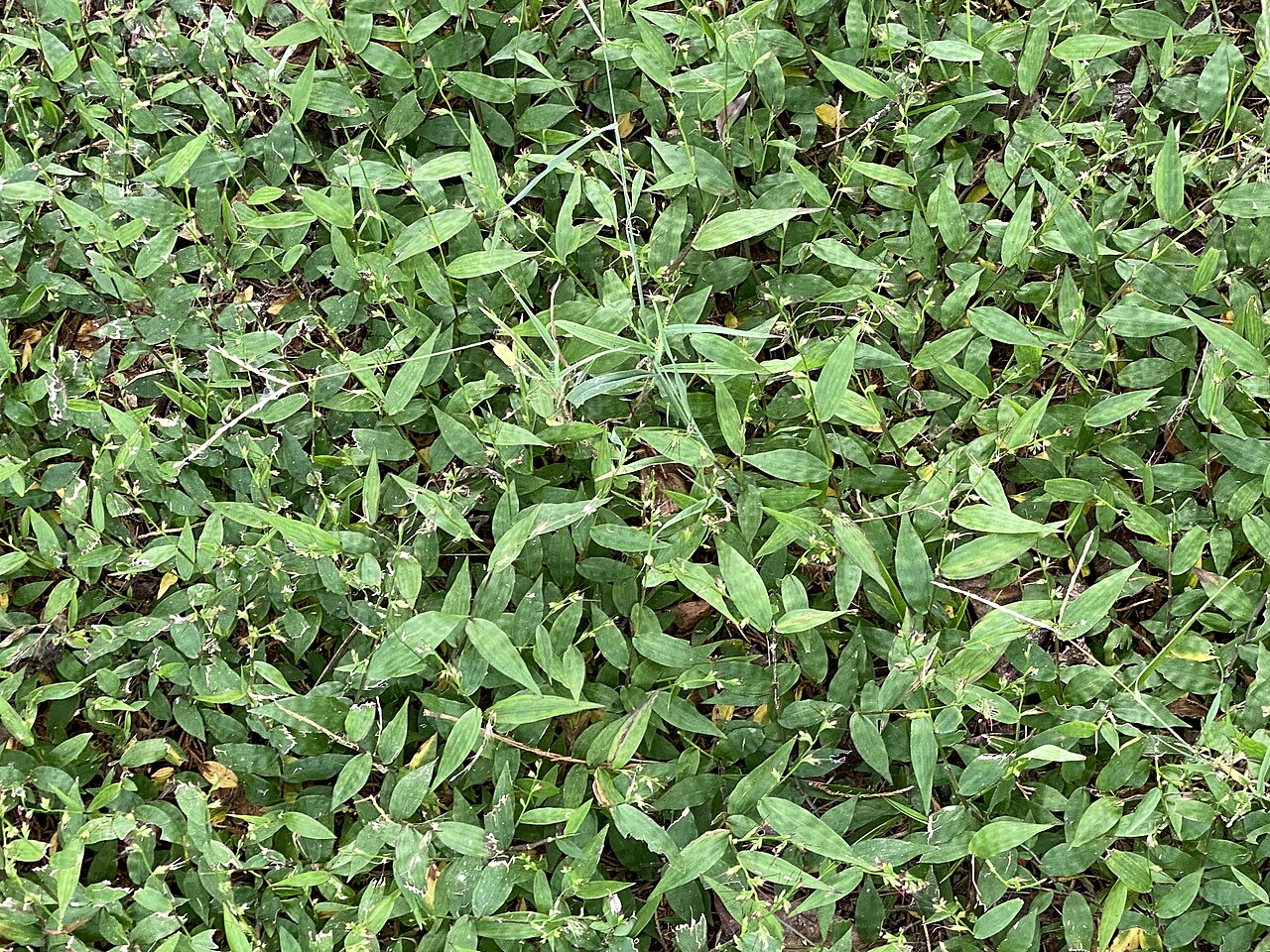
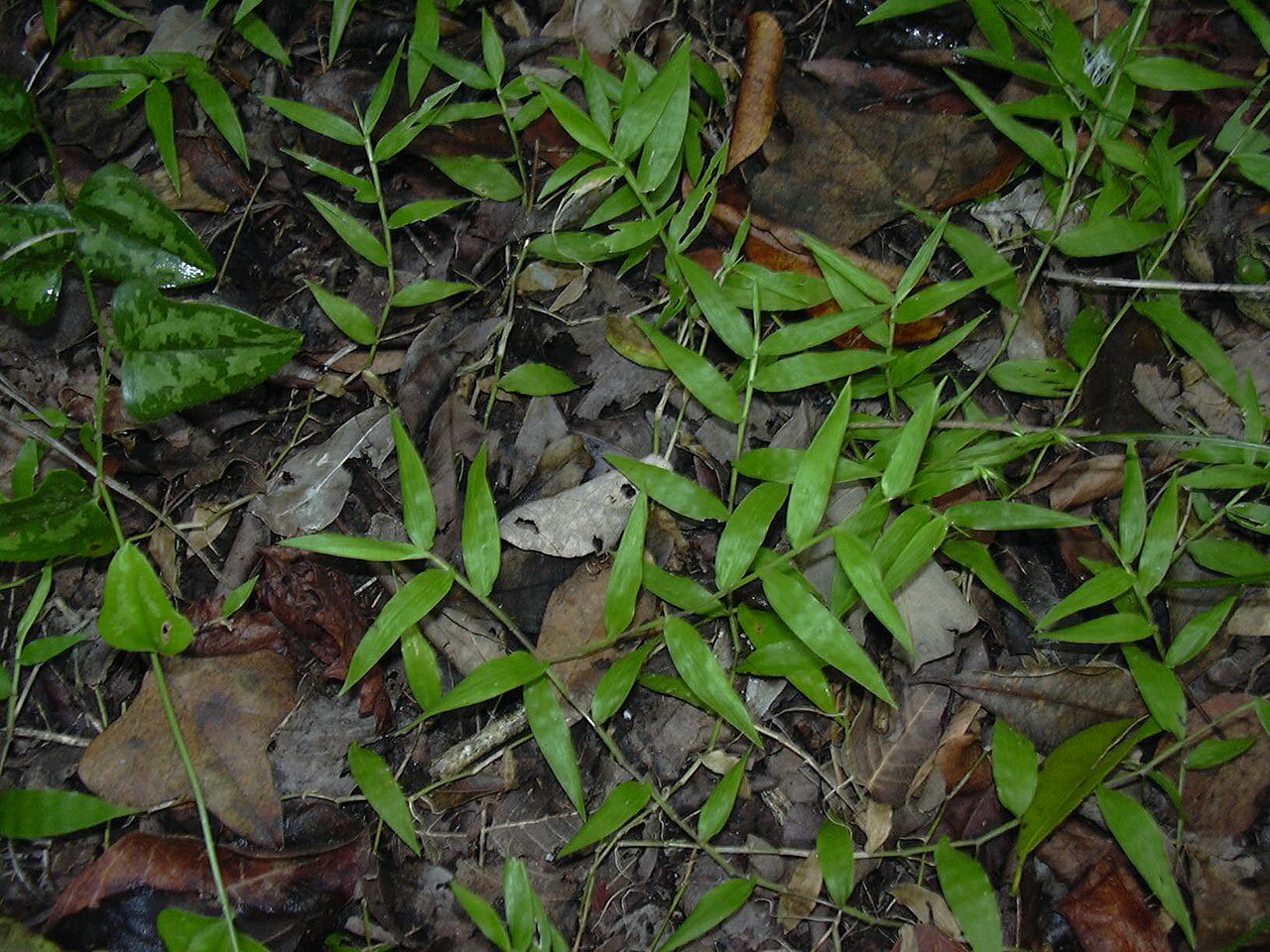
Oplismenus hirtellus, known as Basketgrass or basket grass, is a low, creeping grass of shady forest floors. Its thin stems run along the ground and root at the nodes, and they carry short, broad, lance-shaped leaves that look more like the leaves of a small bamboo than a typical grass blade. Left alone in moist shade it knits together into a soft, open or dense mat only a few inches tall. In Puerto Rico it is known as carruzo, yerba de madera and yerba de maleza, names recorded by the Smithsonian’s Flora of the West Indies.
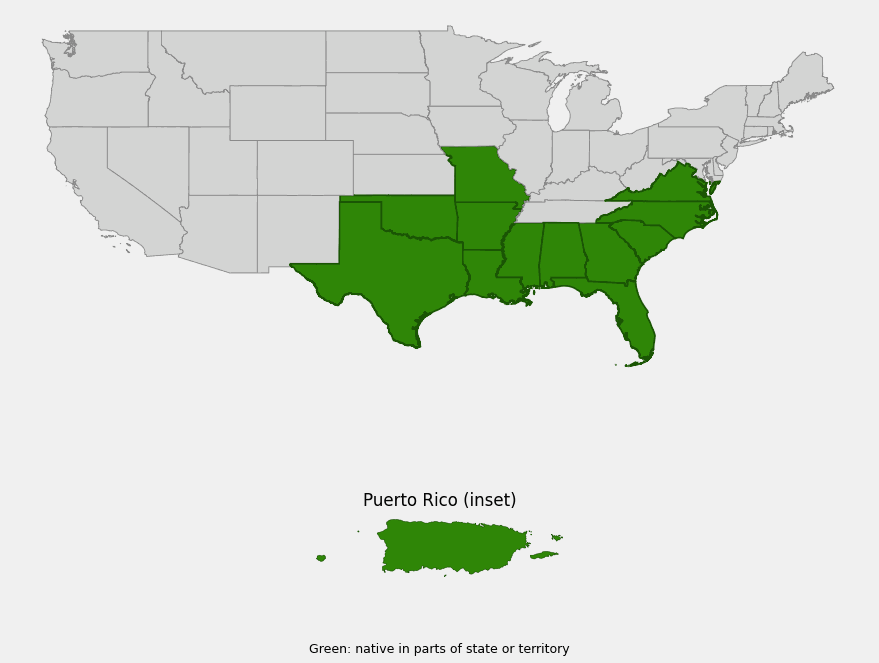
Basketgrass is one of the few grasses that truly prefers shade. It grows in moist forests, hammocks and shaded stream banks, and it flowers on slender upright stalks whose spikelets carry long, sticky awns. The seeds cling to fur, feathers and clothing, which is how the plant has spread around the warm parts of the world. USDA PLANTS lists it as native in Puerto Rico and the U.S. Virgin Islands, and its subspecies setarius as native across the southeastern United States, from Virginia and Missouri south to Florida and Texas.
This guide covers how to identify basketgrass, how to tell it apart from the invasive wavyleaf basketgrass of the Mid-Atlantic, where it grows in Puerto Rico and on the mainland, and how to use it as a native groundcover for shady, moist gardens. It is also a larval host plant for the Carolina satyr butterfly.
Identification
Out of flower, basketgrass is easy to mistake for a seedling bamboo, a dayflower or a small panic grass. The combination of creeping, rooting stems, short broad leaf blades and flowering stalks with long-awned spikelets makes it distinctive once you know it.
Stems & Habit
Basketgrass is a perennial grass with slender, branching stems that sprawl over the ground and root where the nodes touch soil. The tips of the stems turn upward, so a patch of basketgrass is usually only 2 to 6 inches tall, according to the Institute for Regional Conservation (IRC). Flowering shoots stand higher, reaching about a foot. Stems and leaf sheaths are often sparsely hairy, which is the meaning of the species name hirtellus (“somewhat hairy”).
Leaves
The leaf blades are flat, thin, lance-shaped and pointed, generally 1 to 4 inches long and much broader for their length than most grass leaves. They spread nearly at right angles from the stem, giving the plant a neat, ladder-like look. Leaves may be smooth or have scattered hairs, and the margins can be slightly wavy. Plants grown in more light are often tinged purple.
Flowers & Seeds
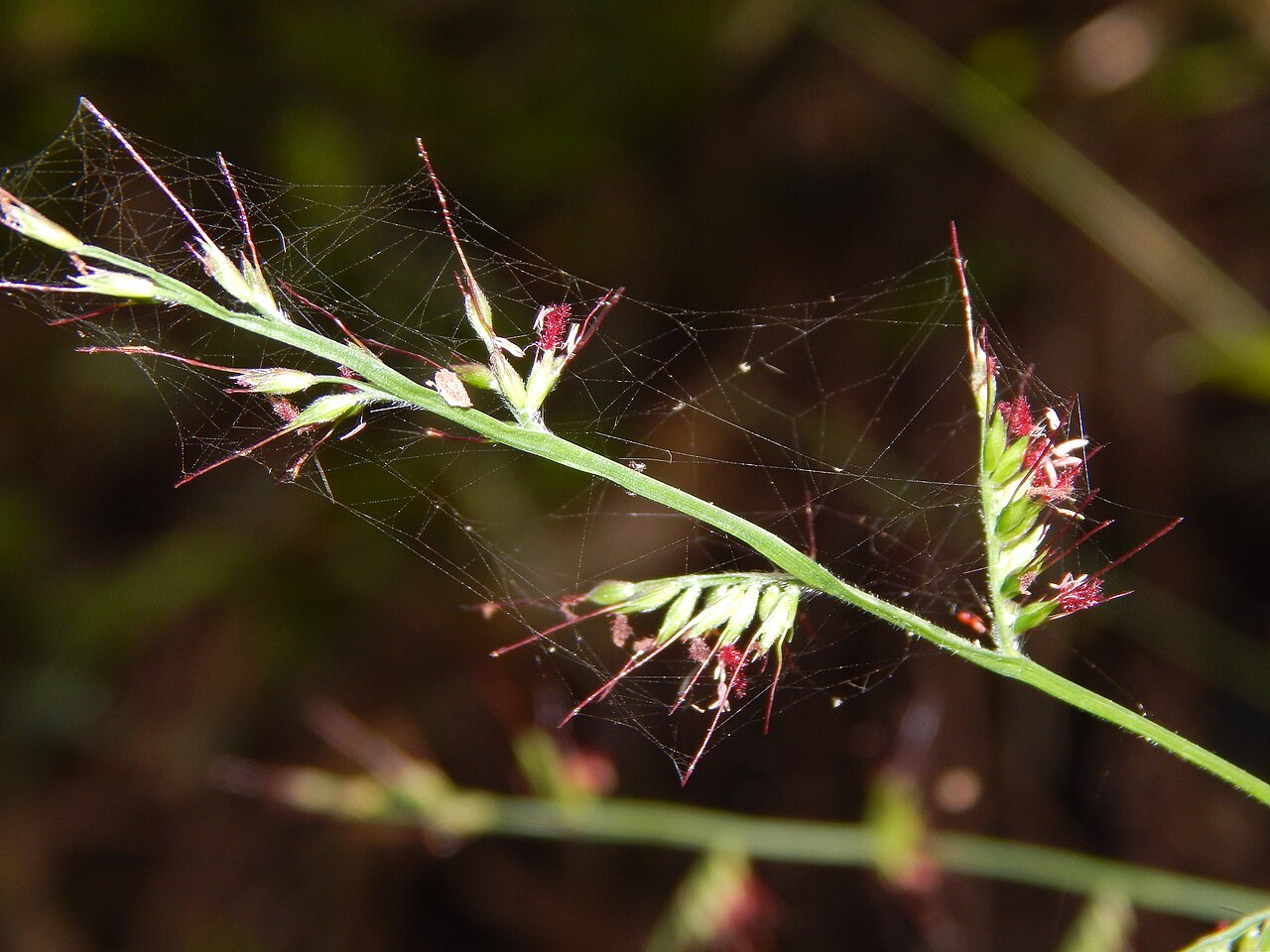
The flowering stalk carries a few short, widely spaced clusters of small green spikelets along a central axis. The lower bract (glume) of each spikelet ends in a long, slender awn that becomes sticky, and when the flowers open they show feathery reddish-purple stigmas. Wikipedia notes that the plant is largely self-pollinated. Each spikelet ripens one small grain, which drops with its sticky awn and hitches a ride on whatever brushes past. IRC reports flowering all year in south Florida; farther north it flowers mainly from late summer into fall.
Similar Species
Wavyleaf basketgrass (Oplismenus undulatifolius), an Asian and European plant first found in Maryland in 1996, has strongly rippled leaves and is an aggressive invader of forests in Maryland and Virginia. It was first identified as Oplismenus hirtellus subsp. undulatifolius and is now treated as a separate species. Native basketgrass has flatter leaves and has long been part of southeastern forests. If you find a basketgrass with deeply wavy leaves spreading through woods in the Mid-Atlantic, report it to your state’s invasive species program rather than planting it.
Quick Facts
| Scientific Name | Oplismenus hirtellus (L.) P. Beauv.; mainland plants are subsp. setarius (syn. Panicum setarium) |
| Family | Poaceae (grass family) |
| Plant Type | Creeping perennial grass; evergreen groundcover in frost-free areas |
| Mature Height | 2–6 in as a groundcover; flowering stalks to about 1 ft |
| Mature Spread | Spreads indefinitely by rooting stems; forms patches several feet across |
| Growth Rate | Moderate to fast |
| Sun Exposure | Light to moderate shade |
| Water Needs | Moderate; prefers moist soil but tolerates short dry spells |
| Soil Type | Moist sandy, limestone or organic soils with a humusy top layer |
| Soil pH | Acidic to slightly alkaline |
| Bloom Time | Year-round in Puerto Rico and south Florida; mainly late summer to fall farther north |
| Flower Color | Green spikelets with reddish-purple stigmas |
| Fall Color | None; may brown back after frost in the northern part of its range |
| Fruit | Small grain (caryopsis) with a sticky awn |
| Deer Resistant | Not documented |
| USDA Hardiness Zones | About 7–11; also the tropical lowlands and mountains of Puerto Rico |
Native Range
Basketgrass is one of the most widespread grasses in the world. Wikipedia describes it from every continent except Antarctica, mostly in tropical and subtropical regions. Within the area PlantNative covers, USDA PLANTS lists the species as native in Puerto Rico and the U.S. Virgin Islands. On the mainland, USDA lists subsp. setarius as native in 12 states: Alabama, Arkansas, Florida, Georgia, Louisiana, Mississippi, Missouri, North Carolina, Oklahoma, South Carolina, Texas and Virginia. IRC gives its range as the southeastern United States west to Texas and south to Miami-Dade County, then through the West Indies, Mexico, Central and South America. In Hawaii it is an introduced weed of shady forests.
In Puerto Rico, the Smithsonian’s Flora of the West Indies lists it as native on the main island and on Mona, Santiago (Cayo Santiago) and Vieques. IRC records subsp. setarius in El Yunque National Forest in the Luquillo Mountains, Toro Negro State Forest in the Cordillera Central, and Susúa State Forest in the southwestern serpentine hills. It grows along shaded trails, stream banks, forest edges and coffee plantations, wherever the ground stays moist under trees.
On the mainland it is a plant of moist hardwood forests, hammocks, floodplains and shaded ravines, mostly on the Coastal Plain. In Florida it grows in tropical and temperate hammocks south to Miami-Dade County; in Texas and Oklahoma it is mainly a plant of the eastern forests; in Missouri and Virginia it is near the northern edge of its range.
📋 Regional plant lists featuring Basketgrass: Puerto Rico · North & South Florida · Alabama, Georgia & Mississippi · North & South Carolina · Maryland, Virginia & West Virginia · Arkansas, Louisiana, Eastern Oklahoma & Eastern Texas · Illinois, Iowa & Missouri
Growing & Care Guide
Basketgrass is a useful native answer to a common problem: bare, shady ground where lawn grasses fail. IRC lists it for natural landscapes and habitat restoration and as a creeping groundcover for moist, shady areas, and Fairchild Tropical Botanic Garden has singled it out as a native that does especially well in shade. It is not a plant for formal lawns, and it can spread beyond where you want it, so give it a place where a loose, informal carpet is welcome.
Light
Plant basketgrass in light to moderate shade under trees or on the north side of buildings. In full sun it becomes thin, yellowish and tinged purple, and it dries out quickly. It tolerates deeper shade than most grasses, which is its main garden value.
Soil & Water
It grows best in moist, well-drained soil with a humusy surface layer of leaf litter or compost. Sandy, limestone and organic soils all work. IRC rates its drought tolerance as moderate: water regularly until it has rooted in, then during long dry spells. It does not tolerate flooding by salt or brackish water, but it can grow near the coast if other plants shelter it from direct salt spray.
Planting Tips
Set out small plugs or rooted divisions about 12 inches apart in spring or at the start of the rainy season and keep them moist while they establish. The stems root as they spread, so a planting fills in within a season or two in good conditions. Combine it with shade shrubs such as wild coffee or beautyberry, and use it to cover soil between stepping stones or under trees where it will not be walked on heavily.
Pruning & Maintenance
No mowing is needed. If it creeps into beds where you do not want it, pull the shallow-rooted stems by hand. Leave fallen leaves in place as mulch; they keep the soil moist and the grass grows up through them. In the northern part of its range it may brown back in a hard frost and regrow from the base in spring.
Propagation
IRC notes that it can be grown from division and from seed. Division is easiest: lift a rooted section of stem and replant it. Seed can be collected from ripe flowering stalks in fall and sown on the surface of moist soil.
Landscape Uses
- Shade groundcover: a low, soft carpet under trees where lawn grasses thin out
- Woodland and hammock restoration: a native forest-floor grass for moist, shaded sites
- Butterfly gardens: larval food for the Carolina satyr
- Erosion control: creeping, rooting stems help hold soil on shaded banks
- Between stepping stones: fills gaps in shady paths that see light foot traffic
Wildlife & Ecological Value
Basketgrass is a small plant, but it covers a lot of forest floor and feeds a common shade-loving butterfly.
For Pollinators
Like most grasses, basketgrass is wind- or self-pollinated and offers little to pollinating insects. Its value is as a caterpillar food plant: IRC lists it as a larval host for the Carolina satyr (Hermeuptychia sosybius), a small brown woodland butterfly of the Southeast whose caterpillars feed on shade-tolerant grasses.
For Birds
Wikipedia notes that the seeds attract birds and other animals, and ground-feeding birds pick over the seed heads. A dense carpet of basketgrass also shelters the insects that wrens, thrushes and other ground-foraging birds eat.
For Mammals
The sticky awns cling to the fur of passing mammals, which carry the seeds to new patches of shade. The plant has no notable importance as food for larger mammals.
Ecosystem Role
Basketgrass covers bare soil on forest floors, trailsides and stream banks, reducing erosion and holding leaf litter in place. Because its seeds travel on animals and people, it is often among the first grasses to colonize new trails and openings in moist forests.
Cultural & Historical Uses
Linnaeus described basketgrass in the 18th century as Panicum hirtellum, and the French botanist Palisot de Beauvois moved it to the genus Oplismenus in 1812. The genus name comes from the Greek for “armed,” a reference to the long awns on the spikelets. The native mainland and Caribbean form, subsp. setarius, was described by Lamarck as Panicum setarium.
In Puerto Rico the Flora of the West Indies records the names carruzo, yerba de madera (“wood grass”) and yerba de maleza (“thicket grass”), all reflecting its habit of growing under trees.
A white-variegated form, often sold as Oplismenus hirtellus ‘Variegatus’, is a long-time favorite for hanging baskets and terrariums, and is often called “basket grass” in the houseplant trade. For outdoor planting, choose plain green plants of local origin, and never plant the invasive wavyleaf basketgrass.
Frequently Asked Questions
Is basketgrass native to Puerto Rico?
Yes. USDA PLANTS lists Oplismenus hirtellus as native in Puerto Rico and the U.S. Virgin Islands, and IRC records it in El Yunque, Toro Negro and Susúa forests. Its local names include carruzo, yerba de madera and yerba de maleza.
Is basketgrass invasive?
Native basketgrass is not considered invasive in the Southeast or Puerto Rico, although it spreads readily in moist shade. The invasive plant is wavyleaf basketgrass (Oplismenus undulatifolius), with strongly rippled leaves, which spreads through forests in Maryland and Virginia. In Hawaii, where O. hirtellus is not native, it is a naturalized weed of shady forests.
Can basketgrass replace a lawn in the shade?
It can cover shady ground that lawn grass will not, but it is a loose, soft groundcover rather than a turf. It does not take heavy foot traffic and it is not mowed. Use it under trees, along shady paths and between stepping stones.
Why do the seeds stick to my socks?
The long awn on each spikelet becomes sticky as the seed ripens. That is how the plant disperses, by sticking to animals, birds and people passing through.
What butterflies use basketgrass?
IRC lists it as a larval host for the Carolina satyr, a small brown woodland butterfly. Its caterpillars feed on the leaves of shade-tolerant grasses.

Looking for a nursery that carries Basketgrass?
Our nursery directory does not yet include Puerto Rico. Browse the native plant nursery directory by state: Alabama–Arkansas · California · Colorado–Hawaii · Idaho–Kansas · Kentucky–Montana · Nebraska–Oklahoma · Oregon · Pennsylvania–Virginia · Washington · West Virginia–Wyoming