
American Water-willow (Justicia americana)
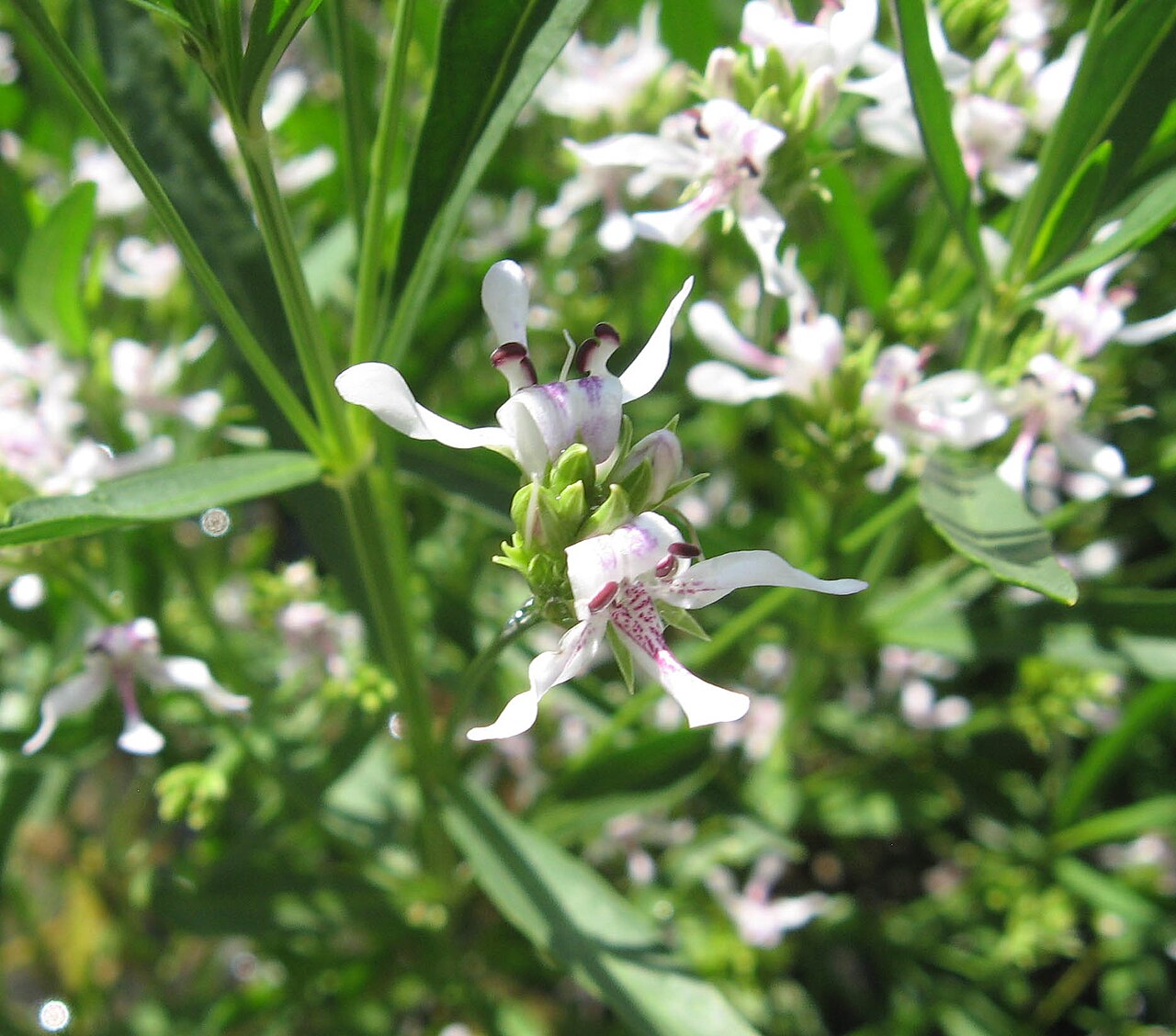
Justicia americana, the American Water-willow (also simply called water-willow), is an emergent aquatic perennial that forms dense colonies in the shallow water and along the banks of streams, rivers, lakes and ponds across the eastern United States. Its upright stems, usually 1 to 3 feet tall, carry long, narrow, willow-like leaves, which explain its common name, though it is not related to willows.
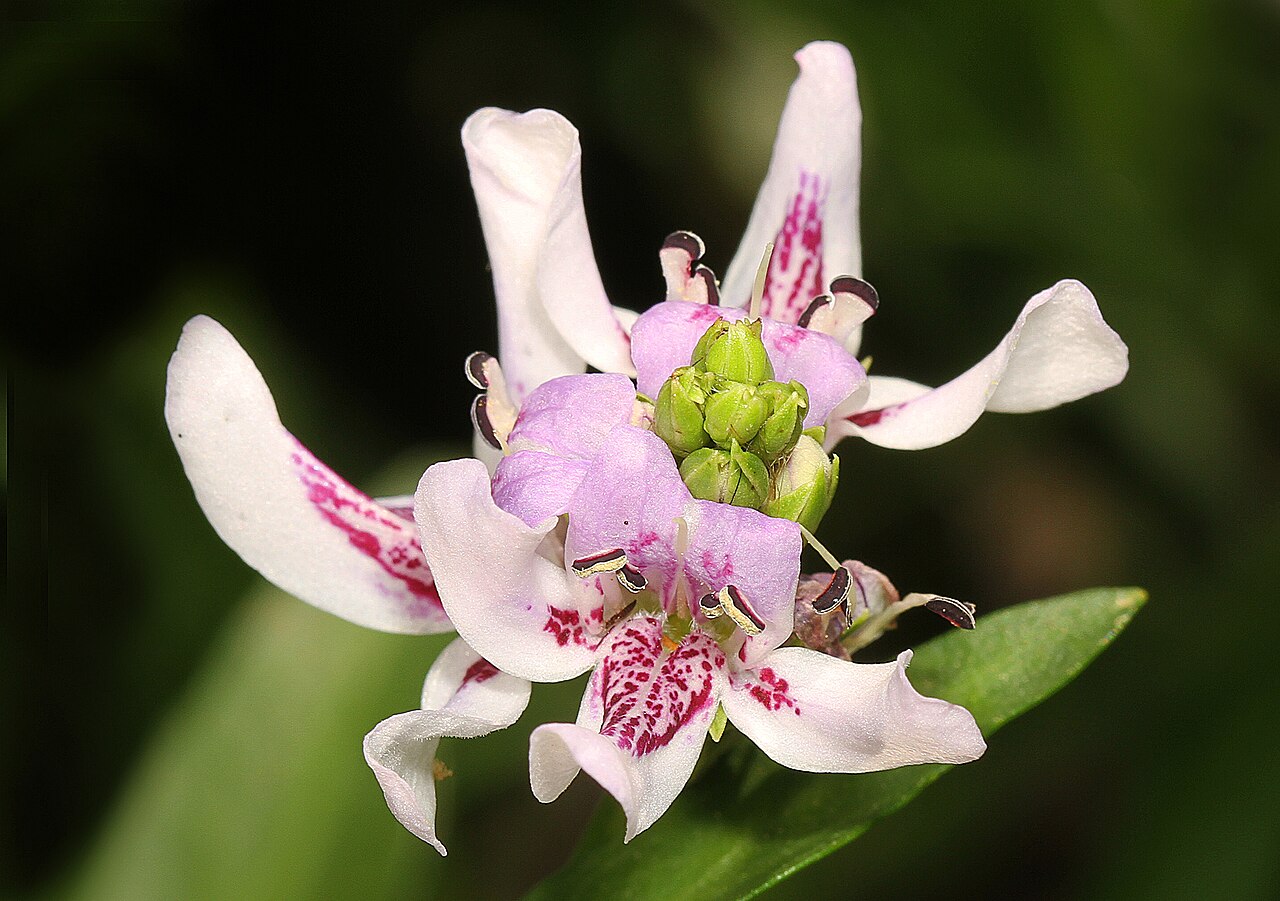
From late spring through summer, small spikes of delicate, orchid-like flowers rise on long stalks above the foliage. Each flower is about half an inch across, white to pale lavender, with a hooded upper lip and a broad lower lip speckled with purple. Water-willow belongs to the acanthus family (Acanthaceae), which is mostly tropical, and it is one of the few members of that family native to the northern United States and Canada.
Water-willow is valued as much for what it does as for how it looks. Its creeping rhizomes anchor gravel bars and shorelines against fast currents, and its stems shelter young fish and aquatic insects. It is one of the best native plants for stabilizing stream banks and pond edges. This guide covers identification, range, growing conditions and the plant’s role in aquatic ecosystems.
Identification
American water-willow is easiest to recognize by its habitat and habit: dense, upright colonies standing in shallow water or wet gravel, with narrow leaves and small two-lipped flowers held on long stalks.
Growth Habit & Stems
It is a rhizomatous perennial that spreads to form large, dense colonies, often covering river bars and lake shallows. The stems are erect, smooth, unbranched or sparingly branched, and usually 1 to 3 feet tall. They are slightly angled or grooved, and stems lying on wet ground can root at the nodes.
Leaves
The leaves are opposite, narrowly lance-shaped to linear, about 3 to 6 inches long and a half inch to an inch wide, with smooth edges and very short stalks or none. They are smooth, bright to dark green and resemble the leaves of a narrow-leaved willow.
Flowers
From about May to October, depending on latitude, flowers appear in dense, short spikes or heads at the ends of long, slender stalks that arise from the upper leaf axils. Each flower is two-lipped and about half an inch across. The upper lip is pale violet to white and arched like a hood over the stamens, while the lower lip spreads into three lobes, white to pale lavender, with a pattern of reddish-purple spots or veins near its base. The anthers are dark purple to almost black.
Fruit & Seeds
After flowering, each blossom forms a small, club-shaped capsule about half an inch long. When ripe and dry, the capsule splits open elastically, flinging out up to four small, rounded seeds. Most new plants, however, come from the spreading rhizomes and from stem fragments that break off and root downstream.
Quick Facts
| Scientific Name | Justicia americana (L.) Vahl (syn. Dianthera americana) |
| Family | Acanthaceae (acanthus family) |
| Plant Type | Emergent aquatic herbaceous perennial; spreads by rhizomes |
| Mature Height | 1–3 ft |
| Mature Spread | Spreads indefinitely by rhizomes into dense colonies |
| Growth Rate | Moderate to fast |
| Sun Exposure | Full sun to partial shade |
| Water Needs | Very high; saturated soil or shallow standing or flowing water |
| Soil Type | Gravel, cobble, sand, silt or muck in and along streams, rivers and lakes |
| Soil pH | About 6.0–8.0 |
| Bloom Time | May–October |
| Flower Color | White to pale lavender, with purple markings |
| Fall Color | None notable; stems die back to rhizomes in winter in the north |
| Fruit | Small, club-shaped capsule with up to four seeds |
| Deer Resistant | Moderately; deer occasionally browse it |
| USDA Hardiness Zones | 4–10 |
Native Range
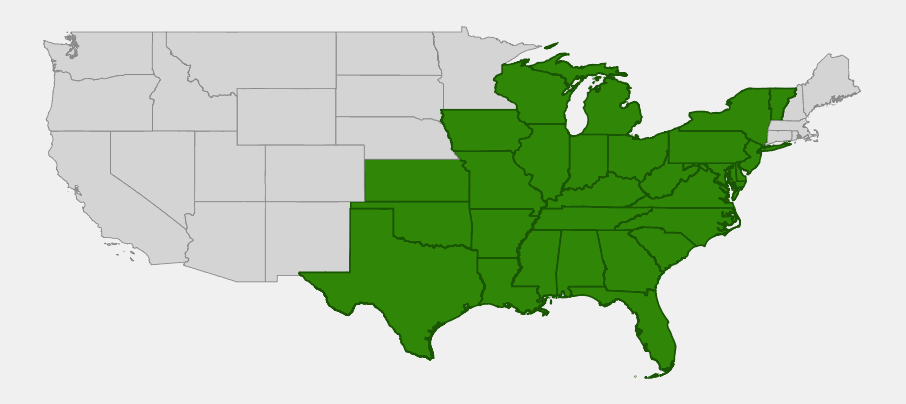
USDA PLANTS lists American water-willow as native in 28 states and the District of Columbia. Its range stretches from Vermont, New York and southern Michigan and Wisconsin south to Florida and west to Iowa, Missouri, Kansas, Oklahoma and Texas. In Canada it reaches its northern limit in southern Ontario and southwestern Quebec, where it is rare and found at only a few sites, including islands in the St. Lawrence River.
It is most abundant in the Ohio, Tennessee, Cumberland and middle Mississippi river systems and in the rivers of the Ozarks, Piedmont and Interior Highlands, where it can line shallow riffles and gravel bars for miles. On the Atlantic and Gulf Coastal Plain it grows along streams and spring runs. Toward the northern and western edges of its range it becomes local.
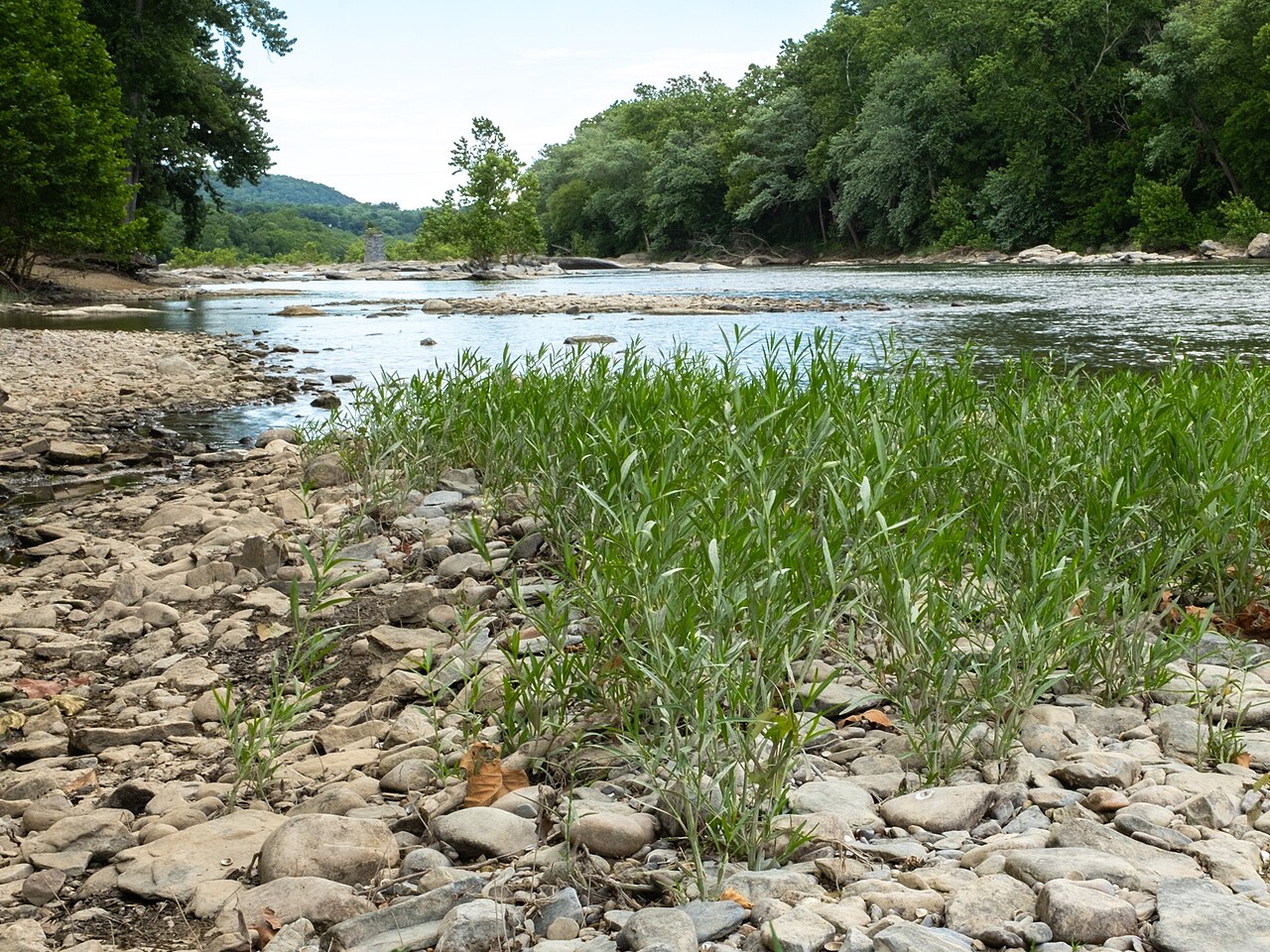
Water-willow grows in shallow water along rivers, streams, lake and reservoir shores, ponds and marshes, typically in water a few inches to about a foot and a half deep, and on wet banks and gravel bars just above the water line. It tolerates moderate currents and frequent flooding, and it is one of the few emergent plants that can establish on gravel and cobble bars in swift water.
📋 Regional plant lists featuring American Water-willow: New York, Pennsylvania & Northern New Jersey · Ohio & Indiana · Michigan, Wisconsin & Eastern Minnesota · Kentucky & Tennessee · Nebraska, Kansas & Eastern Colorado · New Hampshire, Maine & Vermont · Maryland, Virginia & West Virginia · Delaware, Southern New Jersey & Long Island · Illinois, Iowa & Missouri · Alabama, Georgia & Mississippi · North & South Florida
Growing & Care Guide
American water-willow is one of the easiest native aquatic plants to grow. It establishes quickly in shallow water or permanently wet soil and spreads into a dense, weed-suppressing groundcover. It is ideal for pond edges, stream banks, water gardens and stormwater basins.
Light
Plant in full sun for the densest growth and the most flowers. It tolerates partial shade along wooded streams but grows more loosely and blooms less.
Soil & Water
Water-willow needs constantly wet conditions: saturated soil, or standing or slowly to moderately flowing water up to about a foot or so deep. It grows in gravel, sand, silt or muck. In a water garden, plant it in a container of heavy garden soil or aquatic potting mix topped with gravel, and set the pot so the crown is 2 to 6 inches below the water surface.
Planting Tips
Plant rooted divisions, plugs or potted plants in spring, about 12 to 18 inches apart. On stream banks and shorelines, set plants at the water line and slightly below so that colonies can expand in both directions. Protect new plantings from strong currents, waves and geese until roots are established, for example with biodegradable erosion-control fabric or temporary fencing.
Pruning & Maintenance
Established colonies need almost no care. In small ponds and water gardens, cut back or divide plants every few years to keep them in bounds, since the rhizomes spread steadily. Remove dead stems in late winter or early spring if you prefer a tidier look.
Propagation
Propagation is easiest by division of the rhizomes in spring or by stem cuttings, which root readily in wet sand or directly in shallow water. Seed is seldom used, because vegetative propagation is fast and reliable.
Landscape Uses
- Stream bank and shoreline stabilization: dense rhizomes hold gravel, sand and soil against currents and waves
- Ponds and water gardens: a hardy, flowering native emergent for shallow shelves
- Stormwater and rain gardens: the wettest zones of bioretention basins, swales and constructed wetlands
- Fish habitat enhancement: planted in reservoirs and lakes to create cover for young fish
- Stream and river restoration: a key species for revegetating gravel bars and eroding banks
Wildlife & Ecological Value
Dense beds of American water-willow are small nurseries for aquatic life. In many rivers and lakes they are one of the most important sources of cover in shallow water.
For Pollinators
The flowers are visited by small native bees, bumblebees, honey bees and other insects, along with butterflies and skippers. The purple markings on the lower lip act as nectar guides. Because it blooms over a long season, water-willow provides a steady nectar supply along waterways.
For Birds
The plant is not a major food source for birds, but its beds harbor aquatic insects that feed many waterbirds and songbirds, and wading birds such as herons hunt for fish along their edges.
For Mammals
Deer occasionally browse the stems, but water-willow is not considered an important food for mammals. Its beds do provide cover for small mammals that forage along shorelines.
Ecosystem Role
The stems create underwater structure where young fish, such as bass and sunfish, shelter from predators and currents, and where aquatic insects and snails live. The rhizomes stabilize gravel bars and banks, trapping sediment and helping to build new land along rivers. Its beds also slow water and improve water clarity, and they are frequently planted in reservoirs to create fish habitat.
Cultural & Historical Uses
Linnaeus described the plant in 1753 as Dianthera americana, the name used in many older American manuals. The Danish botanist Martin Vahl transferred it to Justicia in 1804, and most botanists have followed him. The genus honors James Justice, an 18th-century Scottish gardener and author of a well-known horticultural handbook.
Water-willow has little recorded use as a food or medicine. Its greatest value to people today is practical: it is widely used by fisheries biologists, stream restoration professionals and landscape designers to stabilize shorelines, improve fish habitat and soften the edges of ponds and stormwater basins.
For river paddlers and anglers across the eastern United States, the long, flowering beds of water-willow along riffles and gravel bars are a familiar summer sight, and they often mark the shallow edges where smallmouth bass and other fish feed.
Frequently Asked Questions
Is American water-willow a willow?
No. It is an herbaceous perennial in the acanthus family. It gets its name from its long, narrow, willow-like leaves and its habit of growing in water. True willows (Salix) are woody shrubs and trees.
How deep can water-willow grow?
It grows best in saturated soil or water from a few inches to about a foot or so deep, and it can survive somewhat deeper water and periodic flooding once established.
Will water-willow take over my pond?
It spreads steadily by rhizomes and can form large colonies in shallow water, but it does not grow into deep water. In small ponds, plant it in containers or divide it every few years to keep it in check.
Is American water-willow good for fish?
Yes. Its dense stems provide cover for young fish and the aquatic insects they eat, and fisheries agencies often plant it in lakes and reservoirs to improve habitat.
When does water-willow bloom?
It blooms from late spring into fall, mostly from June through September, producing a few flowers at a time over a long season.

Looking for a nursery that carries American Water-willow?
Browse our native plant nursery directory: Alabama & Arkansas · Delaware, Florida & Georgia · Illinois, Indiana, Iowa & Kansas · Kentucky, Louisiana, Maryland, Michigan, Mississippi & Missouri · New Jersey, New York, North Carolina, Ohio & Oklahoma · Pennsylvania, South Carolina, Tennessee, Texas, Vermont & Virginia · West Virginia & Wisconsin