
Leichtlin’s Mariposa Lily (Calochortus leichtlinii)
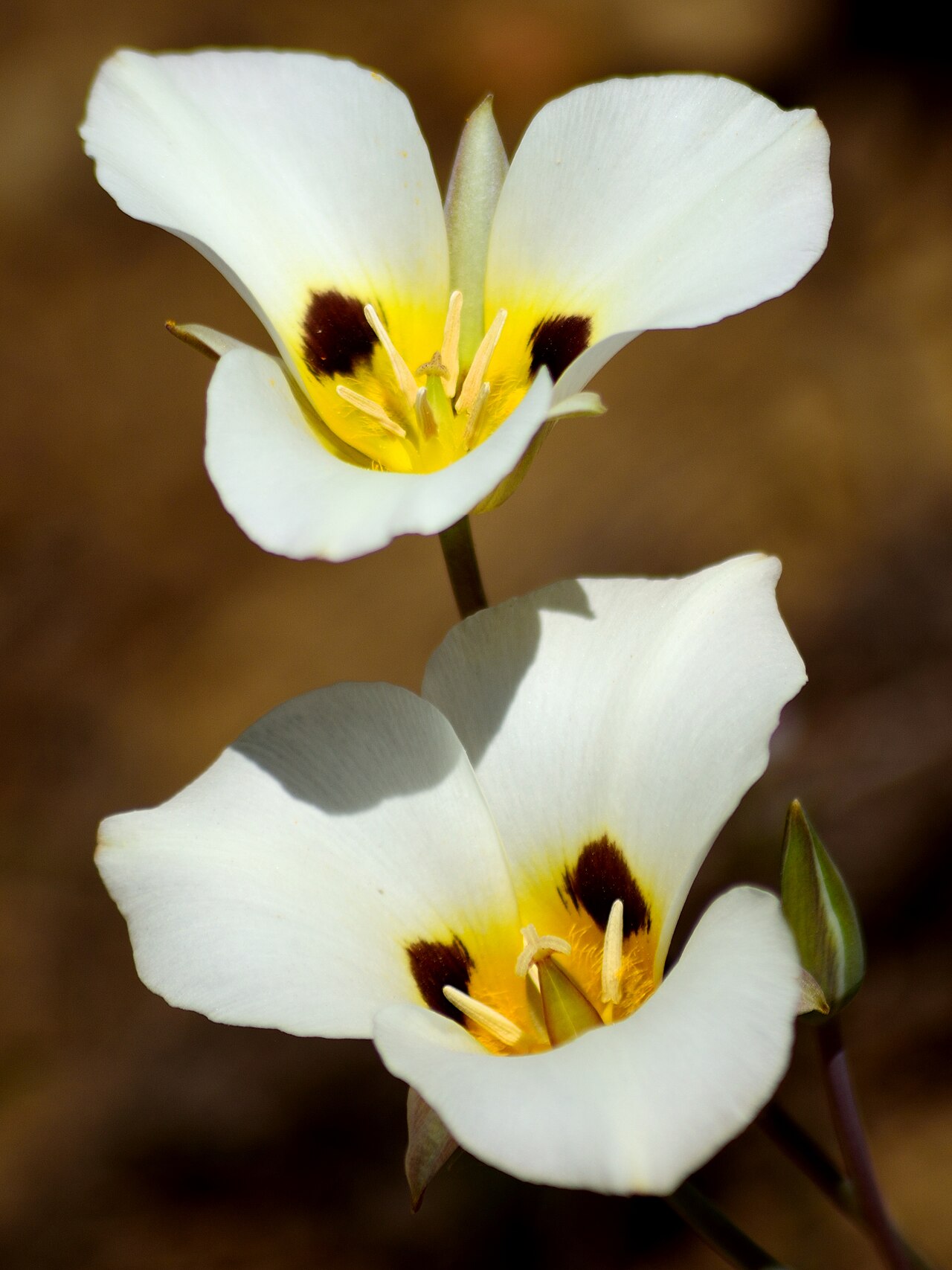
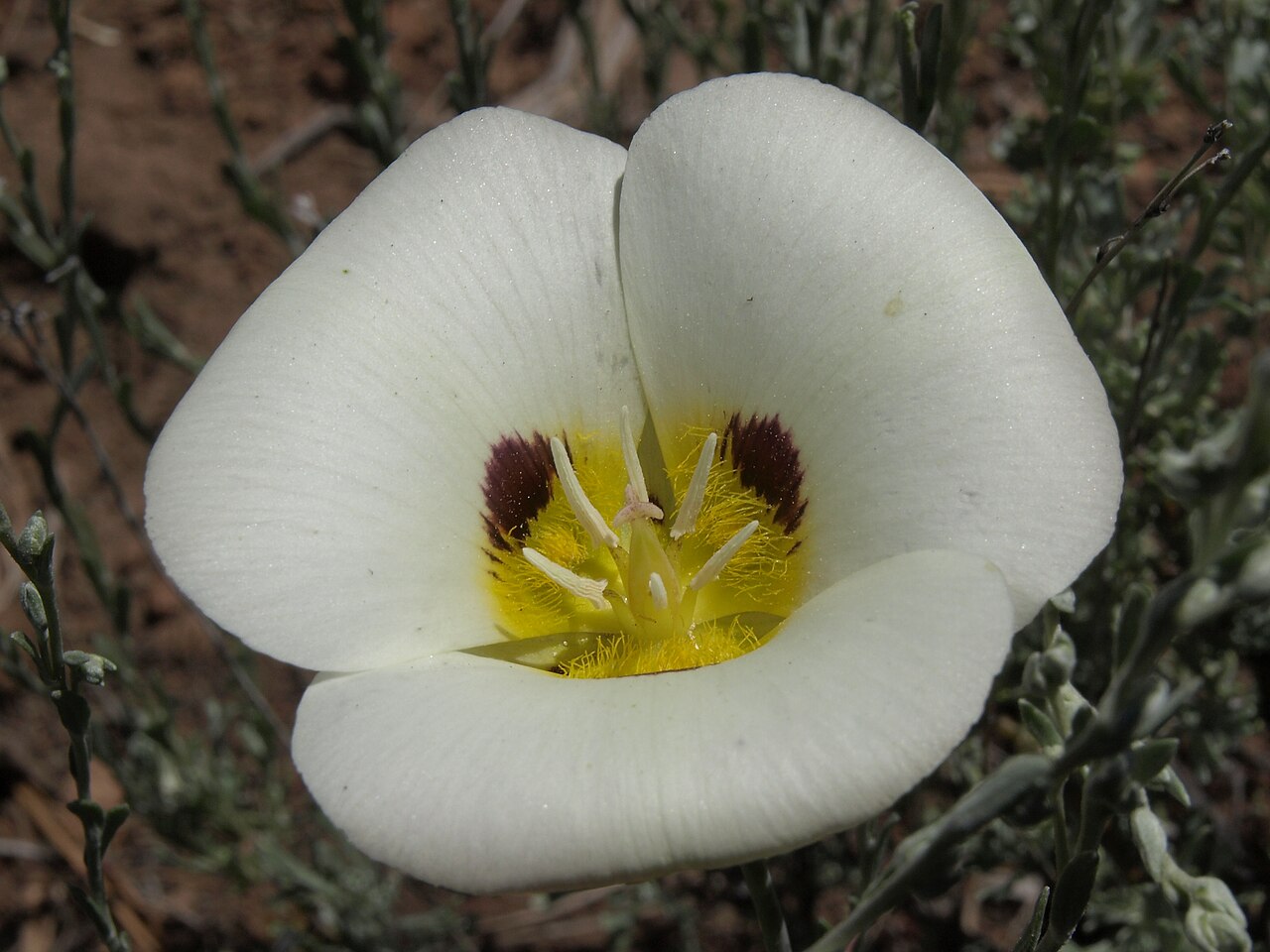
Calochortus leichtlinii, known as Leichtlin’s Mariposa Lily (USDA: smokey mariposa), is a mountain mariposa lily of the Sierra Nevada, the southern Cascades and the western edge of the Great Basin. It belongs to the genus Calochortus in the lily family (Liliaceae). In early to midsummer, slender stems 4 to 24 inches tall carry one to several upright, cup-shaped flowers, usually white or faintly tinged with pink or smoky blue, with a yellow center and a dark maroon to nearly black spot above the base of each petal.
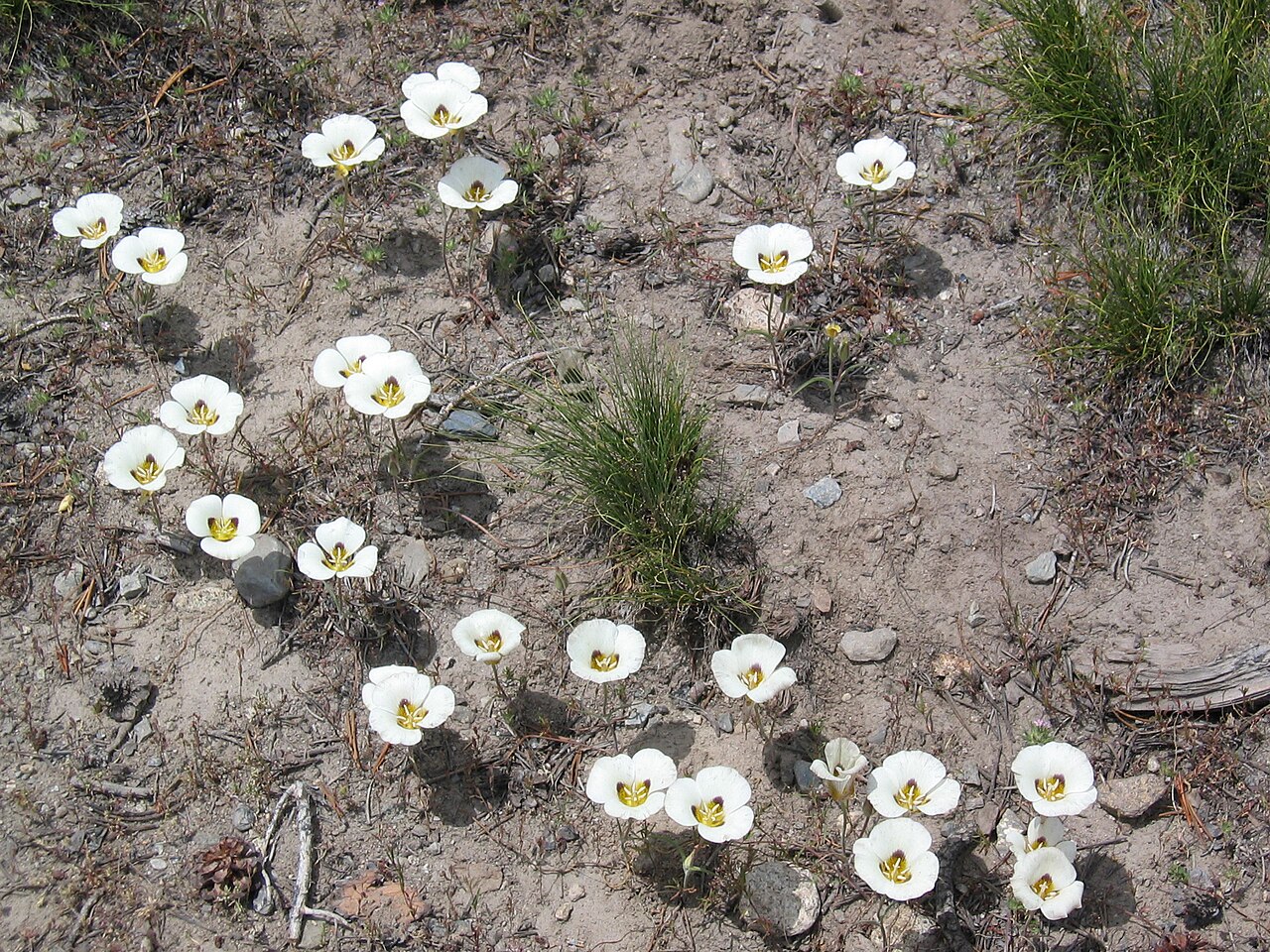
It grows from a small, deep bulb and has a single grass-like basal leaf that usually withers by the time the flowers open, so the blooms seem to rise straight out of the sand, gravel or sagebrush. It is one of the most widespread and common mariposa lilies of high country in California and western Nevada, blooming from May at lower elevations to August near treeline, where drifts of white cups can dot dry meadows and granite slopes.
Like other Calochortus, it needs dry summers and sharp drainage, and it is best enjoyed in the wild or grown from seed by bulb enthusiasts. Never dig wild bulbs. They are deep and fragile, rarely survive transplanting, and digging damages mountain meadows. Buy seed or nursery-grown bulbs only.
Identification
Look for upright white cups with a yellow center and a dark spot on each petal, on thin stems with no obvious leaves, in open, dry ground in the mountains in summer.
Bulb & Stem
The plant grows from a small, egg-shaped bulb several inches deep. The stem is erect and unbranched, 4 to 24 inches (10 to 60 cm) tall, often shorter at high elevations.
Leaves
There is a single narrow, grass-like basal leaf about 4 to 6 inches (10 to 15 cm) long, which usually withers by flowering time. The plant often looks leafless when in bloom.
Flowers
One to five erect, bell- or cup-shaped flowers grow in a loose cluster. Each has three broad, rounded petals about 1/2 to 1 1/2 inches (1 to 4 cm) long, white to pinkish or dull smoky blue, with a yellow base and a dark red, purple or nearly black spot above the yellow. The base of each petal has a small, hairy nectar gland. The three sepals are narrower and greenish, often with a dark spot. Color patterns vary among populations. Bloom time runs from May to August, depending on elevation.
Fruit & Seeds
The fruit is a narrow, erect, three-angled capsule up to about 2 1/2 inches (6 cm) long. It dries and splits to release flat, pale seeds in late summer. The plant then goes dormant until the next spring.
Look-alikes
Sego lily (Calochortus nuttallii) of the Great Basin and Rockies is similar, with a dark band or spot above a yellow base, but it usually has a more prominent dark crescent and grows mostly east of the Sierra in sagebrush country. Superb mariposa lily (C. superbus) of the lower Sierra foothills has an arrow-shaped dark spot and often a yellow zone above it. Bruneau mariposa lily (C. bruneaunis) of the Great Basin has a dark spot and a green stripe on the back of each petal. Look at the shape of the nectary and spots, and the location, to tell them apart.
Safety & Conservation
Bulbs of many Calochortus species, including this one, were eaten by Indigenous peoples, but don’t harvest them: wild bulbs are slow to replace and some Calochortus look-alikes are rare. Leichtlin’s mariposa lily is common and not considered at risk. Leave wild plants alone, and buy seed or bulbs from nurseries that grow their own.
Quick Facts
| Scientific Name | Calochortus leichtlinii |
| Family | Liliaceae (lily family) |
| Plant Type | Bulb-forming herbaceous perennial; summer-dormant |
| Mature Height | 4–24 in |
| Mature Spread | 2–4 in |
| Growth Rate | Slow; several years from seed to flower |
| Sun Exposure | Full sun |
| Water Needs | Low; snowmelt moisture in spring, dry in summer |
| Soil Type | Well-drained sandy, gravelly or rocky soils, including granite and volcanic soils |
| Soil pH | About 6.0–7.5 |
| Bloom Time | May–August (by elevation) |
| Flower Color | White to pinkish or smoky blue, yellow center, dark spots |
| Fall Color | None; dormant by late summer |
| Fruit | Narrow, erect, three-angled capsule |
| Deer Resistant | No; deer browse the flowers and rodents eat the bulbs |
| USDA Hardiness Zones | 4–8 |
Native Range
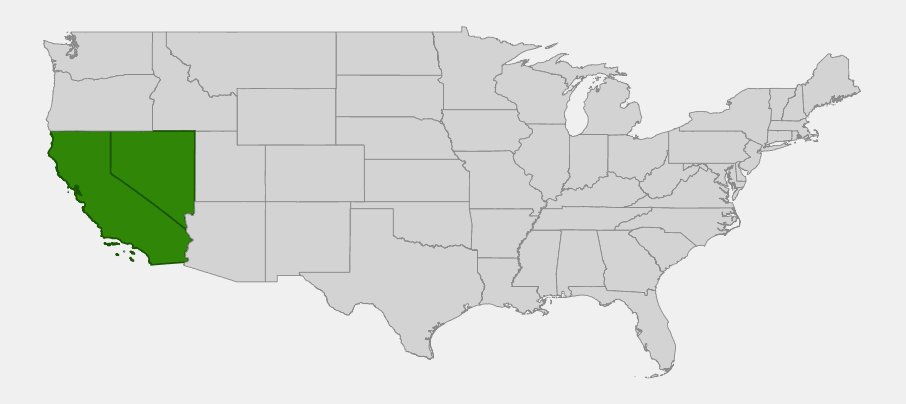
Leichtlin’s mariposa lily is native to California and Nevada. USDA PLANTS lists it as native in both states. In California it grows through much of the Sierra Nevada, from the southern Sierra north to the Lassen area and the southern Cascades, and on the Modoc Plateau and other mountains of northeastern California.
In Nevada it grows in the Carson Range and on Peavine Mountain near Reno, at the eastern edge of the Sierra Nevada, and in nearby mountains of western Nevada at the western edge of the Great Basin. It is one of the most widespread mariposa lilies in the high country of the Sierra Nevada.
It grows in dry, open places: granite and volcanic slopes, sandy and gravelly flats, dry meadows, openings in conifer forest and sagebrush, and chaparral edges, from the lower foothills to above 10,000 feet (3,000 m) in the Sierra Nevada.
📋 Regional plant lists featuring Leichtlin’s Mariposa Lily: Idaho, Eastern Oregon & Eastern Washington · California & Nevada
Growing & Care Guide
Leichtlin’s mariposa lily is grown mostly by bulb specialists and rock gardeners. As a mountain species it is hardier than many California Calochortus, but it still needs perfect drainage and a dry summer dormancy. Start it from seed or buy nursery-grown bulbs.
Light
Full sun. It grows on open, exposed slopes and flats in the wild.
Soil & Water
Use a very gritty, fast-draining mix of sand, pumice or decomposed granite with a little loam. It needs moisture in spring, similar to snowmelt, and dryness from midsummer through fall. In wet-summer climates, grow it in pots or a covered bulb frame.
Planting Tips
Sow seed in fall in deep pots and leave them outdoors for a winter chill. Plant dormant bulbs about 3 to 4 inches deep in fall. In rock gardens, place them in raised, gravelly beds or crevices with other dry-adapted plants.
Pruning & Maintenance
Let foliage and stems die back naturally. Protect bulbs from gophers with wire baskets and flowers from deer if needed. Keep the soil dry after flowering until fall.
Propagation
Seed is the main method. Seeds need a cold, moist period over winter and germinate in spring. Seedlings take several years to reach flowering size.
Landscape Uses
- Rock gardens and crevice gardens: for gritty, summer-dry, sunny spots
- Bulb frames and pots: for collectors of western bulbs
- Mountain meadow restoration: a native wildflower of Sierra Nevada meadows and slopes
- Pollinator plantings: summer nectar and pollen for native bees
- Wildflower viewing: a classic summer flower of Sierra Nevada trails
Wildlife & Ecological Value
Leichtlin’s mariposa lily is part of the summer wildflower display of the Sierra Nevada and western Great Basin.
For Pollinators
The open cups and nectar glands attract native bees, beetles and flies. Bees often crawl into the cup to reach the nectar at the base of each petal.
For Birds
It provides little direct food for birds, but its habitats support mountain birds such as Clark’s nutcracker, mountain bluebirds and sooty grouse.
For Mammals
Pocket gophers and other rodents eat the bulbs, and deer and other browsers eat the flowers and stems.
Ecosystem Role
As a summer-dormant bulb, it takes advantage of snowmelt moisture before the dry season. It is part of the diverse forb community of Sierra Nevada meadows, forest openings and sagebrush, which supports pollinators and wildlife.
Cultural & Historical Uses
The species is named for Max Leichtlin (1831–1910), a German horticulturist in Baden-Baden who grew and distributed many bulbs, including western American species. The genus name Calochortus means “beautiful grass” in Greek, and mariposa is Spanish for butterfly, after the butterfly-like flowers.
The bulbs of many mariposa lilies were dug and eaten by Indigenous peoples of California and the Great Basin, raw or cooked. The small bulbs of this species are reported to have been among them. Today, with so many wild places under pressure, the bulbs should be left in the ground.
Calochortus is a large western genus of about 70 species. Its relatives on this site include Sego Lily, Superb Mariposa Lily, Butterfly Mariposa Lily and Tolmie’s Pussy Ears.
Frequently Asked Questions
Why is it called smokey mariposa?
The petals of some populations are tinged with a dull, smoky blue or gray, especially on the outside, which inspired the USDA name smokey mariposa.
Can I dig mariposa lily bulbs from the mountains?
No. The bulbs are deep, rarely survive transplanting, and digging damages fragile meadows. Grow them from seed or buy nursery-grown bulbs.
When does Leichtlin’s mariposa lily bloom?
From May at lower elevations to August near treeline, depending on snowmelt.
How is it different from the sego lily?
They look alike. Leichtlin’s mariposa lily grows mainly in the Sierra Nevada and nearby mountains, while the sego lily is a Great Basin and Rocky Mountain species. Sego lily usually has a broader dark crescent above the yellow base.
Why are there no leaves when it blooms?
Its single basal leaf usually withers by flowering time, so the plant appears to be just a stem and flowers.

Looking for a nursery that carries Leichtlin’s Mariposa Lily?
Browse our native plant nursery directory: California · Nevada