
Creeping Cucumber (Melothria pendula)
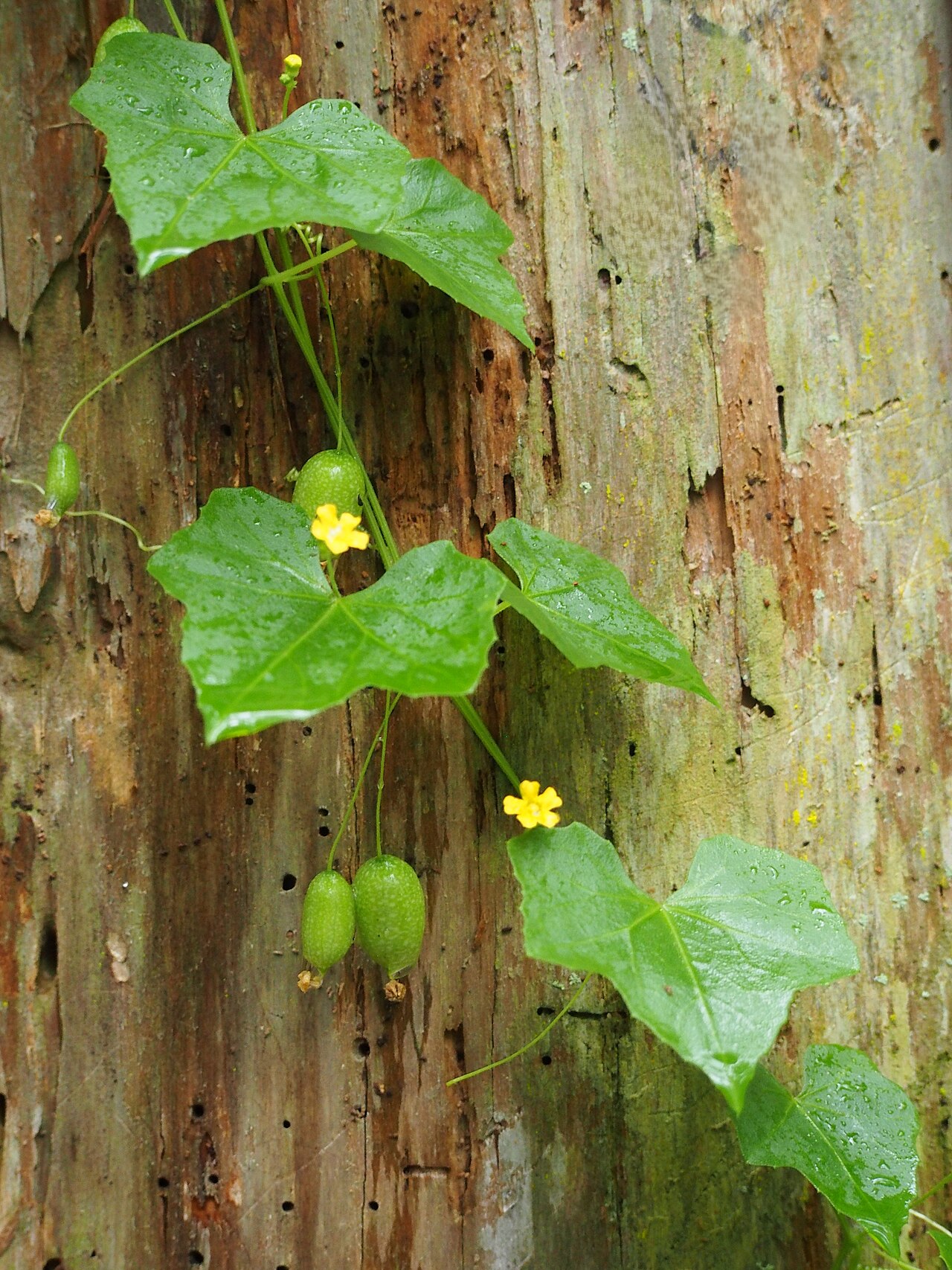
Melothria pendula, known as Creeping Cucumber (USDA: Guadeloupe cucumber), is a slender native vine of the cucumber family (Cucurbitaceae). It grows across the southeastern and south-central United States, Puerto Rico and the U.S. Virgin Islands, and south through Mexico, the Caribbean and Central America into South America. Its thin stems climb by coiled tendrils or trail over the ground, reaching up to about 15 feet, with small, rough, ivy-like leaves.
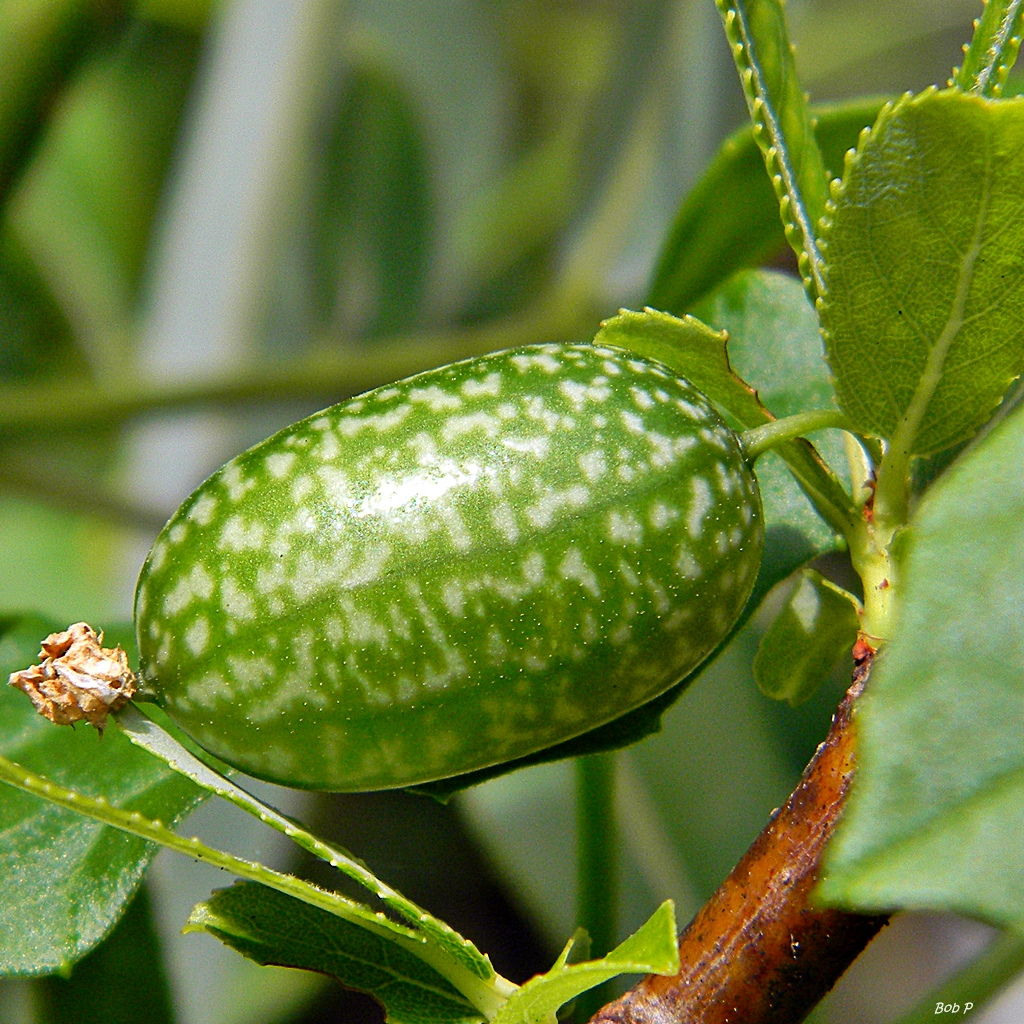
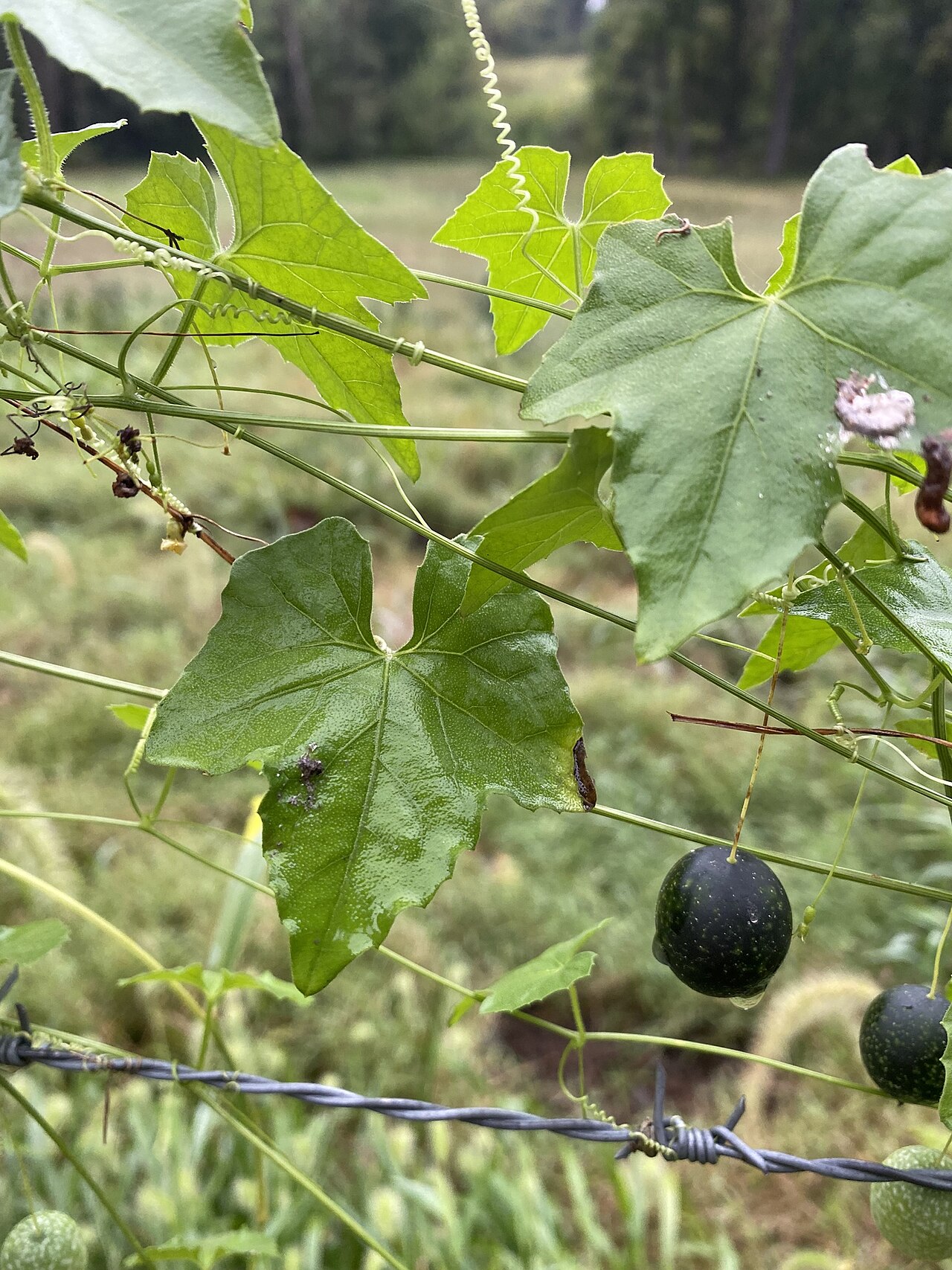
From spring through fall it bears small, bright yellow, five-lobed flowers. These are followed by the plant’s most memorable feature: smooth, oval fruits about 1/2 to 3/4 inch long that look exactly like miniature watermelons, green with pale mottling. As they ripen, they turn glossy black. The vine is common but easily overlooked, scrambling through shrubs, fences and woodland edges.
Safety note: do not eat the fruits. Ripe black fruits are reported to be strongly laxative, and sources disagree about whether green fruits are safe. Keep children from sampling them, since the tiny “watermelons” are tempting. Creeping cucumber is easy to grow from seed in sunny to partly shaded spots, where it makes a delicate, low-maintenance cover for fences and shrubs.
Identification
Look for a thin, tendril-climbing vine with small, lobed, sandpapery leaves, tiny yellow flowers and, from summer on, small striped or mottled green fruits like toy watermelons.
Stems & Habit
The stems are slender, green, slightly hairy and branching, trailing on the ground or climbing to about 15 feet by unbranched, coiled tendrils that grow opposite the leaves. In frost-free areas the plant can persist for years from a tuberous root; farther north it often behaves like an annual, returning from seed.
Leaves
The leaves are alternate, about 1 to 3 inches long and wide, heart-shaped at the base, and shallowly to deeply three- to five-lobed, somewhat like small ivy or grape leaves. The surfaces are rough to the touch, and the edges are toothed or wavy.
Flowers
Plants have separate male and female flowers on the same vine. Both are bright yellow, about 1/4 to 1/2 inch across, with five rounded lobes. Male flowers appear in small clusters on short stalks; female flowers grow singly on longer stalks, with a tiny fruit-like ovary below the petals. The Lady Bird Johnson Wildflower Center lists bloom from April to October.
Fruit
The fruit is a smooth, oval berry about 1/2 to 3/4 inch long, hanging on a slender stalk. Young fruits are green with pale mottling or stripes, like a miniature watermelon; ripe fruits turn black and soft and contain many small, flat, whitish seeds.
Look-alikes
Bur cucumber (Sicyos angulatus) is a much larger, more aggressive vine with branched tendrils, whitish flowers and clusters of spiny fruits. The non-native cucamelon or mouse melon (Melothria scabra) has very similar fruits and is grown in vegetable gardens; it is a Mexican and Central American species. Wild grapes have larger leaves, branched tendrils and grape clusters.
Safety: Do Not Eat the Fruit
The ripe black fruits are reported to act as a strong laxative and should not be eaten. Some foragers report eating young green fruits like tiny cucumbers, but reports are inconsistent and the fruits are easy to confuse at different stages of ripeness. Keep children and pets from eating them. If someone eats a quantity of fruit and becomes ill, contact Poison Control (1-800-222-1222 in the U.S.) or a doctor.
Quick Facts
| Scientific Name | Melothria pendula |
| Family | Cucurbitaceae (cucumber family) |
| Plant Type | Herbaceous perennial vine (often annual in the north) |
| Mature Height | Climbs or trails up to about 15 ft |
| Mature Spread | 3–15 ft |
| Growth Rate | Fast |
| Sun Exposure | Full sun to part shade |
| Water Needs | Medium; moist to fairly dry soil |
| Soil Type | Sandy, loamy or clay soils |
| Soil pH | About 5.5–7.5 (acidic to slightly alkaline) |
| Bloom Time | April–October |
| Flower Color | Bright yellow |
| Fall Color | None notable; dies back with frost |
| Fruit | Tiny watermelon-like berry, green then black (do not eat) |
| Deer Resistant | Not well documented |
| USDA Hardiness Zones | 6–11 (often grown as an annual in colder zones) |
Native Range
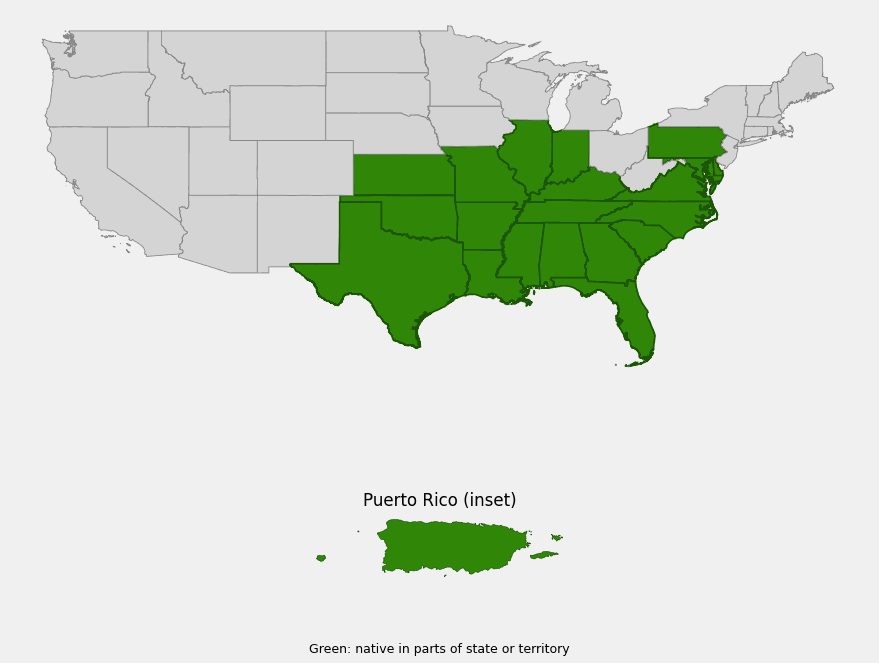
Creeping cucumber is native to the warm-temperate and tropical Americas. USDA PLANTS lists it as native in the lower 48 states, Puerto Rico and the U.S. Virgin Islands, and records it from 20 states and the District of Columbia, plus Puerto Rico. In the United States it ranges from Pennsylvania, Maryland, Delaware and Virginia south to Florida, and west through Indiana, Illinois, Kentucky, Tennessee and Missouri to southeastern Kansas, Oklahoma and Texas.
It is most common on the Coastal Plain and in the lower Mississippi Valley, from the Carolinas through Florida and the Gulf states to East Texas, and is widespread in Texas. Records from Pennsylvania, Indiana, Illinois and Kansas are near the northern edge of its range, where it is uncommon. In Puerto Rico it grows in thickets, pastures and forest edges, and beyond the United States it extends through the Caribbean, Mexico and Central America to South America.
It grows in thickets, woodland edges and openings, hammocks, floodplain forests, fencerows, old fields, roadsides and yards, often scrambling over shrubs and low trees or trailing through tall grass. It tolerates a wide range of soils and moisture and frequently appears in lightly disturbed sites.
📋 Regional plant lists featuring Creeping Cucumber: New York, Pennsylvania & Northern New Jersey · Ohio & Indiana · Kentucky & Tennessee · Nebraska, Kansas & Eastern Colorado · Maryland, Virginia & West Virginia · Delaware, Southern New Jersey & Long Island · Illinois, Iowa & Missouri · Alabama, Georgia & Mississippi · North & South Florida · Puerto Rico · North & South Carolina · Arkansas, Louisiana, Eastern Oklahoma & Eastern Texas · South & West Texas
Growing & Care Guide
Creeping cucumber is easy to grow and often arrives on its own in southern gardens. It is a light, airy vine that rarely smothers its supports. Seed is occasionally offered by native seed suppliers; you can also let volunteer seedlings grow where they appear.
Light
Full sun to part shade. It flowers and fruits best with at least a half day of sun, but grows well at woodland edges and in dappled light.
Soil & Water
It is not fussy about soil and grows in sand, loam or clay. Average moisture is best; established plants tolerate short dry spells. No fertilizer is needed.
Planting Tips
Sow seed in spring after the last frost, about 1/2 inch deep, at the base of a fence, trellis, shrub or small tree. Give it something thin to climb, since its tendrils need slender supports. Avoid planting where children play if you are concerned about them tasting the fruits.
Pruning & Maintenance
Pull or cut back stems that wander where they are not wanted. In the North, frost kills the vines; clean them up in fall or leave them for wildlife. It self-sows, so remove unwanted seedlings in spring.
Propagation
Grow from seed. Collect ripe black fruits, mash them, rinse the seeds and dry them. Sow outdoors in spring or start indoors a few weeks before the last frost. In warm climates, plants also regrow from the tuberous roots.
Landscape Uses
- Fences and trellises: a delicate, quick cover with tiny yellow flowers
- Shrub borders: scrambles lightly through native shrubs without smothering them
- Wildlife gardens: flowers for small bees and fruits for birds
- Children’s and educational gardens: for looking at, not eating, the “mini watermelons”
- Naturalized edges: woodland borders, fencerows and thickets
Wildlife & Ecological Value
Creeping cucumber is a small but useful plant for wildlife, with a long flowering season and fruits that ripen over many months.
For Pollinators
The small yellow flowers are visited by small native bees, including sweat bees, and other small insects over a long season from spring to fall.
For Birds
Birds eat the ripe black fruits and spread the seeds, which is one reason the vine often appears along fences and under trees where birds perch.
For Mammals
Small mammals may eat the fruits and seeds. Wildlife use of the foliage is not well documented.
Ecosystem Role
As a fast-growing native vine, it fills gaps at woodland edges and in disturbed ground, providing cover and food without the aggressive growth of many non-native vines.
Cultural & Historical Uses
The genus name Melothria comes from an ancient Greek name for a plant, applied to a climbing plant and adopted by Linnaeus for this group. The species name pendula means “hanging,” referring to the dangling fruits. USDA’s name Guadeloupe cucumber comes from the Caribbean island of Guadeloupe, where the species also grows.
Creeping cucumber is closely related to the cucamelon or mouse melon (Melothria scabra), whose small, watermelon-patterned fruits have become a novelty vegetable. The native creeping cucumber is sometimes mistaken for it, but its ripe fruits turn black and are reported to be laxative.
Its tiny “watermelons” have long fascinated children and naturalists in the South, and the plant often turns up in discussions of wild foods. Because the safety of the fruits is uncertain and ripe ones are laxative, it is best enjoyed as a curiosity and wildlife plant rather than as food.
Frequently Asked Questions
Are creeping cucumber fruits edible?
Do not eat them. Ripe black fruits are reported to be strongly laxative, and sources disagree about the young green fruits. Keep children from tasting them.
Is creeping cucumber the same as cucamelon?
No. Cucamelon (Melothria scabra) is a related Mexican species grown as a vegetable. Creeping cucumber (M. pendula) is native to the southeastern United States and its ripe fruits turn black.
Is creeping cucumber invasive?
No. It is native to the southeastern and south-central United States and Puerto Rico. It can self-sow but is a light vine that is easy to pull.
When does creeping cucumber bloom?
From about April to October, producing small yellow flowers over a long season.
Will creeping cucumber come back next year?
In mild climates it can persist from tuberous roots; in colder areas the vines die with frost and new plants come from seed.

Looking for a nursery that carries Creeping Cucumber?
Browse our native plant nursery directory: Alabama & Arkansas · Delaware, Florida & Georgia · Illinois, Indiana & Kansas · Kentucky, Louisiana, Maryland, Mississippi & Missouri · North Carolina & Oklahoma · Pennsylvania, South Carolina, Tennessee, Texas & Virginia