
Texas Skeleton Plant (Lygodesmia texana)
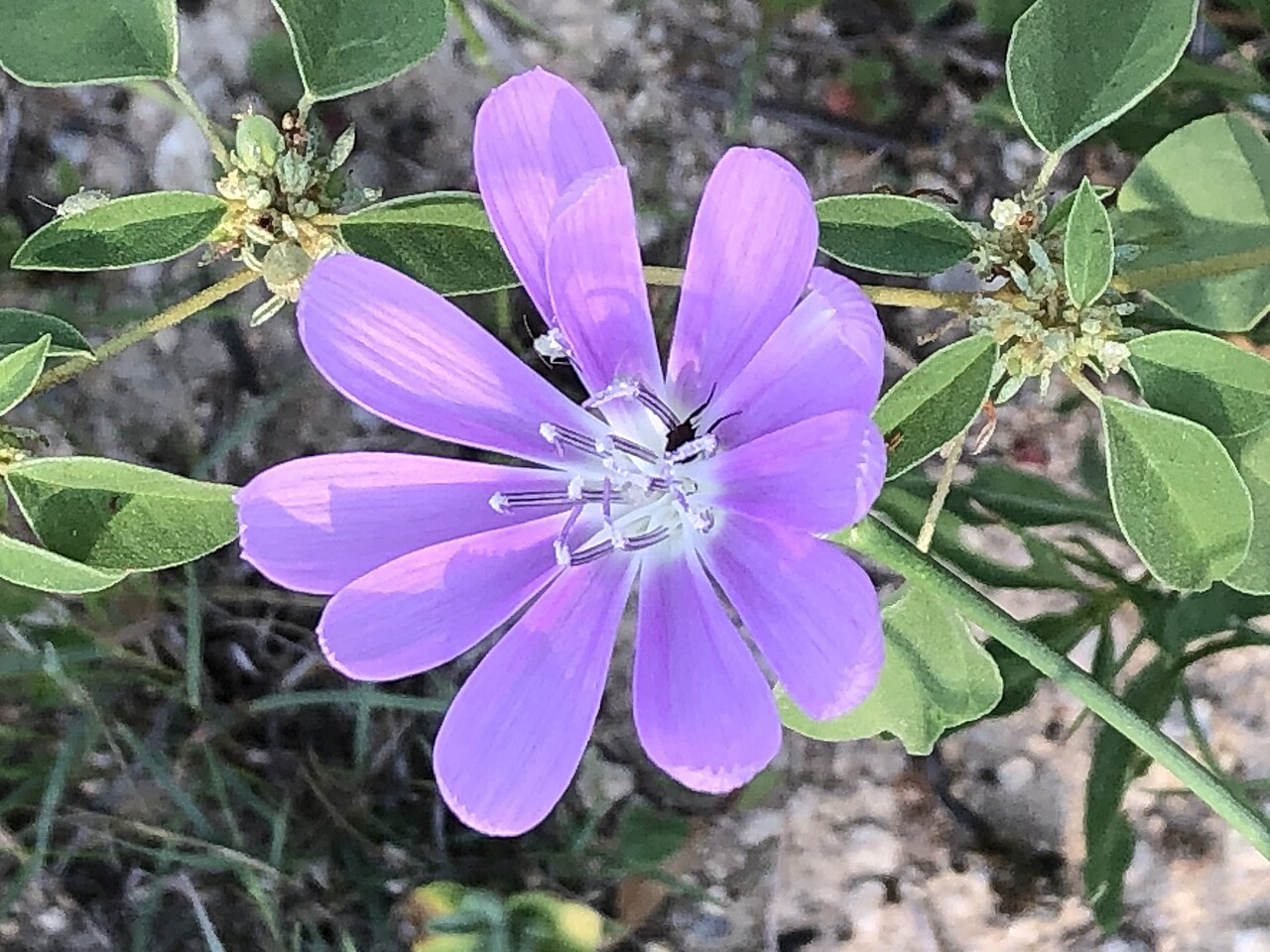
Lygodesmia texana, known as Texas Skeleton Plant, Texas skeletonplant or purple dandelion, is a native perennial wildflower of the sunflower family (Asteraceae) found in Texas, Oklahoma and New Mexico. Its common name comes from its bare, gray-green stems: the few leaves sit near the ground, so the upper plant looks like a branched skeleton of twigs.
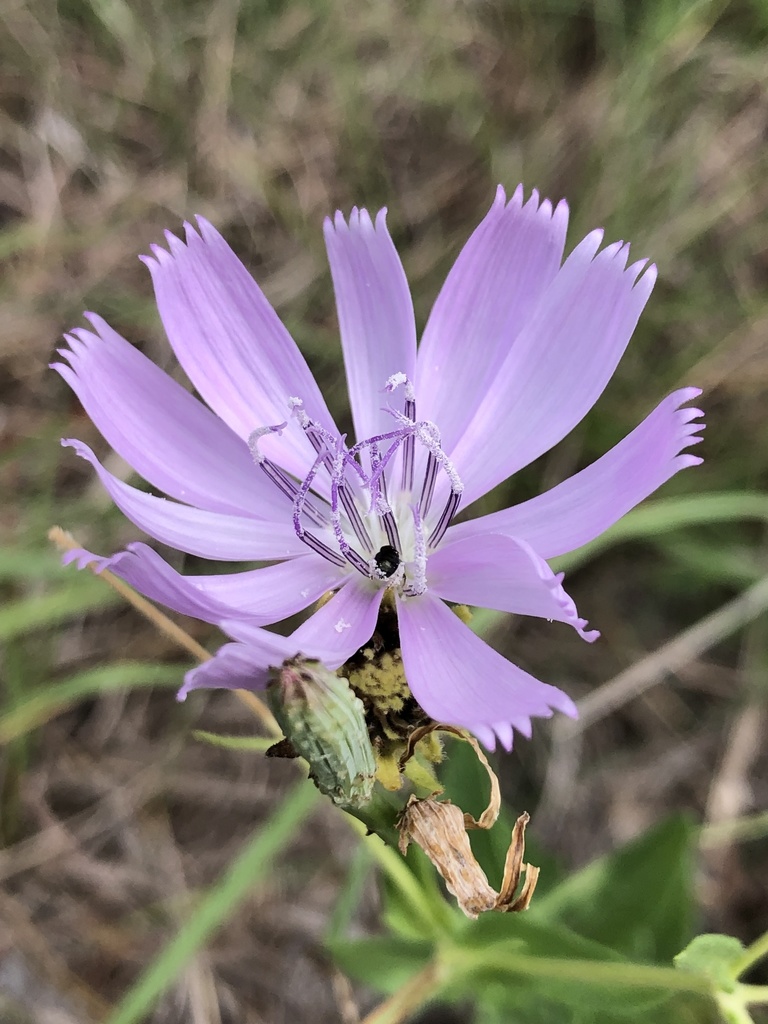
At the tip of each slender stem it opens a single showy flower head, about 2 inches across, of lavender-pink to light purple rays with finely toothed tips. The flowers open in the morning and usually close by early afternoon, and the plant keeps producing them from spring into late summer, often well into fall after rains.
Texas skeleton plant is a member of the chicory tribe and, like chicory and dandelions, has milky sap. This guide covers how to identify it, where it grows, how to grow this tough, drought-loving plant in a dry garden, and its value for pollinators.
Identification
In bloom, Texas skeleton plant is unmistakable: a sparse cluster of nearly leafless, wiry green stems, each topped with one pale purple, chicory-like flower that faces the morning sun.
Growth Form
A herbaceous perennial with a deep, woody taproot. It forms a loose, open clump of upright, branching stems usually 12 to 24 inches tall. The stems are smooth, gray-green and grooved, and broken stems release milky latex.
Leaves
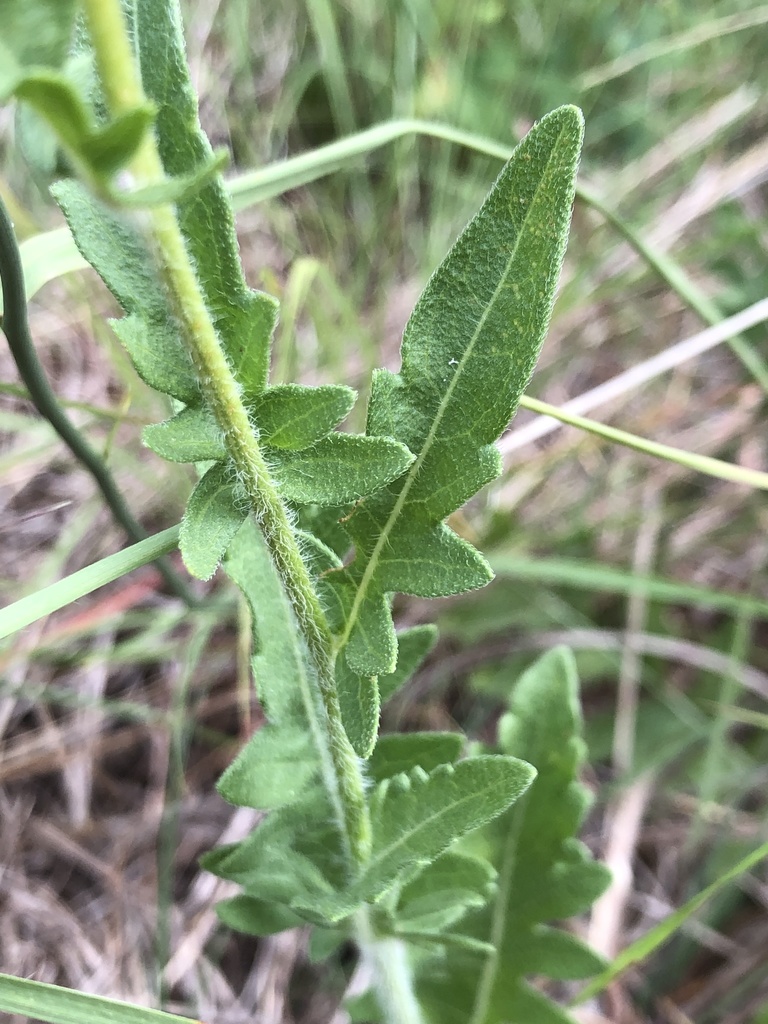
The leaves are few, narrow and gray-green, mostly at the base of the plant, 2 to 4 inches long and cut into short, pointed lobes along each side. Leaves on the upper stems are reduced to tiny scales, which is why the plant looks bare. The basal leaves often wither by the time the plant is in full flower.
Flowers
The flower heads are borne singly at the stem tips, usually one open at a time on each branch. Each head is about 1½ to 2 inches across and made of 8 to 12 strap-shaped (ligulate) florets, lavender-pink to light purple, each with a five-toothed tip. Below them is a slender tube of green bracts about an inch long. Bloom runs from about April through August, and sometimes into October.
Fruit & Seeds
The seeds are slender achenes topped with a tuft of soft, whitish bristles (pappus) that carries them on the wind, much like a small dandelion seed head.
Similar Species
Rush skeletonplant (Lygodesmia juncea) of the Great Plains is smaller-flowered, with only about five rays per head and rush-like stems. Chicory (Cichorium intybus), an introduced roadside weed, has sky-blue flowers in clusters along leafy stems. Desert chicory (Rafinesquia neomexicana) has white flowers and grows farther west.
Quick Facts
| Scientific Name | Lygodesmia texana |
| Family | Asteraceae (sunflower family), chicory tribe |
| Plant Type | Herbaceous perennial wildflower |
| Mature Height | 1–2 ft |
| Mature Spread | 1–1½ ft |
| Growth Rate | Slow to establish; long-lived once rooted |
| Sun Exposure | Full sun |
| Water Needs | Low; very drought tolerant |
| Soil Type | Dry, well-drained rocky, gravelly or limestone soils |
| Soil pH | About 7.0–8.5 (alkaline) |
| Bloom Time | April–August, sometimes to October |
| Flower Color | Lavender-pink to light purple |
| Fall Color | None |
| Fruit | Achenes with white, bristly pappus |
| Deer Resistant | Minimally; deer may browse it |
| USDA Hardiness Zones | 7–9 |
Native Range
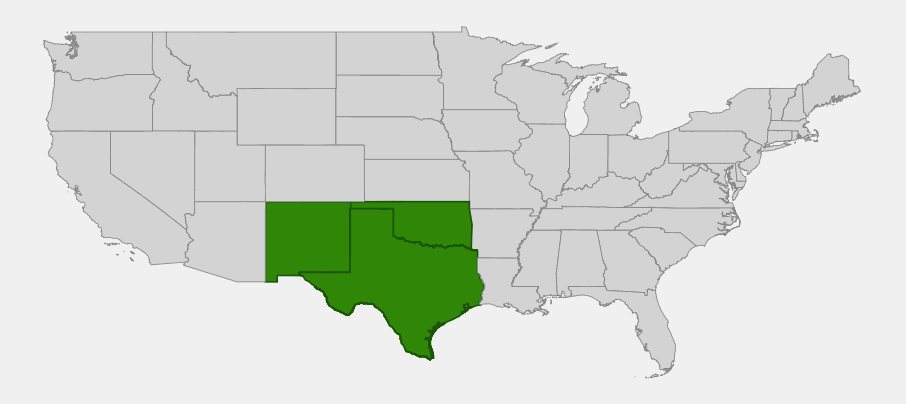
Texas skeleton plant is native to Texas, Oklahoma and New Mexico, the three states where USDA PLANTS records it, and it extends south into northern Mexico. In Texas it is most common on the Edwards Plateau (Hill Country), the Rio Grande Plains, the Rolling Plains and the Panhandle, and it also reaches the Trans-Pecos. In Oklahoma and New Mexico it occurs mainly in areas bordering Texas.
It grows in dry, open, sunny places: rocky limestone hillsides and ridges, shortgrass and mixed-grass prairies, mesquite and juniper savannas, caliche roadsides and gravelly pastures. It often shows up along road cuts and in thin soils where taller plants are sparse.
The deep taproot lets it survive long droughts and summer heat. It often blooms most heavily after spring or late-summer rains, when a roadside can be dotted with its pale purple flowers each morning.
📋 Regional plant lists featuring Texas Skeleton Plant: South & West Texas
Growing & Care Guide
Texas skeleton plant is a plant for the hottest, driest, leanest spot in a native garden. Its airy form and daily flush of morning flowers suit rock gardens, gravel plantings and dry meadows in its native region. The main rule is to keep it lean, dry and uncrowded.
Light
Plant it in full sun. In shade it flowers poorly and tends to rot.
Soil & Water
It needs sharply drained soil: rocky, gravelly, sandy or caliche, ideally alkaline. Water only to get it established; afterward, natural rainfall is enough in its range. Rich soil, heavy clay and regular irrigation shorten its life. The Lady Bird Johnson Wildflower Center advises not to overwater it or let other plants crowd it.
Planting Tips
Give it open space with low neighbors such as blackfoot daisy, Engelmann daisy and short bunchgrasses like sideoats grama. Because the stems are so sparse, plant several together or place them where the morning flowers can be seen against a rock or gravel background.
Pruning & Maintenance
Very little is needed. Cut the dry stems back in late winter before new growth appears. Do not fertilize. Keep aggressive grasses and spreading groundcovers from smothering it.
Propagation
Grow it from seed collected when the fluffy seed heads open in summer and fall. Sow fresh seed on the surface of a gritty mix, or sow outdoors in fall. Its deep taproot makes established plants very hard to transplant, so start it in deep pots or sow it where it will grow, and never dig plants from the wild.
Landscape Uses
- Rock and gravel gardens: airy stems and daily flowers in lean soil
- Xeriscapes: thrives without irrigation once established
- Dry meadows and prairie plantings: fills gaps among short native grasses
- Pollinator gardens: nectar for butterflies and native bees
- Roadside and slope restoration: a deep-rooted native of disturbed, rocky ground
Wildlife & Ecological Value
Texas skeleton plant flowers over a long season when many prairie plants are dormant from heat, so its morning blooms are a dependable resource for insects.
For Pollinators
The Lady Bird Johnson Wildflower Center notes that many butterflies use it as a nectar source. Native bees, including small sweat bees and other ground-nesting bees, visit the open flower heads for pollen and nectar in the morning hours.
For Birds
Seed-eating birds may pick at the small, plumed seeds, and insect-eating birds forage on the pollinators and other insects it attracts.
For Mammals
Deer and livestock may browse the stems, and the deep root helps the plant resprout after grazing or mowing.
Ecosystem Role
As a deep-rooted perennial of thin, rocky soils, it helps hold soil on slopes and road cuts and adds summer flowers to grasslands of the southern Plains.
Cultural & Historical Uses
The genus name Lygodesmia comes from Greek words meaning “pliant (or willow-like) bundle,” a reference to the slender, flexible stems that make the plants look like little bundles of twigs. The species name texana refers to Texas. The plant was first named by John Torrey and Asa Gray in the nineteenth century, and Edward Lee Greene gave it its present rank as a species.
Botanists place it in the chicory tribe (Cichorieae) of the sunflower family, along with dandelions, chicory and lettuces. Every flower in the head is strap-shaped, and the stems carry milky latex.
Its everyday nickname, “purple dandelion,” captures how Texans often notice it: a bright purple flower on a bare stem along a dry roadside on a summer morning, gone by afternoon and back again the next day.
Frequently Asked Questions
Why is it called skeleton plant?
The leaves are few and mostly near the ground, and those higher up are reduced to tiny scales, so the branched, bare stems look like a skeleton.
Why are the flowers closed in the afternoon?
The flower heads open in the morning and normally close by early afternoon, especially in hot weather. A plant can keep producing new heads for months.
Is Texas skeleton plant hard to grow?
Not in the right spot. It needs full sun, sharp drainage and little water. Most failures come from rich soil, overwatering or crowding.
Can I transplant it from the wild?
No. It has a deep taproot and rarely survives being dug, and wild populations should be left in place. Grow it from seed or buy nursery-grown plants.
Where is Texas skeleton plant native?
It is native to Texas, Oklahoma and New Mexico and to northern Mexico, especially on the Edwards Plateau, the Rio Grande Plains, the Rolling Plains and the Panhandle.

Looking for a nursery that carries Texas Skeleton Plant?
Browse our native plant nursery directory: New Mexico & Oklahoma · Texas