
Honeyvine Climbing Milkweed (Cynanchum laeve)
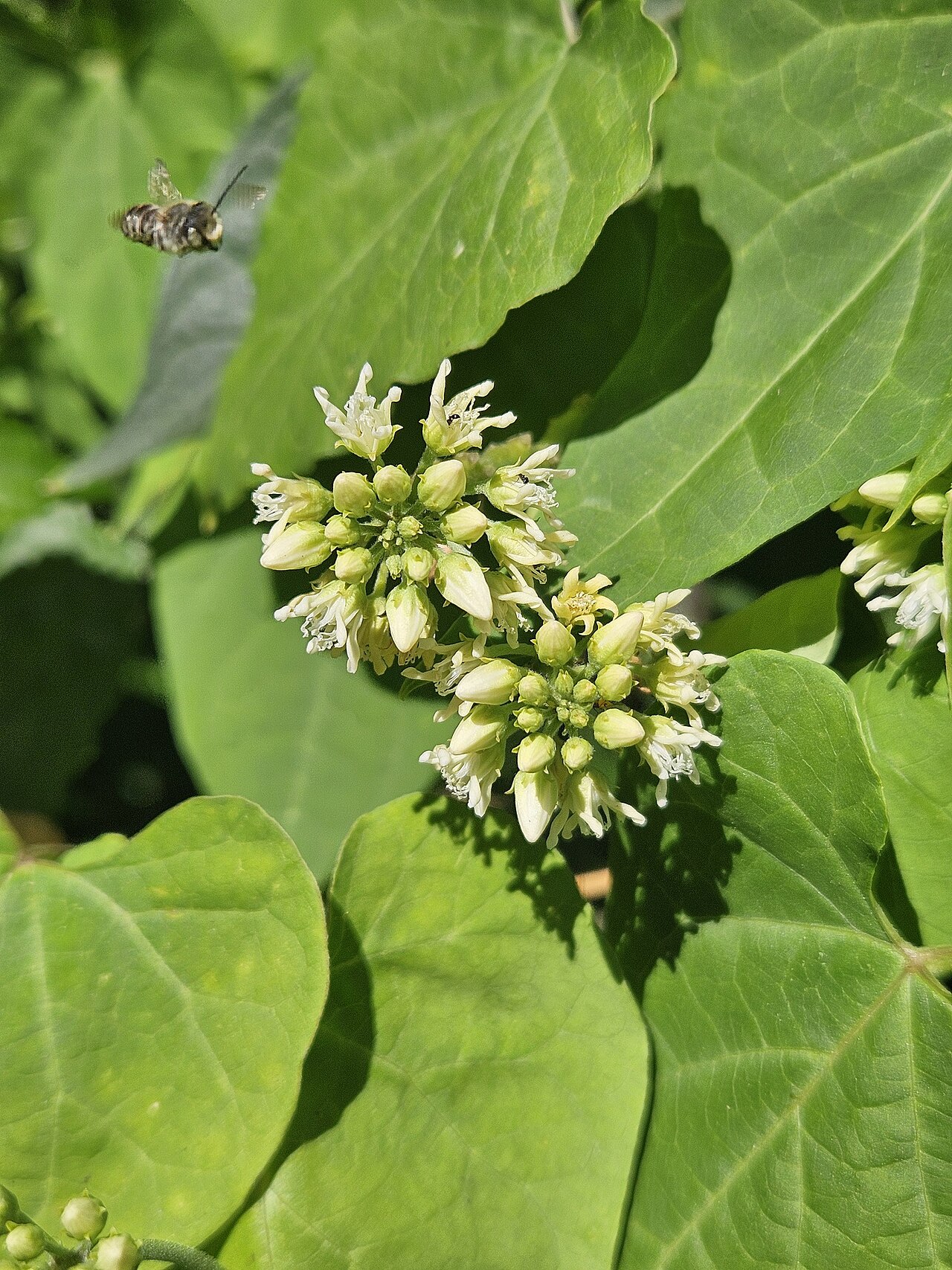
Cynanchum laeve, known as Honeyvine Climbing Milkweed, honeyvine, sandvine or bluevine milkweed, is a fast-growing, twining perennial vine of the milkweed family native to the central and southeastern United States. Each spring it sends up slender stems from a deep, fleshy root system that twine over fences, shrubs and tall weeds, covering them with large, heart-shaped leaves. From midsummer into early fall it produces rounded clusters of small, creamy white, honey-scented flowers, followed by smooth, pointed pods full of silky-tailed seeds.
Honeyvine is a true member of the milkweed family (Apocynaceae), with milky sap, opposite leaves and milkweed-style pods, and monarch butterflies lay their eggs on it. That makes it a valuable host plant in places where other milkweeds are scarce. It is also one of the more troublesome native weeds in Midwestern and Southern crop fields, where its deep roots and wind-blown seeds make it hard to control.
This guide covers how to identify honeyvine and tell it from look-alike vines, where it grows, and how to grow it responsibly: as a monarch plant on a fence or in a wild corner, away from vegetable beds, crop fields and tidy borders. Because its sap and leaves contain toxic compounds, it also includes a safety note.
Identification
Look for a smooth, twining vine with milky sap, opposite heart-shaped leaves on long stalks, rounded clusters of small white flowers in the leaf axils, and slender, smooth milkweed pods in late summer and fall.
Stems & Growth Habit
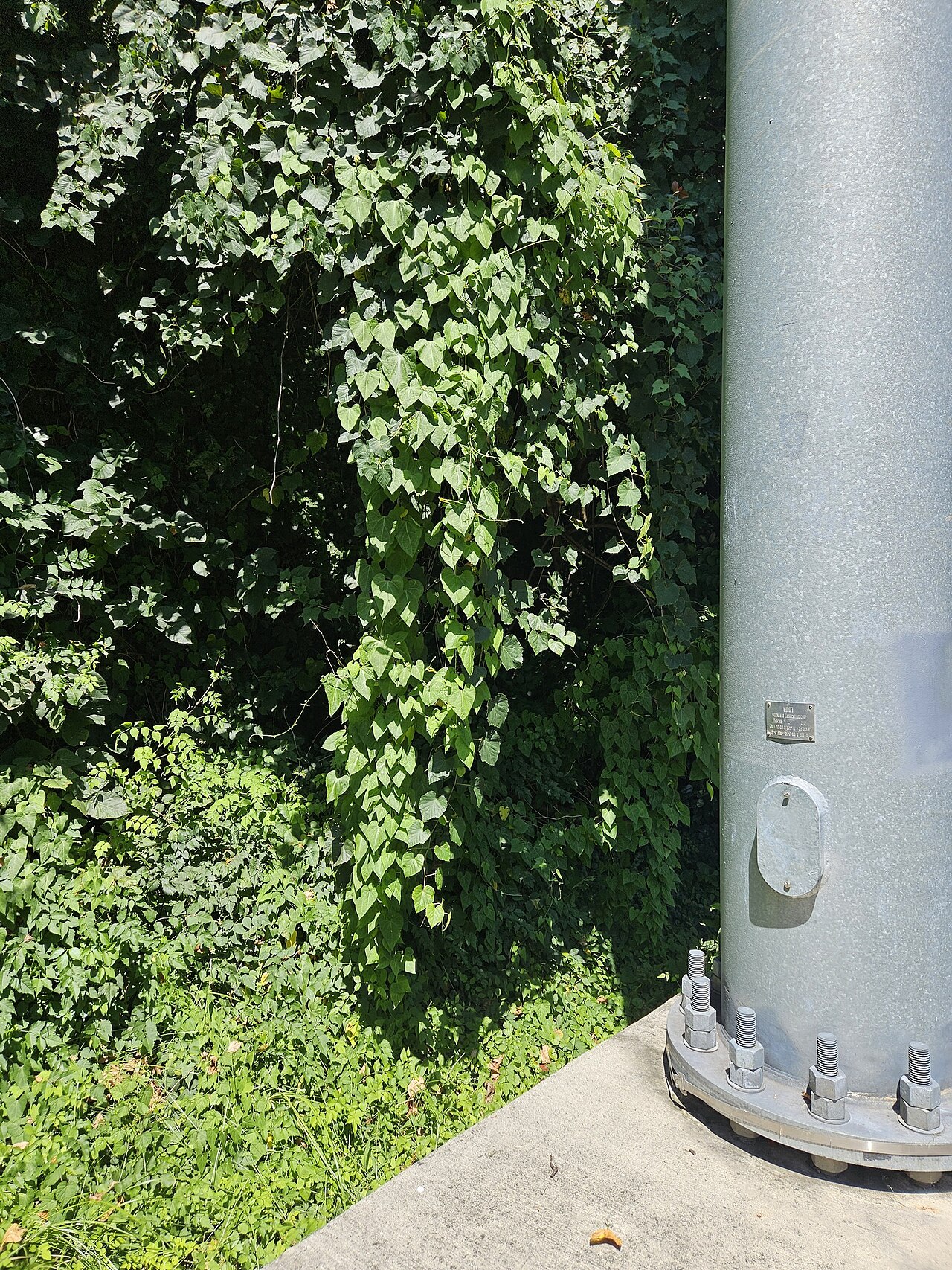
Honeyvine is a herbaceous perennial vine that dies back to the ground each winter. The thin, smooth stems twine around any support and can grow 10 feet or more in a season; the Lady Bird Johnson Wildflower Center gives a maximum of about 30 feet. Young stems are often pinkish. Broken stems and leaves ooze white, milky sap. Below ground, a thick, brittle taproot and creeping lateral roots can extend several feet deep, and new shoots sprout from root pieces.
Leaves
Leaves are opposite, on long stalks, smooth-edged and heart-shaped, with a deep notch at the base and a long, tapering tip. They are usually 2 to 6 inches long, thin, smooth or slightly hairy, and medium green, often with pale veins. The paired, heart-shaped leaves are the best way to recognize the vine before it flowers.
Flowers
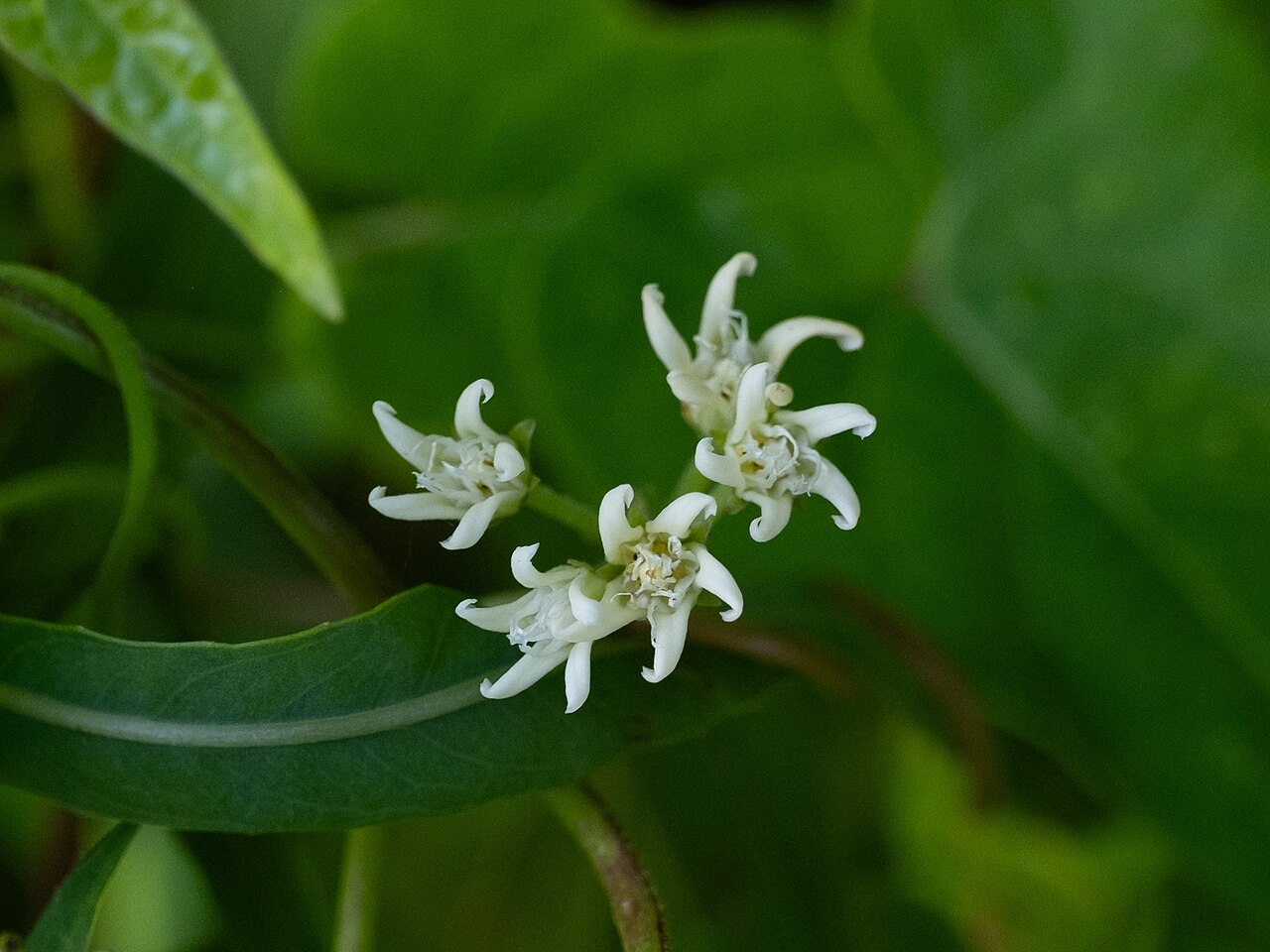
Flowers grow in rounded, umbrella-like clusters of about 15 to 40 on stalks from the leaf axils. Each flower is small, about 1/4 to 1/3 inch long, with five narrow, white to creamy or faintly pinkish petals around a white crown (corona) whose lobes are tipped with small points. They have a sweet, honey-like fragrance that gives the plant its common name. Bloom runs from about July to September, sometimes starting in June.
Fruit & Seeds
The fruits are smooth, hairless, spindle-shaped pods (follicles) 3 to 6 inches long, green at first and drying tan. They split along one side in fall to release flat brown seeds, each with a tuft of silky white hairs that carries it on the wind. A large plant can produce dozens of pods.
Look-alikes
Morning glories and wild potato vine (Ipomoea) have alternate leaves and large funnel-shaped flowers. Wild buckwheats and bindweeds also have alternate leaves. Black and pale swallow-worts (Vincetoxicum species) are invasive non-native relatives with narrower, glossy leaves and small dark purple or pinkish flowers. Native climbing milkweeds such as pearl milkweed (Matelea) have hairy stems, greenish or brown flowers and warty or ridged pods.
Quick Facts
| Scientific Name | Cynanchum laeve |
| Family | Apocynaceae (dogbane and milkweed family) |
| Plant Type | Herbaceous perennial twining vine |
| Mature Height | 10–30 ft (vine length) |
| Mature Spread | 3–6 ft per plant; spreads by roots and seed |
| Growth Rate | Fast |
| Sun Exposure | Full sun to part shade |
| Water Needs | Medium |
| Soil Type | Moist to medium loam, sand or clay; tolerates poor soil |
| Soil pH | About 5.5–8.0 |
| Bloom Time | July–September |
| Flower Color | White to cream |
| Fall Color | Leaves turn yellow |
| Fruit | Smooth milkweed pods with silky-tailed seeds |
| Deer Resistant | High |
| USDA Hardiness Zones | 5–9 |
Native Range
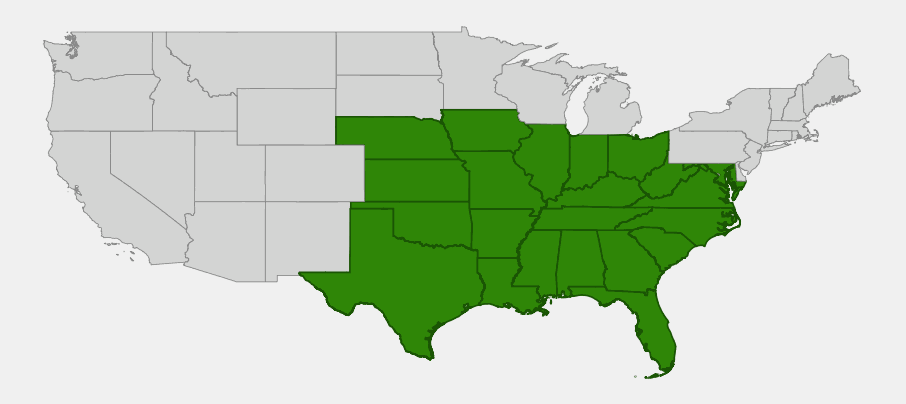
Honeyvine climbing milkweed is native to the central and southeastern United States. Its range runs from the Ohio Valley and the southern Midwest (Ohio, Indiana, Illinois, Iowa and Nebraska) south through Kansas, Missouri, Kentucky, Tennessee and the Carolinas to Florida and the Gulf Coast, and west through Arkansas and Oklahoma to Texas. It is most abundant in the Mississippi, Ohio and Missouri River valleys.
USDA PLANTS also lists it as native in Delaware, New York, Pennsylvania and Idaho, but NatureServe treats the New York, Pennsylvania and Delaware populations as introduced, and the only Idaho records found are a 1966 collection from farmland in Canyon County, far outside the natural range. Those four states are left off the map here. In Canada it occurs in southern Ontario, where it is considered introduced.
Its natural habitats are floodplain forests and their edges, riverbanks, moist thickets, low fields and woodland openings. It has also adapted very well to human-disturbed places, and today it is most often seen on fence rows, roadsides, ditches, field edges, gardens and in crop fields, especially in corn, soybean and wheat country.
📋 Regional plant lists featuring Honeyvine Climbing Milkweed: Ohio & Indiana · Kentucky & Tennessee · Nebraska, Kansas & Eastern Colorado · Maryland, Virginia & West Virginia · Illinois, Iowa & Missouri · Alabama, Georgia & Mississippi · North & South Florida · North & South Carolina · Arkansas, Louisiana, Eastern Oklahoma & Eastern Texas
Growing & Care Guide
Honeyvine is very easy to grow, and the main challenge is keeping it where you want it. It spreads by deep, brittle roots that resprout from small pieces and by wind-blown seeds, so it is a poor choice near vegetable gardens, perennial borders, farm fields or a neighbor’s fence. The best place for it is a sturdy fence, trellis or arbor in a wild or wildlife corner where its self-seeding and spreading roots are not a problem, ideally where you can mow around it. If you farm or live next to cropland, choose a different monarch host, such as a non-spreading milkweed.
Light
Full sun to part shade. It flowers best and produces the most pods in full sun, but it also grows well along sunny woodland edges and in light shade.
Soil & Water
Honeyvine tolerates almost any soil, from sand to heavy clay, and does especially well in moist, fertile ground like that of its native floodplains. It handles both seasonal flooding and summer dry spells once its roots are established. No fertilizer is needed.
Planting Tips
Plant seedlings or small container plants in spring next to a sturdy support, such as a chain-link or wire fence, a trellis or an arbor, at least several feet from beds you want to keep clean. Plants grown in large containers are a way to keep its spreading roots in check. It needs something to twine around; on open ground it sprawls over other plants.
Pruning & Maintenance
Cut the dead vines down in late fall or winter. To limit spreading by seed, remove pods while they are still green and closed, but leave some if you want seed or are raising monarchs. Pull or mow unwanted shoots often during the growing season; repeated removal gradually weakens the roots, while tilling only breaks them up and spreads them. Wear gloves when handling the plant, and wash your hands afterward.
Propagation
Grow it from seed. Collect pods as they begin to split in fall, and remove the silky hairs. Seeds can be sown outdoors in fall or in spring; a few weeks of cold, moist stratification improves germination. Root cuttings also sprout readily. Seedlings grow fast and often flower in their first or second year.
Landscape Uses
- Monarch and butterfly gardens: a vigorous host plant for monarch caterpillars where room allows
- Fences and trellises: quick summer screening on chain-link fences and arbors
- Wildlife corners and hedgerows: supplies nectar, host leaves and cover in informal areas
- Floodplain and riparian restoration: native vine for moist woodland edges and thickets
- Pollinator plantings: late-summer flowers for bees, wasps, flies and butterflies
Wildlife & Ecological Value
Honeyvine climbing milkweed supports many insects, and in parts of the South and Midwest it is one of the most common milkweed-family plants available to monarchs in late summer.
For Pollinators
The fragrant flowers attract many insects, including honey bees, native bees, wasps, flies and butterflies such as hairstreaks, skippers and monarchs. Like other milkweeds, its pollen is packed into small sacs (pollinia) that attach to the legs of visiting insects.
For Birds
Birds make little direct use of it, but the dense vines provide cover and nesting sites for small birds, and insect-eating birds hunt for caterpillars and other insects among the leaves.
For Mammals
Its milky sap and toxic compounds generally keep deer and rabbits away. Livestock usually avoid it, but they can be poisoned if they eat large amounts in contaminated hay.
Ecosystem Role
Honeyvine is a larval host for the monarch butterfly and the queen butterfly, and for the milkweed tussock moth (Euchaetes egle), whose fuzzy caterpillars feed in groups on the leaves. Monarchs readily lay eggs on it, and because it keeps producing fresh leaves through late summer, it can offer food when older milkweed leaves have toughened or died back. Milkweed beetles and other milkweed specialists also feed on it.
Cultural & Historical Uses
The species was first described in 1803 as Gonolobus laevis and later placed in the genus Ampelamus, and it still appears in older manuals as Ampelamus albidus. Cynanchum comes from Greek words meaning “dog strangler,” an old name for poisonous twining plants in this group, and laeve means “smooth,” for its hairless pods and leaves.
In agriculture, honeyvine is known as a tough weed. Its deep root system lets it survive tillage and many herbicides, and it has become more common in crop fields across the Midwest and South. Farmers and gardeners alike find that persistent pulling or mowing over several years works better than one-time removal.
Safety note: Like many members of the milkweed family, honeyvine has milky sap and contains compounds that are toxic if eaten in quantity. Livestock can be poisoned when hay contains large amounts of the vine, and the sap can irritate skin and eyes. Do not eat any part of the plant, keep children and pets from chewing it, wear gloves when pulling it, and wash your hands before touching your eyes.
Frequently Asked Questions
Is honeyvine a real milkweed?
Yes. It belongs to the milkweed family, has milky sap and milkweed-style pods with silky seeds, and monarch butterflies use it as a host plant, although it is a vine rather than an upright milkweed (Asclepias).
Do monarchs use honeyvine?
Yes. Monarch caterpillars feed on its leaves, and in many southern and Midwestern areas it is one of the most common milkweed-family plants in late summer. Queen butterflies and milkweed tussock moths also use it.
Is honeyvine invasive?
It is native, but it can be aggressive and weedy. Its deep roots and wind-blown seeds let it spread into gardens and crop fields, where it is hard to remove. Grow it only on a fence or trellis in a wild area, away from vegetable beds and cropland.
Is honeyvine poisonous?
It contains toxic compounds and should not be eaten. Livestock can be harmed if they eat large amounts in hay, and the milky sap can irritate skin and eyes. Wear gloves when handling it.
How do I get rid of honeyvine?
Pull or cut shoots repeatedly throughout the growing season, and remove pods before they open. Persistent removal for several years gradually exhausts the roots. Tilling breaks the roots into pieces that resprout.

Looking for a nursery that carries Honeyvine Climbing Milkweed?
Browse our native plant nursery directory: Alabama & Arkansas · Florida & Georgia · Illinois, Indiana, Iowa & Kansas · Kentucky, Louisiana, Maryland, Mississippi & Missouri · Nebraska, North Carolina, Ohio & Oklahoma · South Carolina, Tennessee, Texas & Virginia · West Virginia