
Two-Color Rabbit Tobacco (Pseudognaphalium biolettii)
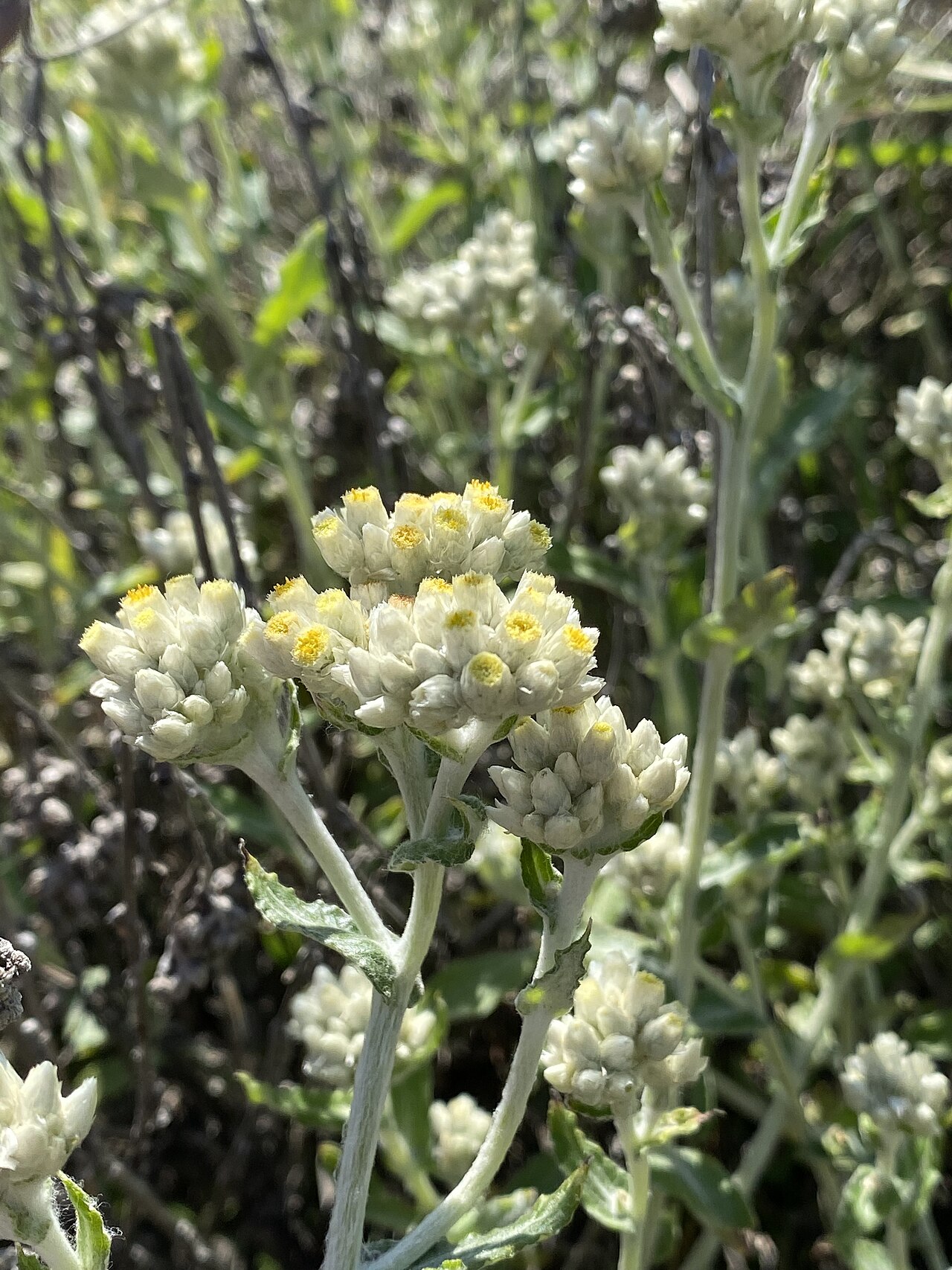
Pseudognaphalium biolettii, known as Two-Color Rabbit Tobacco, two-color everlasting or bicolored cudweed, is a bushy, aromatic wildflower of coastal sage scrub, chaparral and rocky slopes in California and Baja California. It grows as a biennial or short-lived perennial, often somewhat woody at the base, with stems 1 to 3 feet tall (occasionally to about 4 feet). Its name refers to its two-toned leaves: green and sticky on top, and densely white-woolly underneath.
From late winter through spring, and sometimes into summer, the stems end in dense, rounded clusters of small flower heads wrapped in shiny, papery, white to cream bracts that look like tiny pearls. Like other everlastings, the heads keep their shape and color when dried. The foliage has a pleasant, sweet to lemony scent when brushed, especially on warm days.
This guide covers how to identify two-color rabbit tobacco and tell it from other California cudweeds, where it grows, how to grow it in a dry, sunny native garden, and its value as a host plant for the American lady butterfly. It was long known as Gnaphalium bicolor and later Pseudognaphalium bicolor, names you may still see in older books and nursery lists.
Identification
Two-color rabbit tobacco is one of several cudweeds (Pseudognaphalium) in coastal California. The best clues are its leaves, which are distinctly green and glandular-sticky above and white-woolly below, together with its clusters of white to cream, papery flower heads.
Stems & Growth Habit
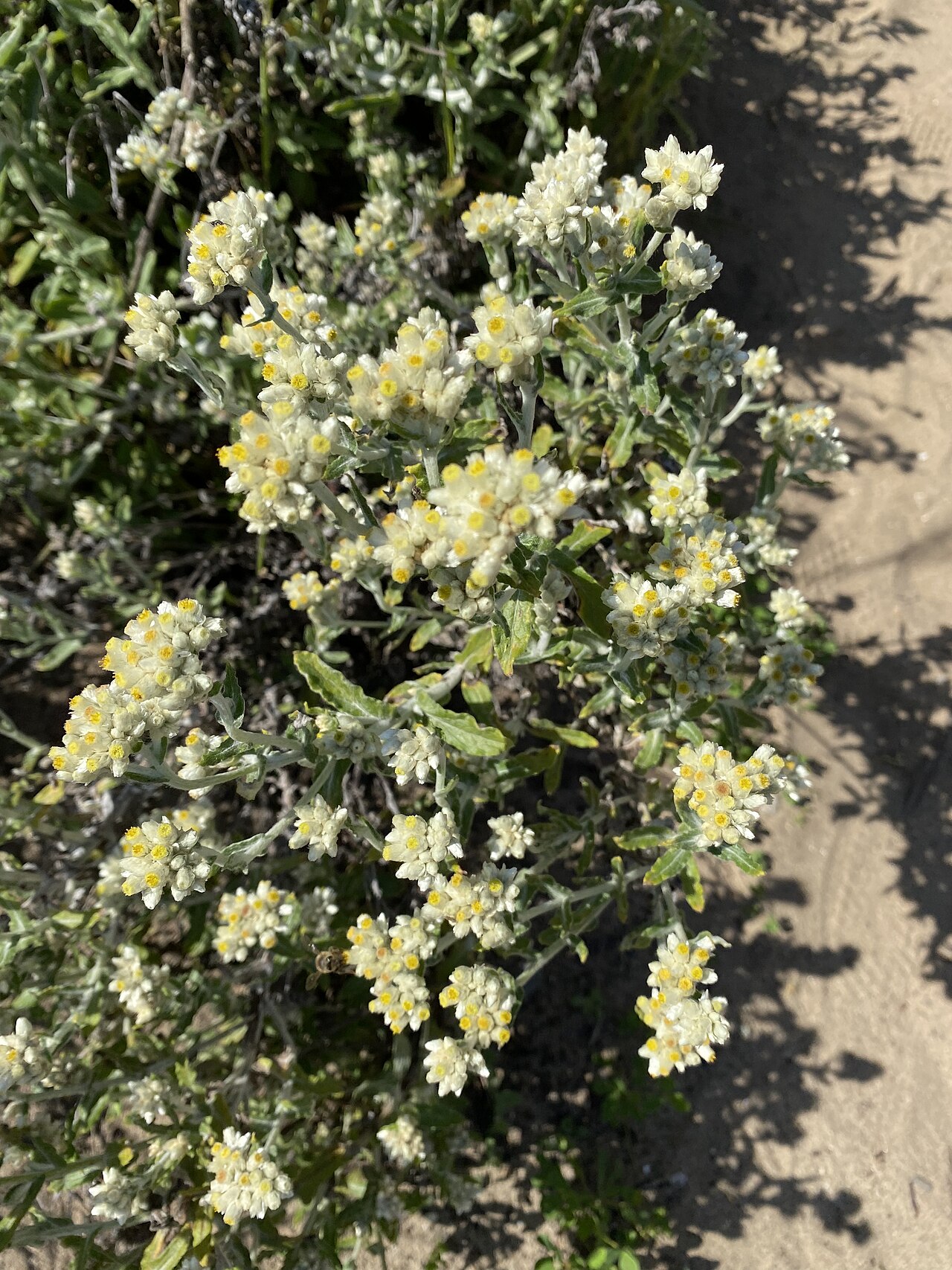
Plants form loose, bushy clumps 1 to 3 feet tall with several upright or spreading stems from a somewhat woody base. The stems are covered with white wool, and often also with sticky glandular hairs. Plants usually flower in their second year and may live a few years, but they often behave as biennials, dying after a heavy bloom and replacing themselves from seed.
Leaves
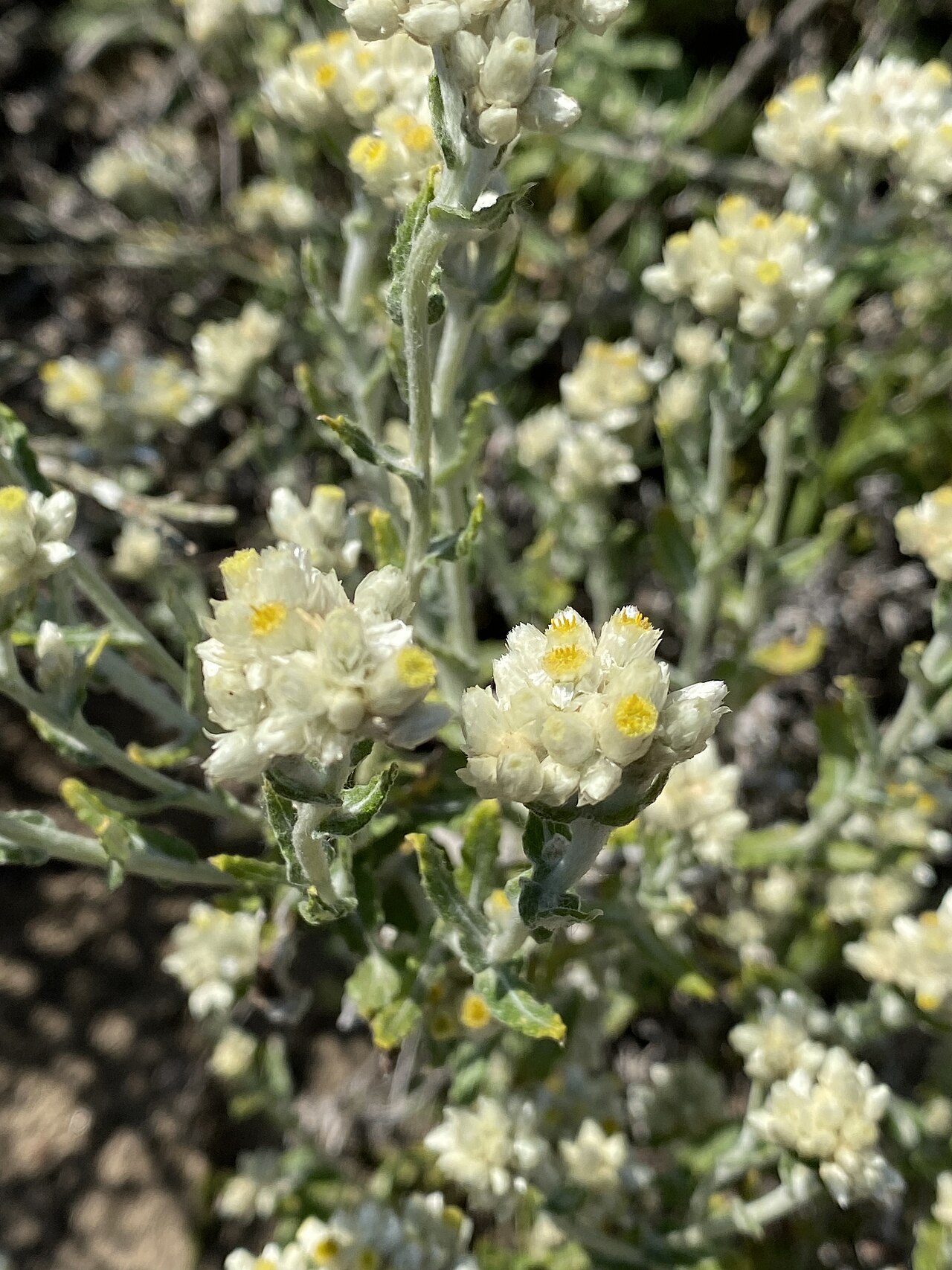
Leaves are alternate, narrow, lance-shaped to oblong, mostly 1 to 3 inches long, and attached directly to the stem, with their bases running a short way down it. The upper surface is green to grayish green and sticky with glandular hairs, while the lower surface is covered in dense, white wool. This contrast gives the plant its common name. The leaves are aromatic when crushed.
Flowers
The tiny flower heads, about 1/4 inch long, are packed into dense, rounded or flat-topped clusters at the ends of the branches. Each head is enclosed by several rows of shiny, papery bracts (phyllaries) that are white to cream or pale yellowish. The small yellow to brownish disk florets peek out from the top; there are no ray petals. In California, most plants bloom from about January to June, and some flower later in the year.
Fruit & Seeds
Each floret produces a tiny, smooth seed (cypsela) with a ring of fine bristles (pappus) that falls away easily. The seeds are released as the heads dry and are carried by wind. Dried heads often remain on the plant into summer.
Look-alikes
California cudweed (Pseudognaphalium californicum) is green and sticky on both leaf surfaces, not white-woolly beneath, and has a strong, sweet scent. Other cudweeds such as Pseudognaphalium canescens and P. microcephalum are woolly on both sides. The eastern rabbit tobacco (Pseudognaphalium obtusifolium) is a related annual or biennial of eastern North America that does not grow in California. Pearly everlasting (Anaphalis margaritacea) has larger, bright white heads and grows in cooler, moister places.
Quick Facts
| Scientific Name | Pseudognaphalium biolettii |
| Family | Asteraceae (aster family) |
| Plant Type | Biennial or short-lived perennial herb, woody at the base |
| Mature Height | 1–3 ft (occasionally to 4 ft) |
| Mature Spread | 1–2 ft |
| Growth Rate | Fast |
| Sun Exposure | Full sun |
| Water Needs | Very low (summer-dry) |
| Soil Type | Well-drained sandy, gravelly or rocky soil |
| Soil pH | About 6.0–8.0 |
| Bloom Time | January–June (sporadically later) |
| Flower Color | White to cream bracts with yellow florets |
| Fall Color | None; foliage silvery green to gray |
| Fruit | Tiny wind-dispersed seeds |
| Deer Resistant | High |
| USDA Hardiness Zones | 8–11 |
Native Range
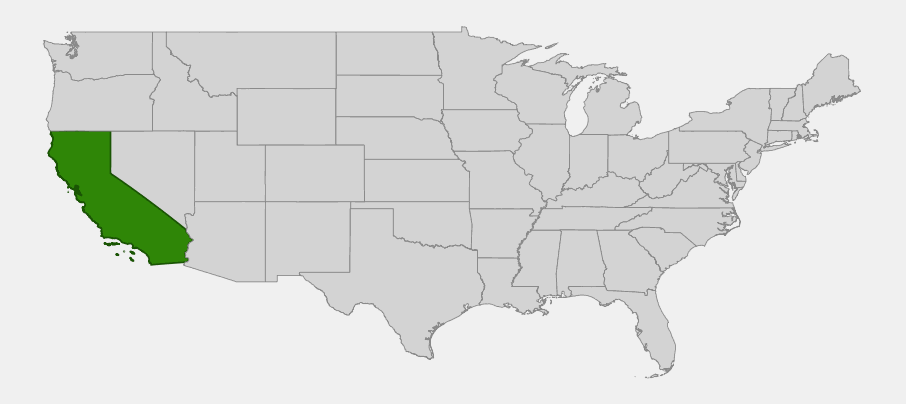
Two-color rabbit tobacco is native to California and northern Baja California, Mexico. USDA PLANTS lists it in California only. Within the state it grows mostly near the coast and in the coastal mountains, from the San Francisco Bay Area and the Central Coast south through the Transverse and Peninsular Ranges to the Mexican border, and on several of the Channel Islands.
It is most common in Southern California, where it is a familiar plant of coastal sage scrub and chaparral openings in places such as the Santa Monica Mountains, the Los Angeles basin edges, Orange County and San Diego County. It typically grows at low elevations, from just above the beach and coastal bluffs into the foothills.
It favors open, sunny, well-drained sites: rocky and sandy slopes, coastal bluffs, dunes and sandy flats, canyon sides, road cuts and recently burned or disturbed ground in coastal sage scrub, chaparral and oak woodland edges. Like many cudweeds, it is quick to colonize open soil after fire or disturbance.
📋 Regional plant lists featuring Two-Color Rabbit Tobacco: California & Nevada
Growing & Care Guide
Two-color rabbit tobacco is an easy, fast-growing plant for dry, sunny native gardens in coastal and Southern California. It needs little more than sun, good drainage and winter rain. Because it is short-lived, think of it as a self-renewing filler: it reseeds itself in open, bare soil, so a few plants usually become a small, shifting colony. It is offered by some California native plant nurseries and seed suppliers; it is also easy to grow from seed.
Light
Full sun. In shade it becomes leggy, flowers poorly and is more likely to rot.
Soil & Water
It needs well-drained soil: sandy, gravelly and rocky soils are ideal, and it tolerates poor, low-nutrient ground. Water young plants through their first winter and spring if rains are sparse. Once established it needs no summer water in coastal areas; summer watering in heavy soil shortens its life. Do not fertilize.
Planting Tips
Plant small container plants or sow seed in fall or early winter, at the start of the rainy season, so roots can develop before summer. Space plants 1 to 2 feet apart, or scatter seed over bare, raked soil. Combine it with other coastal sage scrub plants such as California sagebrush, buckwheats, sages and encelia for a natural look.
Pruning & Maintenance
Little maintenance is needed. You can cut back the dry flower stalks in summer for a tidier look, or leave some to drop seed. Remove old plants when they decline after flowering heavily, and let seedlings take their place. Avoid thick mulch, which prevents reseeding and can keep the base too moist.
Propagation
Grow it from seed. Collect the dry heads in late spring or summer and sow the tiny seeds on the surface of a well-drained mix or directly on bare soil in fall or winter, pressing them in lightly but not covering them deeply. They need no special treatment and germinate with winter rains. Plants often bloom by their second spring.
Landscape Uses
- Coastal sage scrub gardens: a fast-growing, silvery filler among sages, buckwheats and sagebrush
- Butterfly gardens: a larval host plant for the American lady butterfly
- Dry slopes and erosion control: quickly covers open, sandy or rocky ground after disturbance or fire
- Dried flower arrangements: papery “everlasting” heads keep their shape when dried
- Habitat restoration: an early-successional plant in coastal sage scrub and chaparral restoration
Wildlife & Ecological Value
Although its flowers are small and easy to overlook, two-color rabbit tobacco plays a useful role in coastal California plant communities, especially for butterflies.
For Pollinators
The small disk florets are visited by small native bees, flies and other insects, which find pollen and a little nectar in the clustered heads during late winter and spring, when relatively few other plants are blooming in some years.
For Birds
Small seed-eating birds may forage on the tiny seeds, and the bushy stems give some cover to ground-dwelling birds in sage scrub.
For Mammals
The aromatic, woolly foliage is seldom browsed by deer or rabbits.
Ecosystem Role
Two-color rabbit tobacco is a larval host plant for the American lady butterfly (Vanessa virginiensis). Female butterflies lay eggs on the woolly leaves, and the caterpillars build silk shelters from leaves and woolly hairs. As a quick-growing plant of open ground, it also helps hold soil on slopes and fills gaps after fire until longer-lived shrubs return.
Cultural & Historical Uses
The species is named for Frederic T. Bioletti, a viticulturist and plant scientist at the University of California in the late 1800s and early 1900s. Bioletti described the plant as Gnaphalium bicolor. When the cudweeds were moved to the genus Pseudognaphalium, the species was named Pseudognaphalium biolettii in his honor, although the name Pseudognaphalium bicolor also appears in many California references.
The name “rabbit tobacco” is shared by several cudweeds. In the eastern United States it refers to Pseudognaphalium obtusifolium, whose dried leaves were smoked and used as a traditional medicine. The “two-color” in this species’ name refers to its bicolored leaves.
Several cudweeds have a long history in folk medicine, but two-color rabbit tobacco is not recommended for home remedies. Today two-color rabbit tobacco is valued mostly by native gardeners and butterfly enthusiasts.
Frequently Asked Questions
Why is it called two-color rabbit tobacco?
Its leaves are two-toned: green and sticky on top and white-woolly underneath. “Rabbit tobacco” is a folk name shared by several aromatic cudweeds.
Is two-color rabbit tobacco native to California?
Yes. In the United States it is native only to California, mainly along the coast and in the coastal mountains, and it also grows in Baja California, Mexico.
What is the difference between two-color rabbit tobacco and California cudweed?
California cudweed has leaves that are green and sticky on both sides, while two-color rabbit tobacco has leaves that are white-woolly underneath.
Does two-color rabbit tobacco attract butterflies?
Yes. It is a larval host plant for the American lady butterfly, whose caterpillars feed on the woolly leaves.
How long does two-color rabbit tobacco live?
It is a biennial or short-lived perennial, usually living two or three years. It reseeds itself in open, sunny soil, so a planting tends to persist even as individual plants die.

Looking for a nursery that carries Two-Color Rabbit Tobacco?
Browse our native plant nursery directory: California