Rabbit Tobacco (Pseudognaphalium obtusifolium)
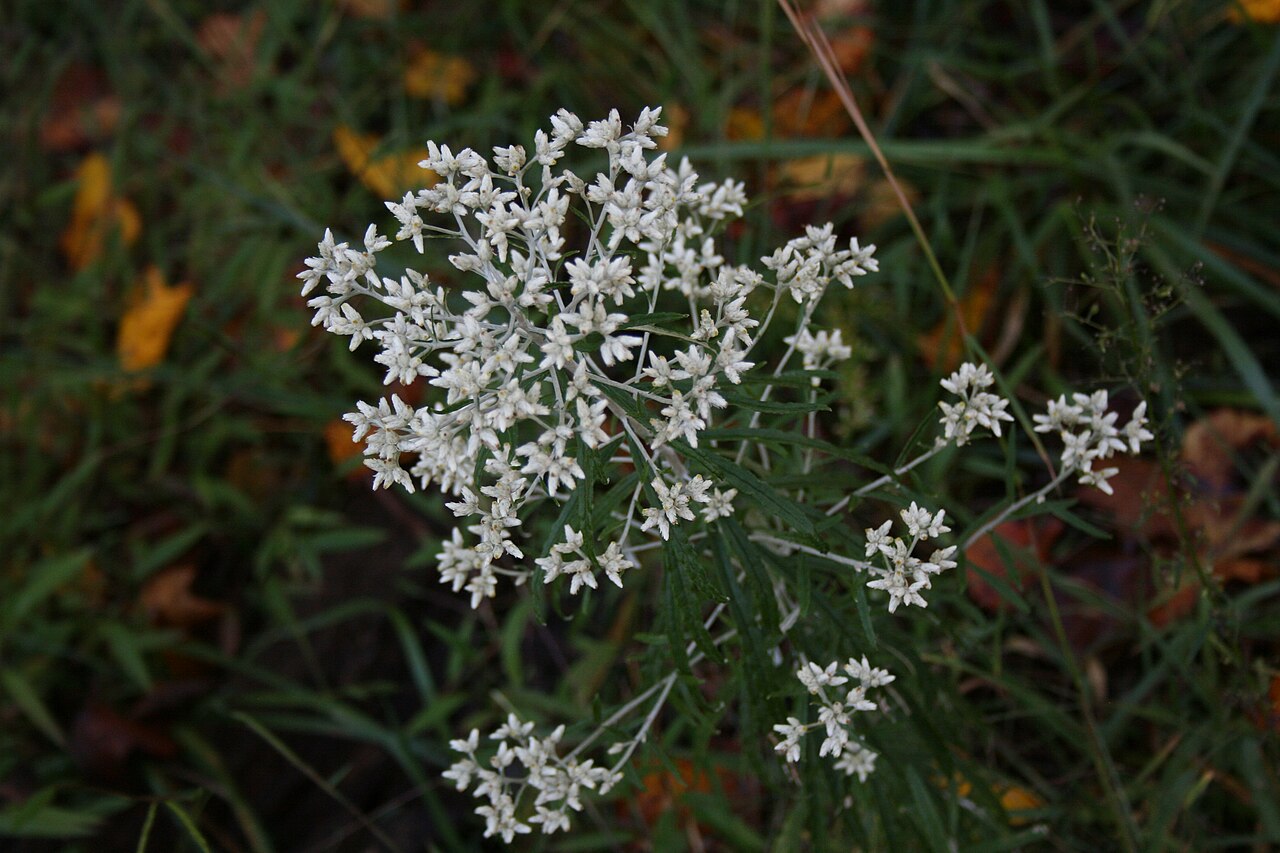
Pseudognaphalium obtusifolium, commonly known as Rabbit Tobacco or Sweet Everlasting, is a soft, gray-green native wildflower of old fields, dry open woods, and roadsides across most of the eastern half of the United States. It belongs to the aster family (Asteraceae) and is instantly recognizable up close: narrow, woolly leaves with a silvery sheen, and in late summer and fall, dense clusters of small, cream-to-white, papery flower heads that keep their shape and color long after they dry — the trait that gives it the “everlasting” half of its name.
This is an unassuming plant that most people walk past without a second look, yet it has one of the more memorable histories of any eastern wildflower. Crushed foliage releases a sweet, maple-syrup-like fragrance, and the dried plant has been smoked, historically and still occasionally today, in the same way other plants are used as a tobacco substitute — hence “rabbit tobacco.” It is an annual or short-lived biennial, not a long-term garden perennial, but it has real value in a meadow or naturalized planting as an easy, low-maintenance native that self-sows modestly without becoming a nuisance.
For native plant gardeners, rabbit tobacco is best thought of as a filler for dry, poor-soil spots where showier perennials struggle — sunny, sandy or gravelly ground, disturbed edges, and meadow plantings where its soft texture and late-season cream flower clusters add contrast among taller grasses and asters.
Identification
Rabbit tobacco grows as an upright, single- or few-stemmed annual or biennial, typically 1 to 3 feet tall, with a distinctly gray-green, woolly appearance from a dense coat of fine hairs on stems and leaf undersides.
Stems & Leaves
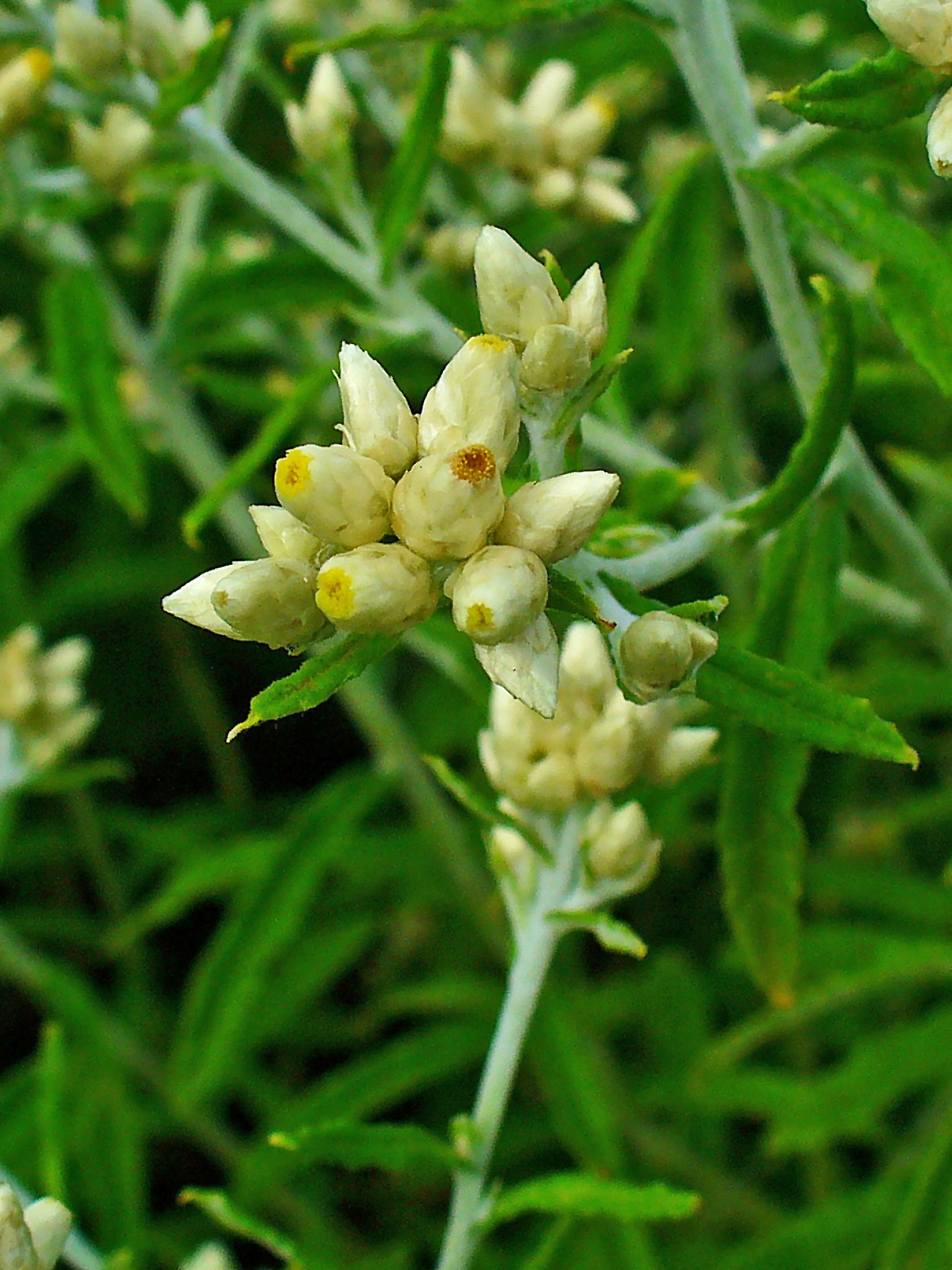
Stems are slender, erect, and covered in soft white wool, often branching near the top where the flower clusters form. Leaves are simple, narrow and lance-shaped to linear, 1 to 3 inches long, stalkless and clasping or nearly clasping the stem, with smooth (untoothed) margins. The upper leaf surface is green and only lightly hairy, while the underside and stem are densely white-woolly, giving the whole plant a grayish cast from a distance. Crushed leaves release a sweet, somewhat maple-like fragrance.
Flowers
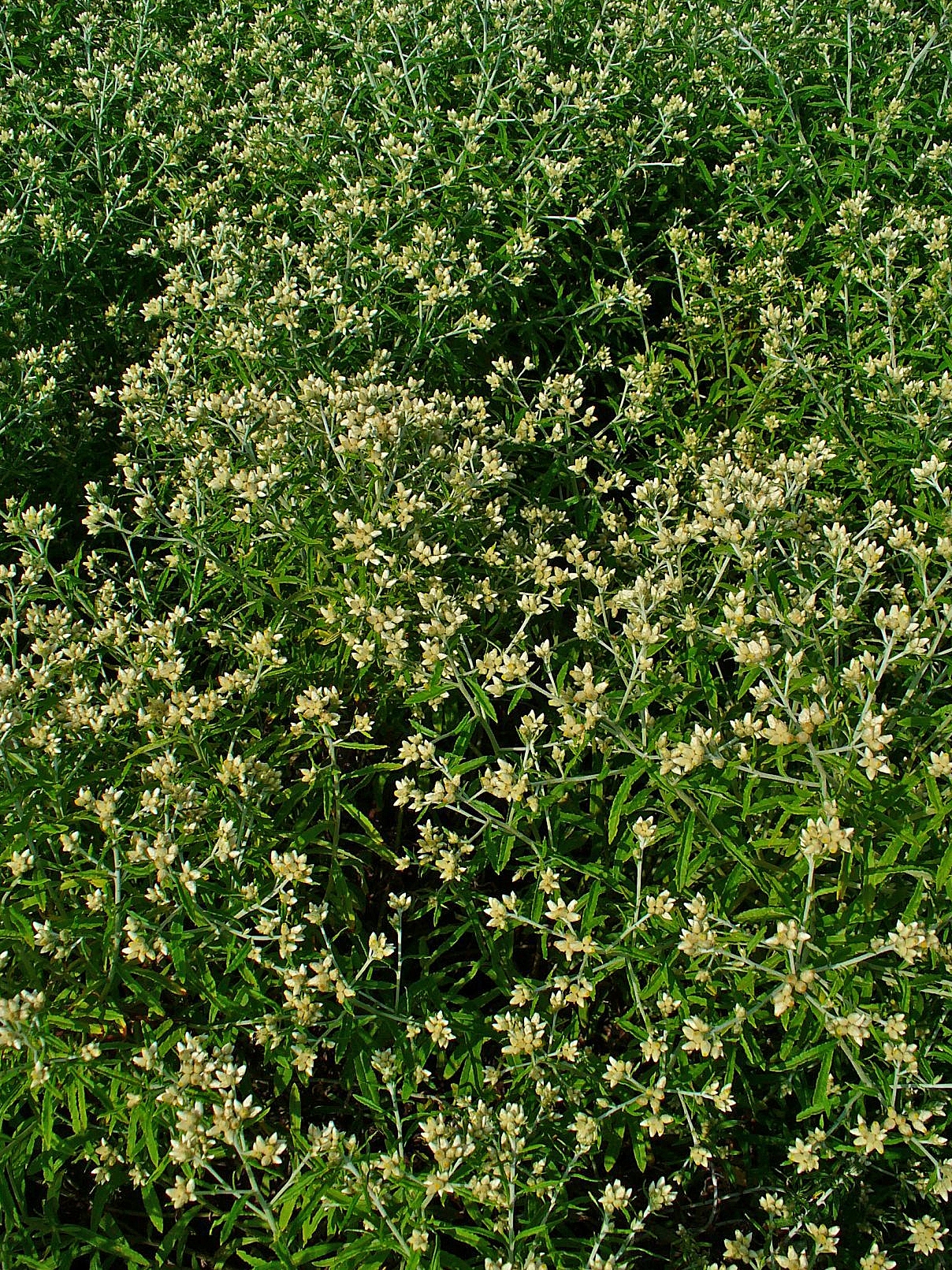
Flower heads are small, about ¼ inch across, and lack the showy outer petals (ray flowers) typical of many asters — instead each head is a tight cluster of tiny disc flowers wrapped in dry, papery, cream-to-white bracts that resemble a small bud even when fully open. Dozens of these heads are arranged in dense, rounded to flat-topped clusters at the stem tips, blooming from late summer into fall (typically August through November, depending on latitude).
Fruit & Seeds
After flowering, each tiny disc flower produces a minute, dry, one-seeded fruit (achene) topped with a tuft of fine bristles (pappus) that aids wind dispersal, in the same manner as dandelion or thistle seed, though on a much smaller scale. The dried flower heads and foliage retain their form and pale color well into winter, giving the plant its “everlasting” reputation in dried arrangements.
Quick Facts
| Scientific Name | Pseudognaphalium obtusifolium |
| Family | Asteraceae (Aster) |
| Plant Type | Annual to short-lived biennial herbaceous wildflower |
| Mature Height | 1–3 ft |
| Mature Spread | 8–14 in |
| Growth Rate | Fast (completes life cycle in one to two seasons) |
| Sun Exposure | Full Sun to Part Shade |
| Water Needs | Low to moderate; tolerates dry, poor soil well |
| Soil Type | Dry, sandy or gravelly, well-drained; tolerates poor fertility |
| Soil pH | Slightly acidic to neutral (5.5–7.0) |
| Bloom Time | August – November |
| Flower Color | Cream to white (papery bracts) |
| Fall Color | Foliage stays gray-green; flower heads persist pale through fall |
| Fruit | Tiny bristle-tufted achenes, wind-dispersed |
| Deer Resistant | Yes (aromatic, woolly foliage is rarely browsed) |
| USDA Hardiness Zones | 3–9 |
Native Range
Rabbit tobacco is native across nearly the entire eastern half of the United States, from New England and the Great Lakes south through the Southeast to Florida and Texas, and west to the eastern Great Plains, including Kansas and Nebraska. It is absent as a native plant from the Rocky Mountain states and the West Coast.
It is a classic plant of disturbed, sunny, well-drained ground: old fields, pastures, dry open woods and woodland edges, roadsides, railroad corridors, and sandy or rocky barrens. As an annual-to-biennial opportunist, it readily colonizes bare or recently disturbed soil and is often among the first wildflowers to appear in an abandoned field, alongside goldenrods, broomsedge and other early-successional natives.
Rabbit tobacco is common and secure throughout its native range and is not a conservation concern; if anything, it is one of the more adaptable and widespread native wildflowers of the eastern United States.
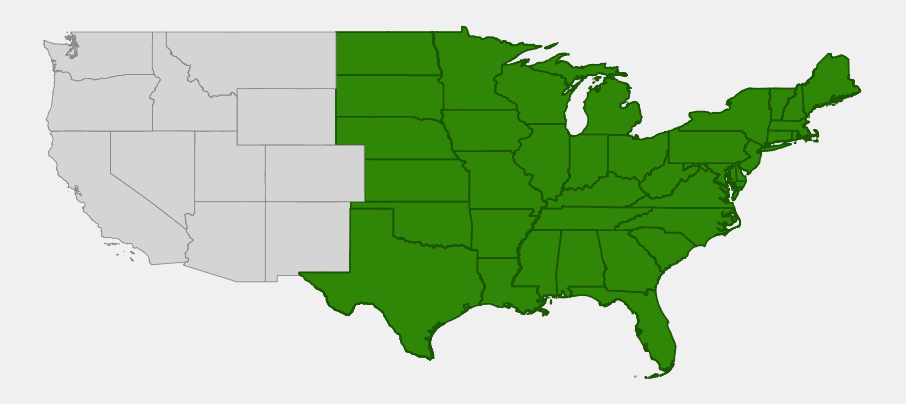
📋 Regional plant lists featuring Rabbit Tobacco: New Hampshire, Maine & Vermont · Connecticut, Massachusetts & Rhode Island · New York, Pennsylvania & Northern New Jersey · Delaware, Southern New Jersey & Long Island · Maryland, Virginia & West Virginia · North Carolina & South Carolina · Georgia, Alabama & Mississippi · Arkansas, Louisiana, Eastern Oklahoma & Eastern Texas · Kentucky & Tennessee · Ohio & Indiana · Illinois, Iowa & Missouri · Michigan, Wisconsin & Eastern Minnesota · Nebraska, Kansas & Eastern Colorado
Growing & Care Guide
Rabbit tobacco is about as low-fuss as native wildflowers get. It thrives on neglect, preferring the poor, dry, disturbed soils that frustrate many other garden plants.
Light
Full sun produces the most compact, floriferous plants, though rabbit tobacco tolerates part shade, especially at woodland edges, where it tends to grow taller and lankier reaching for light.
Soil & Water
This species actually prefers dry, sandy, gravelly or otherwise poor soil over rich garden loam — overly fertile, consistently moist ground tends to produce weak, floppy growth. Established plants need little supplemental water and handle drought well once their roots are in.
Planting Tips
Sow seed directly on disturbed, bare soil in fall or early spring; seeds need light to germinate, so avoid burying them. Because it is an annual or biennial, expect plants to come and go from year to year in a given spot, re-seeding into any open ground nearby. It is best used in a meadow mix or naturalized planting rather than a tidy perennial bed.
Pruning & Maintenance
None required. Spent plants can be left standing through winter for visual interest and to let seed disperse, or cut back in late fall if a tidier look is wanted. Because it favors disturbed ground, light annual disturbance (raking or light tilling of a small area) can help maintain a population in a meadow planting.
Propagation
Propagate by direct-sown seed collected from dried flower heads in fall; no stratification is typically needed, though a period of cold, moist contact with soil over winter mimics natural germination conditions.
Landscape Uses
- Dry meadow and prairie plantings as filler among grasses and taller forbs
- Poor-soil and reclamation sites where little else establishes easily
- Pollinator gardens for late-season nectar
- Dried flower arrangements — the papery heads hold their form and color
- Naturalized roadside or field-edge plantings
Wildlife & Ecological Value
Rabbit tobacco’s late-season bloom and dense, weedy growth habit make it a quietly useful plant for insects and small wildlife in disturbed habitats.
For Pollinators
The small, nectar-rich flower heads attract a range of bees, flies and small butterflies during their late-summer and fall bloom period, a time when many other nectar sources have finished for the season. The species is also a larval host plant for the American lady butterfly (Vanessa virginiensis), whose caterpillars feed specifically on Pseudognaphalium and related everlastings.
For Birds
The tiny bristle-tufted seeds provide modest forage for small seed-eating songbirds in fall and winter, and the dense stands offer low cover for ground-feeding birds in open, early-successional habitat.
For Mammals
The woolly, aromatic foliage is low-palatability and rarely browsed by deer, which makes rabbit tobacco a useful, deer-resistant filler in naturalized plantings.
Ecosystem Role
As an early colonizer of bare and disturbed ground, rabbit tobacco plays a pioneer role in old-field succession, stabilizing soil and creating cover that allows longer-lived perennials and grasses to establish in following seasons.
Cultural & Historical Uses
Rabbit tobacco has a long documented history of use among Indigenous peoples and later rural communities across the eastern United States, primarily as a smoked plant — either on its own or blended with true tobacco — valued for its sweet, mild aroma as an alternative to stronger tobacco. This smoking tradition, often associated with Appalachian and southeastern folk custom, is the direct source of both common names: “rabbit tobacco” for its informal substitute status, and the sense that its soft, woolly foliage was unassuming enough for rabbits to nibble on undisturbed.
The dried plant was also kept in homes and linen closets for its sweet, hay-like fragrance, and it has long been a favorite of dried-flower arrangers for the same reason the Victorians called related species “everlastings” — the pale, papery flower heads keep their color and shape for months after cutting. Various historical home remedies and folk practices involving rabbit tobacco have been recorded across its range, but these are historical practices, not a basis for any medicinal or health claim, and no advice to use rabbit tobacco medicinally should be inferred from this history.
Today rabbit tobacco is mostly of interest to wildflower enthusiasts, native plant gardeners and dried-flower crafters, appreciated as a soft-textured, low-maintenance native with a genuinely interesting past.
Frequently Asked Questions
Is rabbit tobacco the same as real tobacco?
No. Rabbit tobacco (Pseudognaphalium obtusifolium) is a completely different plant from true tobacco (Nicotiana species) and is not in the same plant family. The name comes from a long history of the dried foliage being smoked as a mild, sweet-smelling alternative, not from any close botanical relationship.
Why do people call it “everlasting”?
The dry, papery cream-to-white flower heads keep their shape and pale color for months after they bloom, even once cut and dried, which made the plant a popular choice for dried flower arrangements long before the term “everlasting” became associated with several related species in the aster family.
Will rabbit tobacco take over my garden?
It is unlikely to become a problem. As an annual or short-lived biennial that depends on open, disturbed ground to germinate, it tends to decline once a planting fills in with grasses and perennials, rather than persisting as an aggressive spreader.
Does rabbit tobacco need rich garden soil?
No — it actually performs better in poor, dry, sandy or gravelly soil than in rich, fertile beds, where it tends to flop and grow weak. It is an ideal choice for the toughest, leanest spot in a native planting.
What insects rely on rabbit tobacco?
It is a larval host plant for the American lady butterfly, whose caterpillars feed on its foliage, and its late-season flowers are an important nectar source for bees and other pollinators active in fall.

Looking for a nursery that carries Rabbit Tobacco?
Browse our native plant nursery directory: AL, AR · CT, DE, FL, GA · IL, IN, IA, KS · KY, LA, ME, MD, MA, MI, MN, MS, MO · NE, NH, NJ, NY, NC, ND, OH, OK · PA, RI, SC, SD, TN, TX, VT, VA · WI