
Footsteps of Spring (Sanicula arctopoides)
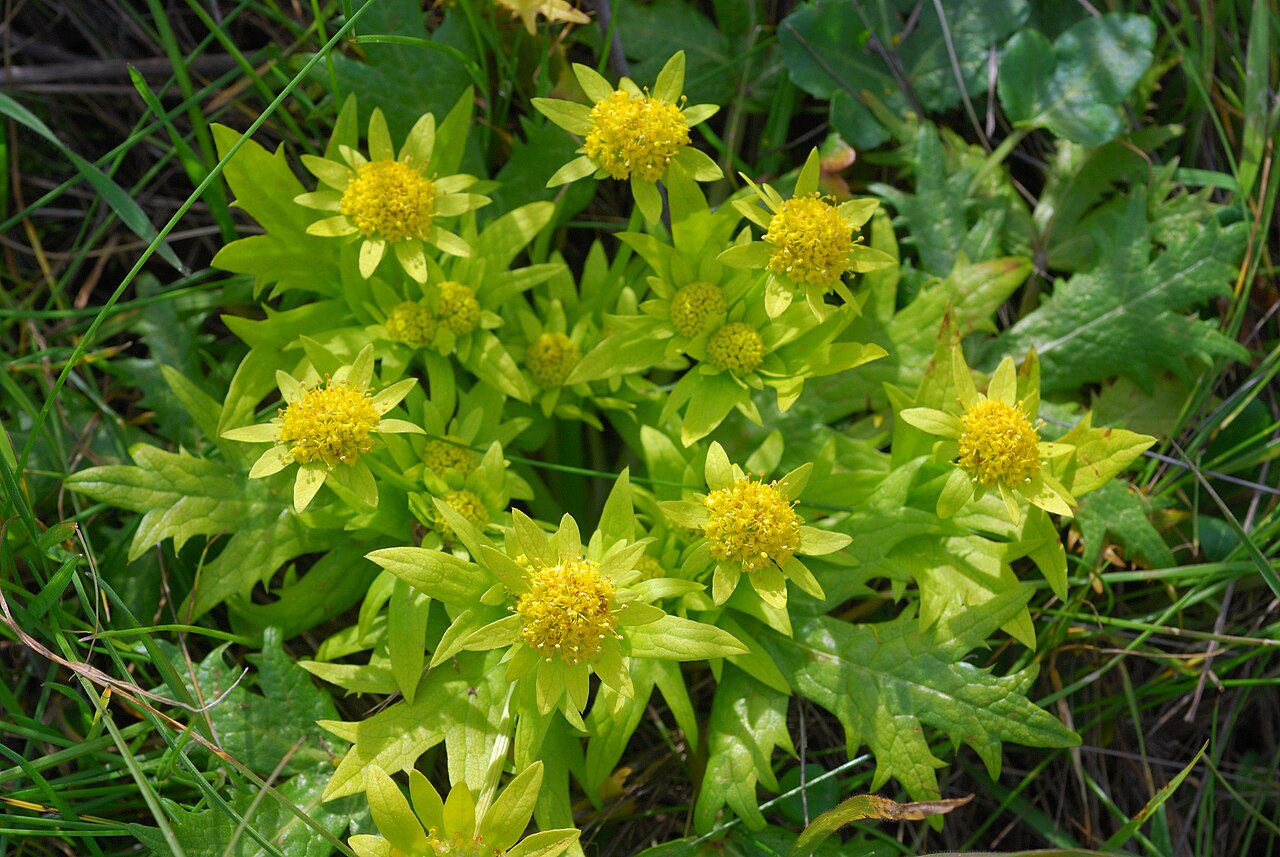
Sanicula arctopoides, known as Footsteps of Spring or yellow mats, is a low, ground-hugging perennial in the carrot family (Apiaceae) of the Pacific Coast. In late winter and early spring it forms flat, star-shaped rosettes of yellow-green, deeply lobed leaves, 4 to 12 inches across, studded with small, ball-shaped clusters of tiny bright yellow flowers.
It grows on coastal bluffs, marine terraces and coastal grasslands from southern California north through Oregon and Washington to southern Vancouver Island in British Columbia. Its rosettes are so flat and bright that, scattered across a green hillside, they look like yellow footprints, which may be how it got its charming common name.
Footsteps of spring is one of the first wildflowers to bloom in coastal prairies, often flowering from February to April before the grasses grow tall. It is rarely grown in gardens, but it is a lovely plant for native rock gardens, coastal meadows and grassland restoration where it occurs naturally.
Identification
Look for a flat, bright yellow-green rosette pressed against the ground in short coastal grassland in late winter or early spring, with stout, spreading stems ending in little yellow pompoms.
Growth Habit
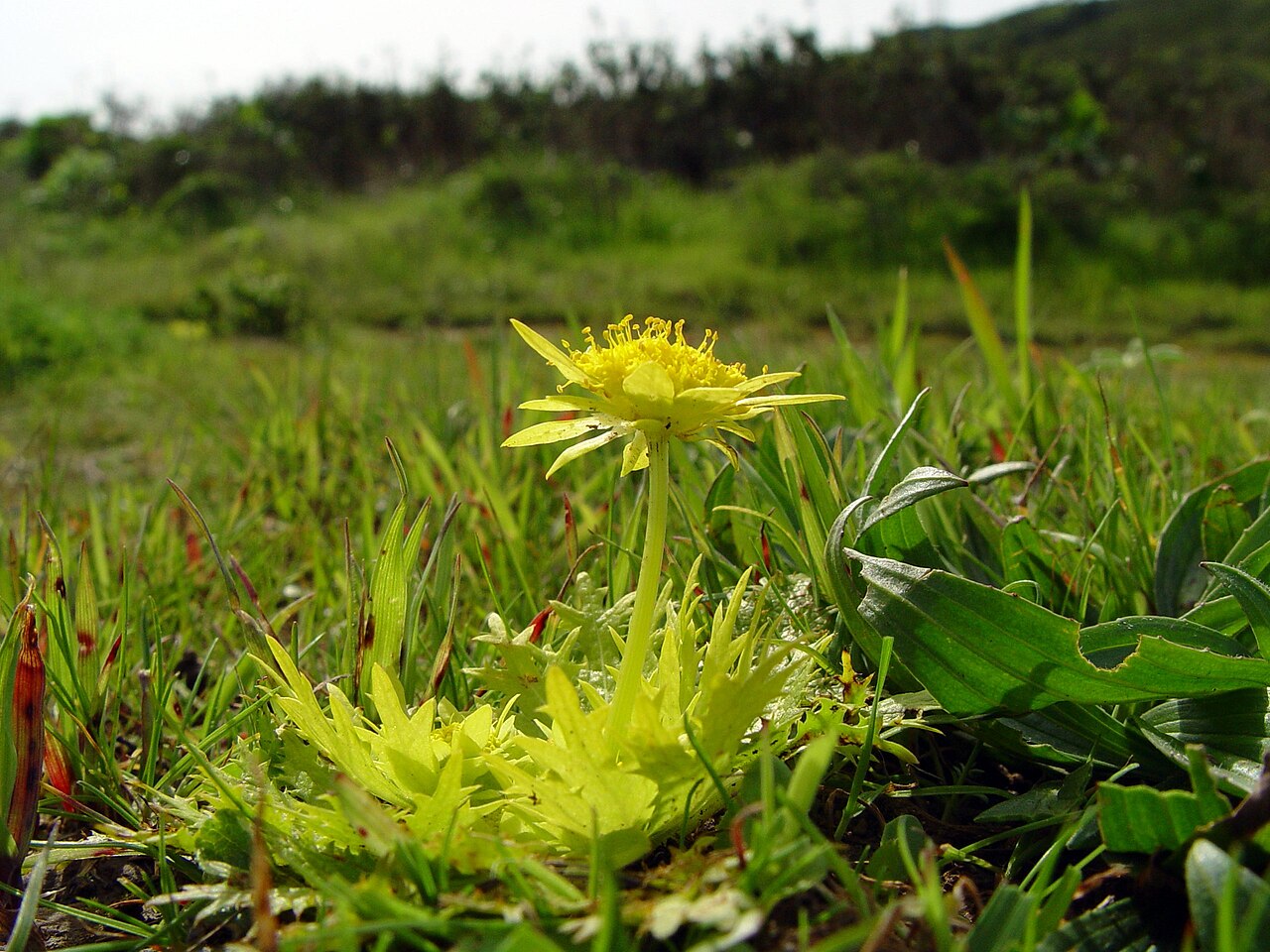
Footsteps of spring grows from a thick, carrot-like taproot. Several short, stout stems spread outward along the ground from the center, so the plant forms a low, star-shaped mat usually 1 to 4 inches tall and 4 to 12 inches across. The whole plant is a striking yellow-green. It dies back to the root in summer.
Leaves
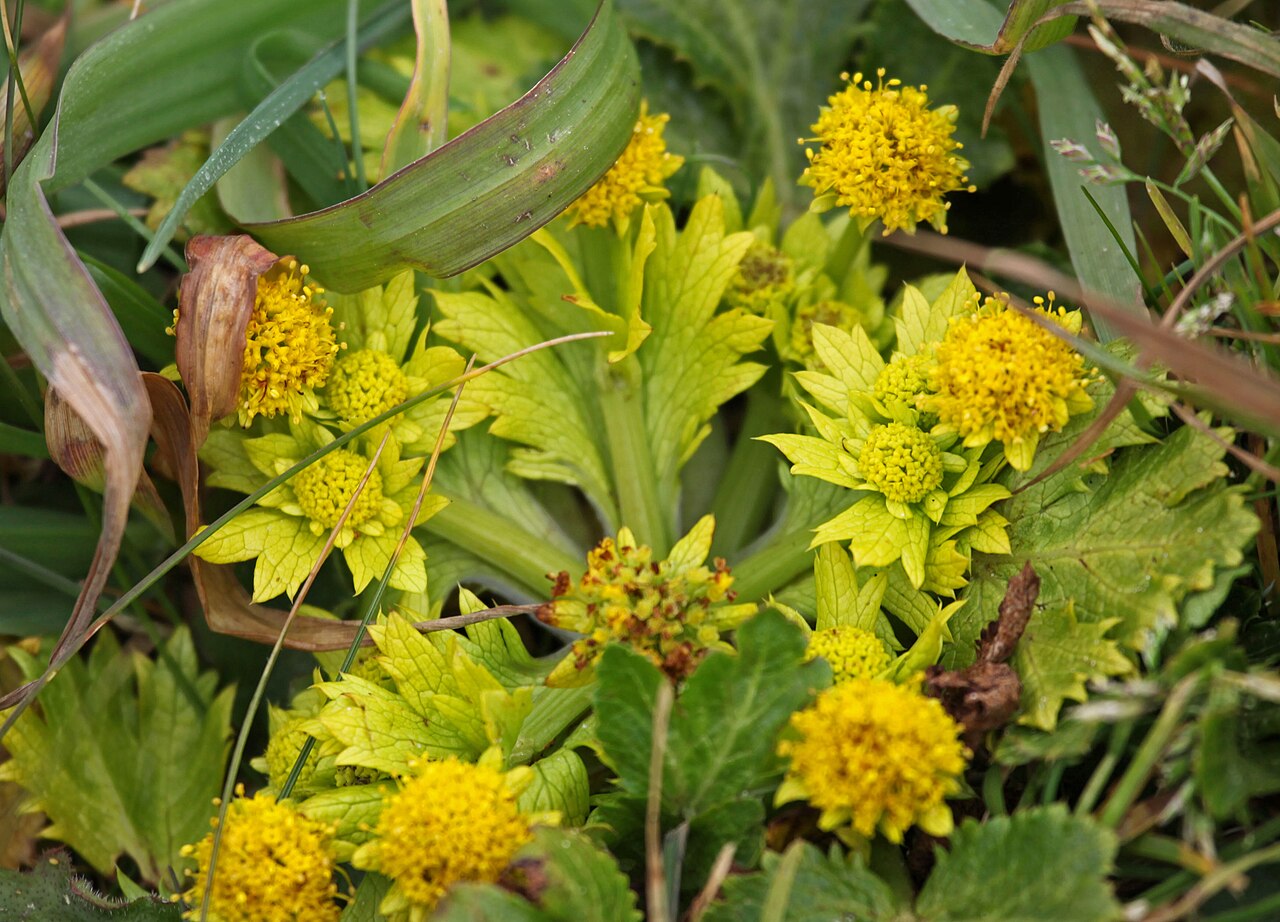
The leaves are 1 to 4 inches long, deeply divided into three main lobes that are again toothed or cut, with sharp-pointed teeth. They are fleshy and smooth, and the basal leaves lie flat on the soil.
Flowers
Tiny yellow flowers are packed into round heads (umbellets) about 1/4 to 1/2 inch across. Each head is surrounded by a collar of 8 to 15 yellowish, pointed bracts, which make it look like a small yellow star. Several heads are clustered at the end of each stem. Bloom time is about February to May.
Fruit
The small, egg-shaped fruits are covered on their upper part with short, hooked bristles that catch on fur and clothing, a common trait in sanicles.
Look-alikes
Pacific sanicle (Sanicula crassicaulis) is an upright plant 1 to 4 feet tall with dark green, palmately lobed leaves and tiny yellow flowers on branching stalks. Purple sanicle (S. bipinnatifida) has finely divided leaves with winged midribs and usually purple flower heads. Footsteps of spring is easy to tell by its flat, yellow-green rosette.
Quick Facts
| Scientific Name | Sanicula arctopoides Hook. & Arn. |
| Family | Apiaceae (carrot family) |
| Plant Type | Low, rosette-forming perennial wildflower |
| Mature Height | 1–4 in |
| Mature Spread | 4–12 in |
| Growth Rate | Slow |
| Sun Exposure | Full sun |
| Water Needs | Low to medium; moist in winter and spring, dry in summer |
| Soil Type | Sandy, loamy or rocky soils of coastal bluffs and grasslands; well drained |
| Soil pH | Slightly acidic to neutral (about 5.5–7.5) |
| Bloom Time | February–May |
| Flower Color | Bright yellow, with yellow-green bracts |
| Fall Color | None (summer-dormant) |
| Fruit | Small fruits with hooked bristles |
| Deer Resistant | Moderate; low and rarely browsed |
| USDA Hardiness Zones | 8–10 |
Native Range
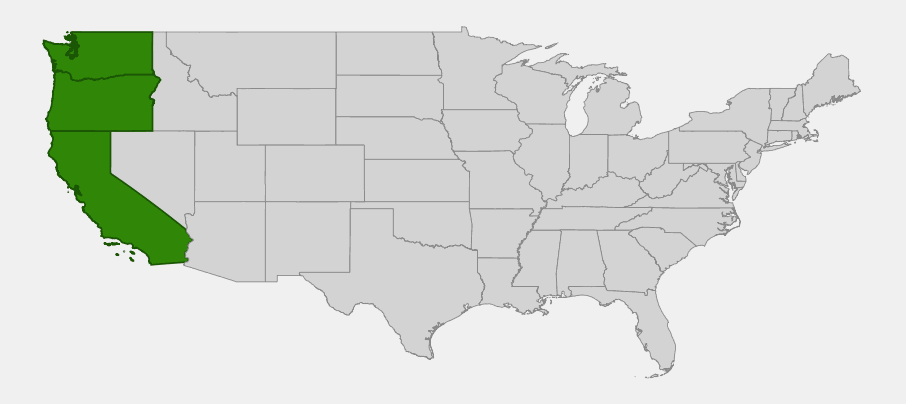
USDA PLANTS lists footsteps of spring as native in California, Oregon and Washington. In California it grows mostly near the coast, especially from the Central Coast north through the San Francisco Bay Area, Marin and Sonoma counties and the North Coast to the Oregon border.
In Oregon it grows mainly along the coast, and in Washington it is rare. It reaches its northern limit on southern Vancouver Island and nearby islands in British Columbia, where it is also rare. All of its range lies west of the Cascades and Sierra Nevada.
It grows on coastal bluffs, headlands and marine terraces, in coastal prairie and grassland, openings in coastal scrub and on rocky, grassy slopes near the sea, usually in full sun on thin, well-drained soils, from sea level to about 1,000 feet.
📋 Regional plant lists featuring Footsteps of Spring: Western Oregon & Western Washington · California & Nevada
Growing & Care Guide
Footsteps of spring is rarely available from nurseries, but specialty native plant growers and seed collectors sometimes offer it. It suits coastal gardens in its native range that can give it full sun, good drainage and a dry summer.
Light
Full sun. In shade or among tall plants it becomes weak and may disappear.
Soil & Water
It needs well-drained sandy, rocky or loamy soil. It grows actively with winter rain and goes dormant in summer, when it should be kept dry. Summer watering can rot the taproot.
Planting Tips
Plant it among low bunchgrasses, in a rock garden or at the front of a coastal meadow, where its flat rosettes are not shaded out. Mark its spot, because the plant disappears completely in summer.
Pruning & Maintenance
No pruning is needed. Keep tall grasses and weeds trimmed around it in winter and spring so it gets full sun. Avoid digging near dormant plants.
Propagation
Grow it from fresh seed sown outdoors in fall, so it gets the cool, moist winter conditions that trigger germination. Seedlings are slow and take a few years to flower. Its taproot makes it hard to transplant, so move it only as a small seedling. Never dig plants from the wild.
Landscape Uses
- Coastal prairie restoration: an early-blooming wildflower for coastal grasslands
- Rock gardens: a striking flat rosette between stones
- Early pollinator food: flowers in late winter, when little else blooms
- Meadow gardens: pairs with low bunchgrasses, blue-eyed grass and goldfields
Wildlife & Ecological Value
Blooming so early, footsteps of spring is an important first meal for insects that emerge on warm winter days along the coast.
For Pollinators
Small native bees, flies and beetles visit the open, easily reached flowers for nectar and pollen in late winter and early spring.
For Birds
Birds make little direct use of it, though the insects it attracts feed insect-eating birds of coastal grasslands.
For Mammals
The hooked fruits catch on the fur of passing animals, which helps spread the seeds.
Ecosystem Role
As part of the diverse wildflower community of coastal prairies, it helps make these grasslands among the richest plant habitats on the West Coast. Coastal prairie has shrunk greatly due to development, and footsteps of spring is now rare at the northern edge of its range in Washington and British Columbia.
Cultural & Historical Uses
The species name arctopoides means “like Arctopus,” a South African genus in the carrot family that also forms flat rosettes with spiny bracts. The genus name Sanicula comes from the Latin sanare, “to heal,” because European sanicles were once used as healing herbs.
It was named by the British botanists William Jackson Hooker and George Arnott, who described many West Coast plants from specimens sent back by early nineteenth-century collectors and expeditions.
Its poetic common name is one of the best known among West Coast wildflowers. On a coastal hillside in late winter, the scattered yellow rosettes really do look like a trail of footprints left by spring itself.
Frequently Asked Questions
Why is it called footsteps of spring?
Its flat, bright yellow-green rosettes appear on coastal hillsides in late winter, scattered like footprints, as one of the first signs of spring.
Where does footsteps of spring grow?
On coastal bluffs, marine terraces and coastal grasslands from southern California north through Oregon and Washington to southern Vancouver Island.
When does footsteps of spring bloom?
Usually from February to April, sometimes into May, before the surrounding grasses grow tall.
Can I grow footsteps of spring in my garden?
Yes, in coastal gardens in its native range, if you give it full sun, well-drained soil and a dry summer. It is best started from seed sown in fall and is rarely sold by nurseries.
Is footsteps of spring related to carrots?
Yes. It is in the carrot family (Apiaceae), along with sanicles, parsley and cow parsnip, even though its flat rosette looks very different.

Looking for a nursery that carries Footsteps of Spring?
Browse our native plant nursery directory: California · Oregon · Washington