
Water Lettuce (Pistia stratiotes)
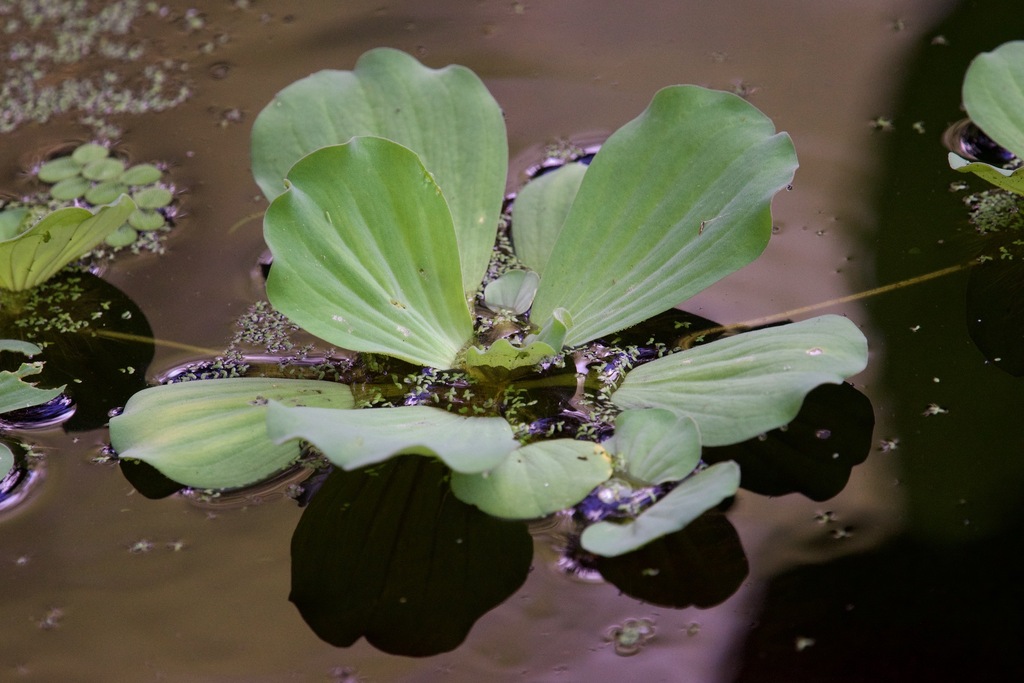
Pistia stratiotes, known as Water Lettuce or water cabbage, is a free-floating aquatic plant in the arum family (Araceae), the only species in its genus. It forms rosettes of thick, spongy, pale green leaves that look like a small head of lettuce floating on the water, with a mass of feathery roots hanging below.
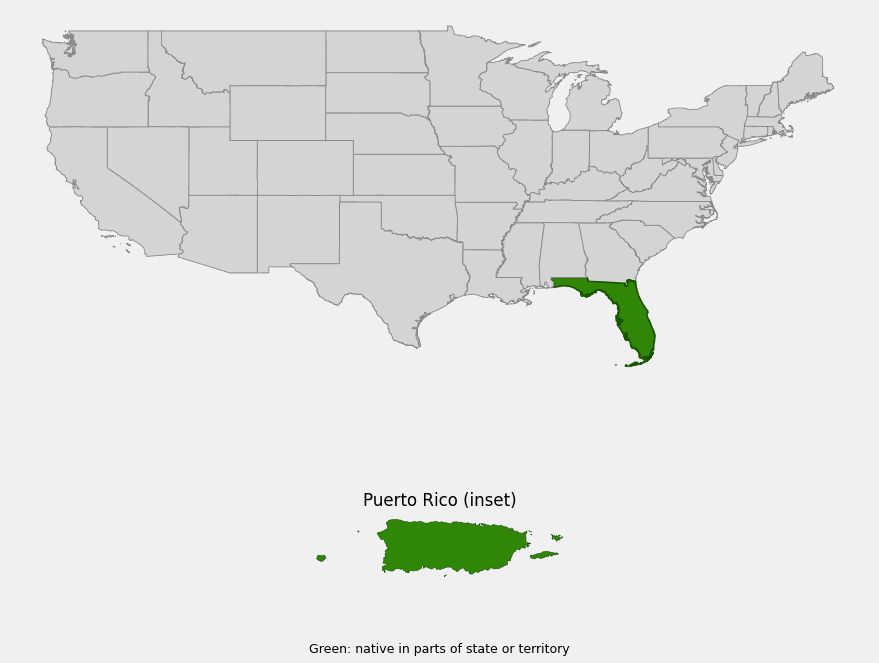
It grows in warm, still or slow-moving fresh water throughout the tropics and subtropics, and its original native range is uncertain. In the United States, USDA PLANTS treats it as native, and the Atlas of Florida Plants lists it as native to Florida, supported by fossils from a Florida lake that are about 3,500 years old and by early historical accounts. It is also native in Puerto Rico. Populations elsewhere in the country come from released aquarium and water-garden plants.
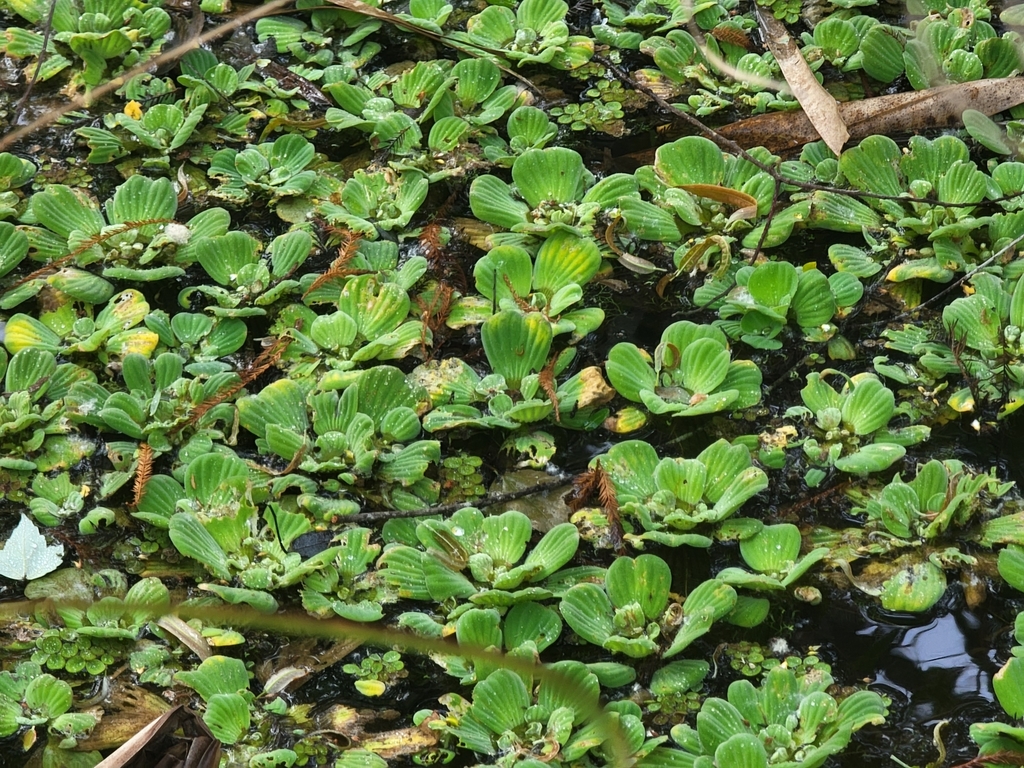
Water lettuce is also one of the most aggressive floating weeds in the world. It multiplies rapidly by runners and can cover lakes, canals and swamps with dense mats that shade out other aquatic plants, lower oxygen in the water and block boats. In Florida it is managed as a serious invasive pest in public waters. This page is meant to help you identify it and understand its story, not to encourage planting it.
Identification
Look for floating rosettes of thick, velvety, pale green leaves with strong parallel ridges and a squared-off or rounded tip, with long, feathery white to dark roots trailing underneath.
Growth Habit
Water lettuce is a perennial that floats freely on the surface, not rooted in the bottom. Each rosette is usually 2 to 6 inches across, sometimes up to 10 inches in crowded mats, where the leaves stand more upright. New plants form at the ends of short runners (stolons), so a single plant soon becomes a connected colony.
Leaves
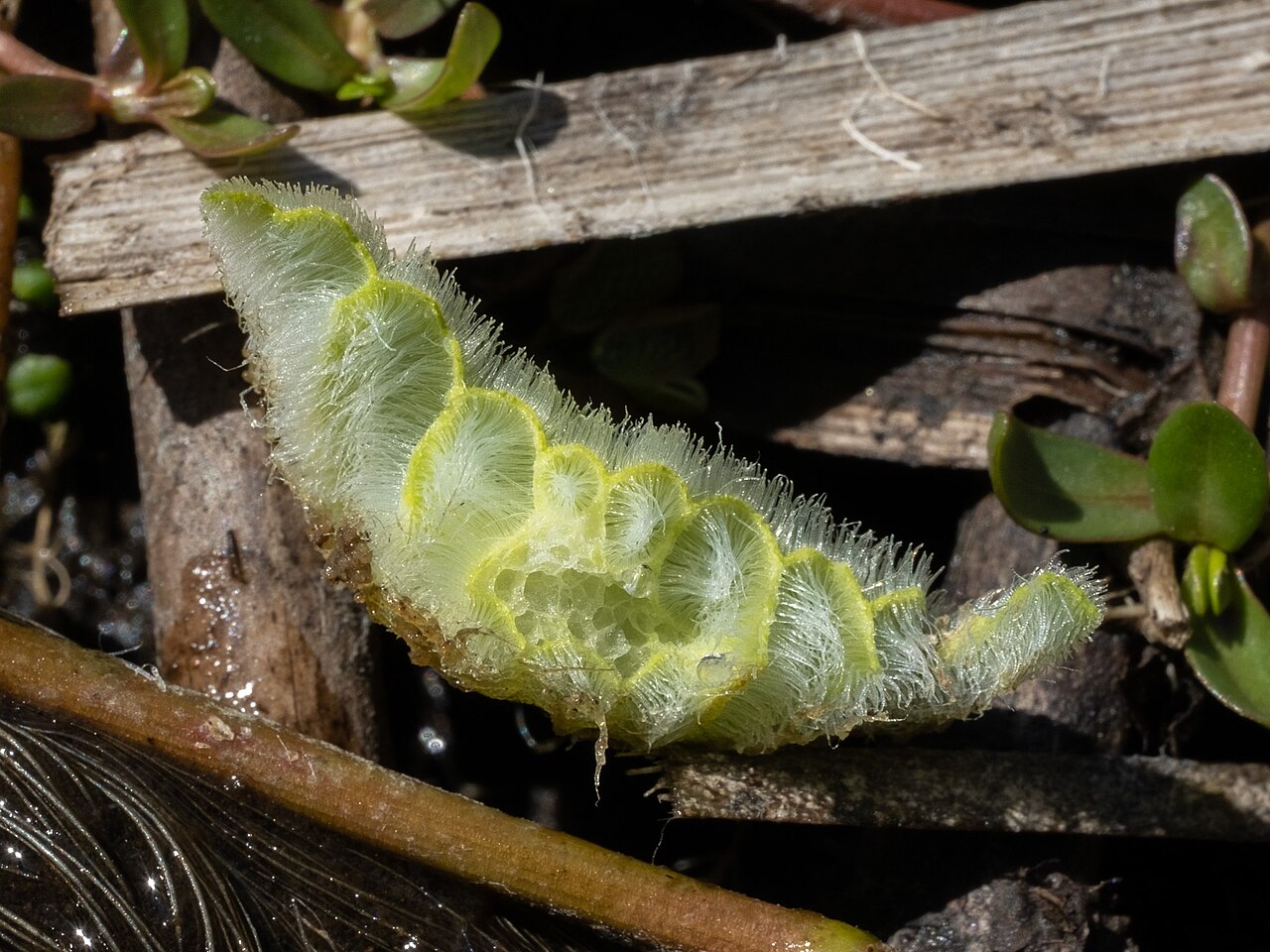
The leaves are stalkless, wedge-shaped to spoon-shaped, about 1 to 6 inches long, with a broad, rounded or squarish tip. They are thick and spongy with air spaces, light grayish green, and marked with 6 to 15 prominent parallel ribs. Both surfaces are covered with short, fine hairs that repel water and trap air.
Roots
A dense cluster of fine, feathery roots, often 8 inches to more than 1 foot long, hangs from the base of each rosette. The roots are whitish when young and turn dark with age.
Flowers & Fruit
The flowers are tiny and easy to miss. They are hidden in the center of the rosette inside a small, pale green, hairy leaf-like spathe about 1/2 inch long, which encloses a short spadix with a single female flower below and a few male flowers above. They produce small green berries with a few seeds. In Florida, seeds can survive in the sediment and sprout after mats have been cleared.
Look-alikes
Water hyacinth (Pontederia crassipes), another floating invader, has glossy, rounded leaves on swollen, spongy stalks and showy lavender flowers. American frog's-bit (Limnobium spongia), a native floating plant, has heart-shaped leaves with a spongy underside and no velvety ridges. Young water lettuce can also be mistaken for floating pennywort (Hydrocotyle), which has round, scalloped leaves on long stalks.
Quick Facts
| Scientific Name | Pistia stratiotes |
| Family | Araceae (arum family) |
| Plant Type | Free-floating aquatic perennial |
| Mature Height | 2–6 in above the water (to 10 in in dense mats) |
| Mature Spread | Each rosette 2–10 in; colonies spread indefinitely by runners |
| Growth Rate | Very fast in warm water |
| Sun Exposure | Full sun to part shade |
| Water Needs | Aquatic; floats on still or slow-moving fresh water |
| Soil Type | None (free-floating); thrives in nutrient-rich water |
| Soil pH | Water about pH 6.5–7.5 |
| Bloom Time | Inconspicuous; mainly spring to fall in Florida |
| Flower Color | Pale green, hidden in the rosette |
| Fall Color | None; killed back by hard frost |
| Fruit | Tiny green berry with a few seeds |
| Deer Resistant | Not applicable (aquatic) |
| USDA Hardiness Zones | 9–11 (frost-sensitive) |
Native Range
USDA PLANTS lists water lettuce as native in the lower 48 states and Puerto Rico and records it in more than twenty states. Most of those records, from Arizona and California to Ohio, New York and the mid-Atlantic, are populations that started from discarded aquarium and pond plants and usually die back each winter. The Atlas of Florida Plants treats it as native in Florida, where fossil and historical evidence supports a long presence, and it is also native in Puerto Rico. This map shows only those two areas.
Its native status in Florida was debated for many years. Naturalist John Bartram described huge floating islands of water lettuce on the St. Johns River in 1765, before the aquarium trade existed, and fossil leaves and seeds about 3,500 years old have been found in sediments from a south-central Florida lake. Genetic studies also suggest that some water lettuce in the southeastern United States is native. Populations along the Gulf Coast of Louisiana and Texas are generally treated as introduced.
In Florida it grows throughout the peninsula and in the Panhandle, in lakes, ponds, sloughs, swamps, slow rivers, ditches and canals, especially where the water is warm and rich in nutrients. It is most abundant in flood-control canals, reservoirs and other altered waters, where it can form mats that cover the whole surface.
📋 Regional plant lists featuring Water Lettuce: North & South Florida · Puerto Rico
Should You Grow It?
We do not recommend planting water lettuce. Even where it is considered native, it spreads so quickly that it is treated as an invasive pest in Florida's public waters, and several states restrict its sale or possession. Check your state's rules before keeping it, and never release it into natural waters.
Light
It grows in full sun to part shade. In full sun and warm water it multiplies fastest.
Soil & Water
It floats on still or slow-moving fresh water and does best in warm, nutrient-rich water. It is killed by hard frost and by salt or brackish water. These preferences explain why it explodes in fertilized ponds and canals.
Planting Tips
For a native floating or emergent plant in a Florida pond, choose species such as American white waterlily, spatterdock, pickerelweed or duck potato instead. If you already have water lettuce in a contained garden pond, keep it isolated from any stream, ditch or drainage outlet.
Pruning & Maintenance
Remove excess plants often, before they cover the surface, and let them dry out or compost them far from water. Never dump plants, pond water or aquarium contents into lakes, streams, canals or storm drains. In public waters, control is handled by state agencies such as the Florida Fish and Wildlife Conservation Commission.
Propagation
It reproduces by runners that form daughter rosettes and also by seed. Because it propagates itself so readily, there is no need to propagate it, and spreading it to new waters is harmful.
Where to See It
- Florida lakes and sloughs: floating among waterlilies and spatterdock
- Swamps and cypress strands: for example in Big Cypress National Preserve
- Slow rivers: such as the St. Johns River, where Bartram saw it in 1765
- Canals and ditches: where it often forms dense mats
- Puerto Rico: in ponds and slow streams
Wildlife & Ecological Value
In small amounts water lettuce provides cover and food for some aquatic animals, but in dense mats it harms the habitats it covers.
For Pollinators
The tiny flowers are visited by small insects such as flies and thrips, but the plant offers little to bees or butterflies.
For Birds
Wading birds and small birds such as purple gallinules and moorhens forage on and among the floating rosettes for insects and snails.
For Mammals
Manatees and other plant-eating aquatic animals occasionally eat it. Like other arums, its tissues contain calcium oxalate crystals.
Ecosystem Role
The hanging roots shelter small fish, aquatic insects and snails. In large mats, however, it blocks sunlight, lowers dissolved oxygen, crowds out native submerged and floating plants and can cause fish kills. Its roots also provide breeding sites for Mansonia mosquitoes, whose larvae attach to the roots to breathe. A South American weevil (Neohydronomus affinis) has been released in Florida as a biological control.
Cultural & Historical Uses
The genus name Pistia comes from the Greek pistos, “water.” The species name stratiotes means “soldier,” borrowed from the unrelated water soldier (Stratiotes), whose leaves are sword-shaped. The species was first described from plants found on the Nile in Africa.
Water lettuce has been grown for centuries in Asia, where it has been used as food for pigs and ducks and in traditional medicine. In the twentieth century it became a popular aquarium and water-garden plant, and releases from that trade spread it far beyond its natural range.
Safety note: Water lettuce contains calcium oxalate crystals and can irritate the mouth and throat if eaten. Keep it away from pets that might chew it. Despite its name, it is not edible lettuce.
Frequently Asked Questions
Is water lettuce native to the United States?
It is considered native to Florida and Puerto Rico, based on fossil evidence about 3,500 years old and 18th-century accounts. Populations in most other states come from released aquarium and pond plants and are introduced.
Is water lettuce invasive?
Yes. Even in Florida, where it is native, it is managed as a serious invasive pest because it forms dense mats that shade out native plants, lower oxygen and block waterways.
Can I grow water lettuce in my pond?
We do not recommend it. Several states restrict its sale or possession, and plants escape easily into natural waters. Choose native pond plants such as waterlilies, spatterdock or pickerelweed instead.
Does water lettuce survive winter?
It is killed by hard frost, so in cold climates it usually dies each winter. In Florida and other warm areas it grows year-round, and seeds can sprout after mats are removed.
How do I tell water lettuce from water hyacinth?
Water lettuce has velvety, pale green, ridged leaves without stalks and hidden flowers. Water hyacinth has glossy leaves on swollen stalks and large lavender flower spikes.

Looking for a nursery that carries Water Lettuce?
Browse our native plant nursery directory: Florida
