
Youth-on-Age (Tolmiea menziesii)
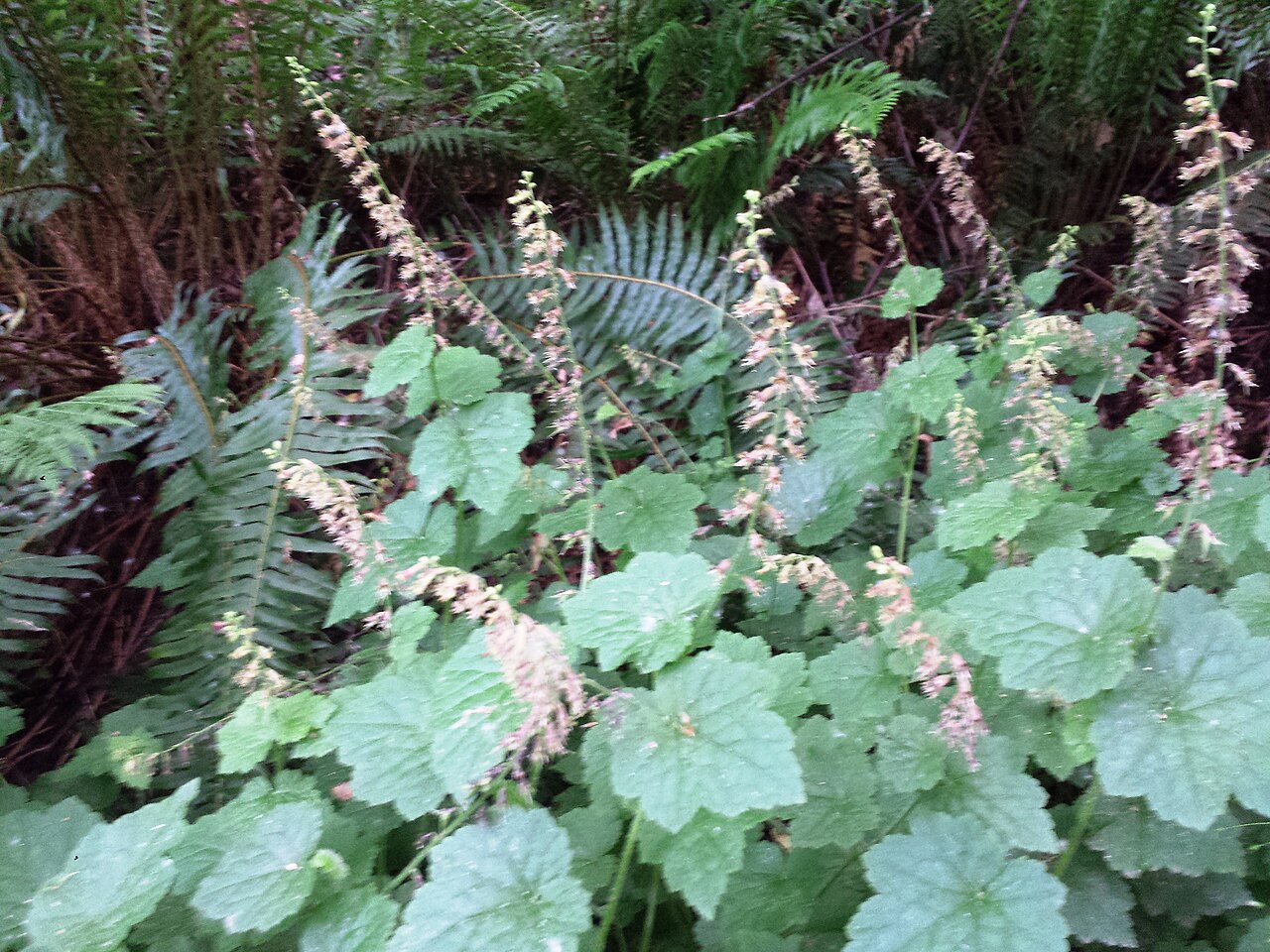
Tolmiea menziesii, known as Youth-on-Age (also piggyback plant or thousand mothers), is a shade-loving perennial of moist forests along the Pacific coast, from southeastern Alaska and British Columbia to California. It is a member of the saxifrage family (Saxifragaceae), related to fringe cups, foamflowers and alumroots.
Its common names come from a remarkable habit: many leaves sprout a small new plantlet where the leaf stalk joins the blade, so young plants appear to ride “piggyback” on the older ones. When the old leaf droops to the ground, the plantlet can root and become a new plant. In spring and early summer, slender stalks 1 to 3 feet tall carry dozens of small, curious, purplish-brown flowers with thread-like petals.
Youth-on-age is an excellent native groundcover for shady, moist gardens in the Pacific Northwest and northern California, where it forms soft, maple-leaved patches under trees and ferns. It is also familiar worldwide as the “piggyback plant,” a classic easy houseplant for cool, bright rooms.
Identification
Look for clumps of hairy, maple-like leaves on long stalks in moist forest shade, often with tiny plantlets on top of the leaves, and in spring for tall, narrow stalks of small brownish-purple flowers.
Growth Habit
Youth-on-age grows from a short, creeping rhizome and forms leafy clumps about 1 foot tall that spread into loose patches. Plants also spread by the leaf-borne plantlets, which root when old leaves touch moist soil.
Leaves
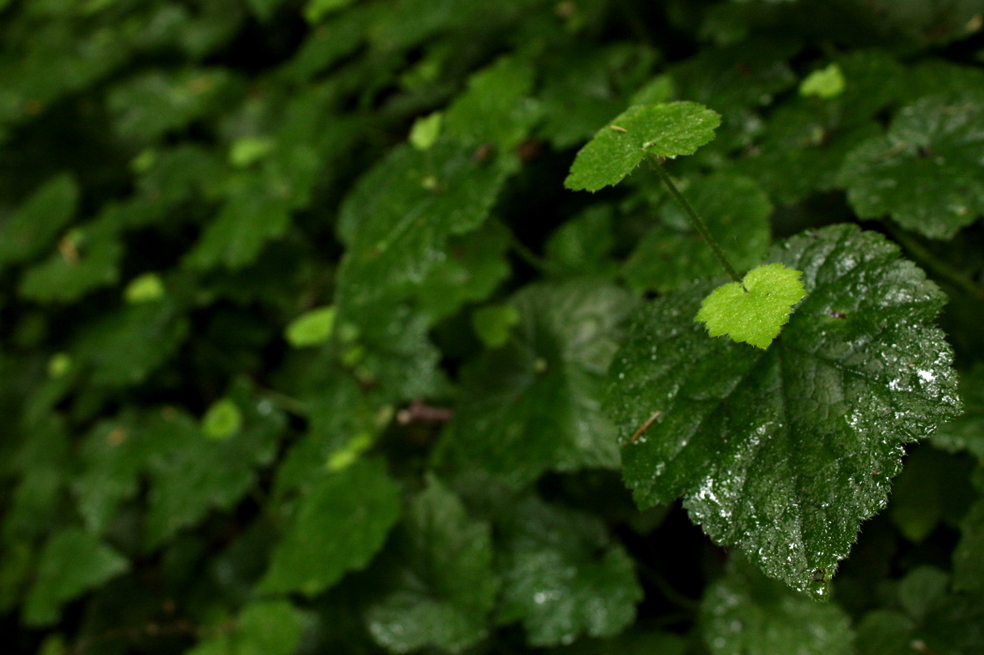
Most leaves are basal on long, hairy stalks. The blades are 2 to 4 inches wide, heart-shaped to rounded, shallowly 5- to 7-lobed and toothed, and covered with stiff hairs, a little like a hairy maple leaf. Many leaves bear a bud or young plantlet at the top of the leaf stalk, where it meets the blade. Leaves are evergreen in mild coastal areas and die back in colder sites.
Flowers
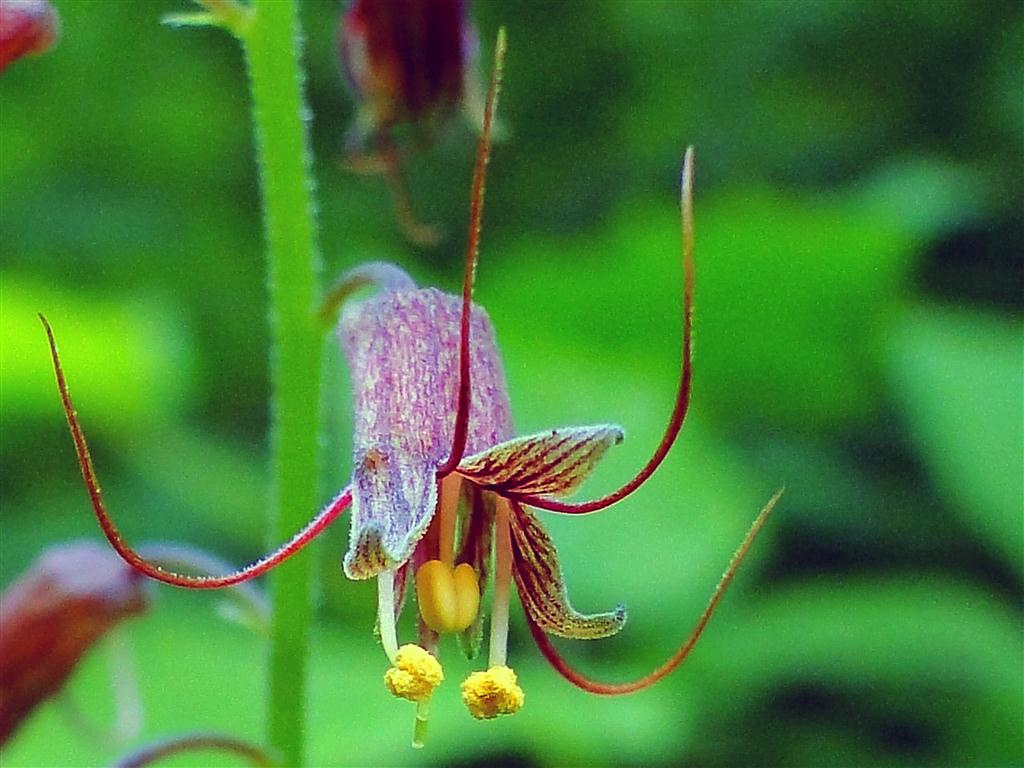
Flowering stalks 1 to 3 feet tall rise above the leaves from about April to July, with a few small stem leaves and a long, narrow spike-like cluster of nodding flowers on one side. Each flower is about 1/2 inch long, with a tubular, hairy, greenish-purple to chocolate-brown calyx, four thread-like, reddish-brown petals that curl out from the tube, and two or three stamens with yellow-orange anthers.
Fruit & Seeds
Each flower produces a small, two-beaked capsule containing many tiny, spiny seeds that fall near the plant. Most spread in gardens comes from the plantlets rather than seed.
Look-alikes
Fringe cups (Tellima grandiflora) has similar hairy leaves but cup-shaped, greenish-white to pink flowers with fringed petals, and no leaf plantlets. Foamflowers (Tiarella trifoliata) have small white flowers and no plantlets. Alumroots (Heuchera) have smoother leaves and more open flower clusters. The plantlets on the leaves are unique to youth-on-age among Pacific Coast plants.
Two Species
Botanists have separated a second, diploid species, Tolmiea diplomenziesii, from the tetraploid T. menziesii. The diploid is the southern form, reported from northern California to central Oregon, while T. menziesii in the strict sense ranges north to Alaska. USDA PLANTS still includes T. diplomenziesii within T. menziesii, as this page does. The two look nearly identical.
Quick Facts
| Scientific Name | Tolmiea menziesii |
| Family | Saxifragaceae (saxifrage family) |
| Plant Type | Herbaceous perennial groundcover; semi-evergreen |
| Mature Height | 1 ft (leaves); flower stalks 1–3 ft |
| Mature Spread | 1–3 ft; spreads slowly into patches |
| Growth Rate | Moderate |
| Sun Exposure | Part shade to full shade |
| Water Needs | Moderate to high; evenly moist soil |
| Soil Type | Rich, moist, humusy loam |
| Soil pH | About 5.5–7.0 |
| Bloom Time | April–July |
| Flower Color | Purplish brown to chocolate |
| Fall Color | None; semi-evergreen in mild areas |
| Fruit | Small capsule with tiny seeds |
| Deer Resistant | Somewhat; hairy leaves are seldom browsed |
| USDA Hardiness Zones | 6–9 |
Native Range
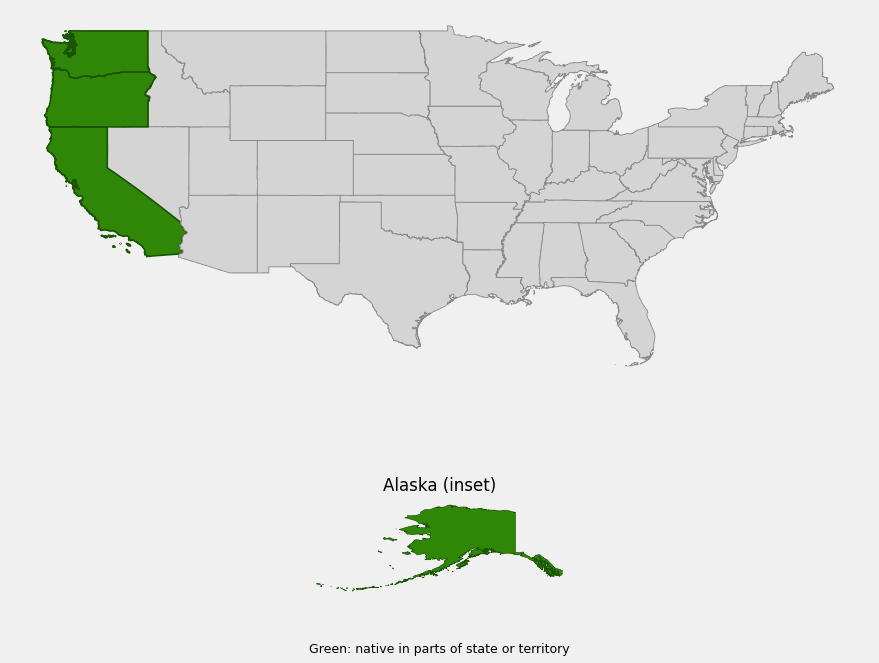
Youth-on-age is a Pacific Coast endemic. USDA PLANTS lists it as native in Alaska, Washington, Oregon and California, and in British Columbia in Canada. Its range runs from southeastern Alaska south through coastal British Columbia, western Washington and western Oregon to northern California.
It grows on the wet, west side of the Cascades and in the Coast Ranges, from sea level into the mountains. Herbarium and iNaturalist records in Washington and Oregon cluster west of the Cascade crest, with no records from the dry interior east of the mountains. In California it is mainly a plant of the moist forests and mountains of the northern part of the state.
Typical habitats are moist, shady coniferous and mixed forests, stream banks, seeps, wet ravines and the edges of springs, often with sword fern, salmonberry, foamflower and other shade plants under Douglas-fir, western redcedar, western hemlock or redwood.
📋 Regional plant lists featuring Youth-on-Age: Alaska · Western Oregon & Western Washington · California & Nevada
Growing & Care Guide
Youth-on-age is easy in cool, shady, moist gardens and is one of the most dependable native groundcovers for woodland plantings west of the Cascades. In hot, dry climates it needs regular water and deep shade.
Light
Plant it in part to full shade. Morning sun is fine in cool coastal areas, but hot afternoon sun scorches the leaves.
Soil & Water
It prefers rich, moist, well-drained soil with plenty of leaf litter or compost. Keep the soil evenly moist, especially in summer; it tolerates brief dryness in deep shade but looks best with regular water. It handles seasonally wet soils near streams and seeps.
Planting Tips
Space plants about 12 to 18 inches apart for groundcover. Use it under trees and shrubs, along shady paths, at the edges of woodland streams and among ferns. As a houseplant, give it bright, indirect light, cool temperatures and evenly moist potting mix, and watch for spider mites in dry indoor air.
Pruning & Maintenance
Remove spent flower stalks if you want a tidier look, and cut back tattered leaves in late winter. It is not invasive in its native range, but it can spread steadily in moist shade; thin patches by pulling unwanted plants. Slugs sometimes chew the leaves.
Propagation
The easiest way is to pin a leaf with a plantlet onto moist soil or potting mix; it roots within a few weeks. Clumps can also be divided in spring or fall, and seed can be sown on the surface of moist mix.
Landscape Uses
- Woodland groundcover: soft, hairy leaves under conifers and shrubs
- Stream and seep edges: moist, shady banks where it spreads naturally
- Fern gardens: a companion for sword fern, lady fern and maidenhair
- Houseplant: the classic piggyback plant for cool, bright rooms
- Children’s gardens: easy plantlets show how plants can reproduce without seeds
Wildlife & Ecological Value
Youth-on-age is part of the shady understory of Pacific Northwest forests, adding cover and flowers in spring.
For Pollinators
The small flowers are visited by bumblebees, other small bees, flies and ants, which collect nectar and pollen. The flowers bloom over a long period in spring and early summer.
For Birds
It offers little direct food for birds, but its dense patches provide ground cover where thrushes, wrens and juncos forage for insects in the leaf litter.
For Mammals
Deer and elk occasionally browse the leaves, but the stiff hairs make it less palatable than many forest plants. Its patches shelter small mammals, slugs and invertebrates on the forest floor.
Ecosystem Role
Youth-on-age helps hold soil on moist, shady slopes and stream banks, and its spreading habit fills gaps in the forest understory. Leaves and plantlets break down quickly, adding to the rich organic layer of these forests.
Cultural & Historical Uses
The genus Tolmiea honors William Fraser Tolmie, a Scottish surgeon and botanist with the Hudson’s Bay Company at Fort Nisqually and Fort Vancouver in the 1800s. The species name honors Archibald Menzies, the Scottish surgeon and naturalist who sailed with Captain George Vancouver and collected many Pacific Northwest plants in the 1790s. The plant was first named Tiarella menziesii by Frederick Pursh.
Its habit of producing plantlets on its leaves made it a popular houseplant in Europe and North America in the 1900s, sold as piggyback plant, pick-a-back plant or thousand mothers. Gold-variegated selections such as ‘Taff’s Gold’ are still sold. In parts of Britain it has escaped from gardens and become naturalized along streams.
In its native range, youth-on-age is a familiar and well-loved part of moist forests, often one of the first wildflowers hikers learn because of its curious leaf plantlets.
Frequently Asked Questions
Why is it called youth-on-age or piggyback plant?
Many leaves produce a small new plant at the top of the leaf stalk. The young plant seems to ride on the older leaf, and when the leaf touches the ground the plantlet can root.
Can I grow youth-on-age as a houseplant?
Yes. It is a classic houseplant. Give it bright, indirect light, cool temperatures, evenly moist soil and good humidity. Hot, dry air invites spider mites.
Is youth-on-age a good groundcover?
Yes, in moist shade. In western Oregon, Washington, British Columbia and northern California it spreads into attractive patches under trees, with little care beyond summer water.
Does youth-on-age grow east of the Cascades?
No. It is a plant of the wet, west side of the Cascades and the coast. In dry climates it needs deep shade and regular water.
How do I propagate a piggyback plant?
Pin a leaf with a plantlet onto moist soil or potting mix, keep it damp, and it will root within a few weeks. You can then cut it from the parent leaf.

Looking for a nursery that carries Youth-on-Age?
Browse our native plant nursery directory: Alaska · California · Oregon · Washington