
Monterey Paintbrush (Castilleja latifolia)
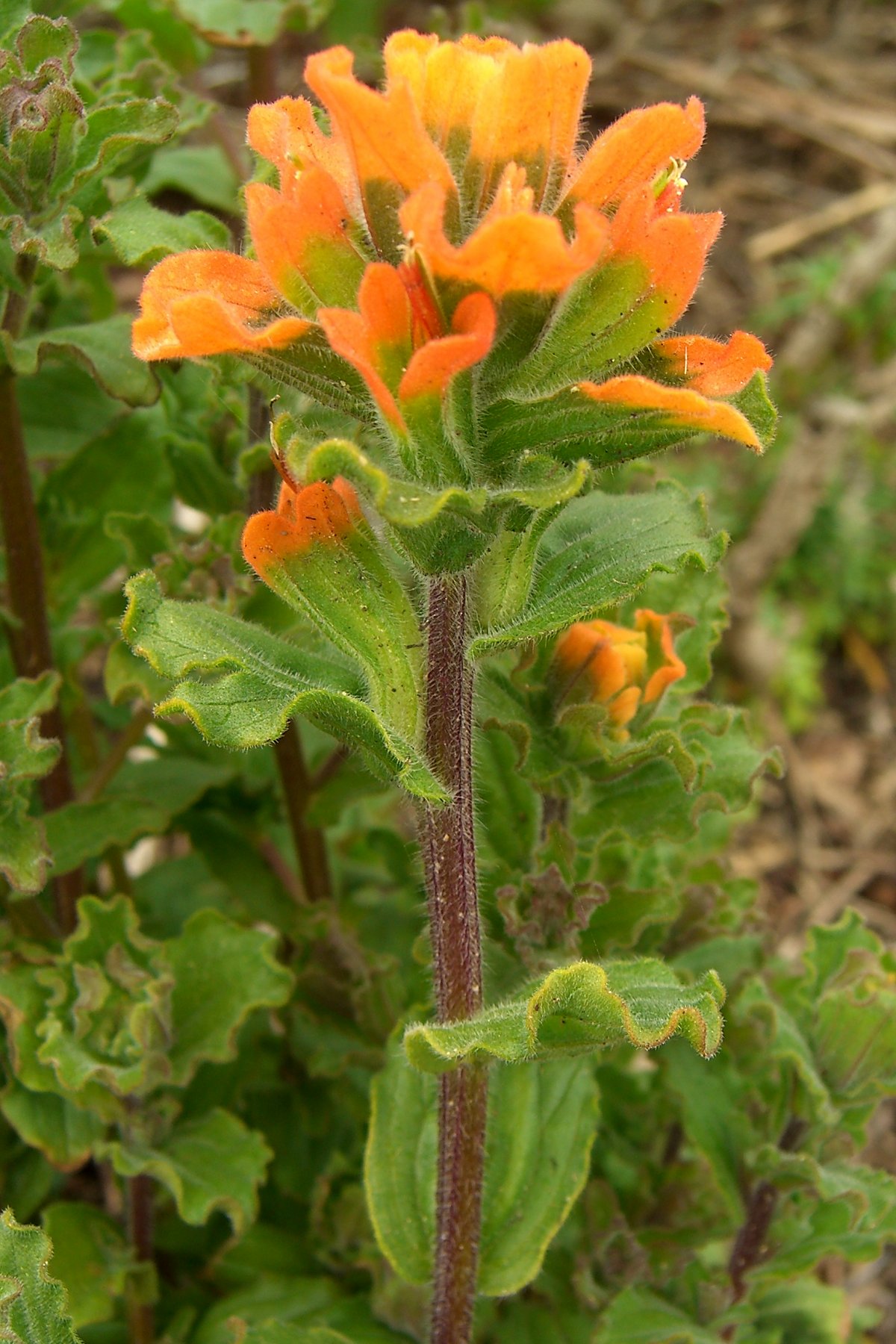
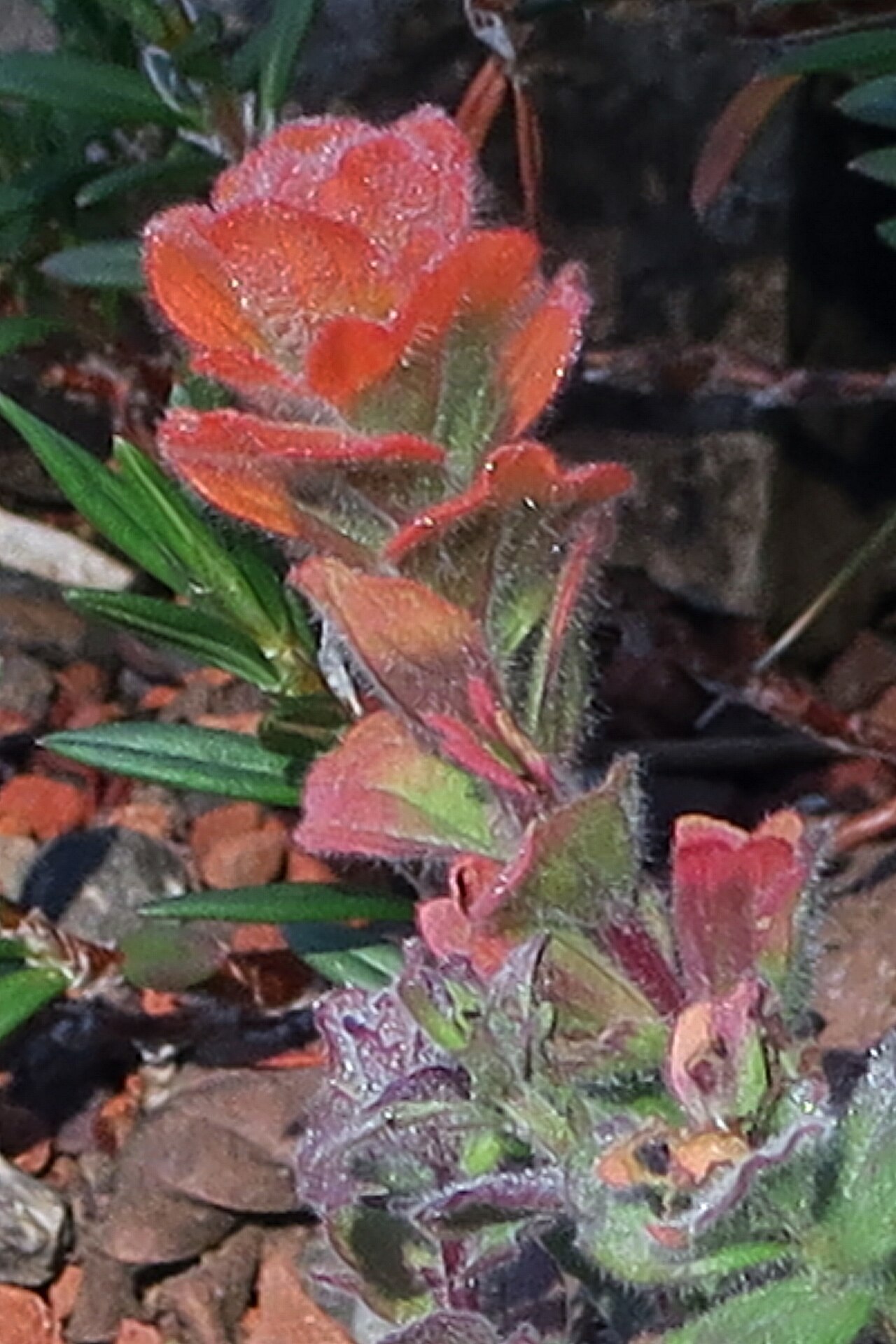
Castilleja latifolia, known as Monterey Paintbrush, Monterey Indian paintbrush or seaside paintbrush, is a bushy, perennial paintbrush found only on the central California coast. It grows 8 to 24 inches tall, with sticky, hairy stems, broad, often wavy-edged leaves and spikes of bracts tipped in bright red, orange or occasionally yellow.
It is a plant of the immediate coastline. Monterey paintbrush grows on coastal bluffs, stabilized sand dunes and in coastal scrub, mainly from Santa Cruz County south around Monterey Bay and the Monterey Peninsula to the northern Big Sur coast. Point Lobos, Asilomar and Garrapata State Park are among the best places to see it.
Like other paintbrushes, it is a hemiparasite: it makes its own food with green leaves, but its roots tap into the roots of nearby shrubs for water and nutrients. Because of that, and its small natural range, it is rarely grown and should never be dug from the wild. This page is mainly a guide to recognizing and enjoying it where it grows.
Identification
Look for a low, bushy paintbrush with fuzzy, sticky, broad leaves and bright red-orange bracts growing in coastal scrub or dunes right along the central California coast.
Growth Habit
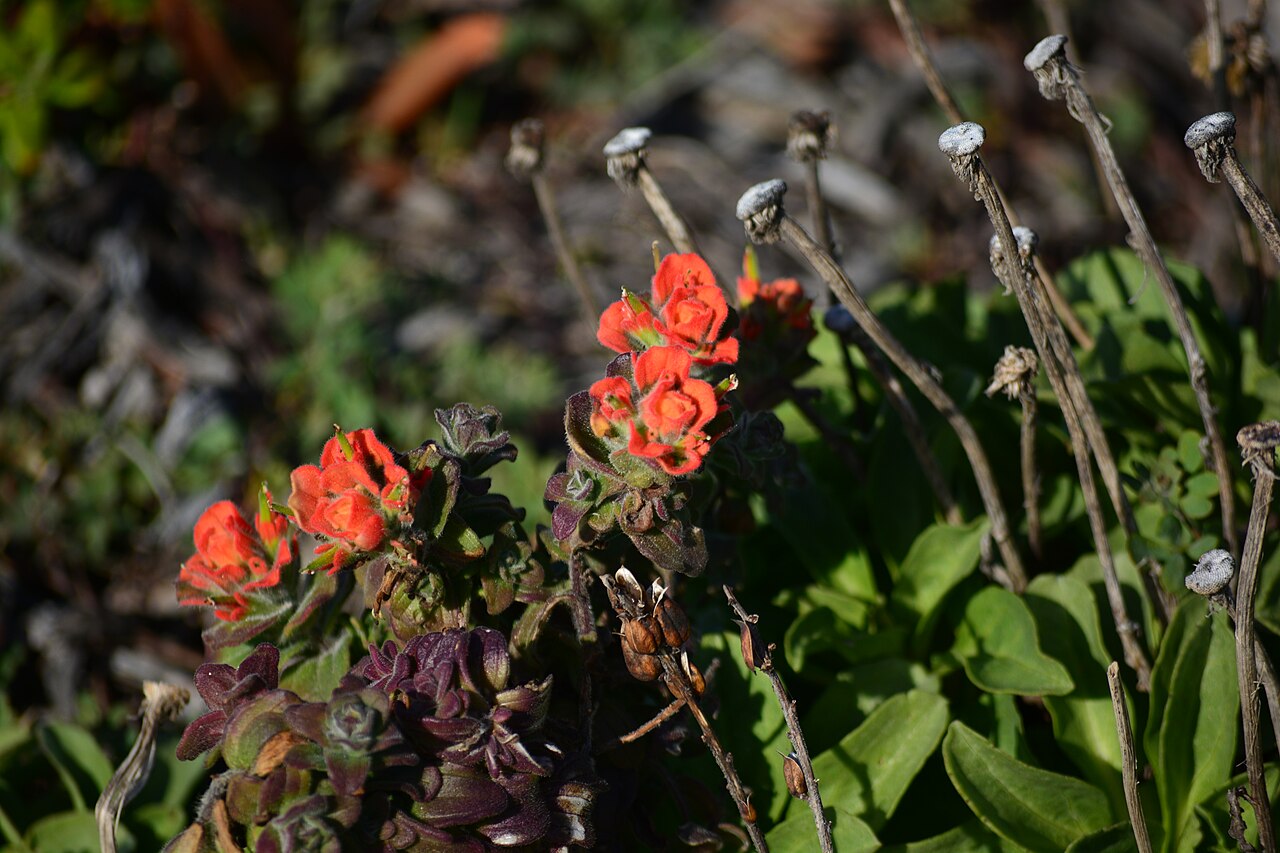
Monterey paintbrush is a perennial with many stems from a woody base, forming a low, rounded clump 8 to 24 inches tall that becomes more shrub-like with age. The stems and leaves are covered with glandular, sticky hairs and are green, gray-green or tinged with purple.
Leaves
The leaves are oblong to oval, broad for a paintbrush, about 1/2 to 1 inch long, somewhat fleshy and often wavy along the edges. Most are undivided, while the upper ones may have a pair of short lobes. The broad leaves give the species its name, latifolia, meaning “broad-leaved.”
Flowers & Bracts
The showy part of the plant is a dense spike of broad, rounded, leaf-like bracts tipped with bright scarlet, orange-red or sometimes yellow. The true flowers are narrow, greenish tubes with red or orange edges, about 3/4 to 1 inch long, tucked between the bracts. Plants can bloom from about February to September, with the peak in spring.
Fruit
The fruit is an oval capsule up to about 3/4 inch long that splits to release many tiny seeds with a net-like coat.
Look-alikes
Coast paintbrush (Castilleja affinis) and Wight's paintbrush (C. wightii) grow nearby but have narrower, often lobed leaves. Wavy-leaved paintbrush (C. applegatei) also has wavy leaves but grows mainly inland and in the mountains. Felt paintbrush (C. foliolosa) is covered with white, felt-like hairs. Monterey paintbrush is best recognized by its broad, sticky leaves and its home right on the coast.
Quick Facts
| Scientific Name | Castilleja latifolia Hook. & Arn. |
| Family | Orobanchaceae (broomrape family) |
| Plant Type | Hemiparasitic perennial wildflower to subshrub |
| Mature Height | 8–24 in |
| Mature Spread | 1–2 ft |
| Growth Rate | Moderate |
| Sun Exposure | Full sun |
| Water Needs | Low; coastal fog and winter rain |
| Soil Type | Sand, sandy loam or rocky soils of dunes and bluffs; well drained |
| Soil pH | Slightly acidic to neutral (about 6.0–7.5) |
| Bloom Time | February–September, peaking in spring |
| Flower Color | Red, orange-red or occasionally yellow bracts |
| Fall Color | None |
| Fruit | Small capsules with many tiny seeds |
| Deer Resistant | Moderate |
| USDA Hardiness Zones | 9–10 (coastal central California) |
Native Range
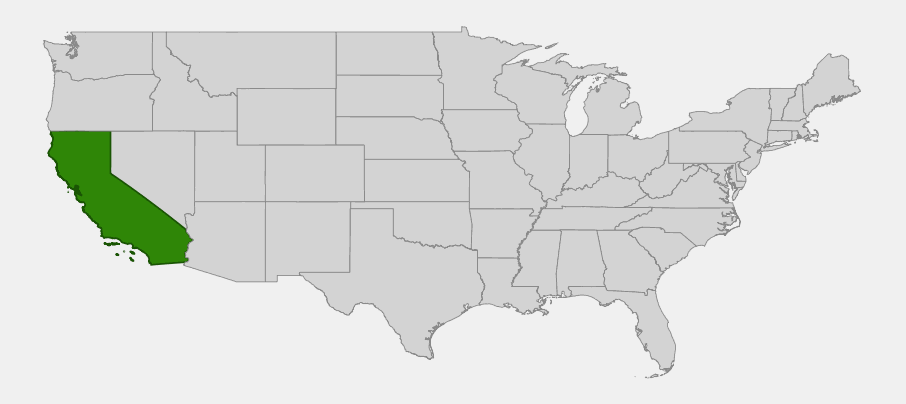
Monterey paintbrush is a California endemic. USDA PLANTS lists it only in California, where it grows along a short stretch of the Central Coast, mainly in Santa Cruz and Monterey counties. Its range centers on Monterey Bay, the Monterey Peninsula and Carmel, and it extends south along the northern Big Sur coast. Scattered records have been reported farther north along the coast.
Within that range it is spotty, though it can be locally abundant. Much of its dune and coastal scrub habitat has been lost to development, golf courses and invasive iceplant, so the best remaining populations are in state parks and reserves.
It grows on stabilized coastal sand dunes, coastal bluffs and terraces, and in coastal sage scrub and openings in Monterey pine and cypress forest, almost always within sight of the ocean, from sea level to a few hundred feet.
📋 Regional plant lists featuring Monterey Paintbrush: California & Nevada
Can You Grow It?
Only with difficulty, and only from seed. Monterey paintbrush is a hemiparasite that needs a host plant growing right beside it, and it is rarely available from nurseries. Native plant gardens on the California coast sometimes grow it from seed alongside a host shrub, but it is not a dependable garden perennial. Never dig plants from the wild: transplanted paintbrush almost always dies, and this species has a small range.
Light
It needs full sun and the cool, foggy air of the immediate coast.
Soil & Water
In the wild it grows in sand or sandy, well-drained soil, moistened by winter rain and summer fog. In a garden it needs sharp drainage and little or no summer water.
Planting Tips
If you can obtain nursery-grown seed or plants, start them right next to a host shrub of coastal scrub, such as coyote bush, California sagebrush, coast buckwheat or seaside daisy. Paintbrush seedlings that do not find a host usually fade away.
Pruning & Maintenance
Do not disturb the roots of the plant or its host. Lightly trim spent flower spikes after seed has dropped if you wish.
Propagation
Sow the tiny seed in fall on the soil surface in a pot or bed with a host seedling, or around an established host shrub. Germination improves after a cool, moist period over winter.
Where to See It
- Point Lobos State Natural Reserve: one of the best places to see it on coastal bluffs
- Asilomar State Beach and dunes: restored dunes in Pacific Grove
- Garrapata State Park: coastal scrub on the northern Big Sur coast
- Hummingbird watching: its red bracts are a magnet for hummingbirds in spring
- Botanic gardens: occasionally grown in California native plant collections
Wildlife & Ecological Value
Like other red paintbrushes, Monterey paintbrush is shaped by and for hummingbirds.
For Pollinators
Anna's and Allen's hummingbirds are its main pollinators, feeding on nectar from the narrow tubular flowers hidden among the red bracts. Bees sometimes visit as well. Paintbrushes are also host plants for checkerspot butterfly caterpillars.
For Birds
Hummingbirds visit the flowers from late winter through summer, and the plants provide low cover in coastal scrub for small birds.
For Mammals
Rabbits and deer may browse it, but its sticky, hairy foliage is not a favorite.
Ecosystem Role
As a hemiparasite, Monterey paintbrush draws water and nutrients from the roots of neighboring shrubs, which can slightly reduce their vigor and help keep the coastal scrub diverse. It is part of the distinctive plant community of the Monterey Bay coast, which also includes several rare and endemic species.
Cultural & Historical Uses
The genus name Castilleja honors the eighteenth-century Spanish botanist Domingo Castillejo. The species name latifolia, meaning “broad-leaved,” describes its wide leaves, which are unusual among paintbrushes. It was described by the British botanists William Jackson Hooker and George Arnott in the 1830s.
Paintbrushes were formerly placed in the figwort or snapdragon family (Scrophulariaceae). Genetic studies moved them to the broomrape family (Orobanchaceae), which includes many parasitic plants, from partly parasitic species like paintbrushes and louseworts to fully parasitic broomrapes.
Because it lives only along a short stretch of coast, Monterey paintbrush is a local emblem of the Monterey Bay area. Restoration of dunes at places like Asilomar, where iceplant has been removed, has helped native plants like this one return.
Frequently Asked Questions
Can I grow Monterey paintbrush in my garden?
Rarely. It is a hemiparasite that needs a host shrub, and it grows well only in the cool, foggy conditions of the central California coast. If you try, start it from nursery or responsibly collected seed beside a host. Never dig wild plants.
Where can I see Monterey paintbrush?
Along the coast of Monterey Bay and the Monterey Peninsula, for example at Point Lobos State Natural Reserve, Asilomar State Beach and Garrapata State Park, mainly in spring.
What makes Monterey paintbrush different from other paintbrushes?
Its broad, often wavy, sticky-hairy leaves, its low, bushy shape and its home right on the central California coast.
Is Monterey paintbrush a parasite?
It is a hemiparasite. It has green leaves and makes its own food, but its roots attach to the roots of nearby plants to take extra water and nutrients.
What pollinates Monterey paintbrush?
Mainly hummingbirds, such as Anna's and Allen's hummingbirds, which feed on nectar from its tubular flowers.

Looking for a nursery that carries Monterey Paintbrush?
Browse our native plant nursery directory: California