
Nickernut (Caesalpinia bonduc)
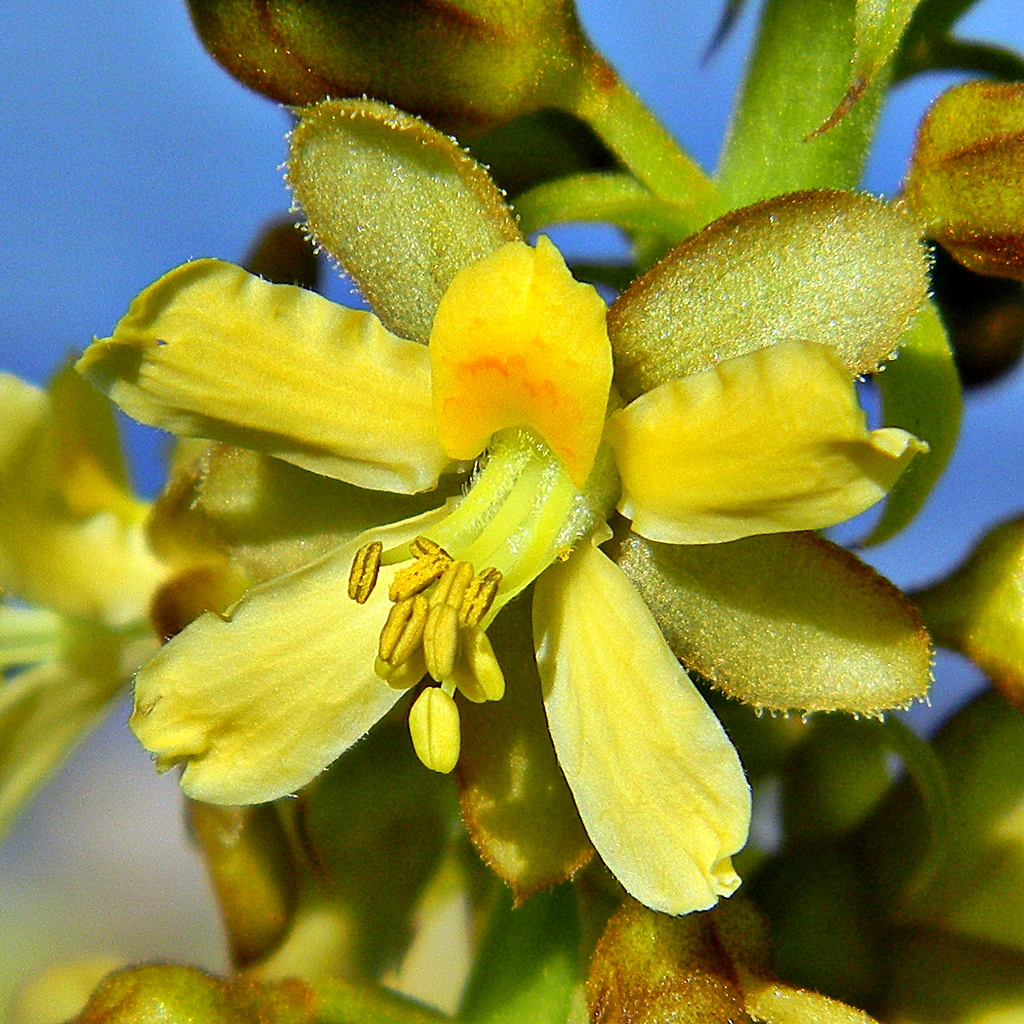
Caesalpinia bonduc, known as Nickernut, gray nicker or nickerbean, is a sprawling, very prickly shrub or scrambling vine of tropical coasts in the legume family (Fabaceae). It forms tangled thickets up to about 10 feet tall, or climbs through trees for 20 to 30 feet, with large, feathery, twice-compound leaves and spikes of yellow flowers.
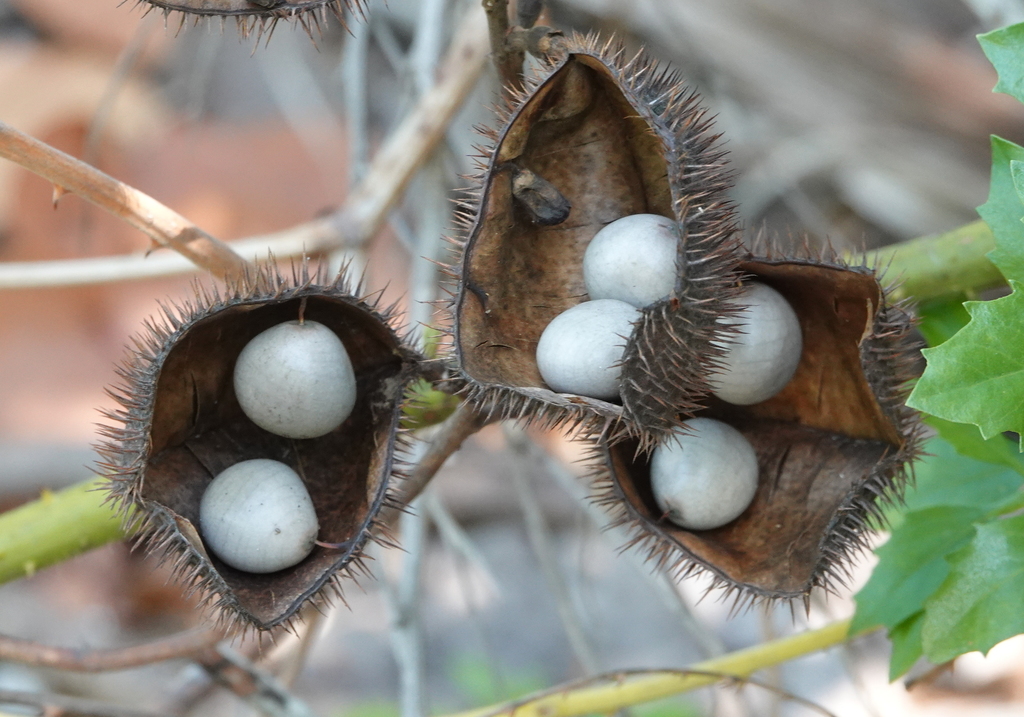
Its most famous feature is the fruit: a short, flat pod covered in stiff spines that splits to release one or two hard, round, gray seeds about 3/4 inch across. The seeds float and can survive for years in seawater, so ocean currents have carried this plant to tropical shores around the world. Beachcombers prize them as “sea beans.” Many botanists now place the species in the genus Guilandina, as Guilandina bonduc.
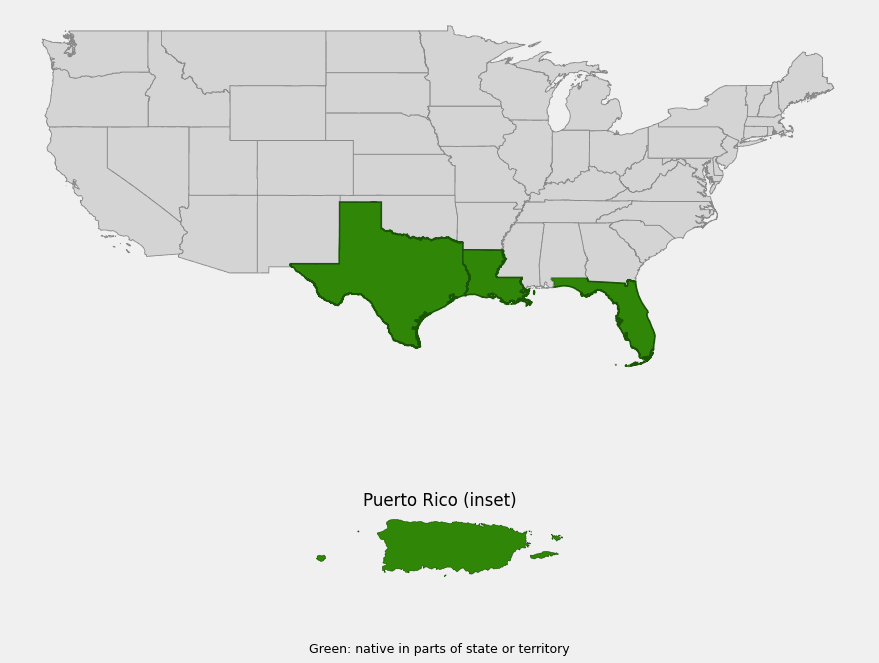
In the United States it is native to coastal central and southern Florida, including the Keys, and to Puerto Rico, growing in coastal hammocks, dune thickets and shell mounds. It is a larval host plant for the Miami blue butterfly. Its seeds are toxic if eaten.
Identification
Look for a scrambling, thicket-forming coastal shrub or vine with hooked prickles, large twice-compound leaves, spikes of yellow flowers and spiny, chestnut-like pods holding round gray seeds.
Growth Habit
Nickernut is an evergreen woody plant that grows as a dense, sprawling shrub or a climbing vine, scrambling over other plants and forming nearly impenetrable thickets. The stems, branches and leaf stalks are armed with short, sharp, hooked prickles.
Leaves
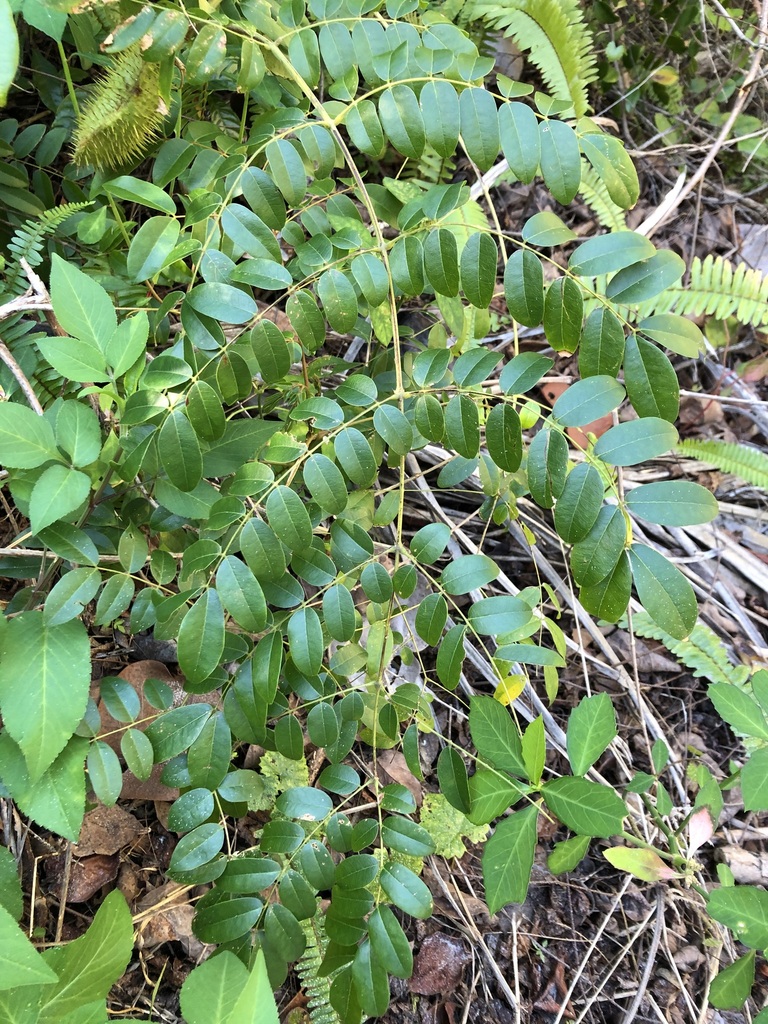
The leaves are alternate and twice-compound (bipinnate), often 1 to 2 feet long, with several pairs of side branches (pinnae), each bearing pairs of oval leaflets about 1 to 2 inches long. Prickles run along the leaf stalk, and there are leafy stipules at the base.
Flowers
Small yellow flowers, about 1/2 inch across, are carried in long, spike-like clusters (racemes) from the leaf axils or near the tips of branches. Each has five yellow petals, one of which is usually marked or spotted with orange or red, and ten stamens. In Florida it can bloom in almost any month, with peaks in late summer and fall.
Fruit & Seeds
The pod is oval, flattened, about 2 to 3 inches long and densely covered in stiff spines. It turns brown and splits open to release one or two (rarely more) very hard, round to slightly flattened gray seeds, about 3/4 inch across, with fine concentric lines.
Look-alikes
Yellow nicker (Caesalpinia major, also called Guilandina major), found in a few places in southern Florida and the Caribbean, has larger, yellow to orange seeds and lacks the large leafy stipules. Other prickly coastal legumes, such as baybean (Canavalia rosea), are unarmed vines with three leaflets and pink flowers.
Quick Facts
| Scientific Name | Caesalpinia bonduc (syn. Guilandina bonduc) |
| Family | Fabaceae (legume family) |
| Plant Type | Evergreen sprawling shrub or woody vine |
| Mature Height | 6–10 ft as a shrub; climbs to 20–30 ft |
| Mature Spread | 10–20 ft or more |
| Growth Rate | Fast |
| Sun Exposure | Full sun to part shade |
| Water Needs | Low to moderate; drought tolerant once established |
| Soil Type | Sand, shell and coastal limestone soils |
| Soil pH | Neutral to alkaline (about 6.5–8.5) |
| Bloom Time | Much of the year in Florida; peaks late summer to winter |
| Flower Color | Yellow, one petal marked orange or red |
| Fall Color | None (evergreen) |
| Fruit | Spiny pod with 1–2 hard, round gray seeds |
| Deer Resistant | Yes; heavily armed with prickles |
| USDA Hardiness Zones | 10–11 |
Native Range
USDA PLANTS lists nickernut as native in Florida, Louisiana, Texas and Puerto Rico, and it also grows in the U.S. Virgin Islands. Worldwide it is found on tropical coasts of the Americas, Africa, Asia and the Pacific islands, spread largely by floating seeds. Records from Hawaii are treated as possibly introduced.
In Florida it grows along the coasts of the central and southern peninsula and throughout the Florida Keys, on both the Atlantic and Gulf sides. The Louisiana and Texas records are outlying records along the Gulf Coast, where seeds regularly wash up on beaches such as Padre and Mustang islands and established plants are rare.
Typical habitats are coastal hammocks and their edges, maritime thickets behind dunes, shell middens and mounds, coastal rock barrens and the landward edges of mangrove swamps. It usually grows within sight or sound of the sea, on well-drained sand, shell or limestone.
📋 Regional plant lists featuring Nickernut: North & South Florida · Puerto Rico
Growing & Care Guide
Nickernut is a tough, salt-tolerant native for coastal habitat plantings in south Florida, but its hooked prickles and sprawling growth make it suitable only for large, naturalistic spaces, not for small yards or near paths.
Light
Full sun to part shade. It flowers and fruits best in sun, and in shade it climbs toward the light through nearby trees.
Soil & Water
It grows in sand, shell and limestone soils and is highly tolerant of salt spray and drought once established. Water young plants until they root in, then rely on rainfall.
Planting Tips
Use it at the back of a coastal buffer, on a dune edge or along a hammock margin where it can sprawl, form a barrier or climb into trees. Keep it well away from walkways, play areas and places where people will brush against it. It can be found at some native plant nurseries in south Florida.
Pruning & Maintenance
Prune it as needed to keep it in bounds, wearing heavy gloves, long sleeves and eye protection, because the prickles are sharp and hooked. Little other care is needed.
Propagation
Grow it from seed. The hard seed coat must be nicked or filed (scarified) and the seed soaked in water before sowing; untreated seeds can remain dormant for years. Seedlings grow quickly in warm conditions.
Landscape Uses
- Coastal habitat plantings: salt- and drought-tolerant thicket for dune and hammock edges
- Barrier hedge: a dense, prickly natural barrier
- Butterfly gardens: larval host for the Miami blue butterfly
- Wildlife cover: dense thickets shelter birds and small animals
- Coastal restoration: native component of maritime thickets
Wildlife & Ecological Value
Nickernut thickets are an important part of the coastal hammock edge in south Florida.
For Pollinators
The yellow flowers are visited by bees and other insects. Nickerbeans are larval host plants for the Miami blue butterfly (Cyclargus thomasi bethunebakeri), whose caterpillars feed on the flower buds and young growth. The Miami blue is federally listed as endangered.
For Birds
The dense, prickly thickets provide safe nesting and roosting cover for songbirds such as cardinals and catbirds, and for migrating birds resting along the coast.
For Mammals
Small mammals shelter in the thickets. The prickles discourage browsing.
Ecosystem Role
Its floating seeds can drift on ocean currents for long periods and still germinate, which is how it has colonized tropical shores worldwide. As a legume, it can host nitrogen-fixing bacteria in its roots, and its thickets help hold sand and shell soils along the shore.
Cultural & Historical Uses
The name “nicker” comes from an old word for a marble, because the round, hard seeds were used as playing marbles. The species name bonduc is from an Arabic word for a hazelnut or ball, also referring to the seeds. In other countries the plant is called fever nut, because the seeds and roots were used in traditional medicine for fevers.
Gray nickers are among the best-known “sea beans,” drift seeds that wash ashore on beaches far from where they grew. Collectors in Florida and Texas look for them after storms, and the polished seeds have long been used for jewelry, rosaries, worry beads and games such as mancala.
Safety note: The seeds of nickernut contain bitter, toxic compounds and should not be eaten. Do not use the plant as a home remedy, keep the seeds away from small children, and handle the plant with gloves because of its sharp, hooked prickles.
Frequently Asked Questions
Why is it called nickernut?
“Nicker” is an old word for a marble. The plant's hard, round gray seeds were used as marbles, and they are still known as gray nickers.
Is nickernut native to Florida?
Yes. It is native to coastal central and southern Florida and the Florida Keys, as well as Puerto Rico and tropical coasts worldwide.
Are nickernut seeds poisonous?
Yes. The seeds contain toxic compounds and should not be eaten. Keep them away from small children.
Can I grow nickernut in my yard?
Only if you have a large coastal or naturalistic area in south Florida. It is sprawling and armed with hooked prickles, so keep it away from paths and play areas.
What are sea beans?
Sea beans are seeds that float and drift on ocean currents and wash up on beaches. Gray nickers from this plant are among the most common sea beans found in Florida and Texas.
