
Velvet-Leaf Mallow (Allowissadula holosericea)
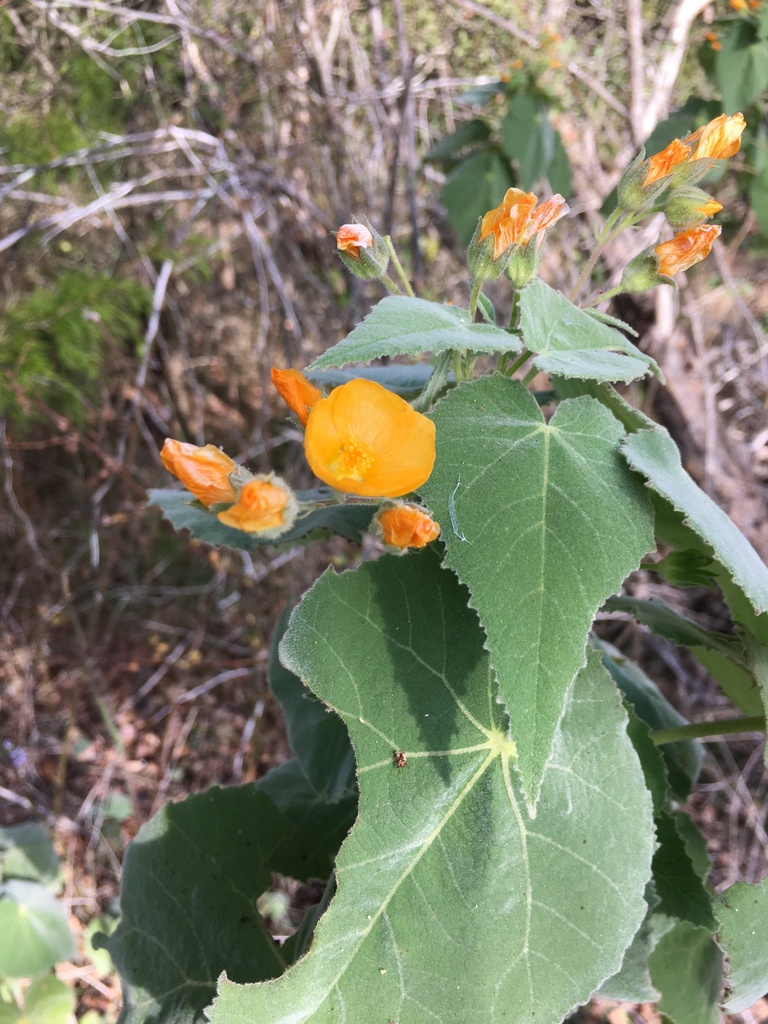
Allowissadula holosericea, known as Velvet-Leaf Mallow, Chisos Mountain false Indianmallow or velvetleaf Indian mallow, is a soft-textured shrub or subshrub of Texas and the Chihuahuan Desert region. It usually grows 3 to 6 feet tall, with large, heart-shaped, gray-green leaves that feel like velvet and a long season of apricot-orange to golden-yellow, five-petaled flowers.
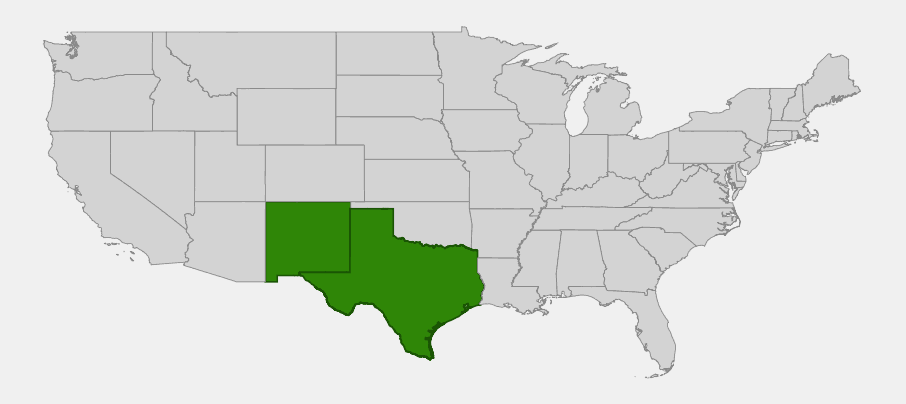
It is native to Texas and southern New Mexico and south into northern Mexico. In Texas it grows on the Edwards Plateau and Balcones Escarpment around Austin and San Antonio, in the Trans-Pecos including the Chisos Mountains of Big Bend, and in parts of South Texas, usually in dry, rocky soils on limestone slopes, canyon sides and the edges of open woodlands.
Gardeners in Central and West Texas grow it for its bold foliage, its flowers that keep coming from spring until frost, and its value to bees. It was formerly placed in Abutilon as Abutilon holosericeum, the Indian mallows, which it closely resembles.
Identification
Look for a soft, coarse shrub with very large, heart-shaped, velvety gray-green leaves and scattered apricot-orange mallow flowers from spring to late fall.
Growth Habit
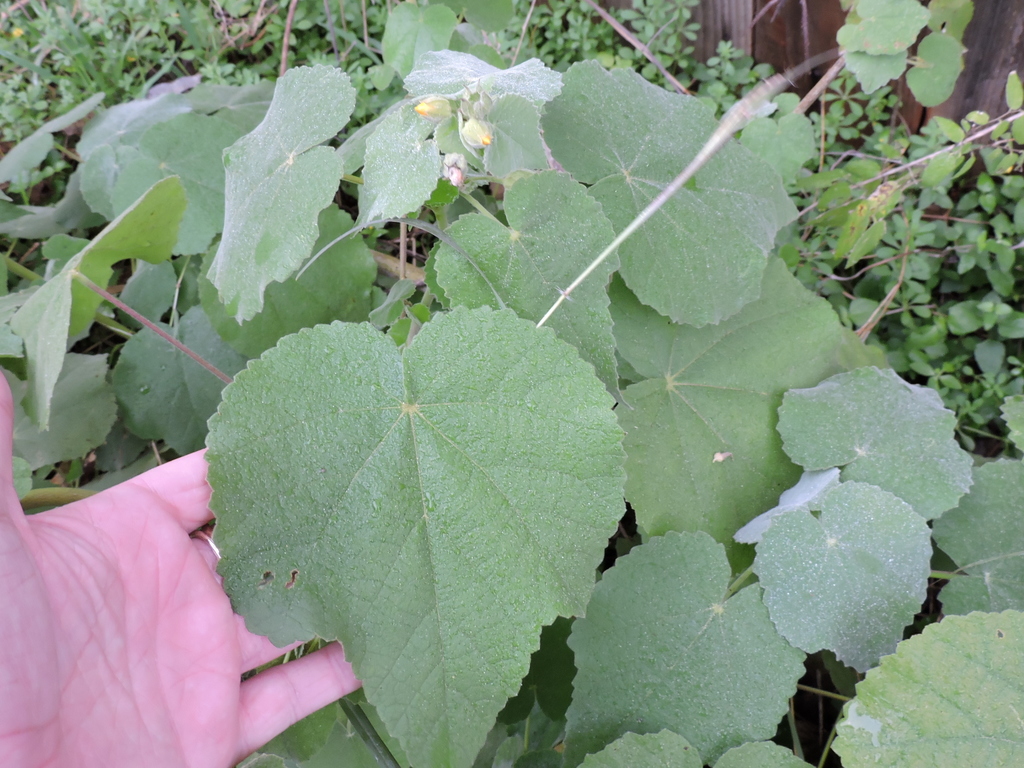
Velvet-leaf mallow is a multi-stemmed, somewhat woody-based shrub or subshrub, usually 3 to 6 feet tall and about as wide. The stems are densely covered with soft, star-shaped (stellate) hairs. Plants can become open and leggy at the base later in the season and may die back to the woody base in cold winters.
Leaves
The leaves are the most striking feature: broadly heart-shaped, often 3 to 6 inches long or more, with a pointed tip and finely toothed edges. They are gray-green to chartreuse and thickly covered with soft hairs on both sides, giving them a velvety feel.
Flowers
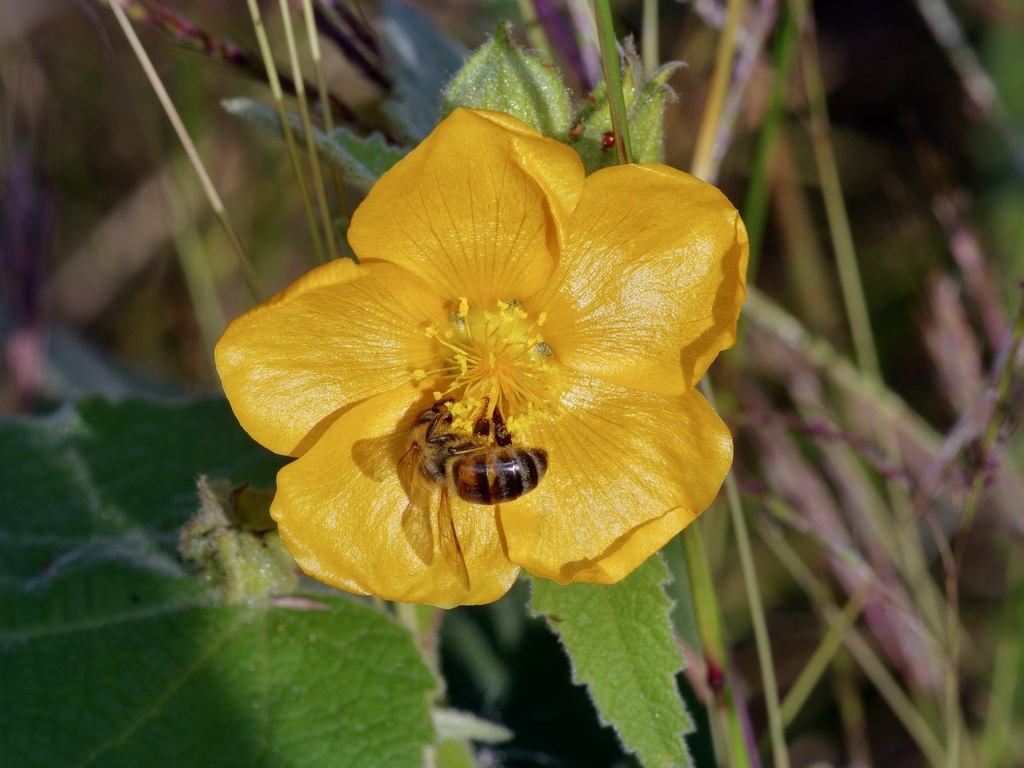
The flowers are about 1 to 1 1/2 inches across, with five broad, overlapping petals in apricot, orange or golden yellow, sometimes with a deeper orange or coral tint. A central column of fused stamens surrounds the styles, as in other mallows. Flowers are borne singly or in loose clusters at the stem tips and in the upper leaf axils, and bloom from spring to frost, especially after rain.
Fruit
The fruit is a rounded, hairy schizocarp that splits into about ten wedge-shaped segments (mericarps), each holding a few seeds. Dried fruits look like small, dark, star-shaped buttons.
Look-alikes
Sweet Indian mallow (Abutilon fruticosum) is lower and more sprawling, with smaller leaves and smaller yellow-orange flowers. Texas rock rose (Pavonia lasiopetala) has smaller, toothed leaves and pink flowers. Non-native velvetleaf (Abutilon theophrasti), a common farm weed, is an annual with yellow flowers and cup-shaped seed pods with spiky beaks.
Quick Facts
| Scientific Name | Allowissadula holosericea (syn. Abutilon holosericeum) |
| Family | Malvaceae (mallow family) |
| Plant Type | Shrub or woody-based subshrub |
| Mature Height | 3–6 ft |
| Mature Spread | 3–5 ft |
| Growth Rate | Fast |
| Sun Exposure | Full sun to part shade |
| Water Needs | Low to medium; drought tolerant once established |
| Soil Type | Rocky, limestone, loam, sand or clay; well-drained |
| Soil pH | Neutral to alkaline (about 7.0–8.5) |
| Bloom Time | Spring to frost, heaviest after rain |
| Flower Color | Apricot-orange to golden yellow |
| Fall Color | None; may die back in cold winters |
| Fruit | Hairy, star-shaped schizocarp splitting into segments |
| Deer Resistant | Moderately; fuzzy leaves are seldom browsed heavily |
| USDA Hardiness Zones | 8–10 |
Native Range
USDA PLANTS lists velvet-leaf mallow as native in two states, Texas and New Mexico. Its range continues south into northern Mexico.
In Texas it is found on the Edwards Plateau and along the Balcones Escarpment, where it is frequent in and around Austin, San Marcos and San Antonio, and west through the Trans-Pecos to the Chisos Mountains of Big Bend, which gave it the USDA common name Chisos Mountain false Indianmallow. It also reaches parts of South Texas. In New Mexico it is limited to the southern part of the state.
It grows in dry, rocky, well-drained soils on limestone hills, canyon slopes, bluffs and the edges of open woodlands and brushland, and it often shows up along shaded creek terraces and woodland edges in urban greenbelts.
📋 Regional plant lists featuring Velvet-Leaf Mallow: South & West Texas
Growing & Care Guide
Velvet-leaf mallow is a fast-growing, low-maintenance shrub for Texas and Southwest gardens. It grows easily from seed and rewards a little pruning with fuller growth and more flowers.
Light
It grows in full sun to part shade. Some afternoon shade keeps the big leaves looking fresh in hot summers, while full sun gives the most compact plants.
Soil & Water
Plant it in well-drained soil; rocky limestone, loam, sand and even clay are fine if water does not stand. Water regularly the first summer. Once established it is drought tolerant, but an occasional deep watering in long dry spells keeps it blooming.
Planting Tips
Plant in fall or spring, about 3 to 4 feet apart. Its bold, soft foliage contrasts well with fine-textured grasses and small-leaved shrubs. Place it toward the back of a bed, since it can look bare at the base by late summer.
Pruning & Maintenance
Cut it back by about a third to a half in late winter to encourage dense, bushy growth. Light tip pruning in summer can reduce legginess. After a hard freeze, cut back any dead stems; it usually resprouts from the woody base.
Propagation
It grows readily from seed sown in spring; nicking or soaking the hard seeds can speed germination. It often self-sows near the parent plant. Softwood cuttings taken in late spring or summer also root.
Landscape Uses
- Pollinator gardens: long season of nectar and pollen for bees
- Shade and woodland edges: bold foliage for dappled light
- Texture contrast: big, velvety leaves among fine-textured plants
- Low-water landscapes: drought tolerant once established
- Wildlife habitat plantings: cover and seeds for small animals
Wildlife & Ecological Value
Velvet-leaf mallow offers a long, steady supply of flowers in a region where summer bloom can be scarce.
For Pollinators
Honeybees, native bees, including small sweat bees and leafcutter bees, and butterflies visit the flowers for pollen and nectar. Like other mallows, it can serve as a caterpillar host for mallow-feeding butterflies such as checkered-skippers.
For Birds
Its dense, leafy growth gives cover to small birds, and seed-eating birds may pick seeds from the dried fruits.
For Mammals
Deer generally browse it only lightly. Small mammals may shelter beneath it and eat fallen seeds.
Ecosystem Role
As a fast-growing native shrub of rocky slopes and woodland edges, it helps cover and stabilize disturbed ground and supports a range of insects through its long flowering season.
Cultural & Historical Uses
The genus name Allowissadula combines the Greek allo-, “other,” with Wissadula, a related mallow genus; the plants were separated from Abutilon and Wissadula in the 1970s. The species name holosericea means “entirely silky,” describing the soft hairs that cover the plant.
Its USDA common name, Chisos Mountain false Indianmallow, refers to the Chisos Mountains of Big Bend National Park, part of its Trans-Pecos range, and to its resemblance to the Indian mallows of Abutilon.
Native plant groups and nurseries in Central Texas have promoted velvet-leaf mallow as a pollinator-friendly, water-wise shrub, and it is often seen in Austin and San Antonio wildscapes and demonstration gardens.
Frequently Asked Questions
Why is it called velvet-leaf mallow?
Its large, heart-shaped leaves are covered with dense, soft, star-shaped hairs that feel like velvet.
When does velvet-leaf mallow bloom?
It can bloom from spring until the first frost, with the most flowers after rains. In mild winters it may keep flowering into December.
Is it the same as velvetleaf, the farm weed?
No. Velvetleaf (Abutilon theophrasti) is a non-native annual weed. Velvet-leaf mallow is a native perennial shrub of Texas and New Mexico.
Does it need full sun?
It grows in full sun or part shade. A bit of afternoon shade helps the large leaves stay fresh in hot summers.
How do I keep it from getting leggy?
Cut it back by a third to a half in late winter, and lightly tip-prune in summer. This keeps it bushier and encourages more flowers.

Looking for a nursery that carries Velvet-Leaf Mallow?
Browse our native plant nursery directory: New Mexico · Texas