
Goldenstar (Bloomeria crocea)
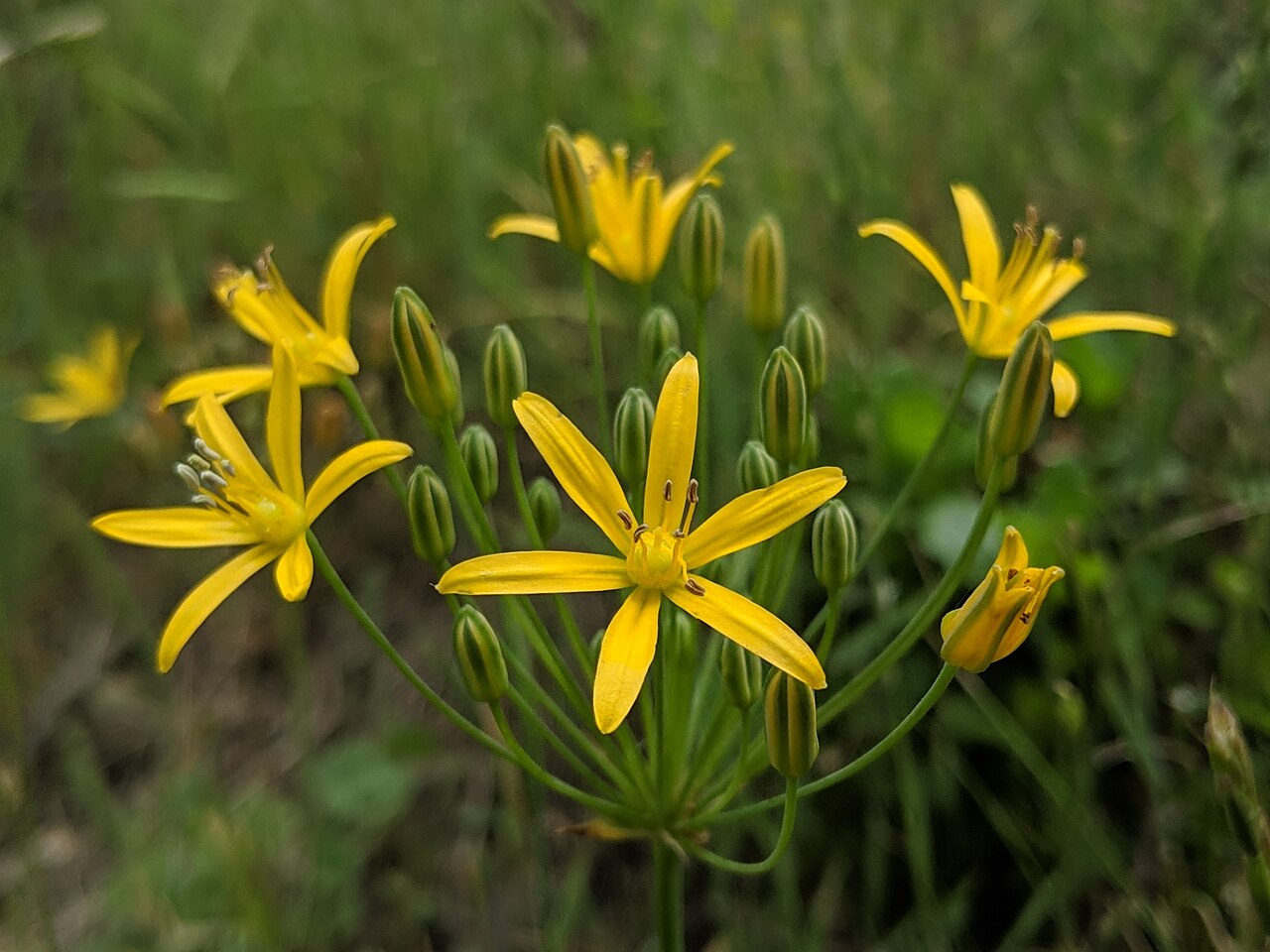
Bloomeria crocea, known as Goldenstar (USDA: common goldenstar; also golden stars), is a spring-blooming bulb-like wildflower of southern and central California and northern Baja California. It grows from a small corm and belongs to the brodiaea group (subfamily Brodiaeoideae), now placed in the asparagus family (Asparagaceae) and formerly in the lily family. Its relatives include bluedicks, brodiaeas and triteleias.
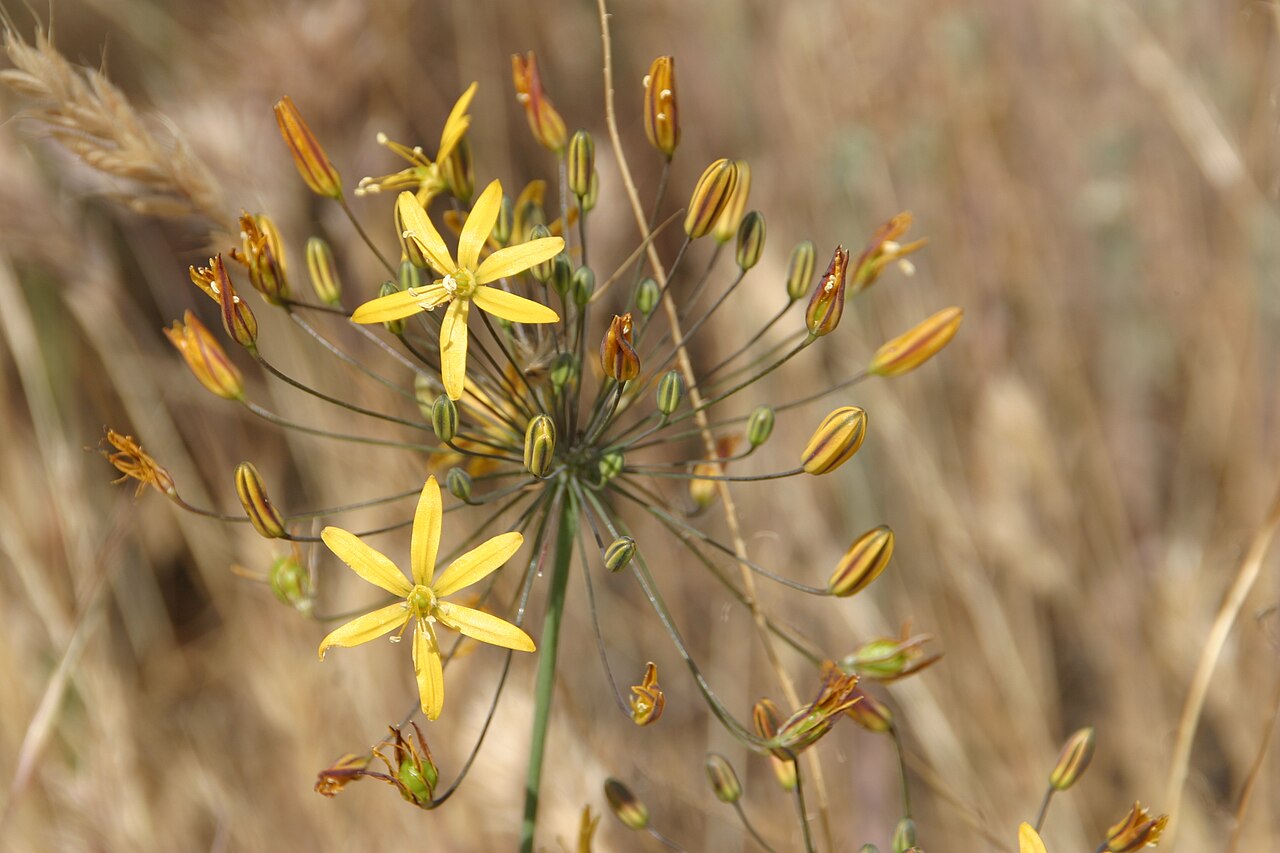
From April to June, each corm sends up a slender, leafless stalk 6 to 24 inches tall topped by a loose, rounded umbel of up to several dozen starry, golden-yellow flowers, each petal marked with a fine darker stripe. The single grass-like leaf often dries before the flowers open, and after seed is set the plant goes completely dormant through the dry summer.
Goldenstar is a delightful plant for California native gardens, meadows and containers, adding a burst of yellow in late spring when many annual wildflowers are fading. It needs well-drained soil and a dry summer rest. Buy corms or seed from native plant nurseries and seed companies rather than digging wild plants.
Identification
Goldenstar is easiest to recognize in bloom: an umbel of many bright yellow, star-shaped flowers held on a bare stalk above grass or open chaparral in late spring.
Corm & Leaf
The plant grows from a small, flattened corm covered with a coarse, fibrous coat. Each corm usually produces a single long, narrow, grass-like leaf in winter or early spring, up to about a foot long. The leaf is easy to miss among grasses and usually withers by flowering time.
Flowers
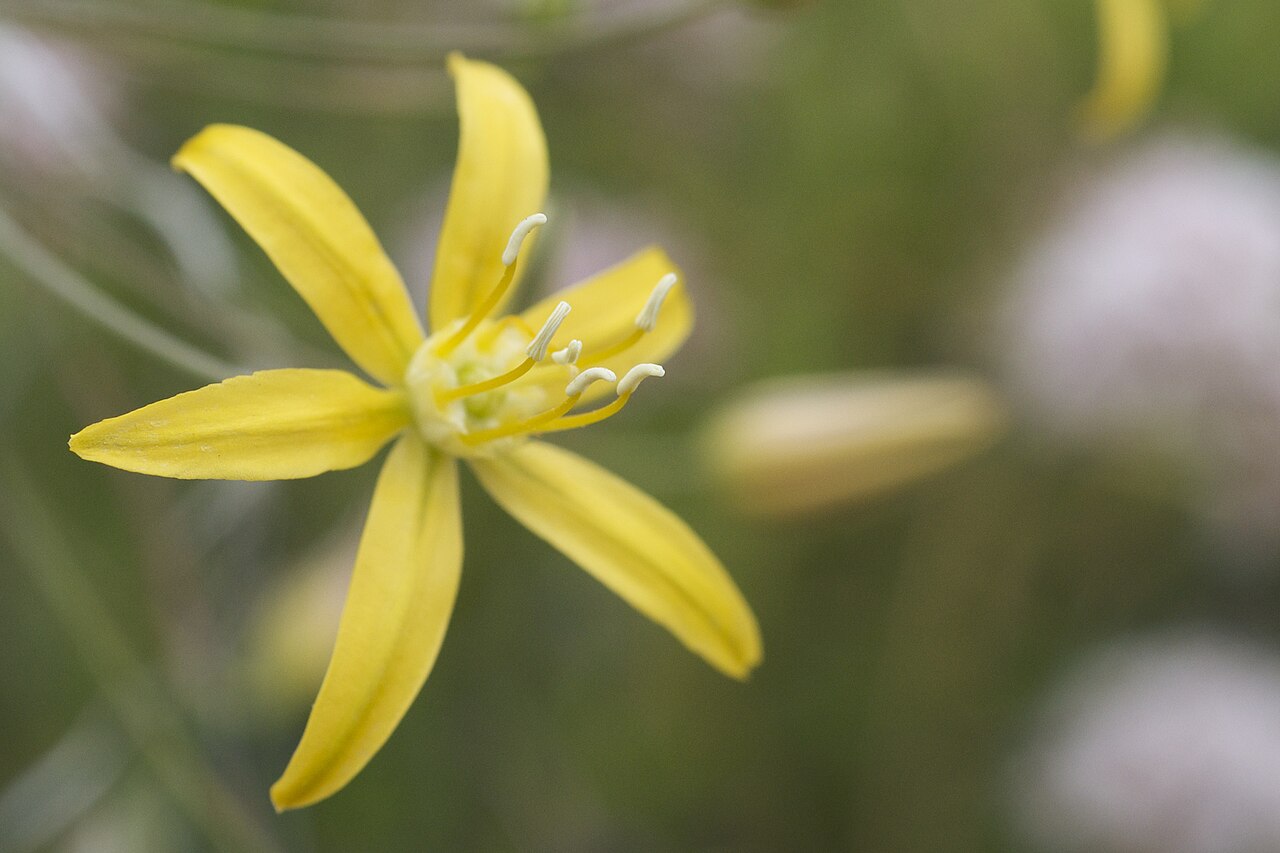
The umbel sits atop a smooth stalk 6 to 24 inches tall and holds roughly 10 to 50 or more flowers on slender stalks 1 to 2 inches long. Each flower is about 1 inch across, with six spreading, narrow, golden-yellow to orange-yellow tepals, often with a dark green or brown central stripe. The six stamens have a distinctive small, cup-shaped appendage at the base of each filament, a feature that separates Bloomeria from similar yellow brodiaea relatives.
Fruit & Seeds
After flowering, each flower forms a small, three-chambered capsule with a few small, angular, black seeds. Seedlings take about three to four years to grow a corm large enough to flower.
Varieties
Three varieties are usually recognized: var. crocea, var. aurea and var. montana. They differ in small details of the flowers and in range, and they are not easy to tell apart in the field.
Look-alikes
Pretty face (Triteleia ixioides) has yellow flowers with a more tubular base and stamens without the cup-shaped appendage. Golden brodiaea (Triteleia lugens) and other yellow triteleias are similar but grow mostly farther north. Mariposa lilies such as yellow mariposa lily have three broad petals in a cup, not six narrow tepals.
Safety Notes
Goldenstar is not known to be toxic. Native Californians ate the corms of several brodiaea relatives, but wild corms should be left in the ground, both for the plants’ sake and because some look-alike bulbs, such as death camas, are poisonous.
Quick Facts
| Scientific Name | Bloomeria crocea |
| Family | Asparagaceae (Brodiaeoideae); formerly Liliaceae or Themidaceae |
| Plant Type | Cormous perennial geophyte; summer-dormant |
| Mature Height | 6–24 in (flower stalk) |
| Mature Spread | 3–6 in |
| Growth Rate | Slow (3–4 years from seed to bloom) |
| Sun Exposure | Full sun to light shade |
| Water Needs | Low; winter–spring moisture, dry summer |
| Soil Type | Well-drained loam, clay loam, sandy or rocky soil |
| Soil pH | About 6.0–7.5 |
| Bloom Time | April–June |
| Flower Color | Golden yellow to orange-yellow |
| Fall Color | None; dormant in summer and fall |
| Fruit | Small capsule with black seeds |
| Deer Resistant | Moderate; gophers eat the corms |
| USDA Hardiness Zones | 8–10 |
Native Range
Goldenstar is native to California and northern Baja California. USDA PLANTS lists it as native in California only. Its range covers the southern California Coast Ranges, the Transverse Ranges, the Peninsular Ranges and the Channel Islands, from about San Benito and Monterey counties and western Kern County south through Santa Barbara, Ventura, Los Angeles, Orange, Riverside and San Diego counties into Baja California.
It grows in grasslands, open oak woodland, the openings and edges of chaparral and coastal sage scrub, and dry flats and hillsides, usually in clay or rocky soils that are wet in winter and bone-dry in summer. It ranges from near the coast into the foothills and lower mountains.
Much of its habitat in southern California has been lost to development and invasive grasses, but goldenstar is still common in remaining grasslands and chaparral openings, where it often blooms with bluedicks, mariposa lilies and late-spring annuals.
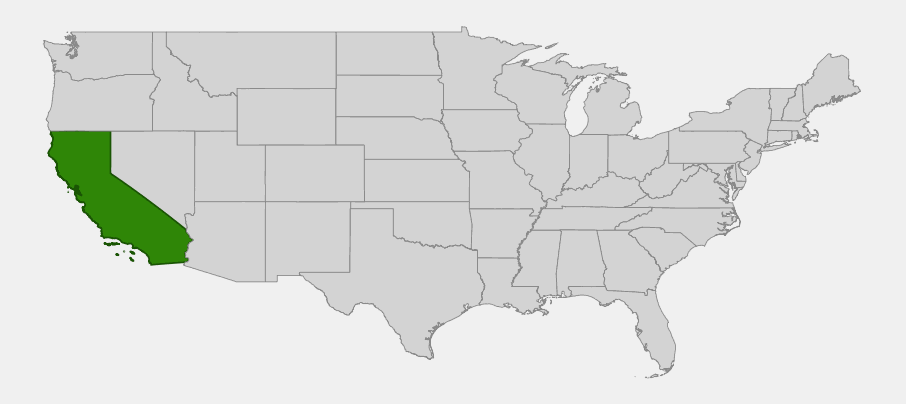
📋 Regional plant lists featuring Goldenstar: California & Nevada
Growing & Care Guide
Goldenstar is easy in Mediterranean climates if it gets winter moisture and a dry summer. Plant corms or sow seed from native plant nurseries and seed companies.
Light
Grow it in full sun to light shade. In inland gardens it appreciates a little afternoon shade.
Soil & Water
Plant it in well-drained soil; it tolerates clay if drainage is good, and it thrives in sandy or rocky soils. Water only during the cool season if winter rains fail. Once the leaves yellow in late spring, stop watering; summer water can rot the corms.
Planting Tips
Plant corms in fall about 2 to 3 inches deep and 3 to 4 inches apart, in groups for impact. Combine them with native bunchgrasses, low perennials and other bulbs in a meadow, rock garden or dry border, or plant them in pots that can be kept dry in summer. In gopher country, plant corms in wire baskets.
Pruning & Maintenance
Little care is needed. Let the foliage and flower stalks dry naturally so the corm can store energy and seed can ripen. Mark the planting spot so the dormant corms are not dug up or watered in summer.
Propagation
Sow seed in fall in deep pots or flats outdoors; it germinates with winter rains. Grow seedlings undisturbed for two to three years before planting out. Mature corms slowly form offsets that can be separated during summer dormancy.
Landscape Uses
- Native meadows: late-spring yellow among bunchgrasses
- Rock gardens: well-drained pockets with other bulbs
- Containers: pots kept dry over summer
- Chaparral and sage scrub gardens: in openings between shrubs
- Pollinator gardens: late-spring nectar for native bees
Wildlife & Ecological Value
Goldenstar provides late-spring nectar and pollen in California grasslands and scrub, and its corms are a food source for burrowing animals.
For Pollinators
The open, star-shaped flowers attract a variety of native bees, including small sweat bees and mining bees, as well as bee flies and butterflies. Because it blooms as many annual wildflowers fade, it helps bridge the gap into summer.
For Birds
Seed-eating birds such as sparrows and finches may take the small seeds, and the insects visiting the flowers feed insect-eating birds.
For Mammals
Pocket gophers and ground squirrels eat the corms, and deer and rabbits sometimes nibble the flower stalks.
Ecosystem Role
As a geophyte that grows only in the wet season, goldenstar uses moisture and nutrients when they are available and retreats underground in summer, surviving drought and fire. It is part of the rich community of bulbs that characterizes California grasslands and shrublands.
Cultural & Historical Uses
The genus Bloomeria honors Hiram Green Bloomer, a San Francisco botanist and a founder of the California Academy of Sciences in 1853. The plant was first described by John Torrey in another genus and later moved to Bloomeria by Frederick Coville. The species name crocea means “saffron-colored.”
The corms of many brodiaea relatives were dug and eaten by Native Californian peoples, and goldenstar corms were likely among them. Regular harvesting with digging sticks may even have helped some bulb populations by loosening the soil and separating offsets.
Today goldenstar is a beloved spring wildflower of southern California hillsides and a reliable native bulb for gardens. Native plant nurseries and botanic gardens grow it from seed; seed-grown corms take several years to bloom, so be patient.
Frequently Asked Questions
Why do goldenstar leaves die before the flowers bloom?
That is normal. The single leaf grows in winter and early spring and usually withers by bloom time. The plant then goes dormant for the summer.
Should I water goldenstar in summer?
No. It needs a dry summer rest. Summer water can rot the corms. Water only in winter or spring if rains are scarce.
How long does goldenstar take to flower from seed?
About three to four years. Buying mature corms gives flowers sooner.
Can I grow goldenstar outside California?
It can be grown in other mild, dry-summer climates or in pots that are kept dry in summer and protected from hard freezes. It struggles where summers are wet.
Is goldenstar the same as a brodiaea?
It is a close relative in the same subfamily, but it is in its own genus, Bloomeria, distinguished by the cup-shaped appendages at the base of its stamens.

Looking for a nursery that carries Goldenstar?
Browse our native plant nursery directory: California