
Chick Lupine (Lupinus subvexus)
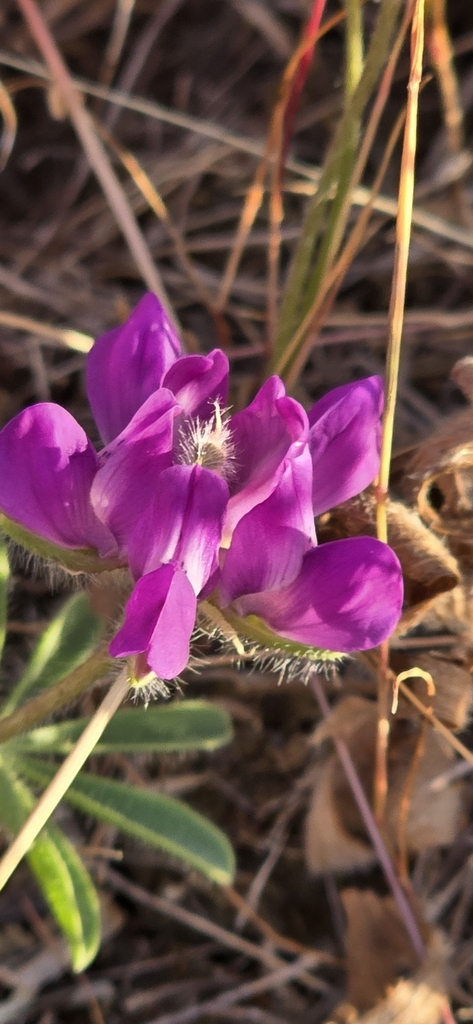
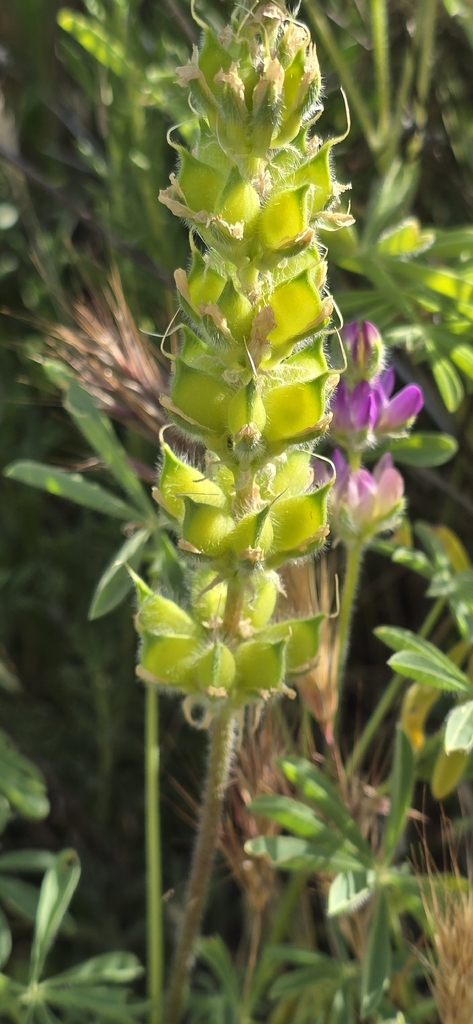
Lupinus subvexus, known as Chick Lupine or valley lupine, is a spring-blooming annual lupine of California’s grasslands, oak savannas and open slopes. It forms a leafy plant from a few inches to about two feet tall, with hairy, palmately divided leaves, and from March to May it carries its pink to magenta-purple pea flowers in neat, separate whorls stacked along the stem. After bloom, those whorls turn into tiers of short, plump, hairy pods, one of the best clues to this species.
Its name has a complicated history. USDA PLANTS accepts it as Lupinus subvexus (var. subvexus), with the common name valley lupine. Many current California treatments, including the Jepson eFlora and iNaturalist, place the same plant in the chick lupine species, Lupinus microcarpus, as var. microcarpus. It is often confused with its close relative, the whitewhorl or dense-flowered lupine (Lupinus microcarpus var. densiflorus, formerly Lupinus densiflorus), which usually has white, cream or yellow flowers.
Chick lupine is a valuable wildflower for native bees and for California meadow and grassland plantings, and like all lupines it enriches the soil with nitrogen. Like other lupines, its seeds and pods contain toxic alkaloids. This guide covers identification, range, how to grow it from seed, and its role in California grasslands.
Identification
Chick lupine is one of several annual lupines in California grasslands. Look for flowers held in distinct, separated whorls, pink to purple petals, and later, whorls of short, plump, densely hairy pods that often point outward or curve.
Stems & Growth Habit
It is an annual with one main stem or several stems from the base, usually 4 inches to 2 feet tall. The stems are stout, often hollow and covered with spreading hairs.
Leaves
The leaves are palmately compound, with 5 to 11 narrow leaflets about ½ to 2 inches long spreading from the top of a long stalk like the fingers of a hand. The leaflets are usually smooth above and hairy beneath.
Flowers
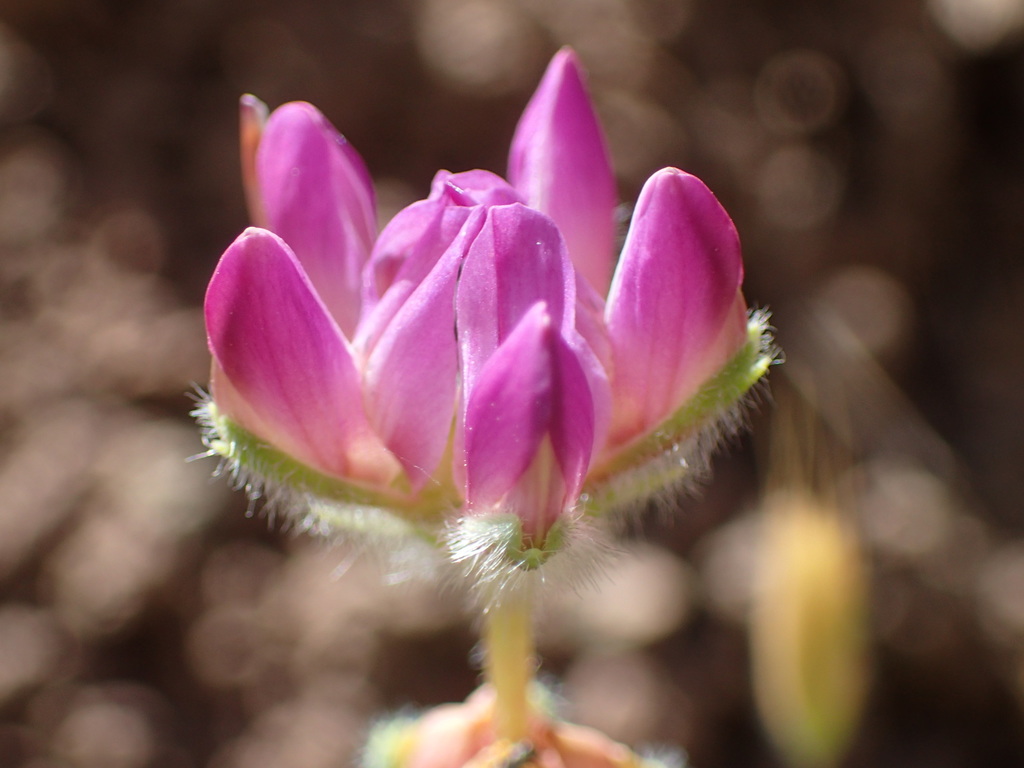
The flowers are typical pea flowers, about ½ inch long, arranged in several separate whorls up a spike-like cluster. They range from pink and rose to magenta or lavender-purple, sometimes paler, and the banner petal often has a whitish or yellowish spot that darkens after pollination. Bloom is mainly from March to May.
Fruit & Seeds
The pods are short and plump, about ½ to ¾ inch long, densely hairy and usually contain only one or two seeds. They are held in tight whorls that remain on the stem after the petals drop, giving the fruiting plant a stacked, tiered look. The seeds are dispersed when the dry pods split.
Look-alikes
Whitewhorl lupine (Lupinus microcarpus var. densiflorus) has similar whorled flowers and pods but usually white, cream or yellow flowers. Miniature lupine (L. bicolor) and sky lupine (L. nanus) have blue and white flowers and slender, many-seeded pods. Arroyo lupine is a larger annual with fleshy leaves and deep blue-purple flowers.
Quick Facts
| Scientific Name | Lupinus subvexus (also treated as Lupinus microcarpus var. microcarpus) |
| Family | Fabaceae (pea family) |
| Plant Type | Annual wildflower; nitrogen-fixing |
| Mature Height | 4 in–2 ft |
| Mature Spread | 6–12 in |
| Growth Rate | Fast (germinates in winter, blooms in spring) |
| Sun Exposure | Full sun |
| Water Needs | Low; relies on winter rain |
| Soil Type | Clay, loam or sandy soils; tolerates poor soil |
| Soil pH | About 6.0–8.0 |
| Bloom Time | March–May |
| Flower Color | Pink, rose, magenta or lavender-purple |
| Fall Color | None (annual; dies by early summer) |
| Fruit | Short, plump, hairy pods in whorls |
| Deer Resistant | Moderate to high (alkaloid-rich) |
| USDA Hardiness Zones | Annual; grown as a cool-season annual in zones 7–10 |
Native Range
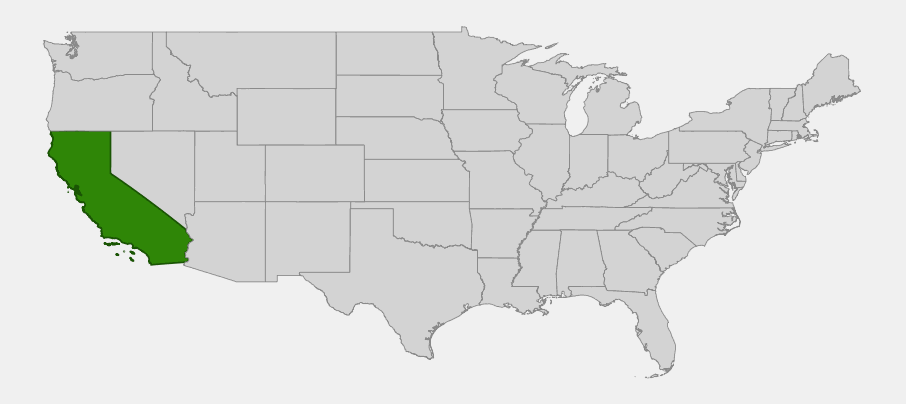
USDA PLANTS lists Lupinus subvexus as native only in California. It is widespread in the California Floristic Province, especially in the Central Valley and its surrounding foothills, the Coast Ranges from the San Francisco Bay Area south, and the hills and valleys of southern California, and it extends into northern Baja California.
Taken in the broader sense as Lupinus microcarpus, chick lupine also includes plants in Oregon, Washington, British Columbia and Arizona, and it has a famous disjunct range in Chile and Argentina, thousands of miles from its North American relatives. The South American plants are thought to have arrived by long-distance seed dispersal.
It grows in open grassland, oak savanna and woodland openings, coastal scrub edges, roadsides and fields, often on clay or heavier soils that are wet in winter and bone dry in summer. Like many annual lupines, it can be abundant after disturbance or in years with good winter rain.
📋 Regional plant lists featuring Chick Lupine: California & Nevada
Growing & Care Guide
Chick lupine is easy to grow from seed in California gardens with a sunny spot and no summer water. It is a good companion for other spring annuals in a native meadow or grassland planting. Seed is sometimes sold as Lupinus microcarpus or in California wildflower mixes; check the variety, since whitewhorl lupine is also sold under that name.
Light
Full sun. Plants in shade become lanky and flower poorly.
Soil & Water
It grows in clay, loam or sandy soil and does not need rich soil, since its roots host nitrogen-fixing bacteria. Winter rain is usually enough. In a dry winter, water occasionally until flowering. Do not water in summer and do not fertilize.
Planting Tips
Sow seed directly in fall, before the winter rains. Nick the hard seed coat with a nail file or soak the seeds in hot water overnight to speed germination, then sow about ¼ inch deep. Lupines dislike transplanting because of their taproot, so sow them where they are to grow. Protect seedlings from snails, slugs and rabbits.
Pruning & Maintenance
No pruning is needed. Let the pods ripen and split if you want plants to reseed. Pull the dry plants in early summer, ideally after shaking the seed onto the ground, or leave them for a natural look.
Propagation
Grow it from seed. The hard-coated seeds need scarification (nicking or hot-water soaking) to germinate quickly; untreated seed may wait a year or more in the soil. Collect pods as they turn tan, before they split, and let them finish drying in a paper bag.
Landscape Uses
- Wildflower meadows: sown with poppies, goldfields, tidy tips and native bunchgrasses
- Pollinator gardens: spring pollen and nectar for bumblebees and other native bees
- Grassland and roadside restoration: a nitrogen-fixing annual that helps prepare poor soil
- Oak savanna gardens: in sunny openings among native oaks and grasses
- Children’s gardens (with care): fast and easy from seed, but supervise children around the toxic seeds
Wildlife & Ecological Value
Chick lupine is a useful part of California’s native grassland flora, feeding bees in spring and enriching the soil for other plants.
For Pollinators
Bumblebees and other native bees visit the flowers, prying open the keel petals to reach the pollen. Lupines are important pollen plants for native bees in California grasslands.
For Birds
Doves, quail and other ground-feeding birds may pick up the seeds that fall from the split pods.
For Mammals
Rodents may eat and cache the seeds. Deer and livestock tend to avoid lupines, and plants with ripening pods can poison livestock that eat large amounts.
Ecosystem Role
Like all lupines, it forms root nodules with nitrogen-fixing bacteria, adding nitrogen to poor grassland and disturbed soils. Lupines also serve as larval host plants for several butterflies, including some blues and duskywings, although the hosts used vary by species and region.
Cultural & Historical Uses
The genus name Lupinus comes from the Latin lupus, “wolf,” from an old belief that lupines devoured the fertility of the soil. In fact the opposite is true: lupines enrich the soil with nitrogen. The name microcarpus means “small-fruited,” after the short pods.
Safety note: lupine seeds, pods and leaves contain quinolizidine alkaloids that are toxic to people and livestock. Eating the seeds or pods can cause nausea, dizziness, confusion and more serious nervous-system symptoms, and lupines are a known cause of livestock poisoning, especially in sheep, when animals eat large amounts of plants with pods. Do not eat any part of wild lupines, and keep children from eating the seeds. The edible lupini beans sold in stores come from specially bred Old World species and must be processed before eating.
The taxonomy of chick lupine and its relatives has been revised many times, and the same plant may appear under Lupinus subvexus, Lupinus densiflorus varieties or Lupinus microcarpus in different books and seed catalogs. When buying seed, look for the flower color described (pink to purple for this plant).
Frequently Asked Questions
Is chick lupine the same as Lupinus microcarpus?
The plant USDA PLANTS calls Lupinus subvexus (valley lupine) is treated in many current California floras as Lupinus microcarpus var. microcarpus, part of the chick lupine species. The names refer to the same pink- to purple-flowered annual.
Is chick lupine poisonous?
Yes. Like other lupines, its seeds, pods and leaves contain toxic alkaloids. Do not eat any part of the plant, and keep children and livestock from eating the seeds.
How is it different from whitewhorl lupine?
Whitewhorl lupine (Lupinus microcarpus var. densiflorus) has similar whorled flowers and pods but usually white, cream or yellow flowers. Chick lupine is usually pink to purple.
How do I grow it?
Sow scarified seed directly in a sunny spot in fall, before the rains. It needs no fertilizer and no summer water.
Is it an annual?
Yes. It germinates with the winter rains, blooms in spring, and dies after setting seed in early summer.

Looking for a nursery that carries Chick Lupine?
Browse our native plant nursery directory: California