
Giant White Wakerobin (Trillium albidum)
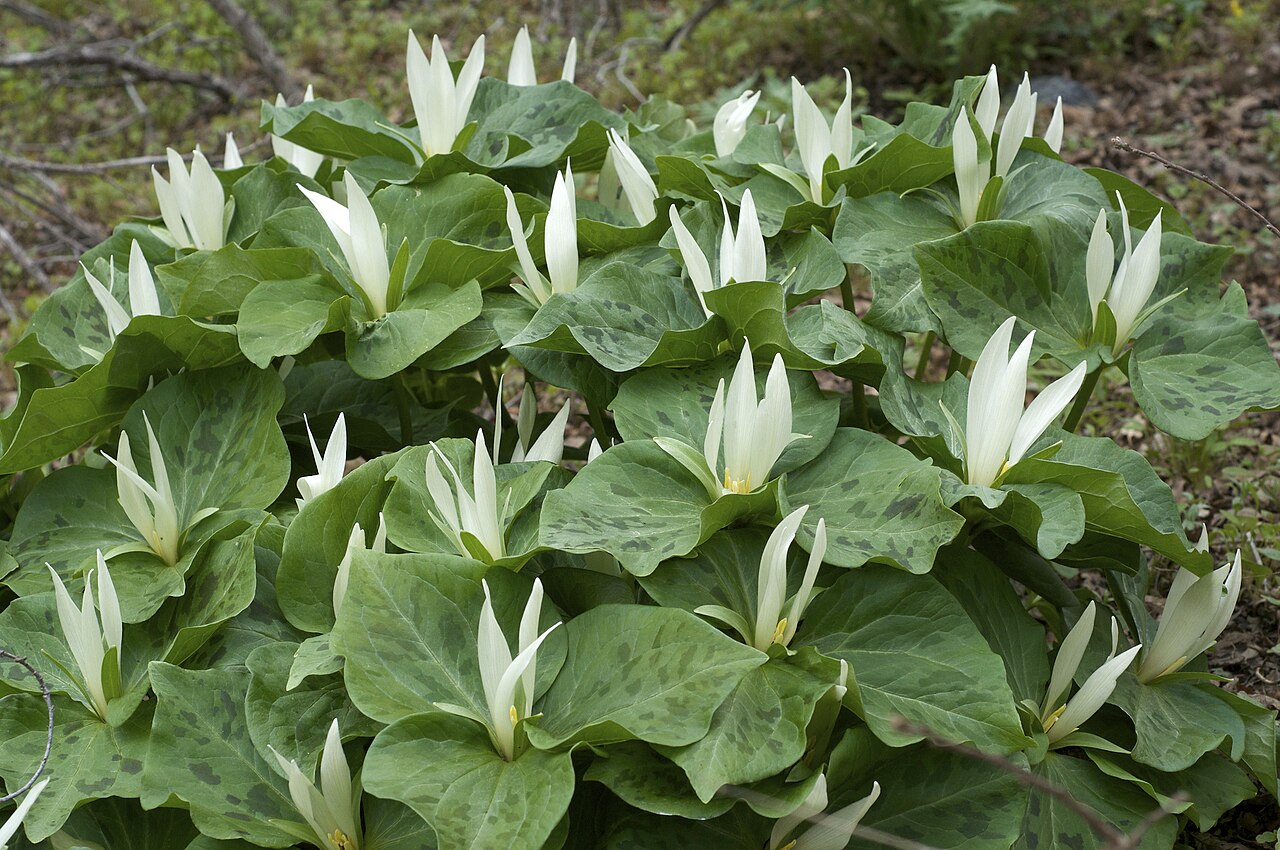
Trillium albidum, known as Giant White Wakerobin or white toadshade, is a large spring wildflower of the Pacific states. It grows from a thick underground rhizome and sends up stems with three broad, leaf-like bracts and a single upright, stalkless flower sitting directly on top of them. The flowers are white, sometimes flushed with pink or purple as they age, and usually have a sweet, rose-like scent.
It belongs to the bunchflower family (Melanthiaceae) and to the group of “sessile” trilliums, whose flowers have no stalk. Among the western sessile trilliums it has the widest range, from central California north through western Oregon to southwestern Washington, and it is the only one whose flowers are normally pure white. Old plants form handsome clumps of several stems, and the species has received the Royal Horticultural Society’s Award of Garden Merit.
Giant white wakerobin grows in moist woodlands, forest edges, brushy slopes and streambanks, often under oaks and Douglas-fir. Like all trilliums it grows slowly, its seeds are spread by ants, and wild plants should never be dug. This guide covers how to identify it, where it grows, how to grow nursery-propagated plants in a shade garden, and its role in western woodlands.
Identification
Giant white wakerobin is easy to recognize in bloom: a stalkless white flower held upright on three large green bracts. The main confusion is with the white-flowered form of giant trillium in the San Francisco Bay Area, and in northwestern Oregon with its own small-flowered subspecies.
Growth Habit
Each plant grows from a short, thick rhizome. Stems (scapes) are usually about 8 to 23 inches tall, and older plants often produce several stems from one rhizome, building up dense clumps. The plant emerges in late winter or early spring and dies back to the ground by midsummer.
Leaves (Bracts)
What look like leaves are three bracts in a whorl at the top of the stem. They are stalkless, broadly oval, about 4 to 8 inches long and nearly as wide, and green with faint brown or dark green mottling that often fades as the season goes on.
Flowers
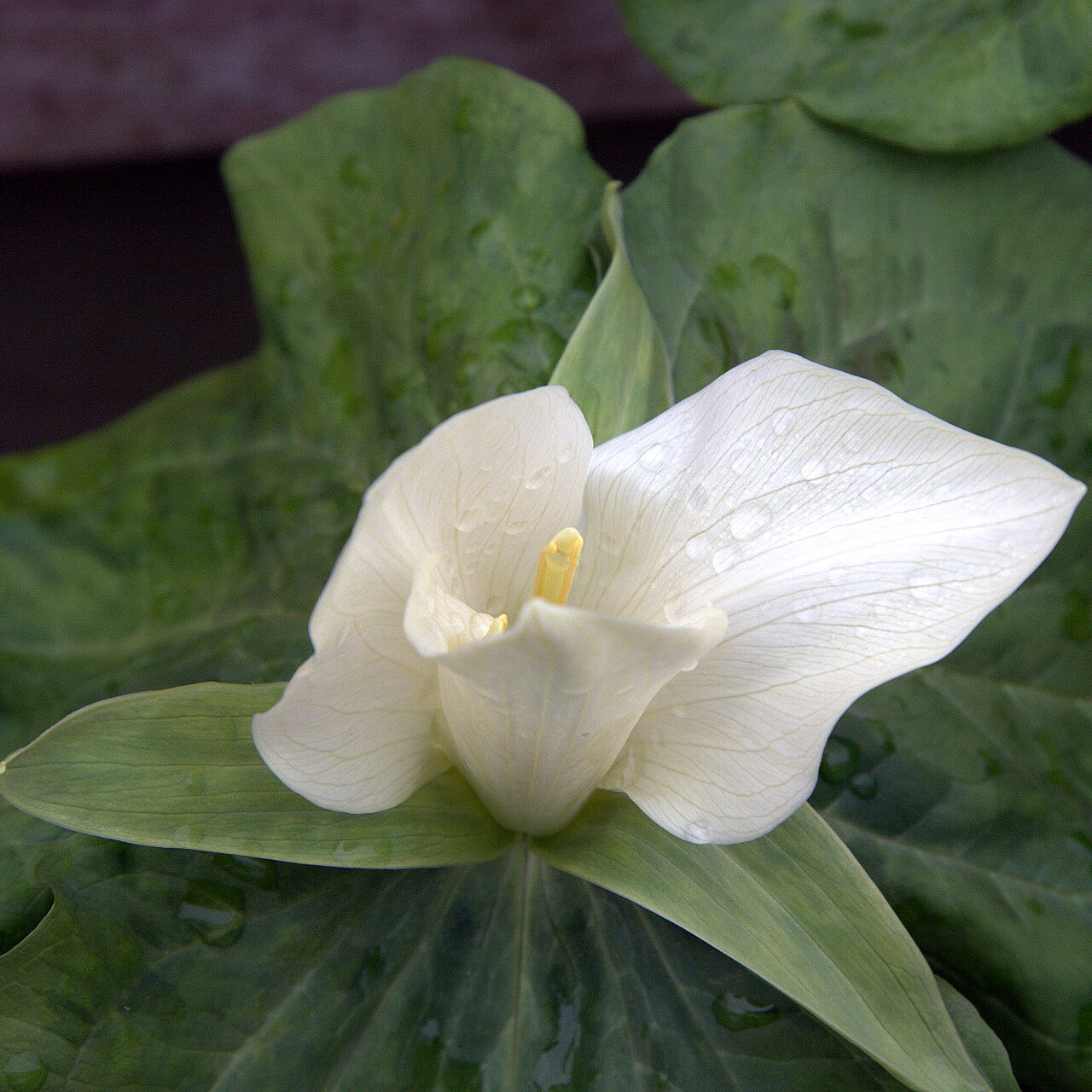
A single flower sits directly on the bracts with no stalk. It has three narrow green sepals and three upright white petals about 2 to 3 inches long, sometimes pink- or purple-tinged at the base or with age. The stamens and ovary are white to pale green. The flowers are usually fragrant, with a rose-like scent, and bloom from about February to June depending on latitude and elevation.
Fruit & Seeds
After flowering, the ovary swells into a green to purplish-green, ridged, berry-like capsule. The seeds carry a fatty appendage (an elaiosome) that attracts ants, which carry them off and disperse them.
Subspecies
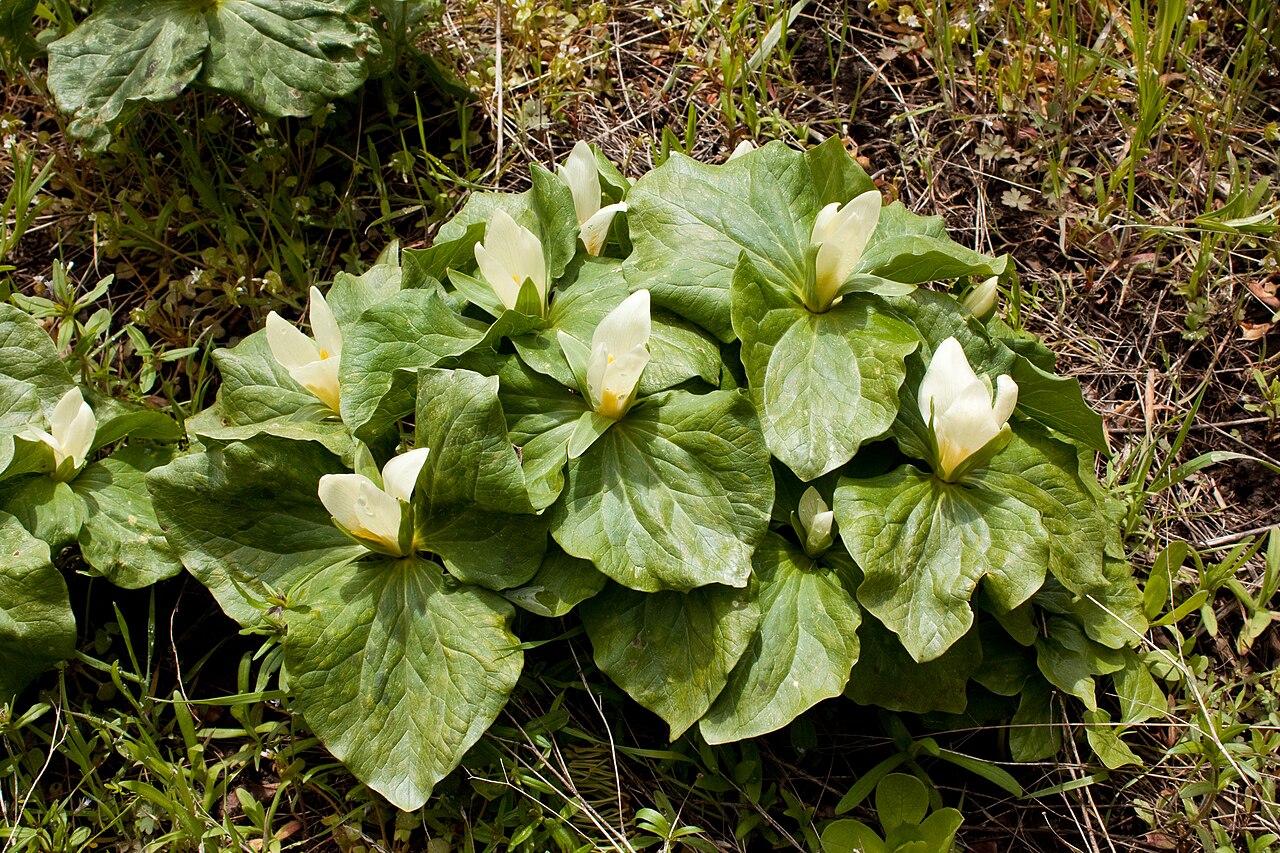
Two subspecies are recognized. Subsp. albidum grows from northern California to central Oregon and is the larger plant, with broad petals. Subsp. parviflorum, of northwestern Oregon and southwestern Washington, is smaller, with narrow petals about 1 to 1 3/4 inches long, more heavily mottled bracts and shiny dark reddish fruits; some botanists treat it as a separate species, Trillium parviflorum. Plants between the Umpqua and Columbia Rivers are intermediate.
Look-alikes
Giant trillium (Trillium chloropetalum) of central California can have white flowers too, but its stamens and ovary are dark purple. Western trillium (Trillium ovatum) also has white flowers, but they sit on a short stalk above the bracts and open flat rather than upright.
Quick Facts
| Scientific Name | Trillium albidum J.D. Freeman |
| Family | Melanthiaceae (bunchflower family) |
| Plant Type | Herbaceous perennial from a rhizome; spring ephemeral |
| Mature Height | 8–23 in |
| Mature Spread | 8–18 in; slowly forms clumps |
| Growth Rate | Slow |
| Sun Exposure | Part shade to full shade |
| Water Needs | Moderate in winter and spring; tolerates dry summer dormancy |
| Soil Type | Humus-rich, well-drained loam; woodland soils |
| Soil pH | About 5.5–7.0 |
| Bloom Time | February–June |
| Flower Color | White, sometimes pink- or purple-tinged |
| Fall Color | None; dormant by mid- to late summer |
| Fruit | Ridged, green to purplish berry-like capsule |
| Deer Resistant | No; deer browse trilliums |
| USDA Hardiness Zones | 6–9 |
Native Range
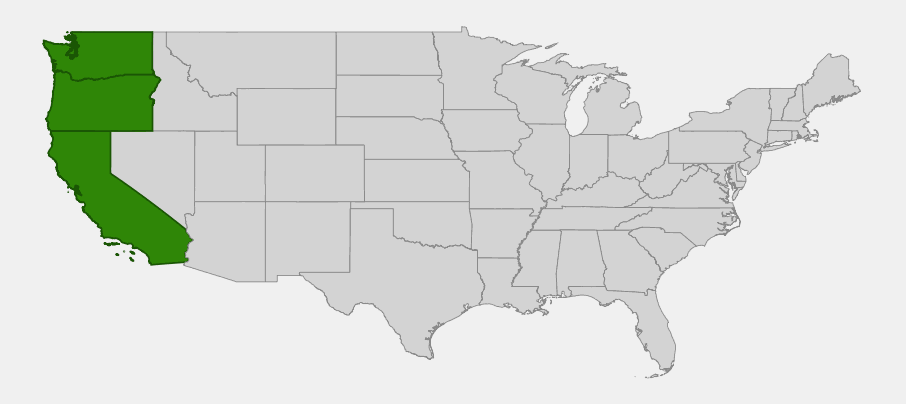
Giant white wakerobin is a Pacific Coast endemic. USDA PLANTS lists it as native to California, Oregon and Washington, and it is not found outside the western United States. It has the widest range of any western sessile trillium.
In California it grows from the San Francisco Bay Area north through the North Coast Ranges and Klamath Mountains, and east into the northern Sierra Nevada foothills. In Oregon it occurs west of the Cascade crest, from the Siskiyou Mountains through the Umpqua and Willamette Valleys and the Coast Range; the type specimen came from Josephine County. In Washington it is limited to the southwest, near the Columbia River, where the small-flowered subsp. parviflorum grows.
It grows in moist mixed-evergreen and oak woodlands, at forest edges, on brushy and grassy slopes, and along streams, at low to middle elevations. In the Bay Area its range overlaps with giant trillium, and some intermediate plants there may be hybrids.
📋 Regional plant lists featuring Giant White Wakerobin: Western Oregon & Western Washington · California & Nevada
Growing & Care Guide
Giant white wakerobin is one of the easier western trilliums to grow, and it makes a long-lived clump in a shady woodland garden. Buy only nursery-propagated plants from a reputable native or specialist nursery. Never dig trilliums from the wild: they grow slowly, rarely survive transplanting, and wild populations take many years to recover.
Light
Plant it in part shade or light, dappled shade, such as under deciduous trees or on the north side of shrubs. It tolerates fairly deep shade but flowers best with some spring sun before the canopy closes.
Soil & Water
It likes humus-rich, well-drained woodland soil with plenty of leaf litter. Keep it evenly moist from winter through spring while it is growing. Once the bracts yellow in summer, it can go fairly dry, which suits Pacific Coast gardens, but do not let the soil bake in full sun.
Planting Tips
Plant rhizomes or potted plants in fall, with the top of the rhizome a few inches below the surface. Mulch with shredded leaves. It combines well with sword fern, inside-out flower, wild ginger, Oregon grape and other woodland natives, and with spring bulbs that also go dormant in summer.
Pruning & Maintenance
No pruning is needed. Leave the foliage until it yellows naturally, because it feeds the rhizome for the next year. Mark the location so the dormant plant is not dug up by accident, and protect it from slugs and deer in spring.
Propagation
Established clumps can be divided carefully in late summer or fall, keeping a growing bud on each piece. Growing from seed is slow: sow fresh seed in fall outdoors, and expect seedlings to take several years to reach flowering size.
Landscape Uses
- Woodland and shade gardens: large white spring flowers above broad, mottled bracts
- Native plant gardens on the Pacific Coast: long-lived and adapted to wet winters and dry summers
- Under oaks and conifers: grows naturally in the dappled shade of oak and mixed-evergreen woodland
- Fragrance gardens: flowers often carry a sweet, rose-like scent
- Restoration of oak and riparian woodland: a characteristic spring wildflower of western woodlands
Wildlife & Ecological Value
Giant white wakerobin flowers early in the season in western woodlands and takes part in two classic trillium partnerships: with pollinating insects and with seed-dispersing ants.
For Pollinators
The fragrant, upright flowers are visited by bees, flies and beetles in early spring, when few other woodland flowers are open.
For Birds
Trilliums are of little direct value to birds, but the moist woodlands where they grow provide cover and insect food for many forest birds.
For Mammals
Deer browse the stems and flowers, and slugs and snails feed on the bracts. Small mammals may eat the fleshy fruits.
Ecosystem Role
Ants carry the seeds away to eat the fatty elaiosomes, then discard the seeds in their nests or debris piles, where they can germinate. This ant dispersal (myrmecochory) is typical of trilliums and explains why new plants usually appear close to old ones and why colonies spread so slowly.
Cultural & Historical Uses
The species was described by the botanist John D. Freeman in 1975, as one of five new trillium species in his revision of the sessile trilliums. For about 75 years before that, it had been included in Trillium chloropetalum, and the name giant white wakerobin reflects its size and color. The name albidum means “white”.
The name wakerobin is an old one for trilliums, which bloom early in spring around the time robins return. Toadshade refers to the broad bracts that seem to shelter the ground beneath them.
Giant white wakerobin is valued by gardeners in the Pacific Northwest and Britain for its large, scented flowers and its tolerance of a range of conditions. Its slow growth makes nursery propagation the only responsible way to bring it into gardens.
Frequently Asked Questions
How do I tell giant white wakerobin from giant trillium?
Both have stalkless flowers. Giant white wakerobin has white petals with pale stamens and ovary. The white form of giant trillium (Trillium chloropetalum) has dark purple stamens and ovary.
Where does giant white wakerobin grow?
It is native to California, western Oregon and southwestern Washington, in moist woodlands, forest edges, brushy slopes and streambanks at low to middle elevations.
Can I dig giant white wakerobin from the wild?
No. Trilliums grow slowly, rarely survive transplanting and wild colonies take many years to recover. Buy nursery-propagated plants instead.
When does it bloom?
From about February to June, starting earliest in the south and at low elevations. The plant goes dormant by summer.
How are trillium seeds spread?
Mainly by ants, which carry the seeds away to eat the fatty appendage attached to each seed and leave the seed behind to germinate.

Looking for a nursery that carries Giant White Wakerobin?
Browse our native plant nursery directory: California · Oregon · Washington

