
Brittleleaf Manzanita (Arctostaphylos tomentosa)
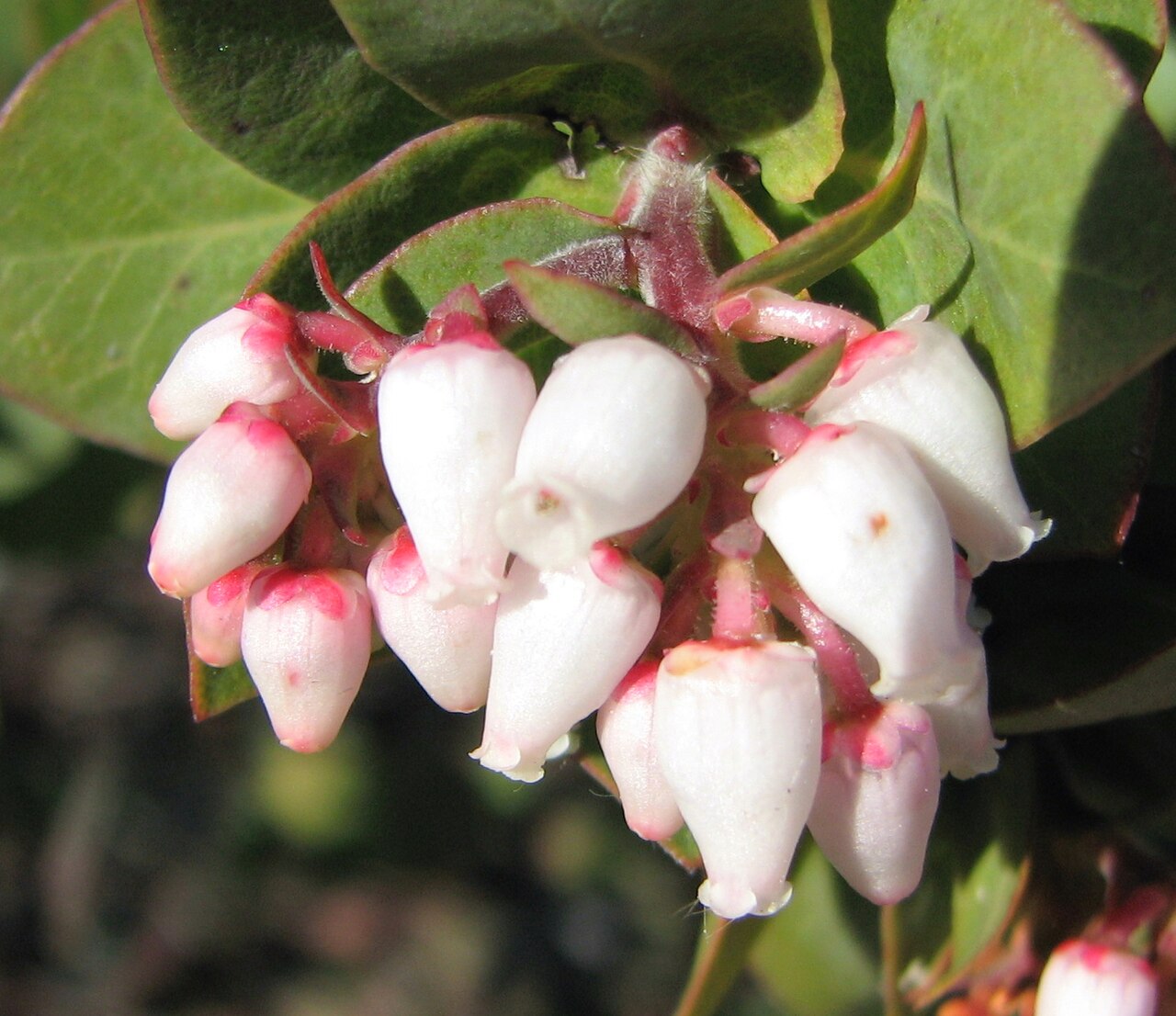
Brittleleaf Manzanita is an evergreen shrub of the fog belt along California’s Central Coast and San Francisco Bay Area. USDA PLANTS treats it as Arctostaphylos tomentosa subspecies crustacea, part of the species it calls woollyleaf manzanita, while the Jepson eFlora and most California botanists now treat it as a separate species, Arctostaphylos crustacea. This page follows the USDA name and covers the whole A. tomentosa group, with a focus on brittleleaf manzanita, the most widespread member. It belongs to the heath family (Ericaceae).
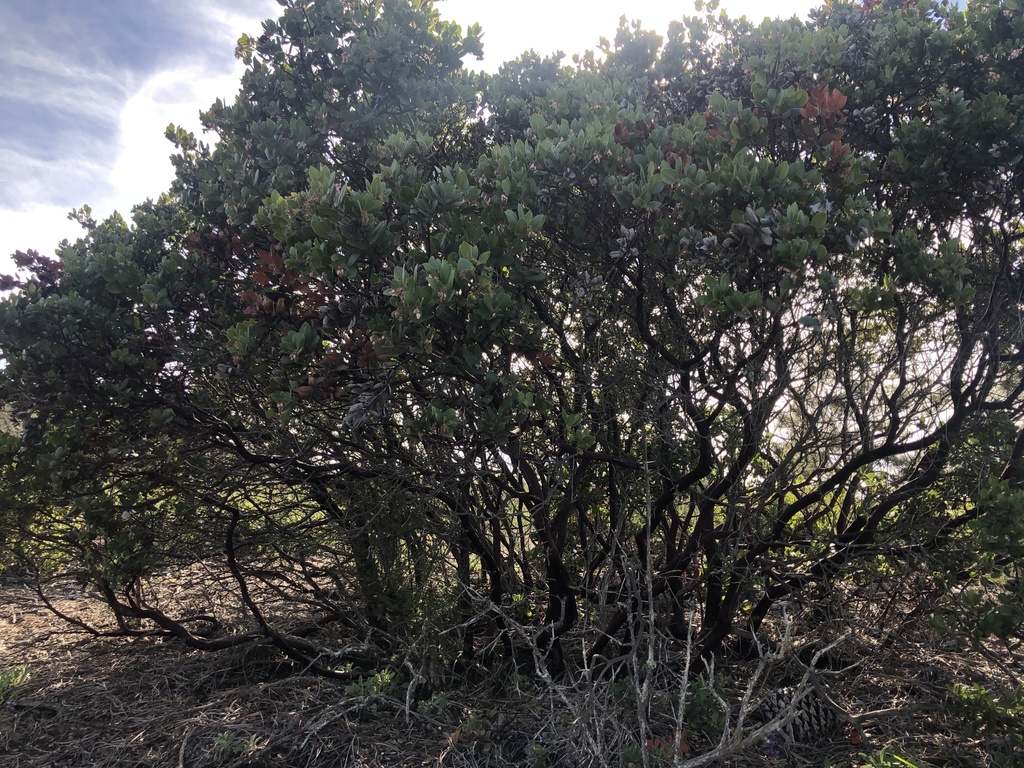
Brittleleaf manzanita grows into a rounded shrub 3 to 10 feet tall, with smooth, reddish-brown bark, bright green oval leaves and bristly young twigs. From December to March it covers itself with clusters of small, white to pale pink, urn-shaped flowers that feed hummingbirds and early native bees. The flowers are followed by small, reddish-brown berries. Like many manzanitas, it grows from a woody burl at its base and sprouts again after fire.
It is an excellent shrub for dry, sunny gardens near the coast, where it needs no summer water once established. Some subspecies of the group have very small ranges and are rare, so buy plants from native plant nurseries and never dig shrubs from the wild.
Identification
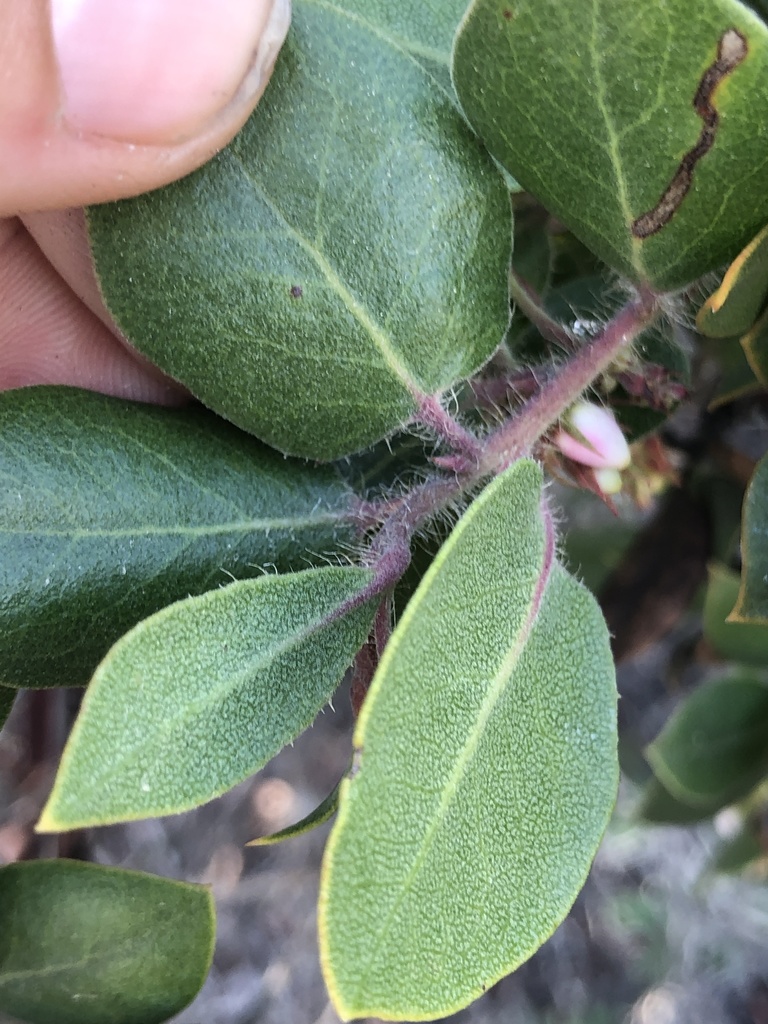
Look for a rounded, burl-forming manzanita with smooth red-brown bark, flat green leaves that are paler beneath, and twigs covered with a mix of short hairs and long bristles.
Growth Habit
An erect, densely branched, evergreen shrub usually 3 to 10 feet tall and about as wide, rising from a large, woody burl at ground level. The burl lets the shrub resprout after fire or cutting, so old plants often have many stems.
Bark & Twigs
Older branches have smooth, reddish-brown to purplish bark that peels in thin strips. Young twigs are hairy, and in brittleleaf manzanita they also carry long, often gland-tipped bristles. Woollyleaf manzanita (subspecies tomentosa) usually has gray, shreddy bark on older stems.
Leaves
The leaves are alternate, oval to oblong, about 1 to 2 inches long, on very short stalks. They are bright green and fairly smooth above and paler beneath, with pores mostly on the lower surface, unlike many manzanitas whose leaves look the same on both sides. In brittleleaf manzanita the lower surface is mostly hairless; in some other subspecies it is densely hairy. The leaves are stiff and crack easily when bent, which may explain the name brittleleaf.
Flowers & Fruit
Small, white to pink, urn-shaped flowers hang in branched clusters at the branch tips from about December to March. The fruit is a small, flattened round berry, about 1/4 to 3/8 inch across, ripening reddish-brown in late spring and summer, with several hard nutlets inside.
Look-alikes
Common manzanita (A. manzanita) is taller, with no burl and leaves that are alike on both sides. Bigberry manzanita (A. glauca) has gray-blue leaves and grows farther south and inland. Hairy manzanita (A. columbiana) has gray, hairy leaves and grows to the north. The many local manzanitas of the Central Coast can be hard to tell apart; bark, twig hairs and the presence of a burl help.
Quick Facts
| Scientific Name | Arctostaphylos tomentosa (brittleleaf manzanita: subsp. crustacea) |
| Family | Ericaceae (heath family) |
| Plant Type | Evergreen, burl-forming shrub |
| Mature Height | 3–10 ft |
| Mature Spread | 4–10 ft |
| Growth Rate | Slow to moderate |
| Sun Exposure | Full sun to light shade |
| Water Needs | Low; no summer water once established |
| Soil Type | Well-drained sandy, rocky or sandstone-derived soils |
| Soil pH | Acidic to neutral (about 5.0–7.0) |
| Bloom Time | December–March |
| Flower Color | White to pale pink |
| Fall Color | None; evergreen |
| Fruit | Small reddish-brown berries in late spring–summer |
| Deer Resistant | Mostly; mature plants are seldom browsed |
| USDA Hardiness Zones | 8–10 |
Native Range
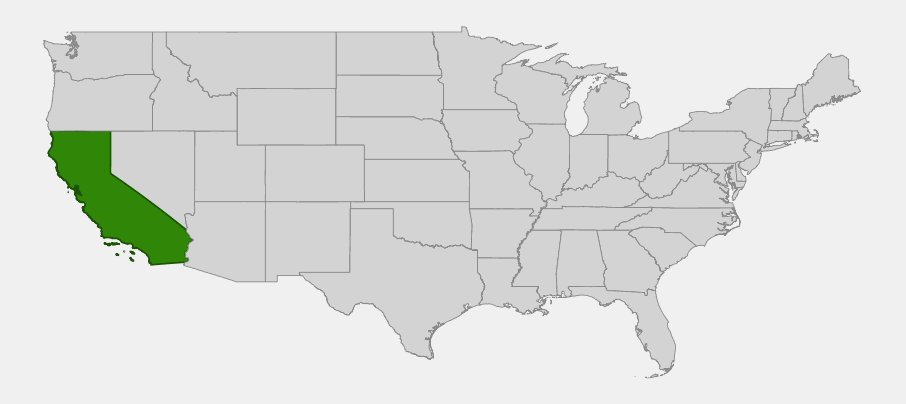
Brittleleaf manzanita and its relatives grow only in California. USDA PLANTS lists Arctostaphylos tomentosa as native to the state. Brittleleaf manzanita is found mainly in the coastal fog belt, from the East Bay Hills and San Francisco Peninsula south through the Santa Cruz Mountains and around Monterey Bay to San Luis Obispo County, with island forms on Santa Cruz and Santa Rosa Islands off Santa Barbara.
Woollyleaf manzanita (subspecies tomentosa) and its close relatives are centered on the Monterey Peninsula and the sandy hills around Monterey Bay, including Fort Ord and the Del Monte Forest, with local forms in the southwestern Santa Cruz Mountains and San Luis Obispo County. Several of these local subspecies, and some island and Bay Area forms of brittleleaf manzanita, have very small ranges and are tracked as rare by the California Native Plant Society.
It grows in maritime chaparral, on open sandy or rocky slopes, and in the understory and edges of Monterey pine, coast live oak and closed-cone cypress woodland, usually below about 3,000 feet, where summer fog keeps conditions cool and moist.
📋 Regional plant lists featuring Brittleleaf Manzanita: California & Nevada
Growing & Care Guide
Brittleleaf manzanita is a tough, handsome shrub for coastal California gardens. Like most manzanitas, it wants sun, sharp drainage and dry summers, and it rewards patience with winter flowers and sculptural red stems.
Light
Full sun near the coast; light afternoon shade in hotter inland gardens. It becomes sparse and leggy in deep shade.
Soil & Water
Plant in well-drained sandy, gravelly or rocky soil; avoid heavy clay that stays wet. Water deeply every week or two during the first summer, then reduce. Established plants near the coast need no summer water, and regular irrigation in warm soil invites root rot.
Planting Tips
Plant in fall or early winter so the roots grow with the rains. Set the root ball slightly above the surrounding soil, do not amend the hole, and use a mulch of gravel or coarse wood chips kept away from the stems. Give it room to reach its full width.
Pruning & Maintenance
Prune lightly, if at all, in late spring or summer after flowering, removing dead or crossing branches to show off the red stems. Avoid heavy cuts into old wood on mature plants. No fertilizer is needed.
Propagation
Seeds have hard coats and need fire-related treatment (smoke or charate) and long cold stratification, so germination is slow and erratic. Most nurseries propagate it from semi-hardwood cuttings taken in late fall or winter, treated with rooting hormone and kept in a well-drained mix.
Landscape Uses
- Coastal gardens: a drought-tolerant evergreen for sandy and rocky soils near the coast
- Habitat gardens: winter nectar for hummingbirds and bees
- Hedges and screens: dense, multi-stemmed shrubs for informal screens
- Slopes: deep roots help hold dry, sandy banks
- Fire-adapted landscapes: resprouts from its burl after fire; keep it well spaced from buildings
Wildlife & Ecological Value
Manzanitas are keystone shrubs of California chaparral, and brittleleaf manzanita supports wildlife through the winter when little else is blooming.
For Pollinators
The winter flowers are an important early nectar source for Anna’s hummingbirds, queen bumble bees and other native bees, and the leaves feed the caterpillars of several moths and butterflies, including the brown elfin.
For Birds
Birds such as thrashers, towhees, jays and quail eat the berries, and the dense shrubs give cover and nesting sites to wrentits and other chaparral birds.
For Mammals
Coyotes, gray foxes, bears and woodrats eat the fruit. Deer browse young growth but usually leave mature plants alone.
Ecosystem Role
Brittleleaf manzanita is a characteristic shrub of maritime chaparral, a rare and declining plant community on the Central Coast. Its burl lets it resprout after fire, while the seeds of many manzanitas wait in the soil until fire triggers germination. Manzanitas form partnerships with soil fungi that help them grow in poor, sandy soils.
Cultural & Historical Uses
Manzanita is Spanish for “little apple,” referring to the small, apple-like fruit. The genus name Arctostaphylos comes from the Greek for “bear” and “bunch of grapes.” The species name tomentosa means “woolly,” for the hairy leaves of the typical subspecies, and crustacea means “crusty” or “brittle.”
California Indian peoples ate manzanita berries fresh, dried or ground into meal, and soaked them to make a tart cider-like drink. The leaves and wood also had uses in traditional medicine and for tools. Do not use manzanita as a home remedy.
Manzanitas are famous for their complex taxonomy, with many local species and subspecies. Botanists split brittleleaf manzanita from A. tomentosa as A. crustacea in 2007, which is why plant lists and nurseries use different names for the same shrub.
Frequently Asked Questions
Is brittleleaf manzanita the same as Arctostaphylos crustacea?
Yes. USDA PLANTS calls it Arctostaphylos tomentosa subsp. crustacea, while the Jepson eFlora and many nurseries use Arctostaphylos crustacea.
Does brittleleaf manzanita need summer water?
No, not once it is established near the coast. Water regularly in its first summer only. In hot inland gardens, an occasional deep soak in summer may help.
Does it resprout after fire?
Yes. It grows from a woody burl at its base and sprouts new stems after fire or heavy cutting.
When does brittleleaf manzanita bloom?
Mainly from December to March, when its white to pink flowers are a valuable food for hummingbirds and early bees.
Is brittleleaf manzanita rare?
The plant as a whole is fairly common in parts of the Central Coast, but several subspecies of the group have tiny ranges and are tracked as rare. Buy nursery-grown plants and never dig them from the wild.

Looking for a nursery that carries Brittleleaf Manzanita?
Browse our native plant nursery directory: California

