
Cowbag Clover (Trifolium depauperatum)
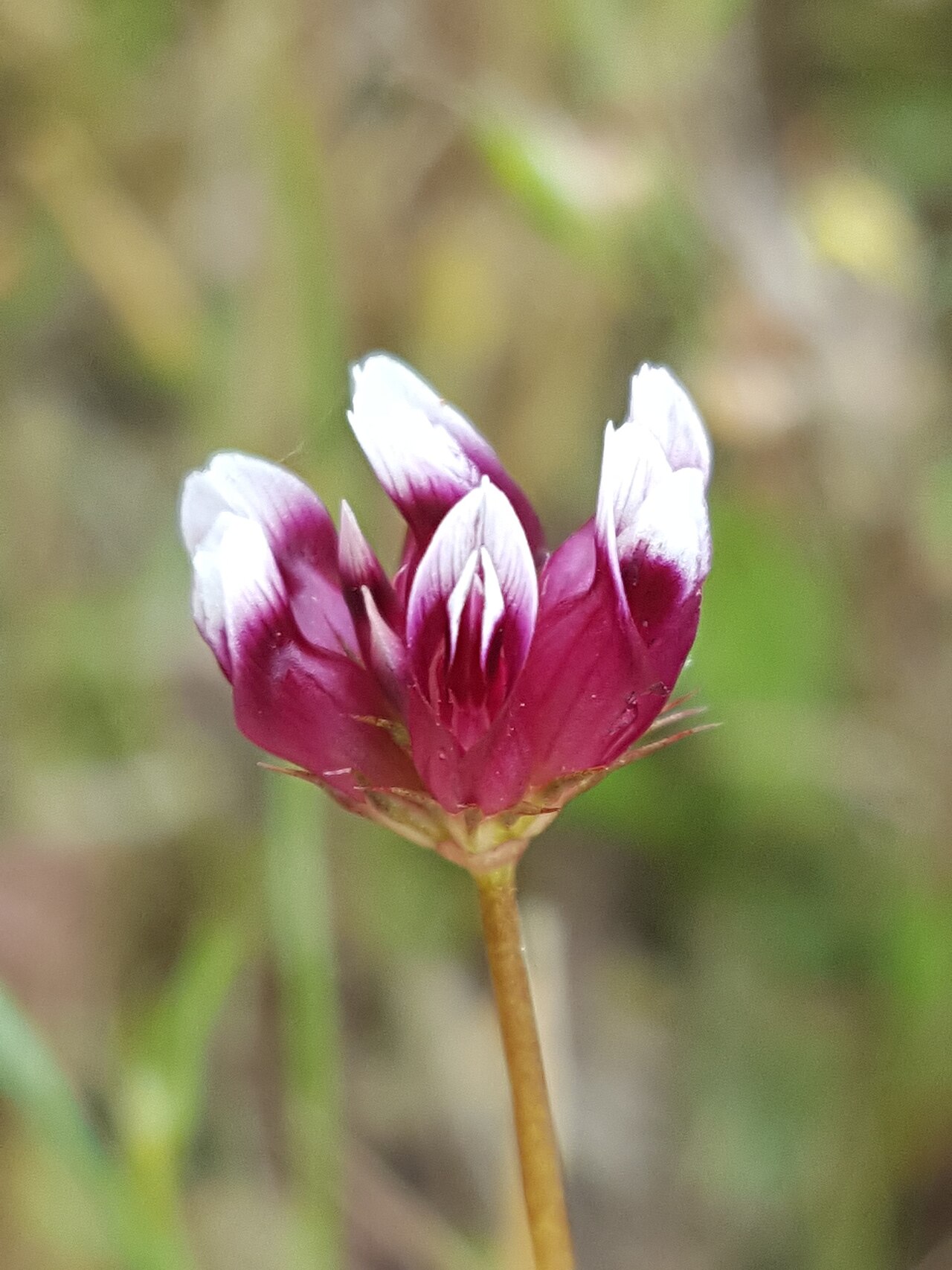
Trifolium depauperatum, known as Cowbag Clover, is a small annual clover of spring grasslands and moist meadows along the Pacific Coast. It also goes by poverty clover and balloon sack clover. It belongs to the pea family (Fabaceae) and is one of more than 50 clovers native to western North America, a region that is a world center of clover diversity.
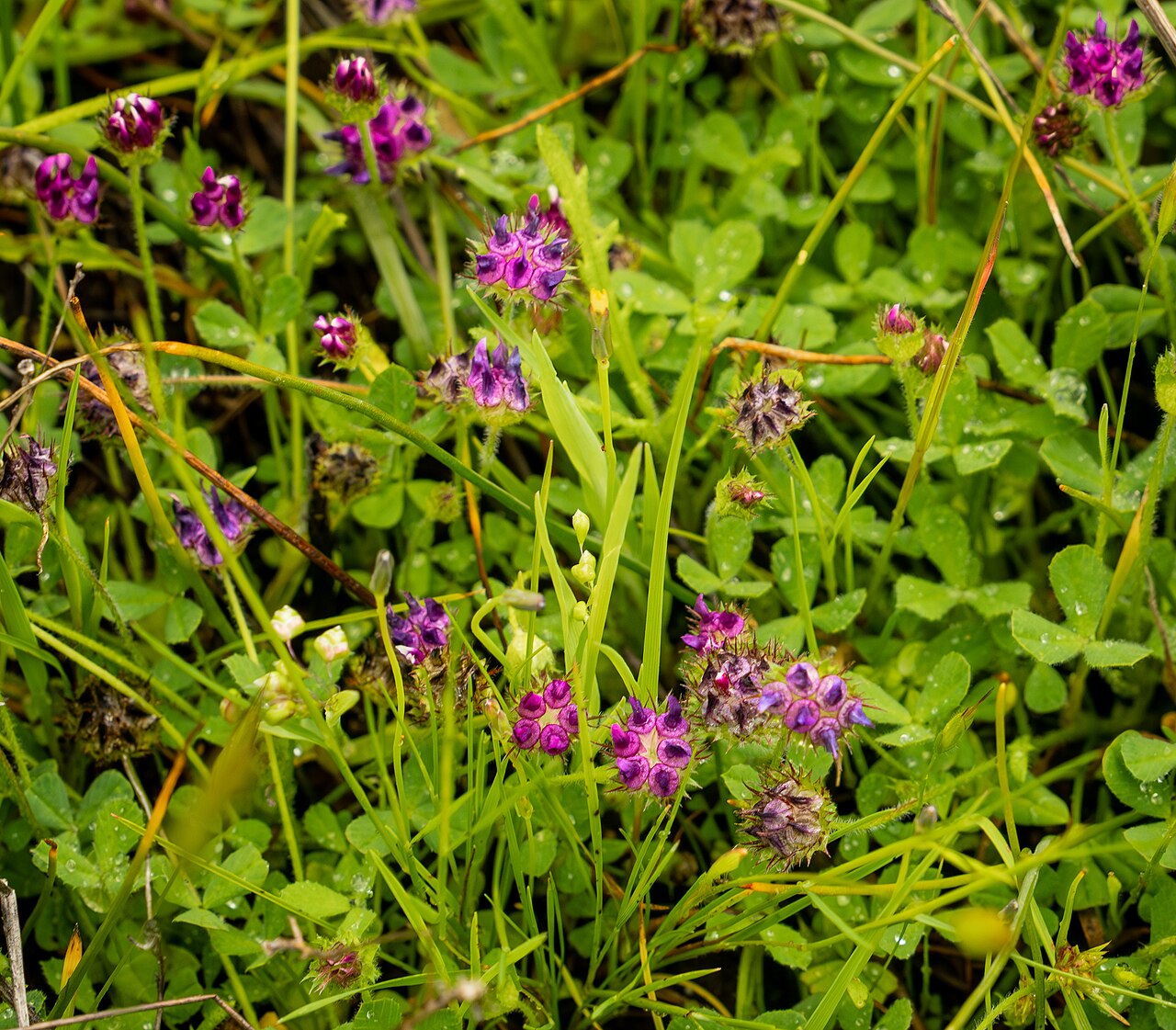
It is a dainty plant, usually only 2 to 10 inches tall, with three-parted leaves and small, rounded heads of magenta to pink-purple flowers tipped with white. Its most striking trait appears after flowering: the corollas swell into papery, balloon-like sacs around the developing pods, so each head looks like a cluster of tiny inflated bags. That is the source of its common names.
Cowbag clover is native from British Columbia through Washington and Oregon to California and Baja California, and also grows in Peru and Chile. Like other clovers it fixes nitrogen with the help of root bacteria. It is a good plant for native wildflower seed mixes and grassland restoration on the West Coast, where it adds early-season flowers for native bees.
Identification
Look for a small, spring-blooming annual clover with white-tipped magenta flowers in a compact head, and later in spring, heads of swollen, papery, sack-like flowers.
Growth Habit
Cowbag clover is a slender annual, upright to sprawling, usually 2 to 10 inches tall and occasionally to about 14 inches. Stems are smooth and often branched from the base. It germinates with fall and winter rains, flowers in spring and dies by early summer.
Leaves
The leaves are compound with three leaflets, each about 1/4 to 3/4 inch long, oblong to wedge-shaped, smooth, and often notched, toothed or blunt at the tip. Leaf stalks have pointed, papery stipules at the base. Unlike white clover, the leaflets lack pale chevron markings.
Flowers
The flowers grow in small, rounded heads about 1/4 to 1/2 inch long, held on slender stalks above the leaves. The head lacks the leafy collar (involucre) of many western clovers, or it is reduced to a tiny ring. Each flower is about 1/4 to 3/8 inch long, magenta to pink-purple with white or pale tips. Bloom time is mainly March to June.
Fruit
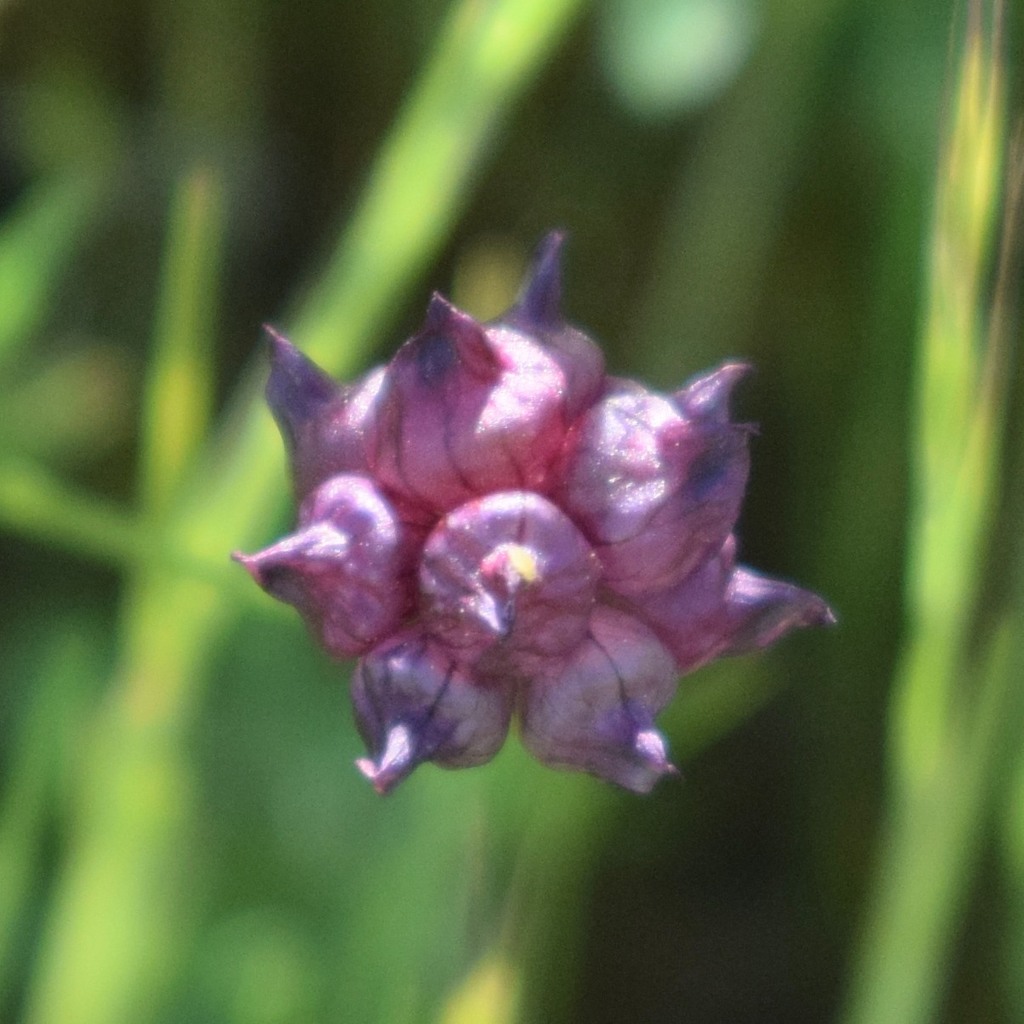
After pollination the banner petal of each flower inflates into a papery, translucent sac that encloses the small pod. The heads become puffy and turn pinkish-purple to tan. Each pod holds one or two small seeds.
Varieties & Look-alikes
Several varieties are recognized in California, including var. depauperatum, var. amplectens (pale sack clover) and var. truncatum, which differ in flower color and leaflet shape. Other native annual clovers with inflated flowers, such as bladder clover (Trifolium fucatum), are larger, with heads about 1 inch across. Tomcat clover (T. willdenovii) has a showy, deeply toothed involucre around the head and does not inflate.
Quick Facts
| Scientific Name | Trifolium depauperatum |
| Family | Fabaceae (pea family) |
| Plant Type | Annual wildflower (cool-season) |
| Mature Height | 2–10 in |
| Mature Spread | 2–8 in |
| Growth Rate | Fast (completes its life cycle in one season) |
| Sun Exposure | Full sun to light shade |
| Water Needs | Moist in winter and spring, dry in summer |
| Soil Type | Clay, loam, sandy and gravelly grassland soils; some forms on alkaline flats |
| Soil pH | Slightly acidic to slightly alkaline (about 5.5–8.0) |
| Bloom Time | March–June |
| Flower Color | Magenta to pink-purple with white tips |
| Fall Color | None; dies back by early summer |
| Fruit | Small pod enclosed in an inflated, papery corolla |
| Deer Resistant | No; grazed by deer and livestock |
| USDA Hardiness Zones | Annual; grows in zones 7–10 within its range |
Native Range
Cowbag clover grows on the Pacific side of North America from southern British Columbia south to Baja California, with a separate population in western South America (Peru and Chile). USDA PLANTS lists it as native in California, Oregon and Washington and in British Columbia. It is most common in California, where it grows in the Coast Ranges, the Central Valley, the Sierra Nevada foothills and southern California.
In Oregon it is most frequent in the Rogue Valley of Jackson County, including the vernal pool grasslands of the Table Rocks, with scattered sites farther north to the coast. In Washington and British Columbia it is rare, limited to a few grassy sites in the San Juan Islands and on southeastern Vancouver Island. USDA also has old records from Michigan and South Carolina, but Michigan Flora and NatureServe treat these as non-native introductions, so they are not counted as part of its native range.
Its habitats include grasslands, coastal prairie, vernal pool edges, moist meadows, grassy openings in oak woodland and mixed evergreen forest, and alkaline or saline flats, mostly at low to middle elevations. It favors spots that are wet in winter and spring and dry in summer.
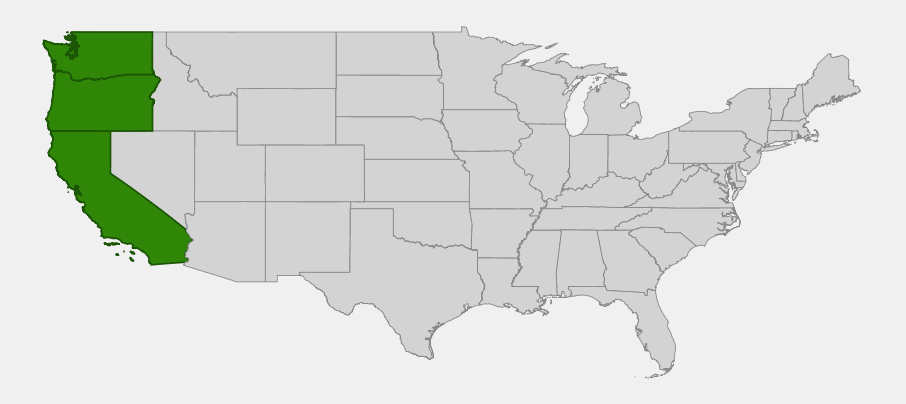
📋 Regional plant lists featuring Cowbag Clover: Western Oregon & Western Washington · California & Nevada
Growing & Care Guide
Cowbag clover is an easy annual to grow from seed in West Coast gardens with a dry summer. It is best used in meadow and wildflower mixes rather than as a single specimen, because the plants are small.
Light
Full sun to light shade. It flowers best in open, sunny grassland.
Soil & Water
It tolerates clay, loam and sandy soils, including heavy soils that are wet in winter. Rain alone is usually enough. It does not need summer water; the plants finish their life cycle by early summer and the seed rests in dry soil until fall.
Planting Tips
Sow seed in fall, just before or with the first rains, on lightly raked soil, and press it in. Scarifying the hard seed coat by rubbing it gently with sandpaper can speed germination. Mix it with other low annual wildflowers and native bunchgrasses. Keep the planting free of tall non-native annual grasses, which can crowd out small clovers.
Pruning & Maintenance
Let plants set seed before mowing, usually in late spring or early summer. Once seed has dropped, the dry plants can be mowed or left in place. It needs no fertilizer, because it makes its own nitrogen.
Propagation
Grow it from seed. Collect the puffy, dry seed heads in late spring and store the seed dry. Plants often reseed in suitable spots.
Landscape Uses
- Wildflower meadows: a small, early-flowering clover for native seed mixes
- Grassland and vernal pool restoration: adds nitrogen and diversity to West Coast grassland projects
- Pollinator gardens: an early-season flower for native bees
- Lawn alternatives: for low, mixed native meadows that are allowed to dry in summer
- Children’s gardens: the balloon-like seed heads are fun to find and touch
Wildlife & Ecological Value
Native clovers like cowbag clover are valuable parts of West Coast grasslands, feeding pollinators, grazing animals and the soil.
For Pollinators
Its flowers are visited by native bees, including small solitary bees and bumble bees, in early spring. Native clovers are also caterpillar food plants for several butterflies in the sulphur and blue families.
For Birds
Its seeds and leaves are eaten by seed-eating and grazing birds, such as quail, doves and sparrows, which forage in spring grasslands.
For Mammals
Deer, rabbits, ground squirrels and livestock graze native clovers, which are nutritious, protein-rich forage.
Ecosystem Role
Like other legumes, it hosts nitrogen-fixing bacteria in its root nodules, adding nitrogen to grassland soils. Native annual clovers have declined in many grasslands because of competition from non-native grasses, so they are often included in restoration seed mixes.
Cultural & Historical Uses
The genus name Trifolium means “three leaves,” after the three leaflets. The species name depauperatum means “impoverished” or “stunted,” a reference to its small size, which also gave it the common name poverty clover.
The names cowbag clover, sack clover and balloon sack clover all describe the inflated, sac-like corollas of the fruiting heads, which look like tiny bags or udders. Several other western annual clovers share this trait, and botanists use the inflated corolla to group them.
Cowbag clover is one of a number of plants that grow in both western North America and western South America but not in between, a pattern botanists call an amphitropical disjunction. Many botanists think migrating birds carried seeds between the two regions long ago.
Frequently Asked Questions
Why is it called cowbag clover?
After flowering, the corollas inflate into papery sacs around the pods, so the seed heads look like tiny bags or udders. It is also called balloon sack clover.
Is cowbag clover native to Michigan or South Carolina?
No. USDA has old records from those states, but Michigan Flora and NatureServe treat them as non-native introductions. Its native range is the Pacific Coast from British Columbia to Baja California.
Is cowbag clover an annual?
Yes. It sprouts with fall and winter rains, blooms in spring and dies by early summer, returning from seed.
Can I grow cowbag clover in a lawn?
It fits best in a low native meadow that is allowed to dry out in summer. Regular summer watering and frequent mowing do not suit it.
Does cowbag clover fix nitrogen?
Yes. Like other clovers it hosts nitrogen-fixing bacteria in its roots, which enrich the soil.

Looking for a nursery that carries Cowbag Clover?
Browse our native plant nursery directory: California · Oregon · Washington

