
Harsh Paintbrush (Castilleja hispida)
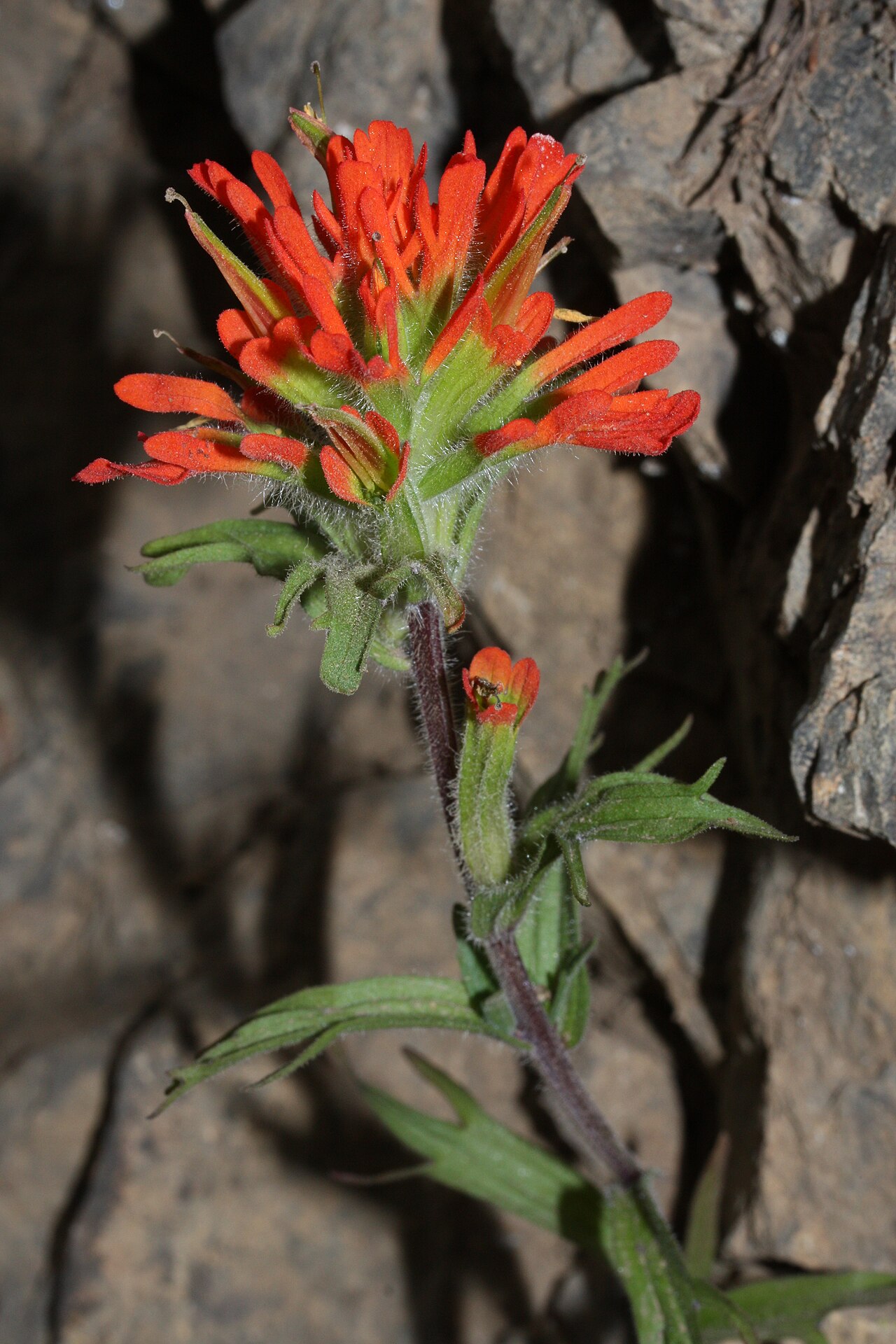
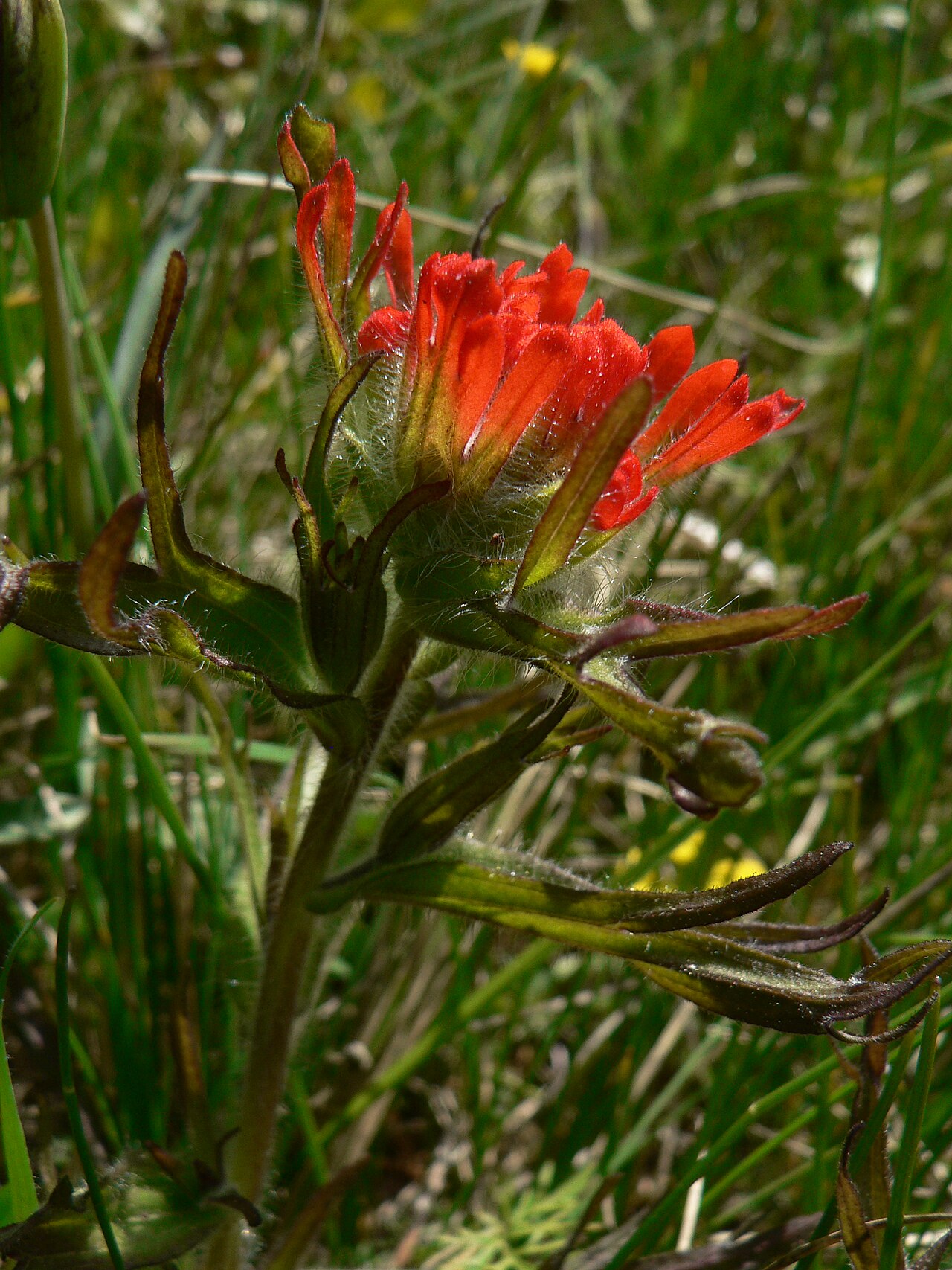
Castilleja hispida, known as Harsh Paintbrush or harsh Indian paintbrush, is one of the most common and colorful paintbrushes of the Pacific Northwest. From spring into summer, its clumps of hairy stems, usually 8 to 24 inches tall, are topped with brushes of scarlet to orange-red, sometimes yellow, bracts. It grows on prairies, grassy and rocky slopes and open forests from British Columbia and Alberta south through Washington, Oregon, Idaho and western Montana to northwestern California.
The name refers to the stiff, rough hairs (hispida means bristly) that cover its stems and leaves. Like other paintbrushes, it belongs to the broomrape family (Orobanchaceae) and is a root hemiparasite: it has green leaves and makes its own food, but it also attaches to the roots of nearby grasses and wildflowers to take water and nutrients.
Harsh paintbrush is an important plant for wildlife. Hummingbirds and bees visit its flowers, and it is a larval host of checkerspot butterflies, including the endangered Taylor’s checkerspot in the prairies of western Washington and Oregon. Because it depends on host plants, it is not a typical garden perennial, but it can be grown from seed in a meadow setting. This guide covers how to identify it, where to see it, and how it fits into Northwest ecosystems.
Identification
Several red paintbrushes grow in the Northwest. Harsh paintbrush is best identified by its bristly hairs and by its upper leaves and bracts, which are divided into a few narrow, spreading lobes.
Growth Habit
It is a clump-forming perennial with several to many unbranched stems, 8 to 24 inches tall, growing from a woody base. The stems are covered with long, stiff, spreading hairs that feel rough to the touch. Plants regrow from the base each spring.
Leaves
The leaves are alternate, lance-shaped, 1 to 3 inches long and hairy. The lower leaves are usually undivided, while the upper leaves are often cut into three to five narrow, spreading lobes, with the central lobe the broadest.
Bracts & Flowers
The colored part of the “brush” is made of bracts, modified leaves at the top of the stem, which are deeply divided into three to five lobes and tipped in scarlet, orange-red or occasionally yellow. The true flowers are narrow, tubular and greenish, about 1 inch long, and only partly visible among the bracts. Bloom time is from April at low elevations to August in the mountains.
Fruit & Seeds
Each flower produces a small, oval capsule containing many tiny seeds with a netted coat. The capsules ripen in summer and open to release the seeds, which are scattered by wind and gravity.
Look-alikes
Scarlet paintbrush (Castilleja miniata) is taller, grows mostly in moist meadows and has mostly undivided leaves with fewer stiff hairs. Golden paintbrush (Castilleja levisecta), a federally threatened species of Puget Sound prairies, has yellow bracts and can hybridize with harsh paintbrush. Three subspecies are recognized: subsp. hispida of the Cascades westward and north, subsp. acuta of the interior Northwest, and subsp. brevilobata, with short bract lobes, on serpentine and other soils in southwestern Oregon and northwestern California.
Quick Facts
| Scientific Name | Castilleja hispida Benth. |
| Family | Orobanchaceae (broomrape family) |
| Plant Type | Perennial root hemiparasite |
| Mature Height | 8–24 in |
| Mature Spread | 6–12 in |
| Growth Rate | Moderate |
| Sun Exposure | Full sun to part shade |
| Water Needs | Low to moderate |
| Soil Type | Well-drained prairie, rocky or gravelly soils |
| Soil pH | About 5.5–7.5 |
| Bloom Time | April–August |
| Flower Color | Scarlet to orange-red bracts (sometimes yellow); greenish flowers |
| Fall Color | None of note |
| Fruit | Small capsule with many tiny seeds |
| Deer Resistant | Moderately |
| USDA Hardiness Zones | 4–8 |
Native Range
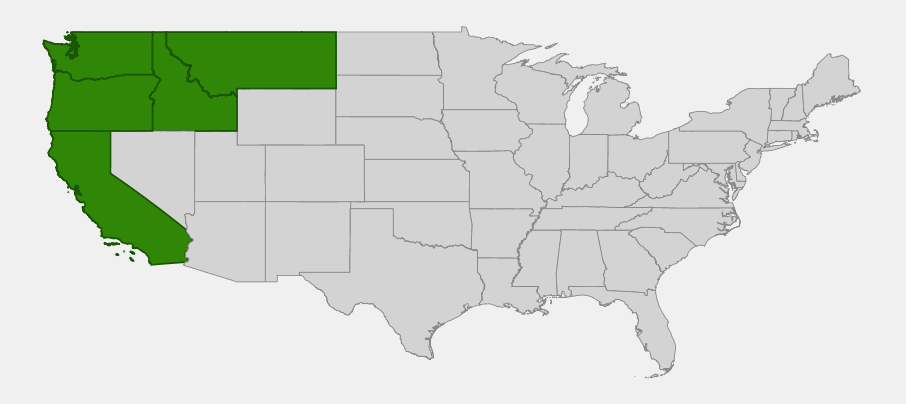
Harsh paintbrush is native to the Pacific Northwest and the northern Rocky Mountains. USDA PLANTS lists it in Washington, Oregon, Idaho, Montana and California, and in Canada in British Columbia and Alberta. USDA also lists Nevada, but NatureServe and other regional sources do not include it there, so Nevada is not shown on the map.
West of the Cascades it grows on the prairies and oak savannas of the Puget Trough and the Willamette Valley, on rocky balds and islands in the San Juan Islands, and on slopes in the Olympic and Cascade Mountains. East of the Cascades it is common in the foothills and mountains of eastern Washington and Oregon, including the Blue Mountains, and across northern and central Idaho and western Montana. Its range reaches northwestern California, where subsp. brevilobata grows in the Klamath and Siskiyou Mountains.
It grows in open, sunny places: grassland and prairie, rocky slopes, forest openings and edges, open ponderosa pine and Douglas-fir forest, and subalpine meadows. It ranges from near sea level to the subalpine zone and is often found on well-drained, rocky or gravelly soils.
📋 Regional plant lists featuring Harsh Paintbrush: Montana & Wyoming · Western Oregon & Western Washington · California & Nevada
Can You Grow It?
Harsh paintbrush can be grown, but not like a typical perennial. It is a hemiparasite that grows best when its roots can connect to a host plant, and it resents transplanting. It is offered occasionally by Northwest native nurseries and seed suppliers, sometimes grown in the same pot as a host grass. Never dig paintbrushes from the wild: they almost always die, and their prairie habitats are increasingly rare.
Light
Give it full sun to light shade. In the wild it grows on open prairies, rocky slopes and forest edges, and it flowers poorly in deep shade.
Soil & Water
It needs well-drained soil, such as a sandy, gravelly or rocky loam. Water young plants until established, then water only occasionally in summer. Heavy, wet soil and frequent summer irrigation shorten its life.
Planting Tips
The most reliable approach is to sow seed or set out small plants next to a suitable host, such as Idaho fescue, red fescue, Oregon sunshine (woolly sunflower) or yarrow. Many growers start paintbrush seedlings in the same pot as a host plant and plant them out together, disturbing the roots as little as possible.
Pruning & Maintenance
No pruning is needed. Cut back the old stems in fall or early spring if desired. Keep aggressive grasses and weeds from overwhelming the planting, and avoid fertilizer, which favors the host plants and weeds over the paintbrush.
Propagation
Grow it from seed. Collect ripe capsules in summer and sow the tiny seed on the surface in fall, outdoors or in pots, so winter cold and moisture can stratify it; alternatively give it several weeks of cold, moist treatment before spring sowing. Seedlings grow better once their roots contact a host plant.
Where to See It
- Mount Rainier and the Cascades: common on open slopes and in meadows, as in Stevens Canyon at Mount Rainier National Park
- Puget Sound and Willamette Valley prairies: prairie and oak savanna remnants and rocky balds in the San Juan Islands
- Columbia River Gorge and eastern Cascade foothills: grassy and rocky slopes with balsamroot and lupines in spring
- Idaho and western Montana: open forests and grasslands of the northern Rockies
- Meadow and prairie restoration: sown with native grasses and wildflowers as a host plant for butterflies
Wildlife & Ecological Value
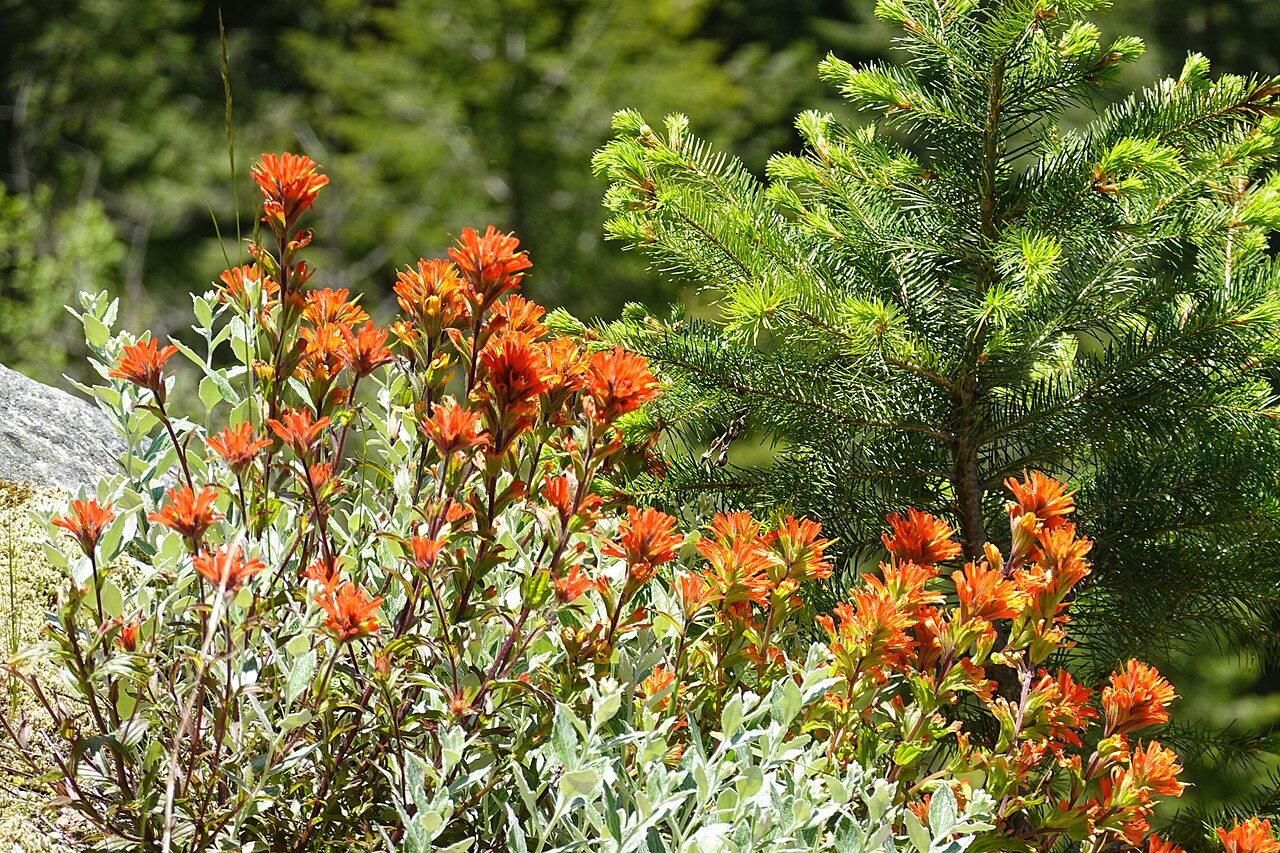
Harsh paintbrush is a small plant with a large role in Northwest prairies and meadows, especially for hummingbirds and butterflies.
For Pollinators
The tubular flowers produce nectar at the base, and the red bracts attract hummingbirds, which are important pollinators of red paintbrushes. Bumble bees and other bees also visit the flowers.
For Butterflies
Paintbrushes are larval host plants of checkerspot butterflies. Harsh paintbrush is one of the host plants of Taylor’s checkerspot (Euphydryas editha taylori), a federally endangered butterfly of the prairies of western Washington and Oregon, and it is planted in prairie restoration projects to support it. Other checkerspots also use it.
For Birds & Mammals
Hummingbirds feed at the flowers. Deer and elk may browse the plants, and small mammals may eat the seeds, but harsh paintbrush is not a major food plant for mammals.
Ecosystem Role
As a root hemiparasite, harsh paintbrush draws resources from grasses and other neighbors, which can reduce the dominance of vigorous grasses and help other wildflowers persist. It is a characteristic species of Northwest prairies and grasslands, habitats that have declined sharply because of development, fire suppression and invasive plants.
Cultural & Historical Uses
The genus Castilleja honors the Spanish botanist Domingo Castillejo. The species name hispida means bristly, describing the stiff hairs of the stems and leaves. George Bentham described the species in the nineteenth century from collections made in the Pacific Northwest.
The common name paintbrush comes from the colored bracts, which look as if the tips had been dipped in paint. Paintbrushes appear in the stories and traditions of many Indigenous peoples of the West, and several Northwest peoples used paintbrushes medicinally. Because they are hemiparasites, paintbrushes can take up compounds from their host plants, so they should not be eaten or used as remedies.
In the Puget Sound region, harsh paintbrush has become a focus of conservation work. Restoration crews grow it in large numbers for prairie sites that support Taylor’s checkerspot, and botanists monitor its hybridization with the threatened golden paintbrush where the two grow together.
Frequently Asked Questions
Why is it called harsh paintbrush?
Its stems and leaves are covered with stiff, bristly hairs that feel rough or harsh to the touch. The species name hispida means bristly.
Is harsh paintbrush a parasite?
It is a hemiparasite. It has green leaves and makes its own food, but its roots attach to nearby plants, usually grasses and wildflowers, to take water and nutrients.
Can I grow harsh paintbrush in my garden?
Yes, with some care. Grow it from seed or small nursery plants next to a host such as Idaho fescue or yarrow, in sunny, well-drained soil. Never dig it from the wild.
Which butterflies use harsh paintbrush?
It is a larval host of checkerspot butterflies, including the endangered Taylor’s checkerspot in western Washington and Oregon.
Where can I see harsh paintbrush?
Look on open, sunny slopes and prairies from spring into summer in Washington, Oregon, Idaho, western Montana and northwestern California, for example at Mount Rainier National Park, in the Columbia River Gorge and on Puget Sound prairies.

Looking for a nursery that carries Harsh Paintbrush?
Browse our native plant nursery directory: California · Idaho · Montana · Oregon · Washington

