
Red Ribbons (Clarkia concinna)
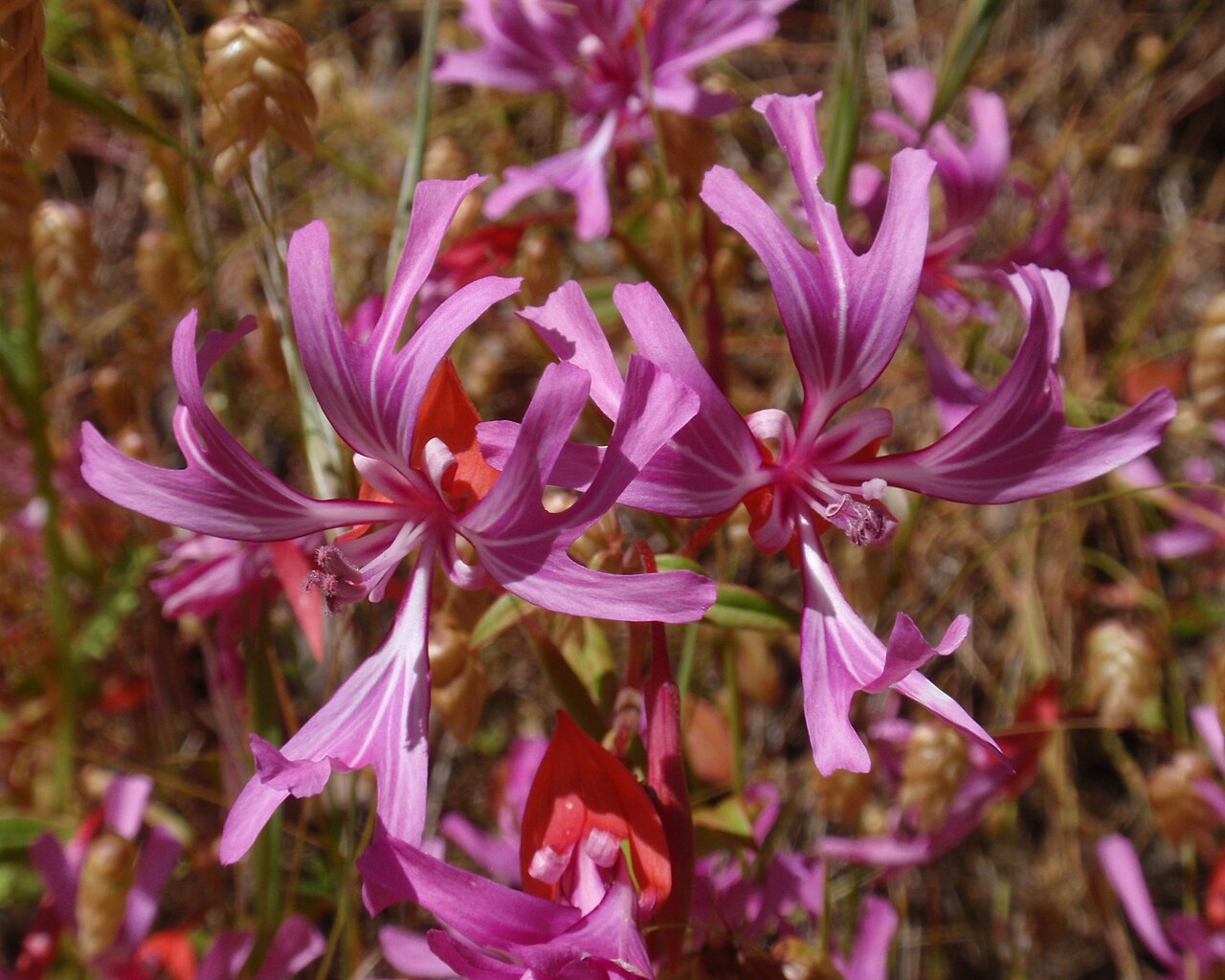
Clarkia concinna, known as Red Ribbons, is a striking annual wildflower of the evening primrose family (Onagraceae) that grows only in California. It is found in the Coast Ranges from the San Francisco Bay Area and Santa Clara County north through Mendocino County, with a few populations in the northern Sierra Nevada foothills of Butte and Yuba counties. It blooms in late spring and early summer on partly shaded slopes, woodland edges and chaparral clearings.
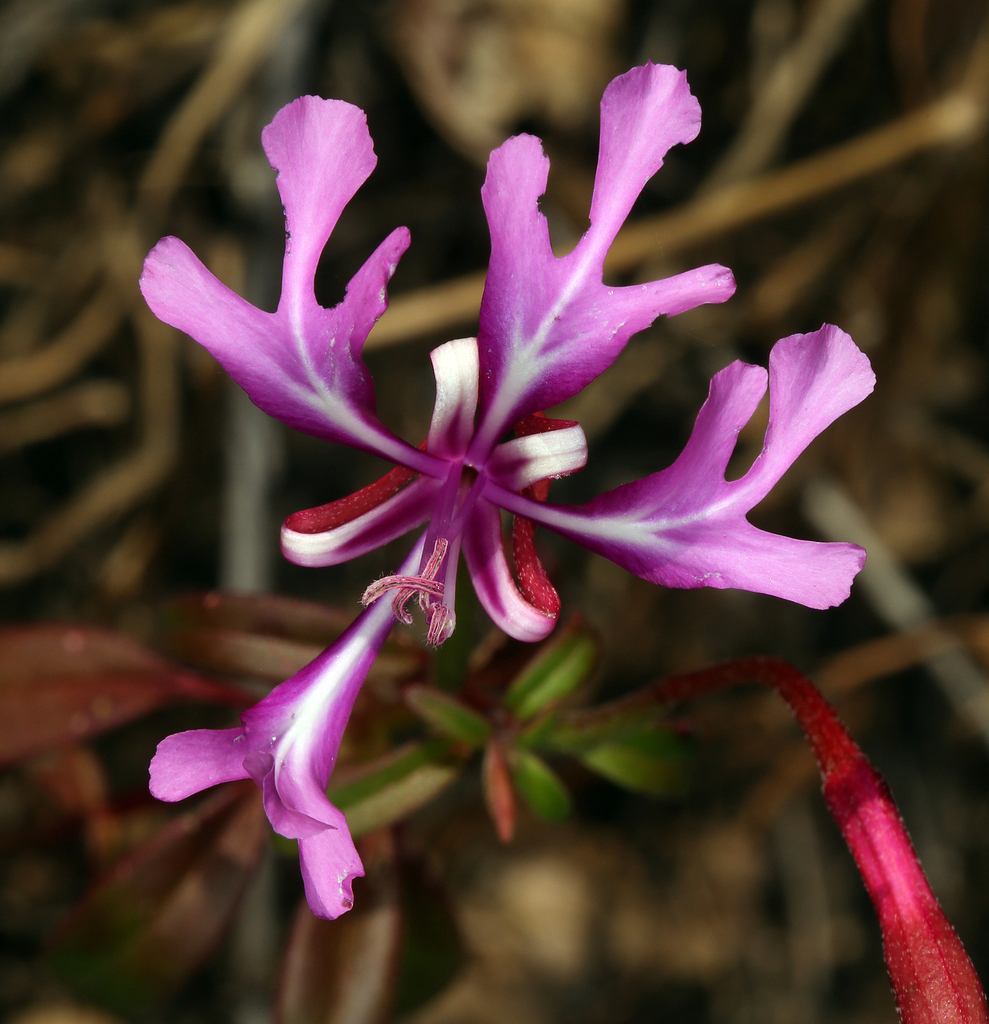
The flowers are unlike any other clarkia. Each has four bright pink to rose-purple petals, each cut into three broad, fan-like lobes and streaked with white near the base, giving the flower a frilly, star-like look. Behind them, four red to deep pink sepals stay joined and curl back like loops of silk ribbon, which gives the plant its name. The species name concinna means “elegant” or “neat.”
Red ribbons is a lovely, easy annual for California wildflower gardens, woodland edges and dry, partly shaded spots under oaks. Sown from seed in fall, it blooms after most spring annuals have finished and attracts butterflies and other long-tongued pollinators. Because it is endemic to California and one subspecies is rare, use seed from responsible native seed suppliers rather than collecting from wild populations.
Identification
Look for a slender annual with pink, three-lobed petals arranged like a frilly star and red, ribbon-like sepals curled behind the flower, on shady slopes in northern California in May and June.
Growth Habit
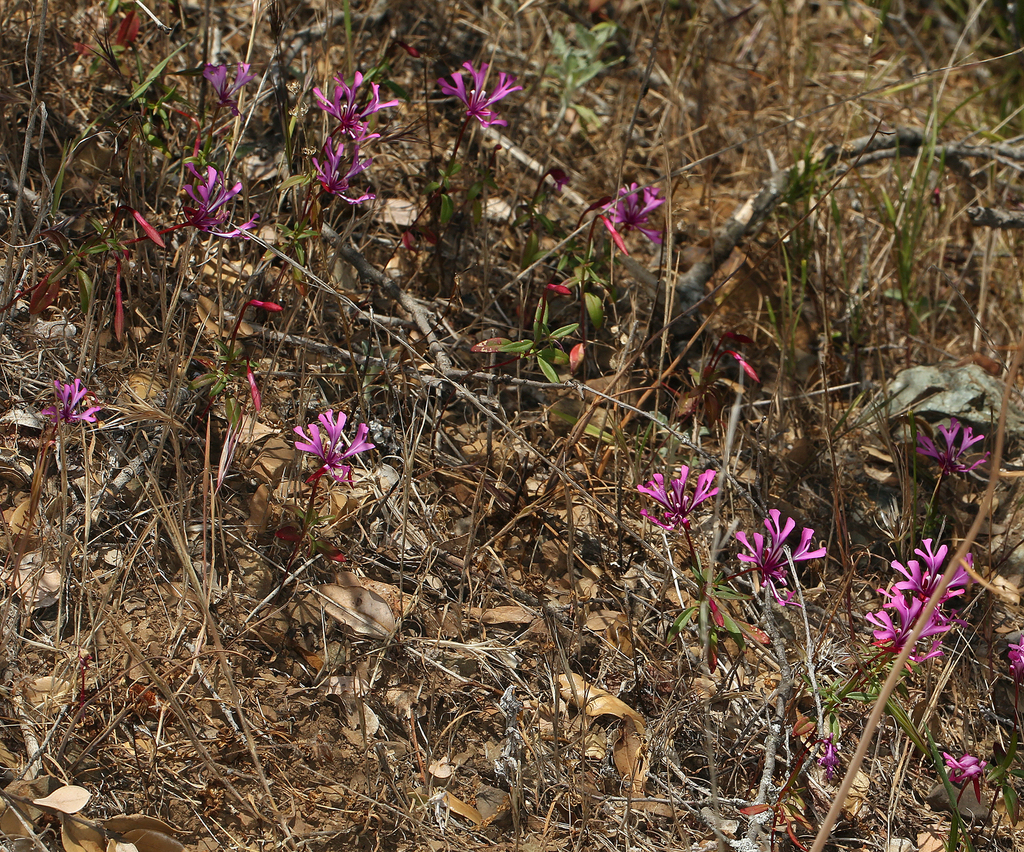
Red ribbons is an upright or sprawling annual, usually 4 to 16 inches tall, with slender, often reddish stems that may be simple or branched. Plants often grow in scattered groups on slopes and road banks.
Leaves
The leaves are alternate, about 1/2 to 2 inches long, lance-shaped to oval, with smooth or slightly toothed edges and short stalks. They are often tinged red, especially as the plant matures and dries in early summer.
Flowers
From about April to July, flowers open from nodding buds in the upper leaf axils. Each flower has a long, narrow floral tube (hypanthium), four pink to rose-purple petals about 1/2 to 1 inch long, each divided into three broad lobes (the middle lobe often largest) and narrowed at the base into a slender claw, and four red to deep pink sepals that remain fused and curve back together like ribbons. There are eight stamens and a four-lobed stigma.
Fruit & Seeds
The fruit is a slender, four-sided capsule up to about an inch long, which splits to release many small seeds in summer. The seeds lie dormant through the dry season and germinate with the fall and winter rains.
Subspecies & Look-alikes
Three subspecies are recognized: the widespread subsp. concinna; subsp. automixa (Santa Clara red ribbons) of the Santa Cruz Mountains and southern Bay Area, with smaller, often self-pollinating flowers; and subsp. raichei (Raiche’s red ribbons), a rare plant of Marin County. Other clarkias, such as farewell-to-spring and elegant clarkia, have undivided or diamond-shaped petals rather than three-lobed, fan-shaped ones.
Quick Facts
| Scientific Name | Clarkia concinna |
| Family | Onagraceae (evening primrose family) |
| Plant Type | Annual wildflower |
| Mature Height | 4–16 in |
| Mature Spread | 4–10 in |
| Growth Rate | Fast (annual) |
| Sun Exposure | Part shade to full sun |
| Water Needs | Low; winter rain, dry summer |
| Soil Type | Well-drained loam, gravelly or rocky soil |
| Soil pH | Slightly acidic to neutral (about 5.5–7.5) |
| Bloom Time | April–July |
| Flower Color | Bright pink to rose-purple, with red sepals |
| Fall Color | None (annual) |
| Fruit | Slender four-sided capsule |
| Deer Resistant | Somewhat; deer may browse it |
| USDA Hardiness Zones | Annual (cool-season; zones 7–10) |
Native Range
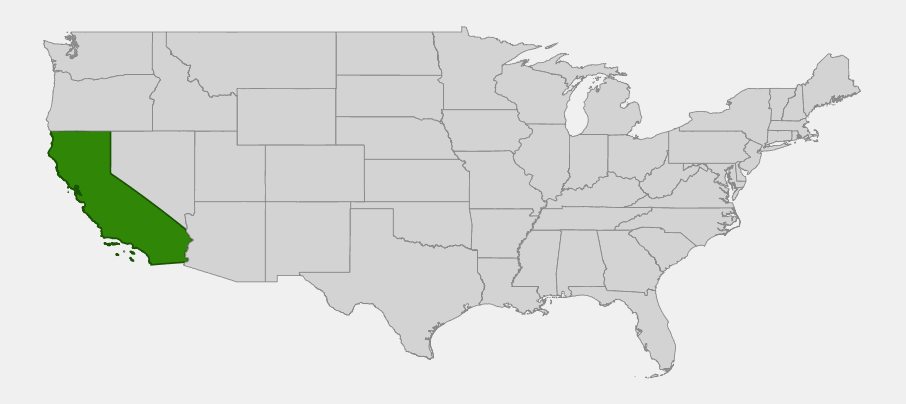
Red ribbons is endemic to California. USDA PLANTS lists it only in California, and it grows nowhere else in the world. Its range covers the Coast Ranges from Santa Clara County and the San Francisco Bay Area north through Marin, Sonoma, Napa, Lake and Mendocino counties, and into the inner North Coast Ranges along the west side of the Sacramento Valley.
Outside the Coast Ranges, it is known from the foothills of the northern Sierra Nevada in Butte and Yuba counties. Subsp. automixa grows in the Santa Cruz Mountains and the hills around the south end of San Francisco Bay, and the rare subsp. raichei is known only from a few sites in Marin County.
It grows on partly shaded, often steep slopes and road banks in oak woodland, mixed evergreen forest, chaparral and the edges of grassland, usually below about 5,000 feet. It often grows on rocky or gravelly soils.
📋 Regional plant lists featuring Red Ribbons: California & Nevada
Growing & Care Guide
Red ribbons is easy to grow from seed in California gardens with a Mediterranean climate. Like other clarkias, it grows with the winter rains and blooms as the soil begins to dry, then sets seed and dies in summer.
Light
Part shade to full sun. It does especially well in light or dappled shade, such as under high oaks or on the shady side of a garden, which also prolongs its bloom.
Soil & Water
Give it well-drained loam, gravelly or rocky soil. Winter rains are usually enough; in dry winters, water occasionally until it flowers. Stop watering in summer, when the plants naturally set seed and die.
Planting Tips
Sow seed directly in fall, just before or after the first rains, on bare, raked soil, and press it in lightly or cover it with a very thin layer of soil. Thin seedlings to a few inches apart. It looks best in drifts among other annual wildflowers and native bunchgrasses, along paths, on banks and at woodland edges.
Pruning & Maintenance
No pruning is needed. Avoid heavy mulch or fertilizer, which favor weeds over annual wildflowers. Leave plants in place until the capsules have dried and split in summer, so they can reseed for next year.
Propagation
By seed only. Collect ripe capsules in summer from your own plants, store the seed dry and sow it in fall. Seed of the common subspecies is sold by California native seed companies.
Landscape Uses
- Wildflower gardens: late-spring color after earlier annuals fade
- Woodland edges: blooms in dappled shade under oaks
- Pollinator gardens: nectar for butterflies and long-tongued insects
- Banks and slopes: reseeds on gravelly, well-drained ground
- Containers: a pretty seasonal accent in pots
Wildlife & Ecological Value
Red ribbons blooms late in the spring wildflower season, when its bright flowers stand out on drying slopes.
For Pollinators
The long floral tube holds nectar that is best reached by long-tongued insects. Butterflies, bee flies and long-tongued bees visit the flowers. Clarkias also support specialist native bees that collect clarkia pollen; subsp. automixa is largely self-pollinating.
For Birds
Seed-eating birds such as finches, juncos and sparrows forage on the ground for clarkia seeds in summer and fall.
For Mammals
Deer, rabbits and rodents may browse the plants. Small mammals also eat the seeds.
Ecosystem Role
As an annual that persists through the dry season as seed, red ribbons is part of the rich annual wildflower community of California woodlands and chaparral edges, and its seeds help feed ants, birds and rodents through the summer.
Cultural & Historical Uses
The genus Clarkia honors William Clark of the Lewis and Clark Expedition, which collected the first specimen of the genus (Clarkia pulchella) in Idaho in 1806. Red ribbons was first described in the 1830s from plants grown from seed collected in California, and was soon cultivated in European gardens.
Clarkias are a classic group for studies of plant evolution. Botanists such as Harlan Lewis used them to study how new species form, including through changes in chromosome number and shifts from insect pollination to self-pollination, a change seen in the Santa Clara red ribbons (subsp. automixa).
Raiche’s red ribbons (subsp. raichei), named for the California botanist and horticulturist Roger Raiche, is a rare plant included in the California Native Plant Society’s inventory of rare plants. Its small populations in Marin County are a reminder to grow red ribbons from purchased seed and never to collect from wild plants.
Frequently Asked Questions
Why is it called red ribbons?
The red sepals stay joined and curl back behind the flower, looking like loops of red ribbon.
Is red ribbons native only to California?
Yes. It is endemic to California, mainly in the Coast Ranges from the Bay Area north, with a few populations in the northern Sierra Nevada foothills.
When does red ribbons bloom?
Usually from April to July, after most spring annuals have finished.
How do I grow red ribbons?
Sow seed in fall on bare, well-drained soil in part shade or sun, let winter rains water it, and allow it to reseed in summer.
Is red ribbons a perennial?
No. It is an annual that grows from seed each winter, blooms in late spring and dies in summer after setting seed.

Looking for a nursery that carries Red Ribbons?
Browse our native plant nursery directory: California

