
Woodland Beardtongue (Nothochelone nemorosa)
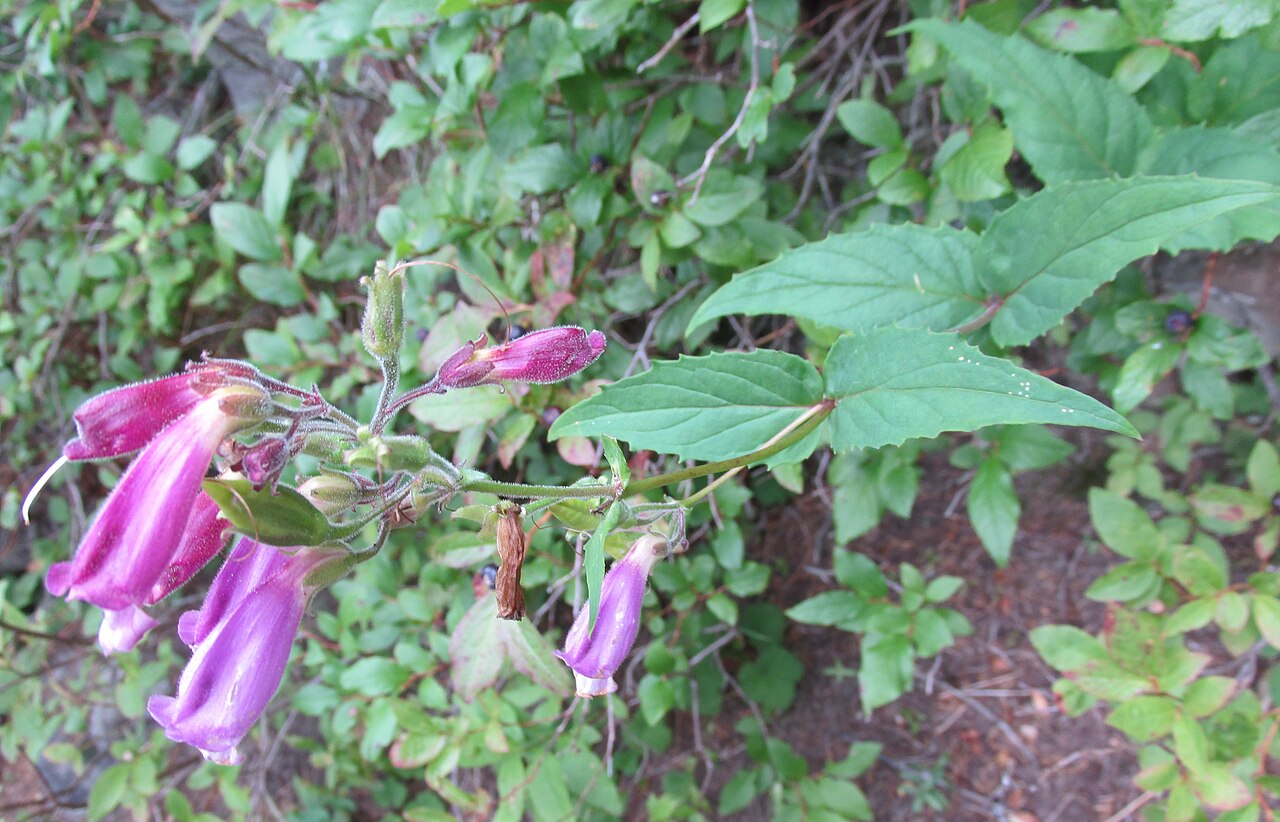
Nothochelone nemorosa, known as Woodland Beardtongue, is a shade-loving wildflower of the coniferous forests of the Pacific Northwest. It is the only species in its genus and belongs to the plantain family (Plantaginaceae), alongside the true penstemons. It was first described as Penstemon nemorosus, and many older books still use that name. Botanists moved it to its own genus, Nothochelone (“false turtlehead”), because of small differences such as its winged seeds.
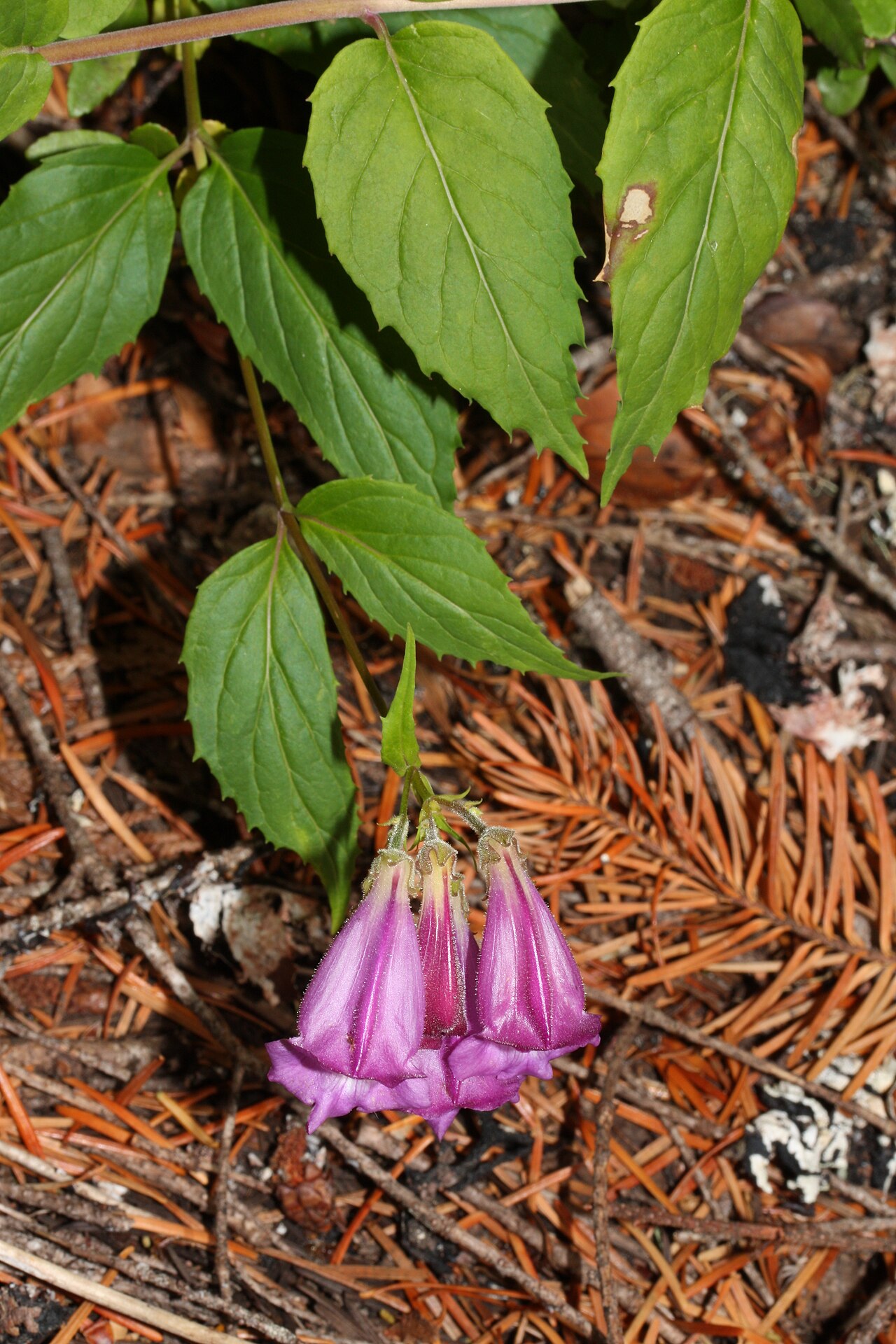
It grows as a loose clump of leafy stems 1 to 3 feet tall from a woody base. The leaves are opposite, thin and sharply toothed, quite unlike the narrow leaves of most penstemons. From June into August, the stems end in open, branched clusters of fat, two-lipped, rose-purple to pinkish-purple flowers about an inch long, covered in sticky glandular hairs. Hummingbirds and bumble bees visit them.
Woodland beardtongue is a good choice for Pacific Northwest woodland gardens: one of few penstemon-like plants that prefers part shade to full sun. It needs good drainage and some summer moisture, and is best in rocky or gritty, humus-rich soil under open conifers. Buy seed or plants from a native plant nursery and do not dig them from the wild.
Identification
Look for leafy, sprawling stems with pairs of sharply toothed, oval leaves and clusters of fat, hairy, rose-purple tubular flowers on shaded forest slopes in the Cascades, Olympics and Coast Ranges.
Growth Habit
Woodland beardtongue is a herbaceous perennial or subshrub with several erect to sprawling stems 16 to 32 inches tall (occasionally to about 3 feet) from a branched, woody base and taproot. Stems are smooth or finely hairy. Plants often lean or arch out from banks and rocky slopes.
Leaves
All the leaves are on the stems (there is no basal rosette). They are opposite, short-stalked, thin, lance-shaped to oval, about 1 1/2 to 4 1/2 inches long and up to 1 1/2 inches wide, with sharply toothed edges and pointed tips. The toothed, broad leaves are the easiest way to tell it from most true penstemons.
Flowers
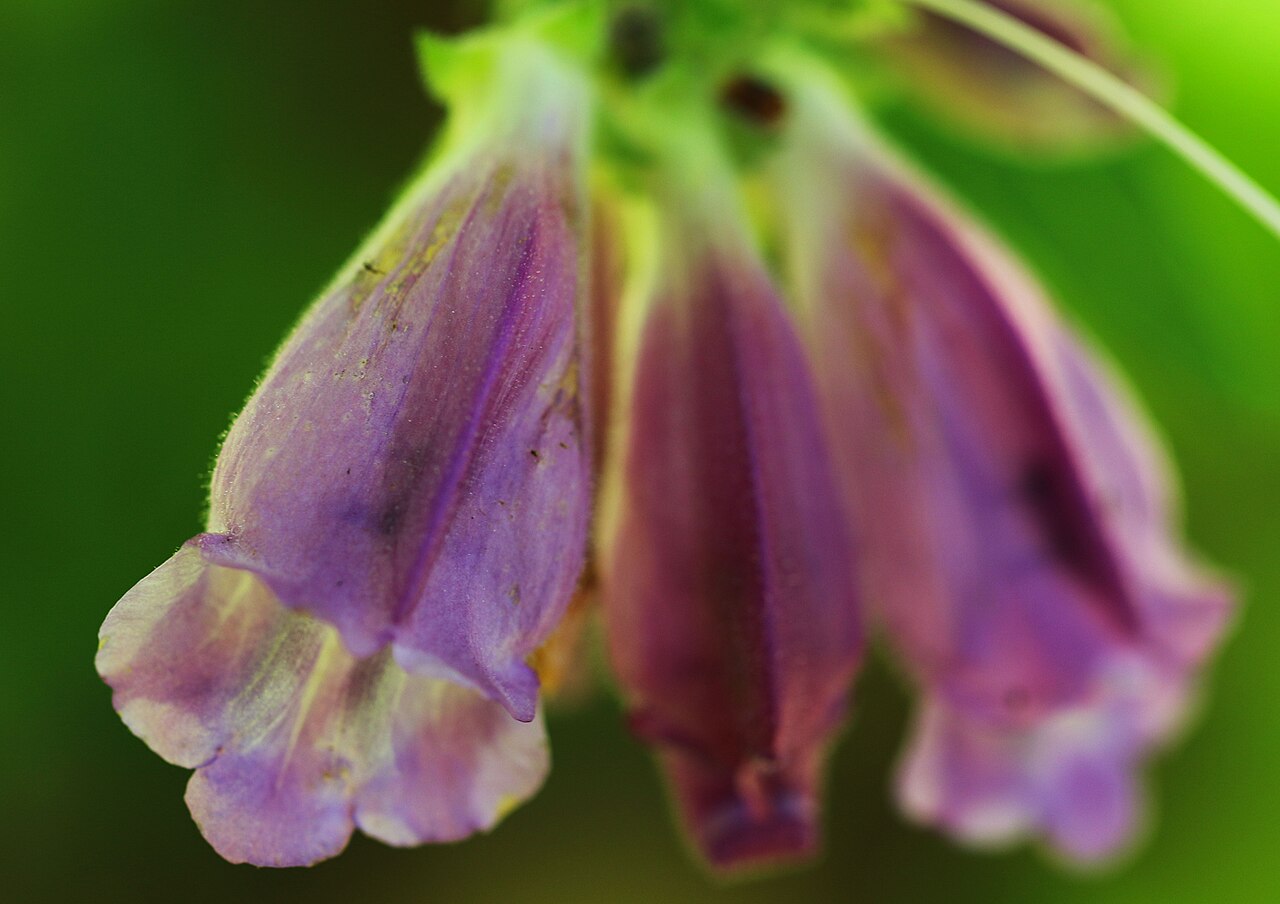
Flowers appear from June to August in open, branched clusters at the top of the stems. Each flower is a two-lipped tube about 1 to 1 1/4 inches long and about 3/8 inch wide at the mouth, pink-purple to rose-purple, with sticky glandular hairs on the outside. The lower lip is longer than the upper one. Inside are four fertile stamens with densely woolly anthers and a short, bearded sterile stamen, the “beard” that gives beardtongues their name.
Fruit & Seeds
The fruit is a woody capsule about 1/2 inch long that splits open in late summer and fall. The seeds have a narrow wing, a feature that helped botanists separate Nothochelone from Penstemon.
Look-alikes
True penstemons in the same forests, such as Cascade penstemon (Penstemon serrulatus), have narrower leaves and denser clusters of blue to purple flowers. Turtleheads (Chelone), such as the eastern white turtlehead, also have broad, toothed, opposite leaves but carry their flowers in dense terminal spikes and do not grow wild in the Pacific Northwest.
Quick Facts
| Scientific Name | Nothochelone nemorosa (syn. Penstemon nemorosus) |
| Family | Plantaginaceae (plantain family) |
| Plant Type | Herbaceous perennial to subshrub |
| Mature Height | 1–3 ft |
| Mature Spread | 1–2 ft |
| Growth Rate | Moderate |
| Sun Exposure | Part shade; tolerates sun where cool |
| Water Needs | Medium; well-drained |
| Soil Type | Rocky, gritty or humus-rich forest soil |
| Soil pH | Acidic to neutral (about 5.0–7.0) |
| Bloom Time | June–August |
| Flower Color | Rose-purple to pink-purple |
| Fall Color | None notable |
| Fruit | Woody capsule with winged seeds |
| Deer Resistant | Moderate; not a preferred browse plant |
| USDA Hardiness Zones | 6–9 |
Native Range
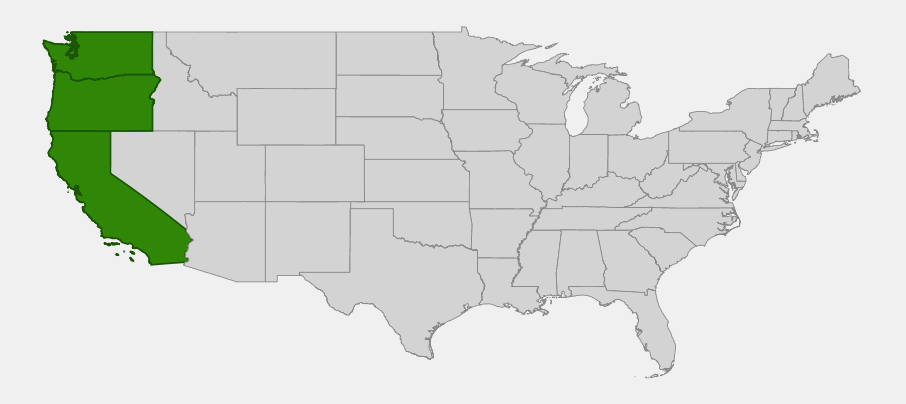
Woodland beardtongue grows along the Pacific coast of North America from southwestern British Columbia, including southern Vancouver Island, south through Washington and Oregon to northwestern California. USDA PLANTS lists it as native in Washington, Oregon, California and British Columbia.
In Washington it grows in the Olympic Mountains and on both sides of the Cascade crest, which is why it is also counted among plants of eastern Washington. In Oregon it grows in the Cascades and Coast Range, and in California it reaches the Klamath and North Coast Ranges. It is most common at middle elevations in the mountains, up to moist slopes in the subalpine zone.
Habitats include the understory of open coniferous forests, rocky, shaded slopes and banks, forest edges, road cuts and talus. It is often found where the forest canopy is broken by rock outcrops or old slides, so it gets some light while its roots stay cool.
📋 Regional plant lists featuring Woodland Beardtongue: Idaho, Eastern Oregon & Eastern Washington · Western Oregon & Western Washington · California & Nevada
Growing & Care Guide
Woodland beardtongue is not often sold, but native plant nurseries and seed suppliers in the Pacific Northwest sometimes offer it. Its main needs are good drainage, cool roots and partial shade. British gardeners who have grown it note that it can be tricky to keep for many years, so give it a well-drained site rather than rich, wet soil.
Light
Part shade or dappled light under open conifers. In cool coastal gardens it tolerates morning sun. Avoid hot afternoon sun, which scorches its thin leaves.
Soil & Water
Plant in well-drained, gritty or rocky soil with some leaf mold. A slope, rock garden edge or raised bed is ideal. Water regularly the first summer, then occasionally in long dry spells. Avoid heavy clay and soggy winter soil, which rot the woody base.
Planting Tips
Set plants out in fall or early spring, 12 to 18 inches apart. Let the stems lean against rocks or neighbors, as they do in the wild. Combine with sword fern, inside-out flower and salal in a woodland setting.
Pruning & Maintenance
Cut back the old flowering stems in late fall or early spring, leaving the woody base. A light mulch of leaf litter or fine bark keeps roots cool. Avoid heavy fertilizing, which makes the stems floppy.
Propagation
It grows readily from seed. Sow fresh seed in fall outdoors or give it one to two months of cold, moist stratification before spring sowing. Stem cuttings taken in early summer can also be rooted in a gritty mix.
Landscape Uses
- Woodland gardens: a summer-flowering perennial for part shade under conifers
- Hummingbird gardens: tubular rose-purple flowers in mid to late summer
- Rocky slopes and banks: sprawls attractively over rocks and walls
- Native shade borders: pairs with ferns, Oregon grape and vanilla leaf
- Restoration: forest edge and road cut plantings in the Cascades and Coast Range
Wildlife & Ecological Value
Woodland beardtongue brings bright, nectar-rich flowers to shaded forests at a time when few other understory plants are in bloom.
For Pollinators
The large tubular flowers are visited by bumble bees, which crawl inside to reach the nectar, and by hummingbirds. Like other members of the penstemon tribe, it is also visited by native solitary bees.
For Birds
Rufous and other hummingbirds feed at the flowers during summer. The dry seed capsules offer little food for other birds.
For Mammals
Deer and elk may browse the stems occasionally, but it is not a preferred food plant.
Ecosystem Role
It colonizes rocky openings, slides and forest edges, helping hold soil on steep slopes, and adds floral diversity to the coniferous forest understory.
Cultural & Historical Uses
The plant was collected by the Scottish botanist David Douglas during his travels in the Pacific Northwest in the 1820s and was described from his material as Penstemon nemorosus. The species name nemorosa means “of the woods,” a reference to its forest habitat.
In 1966 the botanist Richard Straw placed it in its own genus, Nothochelone, which means “false turtlehead” (from the Greek nothos, false, and Chelone, the turtlehead genus). The broad, toothed leaves and fat flowers do resemble those of eastern turtleheads.
Other common names include woodland penstemon and turtlehead. Hikers in Mount Rainier and Olympic National Parks often see it along forest trails in summer.
Frequently Asked Questions
Is woodland beardtongue a penstemon?
It is a close relative. It was first named Penstemon nemorosus and looks very much like a penstemon, but it is now placed in its own genus, Nothochelone, because of differences such as its winged seeds.
Does woodland beardtongue grow in shade?
Yes. Unlike most penstemons, it grows naturally in part shade in coniferous forests and does best with dappled light and cool roots.
When does woodland beardtongue bloom?
From June to August, depending on elevation.
Does it attract hummingbirds?
Yes. Its rose-purple tubular flowers are visited by hummingbirds as well as bumble bees.
Where can I see woodland beardtongue in the wild?
It is common along forest trails in the Cascades and Olympic Mountains, including Mount Rainier and Olympic National Parks, and in the mountains of western Oregon and northwestern California.

Looking for a nursery that carries Woodland Beardtongue?
Browse our native plant nursery directory: California · Oregon · Washington

