
Tufted Poppy (Eschscholzia caespitosa)
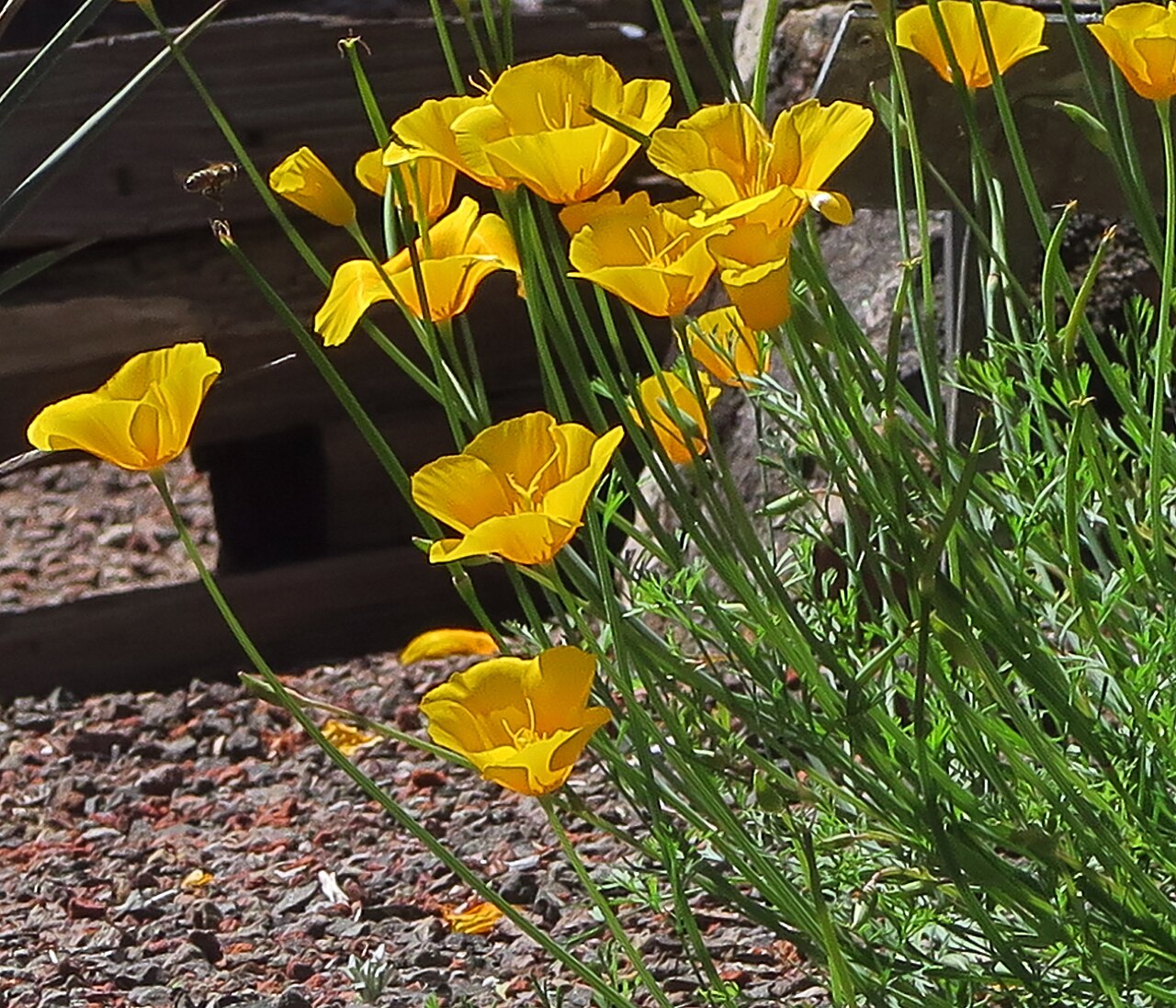
Eschscholzia caespitosa, known as Tufted Poppy, foothill poppy or collarless California poppy, is a small annual poppy of the grasslands, chaparral and oak woodlands of California and southwestern Oregon. In spring it raises satiny, cup-shaped, clear yellow to golden flowers on slender, nearly leafless stalks above a low tuft of finely divided, blue-green leaves.
At a glance it looks like a small California poppy, and the two often grow near each other. The easiest way to tell them apart is the “collar”: the California poppy has a broad, flaring rim under its petals, while the tufted poppy has none. Tufted poppy is also strictly an annual, with leaves mostly in a basal tuft, and it tends to grow on thinner, rockier soils, including serpentine and freshly burned slopes.
For gardeners in California and southern Oregon it is an easy, charming wildflower to sow in fall for a spring show in dry, sunny spots, rock gardens and meadow mixes. This guide covers how to identify it, where it grows, how to grow it from seed, and its value to native bees.
Identification
Tufted poppy is one of about a dozen Eschscholzia species in California. Check the base of the flower, the position of the leaves and the overall size.
Growth Habit
A hairless annual, usually 4 to 12 inches tall. Plants form a tuft of leaves at ground level, from which several slender, erect flower stalks arise. Each stalk carries a single flower. Plants live only from the start of the winter rains until they set seed in late spring.
Leaves
The leaves are mostly basal, divided two or three times into many narrow, linear segments, giving a lacy, ferny look. They are smooth, gray-green to blue-green and often have a waxy bloom. The stems carry few or no leaves.
Flowers
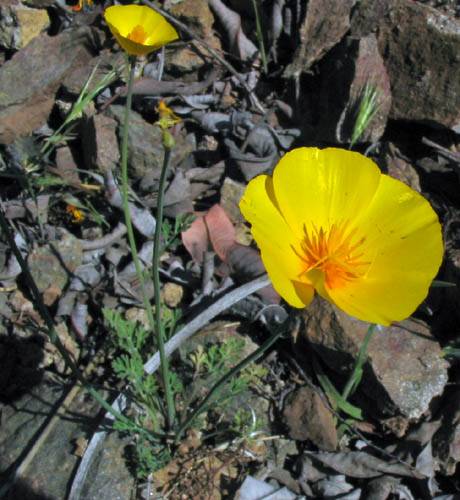
Flowers are 1 to 2 inches across, with four broad, satiny petals about ½ to 1 inch long, usually bright yellow and sometimes deep golden or with a faint orange base. A pointed, cone-shaped cap of fused sepals covers the bud and falls off as the flower opens. The key feature is the receptacle: the flower sits on a narrow stalk tip with no spreading rim or “collar” beneath the petals. Like other poppies, the flowers close at night and in cloudy weather. Bloom is mainly March to June.
Fruit & Seeds
The fruit is a long, slender, ribbed capsule, about 1½ to 3 inches long, that dries tan and splits lengthwise, flinging out many tiny, dark, net-patterned seeds.
Look-alikes
The California poppy (E. californica) is usually larger and often orange, has a flaring rim under the flower and leaves along the stems, and can live several years. Little gold poppy and Parish’s poppy are desert species that rarely grow in the same places. Lobb’s poppy (E. lobbii) of the Central Valley edge has smaller flowers and very narrow leaf segments; careful identification may need a hand lens.
Quick Facts
| Scientific Name | Eschscholzia caespitosa Benth. |
| Family | Papaveraceae (poppy family) |
| Plant Type | Annual wildflower |
| Mature Height | 4–12 in |
| Mature Spread | 4–8 in |
| Growth Rate | Fast; germinates with the winter rains and blooms in spring |
| Sun Exposure | Full sun |
| Water Needs | Low; winter and spring rain only |
| Soil Type | Well-drained sandy, gravelly or rocky soils, including serpentine |
| Soil pH | About 6.0–8.0 |
| Bloom Time | March–June |
| Flower Color | Bright yellow to golden |
| Fall Color | None; annual |
| Fruit | Long, slender, ribbed capsule with many tiny seeds |
| Deer Resistant | Yes; generally avoided by deer |
| USDA Hardiness Zones | Annual; grown in zones 7–10 |
Native Range
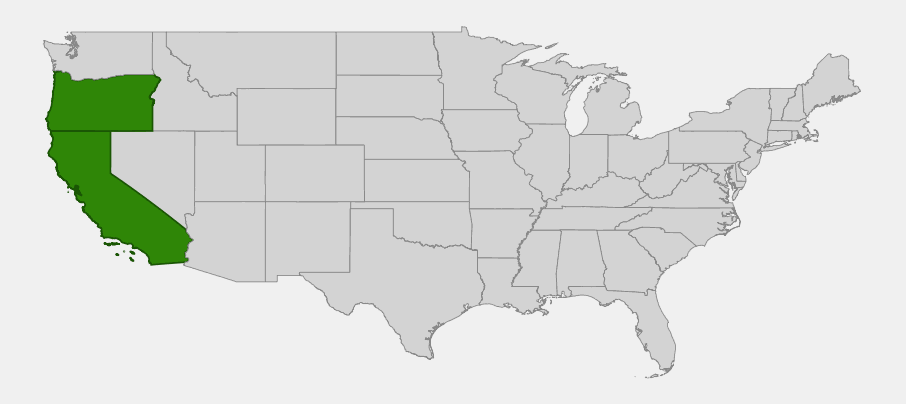
Tufted poppy is native to California, southwestern Oregon and northern Baja California. USDA PLANTS lists it in California and Oregon. In Oregon it is limited to the southwest, mainly the Rogue River valley and the Siskiyou region, while in California it is widespread in the foothills of the Sierra Nevada and the Cascades, the inner and outer Coast Ranges, and the Transverse and Peninsular Ranges of southern California.
It is a plant of the foothills rather than the valley floor or the high mountains. Typical sites are open grassland, chaparral openings, oak woodland and gravelly slopes, mostly below about 5,000 feet. It is especially common on thin, rocky soils where competition from grasses is weak, such as serpentine outcrops, road cuts and slopes recently opened by fire.
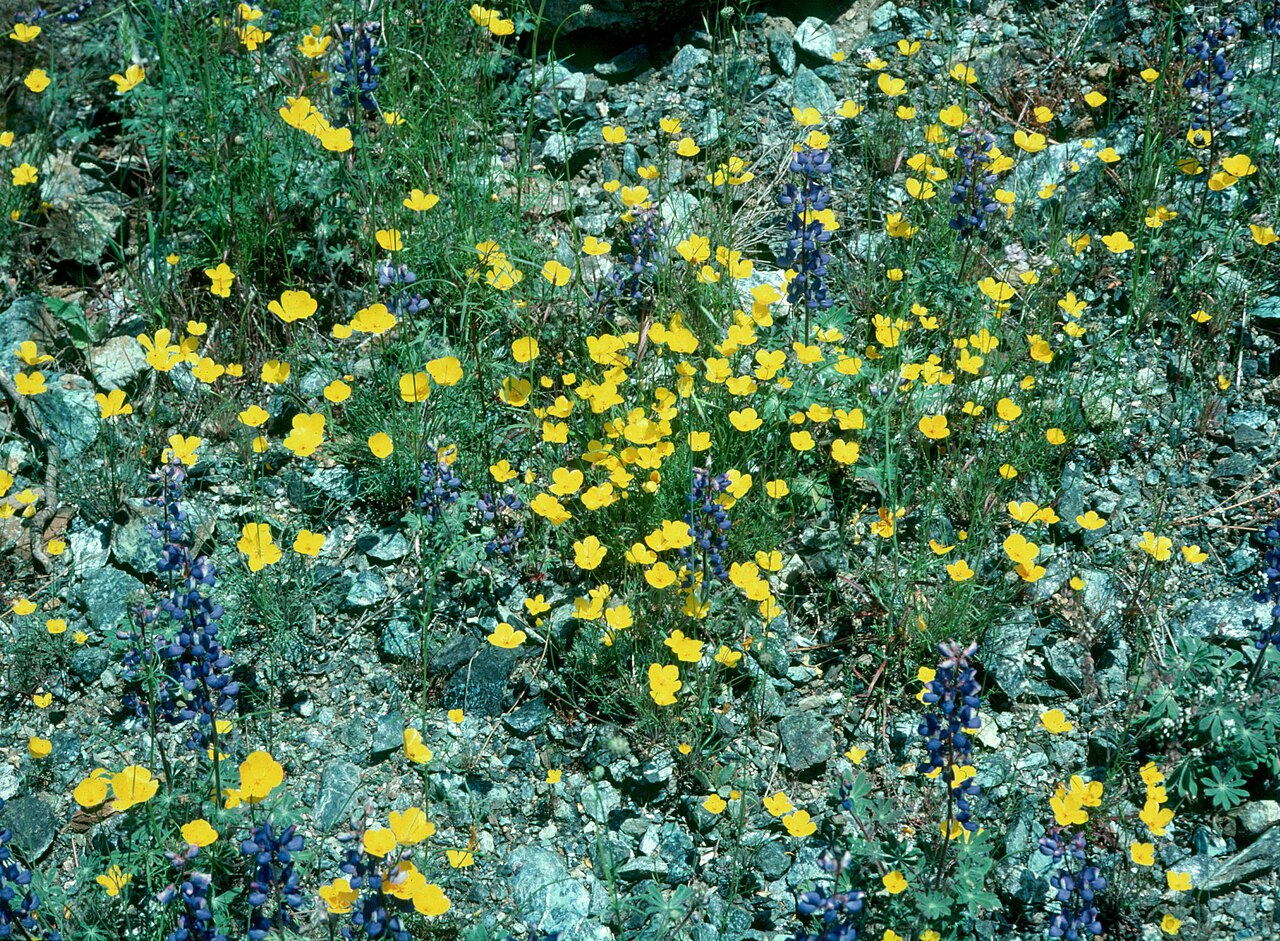
Like many California annuals, its numbers rise and fall with the rain. In wet springs it can paint whole hillsides gold, often mixed with lupines, owl’s clover and goldfields, while in dry years only scattered plants appear.
📋 Regional plant lists featuring Tufted Poppy: Western Oregon & Western Washington · California & Nevada
Growing & Care Guide
Tufted poppy is an easy, low-maintenance annual for dry, sunny gardens in California and southwestern Oregon, and it can be grown as a spring annual in other mild, dry-summer climates. Seed is offered by some native seed suppliers, sometimes as “foothill poppy”. All it needs is sun, sharp drainage and a cool, moist winter.
Light
Full sun. In shade the plants stretch and the flowers stay closed.
Soil & Water
Lean, well-drained sandy, gravelly or rocky soil is best; it is happy in poor soils where many garden plants struggle. Winter rain is usually enough. In a dry winter, water every week or two until the plants bloom, then let the soil dry out as they set seed. Avoid summer irrigation and rich, heavy, wet soils.
Planting Tips
Sow seed directly where you want the plants in fall, before or with the first rains, because poppies do not transplant well. Scatter the seed on raked, bare soil and press it in lightly without burying it. Sow it at the front of a border, in a rock garden or gravel bed, between paving stones, or in a meadow mix with baby blue eyes, creamcups and elegant clarkia.
Pruning & Maintenance
No pruning is needed. Deadheading can extend the bloom a little, but leave some capsules to ripen if you want plants next year. Pull the dry plants in early summer or let them stand until they drop their seed. Keep non-native annual grasses down so the seedlings have open ground.
Propagation
Grow it only from seed. Collect capsules as they turn tan and before they split, let them finish drying in a paper bag, and store the seed cool and dry until fall. Part of each seed crop may stay dormant for a year or more, which helps the plant survive dry years.
Landscape Uses
- Rock and gravel gardens: compact tufts and golden flowers in lean, fast-draining soil
- Wildflower meadows: a spring-blooming annual for California native seed mixes
- Front of borders: low, fine-textured foliage that does not hide neighboring plants
- Pollinator gardens: abundant spring pollen for native bees
- Restoration and burned slopes: a quick native annual cover on open, disturbed foothill sites
Wildlife & Ecological Value
Tufted poppy is one of many spring annuals that make California foothill grasslands so rich in flowers and insects.
For Pollinators
Poppies offer plenty of pollen but little nectar. The open, bowl-shaped flowers are visited by many native bees, including small solitary bees and bumblebees, as well as pollen-eating beetles and flies. Because the flowers close in cool, cloudy weather, they open on warm, sunny days when their pollinators are flying.
For Birds
Seed-eating birds such as finches, juncos and sparrows forage for small seeds shed by spring annuals, and the insects these flowers support help feed nestlings in spring.
For Mammals
Rodents such as pocket mice and harvester ants gather and store the tiny seeds. Deer generally avoid poppies.
Ecosystem Role
As a short-lived annual of open, often disturbed ground, tufted poppy helps cover and stabilize bare soil after fire or landslides and builds up a long-lived seed bank. It is a typical member of the native annual wildflower community that has been squeezed by non-native grasses in much of California.
Cultural & Historical Uses
The species was described by the English botanist George Bentham in 1835 from seed collected in California by David Douglas. The species name caespitosa is Latin for “tufted” or “growing in clumps”, after its basal tuft of leaves. The genus honors Johann Friedrich von Eschscholtz, a Baltic German naturalist on an early 19th-century Russian voyage to California.
Its common names reflect the main way people separate it from the state flower: “collarless California poppy” refers to the missing flaring rim under the flower, and “foothill poppy” to its home in the foothills around the Central Valley.
Like other poppies, tufted poppy contains alkaloids, and the Lady Bird Johnson Wildflower Center notes it can be poisonous if eaten. It is a plant to enjoy for its flowers, not for food or home remedies.
Frequently Asked Questions
How is tufted poppy different from the California poppy?
Tufted poppy is smaller, always an annual, with leaves mostly in a basal tuft, and its flowers have no flaring rim (collar) under the petals. The California poppy has that rim, leaves on the stems, and is often orange.
Is tufted poppy a perennial?
No. It is an annual that sprouts with the winter rains, blooms in spring and dies after setting seed. It comes back from seed if the conditions suit it.
Where does tufted poppy grow?
In the foothills of California, from the Sierra Nevada and Coast Ranges to southern California, and in southwestern Oregon and northern Baja California. Look for it on open, rocky slopes, in grasslands and in chaparral openings in spring.
How do I grow tufted poppy?
Sow seed directly in fall in full sun and lean, well-drained soil. Water only if the winter is dry, and let the plants set seed in late spring.
Is tufted poppy poisonous?
Like other poppies it contains alkaloids and may be harmful if eaten, so keep children and pets from eating it. It is safe to grow and handle in the garden.

Looking for a nursery that carries Tufted Poppy?
Browse our native plant nursery directory: California · Oregon

