
Southern Checkerbloom (Sidalcea sparsifolia)
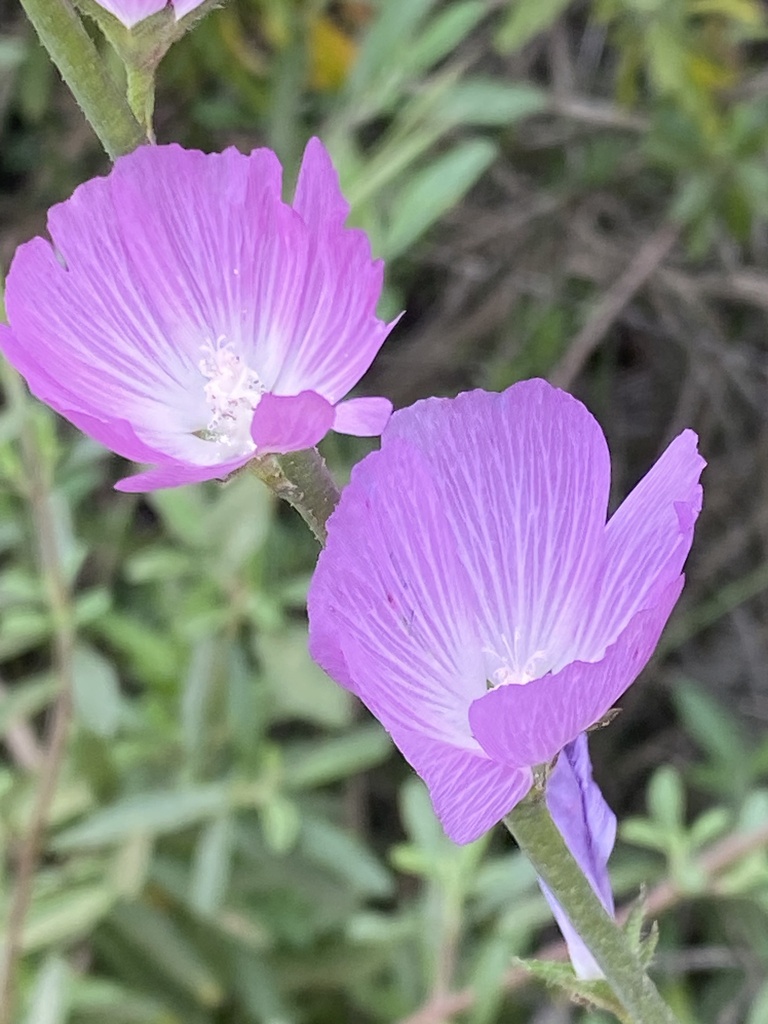
Sidalcea sparsifolia, known as Southern Checkerbloom, is a perennial wildflower of the mallow family (Malvaceae) native to Southern California and northern Baja California. In spring it sends up slender, leaning to upright stems, 1 to 2 feet long, with a few deeply divided leaves and short spikes of satiny pink to lavender flowers that look like small hollyhocks. It grows in grasslands, meadows, openings in chaparral and oak woodland, from the coast to the mountains.
Southern checkerbloom was long treated as a subspecies of the widespread checkerbloom (Sidalcea malviflora), as S. malviflora subsp. sparsifolia. Recent studies of the group raised it to a full species. USDA PLANTS lists it as Sidalcea sparsifolia under the common name dwarf checkerbloom. The name sparsifolia means “sparse-leaved,” a good description of its few, widely spaced stem leaves.
It is a lovely spring wildflower for native meadows, grassland restorations and sunny dry gardens in Southern California. It goes dormant or nearly so in summer and returns with the winter rains. Buy plants or seed from native plant nurseries and never dig wild plants.
Identification
Look for a low, open perennial with rounded, scalloped basal leaves, a few deeply cut stem leaves and spikes of pink, hollyhock-like flowers with five broad petals in spring grasslands.
Growth Habit
Plants are perennials from a woody root crown, sometimes spreading slowly by short rhizomes. The several stems are usually 1 to 2 feet long, often leaning or curving up from the base, and are covered with short, star-shaped and sometimes bristly hairs, especially toward the base.
Leaves
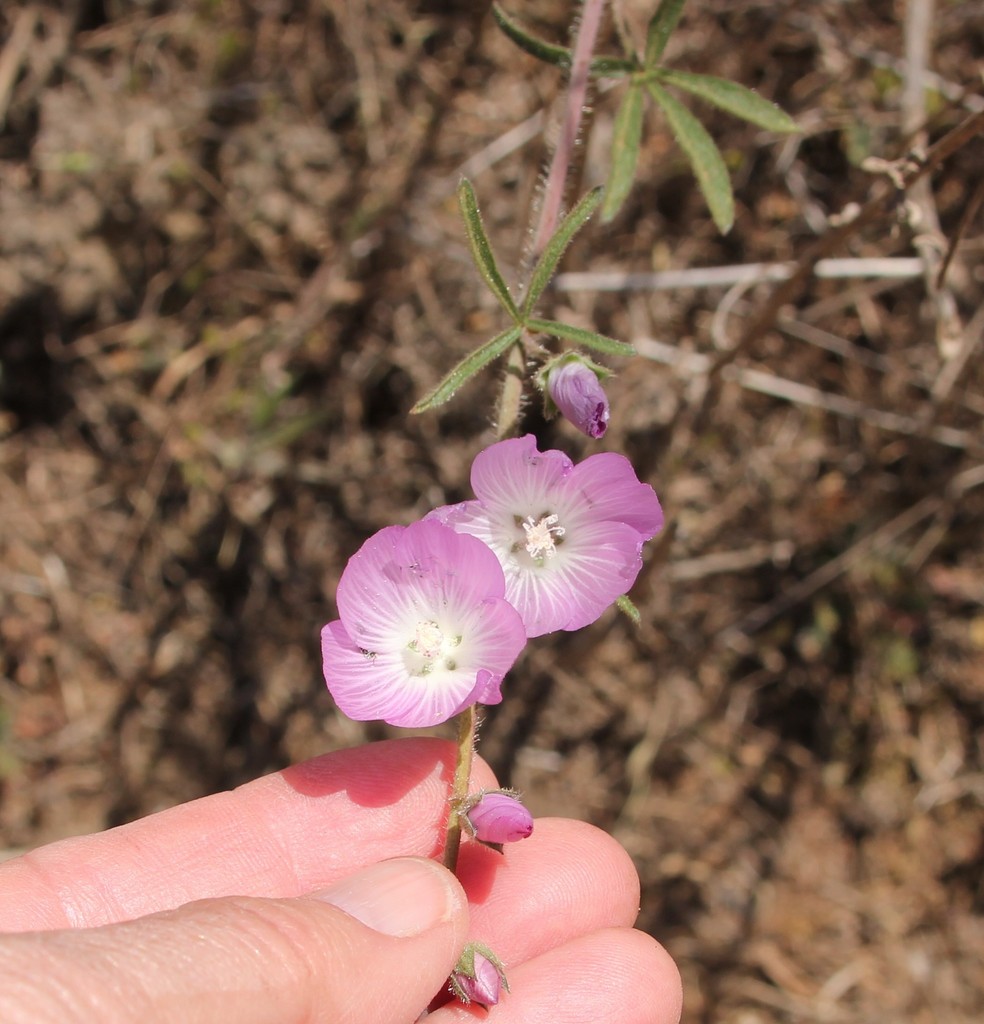
The basal leaves are long-stalked, rounded, about 1 to 2 inches across, and shallowly lobed with scalloped edges. The few stem leaves are deeply divided into five to seven narrow, finger-like lobes, and the upper ones are small and widely spaced along the stem. Basal leaves often wither as the stems bloom.
Flowers
The flowers are in a loose to fairly dense spike-like raceme at the top of each stem. Each flower has five broad, shallowly notched petals about 1/2 to 1 inch long, satiny pink to rose-lavender with fine darker veins and a pale or white center. The stamens are joined into a short central column, as in other mallows. Like other checkerblooms, some plants bear only female flowers, which are usually smaller than the bisexual flowers on other plants. Bloom time is mostly March to June, and into July in the mountains.
Fruit
The fruit is a flattened ring of small, one-seeded segments (mericarps) inside the persistent calyx, typical of the mallow family. The segments are slightly netted or ridged on their backs.
Look-alikes
Checkerbloom (Sidalcea malviflora) of the central and northern California coast is very similar; the two are separated mainly by range and details of the hairs and fruit. Annual checkerbloom (S. calycosa) is an annual of wet places. Chaparral mallow (Malacothamnus) is a large shrub, and the weedy cheeseweed (Malva parviflora) has tiny, pale flowers.
Quick Facts
| Scientific Name | Sidalcea sparsifolia (syn. S. malviflora subsp. sparsifolia) |
| Family | Malvaceae (mallow family) |
| Plant Type | Herbaceous perennial wildflower |
| Mature Height | 1–2 ft |
| Mature Spread | 1–2 ft |
| Growth Rate | Moderate |
| Sun Exposure | Full sun to part shade |
| Water Needs | Low to moderate; moist in spring, dry in summer |
| Soil Type | Loam or clay loam, also sandy; well-drained |
| Soil pH | Slightly acidic to neutral (about 6.0–7.5) |
| Bloom Time | March–June (to July in mountains) |
| Flower Color | Pink to rose-lavender |
| Fall Color | None; summer-dormant |
| Fruit | Ring of small one-seeded segments |
| Deer Resistant | Low; deer and rabbits browse it |
| USDA Hardiness Zones | 7–10 |
Native Range
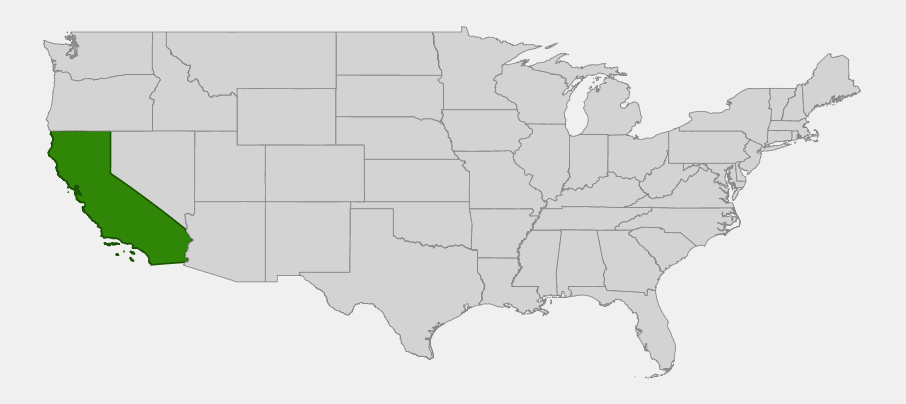
Southern checkerbloom is native to Southern California and northern Baja California, Mexico. USDA PLANTS lists it as native only in California, where it ranges through the coastal hills, valleys and mountains of the southern part of the state, including the Transverse Ranges and the Peninsular Ranges.
It is especially familiar in San Diego County, where it grows from coastal grasslands near San Diego and Santee to the meadows of the Cuyamaca, Laguna and Palomar mountains, and in western Riverside County. Plants in the northern part of the range grade into the coastal forms of checkerbloom.
It grows in valley and foothill grasslands, mountain meadows, openings in chaparral and coastal sage scrub, and oak and pine woodland, usually on clay or loam soils that are moist in spring. It occurs from near sea level to about 7,500 feet.
📋 Regional plant lists featuring Southern Checkerbloom: California & Nevada
Growing & Care Guide
Southern checkerbloom grows with the rhythm of the Southern California climate: it sprouts with the winter rains, blooms in spring and rests in summer. It is easy in a sunny spot with decent drainage and little summer water.
Light
Full sun near the coast; full sun to light afternoon shade inland. In deep shade it becomes floppy and blooms poorly.
Soil & Water
It grows in clay loam, loam or sandy soil, as long as water does not stand around the crown. Water occasionally during dry spells in winter and spring. After flowering, let it go dry; occasional summer water keeps the leaves green longer but is not necessary, and heavy summer watering can rot the roots.
Planting Tips
Plant container plants in late fall or winter, 12 to 18 inches apart. It looks best in drifts with native bunchgrasses, blue-eyed grass, poppies and other spring wildflowers, where its leaning stems can rest among neighbors.
Pruning & Maintenance
Cut the flowering stems back after seed falls or when they turn brown in summer. Cutting back spent stems in late spring sometimes produces a second, smaller flush of flowers. Keep invasive annual grasses from smothering it.
Propagation
Sow seed in fall; germination improves if the hard seed coat is nicked or treated with hot water. Established clumps can be divided in late fall or winter when they begin to grow.
Landscape Uses
- Native meadows: spring color among bunchgrasses and bulbs
- Grassland restoration: a characteristic wildflower of Southern California grasslands
- Pollinator gardens: attracts native bees and butterflies
- Dry gardens: summer-dormant and drought tolerant
- Cottage-style plantings: hollyhock-like flowers on a small scale
Wildlife & Ecological Value
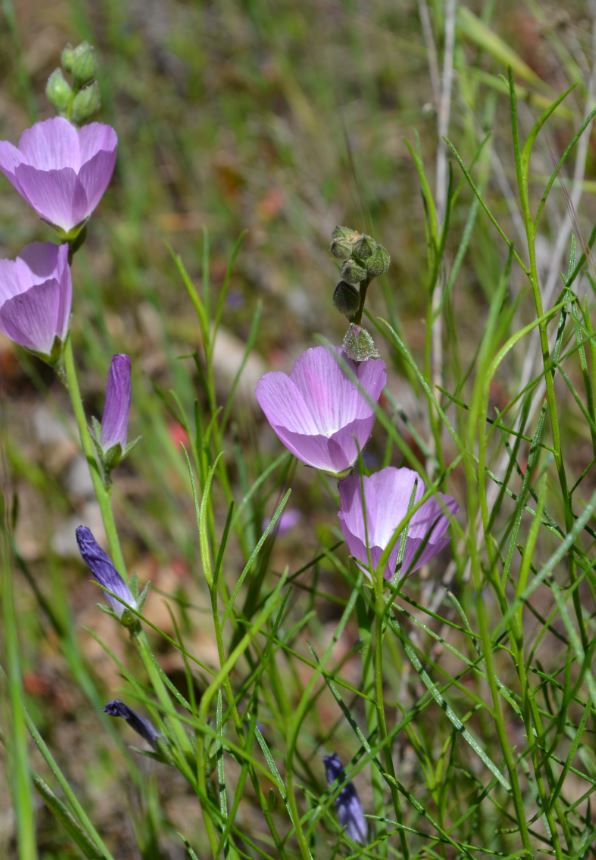
Southern checkerbloom is a valuable spring nectar and pollen source in Southern California grasslands and meadows.
For Pollinators
The open, bowl-shaped flowers attract native bees, including specialist bees that collect pollen mainly from mallows, as well as bee flies and butterflies. Checkerblooms and other mallows are food plants for caterpillars of checkered-skippers, the West Coast lady and the painted lady.
For Birds
Seed-eating birds such as sparrows and finches may eat the seeds, and birds hunt the insects attracted to the flowers.
For Mammals
Deer, rabbits and ground squirrels graze the leaves and flowering stems.
Ecosystem Role
As a long-lived perennial it is part of the native grassland and meadow flora that has been largely replaced by non-native annual grasses in Southern California, so it is a useful species in grassland restoration.
Cultural & Historical Uses
The genus name Sidalcea combines the names of two related Old World mallow genera, Sida and Alcea (hollyhock). The name “checkerbloom” is often said to refer to the checkered or netted pattern of veins on the petals.
The plant was first named by the botanist C. Leo Hitchcock in his mid-twentieth-century study of the genus, as a subspecies of checkerbloom. Later botanists studying the checkerbloom group raised it to species rank, and USDA PLANTS now follows that treatment.
Some Indigenous peoples of California used checkerblooms and other mallows as food greens and in remedies, but there is little specific information about southern checkerbloom. It should not be used as a remedy. Hybrids and selections of other Sidalcea species are popular garden perennials in Britain and elsewhere.
Frequently Asked Questions
Is southern checkerbloom the same as checkerbloom?
It is closely related and was once treated as a subspecies of checkerbloom (Sidalcea malviflora). It is now usually treated as a separate species of Southern California and Baja California.
Why does USDA call it dwarf checkerbloom?
USDA PLANTS lists Sidalcea sparsifolia under the common name dwarf checkerbloom. In California it is more often called southern checkerbloom, the name used here.
Does southern checkerbloom need summer water?
No. It is adapted to dry summers and often goes partly dormant after flowering. Occasional water keeps it greener but too much can rot it.
When does southern checkerbloom bloom?
Mostly from March to June, and into July at higher elevations.
Will southern checkerbloom spread?
It forms slowly expanding clumps and may self-sow in open ground, but it is not aggressive.

Looking for a nursery that carries Southern Checkerbloom?
Browse our native plant nursery directory: California

