
Large-Flowered Phacelia (Phacelia grandiflora)
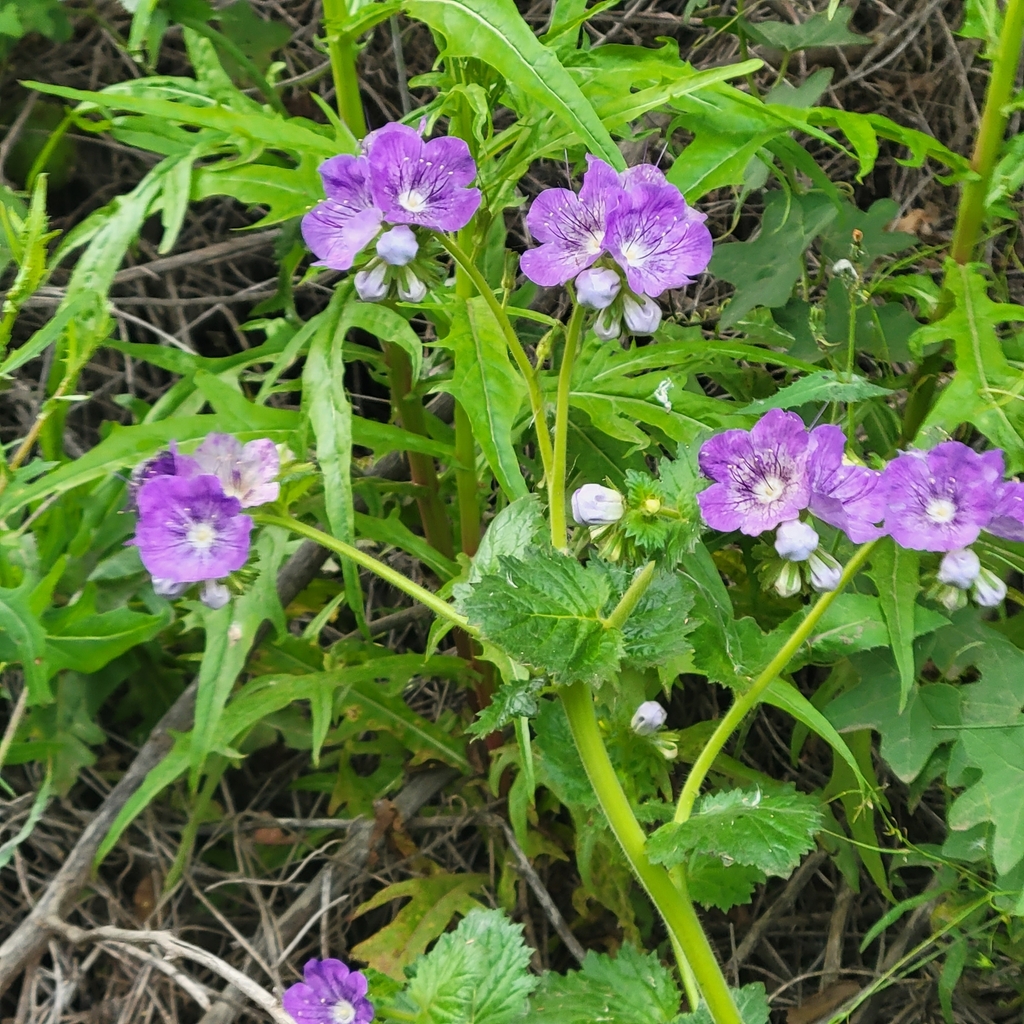
Phacelia grandiflora, known as Large-Flowered Phacelia (USDA: largeflower phacelia), is a showy spring annual of the coastal hills and mountains of southern California. It belongs to the borage family (Boraginaceae; formerly the waterleaf family, Hydrophyllaceae). It belongs to the same small group of large-flowered phacelias (section Whitlavia) as wild Canterbury bells, and is sometimes called giant phacelia.
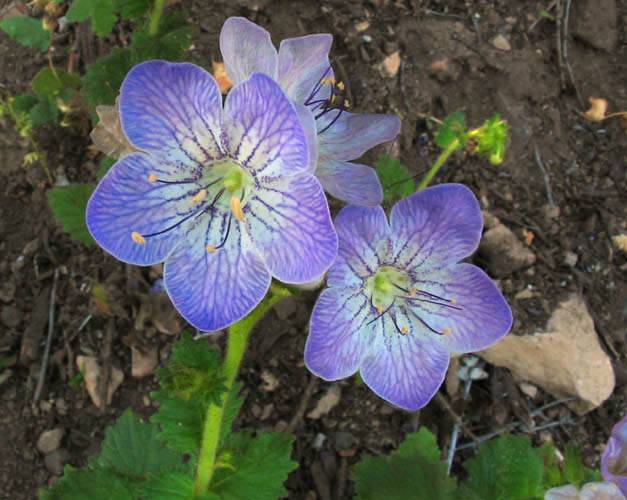
True to its name, it has some of the largest flowers of any phacelia: broad, bowl-shaped blossoms 1 to 1 1/2 inches across, pale lavender to blue-violet or nearly white, often with darker veins. Plants grow 1 to 3 feet tall from March to June, with large, roundish, toothed leaves. The whole plant is covered in sticky glandular hairs.
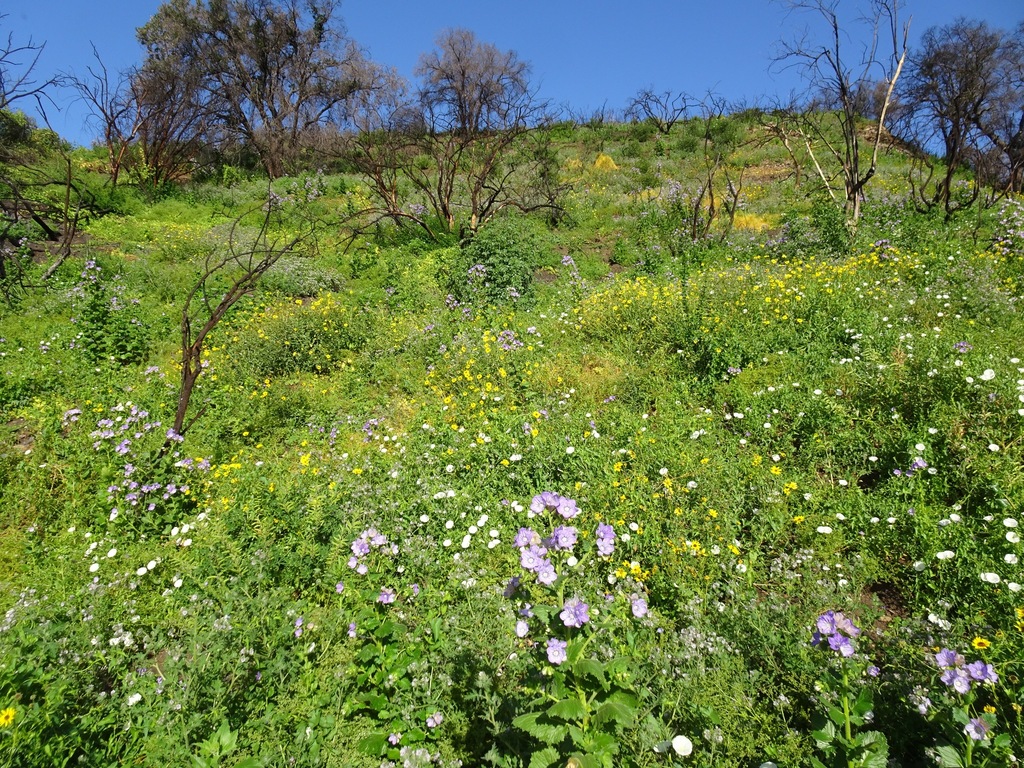
Large-flowered phacelia is a classic “fire follower”: it is most abundant in the first few years after chaparral and coastal sage scrub burn, when seeds that have waited in the soil germinate in great numbers. Safety note: the glandular hairs can cause an itchy, blistering rash (contact dermatitis) in many people, similar to poison oak. Wear gloves and long sleeves when handling it.
Identification
Look for a tall, sticky, hairy annual on burned or disturbed slopes in southern California in spring, with large, roundish, toothed leaves and broad, bowl-shaped, pale lavender flowers 1 inch or more across.
Growth Habit
Large-flowered phacelia is an erect annual 8 inches to 3 feet tall (occasionally taller), usually with a single main stem that branches above. The stems, leaves and flower stalks are covered in stiff hairs and sticky, gland-tipped hairs that give the plant a strong, slightly unpleasant smell and collect dust and small insects.
Leaves
The leaves are alternate, stalked, broadly oval to nearly round, 1 1/2 to 6 inches long, with coarsely toothed or shallowly lobed edges. Lower leaves are the largest.
Flowers
Flowers appear from about March to June in loose, coiled clusters (scorpioid cymes) that uncurl as the flowers open. Each flower is broadly bowl-shaped to nearly flat, about 1 to 1 1/2 inches across, with five rounded lobes. The color ranges from pale lavender and blue-violet to almost white, often with darker veins and a paler center. The stamens are shorter than the petals.
Fruit & Seeds
The fruit is an oval capsule with many small, pitted seeds. The seeds can stay dormant in the soil for many years; heat, smoke and charred wood from fires help trigger germination.
Look-alikes
Wild Canterbury bells (Phacelia minor), its close relative in section Whitlavia, has smaller, deep purple, bell-shaped (tubular) flowers. California bluebells has bright gentian-blue, bell-shaped flowers and grows mostly in the deserts. Other fire-following phacelias in the same area have much smaller flowers in dense, fuzzy coils.
Quick Facts
| Scientific Name | Phacelia grandiflora |
| Family | Boraginaceae (borage family; formerly Hydrophyllaceae) |
| Plant Type | Annual wildflower |
| Mature Height | 1–3 ft |
| Mature Spread | 1–2 ft |
| Growth Rate | Fast |
| Sun Exposure | Full sun to part shade |
| Water Needs | Low; winter and spring rain |
| Soil Type | Rocky, sandy or loamy soils on slopes, often recently burned |
| Soil pH | Slightly acidic to slightly alkaline (about 6.0–8.0) |
| Bloom Time | March–June |
| Flower Color | Pale lavender to blue-violet or nearly white |
| Fall Color | None; dies in summer |
| Fruit | Oval capsule with many small seeds |
| Deer Resistant | Yes; sticky, hairy foliage is avoided |
| USDA Hardiness Zones | Annual (grows in zones 9–11 climates) |
Native Range
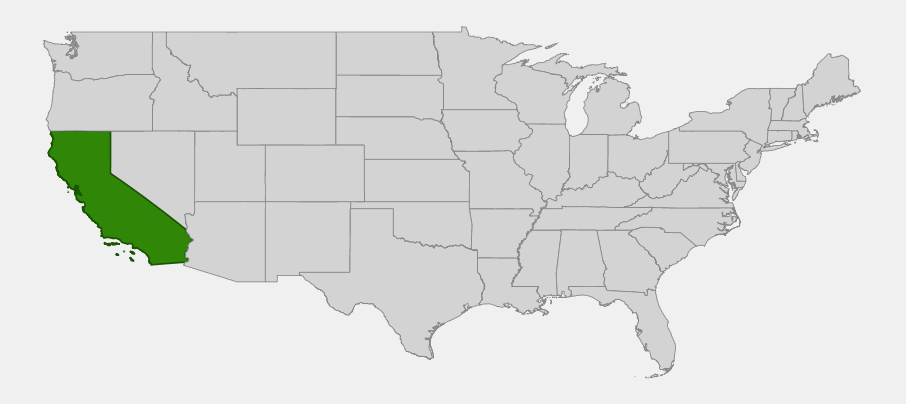
Large-flowered phacelia is native to southern California and northern Baja California, Mexico. USDA PLANTS lists it as native only in California, where it grows from about Santa Barbara County south through Ventura, Los Angeles, Orange, Riverside and San Diego Counties.
It is found in the coastal ranges and foothills, including the Santa Ynez Mountains, the Santa Monica Mountains, the San Gabriel and San Bernardino foothills, the Santa Ana Mountains and the Peninsular Ranges, mostly below about 3,000 feet.
It grows on slopes in chaparral and coastal sage scrub, especially in openings, along roads and trails, on rocky and disturbed ground and, above all, on recently burned slopes. In years without fire it is uncommon and may persist only on road cuts and other disturbed sites.
📋 Regional plant lists featuring Large-Flowered Phacelia: California & Nevada
Growing & Care Guide
Large-flowered phacelia can be grown from seed in mild, winter-rain climates. Because of its irritating hairs, plant it where people will not brush against it, and always wear gloves when handling it.
Light
Full sun to light shade. It flowers best in sun, but tolerates some afternoon shade in hot inland areas.
Soil & Water
It grows in well-drained rocky, sandy or loamy soil. Sow it to coincide with winter rains; water only if rains fail. Stop watering in late spring as the plants set seed. Rich, wet soil leads to weak, floppy plants.
Planting Tips
Sow seed directly in fall, scattering it on bare soil and raking lightly. Germination is often poor without fire cues; many growers treat seed with liquid smoke or “smoke water,” or sprinkle powdered charcoal (charate) over the seed bed. Seedlings do not transplant well. Grow it at the back of a wildflower bed, away from paths.
Pruning & Maintenance
No pruning is needed. Leave plants to drop seed, then remove the dried stalks in summer, wearing gloves and long sleeves.
Propagation
Grow only from seed. Smoke or charate treatment, followed by cool, moist conditions, improves germination.
Landscape Uses
- Wildflower meadows: showy, large lavender flowers in spring
- Post-fire restoration: a native fire follower for burned slopes
- Pollinator gardens: nectar and pollen for native bees
- Back-of-border annual: tall stems behind lower wildflowers
- Educational gardens: a striking example of California fire ecology
Wildlife & Ecological Value
In the first springs after a chaparral fire, large-flowered phacelia and other fire followers carpet the burned slopes and feed pollinators while the shrubs regrow.
For Pollinators
The large, open flowers are visited by many native bees, including bumble bees, carpenter bees, mason bees and small solitary bees, as well as bee flies and butterflies. Phacelias are among the most important pollen sources for native bees in California.
For Birds
Seed-eating birds such as sparrows and towhees may eat the seeds that fall to the ground.
For Mammals
The sticky, hairy foliage is avoided by deer and rabbits.
Ecosystem Role
As a fire follower, it covers bare, burned slopes quickly, helping hold soil and adding organic matter. Its long-lived seeds wait in the soil seed bank between fires, sometimes for decades.
Cultural & Historical Uses
The genus name Phacelia comes from the Greek phakelos, “bundle,” referring to the crowded flower clusters. Grandiflora means “large-flowered.”
Its closest relatives are grouped in section Whitlavia, named after Francis Whitla, an Irish patron of botany. Wild Canterbury bells, the best-known member, was originally described as Whitlavia grandiflora, a name that is easily confused with this species but belongs to Phacelia minor.
Large-flowered phacelia is well known among southern California hikers and botanists for causing contact dermatitis. Its glandular hairs contain compounds that can cause an itchy, blistering rash similar to poison oak in sensitive people, sometimes appearing a day or two after contact.
Frequently Asked Questions
Is large-flowered phacelia poisonous to touch?
For many people, yes. The sticky glandular hairs can cause an itchy, blistering rash (contact dermatitis) similar to poison oak. Wear gloves and long sleeves, and wash skin with soap and water after contact.
Why does it appear after wildfires?
Its seeds can remain dormant in the soil for years. Heat, smoke and charred wood from fire trigger germination, so it is most abundant in the first springs after a burn.
Can I grow large-flowered phacelia in my garden?
Yes, in mild, winter-rain climates. Sow seed in fall, ideally treated with smoke water or charate, and plant it away from paths because of its irritating hairs.
Where does large-flowered phacelia grow?
In southern California from Santa Barbara County to San Diego County and in northern Baja California, in chaparral and coastal sage scrub.
Is it a good pollinator plant?
Yes. Its large flowers attract many native bees and other pollinators in spring.

Looking for a nursery that carries Large-Flowered Phacelia?
Browse our native plant nursery directory: California

