
White Rock-Lettuce (Pinaropappus roseus)
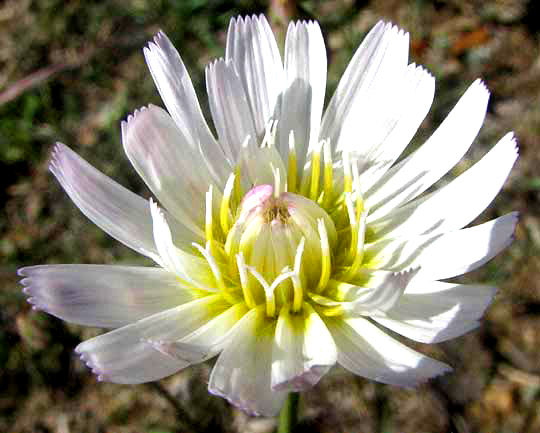
Pinaropappus roseus, known as White Rock-Lettuce (also written white rocklettuce) or pink rock-lettuce, is a low perennial wildflower of rocky, limestone grasslands in Texas, Oklahoma, New Mexico and southeastern Arizona. In spring it sends up slender, nearly leafless stalks, each topped by a single daisy-like flower head about 1 to 2 inches across, with square-tipped, finely toothed white or pale pink rays around a yellowish center.
Despite its daisy-like look, it belongs to the chicory tribe of the aster family (Asteraceae), like dandelions and native lettuces, and its stems and leaves bleed milky sap when broken. All the “petals” are strap-shaped ray florets; there are no separate disk florets. The flowers open in the morning sun and usually close by late morning or midday.
The plant is common on the Edwards Plateau and in the Trans-Pecos of Texas and ranges south through much of Mexico. This guide covers how to identify white rock-lettuce, where it grows, how to use it in rock and dry gardens, and its value to pollinators.
Identification
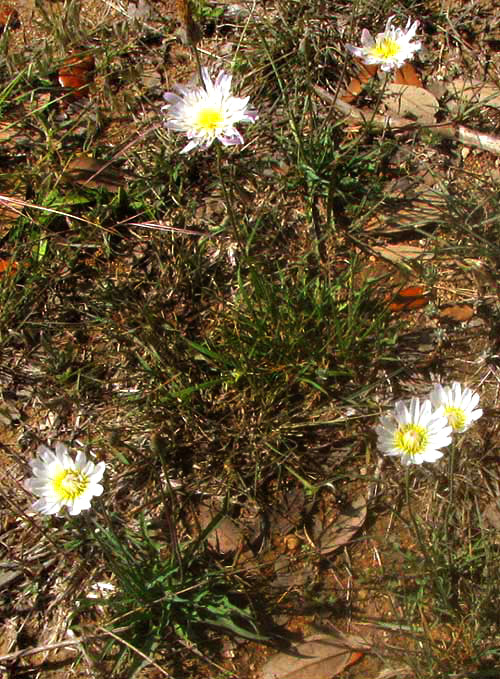
Look for white rock-lettuce in spring on thin, rocky soil: a small tuft of narrow, grass-like or lobed basal leaves with one or a few bare stalks, each carrying a single white to pinkish flower head with ragged, square-cut ray tips.
Growth Habit
It is a low perennial, usually 4 to 16 inches tall, from a thick taproot and short, woody crown. A plant forms a small tuft of basal leaves and one to several slender, mostly unbranched flowering stems. All parts contain a milky latex.
Leaves
Most leaves are at the base of the plant. They are narrow, linear to oblanceolate, about 1 1/2 to 5 inches long, and either entire or cut into a few narrow lobes along the midrib. Stem leaves are few and much reduced, often little more than small scales.
Flowers
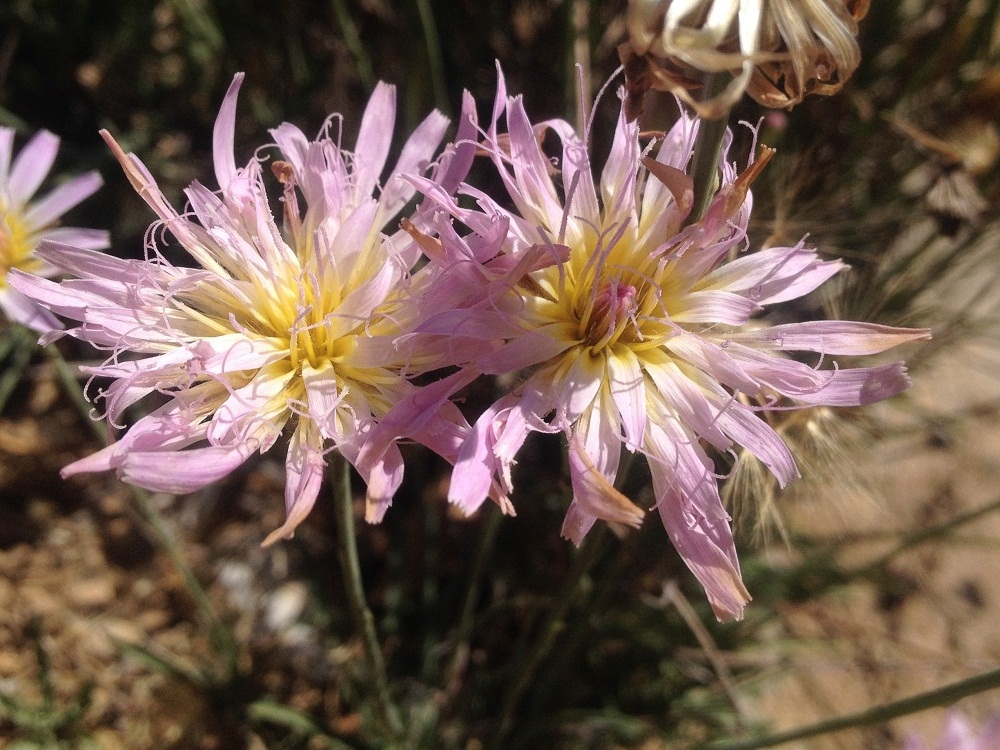
Each stem ends in a single flower head about 1 to 2 inches across. The rays are white to pale pink, often purplish or rose on the underside, and squared off at the tips with five small teeth. The center is yellowish where the inner florets have not yet opened. Flower heads open on sunny mornings and close by midday, and aging heads take on a pinkish tinge. Bloom is mainly March to June, with scattered flowers into summer after rain.
Bracts
Below the flower head is a cup of overlapping, green bracts (phyllaries), often tipped or edged with dark red to purple, which is a helpful feature when the flowers are closed.
Fruit & Seeds
After flowering the heads produce small, slender, ribbed seeds (cypselae), each crowned with a tuft of soft, tan to whitish bristles, forming a fluffy, buff-colored seed head that is dispersed by wind.
Look-alikes
Texas skeleton plant (Lygodesmia texana) also has milky sap and pink to lavender heads on bare stems, but its heads have fewer rays, usually about 8 to 12, and it grows taller. Blackfoot daisy has similar white flowers on rocky limestone soils but is a rounded, bushy plant with clear yellow disk flowers and no milky sap.
Quick Facts
| Scientific Name | Pinaropappus roseus (Less.) Less. |
| Family | Asteraceae (aster family), chicory tribe |
| Plant Type | Low herbaceous perennial wildflower |
| Mature Height | 4–16 in |
| Mature Spread | 4–8 in |
| Growth Rate | Slow to moderate |
| Sun Exposure | Full sun |
| Water Needs | Low; drought tolerant |
| Soil Type | Thin, rocky, well-drained soils, especially limestone and caliche |
| Soil pH | About 7.0–8.5 (neutral to alkaline) |
| Bloom Time | March–June (sporadically to August) |
| Flower Color | White to pale pink, aging pinkish; yellowish center |
| Fall Color | Not significant |
| Fruit | Small seeds with tan bristly pappus, dispersed by wind |
| Deer Resistant | Low-growing and seldom browsed, but not reliably deer-proof |
| USDA Hardiness Zones | 7–9 |
Native Range
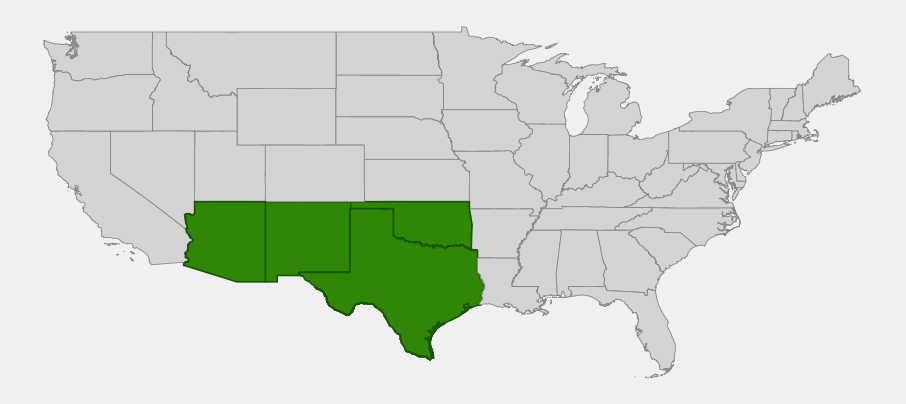
White rock-lettuce is native to the southern Great Plains and the Southwest of the United States and to Mexico. USDA PLANTS lists it in Texas, Oklahoma, New Mexico and Arizona. In Mexico it extends south through the Chihuahuan Desert and the central highlands to at least Guanajuato and beyond.
In Texas it is most common on the Edwards Plateau and in the Trans-Pecos, with scattered populations in the Rolling Plains and North Central Texas. In Oklahoma it is found mainly in the south-central and southwestern parts of the state, in New Mexico mostly in the southern and eastern counties, and in Arizona it is rare, at the western edge of its range.
It grows in rocky prairies and grasslands, on limestone ledges and outcrops, caliche slopes, gravelly hillsides, open juniper-oak woodlands and roadsides, usually in full sun on thin, alkaline soil.
📋 Regional plant lists featuring White Rock-Lettuce: Arizona & New Mexico · South & West Texas
Growing & Care Guide
White rock-lettuce is a small, charming wildflower for rock gardens, gravel gardens and native meadows on thin, alkaline soil in Texas and the Southwest. It is not common in the nursery trade, but seed is occasionally available from regional native seed suppliers. Where it already grows on your property, simply protect it and avoid mowing until it has set seed.
Light
Give it full sun. It flowers best on open, sunny ground and declines in shade or under taller plants.
Soil & Water
It needs very well-drained soil: limestone gravel, caliche, rocky loam or a raised gravel bed. Once established it is highly drought tolerant and needs no supplemental water in most years; too much water or heavy, wet clay will rot the crown.
Planting Tips
Plant or sow it where small plants will not be overrun, such as a rock garden, the edge of a gravel path, a dry slope or among short grasses like buffalograss and blue grama. Group several plants for a better spring display, since each plant carries only a few flowers at a time.
Pruning & Maintenance
Little care is needed. Keep taller, aggressive plants from shading it out. Delay mowing of meadows or roadsides until after the seed heads have dispersed in early summer.
Propagation
Grow it from seed sown in fall on the surface of a gritty mix or directly on prepared rocky ground, so winter rains and cool temperatures can break dormancy. Plants form a deep taproot and do not transplant well once established, so start them small. Do not dig plants from the wild.
Landscape Uses
- Rock and gravel gardens: a small, long-lived perennial for thin, alkaline soil
- Native meadows: spring flowers among short grasses on dry ground
- Xeriscapes: no supplemental water needed once established
- Pollinator gardens: early-season pollen and nectar for small native bees
- Habitat restoration: a component of Edwards Plateau and Trans-Pecos grassland plantings
Wildlife & Ecological Value
White rock-lettuce is a small but steady part of the spring flower display on rocky grasslands, offering pollen and nectar when many other plants are only starting to grow.
For Pollinators
The morning-opening flower heads are visited by small native bees, including sweat bees and mining bees, as well as flies and beetles that feed on the pollen. Like other chicory-tribe flowers, they offer abundant pollen.
For Birds
Small seed-eating birds such as sparrows and finches feed on the seeds of chicory-tribe plants, and the insects drawn to the flowers feed ground-foraging birds.
For Mammals
The leaves, with their milky, bitter sap, are only lightly grazed. Small mammals may eat seeds that fall to the ground.
Ecosystem Role
As a long-lived, deep-rooted perennial of thin, rocky soils, white rock-lettuce helps hold soil between rocks and grass clumps and adds to the diversity of native forbs that support pollinators on limestone prairies and savannas.
Cultural & Historical Uses
The genus name Pinaropappus is often explained as coming from Greek words meaning “dirty” or “dingy” and pappus, referring to the dull, tan bristles that crown the seeds. The species name roseus, “rosy”, refers to the pink tint of many flower heads, which led to the alternative common name pink rock-lettuce.
The species was first described in the early nineteenth century by the German botanist Christian Friedrich Lessing, originally in a different genus, from specimens collected in Mexico. In Mexico it is known by the name chipule, among others.
The name rock-lettuce combines its habitat with its family ties: like lettuce, chicory and dandelion, it has milky sap and strap-shaped ray flowers. On spring walks in the Texas Hill Country, its small white heads among limestone rocks are a familiar sign of the season.
Frequently Asked Questions
Is white rock-lettuce related to garden lettuce?
Yes, distantly. Both belong to the chicory tribe of the aster family, which also includes dandelions and chicory. Like them, white rock-lettuce has milky sap and flower heads made only of strap-shaped ray florets.
Why do the flowers close during the day?
The flower heads open on sunny mornings and usually close by late morning or midday, especially in heat. On cloudy days they may stay closed.
Is it white or pink?
Both. Flower heads are usually white with a yellowish center, but some plants have pale pink heads, many are rosy on the underside, and white heads turn pinkish as they age.
Where does white rock-lettuce grow?
It grows on rocky, often limestone grasslands and slopes in Texas, Oklahoma, New Mexico and southeastern Arizona, and south into Mexico.
Can I grow white rock-lettuce in my garden?
Yes, in full sun with very well-drained, rocky or gravelly soil. It is drought tolerant and suits rock gardens and dry meadows, but it is rarely sold, so it is usually grown from seed.

Looking for a nursery that carries White Rock-Lettuce?
Browse our native plant nursery directory: Arizona · New Mexico & Oklahoma · Texas

