
Cupped Leaf Ceanothus (Ceanothus greggii)
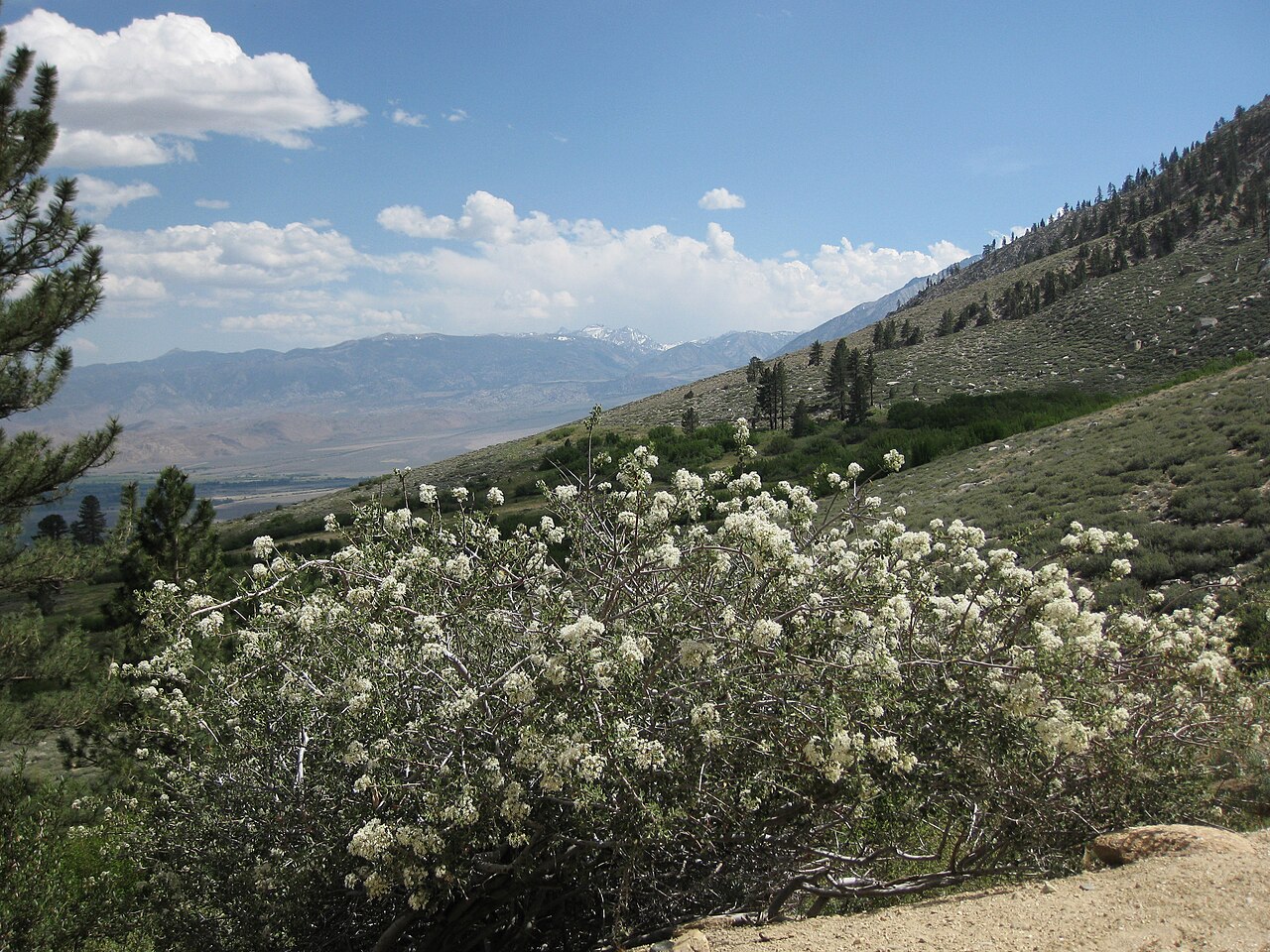
Ceanothus greggii, known here as Cupped Leaf Ceanothus (USDA: desert ceanothus; also cupleaf ceanothus, Mojave ceanothus or Gregg’s ceanothus), is an evergreen shrub of dry slopes in the mountains of the Southwest. It belongs to the buckthorn family (Rhamnaceae). Its small, thick, gray-green leaves are often cupped or folded upward, and in spring it is covered in small, rounded clusters of fragrant white or pale bluish flowers.
It is a stiff, much-branched shrub, usually 3 to 6 feet tall, that grows in chaparral, pinyon-juniper woodland and desert mountain scrub from southern California and southern Nevada east through Utah, Arizona and New Mexico to West Texas and northern Mexico. Like other ceanothus, its roots host bacteria that fix nitrogen, so it can grow on poor, rocky soils.
USDA PLANTS treats this as one wide-ranging species with several varieties. Some recent treatments, including Plants of the World Online and iNaturalist, split it: they call most plants in California, Nevada, Utah and Arizona Ceanothus pauciflorus or C. perplexans, and limit C. greggii in the strict sense to Texas and Mexico. This page follows USDA and covers the whole group.
Identification
Look for a stiff, gray-green evergreen shrub on dry slopes with small, opposite, thick leaves that are often cupped, corky bumps at the leaf bases, and clusters of tiny white flowers in spring.
Growth Habit
An erect to rounded, densely branched evergreen shrub, 3 to 6 feet tall (occasionally to 8 feet) and about as wide. Young twigs are gray and finely hairy; older stems are rigid and grayish-brown. The short side branches can be somewhat spine-like.
Leaves
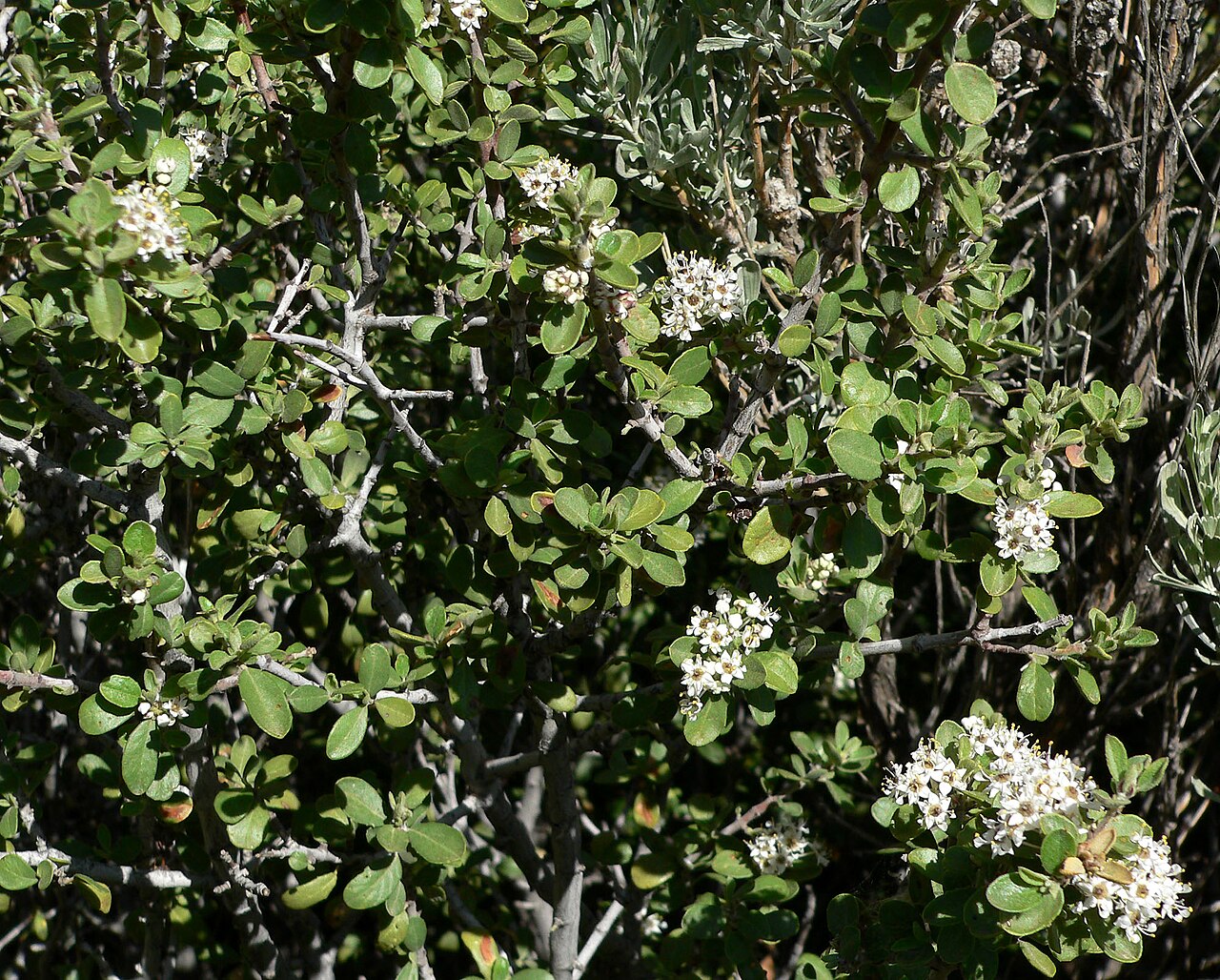
The leaves are opposite, small (about 1/4 to 3/4 inch long), oval to round, thick and leathery. They are often cupped or folded upward along the midrib, gray-green and finely hairy, especially underneath, with smooth edges or a few small teeth. At the base of each leaf pair are persistent, corky stipules that look like small warts, a feature of the section of Ceanothus it belongs to.
Flowers
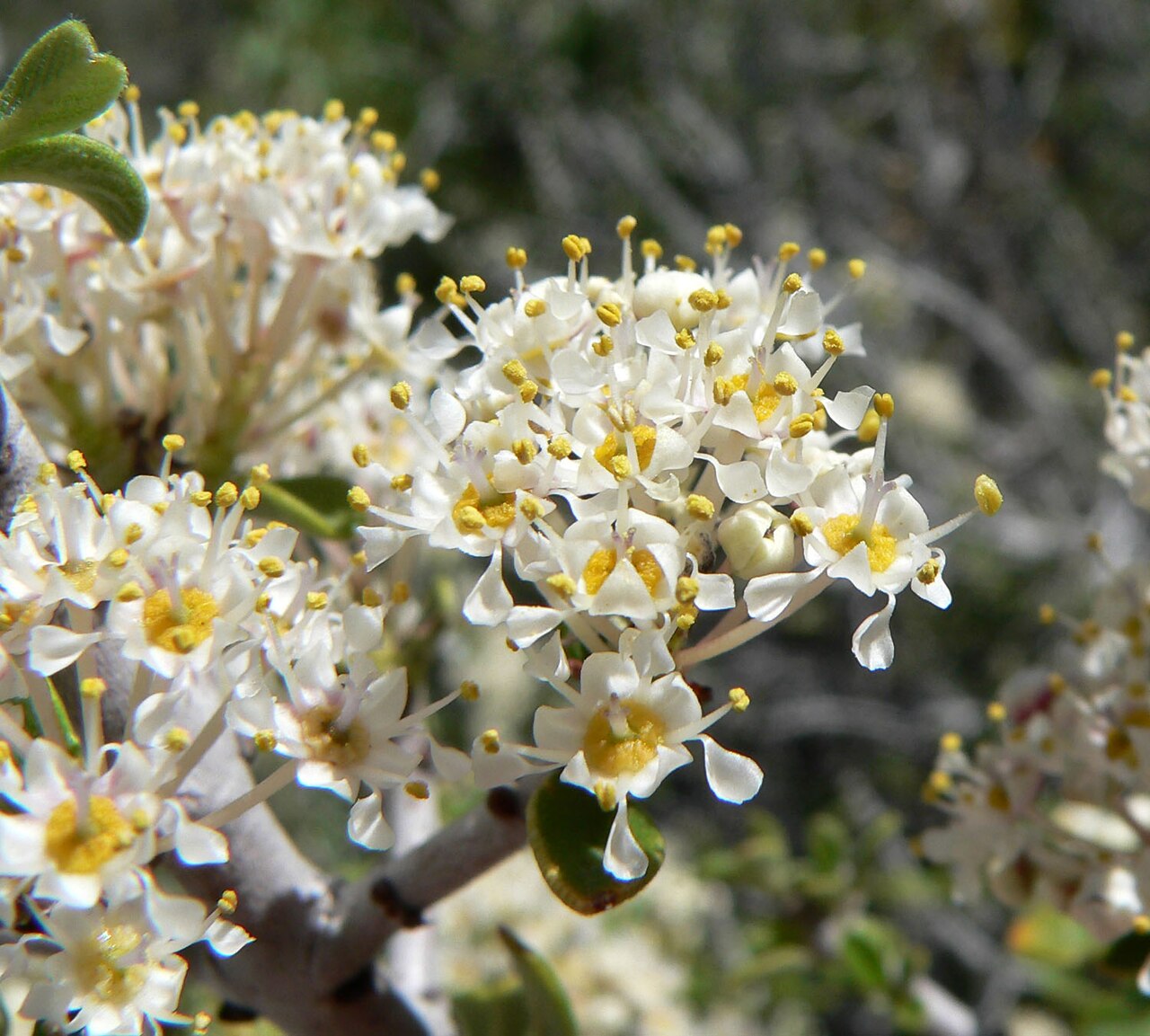
Tiny flowers are crowded into small, rounded, umbrella-like clusters on short side spurs. Each flower has five hooded, spoon-shaped petals and is white, sometimes tinged pale blue or pink. Flowering is from about March to May at low elevations and into June in the mountains. The flowers have a sweet, honey-like scent.
Fruit
The fruit is a round, three-lobed capsule about 1/4 inch wide, with small horns near the top. It ripens in summer and splits explosively, flinging the seeds several feet.
Varieties & Look-alikes
USDA recognizes var. greggii (West Texas and Mexico), var. perplexans (southern California, Arizona and Nevada; often treated as C. perplexans) and var. vestitus (Mojave Desert mountains to Utah, New Mexico and Texas; often treated as C. pauciflorus or C. vestitus). Buckbrush (C. cuneatus) of California is similar but has wedge-shaped leaves and grows mostly west of the deserts. Fendler’s ceanothus has alternate leaves and thorny branch tips.
Quick Facts
| Scientific Name | Ceanothus greggii |
| Family | Rhamnaceae (buckthorn family) |
| Plant Type | Evergreen shrub |
| Mature Height | 3–6 ft (occasionally to 8 ft) |
| Mature Spread | 3–6 ft |
| Growth Rate | Slow to moderate |
| Sun Exposure | Full sun |
| Water Needs | Very low; drought tolerant |
| Soil Type | Rocky, gravelly or sandy well-drained soils, including limestone |
| Soil pH | Neutral to alkaline (about 6.5–8.5) |
| Bloom Time | March–June |
| Flower Color | White, sometimes tinged pale blue or pink |
| Fall Color | None; evergreen |
| Fruit | Small horned capsules |
| Deer Resistant | No; browsed by deer and bighorn sheep |
| USDA Hardiness Zones | 6–9 |
Native Range
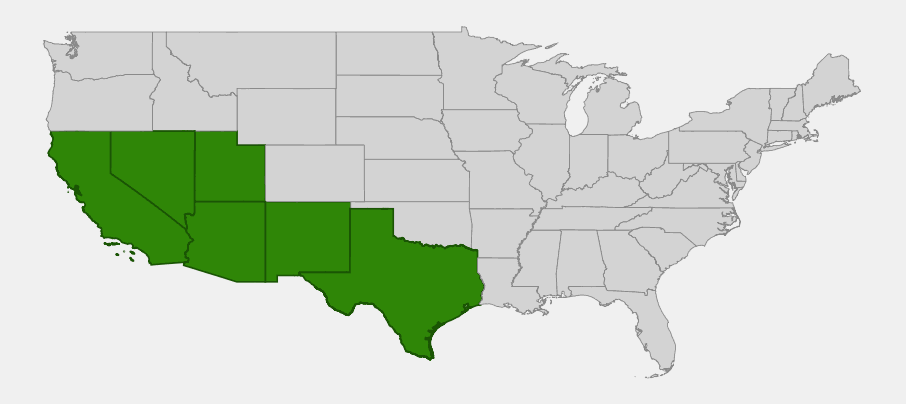
USDA PLANTS lists the species as native to Arizona, California, Nevada, New Mexico, Texas and Utah, and it extends south into northern and central Mexico. In California it grows on the desert slopes of the Transverse and Peninsular Ranges, in the mountains of the Mojave Desert and along the eastern Sierra Nevada. In Nevada it is common in the Spring Mountains and other southern ranges.
In Utah it reaches the southwestern part of the state, and in Arizona and New Mexico it grows in the mountains of the Mogollon Rim, central highlands and southern ranges. In Texas it is found in the Trans-Pecos, in the Chisos, Davis and Guadalupe Mountains and other ranges of West Texas, and it does not grow in eastern Texas.
It favors dry, rocky slopes, ridges and canyons in chaparral, pinyon-juniper woodland, oak woodland and desert mountain scrub, usually at about 3,000 to 8,000 feet. It often forms dense stands after fire, sprouting from seed that has been stored in the soil.
📋 Regional plant lists featuring Cupped Leaf Ceanothus: Utah & Western Colorado · Arizona & New Mexico · South & West Texas · California & Nevada
Growing & Care Guide
Cupped leaf ceanothus is a tough, long-lived shrub for dry gardens in the Southwest and Great Basin. Like most ceanothus, it wants sun, sharp drainage and very little water once established.
Light
Full sun. It tolerates light afternoon shade in the hottest deserts but becomes sparse in shade.
Soil & Water
Plant in rocky, gravelly or sandy soil with excellent drainage. It handles alkaline and limestone soils. Water regularly the first summer, then only occasionally; overwatering, especially in warm weather, can lead to root rot.
Planting Tips
Plant in fall or early spring on a slope, berm or rocky site. Avoid amended or fertilized soil. Allow 4 to 6 feet between plants, and combine it with other dryland shrubs such as cliffrose, Apache plume and pinyon pine.
Pruning & Maintenance
Little pruning is needed. Shape lightly right after flowering if needed, and avoid cutting into thick old wood, since it does not resprout well. Keep summer irrigation to a minimum.
Propagation
Seed has a hard coat and needs hot-water treatment (or a brief heat treatment, mimicking fire) followed by one to three months of cold, moist stratification. Semi-hardwood cuttings can also be rooted with rooting hormone.
Landscape Uses
- Xeriscapes: an evergreen shrub that needs almost no water
- Wildlife gardens: spring flowers for bees and cover for birds
- Slope stabilization: deep roots on dry, rocky banks
- Informal hedges: a dense, stiff screen in dry climates
- Restoration: pinyon-juniper and chaparral plantings
Wildlife & Ecological Value
Cupped leaf ceanothus is an important shrub for wildlife in the dry mountains of the Southwest, providing nectar, seeds, browse and cover.
For Pollinators
The fragrant spring flowers attract many native bees, honey bees, flies, beetles and butterflies. Ceanothus species are host plants for the caterpillars of several butterflies and moths, including the California tortoiseshell, pale swallowtail, several hairstreaks and blues, and the ceanothus silk moth.
For Birds
Quail, towhees and other ground-feeding birds eat the seeds, and the dense branches give nesting and escape cover.
For Mammals
Mule deer and desert bighorn sheep browse the evergreen foliage, especially in winter, and rodents gather the seeds.
Ecosystem Role
Through nitrogen-fixing Frankia bacteria in its root nodules, it adds nitrogen to poor soils. After fire, its long-lived seed bank germinates in large numbers, helping chaparral and woodland recover.
Cultural & Historical Uses
The species is named for Josiah Gregg (1806–1850), a trader, author and naturalist who traveled the Santa Fe Trail and collected plants in Texas and northern Mexico. The genus name Ceanothus comes from a Greek word used for a spiny plant.
The flowers of many ceanothus species, rubbed with water, make a light lather, and several Native American peoples used ceanothus flowers as soap. Ceanothus leaves have also been used to make tea.
The split of this group into several species reflects ongoing study of Ceanothus, a genus in which closely related species often hybridize, making their classification difficult.
Frequently Asked Questions
Is cupped leaf ceanothus evergreen?
Yes. It keeps its small, thick, gray-green leaves all year.
Is this the same as desert ceanothus or Mojave ceanothus?
Yes. USDA calls Ceanothus greggii desert ceanothus. Some newer treatments call the California, Nevada, Utah and Arizona plants C. pauciflorus (Mojave ceanothus) or C. perplexans.
Does it need summer water?
No. Once established, it needs little or no summer water, and too much water can kill it.
Does it fix nitrogen?
Yes. Like other ceanothus, it has root nodules with Frankia bacteria that fix nitrogen from the air.
Is cupped leaf ceanothus good for wildlife?
Yes. It feeds bees and butterflies in spring, hosts butterfly and moth caterpillars, and provides seeds, browse and cover for birds and mammals.

Looking for a nursery that carries Cupped Leaf Ceanothus?
Browse our native plant nursery directory: Arizona · California · Nevada & New Mexico · Texas & Utah

