
Chamisso Bush Lupine (Lupinus chamissonis)
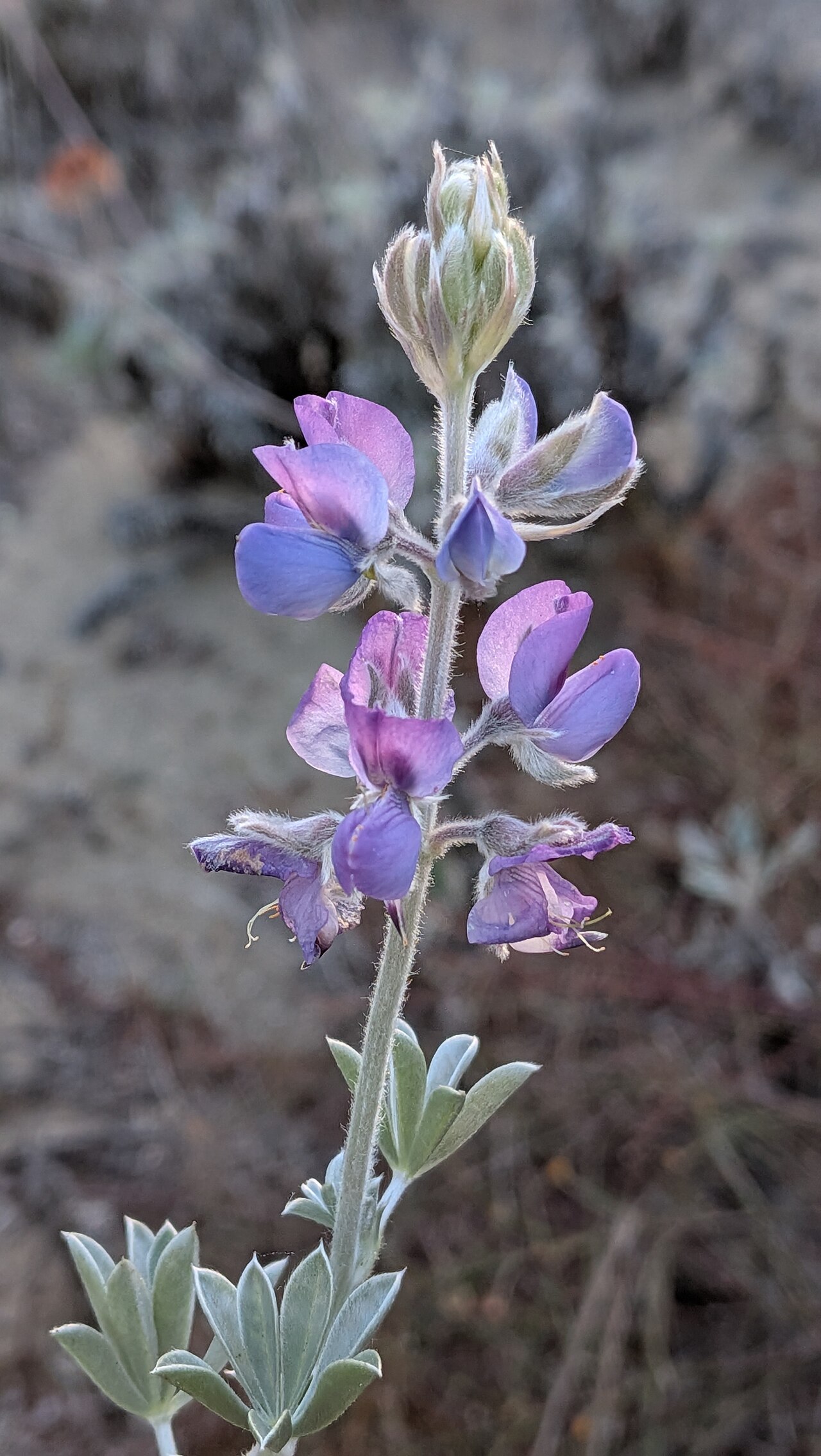
Lupinus chamissonis, known as Chamisso Bush Lupine or dune bush lupine, is a silvery, rounded shrub found only on the coast of California. It grows on sand dunes and coastal bluffs, where its soft, silky-haired foliage shines silver-gray all year and, from spring into summer, carries spikes of lavender-blue to violet pea flowers marked with a yellow or white spot on the upper petal.
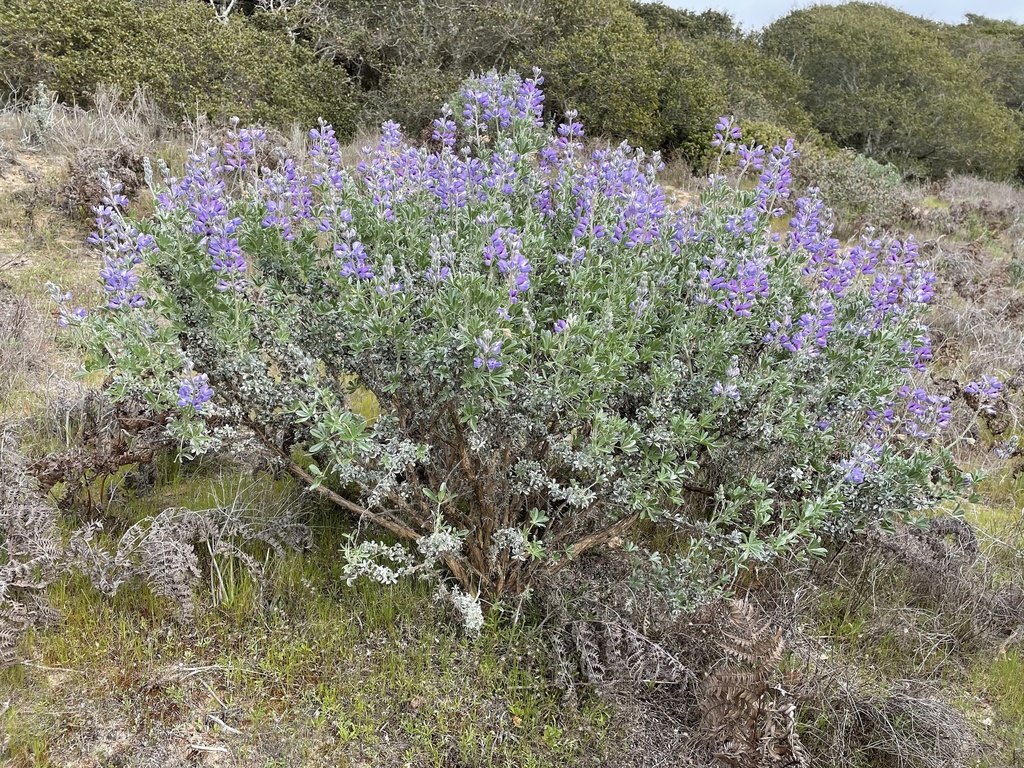
This is a plant built for wind, salt spray and shifting sand. Its dense covering of silver hairs reflects sunlight and cuts water loss, and like all lupines it hosts nitrogen-fixing bacteria in its roots, which lets it thrive in sand that holds almost no nutrients. Shrubs usually stand 2 to 5 feet tall and wide, occasionally taller in sheltered hollows, and they help stabilize the dunes where they grow.
The species is named for Adelbert von Chamisso, the poet and naturalist who sailed with Johann Friedrich von Eschscholtz on the Russian Rurik expedition and visited San Francisco Bay in 1816. This guide covers how to identify Chamisso bush lupine, where it grows, how to grow it in a coastal or dry garden, and its value to bees and other wildlife.
Identification
On the California coast, look for a mounded, evergreen shrub with silvery-gray, palm-shaped leaves and upright spikes of blue-violet pea flowers. The silver color of the whole plant is the quickest clue that separates it from the green-leaved, often yellow-flowered coastal bush lupine growing nearby.
Growth Habit
It is a much-branched evergreen shrub with a woody base, usually 2 to 5 feet tall and about as wide, sometimes up to about 6 feet. Older plants become open and somewhat leggy, and shrubs on exposed dunes stay low and compact.
Leaves
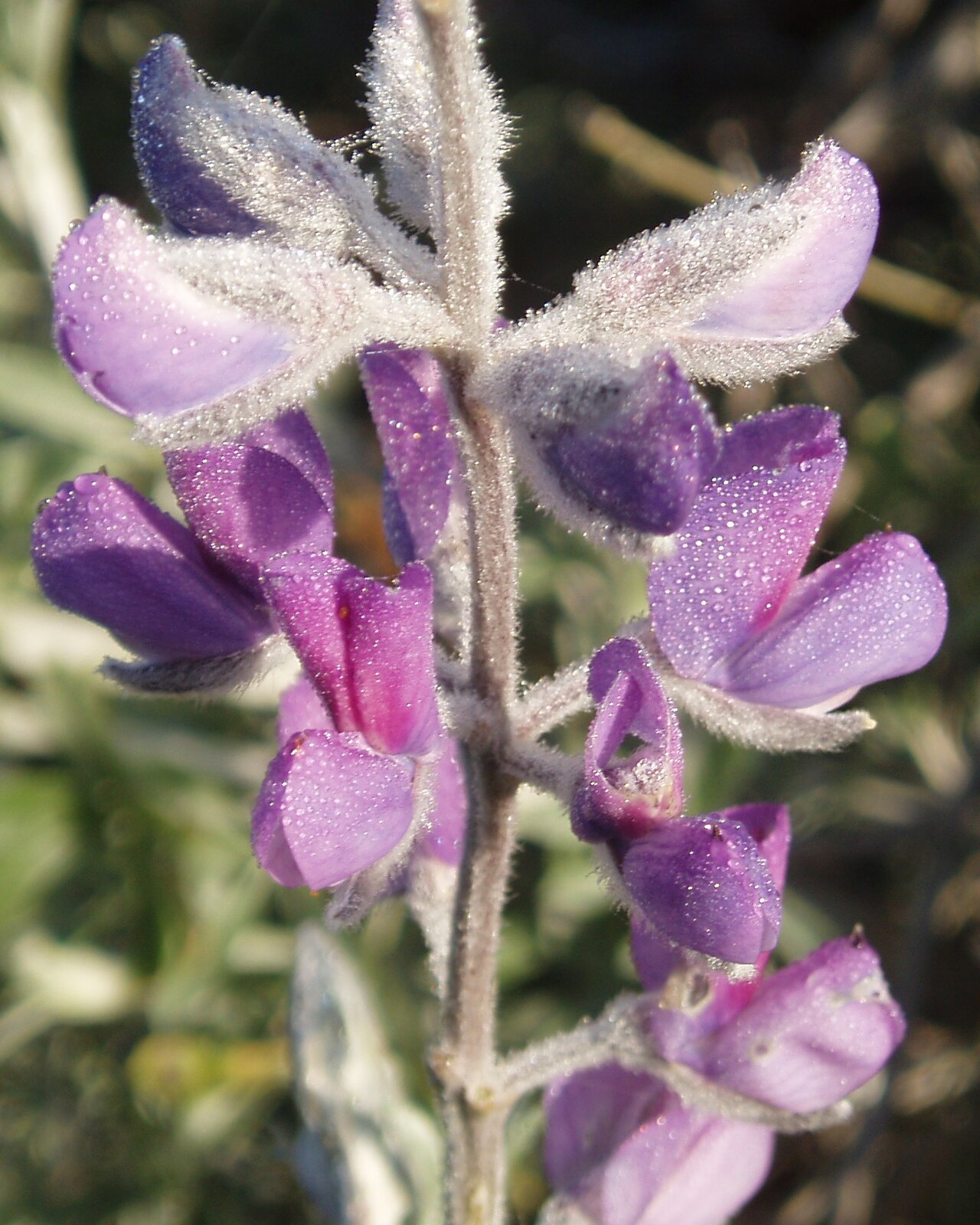
The leaves are palmately compound, like the fingers of a hand, with usually 5 to 9 narrow leaflets up to about 1 inch long. Both surfaces are densely covered with silky, flattened silver hairs, so the foliage looks silver-gray to almost white.
Flowers
The pea-shaped flowers, each about 1/2 inch long, are arranged in loose whorls along spikes 3 to 6 inches long held above the leaves. They are light purple to blue-violet, and the upper petal (the banner) has a yellow spot that often turns white or purplish as the flower ages. Bloom runs mainly from March through July, with scattered flowers later on the fog-cooled coast.
Fruit & Seeds
Each flower can form a flattened, silky-hairy pod about 1 to 1 1/2 inches long. When dry, the pods twist and split open, flinging the hard, mottled seeds a short distance from the parent plant.
Look-alikes
Coastal bush lupine (Lupinus arboreus) often grows with it but has greener, less hairy leaves and usually yellow flowers, though some forms are blue or lilac; the two hybridize where they meet. Silver lupine (Lupinus albifrons) is similarly silvery but grows mainly inland on chaparral slopes and grassland rather than on beach dunes. Tidestrom’s lupine (Lupinus tidestromii), a rare dune species of Monterey and Marin counties, is a low, mat-forming plant rather than an upright shrub.
Quick Facts
| Scientific Name | Lupinus chamissonis Eschsch. |
| Family | Fabaceae (pea or legume family) |
| Plant Type | Evergreen shrub |
| Mature Height | 2–5 ft (occasionally to about 6 ft) |
| Mature Spread | 3–5 ft |
| Growth Rate | Fast |
| Sun Exposure | Full sun |
| Water Needs | Low; drought tolerant once established |
| Soil Type | Sand and other very well-drained soils |
| Soil pH | About 6.0–8.0 |
| Bloom Time | March–July (sporadically later) |
| Flower Color | Lavender-blue to violet with a yellow to white banner spot |
| Fall Color | None; silvery foliage all year |
| Fruit | Silky-hairy pod that splits open to fling seeds |
| Deer Resistant | Generally avoided; lupines contain bitter, toxic alkaloids |
| USDA Hardiness Zones | 8–10 |
Native Range
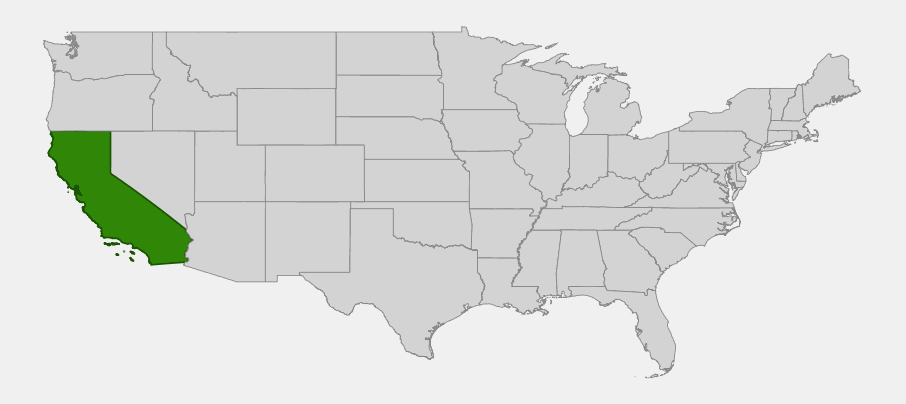
Chamisso bush lupine is endemic to California, and USDA PLANTS lists it only from that state. It grows along much of the length of the California coastline, almost always within sight or sound of the ocean, from the north coast south into southern California.
Its strongholds are the large dune systems of the central coast: the dunes of San Francisco (including the Presidio and the remnants of the old sand hills), Point Reyes and other Marin County dunes, the Monterey Bay dunes around Marina and Pacific Grove, and the dunes of San Luis Obispo County such as those near Morro Bay and Los Osos. Smaller populations grow on coastal bluffs and sandy flats elsewhere.
It grows in coastal dune scrub, on stabilized and back dunes, on sandy bluffs and in coastal sage scrub on sandy soil, from sea level to a few hundred feet in elevation. Dune development, trampling and invasive plants such as European beachgrass and iceplant have shrunk its habitat, and it is a common choice for dune restoration projects.
📋 Regional plant lists featuring Chamisso Bush Lupine: California & Nevada
Growing & Care Guide
Chamisso bush lupine is an excellent shrub for coastal California gardens, especially on sandy soil, where it grows quickly, needs no fertilizer and provides months of blue flowers against silver foliage. It is sold by native plant nurseries in California, particularly those near the coast, and is used widely in dune restoration.
Light
Give it full sun. In shade it becomes weak and floppy and blooms poorly.
Soil & Water
Sharp drainage matters more than anything else. Sand is ideal, and gritty or sandy loam also works; heavy, wet clay usually kills it through root rot. Water young plants every week or two through their first dry season, then little or not at all on the coast. Inland, an occasional deep summer watering helps, but overwatering in warm weather shortens its life.
Planting Tips
Plant from small containers in fall or winter so the winter rains establish the roots. Lupines have a long taproot and resent root disturbance, so avoid potbound plants and handle the root ball gently. Space plants 3 to 4 feet apart, and combine them with buckwheats, goldenbush, sagewort and sand verbena for a dune-garden look.
Pruning & Maintenance
Lightly shear spent flower spikes after the main bloom to tidy the plant and encourage some rebloom. Avoid cutting back hard into old, leafless wood, which rarely resprouts. Like most bush lupines it is fairly short-lived, often 5 to 10 years, but it usually reseeds in sandy ground. Watch for lupine aphids and lupine borers in spring; healthy plants on lean soil tend to cope with them.
Propagation
Grow it from seed. The hard seed coat must be scarified (nicked or rubbed with sandpaper) or soaked in hot water overnight before sowing. Sow in fall or late winter in deep pots or directly in place, because seedlings dislike transplanting. Collect seed only in small amounts and only where it is allowed; many dune populations are on protected land.
Landscape Uses
- Coastal and dune gardens: tolerates wind, salt spray and pure sand
- Dune restoration: a fast-growing native nitrogen fixer that helps stabilize sand
- Pollinator gardens: a long spring bloom heavily visited by bumble bees
- Silver foliage accent: year-round silver-gray color for dry, sunny borders
- Low-water landscapes: needs little or no summer water once established near the coast
Wildlife & Ecological Value
On the dunes, Chamisso bush lupine is one of the main nectar and pollen plants in spring, and its shrubs give shelter in an otherwise open, windswept habitat.
For Pollinators
Bumble bees are the main pollinators; they are heavy enough to push down the lower petals and release pollen onto their bodies. Other native bees, including leafcutter and mason bees, also visit. The foliage feeds the caterpillars of several butterflies and moths that use lupines, such as some blues and duskywings.
For Birds
Wrentits, sparrows and other dune birds use the dense shrubs for cover and nesting, and forage for insects among the branches. Quail and other ground birds may eat some of the seeds.
For Mammals
Small mammals such as brush rabbits and deer mice shelter under the shrubs. The foliage and seeds contain bitter alkaloids, so most mammals avoid eating much of it.
Ecosystem Role
Through the nitrogen-fixing bacteria in its root nodules, it adds nitrogen to poor dune sand, helping other native plants establish. Its roots and canopy trap blowing sand and help stabilize dunes, which is why it is a staple of coastal dune restoration in California.
Cultural & Historical Uses
The species was described by Johann Friedrich von Eschscholtz, who named it for his shipmate Adelbert von Chamisso. Both men sailed on the Russian exploring ship Rurik under Otto von Kotzebue, which anchored in San Francisco Bay in 1816. Chamisso, a poet as well as a botanist, in turn named the California poppy Eschscholzia for his friend.
Chamisso bush lupine was a characteristic plant of the great sand hills that once covered western San Francisco. Most of that dune landscape has been built over, and the plant survives there mainly in protected remnants, such as the dunes of the Presidio, where restoration crews have replanted it.
Safety note: like most lupines, its seeds and foliage contain quinolizidine alkaloids and are toxic if eaten. Do not eat any part of the plant, and keep livestock and pets from grazing it, especially the seed pods.
Frequently Asked Questions
Where does Chamisso bush lupine grow?
It is native only to California, where it grows on coastal sand dunes, sandy bluffs and coastal dune scrub along much of the coast, especially in San Francisco, Marin, Monterey Bay and San Luis Obispo County.
How do I tell Chamisso bush lupine from coastal bush lupine?
Chamisso bush lupine has silvery, densely silky leaves and blue-violet flowers. Coastal bush lupine (Lupinus arboreus) has greener leaves and usually yellow flowers. The two sometimes hybridize.
Is Chamisso bush lupine poisonous?
Yes. Like most lupines, its seeds and leaves contain toxic alkaloids. It should not be eaten, and livestock should not graze it.
How long does Chamisso bush lupine live?
It is a fairly short-lived shrub, commonly 5 to 10 years, but it often reseeds in sandy soil.
Can I grow Chamisso bush lupine away from the coast?
It can grow inland in full sun with very well-drained soil and a little summer water, but it is happiest near the coast and tends to be shorter-lived in hot inland gardens or heavy soils.

Looking for a nursery that carries Chamisso Bush Lupine?
Browse our native plant nursery directory: California

