
Desert Evening-primrose (Oenothera primiveris)
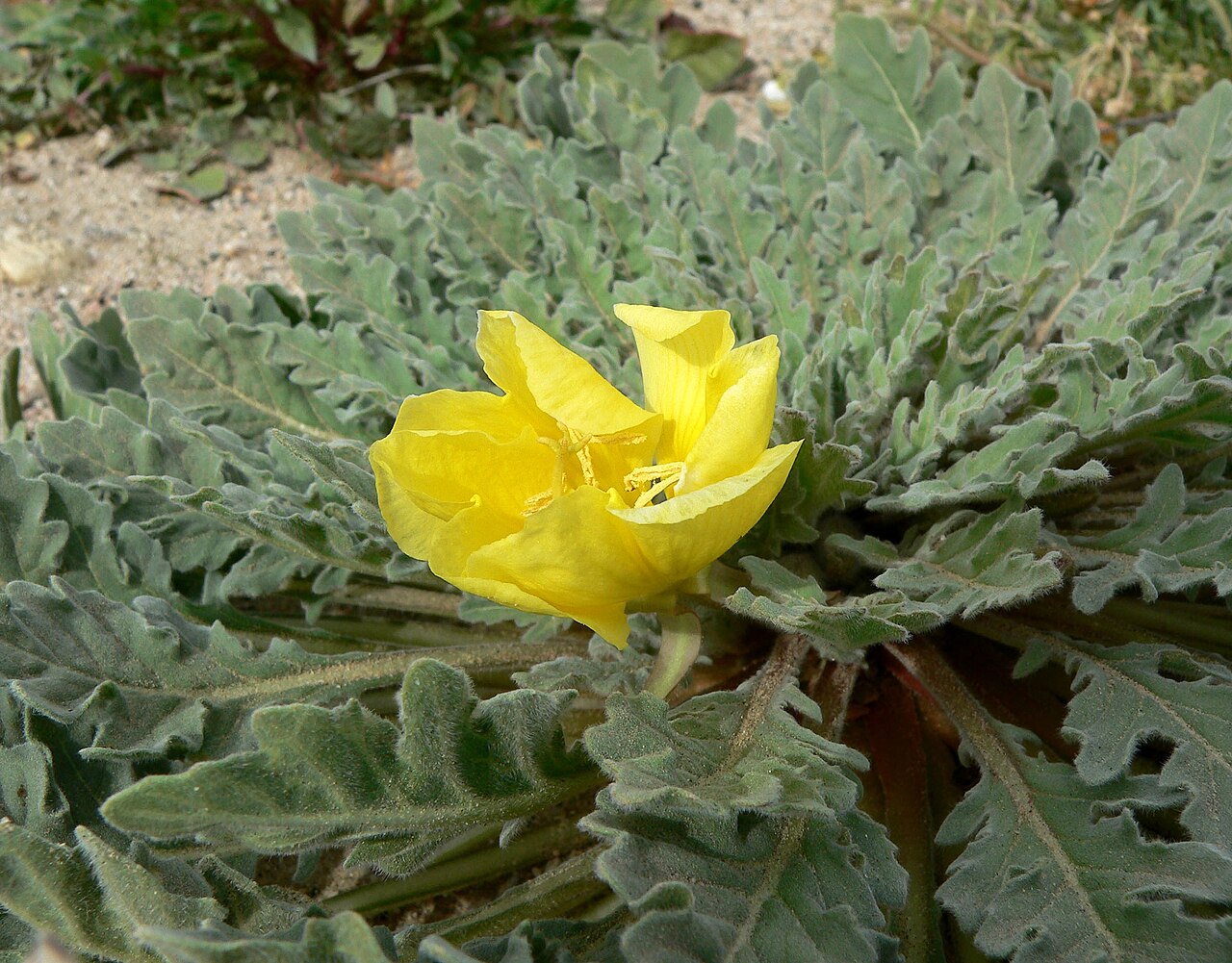
Oenothera primiveris, known as Desert Evening-primrose, yellow desert evening primrose or bottle evening-primrose, is a low, stemless spring wildflower of the deserts of the American Southwest and northern Mexico. In wet years it carpets sandy flats and washes with large, lemon-yellow flowers that open at dusk, glow through the night and fade to orange or reddish by the next morning.
It is a winter annual: seeds germinate after fall or winter rains, the plant grows as a flat rosette of grayish, hairy, deeply lobed leaves, and it flowers from late winter into spring before setting seed and dying as the desert heats up. Because it has essentially no stem, the flowers seem to sit directly in the center of the leaf rosette, on long slender floral tubes that look like stalks.
This guide covers how to identify desert evening-primrose, where it grows from Texas to California, how to grow it from seed in a desert garden, and why its night-blooming flowers matter to moths and native bees.
Identification
In spring, look for a flat rosette of gray-green, wavy-lobed leaves hugging sandy ground, with one to many cup-shaped, four-petaled yellow flowers in the middle. Older flowers in the same rosette are often orange to reddish, which gives a mixed-color look in the morning.
Growth Habit
It is a hairy annual herb that usually lacks a true stem. Leaves and flowers all rise from a basal rosette, so plants are typically only 2 to 8 inches tall, though a vigorous rosette in a good year can spread a foot or more across. Plants in dry years may be tiny, with just one or two flowers.
Leaves
The leaves are green to grayish, covered with fine hairs, and up to about 11 inches long in large plants. Their edges are wavy or crinkled, or cut into deep, irregular lobes and teeth, much like a dandelion leaf.
Flowers
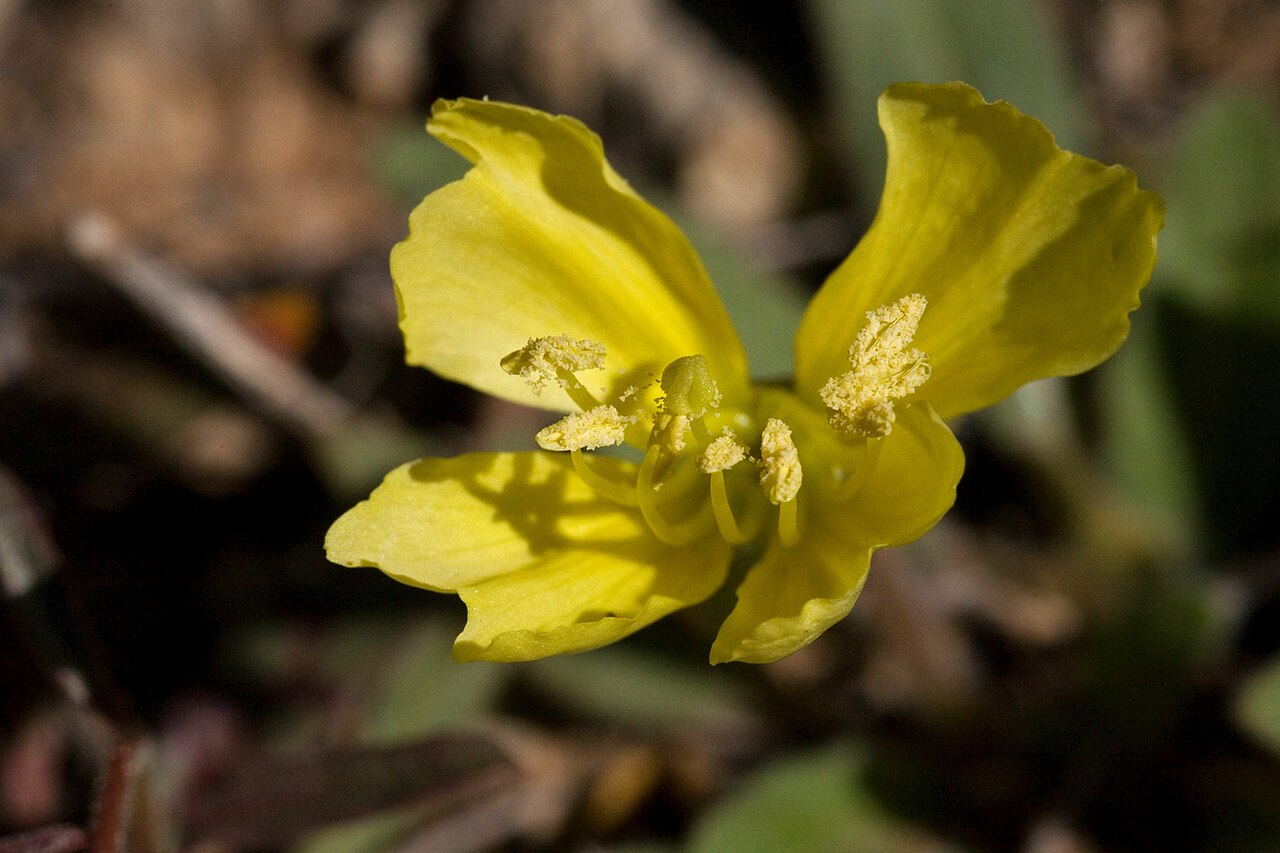
Flowers arise singly from the leaf axils at the center of the rosette, on a long, slender floral tube. Each has four broad yellow petals, up to about 1 1/2 inches long in the large-flowered subspecies, with eight stamens and a stigma divided into four lobes. Flowers open in the evening and wither by the next morning, turning orange to red as they fade. Bloom time is February to May.
Fruit & Seeds
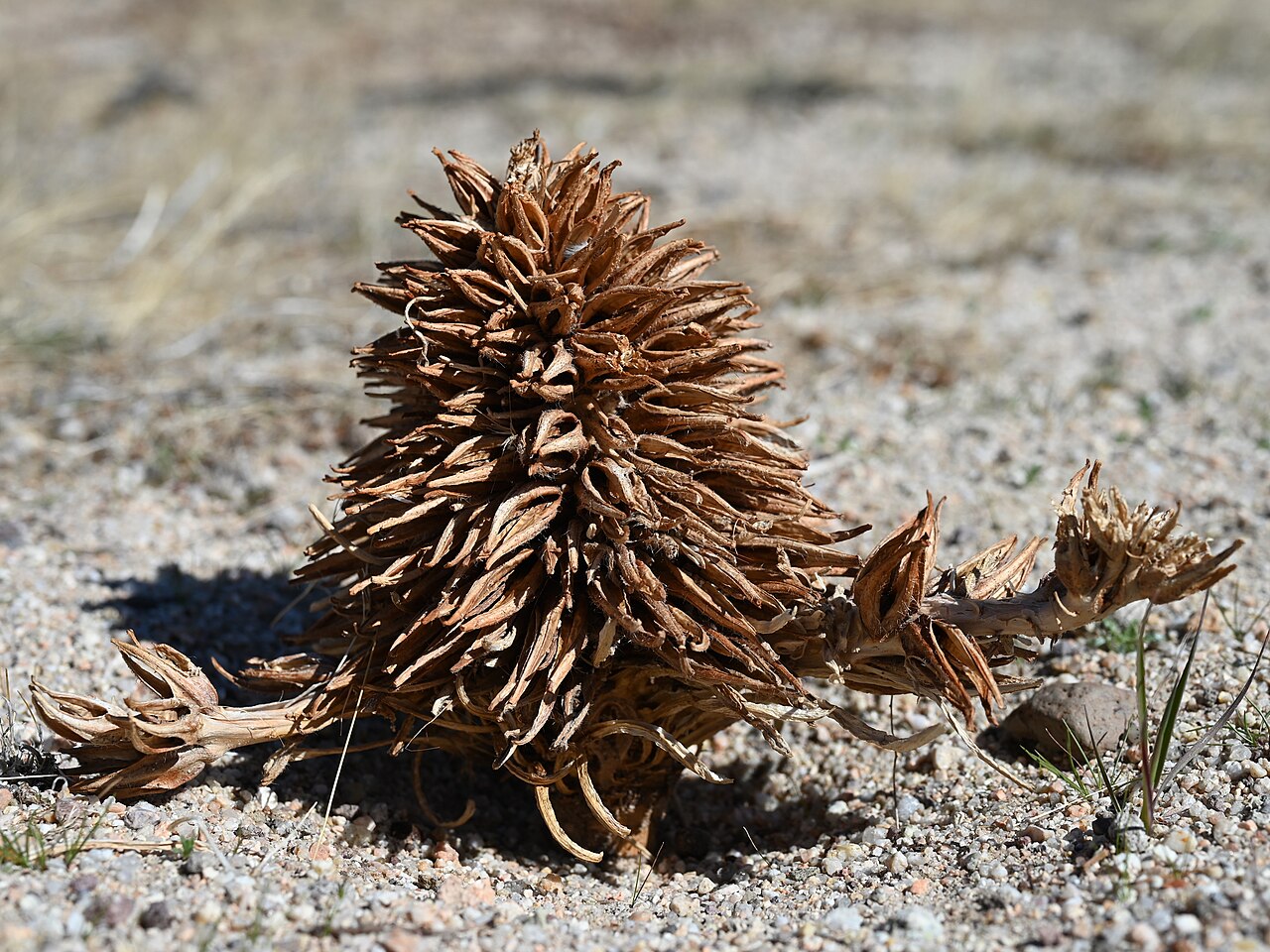
The fruit is a straight or curved, four-angled capsule up to about 2 1/2 inches long. After the plant dies, the woody capsules often stay clustered together on the ground as a bristly, cone-like skeleton, which is easy to spot in summer and fall.
Subspecies
Two subspecies are recognized. Subspecies primiveris has smaller flowers and is largely self-pollinating, while subspecies bufonis (large yellow desert primrose) has larger flowers and relies more on visiting moths for pollination.
Look-alikes
Tufted evening primrose is also stemless but has white flowers that age pink. Dune evening primrose (Oenothera deltoides) has white flowers and branching stems. Desert sun cups and other yellow-flowered evening primroses in the former genus Camissonia have much smaller flowers that open in the morning and a leafy stem.
Quick Facts
| Scientific Name | Oenothera primiveris A. Gray |
| Family | Onagraceae (evening primrose family) |
| Plant Type | Stemless winter annual herb |
| Mature Height | 2–8 in |
| Mature Spread | 4–12 in |
| Growth Rate | Fast (completes its life cycle in one cool season) |
| Sun Exposure | Full sun |
| Water Needs | Low; relies on winter rain |
| Soil Type | Sandy or gravelly, well-drained desert soils |
| Soil pH | About 7.0–8.5 (neutral to alkaline) |
| Bloom Time | February–May |
| Flower Color | Yellow, fading orange to red |
| Fall Color | None; plants die back by early summer |
| Fruit | Woody, four-angled capsule up to 2 1/2 in long |
| Deer Resistant | Not usually browsed heavily; little information |
| USDA Hardiness Zones | 7–10 (as a cool-season annual) |
Native Range
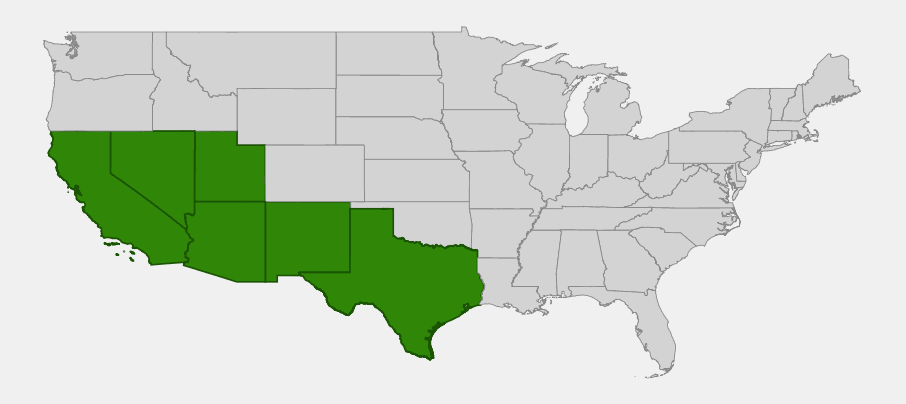
Desert evening-primrose is native to the warm deserts of the southwestern United States and northern Mexico. USDA PLANTS lists it in Arizona, California, Nevada, New Mexico, Texas and Utah. In Texas it is limited to the Trans-Pecos, and in Utah to the southwestern corner of the state.
It is a characteristic spring annual of the Mojave Desert and also occurs in the Sonoran and Chihuahuan Deserts. In California it grows mainly in the Mojave and Colorado Deserts; in Nevada in the southern part of the state around Las Vegas; and in Arizona and New Mexico across the low desert and desert grasslands. It extends south into northern Mexico.
It grows on sandy and gravelly desert flats, washes and bajadas, mostly below about 4,500 feet, in creosote bush scrub, Joshua tree woodland and the lower edges of pinyon-juniper woodland. Numbers vary hugely from year to year: after a wet winter it can be abundant, and in a dry one it may hardly appear.
📋 Regional plant lists featuring Desert Evening-primrose: Utah & Western Colorado · Arizona & New Mexico · South & West Texas · California & Nevada
Growing & Care Guide
Desert evening-primrose is best grown as a seeded wildflower in a desert garden, where it fills bare sandy ground with yellow blooms in spring and then disappears for the summer. Seed is offered by some southwestern native seed companies; it is rarely sold as a nursery plant because annuals with a taproot transplant poorly.
Light
Give it full sun. It grows on open desert flats and will not bloom well in shade.
Soil & Water
Sandy or gravelly, fast-draining soil is essential; heavy clay or rich garden soil that stays wet tends to rot the rosettes. Winter rain is usually enough. In a dry winter, an occasional deep watering in January to March extends flowering. Stop watering once plants begin to set seed, and let them dry out naturally.
Planting Tips
Scatter seed on the soil surface in fall (October to December) before the winter rains, and press it in lightly or cover it with a very thin layer of sand. Fresh seed sown in fall germinates without treatment; for spring sowing, a few weeks of cold-moist stratification helps. Sow it with other desert annuals such as sand verbena, desert sunflower and desert marigold for a mixed spring display.
Pruning & Maintenance
No pruning is needed. Keep weeds and competing grasses down in the seeded area during winter, since the low rosettes are easily shaded out. Leave dead plants and capsules in place until seed has dropped if you want the plant to return the next year.
Propagation
It grows only from seed. Collect ripe capsules in late spring, let them dry, and store the seed dry until fall. Plants self-sow in suitable sandy sites, though the number of seedlings depends heavily on winter rainfall.
Landscape Uses
- Desert wildflower gardens: large, showy yellow flowers on a plant only a few inches tall
- Moon and evening gardens: flowers open at dusk and are at their best at night and early morning
- Pollinator gardens: night-flying moths and early native bees visit the flowers
- Revegetation of sandy desert sites: a quick-cover native annual for seeding bare, disturbed ground
- Gravel and rock gardens: fills gaps between desert shrubs and cacti in spring
Wildlife & Ecological Value
Like many desert annuals, desert evening-primrose provides a burst of resources in a short window after winter rains, and its night-opening flowers connect it to the moths that pollinate many desert evening primroses.
For Pollinators
The large flowers open around sunset and are visited by hawk moths and other night-flying moths, which are the main pollinators of the large-flowered subspecies. Specialist native bees that forage on evening primroses also visit the flowers early in the morning before they close; the Xerces Society notes the plant as being of special value to native bees.
For Birds
Ground-foraging birds such as sparrows and quail pick seeds and insects from among the rosettes and fallen capsules.
For Mammals
Desert rodents gather the seeds, and rabbits and other herbivores browse the leaves of spring annuals when they are plentiful.
Ecosystem Role
As a winter annual, it is part of the spring wildflower community that supports desert insects, and its seeds build up in the soil seed bank, allowing the population to wait out dry years and reappear after wet winters.
Cultural & Historical Uses
The genus name Oenothera comes from Greek and has long been used for the evening primroses. The species name primiveris means “first of spring”, a reference to its early bloom in the desert. It was described by the American botanist Asa Gray in the nineteenth century.
The common name bottle evening-primrose refers to the long, narrow floral tube that swells at the top into the cup of the flower. The subspecies name bufonis is Latin for “of the toad”, a playful name whose origin is not well documented.
For desert visitors, a flat full of these yellow flowers in the early morning, with fresh flowers still open beside the orange and red ones from the night before, is one of the signature sights of a good wildflower spring in the Mojave.
Frequently Asked Questions
Is desert evening-primrose a perennial?
No. It is a winter annual that sprouts after fall or winter rains, blooms in late winter and spring, and dies once it has set seed. It returns from seed in later years.
When do the flowers open?
The flowers open in the evening and stay open through the night, then wilt the next morning, turning orange to red as they fade.
Where does desert evening-primrose grow?
It grows on sandy and gravelly desert flats and washes in Arizona, California, Nevada, New Mexico, western Texas, southwestern Utah and northern Mexico, mostly below about 4,500 feet.
How do I grow desert evening-primrose?
Scatter seed on sandy, well-drained soil in full sun in fall, before the winter rains. It needs little or no supplemental water and does poorly in rich or wet soils.
What pollinates desert evening-primrose?
Night-flying moths, especially hawk moths, are the main pollinators of the large-flowered form, and native bees visit the flowers in the early morning. The small-flowered form often pollinates itself.

Looking for a nursery that carries Desert Evening-primrose?
Browse our native plant nursery directory: Arizona · California · Nevada & New Mexico · Texas & Utah

