
Subalpine Mariposa Lily (Calochortus subalpinus)
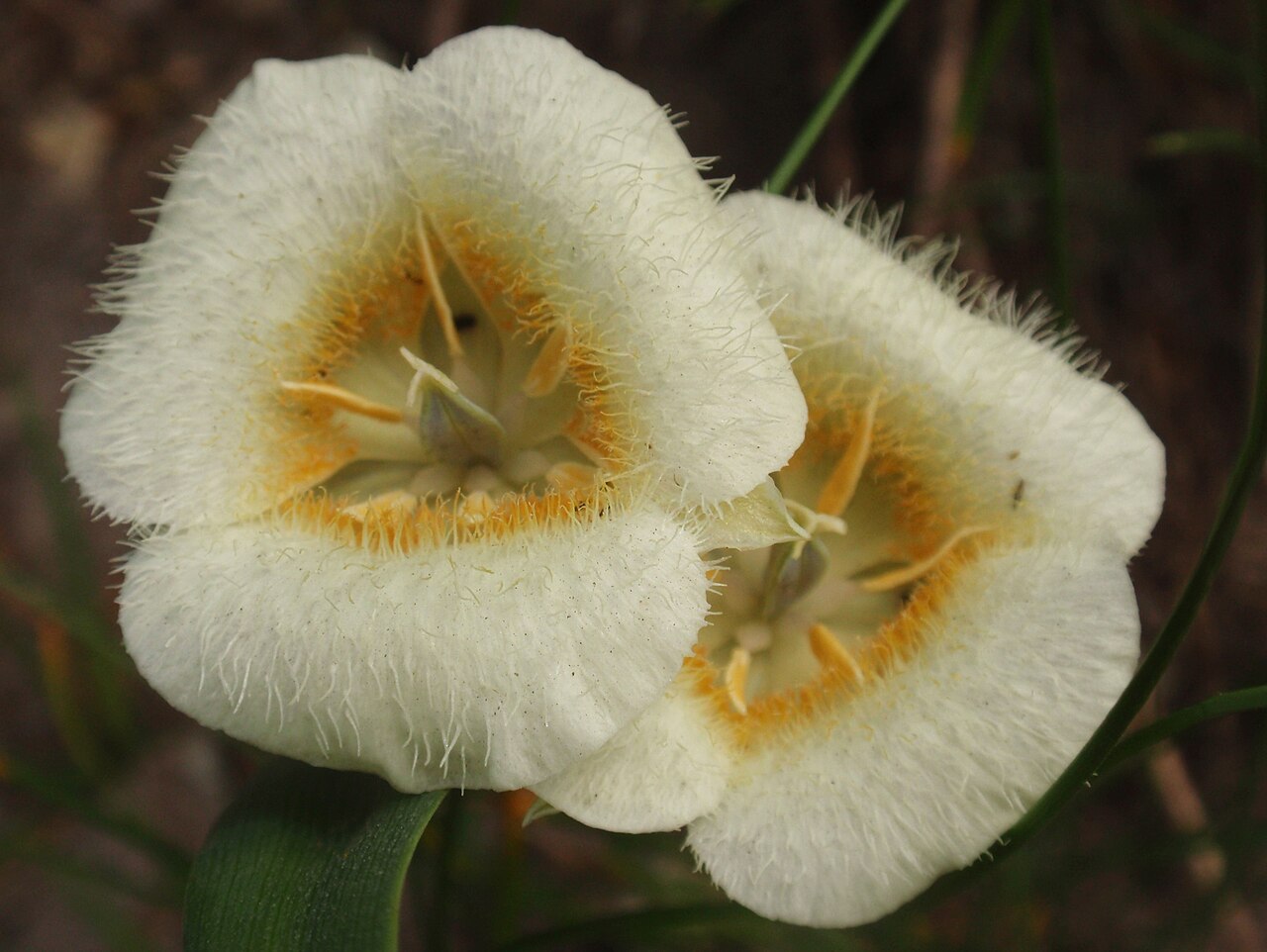
Calochortus subalpinus, known as Subalpine Mariposa Lily or mountain mariposa, is a small bulb wildflower of the Cascade Range in Washington and Oregon. In mid to late summer it opens creamy white, cup-shaped flowers with three broad, fringed petals whose insides are covered in long, soft hairs. It grows on open, often pumice or gravelly slopes, in subalpine meadows and in open conifer forest, mostly at middle to upper mountain elevations.
It belongs to the genus Calochortus, the mariposa lilies, cat’s ears and globe lilies, which botanists now place in the lily family (Liliaceae). Subalpine mariposa lily is one of the “cat’s ear” group, named for the hairy inner petals that look like the fur inside a cat’s ear. It is endemic to the Pacific Northwest, growing nowhere else in the world.
This mariposa lily is rarely available from nurseries, and wild bulbs are delicate, deep-rooted and almost never survive being dug. It is best enjoyed in its mountain habitat, where it is a familiar sight along trails in places like Mount Rainier, Mount Adams and the Dark Divide. This guide covers how to identify it, where to find it, and what is involved in growing it from seed.
Identification
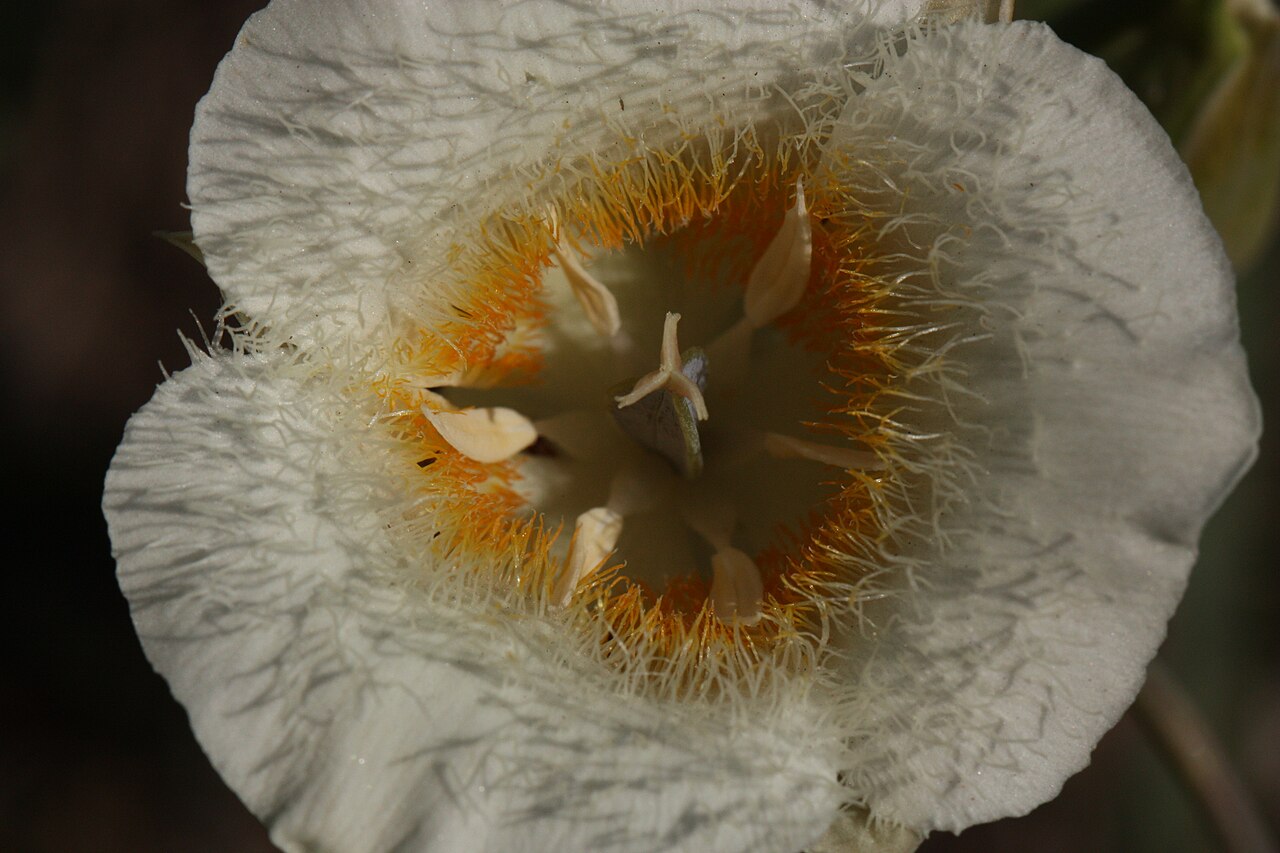
Subalpine mariposa lily is easy to recognize: a single, long, grass-like leaf, a short stem with one to a few creamy white, cup-shaped flowers, and densely hairy petals with a yellow-orange band near the center.
Growth Habit
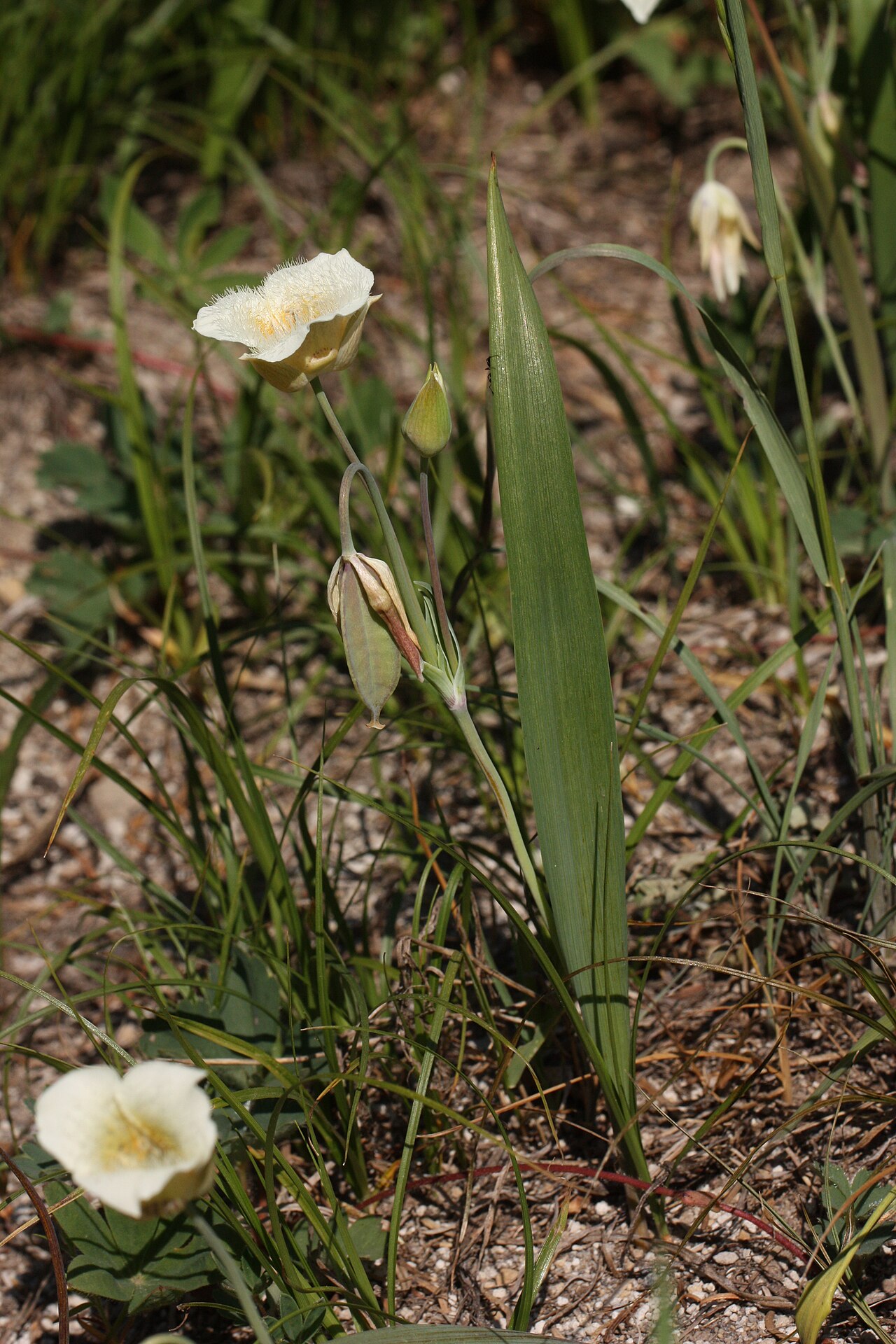
It is a perennial that grows from a small, deep, egg-shaped bulb. Each plant produces one flat, linear basal leaf, usually 4 to 8 inches long and often longer than the stem, and a short, erect flowering stem about 4 to 12 inches tall.
Flowers
The stem carries one to five upright to nodding, open bell- or cup-shaped flowers about 1 to 1½ inches across. Each flower has three broad petals, creamy white to pale yellowish and sometimes tinged with lavender, fringed with hairs along the edges and covered inside with long, soft hairs. Near the base of each petal is a crescent-shaped nectar gland bordered by a band of yellow-orange hairs. The three narrower sepals are often marked with a small purple spot at the base. The anthers are pale to lavender.
Bloom Season
It blooms from about June to August, depending on elevation and snowmelt, and is one of the later-flowering mariposa lilies.
Fruit & Seeds
After flowering, the stem bends and each flower develops into a nodding, three-winged capsule about an inch long, which splits open in late summer to release flat, pale seeds. The leaf withers as the seeds ripen, and the bulb goes dormant until the next spring.
Similar Species
Lyall’s mariposa lily (Calochortus lyallii), which grows on the east slope of the Cascades in Washington, has narrower, pointed petals with a fringe of long hairs and a dark purple crescent above each gland. The related elegant cat’s ear (C. elegans) and Tolmie’s cat’s ear (C. tolmiei) grow at lower elevations and have smaller, often purplish flowers. The sego lily (C. nuttallii) of the Intermountain West has smooth, upright, tulip-like flowers.
Quick Facts
| Scientific Name | Calochortus subalpinus Piper |
| Family | Liliaceae (lily family) |
| Plant Type | Perennial bulb wildflower |
| Mature Height | 4–12 in |
| Mature Spread | 2–4 in |
| Growth Rate | Slow |
| Sun Exposure | Full sun to part shade |
| Water Needs | Medium in spring; dry in late summer |
| Soil Type | Gravelly, sandy or pumice soils with excellent drainage |
| Soil pH | About 5.5–7.0 |
| Bloom Time | June–August |
| Flower Color | Creamy white to pale yellow, sometimes lavender-tinged |
| Fall Color | None; dormant by late summer |
| Fruit | Nodding three-winged capsule |
| Deer Resistant | No; deer and elk browse flowers and buds |
| USDA Hardiness Zones | 5–8 |
Native Range
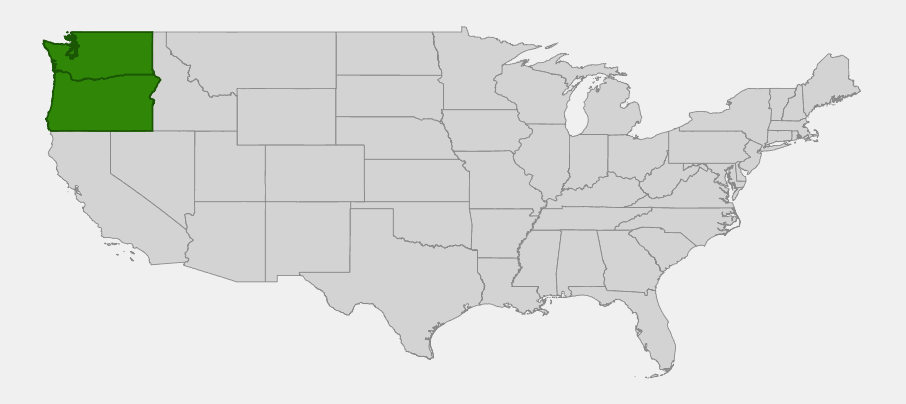
Subalpine mariposa lily is endemic to the Cascade Range of Washington and Oregon. USDA PLANTS lists it only in those two states. In Washington it grows from the central Cascades south through the Mount Rainier, Mount St. Helens, Mount Adams and Dark Divide areas, and in Oregon it extends south through the Cascades.
It grows on open, sunny to lightly shaded sites: subalpine meadows and parklands, open slopes and ridges, pumice and volcanic gravel flats, burned or thinned forest, and clearings in mountain hemlock, subalpine fir, noble fir and lodgepole pine forest. Many populations are on fast-draining volcanic soils that are moist after snowmelt and dry out by late summer.
It occurs on both the wetter west side and the drier east side of the Cascade crest, mostly at middle to subalpine elevations of roughly 3,000 to 7,000 feet. Flowering follows the snowmelt upslope, so you can often find it in bloom at different elevations over several weeks in summer.
📋 Regional plant lists featuring Subalpine Mariposa Lily: Western Oregon & Western Washington · Idaho, Eastern Oregon & Eastern Washington
Growing & Care Guide
Subalpine mariposa lily is a plant for experienced bulb and alpine growers rather than general gardens. It is almost never sold, and wild bulbs should never be dug: they sit deep in rocky soil, break easily and rarely survive transplanting. The responsible way to grow it is from commercially available or legally obtained seed, with patience.
Light
Give it full sun to light shade, similar to an open mountain meadow or forest clearing. In deep shade it will not flower.
Soil & Water
It needs very fast-draining, gritty soil such as a mix of pumice, coarse sand and a little loam, in a rock garden, raised bed or deep pot. Keep it moist from fall through spring and while it is growing and flowering, then let it dry out once the leaf yellows in late summer. Wet soil during dormancy rots the bulb.
Planting Tips
It suits a cool-summer rock garden or alpine trough in the Pacific Northwest. In warm, humid climates it is very difficult. Grow it in deep containers so the bulbs can pull themselves down, and protect plants from slugs, gophers and deer.
Pruning & Maintenance
No pruning is needed. Let the leaf die back naturally so the bulb can store energy, and leave the seed capsules to ripen if you want seed.
Propagation
Sow fresh seed in fall in a deep pot of gritty mix and leave it outdoors over winter; the cold, moist period triggers germination in spring. Seedlings produce only a single grass-like leaf for the first few years and usually take 3 to 5 years to flower. Do not disturb the young bulbs until they are well established.
Landscape Uses
- Rock and alpine gardens: for specialist growers in cool-summer climates, grown from seed
- Wildflower viewing: a highlight of summer hikes in the Washington and Oregon Cascades
- Native seed mixes: occasionally included in high-elevation restoration within its range
- Pollinator habitat: summer flowers for native bees in mountain meadows
- Nature photography: its hairy, cup-shaped flowers are a favorite of wildflower photographers
Wildlife & Ecological Value
Subalpine mariposa lily is a small but characteristic part of Cascade mountain meadows, where its summer flowers feed native insects in a short growing season.
For Pollinators
The open, cup-shaped flowers and nectar glands attract native bees, especially bumble bees and small solitary bees, as well as beetles and flies that crawl among the hairs. The hairs may help guide insects toward the nectar glands at the petal bases.
For Birds
It is not a significant bird plant, but the meadows and open forests where it grows support many mountain birds that feed on the insects visiting its flowers.
For Mammals
Deer and elk browse the flower stems and buds, and pocket gophers and other rodents eat the starchy bulbs. Bears dig for bulbs and roots in subalpine meadows.
Ecosystem Role
As a bulb plant, it grows quickly after snowmelt, flowers and sets seed, then retreats underground before late-summer drought. It is part of the diverse wildflower community of Cascade subalpine meadows and often increases in open areas after fire.
Cultural & Historical Uses
Charles Vancouver Piper, a botanist who worked at Washington State College and later the U.S. Department of Agriculture, described Calochortus subalpinus in 1906 in his Flora of the State of Washington. Piper was a leading student of the Washington flora, and the name refers to the plant’s subalpine habitat.
The genus name Calochortus comes from Greek words meaning “beautiful grass,” for the grass-like leaves, and “mariposa” is Spanish for butterfly, a name early settlers gave to the showy, butterfly-like flowers of some species. Native peoples of the West dug the bulbs of several mariposa lilies as food, cooking or roasting them.
Today subalpine mariposa lily is best known to Northwest hikers, who often meet it along trails in the high Cascades in July and August. Because it depends on undisturbed meadows and open forests, it is a good reason to stay on trails and leave wildflowers in place.
Frequently Asked Questions
Where can I see subalpine mariposa lily?
In the Cascade Range of Washington and Oregon, in subalpine meadows, open slopes and forest clearings, mainly from about 3,000 to 7,000 feet. Areas around Mount Rainier, Mount Adams, the Dark Divide and the Oregon Cascades are good places to look in July and August.
Can I dig up a mariposa lily and move it to my garden?
No. The bulbs are deep and fragile and almost never survive transplanting, and digging plants in national forests and parks is not allowed without a permit. Enjoy them in the wild or grow them from legally obtained seed.
Why are the petals hairy?
Subalpine mariposa lily is a “cat’s ear” type of mariposa lily, with long, soft hairs on the inner petals. The hairs may help guide insects toward the nectar glands at the base of each petal.
When does subalpine mariposa lily bloom?
From about June to August, depending on elevation and how early the snow melts.
Is subalpine mariposa lily rare?
It is restricted to the Cascades of Washington and Oregon, but it is fairly common within that range and is not listed as threatened.

Looking for a nursery that carries Subalpine Mariposa Lily?
Browse our native plant nursery directory: Oregon · Washington

