
Whipple Cholla (Cylindropuntia whipplei)
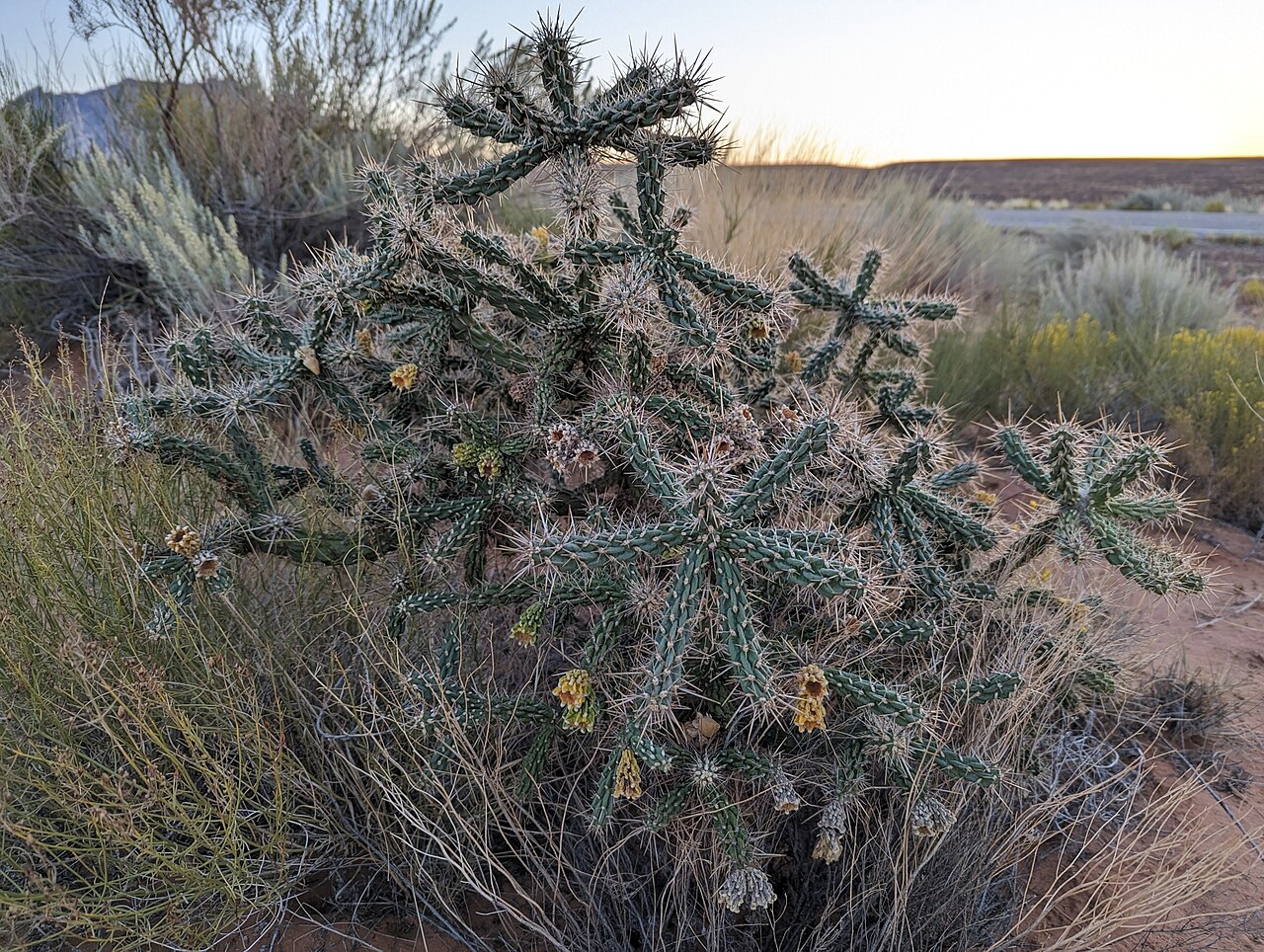
Cylindropuntia whipplei, known as Whipple Cholla (formerly Opuntia whipplei), is a low, branching cactus of the cactus family (Cactaceae) native to the Colorado Plateau and nearby Southwest. It usually grows 1 to 3 feet tall, with short, cylindrical, knobby stems armed with white- to tan-sheathed spines, lemon-yellow flowers in early summer, and fleshy yellow fruits.
It grows in desert grasslands, sagebrush flats, and pinyon-juniper woodlands, mostly at 4,000 to 7,500 feet, in northern Arizona, northwestern New Mexico, southern Utah, southwestern Colorado and southern Nevada. It is one of the most cold-hardy chollas.
Whipple cholla is a tough, drought-proof cactus for cold-desert rock gardens and xeriscapes in its native range. Buy nursery-propagated plants or root a cutting from a cultivated plant rather than collecting from the wild, and give it room away from paths, because its spines are sharp and its joints detach easily.
Identification
On the Colorado Plateau, look for a low, much-branched cholla with short, bumpy stems, pale spines, and yellow rather than magenta flowers.
Growth Habit
It is a low, shrubby cactus 1 to 3 feet tall (occasionally taller), branching from the base into a rounded or sprawling clump. Some low forms, often called variety enodis, creep along the ground and form mats a few inches to a foot high.
Stems
The stem joints are cylindrical, about 1/2 to 1 inch thick and 2 to 6 inches long, with prominent, short, rounded tubercles. Each areole has a cluster of glochids and usually several spines up to about 1 inch long, covered with white, tan or yellowish papery sheaths. The upper joints can break off at a touch and root where they fall.
Flowers
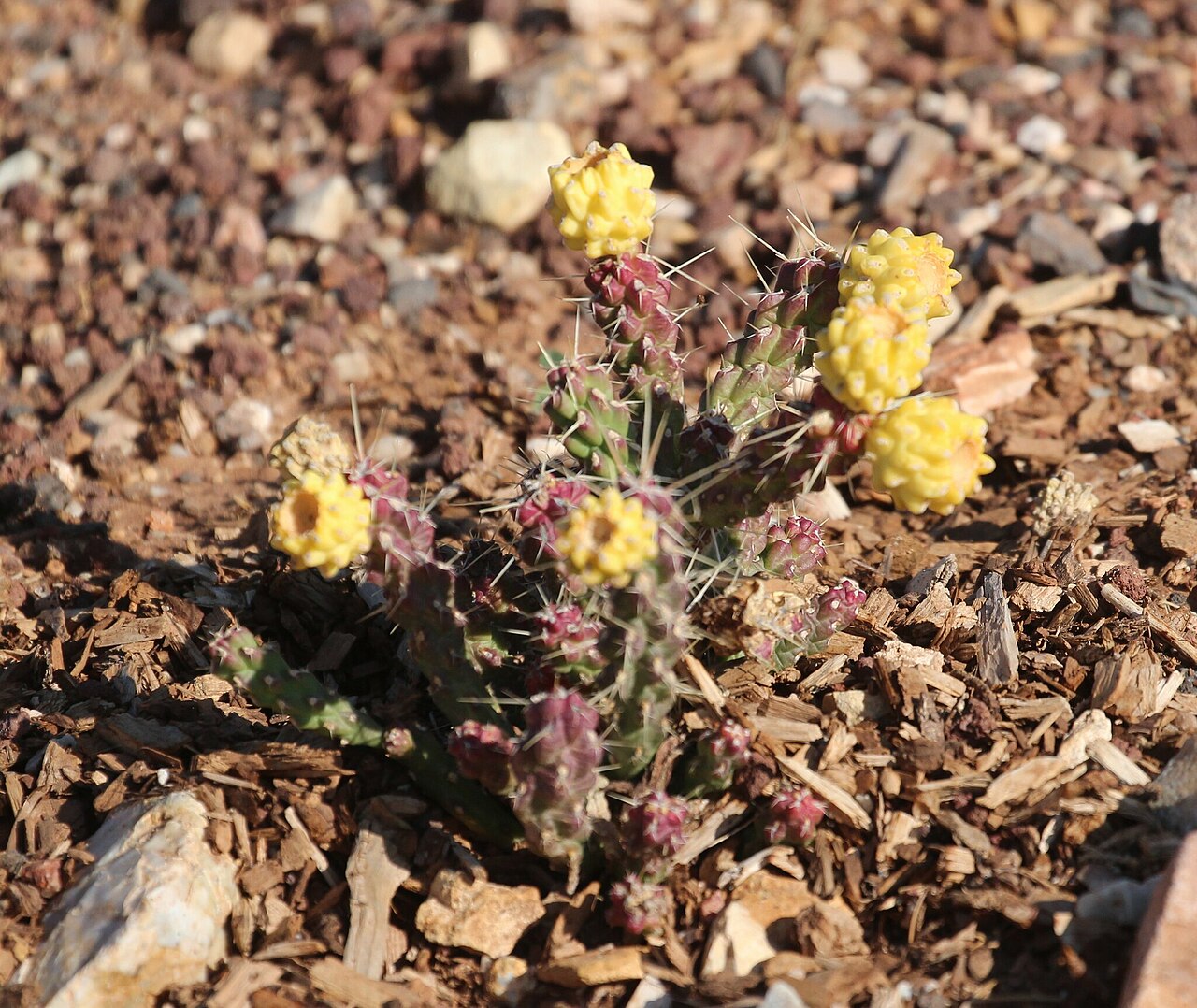
Flowers appear in late spring and early summer, from about May to July, at the tips of the joints. They are about 1 to 1½ inches across, lemon-yellow to greenish-yellow, sometimes tinged reddish, with many stamens and a green stigma.
Fruit
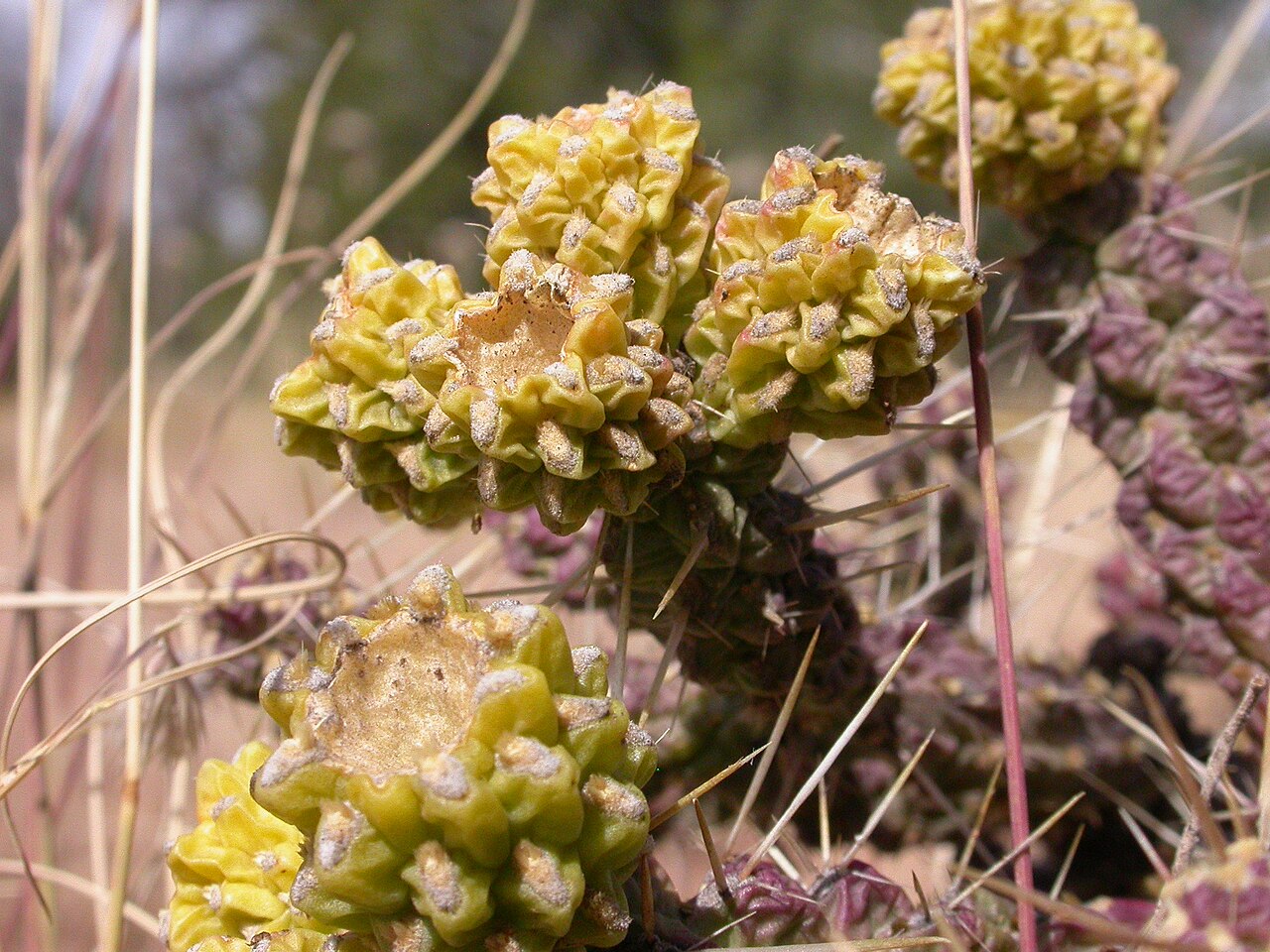
The fruit is fleshy, egg-shaped to round, about 1 inch long, yellow when ripe, knobby with tubercles and spineless or nearly so. Fruits often stay on the plant into winter, and some sprout new flowers or fruits.
Look-alikes
Tree cholla (Cylindropuntia imbricata) grows much taller and has magenta flowers. Pencil and Christmas chollas have very slender stems. Whipple cholla is recognized by its low stature, knobby stems, yellow flowers and spineless yellow fruits.
Quick Facts
| Scientific Name | Cylindropuntia whipplei (syn. Opuntia whipplei) |
| Family | Cactaceae (cactus family) |
| Plant Type | Low shrubby cactus |
| Mature Height | 1–3 ft |
| Mature Spread | 1–4 ft |
| Growth Rate | Slow |
| Sun Exposure | Full sun |
| Water Needs | Very low; dry soil |
| Soil Type | Very well-drained sandy, gravelly or rocky soils |
| Soil pH | Neutral to alkaline (about 6.5–8.5) |
| Bloom Time | May–July |
| Flower Color | Lemon-yellow to greenish-yellow |
| Fall Color | None; stems may turn purplish in cold |
| Fruit | Fleshy, knobby yellow fruit, spineless |
| Deer Resistant | Excellent |
| USDA Hardiness Zones | 5–9 |
Native Range
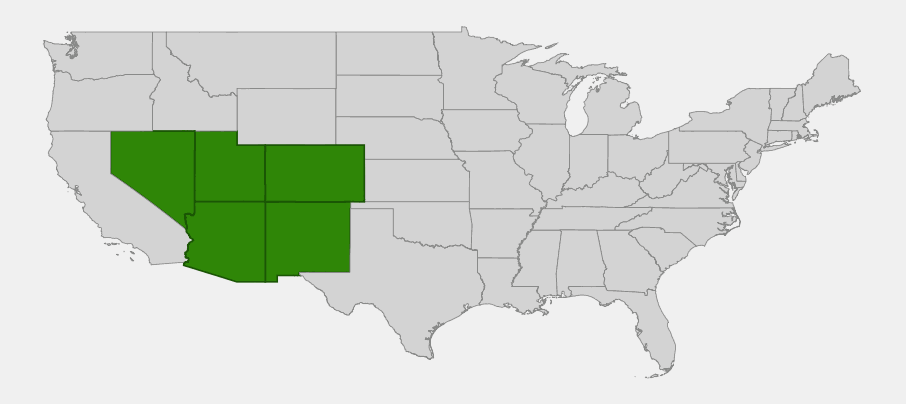
Whipple cholla is native to the Southwest. USDA PLANTS lists it as native in Arizona, Colorado, New Mexico, Nevada and Utah.
Its range is centered on the Colorado Plateau and the Four Corners region: northern and central Arizona, including the Grand Canyon region and the Navajo Nation, northwestern New Mexico, southern Utah and the far southwest corner of Colorado. It also reaches southern Nevada and the Mojave Desert edge in northwestern Arizona.
It grows in desert grasslands, sagebrush and saltbush flats, pinyon-juniper woodlands, sandy plains, mesas and rocky hillsides, mostly from about 4,000 to 7,500 feet.
📋 Regional plant lists featuring Whipple Cholla: Arizona & New Mexico · Utah & Western Colorado · California & Nevada
Growing & Care Guide
Whipple cholla is one of the easiest and hardiest chollas to grow. Give it sun, sharp drainage and very little water, and it will take cold winters, wind and summer heat.
Light
Full sun. In shade it grows weak and floppy and flowers poorly.
Soil & Water
Very well-drained sandy, gravelly or rocky soil. Don’t water once established, except in long droughts in hot areas. It tolerates cold well if the soil is dry in winter. Wet, heavy soil is the main cause of failure.
Planting Tips
Plant in a rock garden, on a berm or slope, or in a dry border, well away from walkways, play areas and places where pets run. Handle it with thick gloves, folded newspaper or tongs, as the glochids and spines are painful and hard to remove.
Pruning & Maintenance
Little care is needed. Remove fallen joints if you don’t want new plants. Wear gloves and use long tongs when tidying.
Propagation
Easy from stem cuttings: let a joint dry for a week or two to callus, then set it on dry gritty soil, where it roots in warm weather. It can also be grown from seed, though slowly. Use plants from nurseries or cultivated stock, never from the wild.
Landscape Uses
- Cold-desert rock gardens: one of the hardiest chollas
- Xeriscapes: needs no irrigation once established
- Barrier plantings: spiny, low hedge in dry, open spaces
- Wildlife gardens: fruits feed small mammals and birds
- Pollinator gardens: early-summer flowers for native bees
Wildlife & Ecological Value
In the open grasslands and woodlands of the Colorado Plateau, Whipple cholla provides food and spiny shelter for many animals.
For Pollinators
The yellow flowers are pollinated mainly by bees, including native cactus specialist bees and bumble bees, which climb among the stamens. Beetles also visit the flowers.
For Birds
Small birds nest or shelter in the spiny clumps, out of reach of predators, and some birds peck at the fruits and seeds.
For Mammals
Woodrats (packrats) use cholla joints to fortify their nests. Rodents, rabbits and other mammals eat the fruits, and pronghorn and deer may nibble them in hard winters.
Ecosystem Role
The spiny clumps protect small plants and animals from grazing and predators, and the fallen joints root to slowly spread the plant across grasslands.
Cultural & Historical Uses
The species honors Lieutenant Amiel Weeks Whipple, who led the 1853 to 1854 Pacific Railroad Survey along the 35th parallel across New Mexico and Arizona. The botanist on that survey, John Milton Bigelow, collected the plant, and George Engelmann and Bigelow named it.
Botanists long placed all the chollas in the prickly pear genus Opuntia. Today the cylinder-stemmed chollas are usually separated as Cylindropuntia, so older books call this plant Opuntia whipplei.
Cholla fruits and buds were traditional foods for many Southwestern peoples. Before eating, people removed the spines and glochids by brushing, rolling or roasting the buds and fruits. Today the plants are best left for wildlife.
Frequently Asked Questions
How cold-hardy is Whipple cholla?
It’s one of the hardiest chollas. It grows naturally at up to about 7,500 feet and is usually rated for USDA zones 5 to 9 when kept dry in winter.
What color are Whipple cholla flowers?
Lemon-yellow to greenish-yellow, from May to July.
Are Whipple cholla spines dangerous?
They’re sharp, and the tiny barbed glochids lodge in skin. Plant it away from paths, and handle it with thick gloves or tongs.
How do I propagate Whipple cholla?
Let a stem joint from a cultivated plant dry for a week or two, then set it on dry gritty soil. It roots easily in warm weather.
Where does Whipple cholla grow wild?
On the Colorado Plateau and nearby areas of Arizona, New Mexico, Utah, Colorado and southern Nevada, in grasslands, sagebrush and pinyon-juniper woodlands.

Looking for a nursery that carries Whipple Cholla?
Browse our native plant nursery directory: Arizona · Colorado · Nevada & New Mexico · Utah

