
Devil’s Bit (Chamaelirium luteum)
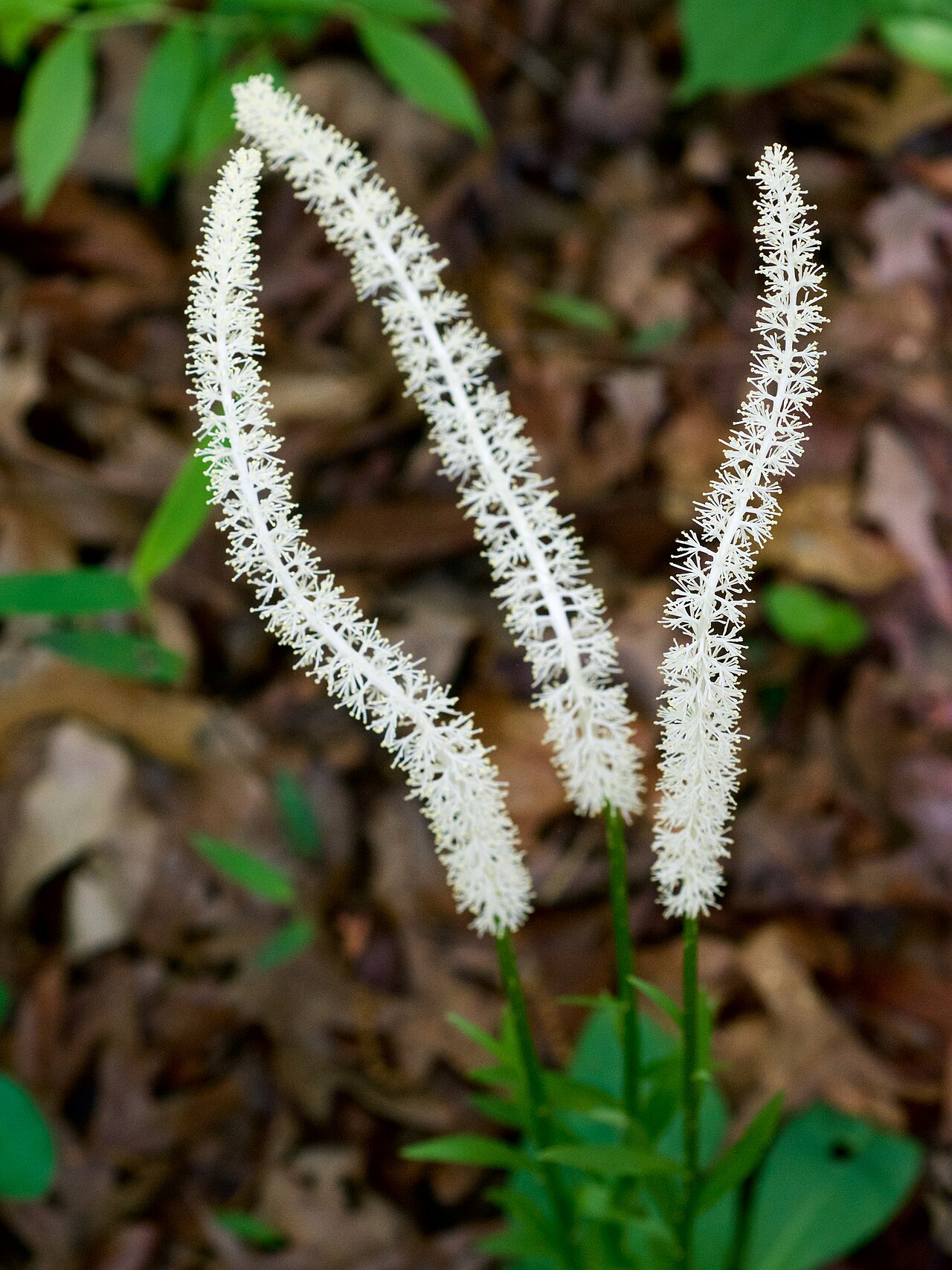
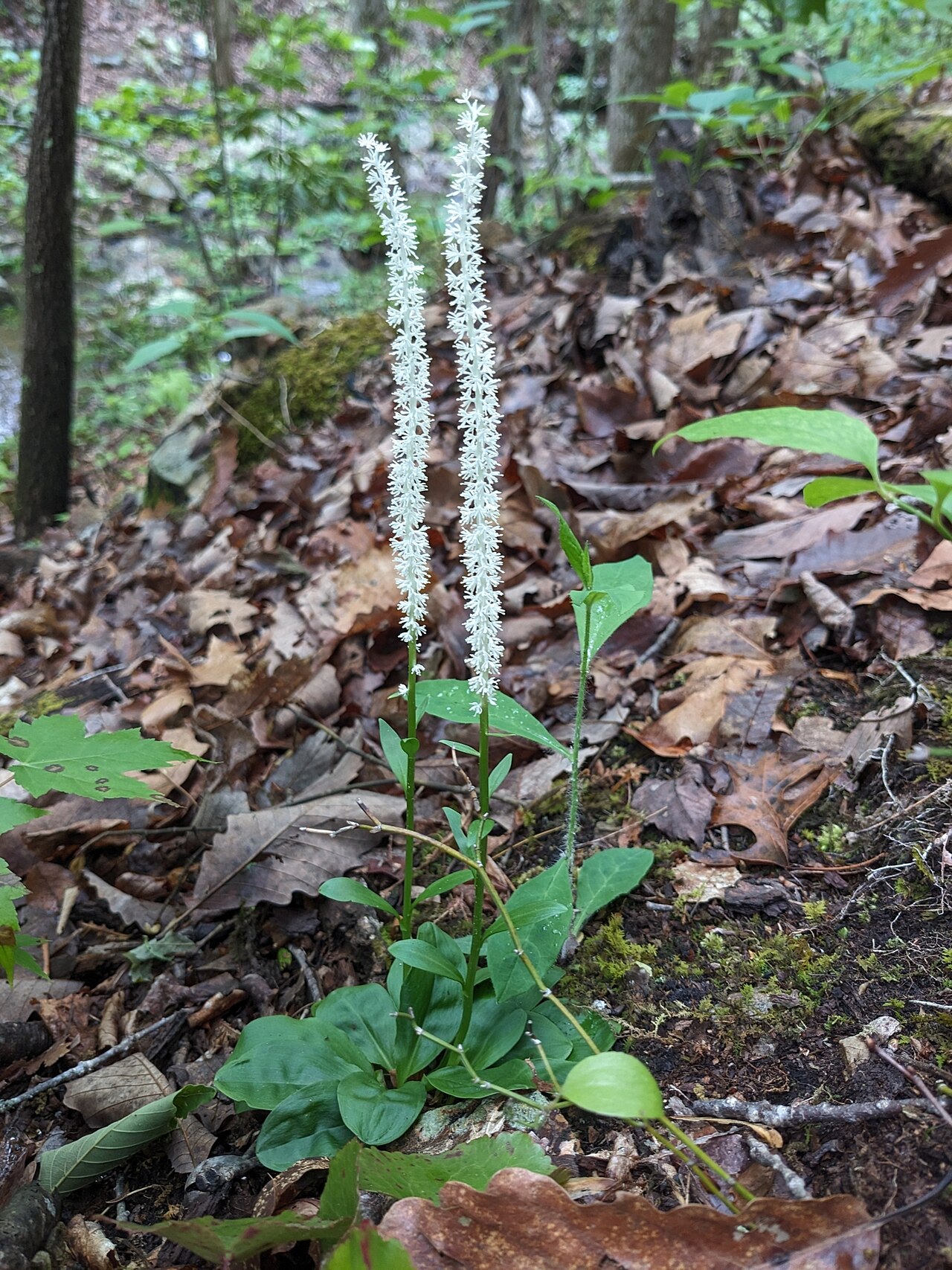
Chamaelirium luteum, known as Devil’s Bit, fairy wand (the USDA PLANTS name), blazing star or false unicorn root, is a distinctive perennial wildflower of eastern North American woodlands. A flat rosette of smooth, spoon-shaped leaves hugs the ground, and in late spring a slender stalk rises 1 to 4 feet tall, ending in a dense, wand-like spike of tiny white flowers. On male plants the spike often arches or nods at the tip, like a fluffy white bottlebrush.
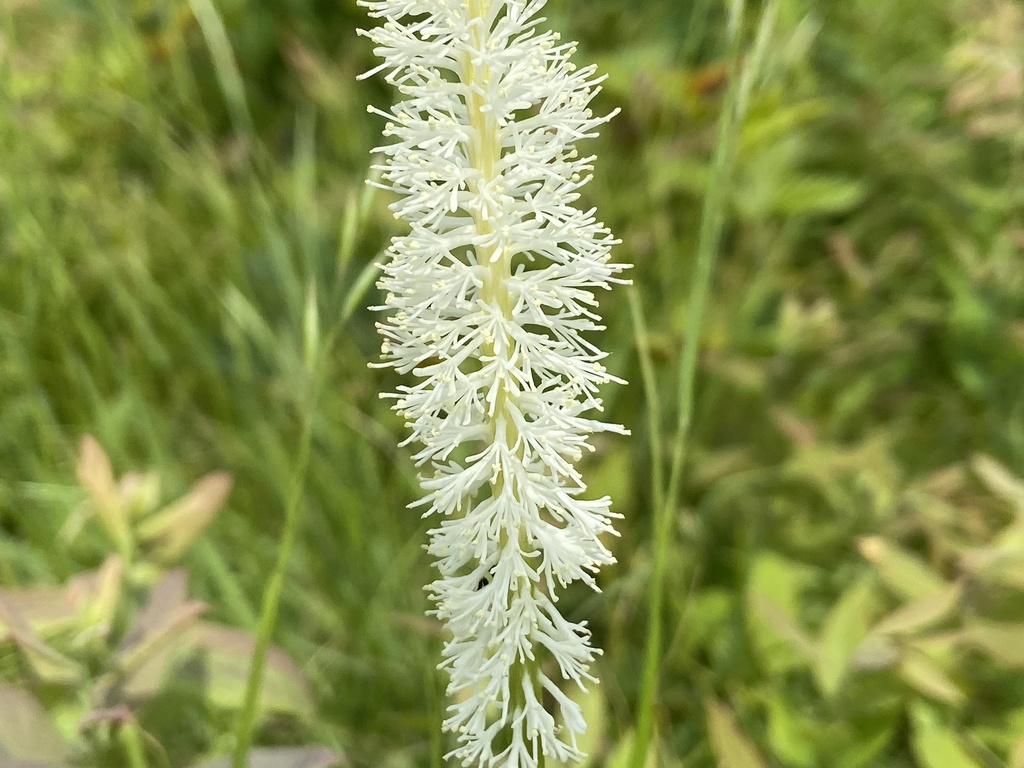
It is the only North American member of the genus Chamaelirium in the bunchflower family (Melanthiaceae), and it is unusual among our wildflowers because the sexes are on separate plants. Male plants bear long, fuzzy, white spikes, while female plants have shorter, sparser, greenish-white spikes that ripen into small capsules. Male plants are usually more common in a population, and both kinds may skip flowering for years.
Conservation note: Devil’s bit is heavily collected from the wild for the herbal trade, where its rhizome is sold as “false unicorn root.” It is slow-growing, takes several years to reach flowering size, and is rare and protected in several states at the edges of its range. It is also listed as “At-Risk” by United Plant Savers. Never dig it from the wild. Buy only nursery-propagated plants from reputable native plant nurseries, and avoid wild-harvested herbal products. This guide covers identification, range, responsible cultivation and its role in eastern forests.
Identification
Devil’s bit is easiest to find in late spring, when its white wands stand out on the forest floor. The rosette is present year-round in mild climates and can be recognized even without flowers.
Rosette & Rhizome
The plant grows from a short, thick, knobby rhizome that looks as if its end has been bitten off, which is the origin of the name “devil’s bit”. From the rhizome comes a flat basal rosette of several smooth, bright green leaves, each about 3 to 8 inches long, spoon-shaped to oblong and narrowing to a stalk-like base. The rosette leaves often persist through winter in the South.
Flowering Stem
The flowering stem is slender, upright and usually 1 to 3 feet tall, occasionally up to about 4 feet. It carries a few small, narrow leaves that get smaller toward the top. Female stalks tend to be taller and leafier than male stalks, which helps them hold the seed capsules up.
Flowers
The flowers are tiny, about ¼ inch across, packed into a narrow spike 3 to 10 inches long. Male flowers have six narrow white tepals and six prominent stamens, so the spike looks fuzzy and creamy white, and it often nods or arches at the tip. As male flowers age they turn yellowish, which explains the species name luteum (yellow). Female flowers are greenish-white, with six tepals and a three-styled ovary, on a shorter, more upright spike. Bloom time is from about March in Florida and the Gulf states to June farther north.
Fruit & Seeds
Female flowers ripen into small, oval, three-parted capsules about ⅓ to ½ inch long. They turn brown in late summer and split open to release many small, winged seeds, which are carried short distances by wind and water.
Look-alikes
Fly Poison (Amianthium muscitoxicum) also has white flowers on a tall stalk, but its flowers form a rounded, cylindrical cluster, its leaves are long and strap-like, and it is very poisonous. Yellow Colicroot and white colicroot (Aletris) have basal rosettes too, but their flowers are tubular and rough-textured. Swamp pink (Helonias bullata) has a pink, rounded flower cluster.
Quick Facts
| Scientific Name | Chamaelirium luteum (L.) A. Gray (syn. Helonias dioica, Veratrum luteum); USDA common name fairywand |
| Family | Melanthiaceae (bunchflower family) |
| Plant Type | Herbaceous perennial from a short rhizome; male and female flowers on separate plants |
| Mature Height | 1–3 ft in flower (occasionally to about 4 ft) |
| Mature Spread | 6–12 in (basal rosette) |
| Growth Rate | Slow; several years from seed to flowering |
| Sun Exposure | Part shade to light shade; tolerates some sun with moisture |
| Water Needs | Moderate; evenly moist, well-drained soil |
| Soil Type | Humus-rich, loamy or sandy soil; woodland and bog-edge soils |
| Soil pH | About 4.5–6.0 (acidic) |
| Bloom Time | March–June (earliest in the Deep South) |
| Flower Color | White (male spikes aging yellowish); female spikes greenish-white |
| Fall Color | None notable; rosette may persist through winter |
| Fruit | Small three-parted capsule with winged seeds (female plants only) |
| Deer Resistant | No; deer browse the flowering stalks |
| USDA Hardiness Zones | 4–9 |
Native Range
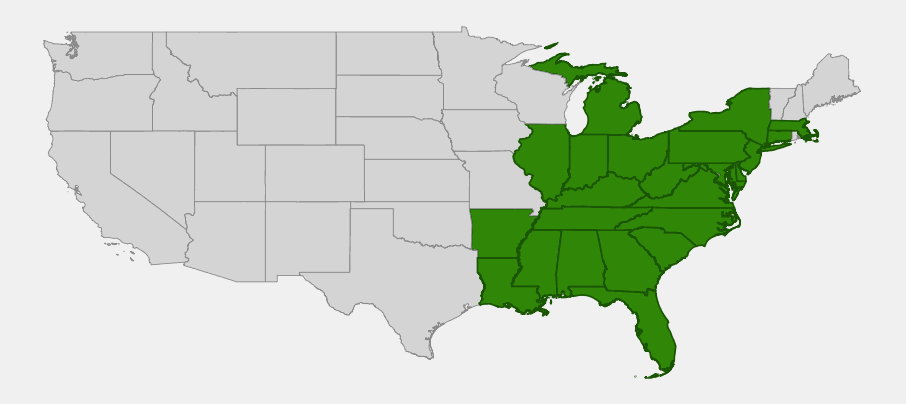
Devil’s bit is native to eastern North America. USDA PLANTS and the Lady Bird Johnson Wildflower Center record it in 23 states and the District of Columbia, from Massachusetts, Connecticut, New York and southern Michigan south to northern Florida and west to Illinois, Arkansas and Louisiana. It is also historically known from southern Ontario in Canada.
It is most common in the Appalachian region, the Piedmont and the upland Southeast, from Pennsylvania and Ohio south through Virginia, West Virginia, Kentucky, Tennessee and the Carolinas to Georgia and Alabama. Toward the edges of its range, in New England, Michigan, Illinois, Florida and the Gulf Coast states, it becomes scattered and rare, and it is tracked or protected as a rare plant in several of these states.
Typical habitats are moist, open deciduous and mixed woods, wooded slopes and ravines, the edges of bogs and seepage wetlands, wet meadows, and moist thickets. It usually grows in acidic, humus-rich soil and in light to moderate shade, often where the forest floor is moist but not waterlogged.
📋 Regional plant lists featuring Devil’s Bit: North & South Florida · Alabama, Georgia & Mississippi · North & South Carolina · Maryland, Virginia & West Virginia · Kentucky & Tennessee · Arkansas, Louisiana, Eastern Oklahoma & Eastern Texas · Illinois, Iowa & Missouri · Ohio & Indiana · Michigan, Wisconsin & Eastern Minnesota · New York, Pennsylvania & Northern New Jersey · Delaware, Southern New Jersey & Long Island · Connecticut, Massachusetts & Rhode Island · New Hampshire, Maine & Vermont
Growing & Care Guide
Devil’s bit can be grown in a shady woodland garden, but only from nursery-propagated plants or seed. Wild populations are already under pressure from herbal collection, and plants dug from the wild often fail anyway. Be patient: it grows slowly, and plants raised from seed may take several years to bloom.
Light
Give it partial to light shade, such as the dappled light under tall deciduous trees. It tolerates more sun where the soil stays moist, as at the edge of a bog or seep, but hot afternoon sun in dry soil will scorch it.
Soil & Water
It needs acidic, humus-rich, evenly moist but well-drained soil, about pH 4.5 to 6. Mix in leaf mold or composted pine bark when planting. Keep the soil from drying out, especially in the first years. A winter mulch of shredded oak leaves suits it well and mimics the forest floor.
Planting Tips
Buy plants from a native plant nursery that propagates its own stock, and ask how the plants were produced. Set the rhizome just below the soil surface, with the rosette level with the ground, about 6 to 10 inches apart. If you want seed, plant several, since you need both male and female plants and you will not know which you have until they bloom.
Pruning & Maintenance
Little care is needed. Leave the flowering stalks of female plants standing until the capsules open. Keep slugs and snails in check around young rosettes, and protect plants from deer if browsing is heavy. Keep the area weeded so the low rosettes are not smothered.
Propagation
Propagate from seed sown in late fall or early winter, about ⅛ inch deep in a humus-rich, acidic mix, and let winter cold stratify it naturally. Seedlings should be left undisturbed for at least a full season before transplanting. Established plants in cultivation can also be increased by dividing the rhizome in fall. Never collect plants or rhizomes from the wild.
Landscape Uses
- Shady woodland gardens: a striking white spring accent above a neat rosette
- Bog and seep margins: grows at the moist edges of acid wetlands
- Native plant conservation gardens: nursery-grown plants help reduce pressure on wild populations
- Pollinator gardens: flowers visited by small bees, flies and beetles
- Educational plantings: a good example of a native plant with separate male and female plants
Wildlife & Ecological Value
Devil’s bit is a small part of the eastern forest floor, but its unusual biology has made it a well-studied plant, and its flowers support a variety of small insects.
For Pollinators
The small white flowers are visited by a variety of small insects, including small bees, flies and beetles, which carry pollen from male plants to female plants. Because the sexes are separate, female plants depend entirely on insects for seed set.
For Birds
The seeds are small and are not a major food source for birds. Birds that forage on the forest floor may find insects among the rosettes and leaf litter.
For Mammals
White-tailed deer browse the flowering stalks, and heavy deer browsing can reduce flowering and seed production in some populations. Rodents may eat the seeds.
Ecosystem Role
Devil’s bit is a long-lived perennial: individual plants may live for decades, flowering only in some years. Long-term studies of its populations have made it a classic example of how plants with separate sexes balance the costs of reproduction, since female plants, which invest more in seeds, tend to flower less often and die more frequently than males.
Cultural & Historical Uses
Devil’s bit has a long history in North American herbal medicine. Several Indigenous peoples of the East used its rhizome, and it was later adopted by 19th-century Eclectic physicians, who called it “helonias” or “false unicorn root” and used it mainly for women’s reproductive health. It is still sold in herbal products today. Because almost all of this supply has come from wild plants, demand from the herbal trade has seriously depleted wild populations.
The genus name Chamaelirium comes from the Greek chamai (on the ground) and leirion (lily). The species name luteum means yellow, from the yellowish color of fading male flowers. The colorful name devil’s bit refers to the blunt, “bitten-off” end of the rhizome.
Safety note: The rhizome contains steroidal saponins and can cause nausea and vomiting in larger amounts. It should not be used during pregnancy or as a home remedy without professional advice. More importantly for conservation, it should never be dug from the wild; nursery-propagated plants are the only responsible source.
Frequently Asked Questions
Is devil’s bit the same as fairy wand?
Yes. Chamaelirium luteum is known by several names, including devil’s bit, fairywand (the USDA PLANTS name), blazing star and false unicorn root. Blazing star is also used for Liatris, so the scientific name helps avoid confusion.
Why does devil’s bit have male and female plants?
It is dioecious, meaning each plant produces only male or only female flowers. Male plants have long, fuzzy white spikes; female plants have shorter, greenish-white spikes that produce seed capsules. You need both for seed.
Is it legal to dig devil’s bit from the wild?
Even where collecting is not specifically prohibited, you should never dig devil’s bit from the wild. It is slow-growing, rare in several states, and heavily overcollected for the herbal trade. Collecting on public land or without the landowner’s permission is usually illegal. Buy only nursery-propagated plants.
Can I grow devil’s bit in my garden?
Yes, in moist, acidic, humus-rich soil in part shade, using nursery-propagated plants or seed. It grows slowly and may take several years to flower.
When does devil’s bit bloom?
From about March in Florida and along the Gulf Coast to May and June in the northern part of its range. Individual plants may skip flowering in some years.

Looking for a nursery that carries Devil’s Bit?
Browse our native plant nursery directory: Alabama & Arkansas · Connecticut, Delaware, Florida & Georgia · Illinois & Indiana · Kentucky, Louisiana, Maryland, Massachusetts, Michigan & Mississippi · New Jersey, New York, North Carolina & Ohio · Pennsylvania, South Carolina, Tennessee & Virginia · West Virginia

