
California Mustard (Guillenia lasiophylla)
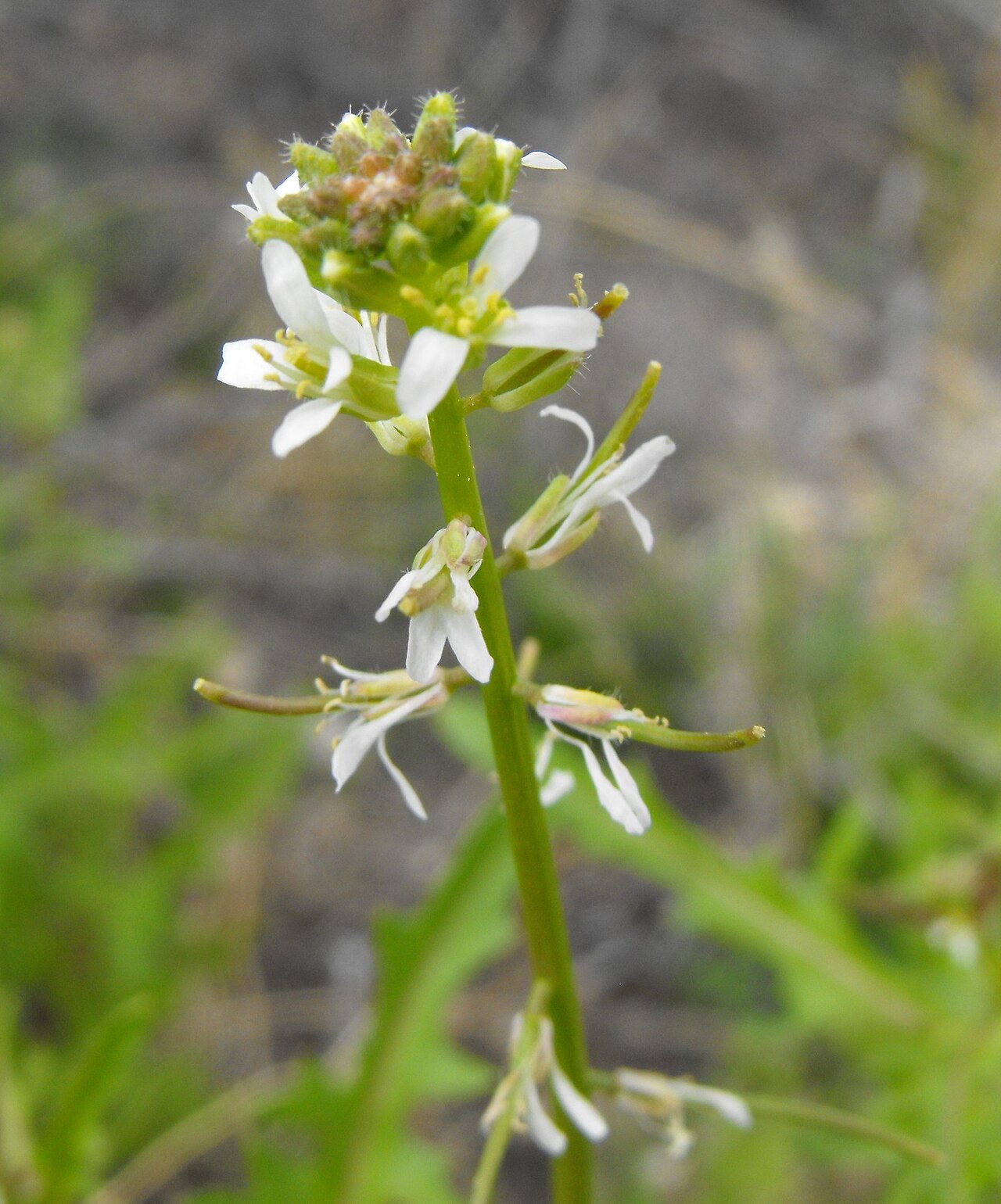
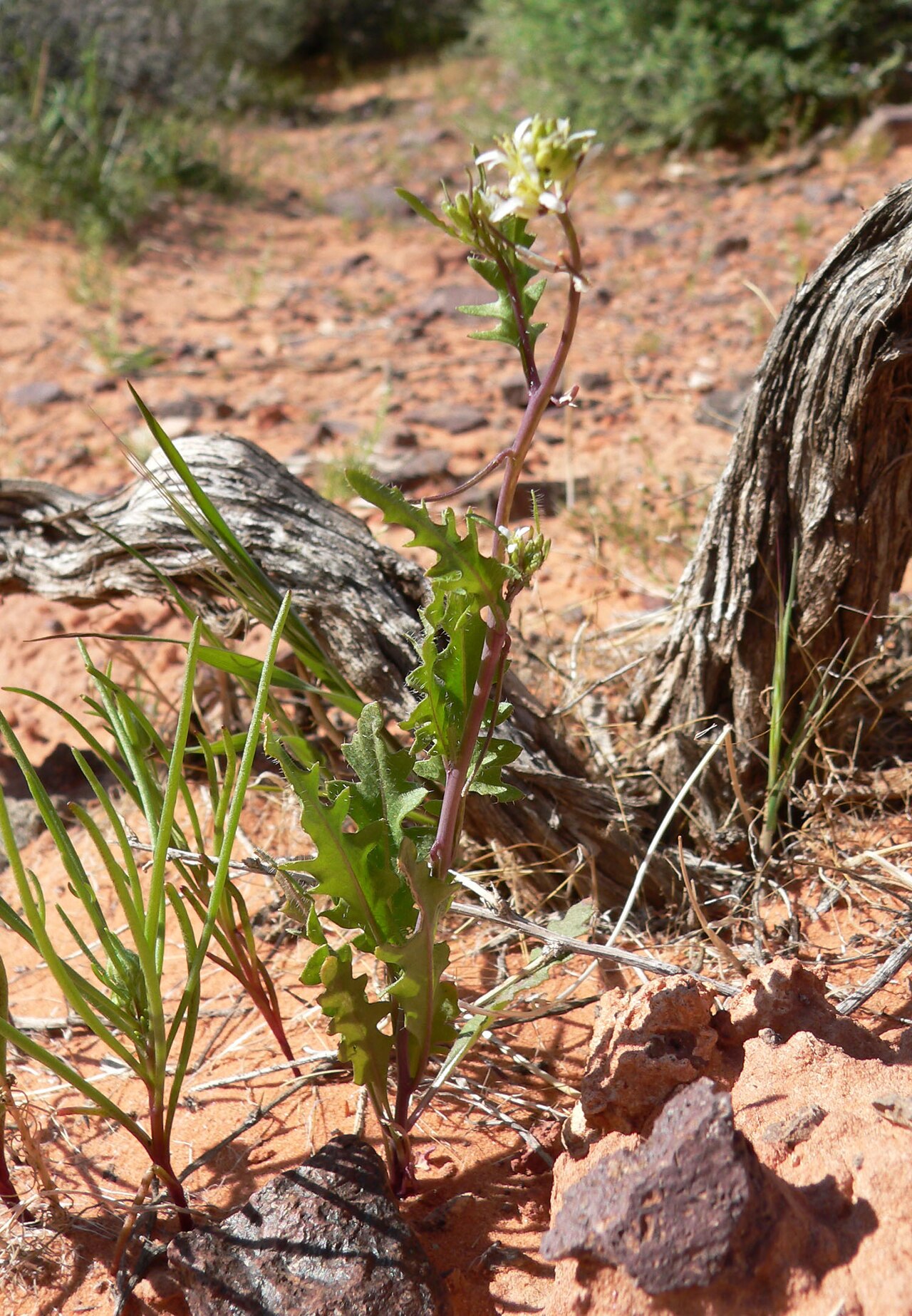
Guillenia lasiophylla, known as California Mustard (also slender-pod jewelflower), is a native annual of the mustard family (Brassicaceae) that grows across much of the American West, from Washington and Oregon south through California and the Great Basin to Arizona, New Mexico and Baja California. It is a slender, upright plant, usually 1 to 3 feet tall and occasionally up to about 5 feet, with a rosette of lobed, toothed leaves and an open spike of small white to cream flowers in spring. Its long, narrow seed pods bend downward as they ripen, which is one of the easiest ways to recognize it.
The species has been moved between genera several times. USDA PLANTS lists it as Guillenia lasiophylla, the Jepson eFlora uses Caulanthus lasiophyllus, and recent studies place it in Streptanthus, the jewelflower genus, as Streptanthus lasiophyllus. Older floras also call it Thelypodium lasiophyllum. The species name lasiophylla means “woolly-leaved” or “hairy-leaved,” for the stiff hairs on its lower leaves.
Although it looks somewhat like the weedy European mustards that fill western roadsides, California mustard is a true native and an important early-spring wildflower in grasslands, desert scrub and open woodland. It supports native bees and butterflies, including the orange-tips and whites whose caterpillars feed on mustards. This guide covers how to identify it, where it grows, and how to use it in native gardens and restoration plantings.
Identification
Several introduced mustards, such as black mustard, short-pod mustard and Sahara mustard, grow in the same places. California mustard is distinguished by its small white to pale yellow flowers (not bright yellow), its very narrow, flattened pods that turn sharply downward, and its relatively delicate, sparsely leafy stems.
Stems & Growth Habit
California mustard is a winter annual that germinates with fall or winter rains, forms a rosette, and bolts in late winter or spring. The stem is usually single and slender, simple or with a few upright branches, 1 to 3 feet tall in most places and occasionally taller in moist years. It is smooth or sparsely hairy and often purplish toward the base.
Leaves
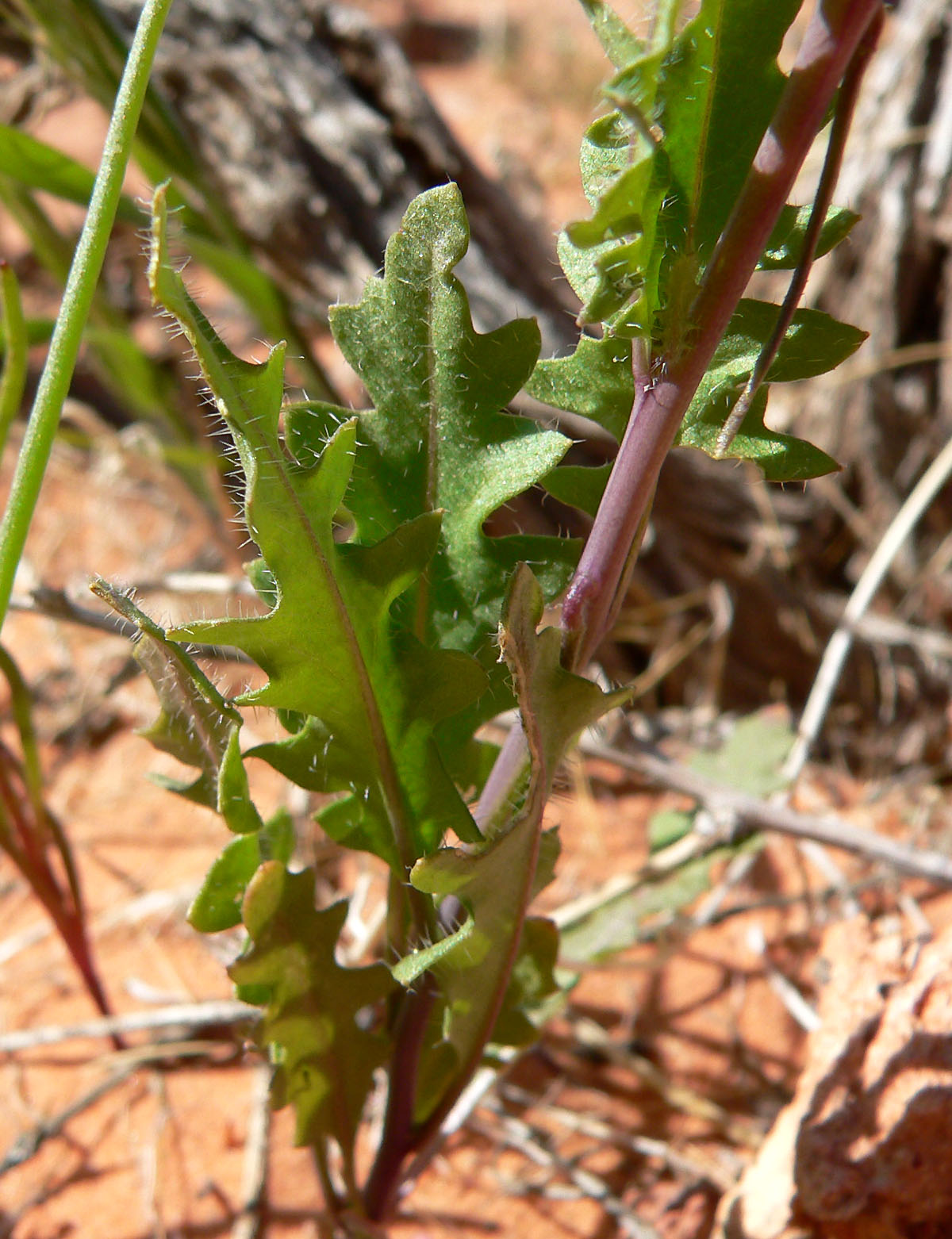
The basal and lower stem leaves are 1½ to 6 inches long, oblong to oblanceolate, and deeply lobed or toothed along the margins, often in a pattern like a dandelion leaf. They carry scattered stiff hairs, especially on the lower surface and margins. Upper stem leaves are smaller, narrower and less lobed. The lower leaves often wither by the time the plant is in full bloom.
Flowers
The flowers are borne in a long, open raceme that keeps elongating as new flowers open at the tip. Each flower is small, about ¼ inch across, with four narrow, widely spaced white to pale cream or yellowish petals, sometimes tinged pink or purple, and a cup of four greenish to purplish sepals. Bloom runs from about February in the low deserts to June in the north and at higher elevations.
Fruit & Seeds
The fruit is a long, very narrow, flattened silique, about 1¼ to 2¾ inches long and only a sixteenth of an inch wide. As the pods mature they bend sharply downward on their short stalks, so a fruiting plant looks like it is hung with many thin, drooping threads. The pods split to release small, flattened, oblong seeds in a single row.
Quick Facts
| Scientific Name | Guillenia lasiophylla (syn. Caulanthus lasiophyllus, Streptanthus lasiophyllus, Thelypodium lasiophyllum) |
| Family | Brassicaceae (mustard family) |
| Plant Type | Annual herb (winter annual) |
| Mature Height | 1–3 ft (occasionally to about 5 ft) |
| Mature Spread | 6–12 in |
| Growth Rate | Fast |
| Sun Exposure | Full sun to partial shade |
| Water Needs | Low; relies on winter and spring rain |
| Soil Type | Sandy, gravelly or rocky soils; also clay and disturbed soils |
| Soil pH | About 6.0–8.5 |
| Bloom Time | February–June |
| Flower Color | White to cream or pale yellow, sometimes pinkish |
| Fall Color | None; plants dry by summer |
| Fruit | Long, very narrow silique that bends downward |
| Deer Resistant | No; browsed by deer, rabbits and livestock |
| USDA Hardiness Zones | 5–10 (grown as a cool-season annual) |
Native Range
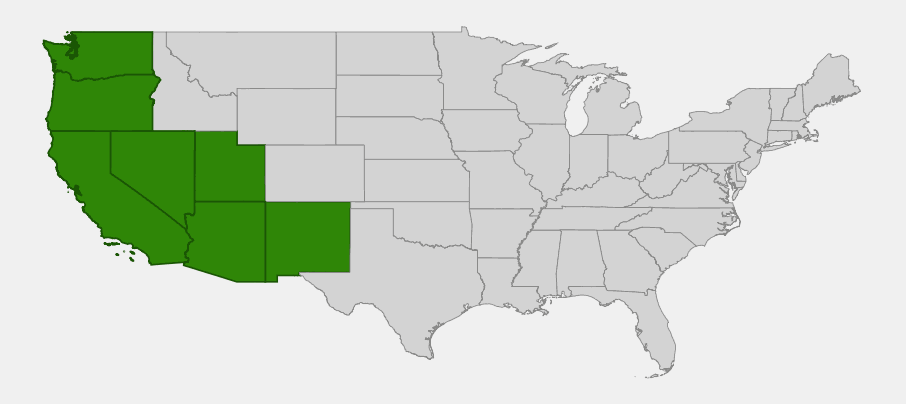
California mustard has a broad range in western North America, from southern British Columbia to Baja California and northwestern Mexico. USDA PLANTS and the Lady Bird Johnson Wildflower Center record it as native in seven states: Arizona, California, Nevada, New Mexico, Oregon, Utah and Washington. California is the heart of its range, where it grows in nearly every region below the high mountains, from the North Coast Ranges and Sierra Nevada foothills to the Mojave and Colorado Deserts and the southern coast.
Outside California it grows in the desert mountains and canyons of southern Nevada, Utah and Arizona, reaches western New Mexico, and extends north into southwestern Oregon. In Washington it is known only from older reports, and the Burke Herbarium lists it as a species whose status in the state needs review, so Washington is best treated as an outlying record at the northern edge of the range.
California mustard is found in a wide variety of open habitats: grassland, oak woodland, chaparral and coastal sage scrub, desert flats and washes, creosote bush and blackbrush scrub, pinyon-juniper woodland, rocky and gravelly slopes, talus, limestone outcrops, sandy banks, and roadsides and burns. It often comes up in abundance after fire or in wet years.
📋 Regional plant lists featuring California Mustard: Arizona & New Mexico · California & Nevada · Utah & Western Colorado · Western Oregon & Western Washington
Growing & Care Guide
California mustard is easy to grow from seed and comes back on its own once it has a foothold. It is best used in naturalistic wildflower plantings and restorations rather than formal beds. Seed is occasionally available from native seed suppliers in California and the Southwest.
Light
Give it full sun or light shade. In the wild it grows in open desert and grassland as well as under shrubs and in the dappled shade of oaks and junipers.
Soil & Water
It grows in almost any well-drained soil, including sand, gravel, rocky ground and clay, and it tolerates the alkaline soils of the desert. Winter and spring rain are all it needs in most of its range. In a dry winter, a few deep waterings will help seedlings establish and flower. No fertilizer is needed.
Planting Tips
Sow seed in fall or early winter, before the rains, by scattering it on bare, raked soil and pressing it in lightly. Mix it with other native annuals such as phacelias, fiddlenecks, lupines and poppies for a varied spring display. Keep introduced mustards and grasses in check, since they compete for the same space.
Pruning & Maintenance
No pruning is needed. Let the plants ripen and drop their seed before clearing them in late spring or summer. If you collect seed, cut the stems when most pods have turned tan and let them finish drying in a paper bag.
Propagation
Propagate from seed only. Fresh seed sown in fall germinates with the first good rains. Plants self-sow readily where there is open ground, and in good years a small sowing can become a large colony.
Landscape Uses
- Native wildflower meadows: an early-spring native annual for California and Southwestern meadow mixes
- Desert and dry gardens: fits naturally among cacti, creosote and desert annuals
- Butterfly gardens: a native mustard host for orange-tip and white butterfly caterpillars
- Restoration and post-fire seedings: a fast-establishing native annual for disturbed and burned ground
- Educational gardens: shows the difference between native mustards and the invasive European species
Wildlife & Ecological Value
Native mustards are an important but underappreciated group of western wildflowers. California mustard feeds insects in early spring and supports several specialist butterflies.
For Pollinators
The small white flowers produce nectar and pollen for small native bees, flies and small butterflies. Native mustards are also larval host plants for butterflies of the family Pieridae, including Sara orangetip, desert orangetip and checkered white, whose caterpillars feed on the flowers, developing pods and leaves.
For Birds
Finches, sparrows, quail and other seed-eating birds eat mustard seeds when the pods split. The plants also host insects that birds feed to their young in spring.
For Mammals
Deer, rabbits, desert tortoises and small rodents browse the tender young leaves, and rodents gather the seeds. Livestock also graze it in spring.
Ecosystem Role
As a fast-growing winter annual, California mustard helps cover bare ground after fire or disturbance and contributes to the seed bank that sustains desert and grassland food webs. In native wildflower displays, it is one of the early bloomers that bridges the gap between winter rains and the main spring flowering.
Cultural & Historical Uses
William Jackson Hooker and George Arnott described the species in the 1830s as Turritis lasiophylla, from material collected in California. Since then it has been placed in Arabis, Thelypodium, Caulanthus, Guillenia and most recently Streptanthus, as botanists have refined their understanding of the western mustards using DNA studies. Gardeners will still find it under several of these names in floras, seed catalogs and databases.
Native mustards were used as food by California and Southwestern Native peoples, who gathered young greens in spring and parched and ground the oily seeds. Specific records for California mustard are limited, but it was likely among the wild mustards gathered in this way where it was common.
Today native mustards like this one face strong competition from introduced Mediterranean mustards, especially black mustard and Sahara mustard, which crowd out native annuals in grasslands and deserts. Learning to recognize the native California mustard, with its small white flowers and drooping, thread-like pods, helps land managers and volunteers remove the invaders without harming the native species.
Frequently Asked Questions
Is California mustard native or invasive?
It is native to western North America. It is often confused with the invasive European mustards that line western roadsides, but those have bright yellow flowers and stiffer, thicker pods.
Why does California mustard have so many scientific names?
The western mustards have been reclassified several times. USDA PLANTS uses Guillenia lasiophylla, the Jepson eFlora uses Caulanthus lasiophyllus, and recent DNA studies place it in Streptanthus. All refer to the same plant.
How do I recognize California mustard?
Look for a slender annual with lobed, hairy lower leaves, small white or pale cream flowers with four narrow petals, and long, very thin pods that bend sharply downward as they ripen.
Does California mustard attract butterflies?
Yes. Native mustards are host plants for orangetip and white butterflies, whose caterpillars feed on the flowers and young pods, and the flowers provide nectar to small butterflies and bees.
Can I grow California mustard in my garden?
Yes, from seed sown in fall in sunny, well-drained soil within its native range. It is an annual, so it is best in a wildflower meadow or dry garden where it can reseed each year.

Looking for a nursery that carries California Mustard?
Browse our native plant nursery directory: Arizona · California · Nevada & New Mexico · Oregon · Utah · Washington

