
Trans-Pecos Morning-glory (Ipomoea cristulata)
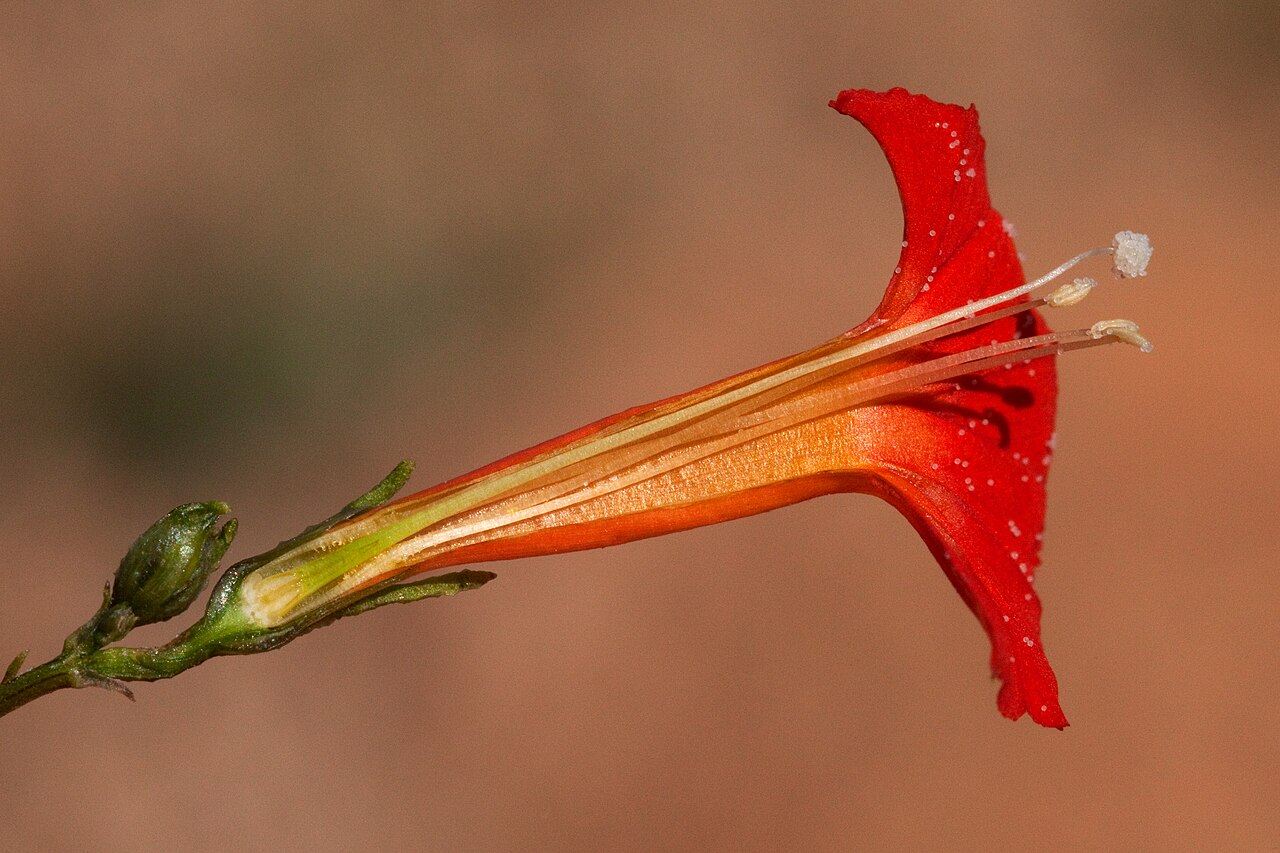
Ipomoea cristulata, known as Trans-Pecos Morning-glory or scarlet morning-glory, is a slender annual vine of the canyons and mountain slopes of the American Southwest and northern Mexico. During the summer rainy season it twines through shrubs, grasses and fences and opens small, brilliant scarlet to red-orange, trumpet-shaped flowers that are a favorite of hummingbirds.
It belongs to the group of red-flowered morning-glories, along with the eastern red morning-glory (Ipomoea coccinea) and scarlet creeper (Ipomoea hederifolia). Unlike the familiar large blue and purple morning-glories, its flowers are narrow tubes with a small, flat, five-sided face, shaped for the bill of a hummingbird. The name cristulata means “with a small crest”, referring to the small crest-like projections on the backs of its sepals.
Its native range runs from Arizona east through New Mexico to the Trans-Pecos region of western Texas, and south into Mexico. This guide covers how to identify Trans-Pecos morning-glory, where it grows, how to grow it as a hummingbird vine, and its value to wildlife.
Identification
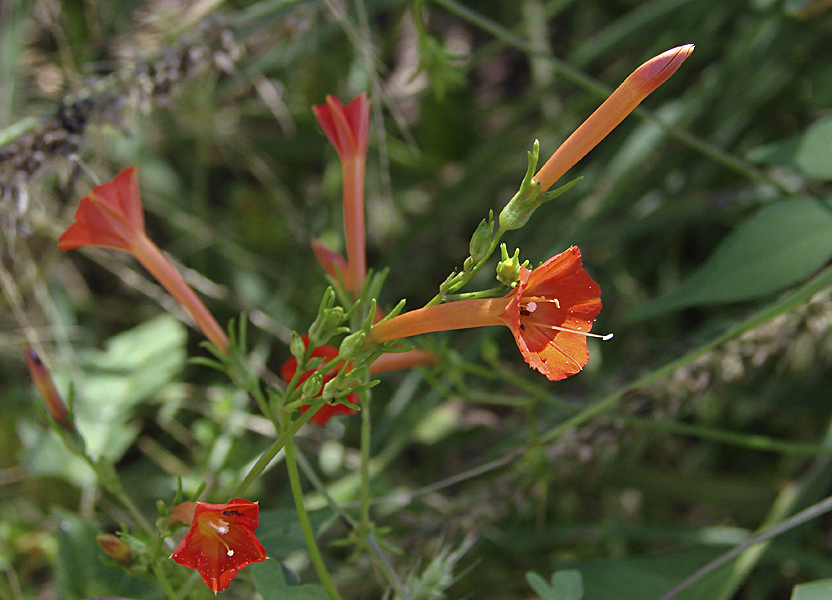
In late summer in the Southwest, look for a thin, twining vine with variable, often deeply lobed leaves and small, bright red, long-tubed flowers. It is most likely to be seen in canyons and on brushy slopes after the monsoon rains begin.
Growth Habit
It is an annual, herbaceous vine with thin, twining stems that climb by winding around other plants, usually reaching 3 to 10 feet. Plants germinate with the summer rains, grow quickly, flower and set seed by fall, then die with the first frost.
Leaves
The leaves are alternate, on long stalks, and very variable: some are heart-shaped with a pointed tip, while others are deeply cut into three to seven narrow, pointed lobes, sometimes on the same plant. They are about 1 to 3 inches long.
Flowers
The flowers are scarlet to red-orange, sometimes with a yellow-orange throat, and consist of a narrow tube about 1 inch long that flares into a small, flat, five-angled face about 1/2 to 3/4 inch across. The stamens and style stick out of the mouth of the flower. Flowers are borne a few together on stalks from the leaf axils, open in the morning and close later in the day. The five sepals each carry a small, crest-like point on the back. Bloom is mainly July through October.
Fruit & Seeds
The fruit is a small, round capsule, about 1/4 inch across, that splits to release four dark, hard seeds.
Look-alikes
Red morning-glory (Ipomoea coccinea) of the eastern United States is very similar but has heart-shaped, mostly unlobed leaves and is not native to the Southwest. Scarlet creeper (Ipomoea hederifolia) has larger flowers and sepals with longer, slender awns. Cypress vine (Ipomoea quamoclit), a cultivated introduction, has thread-like, feathery leaves. In the field, the combination of small red flowers, lobed leaves and crested sepals marks Trans-Pecos morning-glory.
Quick Facts
| Scientific Name | Ipomoea cristulata Hallier f. |
| Family | Convolvulaceae (morning-glory family) |
| Plant Type | Annual twining vine |
| Mature Height | Climbs 3–10 ft |
| Mature Spread | 1–3 ft |
| Growth Rate | Fast |
| Sun Exposure | Full sun to part shade |
| Water Needs | Low to moderate; grows with the summer rains |
| Soil Type | Well-drained rocky, gravelly or sandy soils |
| Soil pH | About 6.5–8.0 |
| Bloom Time | July–October |
| Flower Color | Scarlet to red-orange |
| Fall Color | None; plants die at frost |
| Fruit | Small round capsule with four hard seeds |
| Deer Resistant | Low; deer and rabbits may browse the vines |
| USDA Hardiness Zones | Annual; grows in zones 5–10 as a summer annual |
Native Range
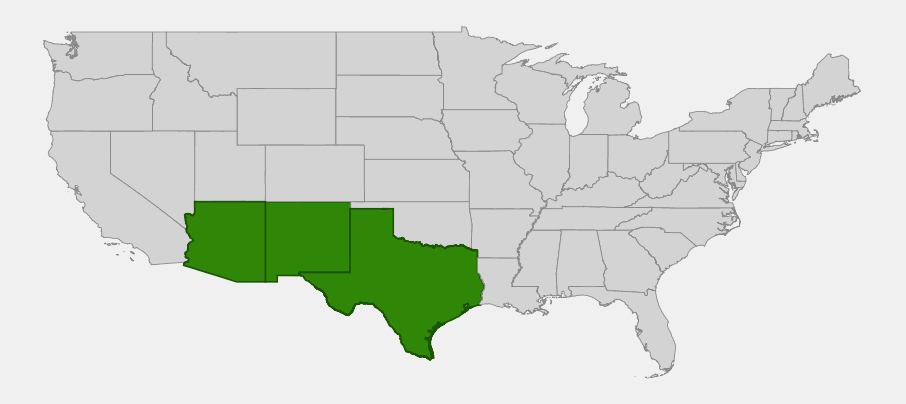
Trans-Pecos morning-glory is native to the southwestern United States and northern Mexico. USDA PLANTS lists it in Arizona, New Mexico and Texas, and Lady Bird Johnson Wildflower Center describes its native range as Arizona east to western Texas and south into Mexico. In Texas it is a plant of the Trans-Pecos, including the Davis and Chisos Mountains and other ranges west of the Pecos River, which gives it its common name.
USDA PLANTS also shows records from Iowa, Kansas, Minnesota and South Carolina. These scattered records are far outside the plant’s natural southwestern range, and the few herbarium specimens from Kansas are isolated collections from widely separated counties. They are best treated as adventive (introduced or waif) occurrences rather than part of its native range, so they are not shaded on the map above.
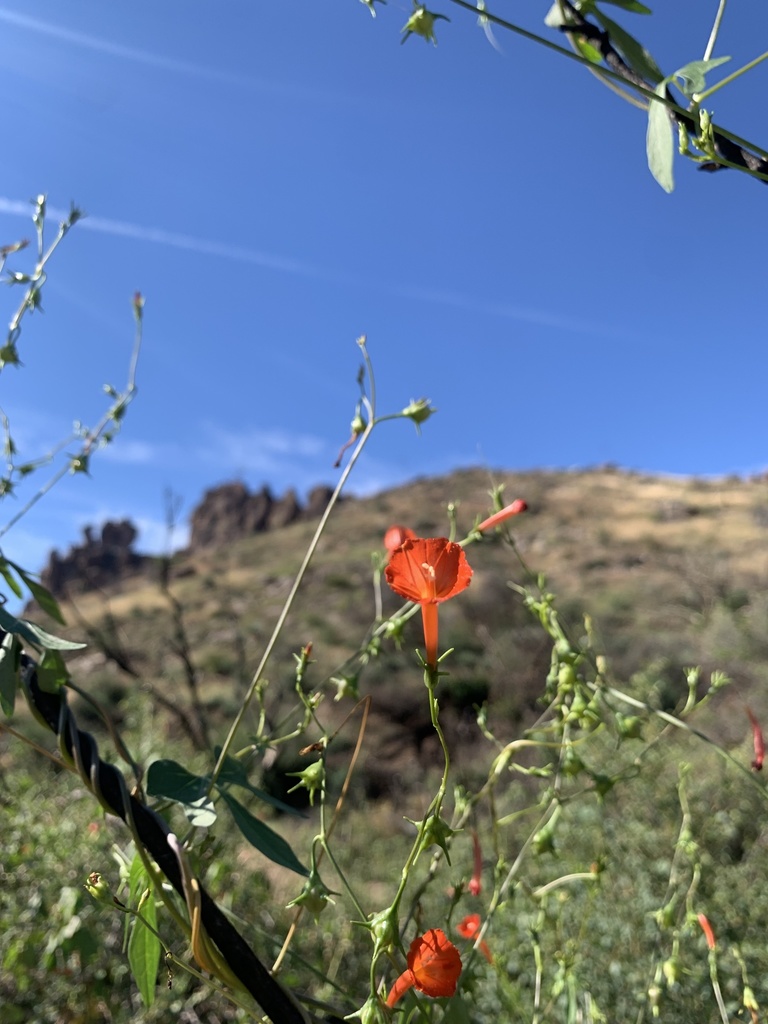
In its native range it grows in canyons, along washes, on rocky and brushy hillsides and in openings in oak, pinyon-juniper and pine woodlands, often climbing over shrubs and grasses. It is found mostly from about 3,000 to 7,500 feet in elevation and appears mainly in the summer monsoon season.
📋 Regional plant lists featuring Trans-Pecos Morning-glory: Arizona & New Mexico · South & West Texas
Growing & Care Guide
Trans-Pecos morning-glory is a delicate, fast-growing annual vine for hummingbird gardens in the Southwest. Seed is offered by some southwestern native seed suppliers, and once established it often reseeds itself. It is far less aggressive than the large weedy morning-glories, and its fine stems rarely smother the plants they climb.
Light
Grow it in full sun to part shade. In hot desert gardens it does best with some afternoon shade or growing up through a shrub.
Soil & Water
It prefers well-drained soil and is not fussy about fertility. In nature it grows with the summer rains, so water seedlings regularly in early summer if rains are late, then water occasionally during dry spells.
Planting Tips
Sow seed outdoors after the last frost, or at the start of the summer rains in the Southwest, about 1/4 inch deep. Give it a light trellis, fence, open shrub or tall grass to climb. It pairs well with other hummingbird plants such as penstemons, salvias and firecrackerbush.
Pruning & Maintenance
No pruning is needed. Pull the dead vines after frost, leaving some seed capsules to ripen and fall if you want it to return the next year.
Propagation
Grow it from seed. Nick the hard seed coat or soak seeds overnight in warm water before sowing to speed germination. Seedlings sprout in about a week in warm soil. Collect seed only in small amounts and only where it is allowed.
Landscape Uses
- Hummingbird gardens: scarlet tubular flowers from midsummer to fall
- Trellises and fences: a light, fine-textured annual climber
- Southwestern native gardens: grows with the summer monsoon rains
- Shrub borders: twines through open shrubs without smothering them
- Wildlife gardens: late-season nectar for hummingbirds and butterflies
Wildlife & Ecological Value
Trans-Pecos morning-glory blooms when many hummingbirds are migrating through the Southwest in late summer, making it a valuable nectar plant.
For Pollinators
The long red tubes are adapted for hummingbird pollination. Butterflies, especially swallowtails and skippers, also sip nectar from the flowers, and small bees may visit to collect pollen.
For Birds
Hummingbirds, including broad-tailed, black-chinned and rufous hummingbirds, visit the flowers in late summer and fall. Seed-eating birds may take some of the seeds from the capsules.
For Mammals
Deer, rabbits and rodents may browse the tender vines, but they are of minor importance as a food source.
Ecosystem Role
As a summer annual it fills openings in canyons and woodland edges after the monsoon rains, adding to the late-season flowering that supports migrating hummingbirds and insects.
Cultural & Historical Uses
The species was described by the German botanist Hans Hallier, who studied the morning-glory family worldwide. Its name refers to the small crest on each sepal, a detail that helps separate it from other red-flowered morning-glories.
Red-flowered morning-glories form a natural group within Ipomoea whose flowers evolved from bee-pollinated ancestors toward hummingbird pollination, with red color, long tubes and protruding stamens. Researchers have used this group to study how changes in flower color and shape evolve.
Safety note: the seeds of many morning-glories contain alkaloids that can be toxic if eaten. Do not eat any part of the plant, and keep seeds away from children and pets.
Frequently Asked Questions
Where is Trans-Pecos morning-glory native?
It is native to Arizona, New Mexico and the Trans-Pecos region of western Texas, and south into Mexico. Scattered records farther east and north are considered introduced.
Is Trans-Pecos morning-glory an annual?
Yes. It sprouts with the summer rains, blooms from midsummer to fall and dies at frost, but it often reseeds.
Do hummingbirds visit Trans-Pecos morning-glory?
Yes. Its narrow, scarlet flowers are adapted for hummingbirds and are visited heavily during late-summer migration.
How is it different from red morning-glory?
Red morning-glory (Ipomoea coccinea) is an eastern species with mostly heart-shaped leaves. Trans-Pecos morning-glory often has deeply lobed leaves and small crests on its sepals.
Is Trans-Pecos morning-glory invasive?
No. It is a native, fairly delicate annual vine that does not smother other plants, unlike some weedy introduced morning-glories.

Looking for a nursery that carries Trans-Pecos Morning-glory?
Browse our native plant nursery directory: Arizona · New Mexico · Texas

