
Bighead Clover (Trifolium macrocephalum)
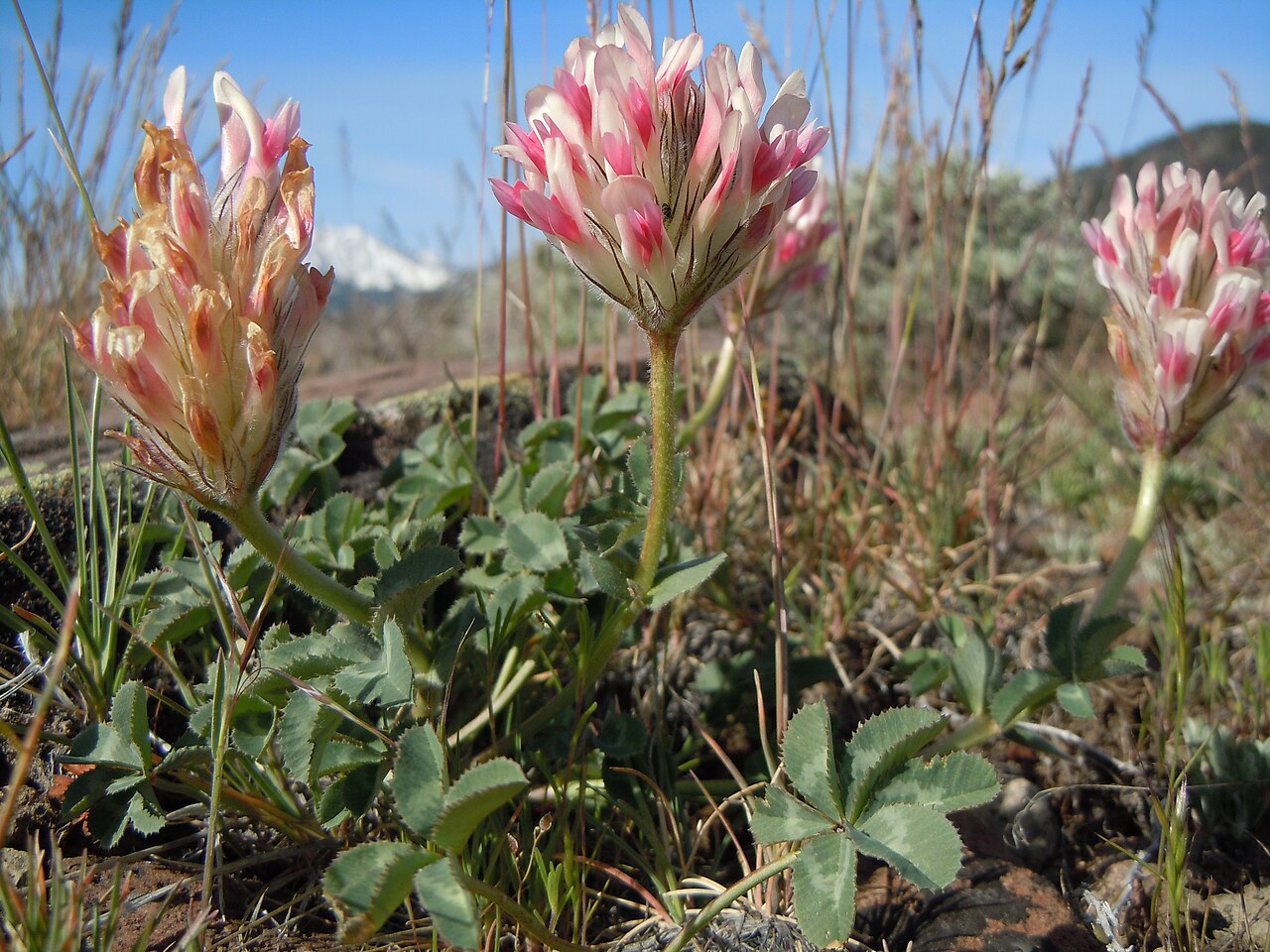
Trifolium macrocephalum, known as Bighead Clover or largehead clover (the USDA PLANTS name), is a low native clover of the sagebrush steppe and dry pine woodlands of the inland Northwest. The plant itself is only a few inches tall, but in spring it produces rounded flower heads up to 2 to 2½ inches across, the largest of any native North American clover. The heads are a striking mix of cream, white and rosy pink, and they look almost too large for the small clumps of leaves below them.
It is also unusual in its leaves. The genus name Trifolium means “three leaves,” but bighead clover usually has 5 to 9 leaflets arranged like the fingers of a hand, so a casual observer might take it for a lupine before it blooms. It belongs to the pea family (Fabaceae) and, like other clovers, fixes nitrogen with the help of bacteria in its root nodules.
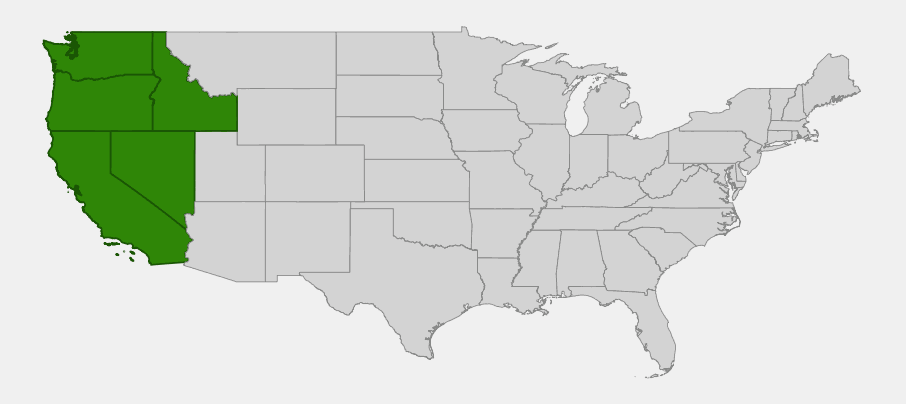
Bighead clover grows in eastern Washington and Oregon, western and southern Idaho, northeastern California and western Nevada, usually on rocky, thin, well-drained soils such as basalt scablands, rocky ridges and open slopes in sagebrush and ponderosa pine country. It is a favorite of spring wildflower hikers in the Columbia Basin and the eastern Cascade foothills. This guide covers how to identify it, where it grows, how to grow it, and its value to bees and other wildlife.
Identification
In bloom, bighead clover is unmistakable: no other native clover has such large flower heads on such a small plant. Out of bloom, its palmate leaves are the best clue.
Form
It is a low, tufted perennial that grows from a thick taproot and woody root crown. Several short stems spread or rise from the crown, usually 4 to 12 inches long, and the whole plant is softly hairy. Plants are often scattered singly on rocky ground rather than forming dense mats.
Leaves
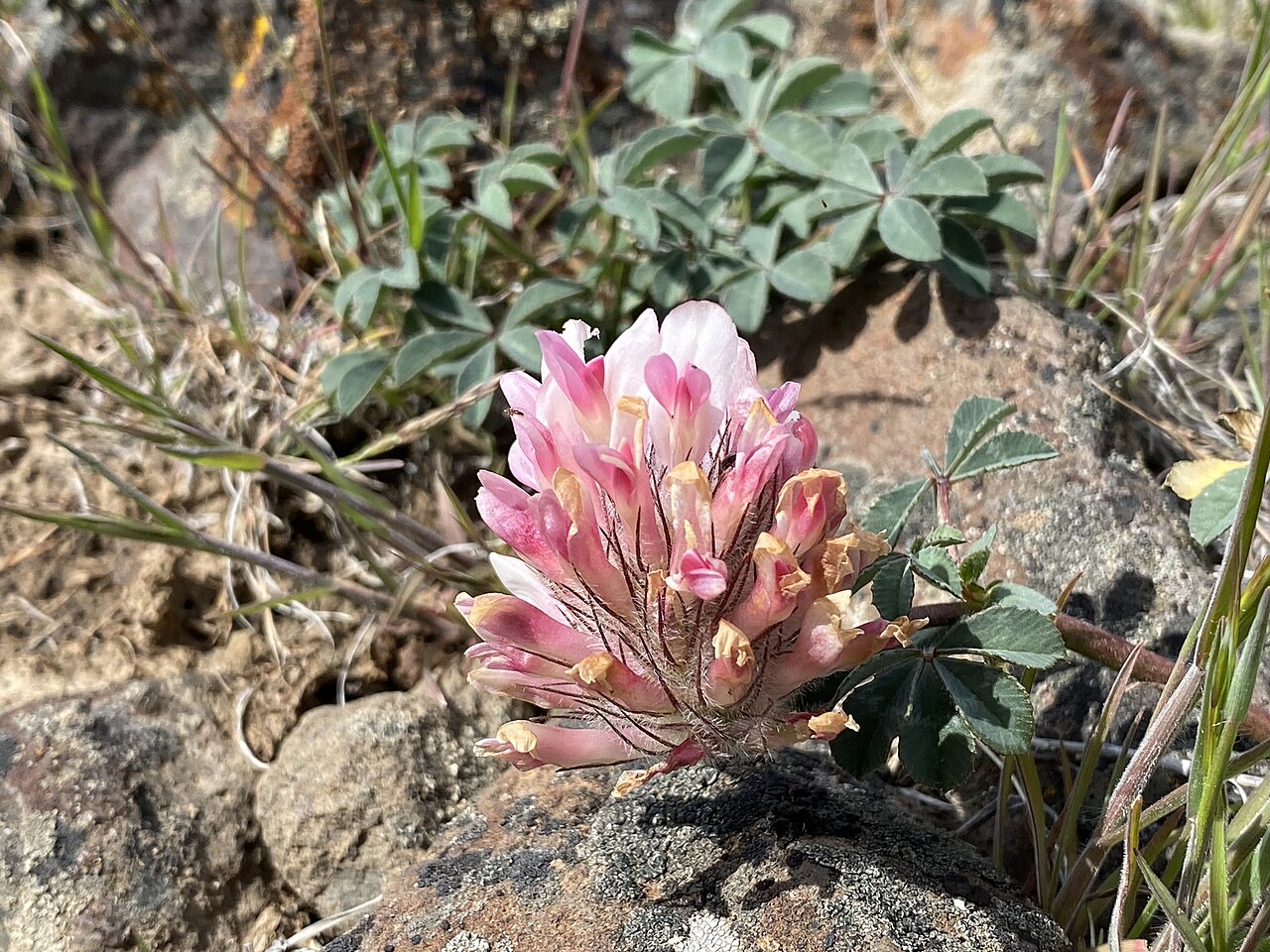
The leaves are palmately compound, with usually 5 to 9 leaflets (sometimes fewer) radiating from the tip of the leaf stalk. Each leaflet is about ½ to 1 inch long, oblong to wedge-shaped, thick and hairy, with finely toothed edges. This “hand-shaped” leaf is very unusual for a clover, since most clovers have three leaflets.
Flowers
The flowers are borne in a dense, rounded to egg-shaped head about 1½ to 2½ inches long, on a stout stalk at the end of each stem. Each head holds many pea flowers about ¾ to 1 inch long. The flowers are usually white or cream with pink to rose-red tips, and they turn deeper pink as they age, so a head often shows several shades. A ring of hairy, pointed sepals gives the head a slightly fuzzy look. Bloom time is mainly April to June.
Fruit & Seeds
After flowering, the head dries and each flower forms a small pod with one to a few seeds, held inside the old, papery flower. The seeds are hard-coated and drop near the parent plant.
Look-alikes
Lupines also have palmate leaves, but their leaflets are narrower, they grow in taller clumps, and their flowers are in long spikes, not round heads. Other native clovers of the region, such as White-tipped Clover (Trifolium variegatum), have three leaflets and much smaller heads. Woolly clover (Trifolium plumosum) of the same region has three narrow leaflets and smaller, plumy heads.
Quick Facts
| Scientific Name | Trifolium macrocephalum (Pursh) Poir.; USDA common name largehead clover |
| Family | Fabaceae (pea family) |
| Plant Type | Low herbaceous perennial from a taproot |
| Mature Height | 4–12 in |
| Mature Spread | 6–12 in |
| Growth Rate | Slow |
| Sun Exposure | Full sun to light shade |
| Water Needs | Low; moist in spring, dry in summer |
| Soil Type | Rocky, gravelly or thin soils, often over basalt; excellent drainage |
| Soil pH | About 6.0–8.0 (tolerates calcareous soils) |
| Bloom Time | April–June |
| Flower Color | Cream to white with pink tips, aging rose-pink |
| Fall Color | None; goes dormant in summer drought |
| Fruit | Small pod with one to a few seeds, enclosed in the dry flower |
| Deer Resistant | No; deer and livestock graze it |
| USDA Hardiness Zones | 5–8 |
Native Range
Bighead clover is a plant of the interior Pacific Northwest and the northwestern Great Basin. USDA PLANTS records it as native in five states: Washington, Oregon, Idaho, California and Nevada. The Lady Bird Johnson Wildflower Center describes its range as eastern Washington to east-central California, western Nevada and Idaho.
In Washington and Oregon it grows mainly east of the Cascades, in the Columbia Basin, the eastern Cascade foothills, the Columbia River Gorge and the Blue Mountains region. In Idaho it is found mostly in the western and southwestern parts of the state. From southeastern Oregon its range continues into northeastern California, including the Modoc Plateau, and into western Nevada along the eastern Sierra Nevada foothills.
It grows from low elevations in the Columbia Basin up to roughly 6,500 feet. It favors open, rocky places: basalt scablands, lithosols (thin, stony soils), rocky ridges and slopes in sagebrush steppe, and openings in juniper and ponderosa pine woodland. It is often found where the soil is wet in early spring and bone-dry by summer.
📋 Regional plant lists featuring Bighead Clover: California & Nevada · Idaho, Eastern Oregon & Eastern Washington
Growing & Care Guide
Bighead clover is a choice plant for dry rock gardens and steppe-style plantings in the inland Northwest. It is not widely sold, but native seed suppliers sometimes offer it. It needs the same conditions as other steppe wildflowers: lots of sun, sharp drainage and a dry summer rest.
Light
Grow it in full sun. It tolerates the light shade of open pines, but flowering is best in sun.
Soil & Water
Plant it in rocky, gravelly or sandy soil with excellent drainage. It is adapted to soils that are moist in spring and dry out completely in summer. Avoid summer irrigation once plants are established, since wet soil in hot weather can cause crown rot. Rich garden soil is not necessary, because it fixes its own nitrogen.
Planting Tips
The best way to establish it is from seed sown directly where it will grow, in fall. Its long taproot makes it difficult to transplant, so if you start it in pots, use deep containers and plant out young. It pairs well with buckwheats, balsamroot, phlox and bunchgrasses in a steppe or rock garden.
Pruning & Maintenance
Little maintenance is needed. Allow the plants to go dormant naturally in summer, and leave the dried flower heads to drop their seed. Keep competing weeds and aggressive grasses away from the small plants.
Propagation
Grow it from seed. The hard seed coat benefits from scarification, such as light sanding or a brief soak in hot water, and a period of cold, moist stratification (or fall sowing) improves germination. Inoculating seed with the right rhizobia, or sowing into soil where native clovers already grow, can help seedlings get established.
Landscape Uses
- Rock gardens and xeriscapes: large, showy flower heads on a compact plant
- Steppe and sagebrush restoration: one of the few clovers suited to intact sagebrush steppe
- Pollinator gardens: an important early-season bumble bee flower
- Soil improvement: fixes nitrogen in thin, rocky soils
- Wildflower meadows in the inland Northwest: pairs well with balsamroot and bunchgrasses
Wildlife & Ecological Value
Bighead clover is a valuable spring wildflower for wildlife in the dry country east of the Cascades.
For Pollinators
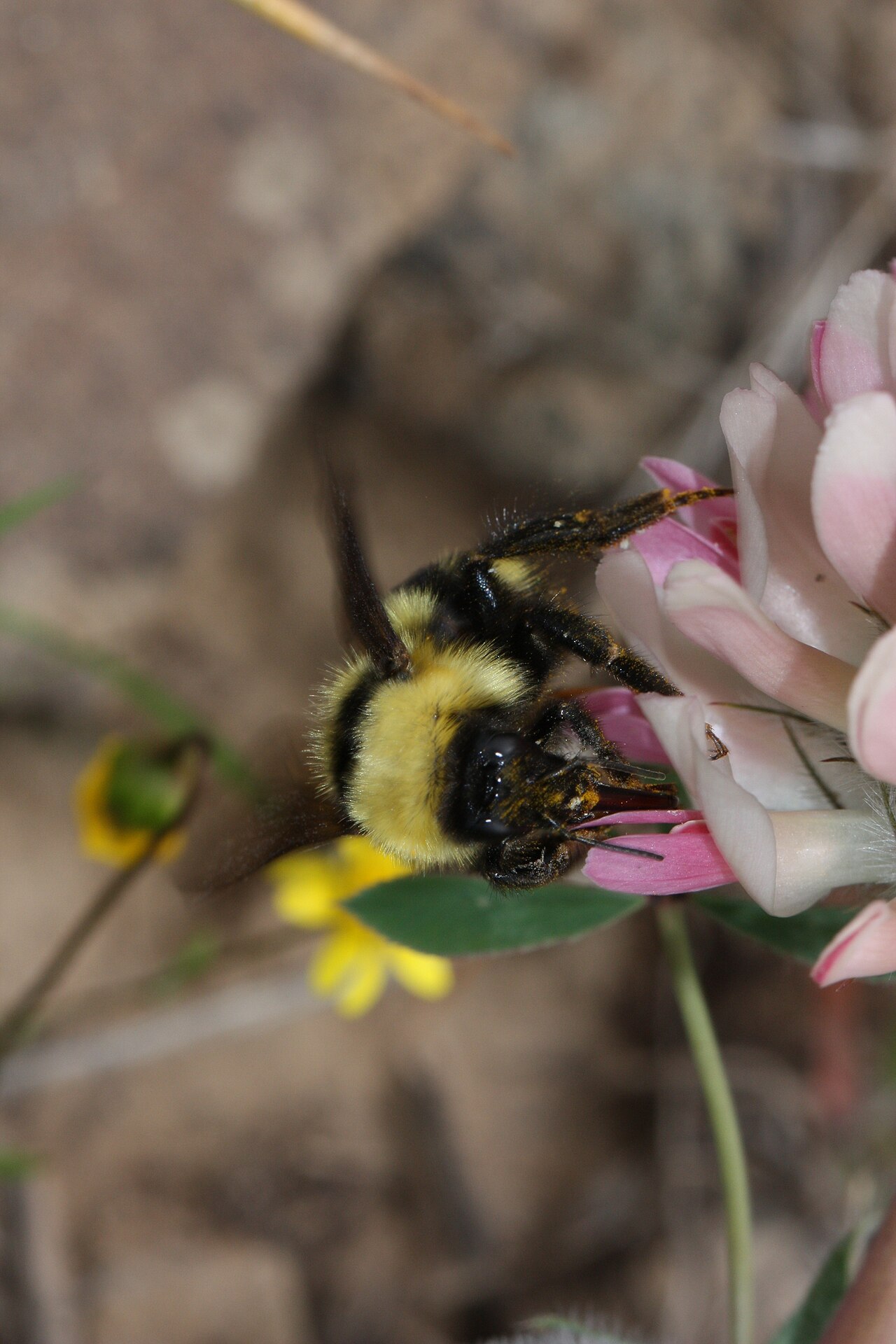
Its large flower heads are rich in nectar and pollen and are visited heavily by bumble bees, which are strong enough to open the pea flowers. Other native bees and some butterflies also visit. Native clovers are host plants for the caterpillars of several sulphur and blue butterflies.
For Birds
Sage-grouse and other ground birds of the sagebrush steppe eat the leaves and flowers of spring forbs such as native clovers, which are important for nesting hens and chicks. Seeds are eaten by ground-feeding birds.
For Mammals
Deer, elk and livestock graze bighead clover in spring. Small mammals such as ground squirrels also eat the leaves and seeds.
Ecosystem Role
As a nitrogen-fixing legume in thin, rocky soils, bighead clover adds nitrogen to nutrient-poor steppe soils. It is one of the native forbs that make healthy sagebrush steppe so diverse, and its presence is often a sign of relatively intact native vegetation.
Cultural & Historical Uses
Bighead clover is one of the plants collected by Meriwether Lewis during the Lewis and Clark Expedition. Frederick Pursh described it from that material in 1814 as Lupinaster macrocephalus, a name that reflects its lupine-like leaves. It was later moved into Trifolium by Jean Louis Marie Poiret, which is why the name is written Trifolium macrocephalum (Pursh) Poir.
The species name macrocephalum means “large-headed,” from the Greek makros (large) and kephale (head), describing its flower heads, the largest among North American clovers. The genus name Trifolium means three-leaved, which this species contradicts with its 5 to 9 leaflets.
Indigenous peoples of the Columbia Plateau used many native clovers as spring greens, and the roots of some clovers were cooked and eaten. Specific uses of bighead clover are not well documented, so it is best appreciated as a wildflower and a pollinator plant.
Frequently Asked Questions
Why does bighead clover have more than three leaflets?
Most clovers have three leaflets, but bighead clover usually has 5 to 9 leaflets arranged like fingers on a hand. This makes it look more like a lupine than a clover until it blooms.
How big are bighead clover flower heads?
The heads are usually 1½ to 2½ inches long, which makes them the largest of any native North American clover. They sit on a plant only 4 to 12 inches tall.
Where does bighead clover grow?
In eastern Washington and Oregon, western and southern Idaho, northeastern California and western Nevada, usually on rocky ground in sagebrush steppe and open juniper and ponderosa pine woodland.
When does bighead clover bloom?
Mainly from April to June, depending on elevation. It goes dormant in the dry summer.
Can I grow bighead clover in my garden?
Yes, in sunny, rocky, well-drained sites in dry climates. Sow scarified seed in fall where it is to grow, avoid summer watering once established, and do not try to move older plants, which have a deep taproot.

Looking for a nursery that carries Bighead Clover?
Browse our native plant nursery directory: California · Idaho · Nevada · Oregon · Washington

